20261001 CDTL NRM D93 26 November 1974 93. Bản ghi nhớ cuộc Hội đàm
https://history.state.gov/historicaldocuments/frus1969-76v18/d93
Google Translated
Tài liệu số 93
Quan hệ Đối ngoại của Hoa Kỳ, 1969–1976, Tập
XVIII, Tầu cộng, 1973–1976
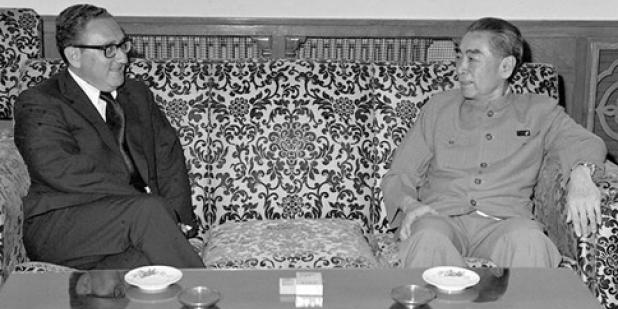
93. Bản ghi nhớ cuộc Hội đàm.
Bắc Kinh, ngày 26 tháng 11 năm 1974, 11:15 sáng –
12:20 trưa
THÀNH PHẦN THAM DỰ
Đặng Tiểu Bình, Phó Thủ tướng Quốc vụ viện Cộng
hòa Nhân dân Tầu cộng
Kiều Quán Hoa, Bộ trưởng Ngoại giao
Đại sứ Hoàng Trấn, Trưởng Văn phòng Liên lạc CHND
Tầu cộng tại Washington
Vương Hải Dung, Thứ trưởng Ngoại giao
Lâm Bình, Vụ trưởng Vụ Châu Mỹ và Châu Đại Dương
Đường Văn Sinh, Phó Vụ trưởng Vụ Châu Mỹ và Châu Đại
Dương
Chương Hàm Chi, Phó Vụ trưởng Vụ Châu Mỹ và Châu Đại
Dương
Chu Tiễn Đại Dũng, Tham tán, Văn phòng Liên lạc CHND
Tầu cộng tại Washington
Tiến sĩ Henry A. Kissinger, Ngoại trưởng kiêm Trợ lý Tổng
thống phụ trách An ninh Quốc gia
Đại sứ George Bush, Trưởng Văn phòng Liên lạc Hoa Kỳ
Donald Rumsfeld, Trợ lý Tổng thống
Winston Lord, Giám đốc Ban Hoạch định Chính sách
Philip Habib, Trợ lý Ngoại trưởng phụ trách các vấn đề
Đông Á và Thái Bình Dương
Richard Solomon, Chuyên viên cấp cao Hội đồng An ninh
Quốc gia
Peter W. Rodman, Chuyên viên Hội đồng An ninh Quốc gia
Karlene Knieps, Bộ Ngoại giao (người ghi chép)
Đặng:
Vậy chúng ta nên bắt đầu như thế nào đây? Tôi đề nghị chúng ta hãy nghe ý kiến
của Tiến sĩ trước, vì ông đã đi đến rất nhiều nơi.
Kissinger:
Có lẽ chúng ta nên điểm qua tình hình chung kể từ lần gặp trước. Tôi đang cân
nhắc xem nên đọc cuốn tài liệu bìa đen (dày 400 trang) hay cuốn bìa xanh (dày
200 trang). [Cười]
Đặng:
Tùy ông quyết định.
Kissinger:
Để tôi điểm qua tình hình quốc tế theo cách nhìn nhận của chúng tôi và những diễn
biến trong năm qua.
Tôi đồng tình với nhận định của Chủ tịch Mao
rằng chúng ta cần đạt tiến triển trong việc bình thường hóa quan hệ, nhưng cũng
cần lưu ý đến bối cảnh quốc tế—yếu tố ban đầu đã gắn kết chúng ta và cũng là yếu
tố chi phối nhiều khía cạnh trong mối quan hệ giữa hai bên.
Xét về khía cạnh này, yếu tố mà cả hai bên cùng quan
tâm—và cũng là yếu tố tạo ra một số điểm chung trong lập trường của chúng
ta—chính là đồng minh kiêm láng giềng phương Bắc của các ông. Về điểm này, đánh
giá của chúng tôi không thay đổi so với năm ngoái. Chúng tôi tin rằng mục đích
của Liên Xô về cơ bản vẫn là mưu cầu bá quyền. Chúng tôi cho rằng
việc tranh luận xem mũi nhọn tấn công chính của họ đang hướng về đâu là không
thực sự hữu ích, bởi dù hướng về phía nào đi nữa thì hậu quả cuối cùng cũng sẽ
như nhau. Do đó, chúng tôi tin rằng điều cốt yếu là phải luôn ghi nhớ các mục
tiêu tổng thể cũng như các biện pháp ngăn chặn họ hiện thực hóa những mục tiêu
đó.
Về phương diện này, chúng ta cần lưu ý—và tôi xin nói
rất thẳng thắn với ông—đến tình hình nội bộ đầy phức tạp. Để Hoa Kỳ có
thể hành động mạnh mẽ trong các cuộc khủng hoảng, chúng tôi cần phải hành động
từ một vị thế mà ở đó chúng tôi đã chứng minh cho người dân thấy rằng mình đã tận
dụng mọi cơ hội vì hòa bình. Tôi nhớ năm ngoái Chủ tịch Mao có
nói rằng Hoa Kỳ chơi những nước cờ phức tạp, và Tầu cộng cũng
chơi những nước cờ phức tạp nhưng với khí thế mạnh mẽ hơn. [Cười]
Đặng:
Tôi nghĩ thực ra ông ấy đã bàn về sự khác biệt giữa quyền cước mô phỏng
(shadow-boxing) và quyền cước Thiếu Lâm—vốn đòi hỏi nhiều năng lượng và sự mạnh
mẽ hơn.
Kissinger:
Đúng vậy, quyền cước mô phỏng. Nhưng đó là một nhận xét rất sâu sắc. Chúng tôi
buộc phải thực hiện nhiều động tác "quyền cước mô phỏng" như vậy để tạo
thế và hành động khi xảy ra khủng hoảng. Tôi nói điều này chỉ để ông phân biệt
được đâu là vẻ bề ngoài và đâu là thực tế. Chúng ta sẽ không cho phép Liên
Xô đạt được lợi thế chiến lược. Chúng ta sẽ tìm cách kiềm chế sức mạnh
của Liên Xô ở bất cứ đâu có thể. Tuy nhiên, chúng ta không... Đồng
thời, chúng ta thực hiện nhiều bước đi nhằm tạo ra các rào cản—dù là về ngoại
giao đối với việc mở rộng ảnh hưởng của Liên Xô, hay về tâm lý và
chính trị đối với các hành động quân sự của họ. Chúng ta không có ý định cùng Liên
Xô chia sẻ quyền lực thống trị (condominium), bởi vì một chính sách như
vậy—khi loại bỏ mọi rào cản đối với sự bành trướng của Liên Xô—rốt
cuộc chắc chắn sẽ quay lại gây bất lợi cho chính chúng ta.
Các sự kiện trong năm qua đã diễn ra theo đúng mô hình
này. Chúng ta đã đạt được một số thỏa thuận với Liên Xô về việc hạn
chế phần nào cuộc chạy đua vũ trang cũng như hợp tác kỹ thuật trong các lĩnh vực
cụ thể. Song, điều này đồng thời cho phép chúng ta ngăn chặn bất kỳ sự mở rộng
nào thêm nữa về sức mạnh của Liên Xô. Nếu rơi vào tình trạng đối
đầu công khai với Liên Xô, chúng ta sẽ vấp phải tình hình nội bộ
như tôi đã mô tả. Thêm vào đó, tại mỗi quốc gia châu Âu, phe cánh tả sẽ có cơ hội
khoét sâu sự chia rẽ chính trị bằng cách gán cho chúng ta cái mác là nguồn cơn
gây ra căng thẳng toàn cầu. Chính sách hiện tại của chúng ta buộc các đảng
Cộng sản ở Ý và Pháp phải ủng hộ NATO, bất chấp những tranh cãi
nội bộ của họ về các vấn đề thuần túy trong nước.
Tôi cho rằng chúng ta sẽ có một phiên họp riêng để thảo
luận chi tiết hơn về các cuộc đàm phán gần đây tại Vladivostok,
thay vì chỉ điểm qua một cách tổng quát như lúc này. Khi đó, tôi sẽ cung cấp
cho quý vị những số liệu chính xác đã được thống nhất. Tuy nhiên, hiện tại quý
vị đã biết rằng Liên Xô đã đồng ý với mức trần ngang bằng về số
lượng mà không tính đến các hệ thống vũ khí bố trí ở nước ngoài của chúng ta;
điều này thực chất mang lại cho chúng ta một lợi thế đáng kể. Ngoài ra, chúng
ta cũng sẽ nắm giữ lợi thế rất lớn về số lượng đầu đạn trong suốt thời hạn của
thỏa thuận. Tôi sẽ giải thích rõ hơn về điều này khi chúng ta cùng xem xét các
số liệu cụ thể.
Vì vậy, chúng tôi tin rằng thỏa thuận tại Vladivostok
cho thấy Liên Xô không thực sự mạnh như họ thường tỏ ra; nếu
không, họ đã chẳng chấp nhận các điều khoản đó—ít nhất là trong tương lai quan
hệ với chúng ta. Có lẽ trong quá trình thảo luận, chúng ta có thể dành ra một
giờ để bàn bạc chi tiết về tình hình nội bộ của Liên Xô.
Ở những khu vực khác trên thế giới, quan hệ của chúng
tôi với Tây Âu đã được cải thiện đáng kể kể từ lần cuối tôi đến đây. Quan hệ giữa
Pháp và Hoa Kỳ đã tốt hơn nhiều, và các cuộc thảo luận năm ngoái
đã dẫn đến sự gắn kết chặt chẽ hơn trong Liên minh Đại Tây Dương, theo
đúng hướng mà chúng tôi đã chỉ ra [cho các ông trong những cuộc thảo luận trước
đây].
Tại Trung Đông, kể từ chuyến thăm năm ngoái của
tôi, chúng tôi đã đạt được hai thỏa thuận: một giữa Ai Cập và Israel, và
một giữa Syria và Israel. Để tôi giải thích cho các ông nghe về chiến lược
của chúng tôi tại Trung Đông: Liên Xô luôn cố gắng thúc đẩy một
giải pháp toàn diện một cách nhanh chóng. Và mỗi lần gặp đồng minh của các ông
là ông Gromyko, ông ấy lại đưa cho tôi một danh sách gồm 10
nguyên tắc, 20 điểm chính, 40 điểm, hay 160 tiểu mục mà ông ấy muốn tôi đồng ý.
[Tiếng cười] Các đề xuất của họ chỉ có một vấn đề duy nhất: Hoa Kỳ phải làm tất
cả mọi việc, còn Liên Xô thì hưởng trọn mọi lợi ích. Chúng tôi không chấp nhận
làm điều đó.
Thẳng thắn mà nói, đối với chúng tôi, vấn đề Israel có
những tác động sâu sắc đến tình hình trong nước. Nếu không hành xử cẩn trọng,
chúng tôi có thể tạo ra một tình huống mà vấn đề Trung Đông trở thành một
vấn đề nội bộ nghiêm trọng, gây ảnh hưởng đến chính sách đối ngoại tổng thể của
chúng tôi. Phía Tầu cộng cũng cần lưu ý điều này. Vì vậy, chúng
tôi phải chia vấn đề thành các phần nhỏ để có thể giải quyết riêng biệt và kiểm
soát được tác động trong nước. Đó là lý do tại sao chúng tôi đang tiến hành từng
bước một.
[Ông Đặng cúi người và nhổ mạnh vào chiếc
ống nhổ.]
Báo chí của chúng tôi – vốn rất muốn thấy những thất bại
của Mỹ – lúc nào cũng nhìn thấy sự bế tắc. Thực tế là hiện nay chúng tôi đang
tiến hành theo những phương thức khác với các cách làm gây tiếng vang lớn của
năm ngoái. Chúng tôi đang áp dụng phương pháp tương tự như trong các cuộc đàm
phán về Việt Nam và giai đoạn tiếp xúc ban đầu với các ông; chúng tôi tin tưởng
rằng mình có thể đạt được một bước tiến mới trong vòng 3 hoặc 4 tháng tới. Tuy
nhiên, chúng tôi muốn kết quả này đạt được vào thời điểm gần với chuyến thăm Ai
Cập của ông Brezhnev, để họ có điều gì đó để ăn mừng khi ông ấy đến
đó. Vì vậy, các cuộc đàm phán đó đang diễn ra một cách lặng lẽ. Hôm nay, chúng
tôi xin thông báo rằng Ngoại trưởng Israel sẽ đến Washington vào
tuần tới, và quý vị có thể coi đây là một phần không thể thiếu trong cách tiếp
cận của chúng tôi.
Đối với vấn đề người Palestine, đây là vấn đề chưa có
hồi kết. Chúng tôi đã mong muốn các cuộc đàm phán diễn ra giữa Vua Hussein
và Israel trước, sau đó mới đến các cuộc đàm phán tiếp theo giữa người
Palestine và Hussein. [Trang 572]
Đặng:
Trước tiên là giữa Hussein và Israel sao?
Kissinger:
Đúng vậy, [các cuộc đàm phán] có thể đã giúp trao trả Bờ Tây về quyền kiểm soát
của người Ả Rập, rồi sau đó mới giải quyết vấn đề định đoạt cuối cùng giữa
người Palestine và Hussein.
Đặng: Ý
ông là trao trả Bờ Tây cho người Ả Rập nghĩa là trao trả cho Jordan?
Kissinger:
Cụ thể thì ý tưởng của chúng tôi là—và thật đáng tiếc—chúng tôi đã đạt được thỏa
thuận rằng Bờ Tây, hoặc một phần đáng kể của Bờ Tây (nơi tập trung hai phần ba
dân số), về mặt kỹ thuật sẽ thuộc về Jordan nhưng đặt dưới sự giám sát của Liên
Hợp Quốc; nhờ đó, chúng tôi có thể thảo luận tại Liên Hợp Quốc trong
khoảng một năm sau đó về việc định đoạt cuối cùng. Xét từ góc độ này, quyết định
tại Rabat là quá vội vàng.
Giờ đây, chúng ta cần một khoảng thời gian để vấn đề
này lắng dịu và hạ nhiệt, nhằm tạo điều kiện cho cả hai bên thích nghi với hoàn
cảnh mới.
Dù sao đi nữa, điều quan trọng cần ghi nhớ là: Người Ả
Rập không thể thắng một cuộc chiến tranh nào trong 5 năm tới. Xét về mặt lịch
sử, họ có thể mạnh hơn, nhưng trong ngắn hạn, chắc chắn họ không phải là bên mạnh
hơn. Do đó, bất kỳ bước tiến chính trị nào cũng phải thông qua Hoa Kỳ.
Không còn cách nào khác. Lợi ích duy nhất của chúng tôi trong tiến trình chính
trị này là làm sao để thấy rõ rằng các quyết định của chúng tôi được đưa ra
hoàn toàn dựa trên ý chí tự nguyện. Nếu bị [phía Ả Rập] gây sức ép,
chúng tôi sẽ chống cự đủ lâu để chứng minh rằng sức ép đó không thể mang lại kết
quả. Còn nếu bị Liên Xô gây sức ép, chúng tôi sẽ đơn giản là
không làm gì cả và yêu cầu Liên Xô phải tạo ra tiến triển.
Tôi nghĩ Tổng thống Asad—người mà tôi rất quý mến—đã
đến thăm quý vị vào năm ngoái.
Đặng: Không, người đến
thăm là Phó Tổng thống của họ, ông Shafei. Ý ông là Asad hay Sadat?
Kissinger: Asad.
Kiều:
Ông ta không đến đây. Ông ta đã đi Triều Tiên.
Kissinger: Ồ!
Kiều:
Ông ta không đến từ phía Nam.
Kissinger:
Tôi nghĩ ông sẽ thích ông ấy. Ông ấy nhận nhiều vũ khí từ Liên Xô,
nhưng lại là người thực tế. Dù sao thì, tôi nhắc đến ông ấy chỉ vì ngay cả ông ấy
cũng hiểu rằng trong bối cảnh bị gây áp lực, ngoại giao của Hoa Kỳ sẽ
không thể vận hành được. Và giờ đây ông ấy đã đồng ý gia hạn sự hiện diện của lực
lượng Liên Hợp Quốc tại Syria; chúng tôi sẽ đề nghị Áo trình một
nghị quyết mà ông ấy đã cùng chúng tôi soạn thảo, và xin thông báo để ông biết,
Israel cũng đã chấp thuận nghị quyết này. Vì vậy, chúng tôi hy vọng phía ông sẽ
không phủ quyết nó. [Tiếng cười]
Chuyện này vẫn chưa được công khai. Chúng tôi đã đàm
phán với Syria về vấn đề này trong suốt tuần qua. Tôi không nghĩ Liên
Xô đã biết về việc này. Họ đã đưa ra rất nhiều tuyên bố đe dọa liên
quan đến Syria tại Vladivostok. [Trang 573] Tôi nhắc đến
chuyện này chỉ để cho thấy rằng ngay cả những người bạn thân thiết của Liên
Xô trong thế giới Ả Rập cũng phải hiểu chính sách của chúng tôi.
Chính sách của chúng tôi là tạo ra bước tiến nhằm trao
trả lãnh thổ Ả Rập về quyền kiểm soát của người Ả Rập, nhưng phải
theo lộ trình từng bước để không làm tê liệt chính sách đối ngoại của chúng tôi
do các phản ứng trong nước. Và chúng tôi sẽ tuyệt đối không thực hiện điều đó
dưới áp lực của Liên Xô.
Cuối cùng thì cũng sẽ phải quay lại Hội nghị Geneva,
nhưng hội nghị đó sẽ dẫn đến một sự bế tắc nhất định.
Về vấn đề Iran, tôi nghĩ mọi việc đã diễn ra gần như
đúng với dự đoán của chúng tôi.
Đặng:
Tôi có thể chen ngang một câu hỏi ở đây được không?
Kissinger:
Tất nhiên rồi.
Đặng:
Ông đã thống nhất với Liên Xô về thời điểm triệu tập Hội nghị Geneva
chưa?
Kissinger:
Chưa.
Đặng: Tôi
nghĩ Liên Xô cho rằng hội nghị nên diễn ra sớm hơn và họ sẽ tham dự.
Kissinger:
Đúng vậy, chúng tôi đã dành 4 tháng để chuẩn bị, rồi hội nghị họp được một ngày
thì chúng tôi cho kết thúc. [Tiếng cười] Liên Xô luôn thúc giục
chúng tôi tổ chức hội nghị này. Rốt cuộc thì nó cũng sẽ phải diễn ra. Tôi không
nghĩ nó có thể được tổ chức trước tháng Ba.
Chừng nào người Ả Rập còn cảm thấy họ đang đạt
được tiến triển bên ngoài khuôn khổ Hội nghị, họ sẽ không vội vàng tham gia hội
nghị đó. Không ai muốn điều đó ngoại trừ Liên Xô. Họ có một đại sứ
tại Geneva là Vinogradov; ông ta dành toàn bộ thời gian để
chờ đợi một hội nghị không bao giờ diễn ra. Thỉnh thoảng, cứ hai tháng một lần,
chúng ta lại cử Đại sứ Bunker đến đó để "bầu bạn" với ông ta trong
lúc chẳng có việc gì để làm. Tuy nhiên, chúng ta vẫn chưa thống nhất được ngày
nối lại đàm phán. Thời điểm sớm nhất mà tôi có thể dự đoán là tháng Ba—trừ khi
xảy ra sự đổ vỡ hoàn toàn trong các cuộc thảo luận bí mật hiện đang diễn ra giữa
Ai Cập với Israel, và giữa các nước Ả Rập khác với Israel
thông qua sự trung gian của chúng ta. Và tôi không cho rằng sẽ có sự đổ vỡ như
vậy.
Về vấn đề Iran, như tôi đã nói, tình hình đang
diễn biến theo đúng hướng mà tôi đã thảo luận với Chủ tịch Mao và
Thủ tướng vào năm ngoái. [Đồ ăn nhẹ được mang vào]
Tôi đã bắt đầu thấy lo rồi đấy. Suốt 20 phút mà chẳng
thấy đồ ăn đâu cả. [Cười] Tôi không biết làm sao mình có thể cầm cự nổi nữa.
[Cười] [nói với Rumsfeld] Anh thấy đấy, lần nào đến đây tôi cũng tăng
thêm 5 pound (khoảng 2,3 kg).
Chúng ta cũng có thể thảo luận chi tiết về vấn đề đó.
Ý tôi là về Iran, chứ không phải về chuyện ăn uống đâu nhé. [Cười]
Ở những khu vực khác trên thế giới: Như các ông đã biết,
tôi đã có chuyến thăm Ấn Độ. Như tôi đã giải thích với đại sứ của
các ông, mục đích chính của tôi là góp phần tạo ra cho Ấn Độ một lối đi khác,
thay vì chỉ hoàn toàn phụ thuộc vào Liên Xô. Theo đánh giá của
chúng tôi, Ấn Độ có tham vọng bá quyền tại Đông Nam Á; họ
muốn biến tất cả các nước láng giềng thành những quốc gia có vị thế như Bhutan,
và đó là điều chúng tôi không thể chấp nhận.
Kiều:
Cho phép tôi ngắt lời một chút. Theo trí nhớ của tôi, Tiến sĩ từng có bài phát
biểu trước một hiệp hội học thuật, trong đó ông đề cập đến vị thế hàng đầu của Ấn
Độ tại tiểu lục địa này.
Kissinger:
Không, tôi đã nói rằng Ấn Độ, với tư cách là quốc gia mạnh nhất
trên tiểu lục địa, có nghĩa vụ đặc biệt phải kiềm chế. Và ý định của tôi là chỉ
ra sự cần thiết của việc kiềm chế đó. Dù sao đi nữa, chúng tôi dự định sẽ nối lại
việc bán một số vũ khí bằng tiền mặt cho Pakistan trong nửa đầu năm tới,
qua đó khôi phục phần nào mối quan hệ giữa hai bên. Có lẽ tôi sẽ phải "xử
lý" một nửa đội ngũ nhân viên của ông Lord trước khi chúng tôi có
thể thực hiện việc này.
Nhưng đó là hướng đi mà chúng tôi đang theo đuổi.
Chúng tôi đã mời Thủ tướng Bhutto đến Washington, và sẽ tiến hành
việc này trong vòng vài tháng sau đó.
Bây giờ, có hai sự kiện đã diễn ra kể từ năm ngoái mà
chúng ta chưa thảo luận, đó là vấn đề năng lượng và vấn đề lương thực đang dần
mang tính quốc tế hóa.
Về nguyên tắc, chúng tôi sẵn sàng thảo luận các vấn đề
này với quý vị và trình bày quan điểm của mình. Đây là những lĩnh vực mà chúng
tôi biết quý vị rất nhạy cảm với một số tuyên bố do phía chúng tôi đưa ra.
Chúng tôi không hề thờ ơ trước những lời chỉ trích gay gắt nhắm vào mình liên
quan đến các vấn đề này. Và tôi nghĩ chúng ta nên cố gắng tránh những cuộc đối
đầu không cần thiết, bởi vì chúng ta cần giải quyết vấn đề năng lượng—không chỉ
vì lợi ích của chính mình, mà còn vì nếu tình trạng hiện nay tiếp diễn, nó sẽ dẫn
đến sự tan rã về mặt chính trị của Tây Âu. Chúng ta có thể tự giải quyết
vấn đề này một cách dễ dàng—hoặc tương đối dễ dàng. Và đây không phải là vấn đề
mà Cộng hòa Nhân dân Tầu cộng có thể thờ ơ. Đối với chúng tôi, vấn
đề này không liên quan đến sự đối đầu giữa Thế giới thứ ba và thế giới công
nghiệp hóa, và chúng tôi cũng không cho rằng nên tiếp cận nó từ một góc độ thuần
túy lý thuyết. Tuy nhiên, trong thời gian tôi ở đây, tôi sẵn sàng thảo luận chi
tiết hơn về vấn đề này.
Đó là tình hình chung. Tôi đã nói được 50 phút rồi—đúng
là phong cách của các bác sĩ. Tôi đề xuất rằng khi tiếp tục thảo luận—ngoài vấn
đề bình thường hóa quan hệ—chúng ta có thể chọn một lĩnh vực cụ thể để bàn thảo
kỹ hơn, chẳng hạn như Liên Xô hay Trung Đông.
Còn một vấn đề nữa mà tôi xin để phía Tầu cộng
quyết định xem có muốn thảo luận hay không, đó là vấn đề Campuchia.
Chúng tôi không nhất thiết phải thảo luận về nó. Tôi có cảm giác rằng mỗi khi vấn
đề này được nêu ra, nó lại gây ra sự khó chịu nhất định cho phía Tầu cộng
—một phản ứng không thường thấy, và hơn nữa, phản ứng đó lại không tương xứng với
tầm quan trọng thực chất của vấn đề đang được đề cập. Từ điều này, tôi suy ra rằng
phía Tầu cộng coi chúng tôi là những kẻ ngốc nghếch hơn mức bình
thường trong vấn đề Campuchia. [Cười] Và hẳn các ông có ấn tượng rằng
chúng tôi đang bỏ sót một điểm lẽ ra phải hoàn toàn hiển nhiên. Vì vậy, tôi
nghĩ nếu các ông muốn, chúng tôi có thể trình bày bản phân tích của mình.
[Trang 575]
Bởi vì xét trên một khía cạnh nào đó, chúng tôi thực sự
không có bất đồng. Chúng tôi không phản đối Sihanouk. Chúng tôi
không hề muốn thấy Sihanouk trở lại Campuchia chỉ để làm một
nhân vật bù nhìn cho Hà Nội. Nhưng chúng tôi sẽ không phản đối nếu
ông ấy đứng đầu một chính phủ thực sự độc lập. Và nếu các ông muốn, chúng ta có
thể trao đổi quan điểm về vấn đề này—với điều kiện các ông hứa sẽ không nổi
cáu.
Kiều:
Tôi không nghĩ là chúng tôi từng nổi cáu bao giờ.
Kissinger:
Vâng, không phải là cá nhân đâu. Chúng tôi hiểu sự quan tâm của các ông đối với
Sihanouk và sẵn sàng thảo luận về vấn đề đó.
Đó là bức tranh toàn cảnh quốc tế theo cách nhìn của
chúng tôi, một cách khái quát. Sau đó, trong các cuộc thảo luận tiếp theo,
chúng ta sẽ đi sâu vào chi tiết từng vấn đề. [Họ hội ý với nhau]
Đặng:
Vâng, có vẻ như chúng ta không có nhiều điểm chung khi bàn về vấn đề nông nghiệp
và năng lượng. Tuy nhiên, chúng ta có thể trao đổi quan điểm với nhau.
Kissinger:
Thực ra tôi nghĩ rằng chúng ta có những lợi ích chung.
Đặng:
Đối với Tầu cộng, vấn đề lương thực và năng lượng không phải là vấn
đề nan giải theo nghĩa đó.
Về vấn đề Campuchia, tôi nghĩ ông cần hiểu rõ
quan điểm của chúng tôi: cả Samdech Norodom Sihanouk và các lực
lượng kháng chiến trong nước đều không phải là con rối của Hà Nội
hay của Tầu cộng như một số người vẫn nói—tức là những kẻ chỉ có
danh nghĩa mà không có thực quyền.
Kissinger:
Chúng tôi đồng ý rằng họ không phải là con rối của Tầu cộng.
Đặng:
Cũng không phải của Hà Nội.
Kissinger:
Điều đó thì chúng tôi không dám chắc.
Đặng:
Chúng tôi có thể khẳng định với ông điều này. Họ hoàn toàn đại diện cho nền độc
lập của đất nước và dân tộc mình. Thực ra, tại sao Hoa Kỳ lại phải dính
líu vào vấn đề này? Bởi vì ngay từ đầu, đây đã là vấn đề nội bộ của họ. Hãy để
họ tự giải quyết vấn đề của mình.
Kissinger:
Hoa Kỳ đã dính líu vào vấn đề này rồi. Chúng tôi không thể quyết định xem có
nên tham gia hay không nữa.
Đặng:
Nếu ông có quyền quyết định tham gia, thì ông cũng có quyền quyết định không
tham gia.
Kissinger:
Điều đó có thể đúng một phần, nhưng việc Hoa Kỳ đơn phương bỏ rơi những người
mà chúng tôi từng hợp tác mang ý nghĩa lớn hơn nhiều, và đó không phải là thói
quen mà chúng tôi nên dễ dàng hình thành.
Đặng:
Cũng cần nói thêm rằng các ông đã hợp tác với Sihanouk trong một khoảng thời
gian còn dài hơn thế.
Kissinger:
Chúng tôi không loại trừ Sihanouk. Chúng tôi nghĩ cần tìm ra một phương thức để
bắt đầu đàm phán, và kết quả của quá trình đó, nhiều khả năng, sẽ dẫn đến vai
trò của Sihanouk. [Trang 576]
Đặng:
Về vấn đề này, hẳn ông biết rằng chúng tôi ủng hộ Samdech Norodom
Sihanouk cùng các lực lượng kháng chiến trong nước, cũng như ủng hộ lập
trường của họ. Và nói thẳng ra, chúng tôi cho rằng nếu Hoa Kỳ đặt hy vọng vào
Lon Nol hay bất kỳ lực lượng nào mà các ông nghĩ sẽ thay thế Lon Nol,
thì điều đó không đáng tin cậy.
Kissinger:
Chúng tôi cho rằng có thể tiến hành đàm phán, và kết quả là Sihanouk
hoàn toàn có khả năng trở thành nhân tố nắm quyền kiểm soát. Chúng tôi nghĩ rằng
việc không phụ thuộc hoàn toàn vào một lực lượng nào là có lợi cho chính ông ấy.
Ông ấy nên có nhiều lực lượng, nhiều yếu tố để tận dụng.
Đặng:
Đó là ý kiến của ông.
Kissinger:
Đúng vậy, chúng tôi cho rằng có thể đạt được một giải pháp tại Campuchia,
trong đó Sihanouk có thể nổi lên như là lực lượng chi phối.
Đặng:
Vì ông muốn thảo luận cụ thể về vấn đề này, nên chúng ta có thể bàn về nó.
Kissinger:
Được thôi.
Đặng:
Nhưng tôi nghĩ sáng nay đến đây là đủ rồi.
Kissinger:
Có lẽ vậy.
Đặng:
Chiều nay chúng ta sẽ tiến hành thế nào?
Kissinger:
Tùy ông quyết định. Chúng tôi chưa thảo luận về vấn đề bình thường hóa quan hệ
và chúng tôi đã sẵn sàng.
Đặng:
Có lẽ chiều nay chúng tôi sẽ mời ông thảo luận nốt những nội dung còn dang dở:
quan hệ song phương và bình thường hóa quan hệ. Bởi vì chiều nay chúng tôi chỉ
có nửa giờ đồng hồ. Sáng mai chúng ta có thể tiếp tục trao đổi quan điểm.
Kissinger:
Như vậy cũng tốt. Đó là vấn đề quan trọng.
Đặng:
3 giờ 30 chiều nay.
Kissinger:
Tại Nhà khách phải không?
Đặng:
Vâng. Làm vậy có lẽ sẽ thuận tiện hơn cho ông.
Kissinger:
Ông thật chu đáo.
Đặng:
Vẫn những người đó chứ?
Kissinger:
Vẫn giữ nguyên số lượng người. Có lẽ tôi sẽ thêm ông Gleysteen vào và để một
người khác ở lại.
Đặng:
Đó là quyết định của ông.
Kissinger:
Nhưng số lượng người vẫn giữ nguyên.
Đặng:
Thỏa thuận về số lượng chứ không phải chất lượng! [Cười]
[Cuộc họp kết thúc]
1. Nguồn:
Thư viện Ford, Cố vấn An ninh Quốc gia, Các báo cáo của Kissinger về các cuộc
thảo luận liên quan đến Liên Xô, Tầu cộng và Trung Đông, Hộp 2,
Các biên bản ghi nhớ và báo cáo về Trung Quốc, ngày 25–29 tháng 11 năm 1974,
Chuyến công du của Kissinger (1). Mật; Nodis. Cuộc họp diễn ra tại Đại lễ đường
Nhân dân. Tất cả các phần nằm trong ngoặc vuông đều có trong văn bản gốc.
Historical Documents - Office of the Historian
https://history.state.gov/historicaldocuments/frus1969-76v18/sources
https://history.state.gov/historicaldocuments/frus1969-76v18/terms
https://history.state.gov/historicaldocuments/frus1969-76v18/persons
https://history.state.gov/historicaldocuments/frus1969-76v18/comp1
Move Toward Normalization of Relations, October 1974–July 1975 (Documents 88–116)
https://history.state.gov/historicaldocuments/frus1969-76v18/ch3
1.
Document 93
Foreign Relations of the United States, 1969–1976, Volume
XVIII, China, 1973–1976
93.
Memorandum of Conversation1
Beijing,
November 26, 1974, 11:15 a.m.–12:20 p.m.
PARTICIPANTS
· Teng
Hsiao-p’ing, Vice Premier of the State Council of the People’s Republic of
China
· Ch’iao
Kuan-hua, Minister of Foreign Affairs
· Amb.
Huang Chen, Chief of PRC Liaison Office, Washington
· Wang
Hai-jung, Vice Minister of Foreign Affairs
· Lin
P’ing, Director, Department of American and Oceanic Affairs
· T’ang
Wen-sheng, Deputy Director, Department of American and Oceanic Affairs
· Chang
Han-chih, Deputy Director, Department of American and Oceanic Affairs
· Chu
Tsien Ta-yung, Counselor, PRCLO, Washington
· Dr.
Henry A. Kissinger, Secretary of State and Assistant to the President for
National Security Affairs
· Amb.
George Bush, Chief, U.S. Liaison Office
· Donald
Rumsfeld, Assistant to the President
· Winston
Lord, Director, Policy Planning Staff
· Philip
Habib, Assistant Secretary of State for East Asian and Pacific Affairs
· Richard
Solomon, National Security Council Senior Staff
· Peter
W. Rodman, National Security Council Staff
· Karlene
Knieps, Department of State (notetaker)
Teng: So how should we commence? I suggest we listen to the
Doctor first, because you have traveled to so many lands.
Kissinger: Perhaps we should have a general review of
events since we last met. I’m deciding whether to read the black [briefing]
book, which has 400 pages, or the green book, which has 200. [Laughter]
Teng: It is up to you.
Kissinger: Let me review the international situation as we
see it, as it has developed during the year.
I agree with the analysis of Chairman Mao that we should
make progress in normalization, but also that there is an international
environment which brought us together in the first place and which determines
in many respects our relationship.
In this respect, the factor in which we both have an
interest, and which has produced some common fronts, is your ally and northern
neighbor. In this respect, our assessment has not changed since last [Page 570]year. We believe Soviet
purposes are still essentially hegemonial. We don’t think it is particularly
fruitful to debate in which direction the primary thrust is going, because in
whichever direction it goes, the ultimate consequences will be the same. And
therefore, we believe the principal necessity is to keep in mind the overall
objectives and the means to prevent them from being realized.
In this respect, we have to keep in mind—and I’m being very
frank with you—a very complicated domestic situation. For the United States to
take strong actions in crises, it is necessary to do so from a position of
having demonstrated to our people that we have exhausted every avenue for
peace. I think Chairman Mao, last year, said the United States plays
complicated games, and China too plays complicated games, but more
energetically. [Laughter]
Teng: I think he had discussed actually the difference
between shadow-boxing and boxing in the Sha-lin style, which is more energetic.
Kissinger: Yes, shadow-boxing. But it was a profound
observation. We have to do a lot of shadow-boxing to get into a position to
take action when we are in a crisis. I say this only so you will distinguish
between appearances and reality. We will not permit a strategic gain for Soviet
power. We will attempt to reduce Soviet power where we can. We do not,
however…At the same time we go through many stages which create either
diplomatic obstacles to the extension of Soviet power or psychological and
political obstacles against Soviet military action. We do not intend to create
a condominium with the Soviet Union, because such a policy—by removing all
obstacles to Soviet expansion—would eventually, with certainty, turn against
us.
So events of this past year fitted this pattern. We have
made a number of agreements with the Soviet Union on limiting arms competition
to some extent, and certain technical cooperation on specific subjects. But
this has enabled us, at the same time, to prevent any further extension of
Soviet power. If we were in a position of open confrontation with the Soviet
Union it would create the domestic situation I have described. And in addition,
in each European country, the European left would be able to polarize the
political spectrum by labeling us as the source of world tensions. Our present
policy forces the Communist parties of Italy and France to support NATO, and
[this is] despite their domestic battles on purely domestic issues.
We will have a separate session, I suppose, in which we can
go into greater detail on the recent discussions in Vladivostok, than I can now
in a general review. On that occasion I will give you the exact figures that
were agreed upon. But you know now that the Soviet Union agreed upon equal
numbers without counting our overseas based systems, which means in effect that
we have a substantial advantage. And, in addition, we will have a very
substantial advantage in warheads for [Page 571]the entire period of the
agreement. I will explain this when I go through the figures with you.
So we believe the agreement in Vladivostok demonstrates the
Soviet Union is not as strong as it sometimes pretends, or they would not have
agreed to that—at least vis-à-vis us. Perhaps during our discussions we can set
aside an hour for detailed discussion of the Soviet situation.
In other parts of the world, our relations with Western
Europe have substantially improved since I was last here. Relations between
France and the United States are much better, and the discussions of last year
have resulted in greater cohesion of the Atlantic Alliance along the lines we
pointed out [to you in previous discussions].
In the Middle East, since I was here last year we have
brought about two agreements, between Egypt and Israel and between Syria and
Israel. Let me explain our Middle East strategy to you: The Soviet Union
attempts to produce a comprehensive solution rapidly. And every time I see your
ally Gromyko he gives me a list of 10 principles, 20 main points, 40 points,
160 sub-sub paragraphs which he would like me to agree to. [Laughter] There is
only one thing wrong with their proposals—the United States has to do all the
work, and the Soviet Union will get all the advantages. That we are not
prepared to do.
For us, quite candidly, the problem of Israel is an issue
which has profound domestic consequences. If we do not behave carefully, we can
produce a situation within the United States in which a very serious domestic
problem is created in the Middle East which will affect our overall foreign
policy. And this China should keep in mind as well. So we have to divide the
problem into parts, each of which can be handled separately, and each of which
can be managed domestically. And this is why we are proceeding step by step.
[Teng bends over and spits loudly into his spittoon.]
Our press, which has a great desire to see American
setbacks, is always seeing stalemates. The fact of the matter is we are now
proceeding by methods different from the spectacular methods of last year. We
are now proceeding by the methods of the Vietnamese negotiations and our early
contact with you, and we are confident we can produce another step within the
next 3 or 4 months. But we would like to have it culminate a little closer to
Mr. Brezhnev’s visit to Egypt, so they’ll have something to celebrate when he
comes there. So those negotiations are going on quietly. And we are announcing
today that the Israeli Foreign Minister is coming to Washington next week and
you should assume this will be an integral part of our approach.
With respect to the Palestinians, this is an issue on which
the last word has not yet been spoken. We would have preferred it if
negotiations had taken place between King Hussein and Israel, and then
subsequent negotiations between the Palestinians and Hussein.
T’ang: First between Hussein and Israel?
Kissinger: Yes, [negotiations] which could have restored
the West Bank to Arab control, and then with the ultimate disposition settled
between the Palestinians and Hussein.
Teng: You mean by returning the West Bank to the Arabs,
returning it to Jordan?
Kissinger: Our idea, specifically, was—and it is a
tragedy—we had achieved agreement that the West Bank, or a substantial part of
the West Bank, with two-thirds of the population, would go technically to
Jordan, but under U.N. supervision, so we would have been in a position to have
discussions in the U.N. in another year or so as to the ultimate disposition.
From this point of view, the Rabat decision was premature.
Now we need a period on this issue of some moderation and
cooling off, to allow both sides to adjust to the new circumstances.
It is, in any event, important to keep the following in
mind: The Arabs cannot win a war in the next 5 years. Historically they may be
stronger, but in the short term they are certainly not the stronger. Therefore,
any political progress has to come through the United States. There is no other
way. The only interest we have in the political process is that it appear that
our decisions are made at our own free will. If we are pressed [by the Arabs]
we will resist long enough to demonstrate that pressure cannot possibly
succeed. And if we are pressed by the Soviet Union, we will simply do nothing
and we will tell the Soviet Union to produce progress.
I think President Asad, whom I like very much, visited you
last year.
Teng: No, it was their Vice President, Shafei. Asad or
Sadat?
Kissinger: Asad.
Ch’iao: He didn’t come here. He went to North Korea.
Kissinger: Oh!
Ch’iao: He didn’t come from the South.
Kissinger: I think you would like him. He gets many arms
from the Soviet Union, but he is a realist. At any rate, I mention him only
because even he has understood that under conditions of pressure the United
States diplomacy will not operate. And he has now agreed to the extension of
the United Nations forces in Syria, and we are going to ask Austria to
introduce a resolution which he has worked out with us, and which, for your
information, Israel has already accepted. So, we hope you will not veto it. [Laughter.
This isn’t known yet. We have negotiated it for the last
week with Syria. I don’t think the Soviet Union knows about it yet. They made
very many threatening statements about Syria in Vladivostok.
I mention it only to indicate that even good friends of the
Soviet Union in the Arab world have to understand our policy.
Our policy is to produce progress that returns Arab
territory to Arab control, but gradually at a pace that doesn’t produce
paralysis of our foreign policy because of the domestic reaction. And we will
not do it under Soviet pressure at all.
Eventually, there will be a return to the Geneva
Conference, but that will produce a certain stalemate.
In the area of Iran, I think things have gone approximately
as we foresaw.
Teng: May I insert a question here?
Kissinger: Certainly.
Teng: Have you decided with the Soviet Union when the
Geneva Conference will be convened?
Kissinger: No.
Teng: I think the Soviet Union thinks it should be quicker
and they will be attending.
Kissinger: Yes, we spent 4 months preparing for it, and
then it met one day, after which we closed it. [Laughter] The Soviet Union
always urges us to hold it. Eventually, it will have to take place. I don’t
think it can possibly be before March.
As long as the Arabs think they are making progress outside
the Conference, they will be in no hurry to get there. No one wants it except
the Soviet Union. They have an Ambassador in Geneva, Vinogradov, who spends all
his time waiting for a conference that doesn’t take place. We occasionally send
Ambassador Bunker once every two months to keep him company there doing
nothing. But we have not agreed on a resumption date. The earliest I could
foresee would be March—unless there is a total breakdown in the secret discussions
now going on between Egypt and Israel and the other Arab countries and Israel
through us. And I don’t foresee such a breakdown.
On Iran, as I have said, things have developed in the
direction of my discussions with Chairman Mao and the Prime Minister last year.
[Refreshments are brought in]
I was getting worried. No food was coming in for 20
minutes. [Laughter] I didn’t see how I was going to live through it. [Laughter]
[to Rumsfeld] See, I have gained 5 pounds here on every visit.
We can discuss that in great detail too. I mean about Iran,
not about food. [Laughter]
In other parts of the world: I took a trip to India, as you
know, As I explained to your Ambassador, my primary purpose was contributing
giving India another opening except [besides] total reliance on the Soviet
Union. Our assessment is India’s intentions in Southeast Asia [Page 574]are hegemonial, and that
they would like to reduce all neighboring countries to the status of Bhutan,
and that we are not prepared to accept.
Ch’iao: May I insert something here? As I recall it, the
Doctor made a speech to some scholarly association in which he said about the
leading position of India on the sub-continent.
Kissinger: No, I said that India, as the strongest country
on the subcontinent had a special obligation for restraint. And the intention
was to point out the necessity for restraint. At any rate, we intend during the
first half of next year to resume some cash arms sales to Pakistan which will
restore some relationship. I will probably have to shoot half of Mr. Lord’s
staff before we can execute this.
But that is the direction in which we are moving. We have
invited Prime Minister Bhutto to Washington, and within a few months after that
we will do it.
Now, two events that have happened since last year that we
did not discuss are the internationalization of the problem of energy, and the
problem of food.
We are prepared in principle to discuss these issues with
you, and to explain our views to you. They are areas in which we know you are
sensitive to some statements that have been made by us. We are not indifferent
to cannons that are fired at us with respect to these issues. And I think we
should attempt to avoid unnecessary confrontations, because we have to solve
the energy problem, not for ourselves, but because if it continues in its
present form it will lead to the political disintegration of Western Europe. We
can solve it for ourselves easily—relatively easily. And this cannot be a
matter of indifference to the People’s Republic. It has for us nothing to do
with the Third World against the industrialized world, and we don’t think it
should be approached from a strictly theoretical point of view. But while I am
here I am prepared to discuss it in greater detail.
So this is the general situation. I have spoken for 50
minutes, which is what doctors do. I would propose, as we continue our
discussions— in addition to normalization, we could pick an area for discussion
in greater detail—the Soviet Union, the Middle East.
There is another issue which I leave it up to the Chinese
side whether it wishes to discuss, and that is the problem of Cambodia. We
don’t insist on discussing it. I have the impression that whenever it is raised
it creates a degree of irritation on the Chinese side, which is
uncharacteristic—and in addition to being uncharacteristic is out of proportion
to the intrinsic importance of the subject being raised. From this I conclude
the Chinese side considers us more than usually stupid on the issue of Cambodia.
[Laughter] And that you must have the impression we are missing some point that
should be perfectly obvious. So I thought, if you want to, we could give you
our analysis.
Because in one respect we are really not in disagreement.
We are not opposed to Sihanouk. We have no interest in Sihanouk returning to
Cambodia as a figurehead for Hanoi. But we would have no objection to him if he
could head a truly independent government. And if you want to, we could have an
exchange of views on this subject—if you promise me not to get irritated.
Ch’iao: I don’t think we have ever become irritated.
Kissinger: No, not personally. No, we understand your
interest in Sihanouk and we are prepared to discuss it.
So this is the international scene as we see it, quickly.
And then in our subsequent discussions we will go into more detail on each
area.
[They confer]
Teng: Yes, it seems we don’t have very much common language
when it comes to the question of agriculture and energy. But we can exchange
views.
Kissinger: I actually think we should have some common
interests.
Teng: As for China itself, the food problem and energy
problem do not exist for us, in that sense.
As for the Cambodian issues, I think you should be clear
about our views, that is, both Samdech Norodom Sihanouk and the resistance
forces within the country are neither puppets of Hanoi nor puppets of China as
some people say. Figureheads.
Kissinger: We agree they aren’t figureheads of China.
Teng: Nor of Hanoi.
Kissinger: That we are not sure of.
Teng: We can assure you. They are entirely figureheads for
the independence of their own country and nation. Actually why does the United
States have to get itself involved in this issue? Because from the beginning it
was their own problem. Let them solve their own problem.
Kissinger: The United States is already involved in the
issue. It can’t make the decision whether to get involved.
Teng: Since you have the power to decide whether to get
involved, you also have the power to decide not to be involved.
Kissinger: That may be partly true, but for the U.S. to
simply abandon people with whom we have been working has a larger significance
and it is not a habit we should acquire lightly.
Teng: It should also be true to say you have worked with
Sihanouk for an even longer period of time.
Kissinger: We don’t exclude Sihanouk. We think we should
find a formula for a negotiation to get started, the outcome of which would, in
all probability be Sihanouk.
Teng: On this issue you would know we support Samdech
Norodom Sihanouk and the resistance forces within the country and we support
their position. And to put it frankly, we think if the United States is to
place its hopes on Lon Nol or on any force you think would replace Lon Nol,
that is not reliable.
Kissinger: We think it is possible to produce a
negotiation, at the end of which Sihanouk could quite possibly emerge as the
controlling factor. We think it is in his own interest not to be totally
dependent on one force. He should have many forces, factors to play with.
Teng: That is your idea.
Kissinger: It is our idea that it is possible to achieve a
solution in Cambodia in which Sihanouk could emerge as the dominant force, yes.
Teng: As you wanted to discuss this specifically, we can.
Kissinger: All right.
Teng: But I think that is all for this morning.
Kissinger: That is probably right.
Teng: How should we proceed this afternoon?
Kissinger: It is up to you. We have not discussed
normalization and we are prepared.
Teng: Perhaps we will invite you this afternoon to discuss
what you didn’t finish: bilateral relations and normalization. Because we will
only have half an hour this afternoon. Tomorrow morning we can continue with
our views.
Kissinger: That will be fine. That will be important.
Teng: 3:30 p.m. this afternoon.
Kissinger: At the Guest House?
Teng: Yes. It might be more convenient for you.
Kissinger: It is very courteous.
Teng: The same people?
Kissinger: The same numbers. I will probably add Mr.
Gleysteen and drop somebody else.
Teng: That is your decision.
Kissinger: But the same numbers.
Teng: An agreement on quantity and not quality! [Laughter.
[The meeting ended]
1.
Source: Ford Library, National Security Advisor, Kissinger
Reports on USSR, China, and Middle East Discussions, Box 2, China Memcons and
Reports, November 25–29, 1974, Kissinger’s Trip (1). Secret; Nodis. The meeting
took place in the Great Hall of the People. All brackets are in the original.↩
https://history.state.gov/historicaldocuments/frus1969-76v18/d93
https://history.state.gov/historicaldocuments/frus1969-76v18/pg_570
https://history.state.gov/historicaldocuments/frus1969-76v18/pg_571
https://history.state.gov/historicaldocuments/frus1969-76v18/pg_572
https://history.state.gov/historicaldocuments/frus1969-76v18/pg_573
https://history.state.gov/historicaldocuments/frus1969-76v18/pg_574
https://history.state.gov/historicaldocuments/frus1969-76v18/pg_575
https://history.state.gov/historicaldocuments/frus1969-76v18/pg_576
Thân thế (các) nhân vật
General Secretary of the Communist Party of
the Soviet Union
https://en.wikipedia.org/wiki/Leonid_Brezhnev
https://www.britannica.com/biography/Leonid-Ilich-Brezhnev
https://en.wikipedia.org/wiki/General_Secretary_of_the_Communist_Party_of_the_Soviet_Union
https://www.britannica.com/place/Soviet-Union/The-Brezhnev-era
Bush George H W.,
Head of the U.S. Liaison Office in Beijing from October 21, 1974,
until December 7, 1975
https://en.wikipedia.org/wiki/George_H._W._Bush
https://en.wikipedia.org/wiki/President_of_the_United_States
https://en.wikipedia.org/wiki/Vice_President_of_the_United_States
https://en.wikipedia.org/wiki/Director_of_Central_Intelligence
https://en.wikipedia.org/wiki/Chief_of_the_U.S._Liaison_Office_to_the_People%27s_Republic_of_China
https://en.wikipedia.org/wiki/Republican_National_Committee
https://en.wikipedia.org/wiki/United_States_Ambassador_to_the_United_Nations
https://en.wikipedia.org/wiki/United_States_House_of_Representatives
https://history.state.gov/departmenthistory/people/chiefsofmission/china
https://www.state.gov/biographies-list/
https://www.state.gov/resources-bureau-of-global-talent-management/#ambassadors
https://www.cnn.com/2018/12/01/asia/george-h-w-bush-china-intl/index.html
https://en.wikipedia.org/wiki/List_of_ambassadors_of_the_United_States_to_China
https://www.chinadaily.com.cn/china/09usofficials/2009-05/31/content_7956346.htm
https://bush41library.tamu.edu/audiovisual/photos/35
Chiao Kuan-hua, (Qiao
Guanhua)
Vice Foreign Minister, People’s Republic of China
https://en.wikipedia.org/wiki/Qiao_Guanhua
https://history.state.gov/historicaldocuments/frus1969-76ve13/d124
https://www.marxists.org/subject/china/china-reconstructs/1974/CR1974-12-Sup.pdf
SYND 25-11-71 CHINESE DELEGATE CHIAO KUAN HUA SPEAKS ABOUT DISARMAMENT
AT THE UN
https://www.youtube.com/watch?v=bjnyWtitbrg
Deng Xiaoping (Teng Hsiao-p’ing),
Vice
Premier of State Council after 1973
https://en.wikipedia.org/wiki/Deng_Xiaoping
https://www.britannica.com/biography/Deng-Xiaoping
https://www.britannica.com/summary/Deng-Xiaoping
https://www.ebsco.com/research-starters/history/deng-xiaoping
http://www.cppcc.gov.cn/zxww/2012/07/03/ARTI1341300716750109.shtml
https://www.encyclopedia.com/people/history/chinese-and-taiwanese-history-biographies/deng-xiaoping
https://simple.wikipedia.org/wiki/Deng_Xiaoping
Gleysteen, William H., Jr.,
Deputy Director, Office of United Nations Political Affairs, Bureau of
International Organization Affairs, Department of State, from August 1966
https://en.wikipedia.org/wiki/William_H._Gleysteen
https://en.wikipedia.org/wiki/United_States_Ambassador_to_South_Korea
https://adst.org/OH%20TOCs/Gleysteen,%20William%20H.,%20Jr.toc.pdf
Soviet
Foreign Minister
https://en.wikipedia.org/wiki/Andrei_Gromyko
https://en.wikipedia.org/wiki/List_of_heads_of_state_of_the_Soviet_Union
https://en.wikipedia.org/wiki/27th_Politburo_of_the_Communist_Party_of_the_Soviet_Union
https://en.wikipedia.org/wiki/Ministry_of_Foreign_Affairs_(Soviet_Union)
https://en.wikipedia.org/wiki/Permanent_Representative_of_the_Soviet_Union_to_the_United_Nations
https://digitalarchive.wilsoncenter.org/search?f[0]=people:81473&fo[0]=81473
https://www.fordlibrarymuseum.gov/library/exhibits/vladivostok/gromyko.pdf
Habib, Philip C.,
member, U.S. Delegation to the Paris Peace
Talks from May 1968 until October 1971; Ambassador to Korea from September 30,
1971, until August 19, 1974; Assistant Secretary of State for East Asian and
Pacific Affairs from September 27, 1974
https://en.wikipedia.org/wiki/Philip_C._Habib
https://en.wikipedia.org/wiki/Under_Secretary_of_State_for_Political_Affairs
https://en.wikipedia.org/wiki/Assistant_Secretary_of_State_for_East_Asian_and_Pacific_Affairs
https://en.wikipedia.org/wiki/United_States_Ambassador_to_Korea
https://diplomacy.state.gov/u-s-diplomact-philip-c-habib-presidential-medal-of-freedom-winner/
https://nsuworks.nova.edu/nsudigital_forums/13/
https://www.arabamerica.com/arabamericans/philip-habib-3/
https://www.britannica.com/biography/Philip-Charles-Habib
Huang Zhen (Huang Chen),
PRC Ambassador to France until March 1973; Chief of the PRC Liaison
Office in the United States from March 1973
https://en.wikipedia.org/wiki/Huang_Zhen
https://en.wikisource.org/wiki/Author:Huang_Zhen
https://2001-2009.state.gov/documents/organization/72591.pdf
https://nsarchive2.gwu.edu/NSAEBB/NSAEBB79/BEBB23.pdf
https://www.fordlibrarymuseum.gov/sites/default/files/2024-06/1552743.pdf
https://www.britishpathe.com/asset/236303/
https://mediaclip.ina.fr/en/caf97507056-credentials-huang-chen-at-the-elysee.html
https://history.state.gov/historicaldocuments/frus1969-76ve13/d12
Henry A Kissinger
Assistant to the President for National Security Affairs until
November 3, 1975; also Secretary of State from September 21, 1973
https://www.theguardian.com/world/2023/may/20/bilderberg-meeting-group-lisbon-kissinger
https://www.theguardian.com/world/bilderberg
https://history.state.gov/historicaldocuments/frus1969-76ve13/summary
https://china.usc.edu/getting-beijing-henry-kissingers-secret-1971-trip
https://china.usc.edu/catalog/documents/us-china
http://www.archives.gov/press/press-releases/2001/nr01-47.html
https://china.usc.edu/talking-points-july-22-august-3-2011
https://china.usc.edu/getting-beijing-henry-kissingers-secret-1971-trip#meetings
https://china.usc.edu/getting-beijing-henry-kissingers-secret-1971-trip#nixon-announcement
https://china.usc.edu/getting-beijing-henry-kissingers-secret-1971-trip#chinese-accept
https://china.usc.edu/getting-beijing-henry-kissingers-secret-1971-trip#signals
https://china.usc.edu/getting-beijing-henry-kissingers-secret-1971-trip#the_aim
http://www.foreignaffairs.com/articles/23927/richard-m-nixon/asia-after-viet-nam
https://history.state.gov/historicaldocuments/frus1969-76v17/d4
https://history.state.gov/historicaldocuments/frus1969-76v17/d12
https://history.state.gov/historicaldocuments/frus1969-76v17/d13
https://history.state.gov/historicaldocuments/frus1969-76v17/d141
https://2001-2009.state.gov/documents/organization/100324.pdf
https://en.wikipedia.org/wiki/Henry_Kissinger_and_the_Vietnam_War
Lesson in Vietnam from
Kissinger to Nixon: “when we made it “our war” we would not let
the South Vietnamese fight it; when it again became “their war”, we would not
help them fight it.”
(We
also had trouble with excesses here: when we
made it “our war” we would not let the South Vietnamese fight it; when it again
became “their war,” we would not help them fight it. Ironically, we
prepared the South Vietnamese for main force warfare after 1954 (anticipating another Korean-type attack), and they faced a political war; they had prepared
themselves for political warfare after 1973 only to be faced with a main force
invasion 20 years after it had been expected.)
https://history.state.gov/historicaldocuments/frus1969-76v10/d280
Lesson of Vietnam May 12 1975 by Henry A. Kissinger
https://www.fordlibrarymuseum.gov/library/exhibits/vietnam/032400091-002.pdf
https://thebattleofkontum.com/extras/kissinger.html
“Richard M. Nixon and Kissinger on 3 August 1972,” Conversation 760-006,
Presidential Recordings Digital Edition [Fatal Politics, ed. Ken Huges]
(Charlottesville: University of Virginia Press, 2014-). URL:https://prde.upress.virginia.edu/conversations/4006748
https://player.vimeo.com/video/889937807?h=e44572c8f3&color=e57200&title=0&byline=0&portrait=0
https://player.vimeo.com/video/889937807?h=e44572c8f3&color=e57200&title=0&byline=0&portrait=0
Discover the Truth at:
https://www.theblackvault.com/documentarchive/the-cias-vietnam-document-cd-rom/
The secret life of Henry
Kissinger minutes of a 1975 meeting with Lawrence Eagleburger
https://etan.org/news/kissinger/secret.htm
Henry Kissinger and the Truth About Negotiations In Vietnam
https://www.youtube.com/watch?v=Z5fxxKVfX5g
Henry Kissinger - Secrets of a superpower | DW Documentary
https://www.youtube.com/watch?v=bWVMTKeAwlA
The Untold Truth of Henry Kissinger
https://www.youtube.com/watch?v=0iheZdvWdbI&t=1s
Was Henry Kissinger a War Criminal?
https://www.youtube.com/watch?v=COqq7862wcU&t=25s
General,
Cambodian
Prime Minister and Minister of National Defense, June 1969; led coup that
deposed Prince Norodom Sihanouk in March 1970; Prime Minister and Minister of
National Defense after March 18, 1970; President of Khmer Republic from 1972
until 1975
Lord, Winston,
member, National Security Council staff until
1973; Director of the Policy Planning Staff, Department of State from October
1973 until January 1977
https://en.wikipedia.org/wiki/Winston_Lord
https://en.wikipedia.org/wiki/Assistant_Secretary_of_State_for_East_Asian_and_Pacific_Affairs
https://en.wikipedia.org/wiki/List_of_ambassadors_of_the_United_States_to_China
https://en.wikipedia.org/wiki/Council_on_Foreign_Relations
https://en.wikipedia.org/wiki/Director_of_Policy_Planning
https://www.brookings.edu/wp-content/uploads/2016/07/19981208.pdf
https://www.brookings.edu/wp-content/uploads/2016/07/19991104.pdf
https://nsarchive.gwu.edu/document/22669-document-04-winston-lord-director-policy
https://www.ncafp.org/about-us/faps-board-of-advisors/ambassador-winston-lord/
Chiao Kuan-hua, (Qiao
Guanhua)
Vice Foreign Minister, People’s Republic of China
https://en.wikipedia.org/wiki/Qiao_Guanhua
https://history.state.gov/historicaldocuments/frus1969-76ve13/d124
https://www.marxists.org/subject/china/china-reconstructs/1974/CR1974-12-Sup.pdf
SYND 25-11-71 CHINESE DELEGATE CHIAO KUAN HUA SPEAKS ABOUT DISARMAMENT
AT THE UN
https://www.youtube.com/watch?v=bjnyWtitbrg
member,
National Security Council staff
https://georgewbush-whitehouse.archives.gov/government/rodman-bio.html
https://www.fordlibrarymuseum.gov/library/guides/findingaid/nsarodmanfiles.asp
https://www.henryakissinger.com/remembrances/eulogy-for-peter-w-rodman/
https://en.wikipedia.org/wiki/Peter_Rodman
Rumsfeld, Donald,
Counselor to the President from January 1971
until January 1973; Permanent Representative to the North Atlantic Treaty
Organization from 1973 until 1974; Secretary of Defense from November 20, 1975
https://en.wikipedia.org/wiki/Donald_Rumsfeld
https://en.wikipedia.org/wiki/United_States_Secretary_of_Defense
https://en.wikipedia.org/wiki/White_House_Chief_of_Staff
https://en.wikipedia.org/wiki/United_States_Ambassador_to_NATO
https://en.wikipedia.org/wiki/Economic_Stabilization_Act_of_1970#Administrative_history
https://en.wikipedia.org/wiki/Counselor_to_the_President
https://en.wikipedia.org/wiki/Director_of_the_Office_of_Economic_Opportunity
https://history.defense.gov/Multimedia/Biographies/Article-View/Article/571288/donald-h-rumsfeld/
https://www.defense.gov/About/Biographies/Biography/Article/602800/
https://georgewbush-whitehouse.archives.gov/government/text/rumsfeld-bio.html
Sadat, Anwar,
President of Egypt
https://en.wikipedia.org/wiki/Anwar_Sadat
https://www.britannica.com/biography/Anwar-Sadat
https://www.ebsco.com/research-starters/history/sadat-becomes-president-egypt
https://sadat.umd.edu/about-us/anwar-sadat
https://www.nobelprize.org/prizes/peace/1978/al-sadat/facts/
https://en.wikipedia.org/wiki/Assassination_of_Anwar_Sadat
https://www.biography.com/political-figures/anwar-el-sadat
Norodom Sihanouk,
King of Cambodia to March 1955, thereafter
Prince of Cambodia; Prime Minister and Foreign Minister, October 1955–January
1956; Prime Minister, Foreign Minister, and Minister of the Interior,
March–April 1956; Prime Minister, September–October 1956; Prime Minister,
Foreign Minister, Minister of Plans, and Minister of the Interior, April–July
1957
Cambodian Head of State until March 1970;
thereafter, leader of Cambodian Government in exile in Beijing
Prince, Head of State of Cambodia until March
18, 1970; thereafter, leader of the Cambodian government-in-exile in Beijing
(GRUNK)
4/11/75 - Phnom Penh Evacuation
Solomon, Richard H.,
member, National Security Council
staff
https://en.wikipedia.org/wiki/Richard_H._Solomon
https://www.academyofdiplomacy.org/members-1/solomon/richard-h.
https://carnegiecouncil.org/people/richard-h-solomon
https://www.c-span.org/person/richard-h-solomon/9004/
https://www.chinafile.com/contributors/richard-h-solomon
https://findingaids.lib.umich.edu/catalog/umich-bhl-2008034
https://www.presidency.ucsb.edu/documents/nomination-richard-h-solomon-be-assistant-secretary-state


No comments:
Post a Comment