20260930 CDTL NRM D92 26 November 1974 92. Bản ghi nhớ cuộc Hội đàm.
https://history.state.gov/historicaldocuments/frus1969-76v18/d92
Google Translated
Tài liệu số 92
Quan hệ Đối ngoại của Hoa Kỳ, 1969–1976, Tập
XVIII, Trung Quốc, 1973–1976
92. Bản ghi nhớ cuộc Hội đàm.
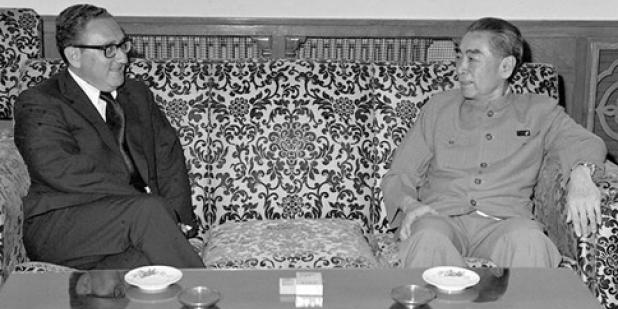
Bắc Kinh, ngày 26 tháng 11 năm 1974, 10:20–11:02 sáng.
THÀNH PHẦN THAM DỰ
Đặng Tiểu Bình, Phó Thủ tướng Quốc vụ viện, Cộng
hòa Nhân dân Tầu cộng; Kiều Quán Hoa, Bộ trưởng Ngoại giao
Đại sứ Hoàng Trấn, Trưởng Văn phòng Liên lạc CHND
Tầu cộng tại Washington
Lâm Bình, Vụ trưởng Vụ Châu Mỹ và Châu Đại Dương, Bộ
Ngoại giao
Đường Văn Sinh, Phó Vụ trưởng Vụ Châu Mỹ và Châu Đại
Dương, Bộ Ngoại giao
Chu Truyền Hiền, Vụ trưởng Vụ Lễ tân, Bộ Ngoại giao
Tiền Đại Dung, Tham tán, Văn phòng Liên lạc CHND
Tầu cộng tại Washington
Đinh Nguyên Hồng, Trưởng phòng Hoa Kỳ, Vụ Châu Mỹ và
Châu Đại Dương, Bộ Ngoại giao
Triệu Tế Hoa, Phó trưởng phòng Hoa Kỳ, Vụ Châu Mỹ và
Châu Đại Dương, Bộ Ngoại giao
Chương Hàm Chi, Phiên dịch
Liên Chính Bảo, Thư ký ghi chép
Tiến sĩ Henry A. Kissinger, Ngoại trưởng kiêm Trợ lý Tổng
thống phụ trách An ninh Quốc gia
Donald Rumsfeld, Trợ lý Tổng thống
Đại sứ George Bush, Trưởng Văn phòng Liên lạc Hoa Kỳ tại
Bắc Kinh
Đại sứ Robert Anderson, Trợ lý đặc biệt của Ngoại trưởng
phụ trách Quan hệ Báo chí
Winston Lord, Giám đốc Ban Hoạch định Chính sách, Bộ
Ngoại giao
Philip C. Habib, Trợ lý Ngoại trưởng phụ trách các vấn
đề Đông Á và Thái Bình Dương
William H. Gleysteen, Phó Trợ lý Ngoại trưởng phụ
trách các vấn đề Đông Á và Thái Bình Dương
John H. Holdridge, Phó Trưởng Văn phòng Liên lạc Hoa Kỳ
tại Bắc Kinh
Oscar V. Armstrong, Giám đốc Văn phòng phụ trách các vấn
đề CHND Trung Hoa và Mông Cổ, Bộ Ngoại giao
Richard H. Solomon, Chuyên viên cấp cao, Hội đồng An
ninh Quốc gia
Robert C. McFarlane, Hội đồng An ninh Quốc gia
Karlene Knieps, Thư ký ghi chép
CHỦ ĐỀ
Cuộc thảo luận tổng quan mở đầu: Nhật Bản; Quan hệ
song phương và Bình thường hóa quan hệ
[Lưu ý: Các cuộc thảo luận bắt đầu khi các
thành viên của đoàn báo chí Mỹ đi cùng Ngoại trưởng đang có mặt trong phòng. Một
số nhận xét của Phó Thủ tướng Đặng dường như hướng tới sự hiện diện của báo giới
này.] [Trang 563]
Phó Thủ tướng Đặng:
Tôi muốn nhân cơ hội này một lần nữa bày tỏ sự chào đón đối với Tiến sĩ trong
chuyến thăm Tầu cộng lần thứ bảy của ông. Tôi cũng xin nói thêm rằng
đây là lần thứ ba trong năm nay chúng ta có cơ hội trao đổi quan điểm. Và chúng
tôi được biết Tiến sĩ vừa có một chuyến đi vòng quanh thế giới gần đây. Vì vậy,
chúng tôi rất vui khi có cơ hội trao đổi ý kiến một lần nữa với Tiến sĩ và tất
cả những người bạn khác trong phái đoàn của ông—để chúng tôi có dịp trao đổi
quan điểm không chỉ với những người bạn cũ thân thiết mà còn với cả những người
bạn mới, chẳng hạn như ông Rumsfeld.
Bộ trưởng Kissinger:
Thay mặt các đồng nghiệp, tôi muốn cảm ơn sự đón tiếp nồng hậu mà chúng tôi nhận
được tại đây. Như ông đã nói, chúng tôi đã có ba lần trao đổi trong năm nay với
ông và với Bộ trưởng Ngoại giao, và mối quan hệ của chúng ta luôn có những bước
tiến triển.
Phó Thủ tướng Đặng:
Sẽ thật tốt nếu một ngày nào đó chúng ta có thể trao đổi quan điểm tại
Washington.
Bộ trưởng Kissinger:
Tôi hy vọng chúng ta có thể thực hiện điều đó rất sớm—
Phó Thủ tướng Đặng:
Tôi nghĩ đó là mong muốn chung, và điều đó thật tốt.
Bộ trưởng Kissinger:
—bởi vì Bộ trưởng Ngoại giao của ông luôn từ chối các lời mời của tôi.
Phó Thủ tướng Đặng:
Hiện giờ ông ấy khó mà đến đó được. Ông ấy sẽ làm gì nếu gặp Đại sứ của Tưởng
Giới Thạch tại Washington chứ?
[Lưu ý: Tại thời điểm này của cuộc trò chuyện,
báo giới được mời ra khỏi phòng.]
Bộ trưởng Kissinger:
Tôi tưởng ông ấy muốn đợi cho đến khi dinh thự của Đại sứ [Hoàng Trấn] được
trang bị đầy đủ nội thất. Tôi nghĩ chúng ta có thể sắp xếp một chuyến thăm sao
cho không có nguy cơ ông ấy phải gặp bất kỳ ai mà ông ấy muốn tránh mặt tại đó.
Phó Thủ tướng Đặng:
Việc đó có thể sẽ khó khăn.
Bộ trưởng Kissinger:
Chúng tôi có thể sắp xếp được việc đó, và trong chuyến thăm này, chúng tôi đã sẵn
sàng thảo luận về toàn bộ vấn đề bình thường hóa quan hệ.
Phó Thủ tướng Đặng:
Điều đó thật tốt. Chúng tôi vừa nhận được tin ông Tanaka đã từ chức.
Bộ trưởng Kissinger:
Vâng. Tôi nghĩ tối qua tôi đã nói với Ngoại trưởng của các ông rằng chúng tôi
biết ông ấy sẽ từ chức vào sáng nay. Theo các dấu hiệu chúng tôi nắm được thì
giờ đây sẽ diễn ra một loạt các cuộc tham vấn khẩn trương, trong đó... Tất cả
các ứng cử viên đều ủng hộ việc tham vấn vì họ tin rằng mình sẽ trở thành Thủ
tướng. Tôi cho rằng sẽ có một cuộc bầu cử vào khoảng ngày 9 tháng 12. Chúng tôi
nhận định rằng ông Ohira là người có khả năng cao nhất sẽ kế nhiệm, và nếu ông ấy
không thành công thì có lẽ ông Shiina sẽ là người kế nhiệm. [Trang 564]
Phó Thủ tướng Đặng:
Còn ông Fukuda thì sao?
Bộ trưởng Kissinger:
Chúng tôi không nghĩ ông Fukuda có thể thành công vào lúc này; do đó, nếu họ muốn
chọn ông Fukuda, trước tiên họ sẽ đưa ông Shiina lên làm nhân vật chuyển tiếp.
Phó Thủ tướng Đặng:
Nhưng ông cũng nên biết rằng ông Fukuda cũng sẽ được Liên Xô ủng
hộ bỏ phiếu.
Bộ trưởng Kissinger:
Về điều này thì thú thật là tôi không biết.
Phó Thủ tướng Đặng:
Mối quan hệ giữa họ đang ngày càng trở nên khăng khít.
Bộ trưởng Kissinger:
Giữa ông Fukuda và ông Shiina, hay giữa Nhật Bản và Liên Xô?
Phó Thủ tướng Đặng:
Không, là giữa ông Fukuda và Liên Xô.
Bộ trưởng Kissinger:
Điều này thì tôi không biết.
Phó Thủ tướng Đặng:
Ông có ủng hộ ông Ohira không?
Bộ trưởng Kissinger:
Cá nhân tôi ư? Cá nhân ông Ohira là một người bạn tốt của tôi. Và chúng tôi sẽ rất
hài lòng nếu ông Ohira lên nắm quyền. Còn chúng tôi chắc chắn không ủng hộ ông
Fukuda.
Phó Thủ tướng Đặng:
Vậy là chúng ta có cùng quan điểm.
Bộ trưởng Kissinger:
Chúng tôi hoàn toàn không có vấn đề gì với ông Ohira cả. Ông ấy sẽ ủng hộ chính
sách mà chúng tôi đã quen thuộc.
Phó Thủ tướng Đặng:
Đúng vậy, và chúng tôi cũng nhận thấy một đặc điểm của ông Ohira là lời nói của
ông ấy rất có trọng lượng. Và có lẽ, xét về khía cạnh này, nếu thực hiện một
chính sách nào đó, ông ấy thậm chí còn có thể kiên định hơn cả ông Tanaka.
Ngoại trưởng Kissinger:
Ông ấy dày dạn kinh nghiệm hơn ông Tanaka. Dù sao đi nữa, chúng tôi cho rằng
nhiều khả năng ông Ohira sẽ trở thành Thủ tướng. Và nếu vì lý do nào đó mà ông ấy
không được chọn—điều mà chúng tôi không dự tính—thì cũng chưa rõ cục diện sẽ ra
sao. Học trò của tôi [ông Nakasone] vẫn chưa chính thức tuyên bố ý định. Ông ấy
cũng có vai trò nhất định. Tuy nhiên, nếu một người khác trở thành Thủ tướng,
xin ông biết rằng Hoa Kỳ tin tưởng chính sách đối ngoại của Nhật Bản sẽ được tiếp
nối, và chúng tôi sẽ khuyến khích họ duy trì lộ trình đã đề ra, đặc biệt là đối
với Trung Quốc.
Phó Thủ tướng Đặng:
Ngay cả khi ông Fukuda trở thành Thủ tướng, chúng tôi cũng không cho rằng điều
đó sẽ gây ra hậu quả lớn. Có thể sẽ có đôi chút biến động, bởi lẽ quá trình diễn
biến sự việc luôn đi kèm những khó khăn.
Ngoại trưởng Kissinger:
Chúng tôi cho rằng Nhật Bản hẳn phải rất thiếu thận trọng mới xích lại gần Liên
Xô. Đó là một hướng đi rất nguy hiểm đối với Nhật Bản.
Phó Thủ tướng Đặng:
Nhưng bất kể ai lên nắm quyền, họ vẫn vấp phải một vấn đề cốt lõi không thể giải
quyết. Vấn đề này chúng ta đã thảo luận tối qua: vấn đề Vùng lãnh thổ phía Bắc
[bốn hòn đảo phía bắc mà Nhật Bản muốn Liên Xô trao trả].
Ngoại trưởng Kissinger:
Chúng ta sẽ biết kết quả trong mười ngày tới; đây là điều hiếm thấy so với hầu
hết các sự kiện quốc tế khác. Có lẽ sau khi Thủ tướng mới được chọn, nếu có diễn
biến bất ngờ nào, chúng ta có thể trao đổi thêm.
Phó Thủ tướng Đặng:
Vậy theo ông, chúng ta nên tiếp tục các cuộc thảo luận như thế nào?
Ngoại trưởng Kissinger:
Tôi nghĩ có lẽ bây giờ chúng ta có thể đưa ra một số nhận định mang tính tổng
quát, sau đó làm việc theo các nhóm nhỏ hơn. Một nhóm nội dung sẽ tập trung vào
việc đánh giá tình hình quốc tế như thường lệ, tiếp đó là thảo luận về việc duy
trì tiến trình bình thường hóa quan hệ. Nhóm nội dung thứ hai sẽ đề cập đến các
vấn đề mang tính kỹ thuật hơn, những vấn đề mà các chuyên gia của hai bên nên
thảo luận với nhau.
Về các vấn đề song phương, tôi xin nói một lời trước
khi các chuyên gia quá sa đà vào sự hào hứng của mình: Những vấn đề như trao đổi
song phương và các hiệp định văn hóa về cơ bản chỉ mang tính biểu tượng trong
chính sách đối ngoại và quan hệ chính trị giữa hai nước; do đó, chúng ta sẽ giải
quyết chúng trong bối cảnh đó. Thú thật, tôi không quá bận tâm liệu việc giải
quyết vấn đề các tài khoản bị phong tỏa có chênh lệch một triệu đô la hay
không, hay liệu có thêm hoặc bớt một đoàn đại biểu nào qua lại giữa Hoa Kỳ và Tầu
cộng hay không. Chúng ta nên coi những vấn đề này như biểu tượng cho mối
quan hệ tổng thể giữa hai bên. Vì vậy, khi nào quý vị muốn giải quyết chúng
[các vấn đề về yêu sách hoặc tài sản], hãy cho chúng tôi biết và chúng tôi sẽ
tìm cách giải quyết.
Chúng tôi tin tưởng và hy vọng rằng các điều kiện hiện
nay đang thuận lợi để tạo ra bước tiến trong quan hệ song phương. Chúng tôi cho
rằng việc này sẽ hiện thực hóa các nguyên tắc của Thông cáo Thượng Hải cũng như
những nội dung đã được thảo luận trong các chuyến thăm đầu tiên của chúng tôi tới
Tầu cộng. Xét trên bình diện quốc tế tổng thể, đây là điều đáng
mong đợi để tránh gây ra bất kỳ sự hiểu lầm nào trong mắt các quốc gia khác về
quá trình phát triển mối quan hệ giữa hai nước chúng ta.
Vì vậy, chúng tôi đã sẵn sàng. Mặt khác, chúng tôi sẽ
không gây áp lực, và quý vị có thể cho chúng tôi biết tốc độ mà quý vị mong muốn
đối với các vấn đề kỹ thuật song phương này. Lợi ích của việc thảo luận ngay
khi tôi đang ở đây là mức độ phức tạp của các vấn đề thường tỷ lệ thuận với quy
mô đội ngũ nhân viên đi cùng tôi; nhờ đó, tôi, quý vị và Bộ trưởng Ngoại giao
có thể trực tiếp trao đổi và giải quyết các vấn đề phức tạp một cách nhanh
chóng hơn. [Trang 566]
Trở lại với những vấn đề then chốt mà tôi đã thảo luận
với Bộ trưởng Ngoại giao tại New York vào tháng 10:4 Về quan điểm chung của
chúng tôi đối với việc bình thường hóa quan hệ — đây là một trong những chủ đề
chúng ta có thể thảo luận chi tiết hơn khi họp theo nhóm nhỏ — tôi chỉ muốn nói
rằng chúng tôi sẵn sàng thảo luận một cách nghiêm túc và nỗ lực đáp ứng khung
thời gian mà chúng ta đã bàn bạc trong các cuộc gặp trước đây giữa tôi và Thủ
tướng [Chu Ân Lai].
Nhóm vấn đề thứ hai là việc chúng ta thường xuyên rà
soát chi tiết tình hình quốc tế. Trước khi tôi đến đây, báo chí luôn hỏi liệu
tôi có đến để trấn an phía Tầu cộng hay không. Họ cũng luôn nói rằng
quan hệ giữa hai nước đã xấu đi. Tuy nhiên, không thể trấn an những người thực
sự nghiêm túc chỉ bằng lời nói. Như quý vị và tất cả những người bạn từng tham
dự các cuộc họp này đều biết, chúng tôi đã trình bày chi tiết nhất có thể về ý
định và chiến lược của mình — thậm chí tôi có thể nói là chi tiết hơn so với bất
kỳ quốc gia nào khác. Như quý vị đã biết — và tôi tin quý vị cũng nhận thấy — lời
nói của chúng tôi luôn có giá trị, và quý vị chưa bao giờ bất ngờ trước bất kỳ
động thái chính sách đối ngoại nào mà chúng tôi thực hiện. Tôi cho rằng trong
năm qua, tình hình đã diễn biến đúng như những gì chúng ta đã thảo luận khi tôi
đến đây [vào tháng 11 năm 1973]. Và chúng tôi sẵn sàng thực hiện lại việc rà
soát này trong thời gian tới.
Theo tôi, đây là cách sử dụng thời gian hữu ích nhất,
nhưng chúng tôi cũng sẵn sàng lắng nghe bất kỳ đề nghị nào khác từ phía quý vị
về phương thức tiến hành.
Phó Thủ tướng Đặng:
Chỉ có vậy thôi sao?
Bộ trưởng Kissinger:
Đây là một trong những bài phát biểu ngắn nhất của tôi. [Cười] Tôi cũng có một
phiên bản dài 50 phút, như Bộ trưởng Ngoại giao của quý vị đã biết.
Phó Thủ tướng Đặng:
Về phương thức tiến hành đàm phán, chúng tôi nhất trí rằng một số vấn đề có thể
được thảo luận trong các nhóm nhỏ như ông đã đề nghị. Trong các cuộc thảo luận
giữa Tiến sĩ và Bộ trưởng Ngoại giao vào tháng 10 vừa qua, ông đã nhấn mạnh cả
các vấn đề song phương và đặc biệt là các vấn đề quốc tế. Chúng tôi hoan nghênh
phát biểu của Tiến sĩ Kissinger trong tiệc chiêu đãi hôm qua, trong đó ông dự
báo sẽ có thêm tiến triển về vấn đề bình thường hóa quan hệ theo tinh thần của Thông
cáo Thượng Hải. Dư luận thế giới hiện có nhiều ý kiến và bàn tán cho
rằng quan hệ giữa hai bên đã trở nên nguội lạnh và tiến độ đã chậm lại. Tuy
nhiên, về bản chất, tôi tin rằng cả hai bên đều nhận định quá trình phát triển
quan hệ của chúng ta vẫn diễn ra bình thường.
Song, cũng không thể nói rằng những lời bàn tán đó
hoàn toàn không có cơ sở. Chẳng hạn, hôm qua cũng như trong các cuộc thảo luận
với Bộ trưởng Ngoại giao hồi tháng 10, Tiến sĩ đã đề cập đến việc tiếng đại bác
của chúng tôi vang lên thường xuyên hơn.
Bộ trưởng Kissinger:
Vâng, và độ chính xác cũng cao hơn.
Phó Thủ tướng Đặng:
Và cũng là điều dễ hiểu khi nảy sinh những đồn đoán, bàn tán khi phía các ông cử
Đại sứ tới Đài Loan và khi họ tăng số lượng lãnh sự quán tại Hoa Kỳ.
Bộ trưởng Kissinger:
Nhất là khi các ông không bao giờ tin rằng một số hành động của chúng tôi là kết
quả của sự thiếu sáng suốt chứ không phải do tính toán kỹ lưỡng. Bản thân tôi
cũng không hề hay biết về chuyện các lãnh sự quán cho đến khi mọi việc đã rồi.
Phó Thủ tướng Đặng:
Về quan điểm của chúng tôi đối với vấn đề bình thường hóa quan hệ, tôi tin rằng
Tiến sĩ và các bạn bè Mỹ khác đều đã nắm rõ: đó là theo "kiểu Nhật Bản".
Về khía cạnh này, phía các ông từng bày tỏ mong muốn chúng tôi đề nghị một
phương thức cụ thể để thực hiện. Tuy nhiên, thực tế là chúng tôi đã nêu quan điểm
của mình từ lâu rồi: đó là theo "kiểu Nhật Bản". Về phần mình, chúng
tôi cũng hy vọng phía các ông có thể tiến thêm vài bước.
Bộ trưởng Kissinger:
Thưa Phó Thủ tướng, khi suy ngẫm về những điều ông vừa nói—ông đã cho chúng tôi
một ý tưởng tổng quát, đó là cách làm của Nhật Bản. Người ta vẫn thường nói rằng
người Nhật bắt chước chúng tôi. Giờ đây, ông lại buộc chúng tôi phải bắt chước
người Nhật. Đây là một phong cách mới. Tuy nhiên, chúng tôi có thể chấp nhận
nguyên tắc cơ bản đó. Song, chúng tôi có một số hoàn cảnh đặc thù mà phía Nhật
Bản không có. Và ở nhiều giai đoạn trong quan hệ giữa hai bên, chúng tôi đã tìm
ra những phương thức vừa phù hợp với các nguyên tắc của các ông, vừa tính đến
những nhu cầu thiết yếu của chúng tôi. Có lẽ không thích hợp khi đề nghị ông
đưa ra một đề xuất cụ thể về một vấn đề mang tính nguyên tắc sâu sắc đối với
các ông như vậy.
Tôi nhớ lại khi chúng tôi soạn thảo bản thông cáo
chung đầu tiên trong chuyến thăm đầu tiên của mình—lúc đó tôi chưa có hân hạnh
được biết Bộ trưởng Ngoại giao, và phía Tầu cộng vẫn đối xử với
tôi một cách nhẹ nhàng. Tuy nhiên, Đại sứ Hoàng Hoa—người cùng tôi soạn thảo
văn bản—đã đề nghị rằng trước khi bắt tay vào viết, chúng ta hãy trao đổi thẳng
thắn về những yêu cầu thiết yếu của mỗi bên; khi đã làm được điều đó, chúng ta
sẽ tìm được ngôn từ phù hợp. Và mọi chuyện đã diễn ra đúng như vậy.
Tôi nghĩ rằng trong khuôn khổ mô hình của Nhật Bản,
chúng ta nên trao đổi thẳng thắn về một số nhu cầu thiết yếu của chúng tôi sao
cho phù hợp với các nguyên tắc của các ông, rồi xem liệu có thể tìm ra cách nào
để đạt được mục tiêu hay không. Sau đó, chúng ta mới đưa ra đề xuất cụ thể.
Phó Thủ tướng Đặng:
Có lẽ chúng ta có thể đi sâu vào chi tiết hơn trong các nhóm làm việc nhỏ.
Bộ trưởng Kissinger:
Tôi đồng ý.
Phó Thủ tướng Đặng:
Nhưng trước tiên, tôi phải "bắn một phát đại bác" đã. [Trang 568]
Bộ trưởng Kissinger:
Nhắm vào tôi sao?
Phó Thủ tướng Đặng:
Tùy ông, đạn thật hay đạn lép cũng được. Ý tôi là, về vấn đề này, theo quan điểm
của chúng tôi, các ông đang nợ chúng tôi một món nợ. Chúng ta không cần thảo luận
về chuyện đó ngay lúc này.
Còn về các vấn đề song phương, như chúng tôi đã nhiều
lần khẳng định—và như Chủ tịch Mao cũng như Thủ tướng Chu
Ân Lai từng nói trước đây—quan điểm của chúng tôi có thể tóm gọn trong
hai câu: Theo nguyện vọng, chúng tôi mong muốn vấn đề này được giải quyết nhanh
chóng hơn; nhưng mặt khác, chúng tôi cũng không quá vội vã. Nói cách khác, nếu
chúng ta có thể đạt được một điểm chung được cả hai bên chấp nhận trong thời
gian tương đối ngắn, chúng tôi sẽ hoan nghênh điều đó.
Tuy nhiên, trong cuộc trao đổi với Tiến sĩ, Chủ tịch
Mao cũng đã nói rằng chúng tôi đặc biệt quan tâm đến các vấn đề quốc tế. Do đó,
chúng tôi tán thành ý kiến của Tiến sĩ về việc thực hiện theo đề xuất của
ông; nghĩa là trao đổi quan điểm về các vấn đề quốc tế và song phương trong các
nhóm nhỏ hơn.
Vì vậy, hai bên có thể cử đại diện để thảo luận về các
vấn đề mang tính kỹ thuật và các vấn đề song phương.
Bộ trưởng Kissinger: Về phía chúng tôi, Bộ trưởng
Habib, ông Armstrong và có thể một hoặc hai người nữa sẽ tham gia thảo luận. Và
cả ông Holdridge từ Văn phòng Liên lạc nữa.
Phó Thủ tướng Đặng:
Về phía chúng tôi sẽ có Giám đốc Lâm Bình và ông Tiền Đại Dung từ Văn phòng
Liên lạc, cùng một vài người khác. Ông có đồng ý không?
Bộ trưởng Kissinger:
Vâng.
Phó Thủ tướng Đặng:
Thấy chưa, đạt được thỏa thuận thật dễ dàng. [Cười]
Bộ trưởng Kissinger:
Thỏa thuận đầu tiên của chúng ta. Chúng ta nên đưa ra một thông báo đặc biệt.
Phó Thủ tướng Đặng:
Vậy ông có nghĩ là chúng ta đã hoàn tất phần này của cuộc thảo luận chưa?
Bộ trưởng Kissinger:
Giờ chúng ta có thể chia thành các nhóm nhỏ hơn.
Phó Thủ tướng Đặng:
Và chúng ta có thể để nhóm đó tự quyết định thời gian gặp gỡ cũng như nội dung
thảo luận. Tốt.
Bộ trưởng Kissinger:
Tốt.
Phó Thủ tướng Đặng:
Vậy ông có muốn nghỉ ngơi một chút không?
[Cuộc họp kết thúc lúc 11 giờ sáng.]
1. Nguồn:
Thư viện Ford, Cố vấn An ninh Quốc gia, Các báo cáo của Kissinger,
Hộp 2, ngày 25–29 tháng 11 năm 1974, Chuyến thăm của Kissinger. Mật cấp
cao; Nhạy cảm; Chỉ dành cho người có thẩm quyền xem trực tiếp (Exclusively Eyes
Only). Cuộc gặp diễn ra tại Đại lễ đường Nhân dân. Tất cả các phần nằm trong
ngoặc vuông đều có trong văn bản gốc.↩
2. Thủ
tướng Nhật Bản Tanaka Kakuei từ chức vào ngày 26
tháng 11 năm 1974.↩
3. Theo
biên bản ghi chép cuộc gặp ngày 25 tháng 11 (từ 19:33 đến 19:50), vấn đề tranh
chấp quần đảo giữa Nhật Bản và Liên Xô đã không được thảo luận trong buổi Đặng
Tiểu Bình tiếp đón Kissinger. (Thư viện Ford, Cố vấn An ninh Quốc gia,
Các báo cáo của Kissinger, Hộp 2, ngày 25–29 tháng 11 năm 1974, Chuyến
thăm của Kissinger.) Chủ đề này dường như đã được thảo luận trong bữa tiệc
chiêu đãi sau đó do Bộ trưởng Ngoại giao Kiều Quán Hoa chủ trì.↩
4. Xem
Tài liệu 87.↩
5. Nội
dung các bài phát biểu nâng ly của Kissinger và Kiều Quán Hoa
vào tối ngày 25 tháng 11 được đăng trong *Department of State Bulletin*
(Bản tin Bộ Ngoại giao), ngày 23 tháng 12 năm 1974, tr. 905–907.↩
6. Xem
chú thích 2, Tài liệu 76.↩
7. Biên
bản ghi chép về các cuộc thảo luận giữa các quan chức tương nhiệm diễn ra vào
ngày 26 tháng 11 (từ 14:00 đến 15:15) hiện lưu tại Thư viện Ford,
Cố vấn An ninh Quốc gia, Các báo cáo của Kissinger, Hộp 2, ngày 25–29 tháng 11
năm 1974, Chuyến thăm của Kissinger.↩
https://history.state.gov/historicaldocuments/frus1969-76v18/sources
https://history.state.gov/historicaldocuments/frus1969-76v18/terms
https://history.state.gov/historicaldocuments/frus1969-76v18/persons
https://history.state.gov/historicaldocuments/frus1969-76v18/comp1
Move Toward Normalization of Relations, October 1974–July 1975 (Documents 88–116)
https://history.state.gov/historicaldocuments/frus1969-76v18/ch3
1.
Document 92
Foreign Relations of the United States, 1969–1976, Volume
XVIII, China, 1973–1976
92.
Memorandum of Conversation1
Beijing,
November 26, 1974, 10:20–11:02 a.m.
PARTICIPANTS
· Teng
Hsiao-p’ing, Vice Premier of the State Council, People’s Republic of China
Ch’iao Kuan-hua, Minister of Foreign Affairs
· Ambassador
Huang Chen, Chief of the PRC Liaison Office, Washington
· Lin
P’ing, Director, Department of American and Oceanic Affairs, Ministry of
Foreign Affairs
· T’ang
Wen-sheng, Deputy Director, Department of American and Oceanic Affairs,
Ministry of Foreign Affairs
· Chu
Ch’uan-hsien, Director, Protocol Department, Ministry of Foreign Affairs
· Tsien
Ta-yung, Counselor, PRC Liaison Office, Washington
· Ting
Yuan-hung, Director, United States Office, Department of American and Oceanic
Affairs Ministry of Foreign Affairs
· Chao
Chi-hua, Deputy Director, United States Office, Department of American and
Oceanic Affairs, Ministry of Foreign Affairs
· Chang
Han-chih, Translator
· Lien
Cheng-pao, Notetaker
· Dr.
Henry A. Kissinger, Secretary of State and Assistant to the Preident for
National Security Affairs
· Donald
Rumsfeld, Assistant to the President
· Ambassador
George Bush, Chief of the United States Liaison Office, Peking
· Ambassador
Robert Anderson, Special Assistant to the Secretary of State for Press
Relations
· Winston
Lord, Director, Policy Planning Staff, Department of State
· Philip
C. Habib, Assistant Secretary of State for East Asian and Pacific Affairs
· William
H. Gleysteen, Deputy Assistant Secretary of State for East Asian and Pacific
Affairs
· John
H. Holdridge, Deputy Chief, United States Liaison Office, Peking
· Oscar
V. Armstrong, Director, People’s Republic of China and Mongolian Affairs,
Department of State
· Richard
H. Solomon, Senior Staff Member, National Security Council
· Robert
C. McFarlane, National Security Council
· Karlene
Knieps, Notetaker
SUBJECT
· Introductory
Tour d’Horizon: Japan; Bilateral Relations and Normalization
[Note: The discussions began with members of the
American press party traveling with the Secretary in the room. Some of Vice
Premier Teng’s remarks seemed oriented to this press presence.]
Vice Premier Teng: I would like to take this opportunity to
once again express our welcome to the Doctor on his seventh visit to China. I
might also say this is the third time we have had the opportunity to exchange
views this year. And we hear that the Doctor has made a trip around the globe
recently. So we are happy to have this opportunity to have an exchange of
opinions again with the Doctor and all the other friends on your staff—to
provide us with the opportunity to exchange views not only with old familiar
friends, but with new friends like, for instance, Mr. Rumsfeld.
Secretary Kissinger: I want to thank you on behalf of my
colleagues for the very warm reception we have received here. We have, as you
said, had three exchanges this year with you and with the Foreign Minister, and
we always progress in our relationship.
Vice Premier Teng: It probably would be good if one day we
would be able to exchange views in Washington.
Secretary Kissinger: I hope we can do that very soon—
Vice Premier Teng: I think it is a common desire, and that
is good.
Secretary Kissinger: —because your Foreign Minister always
refuses my invitations.
Vice Premier Teng: It is difficult for him to come now.
What will he do if he meets the Chiang Kai-shek Ambassador in Washington.
[Note: At this point in the conversation the press
is ushered from the room.]
Secretary Kissinger: I thought he wanted to wait until the
Ambassador’s [Huang Chen’s] residence was fully furnished. I think we can
arrange a visit so that there is no danger of his meeting anybody there he
wishes to avoid.
Vice Premier Teng: It might be difficult.
Secretary Kissinger: That we could arrange, and we are
prepared on this visit to discuss the whole question of normalization.
Vice Premier Teng: That is good. We have just received news
that Tanaka has resigned.2
Secretary Kissinger: Yes. I think I told your Foreign
Minister last night that we knew he would resign this morning. Our indications
are that there will now be a rush of consultations in which—. All the
candidates are in favor of consultation because they think they will emerge as
the Prime Minister. I think there will be an election around December 9. We
think that Ohira is the most likely to succeed him, and if he doesn’t make it
then Shiina will probably become the successor.
Vice Premier Teng: What about Fukuda?
Secretary Kissinger: We don’t think Fukuda can make it now,
and therefore if they want Fukuda they will first put in Shiina as a
transitional figure.
Vice Premier Teng: But you should also know that Fukuda
would be voted for by the Soviet Union too.
Secretary Kissinger: This I frankly would not know.
Vice Premier Teng: Their relationship is growing closer
day-by-day.
Secretary Kissinger: Between Fukuda and Shiina, or between
the Japanese and Soviets?
Vice Premier Teng: No, between Fukuda and the Soviet Union.
Secretary Kissinger: This I was not aware of.
Vice Premier Teng: Would you vote for Ohira?
Secretary Kissinger: I, personally? Ohira personally is a
good friend of mine. And we would be very content with Ohira. And we are
certainly not supporting Fukuda.
Vice Premier Teng: So we would have similiar opinions.
Secretary Kissinger: We have no difficulty at all with
Ohira. He would support the policy we are familiar with.
Vice Premier Teng: That is so, and we also feel that one of
the characteristics of Ohira is that what he says counts. And perhaps, in this
respect, if he carries out a certain policy he might be even more firm than
Tanaka.
Secretary Kissinger: Well, he is more experienced than
Tanaka. In any event, we think that in all probability Ohira will be Prime
Minister. And if for any reason he should not be, which we do not expect—but it
isn’t certain where it could line up. My student [Nakasone] has not yet
declared himself. He has his uses. But if there should be some other Prime
Minister, you should know that the U.S. believes that the Japanese foreign
policy is continuing, and we will encourage them to maintain the course they
have begun, particularly regarding China.
Vice Premier Teng: Even if Fukuda should be Prime Minister,
we don’t think it would be of any great consequence. Perhaps there might be
some twists and turns because in the development of events there are always
difficulties.
Secretary Kissinger: We think Japan would have to be very
careless to come closer to the Soviet Union. It is a very dangerous course for
Japan.
Vice Premier Teng: But no matter whoever comes to office,
they still have a fundamental issue they cannot solve. This issue we discussed [Page 565]last night. The question
of the Northern Territories [the four northern islands which Japan wants the
Soviets to return].3
Secretary Kissinger: We will know in ten days, which is
more than you can say of most international events. Perhaps after the Prime
Minister is selected, if there is an unexpected development, we can exchange
ideas.
Vice Premier Teng: So how do you think we should carry on
our talks?
Secretary Kissinger: I think perhaps we can make a few
observations now of a general nature, and then we might work in smaller groups.
One set of views should concern our usual review of the international
situation, and then discussion of continuing the process of normalizing
relations. The second set of views covers more technical issues, which we
should have discussed among our experts.
On the bilateral issues, if I could perhaps say one word
before the experts get carried away with their enthusiasm: Such issues as the
bilateral exchanges and cultural agreements are essentially a symbolic aspect
of our foreign policy, of our political relations, and therefore we will deal
with them in this context. Frankly I am indifferent as to whether there is a
million dollars more or less in settling the question of blocked accounts, or
whether one group more or less goes back and forth between the United States
and China. We should use these as a symbol of our overall relationship. So when
you want to settle them [the claims/asset problems] you let us know, and we
will find a way of settling them.
We believe that, hopefully conditions are favorable to show
some advance in our relationship. We think this is, would be, a fulfillment of
the principles of the Shanghai Communiqué as well as some of the discussions we
had when we made our first visits to China. We think it is desirable in terms
of the overall international situation, so that there is no misunderstanding
about the evolution of our relationship in the eyes of other countries.
So we are prepared. On the other hand, we won’t press you,
and you let us know at what speed you want to proceed on these technical
bilateral issues. The advantage of discussing them while I am here is that the
complexity of the issues tends to increase by the size of my staff, and on this
basis you and I and the Foreign Minister can talk and we can cut through the
complexities somewhat more rapidly.
To return to the more decisive issues I spoke about with
the Foreign Minister in New York in October:4 With
respect to our general views on normalization, and this is one of the topics we
can discuss with greater precision when we meet in smaller groups, I simply
wanted to say that we are prepared to discuss seriously and in an attempt to
meet the time limit we previously discussed in my past meetings with the Prime
Minister [Chou En-lai].
The second category of problems is our usual detailed
review of the international situation. The press always asks me before I come
here whether I am coming to reassure the Chinese. They also always tell me that
our relationship has deteriorated. But you cannot reassure serious people by
words. What we have done, as you know and as all our friends who have been at
these meetings [know], is to give you as detailed a description of our
intentions and strategy as is possible— and I would say more detailed than with
any other country. As you know—I think you may have learned that our word
counts, and that you have not been surprised by any foreign policy moves we
have made. I think that during the course of the last year things have evolved
about as we discussed when I was here [in November, 1973]. And we are prepared
to do this [review] again for the near future.
This would seem to me to be the most useful way we could
spend our time, but we are open to any suggestions as to approaches that you
would suggest.
Vice Premier Teng: That’s all?
Secretary Kissinger: It is one of my shortest speeches.
[Laughter] I also have a fifty minute version, as your Foreign Minister knows.
Vice Premier Teng: As for the way of holding the talks, we
are in agreement that some questions can be discussed in smaller groups as you
suggested. And in the Doctor’s discussions with the Foreign Minister this
October, you laid stress on both bilateral and especially international issues.
And we welcome the words expressed by Dr. Kissinger in his toast yesterday5 to
the effect that you would foresee further progress on the issue of
normalization along the lines of the Shanghai Communiqué. Outside there are
many opinions in the world and a lot of talk saying that our relations have
chilled and our speed has slowed down. But in the essence I believe that both
sides hold that the progress of our relations has been normal.
But we should also say it is not correct to say that there
is no ground whatsoever for such talk. For instance, the Doctor mentioned [Page 567]yesterday and also in
October in his discussions with the Foreign Minister that our cannon are
sounding more frequently.
Secretary Kissinger: Yes, and also becoming more accurate.
Vice Premier Teng: And it is only natural that there should
be some speculation and talk when you send an Ambassador to Taiwan,6 and
when they increase the number of their consulates in the United States.
Secretary Kissinger: Especially since you will never
believe that some of our actions are the result of stupidity and not planning.
I never knew about the consulates until it had been done.
Vice Premier Teng: As for our views on the question of
normalization, I believe the Doctor and other American friends are familiar
with these: that is, the Japan way. And in this aspect, you have expressed the
desire that we on our side should put forward specific mode of how we should do
it. But actually we have given our opinion long ago: that is, the Japan way. On
our side we would also hope that you on your side can move forward a few steps.
Secretary Kissinger: Mr. [Vice] Prime Minister, the point
in reflecting about what you said—you have given us a general idea, which is
the Japan way. But it is always said the Japanese imitate us. Now you are
forcing us to imitate the Japanese. This is a new style. But we can accept that
basic principle. But we have a number of special circumstances which the
Japanese do not have. And at various stages of our relationship we have found
means, which were consistent with your principles, which also took into account
our necessities. It is perhaps not proper to ask you to make a specific
proposal on an issue that is of such profound principle to you.
I remember when we drafted our first communiqué, on my very
first visit, when I did not have the pleasure of knowing the Foreign Minister—I
was still being treated gently by the Chinese. But Ambassador Huang Hua, with
whom I was drafting the communiqué, before we started working on the text said
let us have a frank talk about what we must have, each of us, and when we do we
can find the words. And it worked out that way.
And I think that within the framework of the Japanese model
we should have a frank talk of some of our necessities consistent with your
principles, and then see whether we can find some way to reach our goal. After
this then we can put forward a specific proposal.
Vice Premier Teng: We perhaps can go into more detail in
the smaller groups.
Secretary Kissinger: I agree.
Vice Premier Teng: But I must first fire a cannon.
Secretary Kissinger: At me?
Vice Premier Teng: Well, empty or full, as you like. That
is, on this issue, as we see it, you owe us a debt. We don’t have to discuss it
now.
As for the bilateral issues, as we have said many times,
and as Chairman Mao has said and also as Premier Chou En-lai has said in the
past, we can sum up our views in two sentences: According to our wishes, we
would like this matter to come more quickly; but secondly, we are not so much
in a hurry. That is to say, if we are able to reach a point acceptable to both
sides in a relatively quicker period of time, we would welcome this.
But Chairman Mao has also said in his talk with the Doctor
that we pay special attention to international issues. And therefore we agree
with the Doctor that it would be good to do as you proposed; that is, to
exchange views on international and bilateral issues in smaller groups.
So we can nominate some people on both sides to discuss the
more technical issues and bilateral matters.
Secretary Kissinger: On our side, Secretary Habib and Mr.
Armstrong, and maybe one or two others, will be having our discussions. And Mr.
Holdridge from the Liaison Office.
Vice Premier Teng: On our side we will have Director Lin
P’ing and Mr. Tsien Ta-yung from our Liaison Office, and also a few others.
Would you agree?
Secretary Kissinger: Yes.
Vice Premier Teng: See how easy it is to reach an
agreement. [Laughter]
Secretary Kissinger: Our first agreement. We should make a
special announcement.
Vice Premier Teng: So do you think that is about all for
this section of our discussion?
Secretary Kissinger: We can now go into smaller groups.
Vice Premier Teng: And we can leave it to that group to
decide themselves when they would like to meet and what they would like to
discuss. Good.7
Secretary Kissinger: Good.
Vice Premier Teng: So would you want to rest.
[The meeting adjourned at 11:00 a.m.]
1.
Source: Ford Library, National Security Advisor, Kissinger
Reports, Box 2, November 25–29, 1974, Kissinger’s Trip. Top Secret; Sensitive;
Exclusively Eyes Only. The meeting took place in the Great Hall of the People.
All brackets are in the original.↩
2.
Japanese Prime Minister Kakuei Tanaka resigned November 26,
1974.↩
3.
According to the memorandum of conversation of the November
25 meeting, 7:33–7:50 p.m., the islands dispute between Japan and the Soviet
Union was not discussed during Deng’s welcome of Kissinger. (Ford Library,
National Security Advisor, Kissinger Reports, Box 2, November 25–29, 1974,
Kissinger’s Trip.) The subject was apparently discussed during the ensuing
banquet hosted by Foreign Minister Qiao Guanhua.↩
4.
See Document 87.↩
5.
Kissinger’s and Qiao’s exchange of toasts on the evening of
November 25 is printed in Department of State Bulletin, December 23,
1974, pp. 905–907.↩
6.
See footnote 2,
Document 76.↩
7.
A memorandum of conversation of these counterpart
discussions, which took place on November 26, 2–3:15 p.m., is in Ford Library,
National Security Advisor, Kissinger Reports, Box 2, November 25–29, 1974,
Kissinger’s Trip.↩
https://history.state.gov/historicaldocuments/frus1969-76v18/d92
https://history.state.gov/historicaldocuments/frus1969-76v18/pg_563
https://history.state.gov/historicaldocuments/frus1969-76v18/pg_564
https://history.state.gov/historicaldocuments/frus1969-76v18/pg_565
https://history.state.gov/historicaldocuments/frus1969-76v18/pg_566
https://history.state.gov/historicaldocuments/frus1969-76v18/pg_567
https://history.state.gov/historicaldocuments/frus1969-76v18/pg_568
https://history.state.gov/historicaldocuments/frus1969-76v18/d76fn2
https://history.state.gov/historicaldocuments/frus1969-76v18/d87
Thân thế (các) nhân vật
Armstrong, Oscar Vance,
Political Advisor to CINPAC until July 1973; Director of People’s
Republic of China and Mongolian Affairs from July 1973; Deputy Assistant
Secretary for East Asian and Pacific Affairs from August 1976
https://www.wikitree.com/wiki/Armstrong-28783
https://history.state.gov/historicaldocuments/frus1969-76v18/persons
https://adst.org/Readers/China.pdf
https://www.govinfo.gov/content/pkg/GPO-CRECB-1977-pt17/pdf/GPO-CRECB-1977-pt17-1-2.pdf
https://www.governmentattic.org/2docs/FOIA_Logs_NARA-ADDRES_2001-2009.pdf
https://tile.loc.gov/storage-services/service/mss/mfdip/2004/2004gle01/2004gle01.pdf
https://archive.org/stream/allhands7087unit/allhands7087unit_djvu.txt
Bush George H W.,
Head of the U.S. Liaison Office in Beijing from October 21, 1974,
until December 7, 1975
https://en.wikipedia.org/wiki/George_H._W._Bush
https://en.wikipedia.org/wiki/President_of_the_United_States
https://en.wikipedia.org/wiki/Vice_President_of_the_United_States
https://en.wikipedia.org/wiki/Director_of_Central_Intelligence
https://en.wikipedia.org/wiki/Chief_of_the_U.S._Liaison_Office_to_the_People%27s_Republic_of_China
https://en.wikipedia.org/wiki/Republican_National_Committee
https://en.wikipedia.org/wiki/United_States_Ambassador_to_the_United_Nations
https://en.wikipedia.org/wiki/United_States_House_of_Representatives
https://history.state.gov/departmenthistory/people/chiefsofmission/china
https://www.state.gov/biographies-list/
https://www.state.gov/resources-bureau-of-global-talent-management/#ambassadors
https://www.cnn.com/2018/12/01/asia/george-h-w-bush-china-intl/index.html
https://en.wikipedia.org/wiki/List_of_ambassadors_of_the_United_States_to_China
https://www.chinadaily.com.cn/china/09usofficials/2009-05/31/content_7956346.htm
https://bush41library.tamu.edu/audiovisual/photos/35
Jiang Jieshi, Madame (Madame Chiang Kai-shek),
wife of Jiang Jieshi; born Song Meiling (Soong Mayling)
https://en.wikipedia.org/wiki/Soong_Mei-ling
https://www.bdcconline.net/en/stories/madame-chiang-kai-shek
https://www.britannica.com/biography/Soong-Mei-ling
https://www1.wellesley.edu/ealc/alum-corner/chinese-alumnae-corner/soong-mayling-1917-
https://www.ebsco.com/research-starters/biography/chiang-soong-mei-ling
https://www.phcmontreat.org/history-archive/soong-mei-ling-and-soong-ching-ling/
Chiao Kuan-hua, (Qiao
Guanhua)
Vice Foreign Minister, People’s Republic of China
https://en.wikipedia.org/wiki/Qiao_Guanhua
https://history.state.gov/historicaldocuments/frus1969-76ve13/d124
https://www.marxists.org/subject/china/china-reconstructs/1974/CR1974-12-Sup.pdf
SYND 25-11-71 CHINESE DELEGATE CHIAO KUAN HUA SPEAKS ABOUT DISARMAMENT
AT THE UN
https://www.youtube.com/watch?v=bjnyWtitbrg
Premier
of the People’s Republic of China; member, Standing Committee of the Chinese
Communist Party’s Political Bureau
https://en.wikipedia.org/wiki/Zhou_Enlai
https://en.wikipedia.org/wiki/Premier_of_the_People%27s_Republic_of_China
https://en.wikipedia.org/wiki/Minister_of_Foreign_Affairs_of_the_People%27s_Republic_of_China
https://en.wikipedia.org/wiki/Vice_Chairman_of_the_Chinese_Communist_Party
https://en.wikipedia.org/wiki/Vice_Chairman_of_the_Chinese_Communist_Party
https://en.wikipedia.org/wiki/Chairman_of_the_Chinese_People%27s_Political_Consultative_Conference
https://history.state.gov/historicaldocuments/frus1969-76v17/d139
https://digitalarchive.wilsoncenter.org/document/zhou-enlai-talking-ho-chi-minh
https://digitalarchive.wilsoncenter.org/search?f[0]=topics:86538&fo[0]=86538
Tài liệu
Chu Ân Lai yêu
cầu Hoa Kỳ loại bỏ Tổng Thống Nguyễn Văn Thiệu và dùng Dương Văn Minh để lật
đổ hai nền Đệ I và Đệ II VNCH.
https://digitalarchive.wilsoncenter.org/document/discussion-between-zhou-enlai-and-le-duc-tho
https://digitalarchive.wilsoncenter.org/document/89367/download
Deng Xiaoping (Teng Hsiao-p’ing),
Vice Premier of State Council after 1973
https://en.wikipedia.org/wiki/Deng_Xiaoping
https://www.britannica.com/biography/Deng-Xiaoping
https://www.britannica.com/summary/Deng-Xiaoping
https://www.ebsco.com/research-starters/history/deng-xiaoping
http://www.cppcc.gov.cn/zxww/2012/07/03/ARTI1341300716750109.shtml
https://www.encyclopedia.com/people/history/chinese-and-taiwanese-history-biographies/deng-xiaoping
https://simple.wikipedia.org/wiki/Deng_Xiaoping
Gleysteen, William H., Jr.,
Deputy Director, Office of United Nations Political Affairs, Bureau of
International Organization Affairs, Department of State, from August 1966
https://en.wikipedia.org/wiki/William_H._Gleysteen
https://en.wikipedia.org/wiki/United_States_Ambassador_to_South_Korea
https://adst.org/OH%20TOCs/Gleysteen,%20William%20H.,%20Jr.toc.pdf
member, U.S. Delegation to the Paris Peace
Talks from May 1968 until October 1971; Ambassador to Korea from September 30,
1971, until August 19, 1974; Assistant Secretary of State for East Asian and
Pacific Affairs from September 27, 1974
https://en.wikipedia.org/wiki/Philip_C._Habib
https://en.wikipedia.org/wiki/Under_Secretary_of_State_for_Political_Affairs
https://en.wikipedia.org/wiki/Assistant_Secretary_of_State_for_East_Asian_and_Pacific_Affairs
https://en.wikipedia.org/wiki/United_States_Ambassador_to_Korea
https://diplomacy.state.gov/u-s-diplomact-philip-c-habib-presidential-medal-of-freedom-winner/
https://nsuworks.nova.edu/nsudigital_forums/13/
https://www.arabamerica.com/arabamericans/philip-habib-3/
https://www.britannica.com/biography/Philip-Charles-Habib
member, National Security Council Operations
staff/East Asia until April 1973; co-Deputy Chief of Mission, U.S. Embassy in
Beijing from 1973 until 1975
https://en.wikipedia.org/wiki/John_H._Holdridge
https://en.wikipedia.org/wiki/United_States_Ambassador_to_Indonesia
https://en.wikipedia.org/wiki/Assistant_Secretary_of_State_for_East_Asian_and_Pacific_Affairs
https://en.wikipedia.org/wiki/United_States_Ambassador_to_the_Republic_of_Singapore
https://www.uscpf.org/v2/johnholdridge.html
https://www.nndb.com/people/033/000127649/
https://www.uscpf.org/v2/holdridgebio.html
Huang Hua,
Chief
Delegate to the Security Council and PRC Ambassador to the United Nations until
October 1976
https://www.latimes.com/local/obituaries/la-me-huang-hua-20101125-story.html
https://www.fmprc.gov.cn/eng/zy/wjrw/3606_665551/202405/t20240531_11367612.html
https://en.wikipedia.org/wiki/Huang_Hua
https://history.state.gov/historicaldocuments/frus1969-76v18/d82
https://www.nixonfoundation.org/2010/11/huang-hua-1913-2010/
https://en.wikipedia.org/wiki/Huang_Hua_(activist)
Huang Zhen (Huang Chen),
PRC Ambassador to France until March 1973; Chief of the PRC Liaison
Office in the United States from March 1973
https://en.wikipedia.org/wiki/Huang_Zhen
https://en.wikisource.org/wiki/Author:Huang_Zhen
https://2001-2009.state.gov/documents/organization/72591.pdf
https://nsarchive2.gwu.edu/NSAEBB/NSAEBB79/BEBB23.pdf
https://www.fordlibrarymuseum.gov/sites/default/files/2024-06/1552743.pdf
https://www.britishpathe.com/asset/236303/
https://mediaclip.ina.fr/en/caf97507056-credentials-huang-chen-at-the-elysee.html
https://history.state.gov/historicaldocuments/frus1969-76ve13/d12
Henry A Kissinger
Assistant to the President for National Security Affairs until
November 3, 1975; also Secretary of State from September 21, 1973
https://www.theguardian.com/world/2023/may/20/bilderberg-meeting-group-lisbon-kissinger
https://www.theguardian.com/world/bilderberg
https://history.state.gov/historicaldocuments/frus1969-76ve13/summary
https://china.usc.edu/getting-beijing-henry-kissingers-secret-1971-trip
https://china.usc.edu/catalog/documents/us-china
http://www.archives.gov/press/press-releases/2001/nr01-47.html
https://china.usc.edu/talking-points-july-22-august-3-2011
https://china.usc.edu/getting-beijing-henry-kissingers-secret-1971-trip#meetings
https://china.usc.edu/getting-beijing-henry-kissingers-secret-1971-trip#nixon-announcement
https://china.usc.edu/getting-beijing-henry-kissingers-secret-1971-trip#chinese-accept
https://china.usc.edu/getting-beijing-henry-kissingers-secret-1971-trip#signals
https://china.usc.edu/getting-beijing-henry-kissingers-secret-1971-trip#the_aim
http://www.foreignaffairs.com/articles/23927/richard-m-nixon/asia-after-viet-nam
https://history.state.gov/historicaldocuments/frus1969-76v17/d4
https://history.state.gov/historicaldocuments/frus1969-76v17/d12
https://history.state.gov/historicaldocuments/frus1969-76v17/d13
https://history.state.gov/historicaldocuments/frus1969-76v17/d141
https://2001-2009.state.gov/documents/organization/100324.pdf
https://en.wikipedia.org/wiki/Henry_Kissinger_and_the_Vietnam_War
Lesson in Vietnam from
Kissinger to Nixon: “when we made it “our war” we would not let
the South Vietnamese fight it; when it again became “their war”, we would not
help them fight it.”
(We
also had trouble with excesses here: when we
made it “our war” we would not let the South Vietnamese fight it; when it again
became “their war,” we would not help them fight it. Ironically, we
prepared the South Vietnamese for main force warfare after 1954 (anticipating another Korean-type attack), and they faced a political war; they had prepared
themselves for political warfare after 1973 only to be faced with a main force
invasion 20 years after it had been expected.)
https://history.state.gov/historicaldocuments/frus1969-76v10/d280
Lesson of Vietnam May 12 1975 by Henry A. Kissinger
https://www.fordlibrarymuseum.gov/library/exhibits/vietnam/032400091-002.pdf
https://thebattleofkontum.com/extras/kissinger.html
“Richard M. Nixon and Kissinger on 3 August 1972,” Conversation 760-006,
Presidential Recordings Digital Edition [Fatal Politics, ed. Ken Huges]
(Charlottesville: University of Virginia Press, 2014-). URL:https://prde.upress.virginia.edu/conversations/4006748
https://player.vimeo.com/video/889937807?h=e44572c8f3&color=e57200&title=0&byline=0&portrait=0
https://player.vimeo.com/video/889937807?h=e44572c8f3&color=e57200&title=0&byline=0&portrait=0
Discover the Truth at:
https://www.theblackvault.com/documentarchive/the-cias-vietnam-document-cd-rom/
The secret life of Henry
Kissinger minutes of a 1975 meeting with Lawrence Eagleburger
https://etan.org/news/kissinger/secret.htm
Henry Kissinger and the Truth About Negotiations In Vietnam
https://www.youtube.com/watch?v=Z5fxxKVfX5g
Henry Kissinger - Secrets of a superpower | DW Documentary
https://www.youtube.com/watch?v=bWVMTKeAwlA
The Untold Truth of Henry Kissinger
https://www.youtube.com/watch?v=0iheZdvWdbI&t=1s
Was Henry Kissinger a War Criminal?
https://www.youtube.com/watch?v=COqq7862wcU&t=25s
member, National Security Council staff until
1973; Director of the Policy Planning Staff, Department of State from October
1973 until January 1977
https://en.wikipedia.org/wiki/Winston_Lord
https://en.wikipedia.org/wiki/Assistant_Secretary_of_State_for_East_Asian_and_Pacific_Affairs
https://en.wikipedia.org/wiki/List_of_ambassadors_of_the_United_States_to_China
https://en.wikipedia.org/wiki/Council_on_Foreign_Relations
https://en.wikipedia.org/wiki/Director_of_Policy_Planning
https://www.brookings.edu/wp-content/uploads/2016/07/19981208.pdf
https://www.brookings.edu/wp-content/uploads/2016/07/19991104.pdf
https://nsarchive.gwu.edu/document/22669-document-04-winston-lord-director-policy
https://www.ncafp.org/about-us/faps-board-of-advisors/ambassador-winston-lord/
Lieutenant
Colonel, USMC, Military Assistant to Henry Kissinger and Brent Scowcroft from
1973
https://en.wikipedia.org/wiki/Robert_McFarlane_(American_government_official)
https://en.wikipedia.org/wiki/National_Security_Advisor_(United_States)
https://en.wikipedia.org/wiki/Deputy_National_Security_Advisor_(United_States)
https://en.wikipedia.org/wiki/Counselor_of_the_United_States_Department_of_State
https://www.reaganlibrary.gov/public/archives/textual/smof/mcfarlan.pdf
https://www.reaganlibrary.gov/archives/white-house-inventory/mcfarlane-robert-c-bud-files-1982-1985
https://www.nixonfoundation.org/2022/05/remembering-robert-bud-mcfarlane/
Ohira, Masayoshi,
Japanese Foreign Minister until July 12, 1974
https://www.britannica.com/biography/Ohira-Masayoshi
https://en.wikipedia.org/wiki/Masayoshi_%C5%8Chira
https://history.state.gov/historicaldocuments/frus1969-76v18/persons
https://simple.wikipedia.org/wiki/Masayoshi_%C5%8Chira
Chiao Kuan-hua, (Qiao
Guanhua)
Vice Foreign Minister, People’s Republic of China
https://en.wikipedia.org/wiki/Qiao_Guanhua
https://history.state.gov/historicaldocuments/frus1969-76ve13/d124
https://www.marxists.org/subject/china/china-reconstructs/1974/CR1974-12-Sup.pdf
SYND 25-11-71 CHINESE DELEGATE CHIAO KUAN HUA SPEAKS ABOUT DISARMAMENT
AT THE UN
https://www.youtube.com/watch?v=bjnyWtitbrg
Counselor to the President from January 1971
until January 1973; Permanent Representative to the North Atlantic Treaty
Organization from 1973 until 1974; Secretary of Defense from November 20, 1975
https://en.wikipedia.org/wiki/Donald_Rumsfeld
https://en.wikipedia.org/wiki/United_States_Secretary_of_Defense
https://en.wikipedia.org/wiki/White_House_Chief_of_Staff
https://en.wikipedia.org/wiki/United_States_Ambassador_to_NATO
https://en.wikipedia.org/wiki/Economic_Stabilization_Act_of_1970#Administrative_history
https://en.wikipedia.org/wiki/Counselor_to_the_President
https://en.wikipedia.org/wiki/Director_of_the_Office_of_Economic_Opportunity
https://history.defense.gov/Multimedia/Biographies/Article-View/Article/571288/donald-h-rumsfeld/
https://www.defense.gov/About/Biographies/Biography/Article/602800/
https://georgewbush-whitehouse.archives.gov/government/text/rumsfeld-bio.html
Solomon, Richard H.,
member, National Security Council
staff
https://en.wikipedia.org/wiki/Richard_H._Solomon
https://www.academyofdiplomacy.org/members-1/solomon/richard-h.
https://carnegiecouncil.org/people/richard-h-solomon
https://www.c-span.org/person/richard-h-solomon/9004/
https://www.chinafile.com/contributors/richard-h-solomon
https://findingaids.lib.umich.edu/catalog/umich-bhl-2008034
https://www.presidency.ucsb.edu/documents/nomination-richard-h-solomon-be-assistant-secretary-state
Tanaka Kakuei,
Japanese Prime Minister from July 7, 1972, until
December 9, 1974
https://www.britannica.com/biography/Tanaka-Kakuei
https://en.wikipedia.org/wiki/Kakuei_Tanaka
https://history.state.gov/historicaldocuments/frus1969-76ve12/d227
https://grokipedia.com/page/Kakuei_Tanaka
https://www.jimin.jp/english/about-ldp/history/104281.html
https://scholar.lib.vt.edu/VA-news/ROA-Times/issues/1993/rt9312/931217/12170054.htm
https://www.fccj.or.jp/number-1-shimbun-article/day-reckoning-kakuei-tanaka-and-fccj


No comments:
Post a Comment