20260121 CDTL HST DDE D10 30 January 1952 Điện tín Bộ trưởng Heath tại Sài Gòn gửi Bộ Ngoại giao
https://history.state.gov/historicaldocuments/frus1952-54v13p1/comp1
https://history.state.gov/historicaldocuments/frus1952-54v13p1/d10
https://history.state.gov/historicaldocuments/frus1952-54v13p1/pg_23
https://history.state.gov/historicaldocuments/frus1952-54v13p1/pg_24
1. Document 10
Foreign Relations of the United States, 1952–1954, Indochina, Volume XIII, Part 1
751G.11/1–3052: Telegram
The Minister at Saigon (Heath) to the Department of State
secret
Saigon, January 30, 1952—8 p.m.
Google Translated
Tài liệu 10
Quan hệ đối ngoại của Hoa Kỳ, 1952–1954, Đông Dương, Tập XIII, Phần 1
751G.11/1–3052: Điện tín Bộ trưởng Heath tại Sài Gòn gửi Bộ Ngoại giao
Mật
Sài Gòn, ngày 30 tháng 1 năm 1952—8 giờ tối.
1505. Thông tin báo cáo từ Paris 559. Ngày 27 tháng Giêng, nhân dịp Tết Nguyên đán Việt Nam, với tư cách là trưởng đoàn ngoại giao, tôi đã có bài phát biểu tại Đà Lạt, trong đó tôi nói rằng trong năm quan trọng này, cả thế giới đang dõi theo Bảo Đại với hy vọng ông sẽ dẫn dắt Việt Nam đến chiến thắng và ổn định. (Văn bản được gửi kèm theo công văn.)
Ngày hôm sau, tôi đã có cuộc nói chuyện với Bảo Đại. Ông bắt đầu bằng một bài diễn văn dài đầy bi quan về tình hình tài chính và chính trị của Việt Nam cũng như tình trạng quan hệ với Pháp, và kết thúc bằng việc đề nghị một "giải pháp" mới lạ.
Ông ấy đã tìm kiếm những người kế nhiệm tiềm năng cho Hữu nhưng không tìm được ai có uy tín hoặc khả năng cần thiết cho công việc. Ngô Đình Diệm là người nổi tiếng nhất nhưng uy tín và sự ủng hộ của ông chỉ giới hạn trong cộng đồng Công giáo, chiếm chưa đến một phần mười dân số Việt Nam. Hơn nữa, Diệm là người "không có năng lực", bướng bỉnh và vô cùng kiêu ngạo. Cựu Thống đốc Tri có khả năng thực sự nhưng lại tỏ ra là nô lệ của đảng Đại Việt, không có lý tưởng hay chương trình thực sự nào ngoài việc thiết lập chế độ độc quyền chính trị độc đoán. Có nhiều người tự xưng là yêu nước nhưng ông cảm thấy khi nắm quyền, họ sẽ thể hiện sự phù phiếm và tham vọng cá nhân giống như Hữu. Trong toàn bộ nội các, chỉ có một người, Tam Minh, Bộ trưởng An ninh Quốc gia, thực sự làm tốt công việc của mình. Hữu là người đa nghi, ghen tị và không cho phép bất kỳ cộng sự nào của mình có đủ quyền tự do hành động. Giao, cựu Thống đốc An Nam, sẽ là một Thủ tướng tốt hơn Hữu. Tôi nhận thấy mình là bạn tốt của Giao, nhận ra những phẩm chất tốt của ông ấy nhưng cũng thừa nhận những khuyết điểm trong thời gian ông làm Thống đốc An Nam. Bảo Đại nói rằng Giao sẽ ổn nếu được ông kiểm soát chặt chẽ. Tôi nói rằng việc kiểm soát đó phải thật chặt chẽ.
Tình hình tài chính của Việt Nam cũng không mấy khả quan như tình hình chính trị. [Trang 23]
Bảo Đại nói rằng cần ba tỷ piastre cho quân đội quốc gia Việt Nam vào năm 1952, và chỉ có một tỷ piastre từ nguồn thu của Việt Nam. Pháp chưa hứa sẽ bù đắp khoản thiếu hụt này.
Tôi đã nhận thấy rằng trước khi viện trợ có thể được xem xét, chính phủ cần phải trình bày một ngân sách chính thức. Bảo Đại nói rằng ông "không hiểu" tại sao Hữu vẫn chưa đệ trình ngân sách. Tôi trả lời rằng Bảo Đại có thể buộc Hữu phải làm như vậy nếu ông ấy thực sự sử dụng quyền lực của mình. Bảo Đại nói rằng đã xảy ra một tình trạng bế tắc nguy hiểm do sự bất đồng với Pháp, đòi hỏi một giải pháp táo bạo và hiệu quả. Pháp phải chấm dứt những can thiệp "gây khó chịu" vào các vấn đề chính trị nội bộ, kèm theo những lời đe dọa cắt giảm viện trợ tài chính. Tôi nhận xét rằng ông ấy có thể phản đối và chống lại một cách hiệu quả sự can thiệp của Pháp vào các vấn đề nội bộ nếu ông ấy nắm chắc quyền điều hành chính phủ. Về tình hình tài chính, tôi nghĩ rằng Pháp và thậm chí cả chúng ta đều có quyền can thiệp đến mức "kiểm soát" theo nghĩa của từ này trong tiếng Pháp và tham vấn. Thực tế là Việt Nam là một quốc gia phá sản, phụ thuộc chủ yếu vào Pháp và ở mức độ thấp hơn là Hoa Kỳ. Tôi nhắc lại rằng trong một cuộc phỏng vấn trước đó, chính ông ấy đã lập luận rằng chúng ta nên thực hiện một số biện pháp kiểm soát hiệu quả đối với hoạt động tài chính của chính phủ Hữu.
Bảo Đại tiếp tục nói rằng đã đến lúc Pháp phải tuyên bố mục tiêu thực sự của họ là gì. Họ chắc chắn phải có những mục tiêu cụ thể, mà ông hy vọng, không phải là quay trở lại chế độ thuộc địa. Tôi nhận xét rằng Pháp sẽ không thể nào quay ngược lại chế độ thuộc địa ngay cả khi họ muốn. Về mục tiêu của Pháp, dường như khá rõ ràng rằng vấn đề uy tín quốc gia có liên quan, và việc bảo vệ Liên hiệp Pháp mới thành lập, mà Pháp, theo đường lối chung của Khối thịnh vượng chung Anh-Brit commonwealth, hy vọng sẽ chuyển đổi các thuộc địa và vùng bảo hộ cũ của mình. Letourneau đã nói rằng nếu các quốc gia liên kết bị mất, Liên hiệp Pháp sẽ sụp đổ. Tôi hiểu rằng Pháp không giấu giếm kỳ vọng về một số bảo đảm và ưu đãi kinh tế theo hướng ưu đãi đế quốc Anh. Cũng có một mong muốn chính đáng là duy trì một mức độ nhất định về ngôn ngữ và văn hóa Pháp ở Đông Dương. Bảo Đại nói rằng đã đến lúc phải thoát khỏi lĩnh vực tình cảm để bước sang lĩnh vực thực tế. Tôi nhận xét rằng trong các cuộc trò chuyện của tôi với Letourneau, tôi thấy ông ấy thẳng thắn và thực tế.
Bảo Đại nói rằng có lẽ sẽ không phải là thảm kịch hoàn toàn nếu người Trung cộng xâm lược. Ông có thể thành lập và lãnh đạo lực lượng kháng chiến hiệu quả chống lại người Trung Quốc, kẻ thù truyền thống đáng ghét. Tôi nhận xét rằng người Trung cộng sẽ hành động thông qua chính quyền bù nhìn Việt Minh, vốn với sự tàn bạo và hiệu quả của cộng sản sẽ nhanh chóng loại bỏ tất cả các lãnh đạo tiềm năng của phong trào kháng chiến. Hiện tại, chỉ có lực lượng Liên hiệp Pháp mới ngăn cản Việt Nam trở thành thuộc địa của Trung cộng.
[Không rõ] Bảo Đại sau đó đề cập đến "giải pháp" cho khó khăn hiện tại với Pháp.
Ông nói rằng đó không phải là ý tưởng của ông mà là của De Lattre. Trước khi De Lattre rời đi, Tướng Pháp Le Cocq đã nêu vấn đề người kế nhiệm ông với De Lattre trong trường hợp [Trang 24] sức khỏe của ông không cho phép ông tiếp tục ở lại Đông Dương. Sau khi suy nghĩ, De Lattre được cho là đã trả lời rằng không nên giao cho bất kỳ người Pháp nào chức vụ kết hợp giữa tổng tư lệnh và cao ủy. Bảo Đại nên được bổ nhiệm làm người kế nhiệm. Bảo Đại bình luận rằng ông sẽ là tổng tư lệnh trên danh nghĩa, với Tướng Salan trên thực tế đóng vai trò là tham mưu trưởng của ông. Các chức năng dân sự của Pháp cũng sẽ nằm dưới sự kiểm soát của ông, với Gautier giữ chức cố vấn chính trị. Giải pháp như vậy sẽ giúp xoa dịu nỗi sợ hãi của người Việt về việc khôi phục chủ nghĩa thực dân Pháp. Bảo Đại sẽ nắm quyền kiểm soát trực tiếp chính phủ và quân đội Việt Nam. Cho đến nay, ông khẳng định, việc ông làm như vậy là không mong muốn cũng không thực tế. Tôi nói rằng tôi rất kính trọng trí tuệ của ông nhưng thẳng thắn hỏi liệu ông có nhận ra khối lượng công việc và trách nhiệm nặng nề mà ông sẽ phải gánh vác hay không. Ông không thể ở lại vùng núi – ông sẽ phải chuyển đến Sài Gòn và Hà Nội. Liệu ông có đủ sức khỏe và sẵn sàng để đảm nhận khối lượng công việc và trách nhiệm này không? Ông khẳng định ông đã sẵn sàng. Cho dù Chính phủ Pháp có trao cho ông những chức danh hoặc quyền lực đó hay không, tôi nói với ông rằng tôi cảm thấy nếu ông xuống và đảm nhận sự giám sát tích cực chính phủ và quân đội của mình, và nỗ lực hết sức mình, ông sẽ thành công. Như tôi đã nói trong bài phát biểu của mình với ông, năm nay là năm then chốt. Ông không còn nhiều thời gian để mất.
Bảo Đại nói rằng ông không thể chủ động nắm quyền điều hành chính phủ trừ khi Pháp tăng cường quyền lực cho ông. Ông cảm thấy rằng trong những lần ở Pháp trước đây, ông đã làm được nhiều việc hơn cho nền độc lập thực sự của Việt Nam so với khi ông ở Việt Nam. Ông thậm chí đã nghĩ đến việc thực hiện một chuyến đi đến Pháp với ý định đó, nhưng điều đó đã bị Pháp phản đối. Tôi nhận thấy rằng tôi cũng sẽ rất tiếc nếu thấy ông rời khỏi đất nước vào thời điểm quan trọng này. Bảo Đại nói rằng cái chết của De Lattre là một mất mát lớn nhất, không chỉ từ góc độ quân sự mà còn từ góc độ chính trị, vì De Lattre cuối cùng đã nhận ra rằng sự can thiệp vội vã vào các vấn đề chính trị của Việt Nam là phản tác dụng, và rằng ông và De Lattre cuối cùng đã thiết lập được mối quan hệ hợp tác tham vấn thực sự. Ông kết thúc cuộc phỏng vấn bằng cách nói rằng ông cảm thấy có thể tin tưởng vào tôi như một người bạn cố vấn chân thành. Tôi xác nhận điều này nhưng nói rằng khi ông vắng mặt ở Sài Gòn, rất khó để tình bạn của chúng ta có hiệu quả.
Bình luận: Tôi không biết Pháp sẽ phản ứng thế nào với đề nghị ông được bổ nhiệm làm Cao ủy và Tổng tư lệnh. Trong Khối Thịnh vượng chung Anh, đã có tiền lệ trong việc bổ nhiệm một người Úc và một người Canada làm Toàn quyền cấp cao tương ứng. Thực tế, tôi nghĩ Pháp nên xem xét một bước đi táo bạo như vậy để phá vỡ bế tắc chính trị. Liệu với những quyền lực và chức danh này, Bảo Đại có thể phát huy hiệu quả hay không thì vẫn còn là một câu hỏi. Có thể thuyết phục ông tiếp tục cư trú ở Sài Gòn và Hà Nội, nơi ông có thể nhận được những lời khuyên và sự kiểm soát tốt.
1. Nội dung bài phát biểu của Đại sứ Heath được ghi trong điện tín số 1497 từ Sài Gòn, ngày 28 tháng 1 năm 1952, không được in ra. (851G.424/1–2852)↩
2. Một nhà lãnh đạo nổi bật của cộng đồng Công giáo Việt Nam.↩
3. Phạm Văn Giao. ↩
https://history.state.gov/historicaldocuments/frus1952-54v13p1/sources
List of Abbreviations and Symbol
https://history.state.gov/historicaldocuments/frus1952-54v13p1/terms
https://history.state.gov/historicaldocuments/frus1952-54v13p1/persons
4. Document 10
Foreign Relations of the United States, 1952–1954, Indochina, Volume XIII, Part 1
751G.11/1–3052: Telegram
The Minister at Saigon (Heath) to the Department of State
secret
Saigon, January 30, 1952—8 p.m.
1505. Rptd info Paris 559. Jan 27 Vietnamese New Year, as dean dipl corps I delivered address at Dalat which I said in this critical year eyes of the world were on Bao Dai in hope he wld lead Vietnam towards victory and stability. (Text by despatch.)1
Fol day had talk with Bao Dai. He started with long pessimistic diatribe on Vietnamese fin and polit situation and state of relations with Fr concluded by suggesting novel “solution”.
He had made a canvass of possible successors to Huu and cld not find one with requisite prestige or ability for the job. Ngo Dinh Diem2 was best known but this prestige and favor extended only to Catholic community embracing but a tenth of Vietnamese population. Further Diem was an “incapable” obstinate and inordinately proud. Ex-Gov Tri had real ability but shown himself slave to Dai Viet party without ideals or true program except establish authoritarian monopoly of polit power. There were many who professed patriotism but in office they wld he felt show same vanity and personal ambition which characterized Huu. In the entire cabinet, only one man, Tam Min Natl Security, was really doing his job. Huu was suspicious, jealous and wld give none of his collaborators requisite liberty of action. Giao,3 ex-Gov of Annam wld make a better Prime Min than Huu. I observed I was good friend of Giao, realized his good qualities but there were admitted defects in his governorship of Annam. Bao Dai said Giao wld be all right under his close control. I said it wld have to be close.
The fin situation of Vietnam was as unpromising as the political [Page 23] Bao Dai said. Three billion piastres wld be needed for Viet natl army in 1952, and only one billion wld be available from Viet revenue. Fr had not promised meet this deficit.
I observed before such aid cld be considered it wld be necessary for govt to present an authentic budget. Bao Dai said he “cld not understand” why Huu had not yet submitted budget. I replied that Bao Dai cld force Huu to take such action if he only exerted his auth. Bao Dai said a dangerous stalemate of incompatibility with Fr had been reached which requires bold effective solution. Fr must cease “annoying” interventions in internal polit matters coupled with menaces of cutting off fin aid. I observed that he cld object and effectively resist Fr intervention in purely internal matters if he wld firmly take the reins of govt. As regards the fin situation I thought that Fr and even ourselves has every right to intervene to the extent of “control” in the Fr sense of the word and consultation. The fact was Vietnam was a bankrupt country dependent mainly on Fr and to a lesser extent on US. I reminded that in a previous interview he had himself argued we shld exert some effective control on Huu govt financial operation.
Bao Dai went on to say it was time for Fr to declare what their real aims were. They must have some concrete aims which, he hoped, did not contemplate a return towards colonialist control. I remarked it wld be impossible for Fr turn the clock back to colonial control even if they wanted to. As to Fr aims it seemed fairly clear that questions of natl prestige were involved and the protection of nascent Fr Union with which Fr, along gen lines of Brit commonwealth expects to transform its former imperial possessions and its protectorates. Letourneau had said if Assoc States were lost Fr Union was doomed. I understood Fr made no secret of expectation of some econ assurances and preferences along line of Brit imperial preferences. There was also legitimate desire to maintain a certain currency of Fr language and culture in Indochina. Bao Dai said time had come to get off the plane of sentiment to one of reality. I remarked that in my own conversations with Letourneau I had found him frank and realistic.
Bao Dai said that perhaps it wld not be utterly tragic if Chinese were to invade. He cld found and lead effective resistance against the Chi, the hated traditional enemy. I remarked that Chi would work thru the puppet VM which with Commie ruthlessness and efficiency wld speedily do away with all potential leaders of resistance. At present time only Fr Union forces kept Vietnam from becoming Chi Colony.
[Garble] Bao Dai then came to “solution” of present difficulty with Fr.
He said it not his idea but De Lattre’s. Prior latter’s departure Fr Gen Le Cocq had raised with De Lattre question his successor in case [Page 24] latter’s health prevented his staying on in Indochina. After reflection De Lattre had reportedly replied that no French shld be given combined functions commanding gen and HICOM. Bao Dai shld be appointed as successor. Bao Dai commented he wld be nominally CIC with Gen Salan technically acting as his chief staff. Fr civil functions wld likewise be under his control with. Gautier having title polit advisor. Such solution wld go far towards allaying Viet fear of restoration Fr colonialism. Bao Dai wld take over active control Viet govt and army. Up to present, he asserted, it wld have been neither desirable nor practical for him to do so. I said that I had great respect for his intel but inquired bluntly whether he realized punishing load of work and responsibility he wld have to undertake. He cld not stay in mountains—he wld have to move to Saigon and Hanoi. Was he physically and otherwise prepared take over, this workload of responsibility? He asserted he was ready. Whether or not Fr Govt granted him such titles or powers, I told him I felt that if he wld come down and assume active supervision his govt and his army, and make sustained effort of will he wld succeed. As I have said in my address to him year was critical. He had little time to lose.
Bao Dai said that he cld not actively take over reins govt unless Fr increased his powers. He felt that during his previous stays in France he had accomplished much more for true Viet independence than when he resident in Vietnam. He had even thought of making trip to France with that idea in view but it frowned upon by Fr. I observed that I wld also greatly regret to see him leave his country at this tide of its affairs. Bao Dai said death De Lattre was greatest loss, not only from mil point of view but from polit since De Lattre had finally come realize that this impetuous intervention into Viet polit affairs counter-productive, and that he and De Lattre had finally established real consultative partnership. He terminated interview by saying he felt he cld count on me as sincere friend and advisor. I confirmed this but said that with him absent from Saigon it difficult make our friendship very effective.
Comment: I have no idea how Fr wld take suggestion he be named HICOM and CIC. In Brit Commonwealth there precedent in recent appointment of an Australian and a Canadian being named high command Gov-Gen respectively. Actually I think Fr might be well advised consider some such romantic step in effort to break polit impasse. Whether with these powers and titles Bao Dai wld effectively exert himself is of course open to question. It shld be possible to convince him to take continued residence in Saigon and Hanoi where he wld be available to good advice and control.
Heath
1. The text of Ambassador Heath’s address is contained in telegram 1497 from Saigon, Jan. 28, 1952, not printed. (851G.424/1–2852)↩
2. A prominent leader of the Vietnamese Catholic community.↩
3. Pham Van Giao.↩
https://history.state.gov/historicaldocuments/frus1952-54v13p1/comp1
https://history.state.gov/historicaldocuments/frus1952-54v13p1/d10
https://history.state.gov/historicaldocuments/frus1952-54v13p1/pg_23
https://history.state.gov/historicaldocuments/frus1952-54v13p1/pg_24
Chief of State of Vietnam.
De Lattre De Tassigny, Général d’Armée Jean,
French High Commissioner and Commander of French Forces in Indochina, December 1950–November 1951; died January 1952.
https://en.wikipedia.org/wiki/Jean_de_Lattre_de_Tassigny
https://history.state.gov/historicaldocuments/frus1952-54v13p1/d8
https://www.britannica.com/biography/Jean-de-Lattre-de-Tassigny
https://ww2db.com/person_bio.php?person_id=738
Ambassador (Minister to June 1952) at Saigon accredited to Vietnam, Laos, and Cambodia. Appointments terminated October (Cambodia) and November (Vietnam, Laos) 1954.
https://en.wikipedia.org/wiki/Donald_R._Heath
https://history.state.gov/departmenthistory/people/heath-donald-read
https://oac.cdlib.org/findaid/ark:/13030/c81260v0/
French Minister in Charge of Relations with the Associated States until July 1953; also served as French High Commissioner in Indochina, April 1952–July 19, 1953.
https://history.state.gov/historicaldocuments/frus1952-54v13p1/d220
https://en.wikipedia.org/wiki/Jean_Letourneau
https://avalon.law.yale.edu/20th_century/inch012.asp
https://history.state.gov/historicaldocuments/frus1952-54v13p1/d53
https://granger.com/0146908-jean-letourneau-frech-minister-jean-letourneau-at-the-depar-image.html
Ngo Dinh Diem,
President of the Council of Ministers of the State of Vietnam to October 1955; thereafter President and Chief of State of the Republic of Vietnam
https://en.wikipedia.org/wiki/Ngo_Dinh_Diem
https://millercenter.org/the-presidency/educational-resources/diem-coup
https://www.jfklibrary.org/search?f[0]=subject:Vietnam%20War,%201961-1975
The Diem Coup audio
https://soundcloud.com/the-miller-center-at-uva/sets/the-diem-coup
February 1, 1966: President Johnson remembers Diem coup (admitted) to Eugene McCarthy
https://soundcloud.com/the-miller-center-at-uva/february-1-1966-president
November 4, 1963: President Kennedy on the Diem coup
https://soundcloud.com/the-miller-center-at-uva/november-4-1963-president-kennedy-on-the-diem-coup
NHỚ LẠI NHỮNG NGÀY Ở CẠNH TỔNG THỐNG NGÔ ĐÌNH DIỆM (Full) - Tài Nguyễn Diễn Đọc
https://www.youtube.com/watch?v=sWTTgB7oE6U&t=6927
Một phụ nữ miền Bắc viết về cố TT Ngô Đình Diệm.
https://www.youtube.com/watch?v=UMEkUQRp01o
"The Death of Diem and Nhu"
https://www.youtube.com/watch?v=U8O1HOTXS8A
"The Coup in Saigon"
https://www.youtube.com/watch?v=k4IaJYiNanc
"Everybody'll Say We Did It"
https://www.youtube.com/watch?v=Jaai1NdZ70k
"We Have Plans for Withdrawal"
https://www.youtube.com/watch?v=0BABdRu7FY0
"The Road to Disaster"
https://www.youtube.com/watch?v=dr5dRFVV-ok
https://www.youtube.com/channel/UChty22qJfdeAd8dAee9Mo7g/featured
“The President Is Dead”
https://www.youtube.com/watch?v=lD-akTUBFWs
“That Wasn't What Killed Kennedy”
https://www.youtube.com/watch?v=LAF0JGttS3E
Kennedy and Vietnam: The great what-if
https://www.youtube.com/watch?v=6XLhqXt2pww
JFK, LBJ and the Paradox of Vietnam
https://www.youtube.com/watch?v=TYRsahM-GqQ&t=2054
BÀI 305: NHÌN LẠI LỊCH SỬ: ĐỆ NHẤT CỘNG HÒA
http://www.bacaytruc.com/index.php/16996-bai-305-nhin-l-i-l-ch-s-d-nh-t-c-ng-hoa-tac-gi-vu-linh-ddtc
BÀI 306: NHÌN LẠI LỊCH SỬ: ĐỆ NHỊ CỘNG HÒA
https://diendantraichieu.blogspot.com/2023/11/bai-306-nhin-lai-lich-su-e-nhi-cong-hoa.html
BÀI 307: NHÌN LẠI LỊCH SỬ: VAI TRÒ CỦA MỸ
http://www.bacaytruc.com/index.php/17092-bai-307-nhin-l-i-l-ch-s-vai-tro-c-a-m-tac-gi-vu-linh-ddtc
JFK and the Diem Coup
https://nsarchive2.gwu.edu/NSAEBB/NSAEBB101/
Evidence on the Diem Coup in South Vietnam 1963
https://www.tokyoprogressive.org/evidence-on-the-diem-coup-in-south-vietnam-1963/
Tập 1 - Đời Một Phóng Viên & Những Ngày Bên Chí Sĩ Ngô Đình Diệm
https://www.youtube.com/watch?v=2CJ1CXSWwpI
Tập 2. Đời Một Phóng Viên & Những Ngày Bên Chí Sĩ Ngô Đình Diệm
https://www.youtube.com/watch?v=Po5Hlbfk6Zc
Tập 3 - Đời Một Phóng Viên & Những Ngày Bên Chí Sĩ Ngô Đình Diệm
https://www.youtube.com/watch?v=vdluTn-L8sc
Tập 4 : Đời Một Phóng Viên & Những Ngày Bên Chí Sĩ Ngô Đình Diệm
https://www.youtube.com/watch?v=p58HIMAy_Hg
Tập 5 - Đời Một Phóng Viên & Những Ngày Bên Chí Sĩ Ngô Đình Diệm
https://www.youtube.com/watch?v=ti24AXG12YE
Tập 6 - Đời Một Phóng Viên & Những Ngày Bên Chí Sĩ Ngô Đình Diệm
https://www.youtube.com/watch?v=LB0xpBPX9UI
Tập 7 - Đời Một Phóng Viên & Những Ngày Bên Chí Sĩ Ngô Đình Diệm
https://www.youtube.com/watch?v=Rvv0ze1mG_8
Tập 8 - Đời một Phóng Viên và Những ngày chung sống với Chí Sĩ Ngô Đình Diệm
https://www.youtube.com/watch?v=Ht1u6A62KXk
Tập 9 - Đời một Phóng Viên và những ngày chung sống với Chí Sĩ Ngô Đình Diệm
https://www.youtube.com/watch?v=bcZZ9O5cwgA&t=18s
Tập 10 - Đời một Phóng Viên & Những ngày chung sống với Chí Sĩ Ngô Đình Diệm
https://www.youtube.com/watch?v=bgJnv7kALSA
Interview with Madame Ngo Dinh Nhu, 1982
https://video.alexanderstreet.com/watch/interview-with-madame-ngo-dinh-nhu-1982
Tài liệu cộng sản giặc Hồ xuyên tạc Tổng thống Diệm và quân đội Mỹ
https://sachhiem.net/LICHSU/N/NgoDacTriet.php
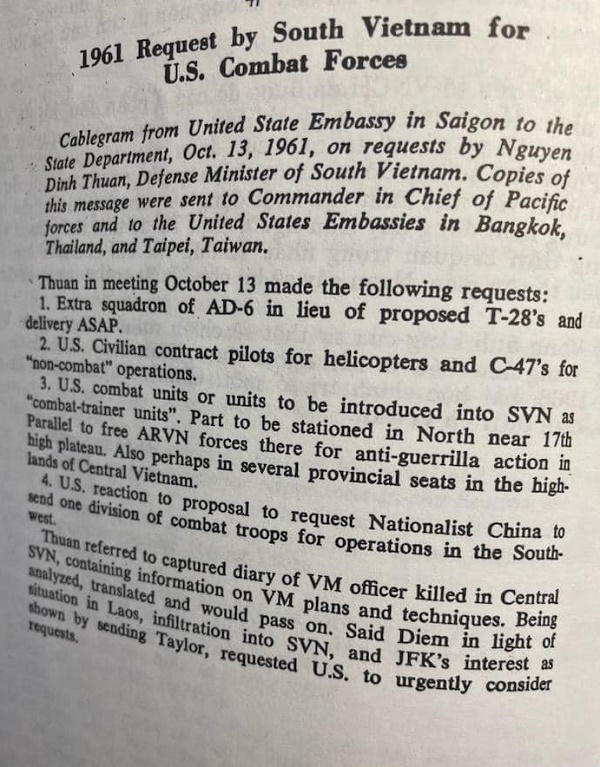
https://sachhiem.net/LICHSU/IMG/NGODD/1961XinQuanMy.jpg
Nguyen Huu Tri,
Governor of Northern Vietnam, 1952–1954; leader of the Dai Viet (Vietnamese political party).
Nguyen Van Tam,
Minister of the Interior of the State of Vietnam and Acting Governor of Northern Vietnam to June 3, 1952; Prime Minister of the State of Vietnam, June 3, 1952–December 17, 1953.
Pham Van Giao,
Deputy Prime Minister of the State of Vietnam, 1952; Governor of Central Vietnam, 1953–1954.
Salan, Général Raoul,
Commander of French Forces in Indochina, April 1, 1952–May 1953.
https://en.wikipedia.org/wiki/Raoul_Salan
https://www.britannica.com/biography/Raoul-Albin-Louis-Salan
https://www.britishpathe.com/asset/219896/
https://history.state.gov/historicaldocuments/frus1952-54v13p1/d21
http://saigon-vietnam.fr/raoul-salan_en.php
https://foreignlegion.info/1952-battle-of-na-san/
https://grokipedia.com/page/Raoul_Salan
https://historfiction.fandom.com/wiki/Raoul_Salan
Tran Van Huu,
Prime Minister of Vietnam to June 3, 1952.
https://en.wikipedia.org/wiki/Tr%E1%BA%A7n_V%C4%83n_H%E1%BB%AFu
https://history.state.gov/historicaldocuments/frus1952-54v16/d279
https://vietnamproject.archives.msu.edu/objects/159-547-2488/


No comments:
Post a Comment