20260717 CDTL NRM D17 27 February 1973 17. Bản ghi nhớ của Phụ tá Tổng thống NSA Kissinger gửi Tổng thống Nixon.
https://history.state.gov/historicaldocuments/frus1969-76v18/d17
Google Translated
Tài liệu số 17
Quan hệ Đối ngoại của Hoa Kỳ, 1969–1976, Tập XVIII, Trung Quốc, 1973–1976
17. Bản ghi nhớ của Phụ tá Tổng thống NSA Kissinger gửi Tổng thống Nixon.
Washington, ngày 27 tháng 2 năm 1973.
CHỦ ĐỀ
Chuyến công du châu Á của tôi
Chuyến đi của tôi tới Bangkok, Viêng Chăn, Hà Nội, Bắc Kinh và Tokyo đã diễn ra vào thời điểm thích hợp.
Chúng tôi vừa hoàn tất một thỏa thuận về vấn đề Việt Nam: Tôi đã có thể khẳng định với cả đồng minh lẫn đối phương rằng quý vị sẽ kiên quyết yêu cầu thực thi nghiêm túc Hiệp định, duy trì lực lượng trong khu vực để ngăn chặn các hành vi vi phạm, đồng thời gắn việc viện trợ kinh tế quan trọng với sự tuân thủ thỏa thuận.
Cuộc chiến vẫn tiếp diễn tại Lào và Campuchia:
Tôi đã nhấn mạnh sự cần thiết phải sớm đạt được lệnh ngừng bắn và việc rút quân của miền Bắc Việt Nam. Các cuộc thảo luận về Lào đã góp phần thúc đẩy lệnh ngừng bắn; trong khi đó, các cuộc thảo luận về Campuchia có thể mở đường cho một tiến trình đàm phán, song sự tham gia của nhiều lực lượng khác nhau khiến vấn đề này trở nên đặc biệt phức tạp.
Đây là sự khởi đầu nhiệm kỳ thứ hai của các bạn:
Tôi đã bày tỏ quyết tâm duy trì vai trò lãnh đạo mạnh mẽ trên thế giới trong bốn năm tới. Thông điệp này không chỉ trấn an bạn bè của chúng ta mà còn là yếu tố then chốt trong mối quan hệ đang phát triển của chúng ta với Bắc Kinh. Với Tầu cộng, chúng ta hiện đang bước vào một mối quan hệ mới tích cực với sự mở rộng đáng kể các liên hệ song phương và hợp tác ngầm trong cách tiếp cận toàn cầu của chúng ta. Với Bắc Việt Nam, chúng ta có thể đã đặt nền móng cho mối quan hệ tốt đẹp hơn; ít nhất chúng ta đã làm rõ rằng họ phải lựa chọn giữa kiềm chế, hòa giải và tái thiết một mặt, và lừa dối và đối đầu mặt khác.
Sau đây là những điểm nổi bật của mỗi điểm dừng chân của tôi.
[Phần thảo luận không liên quan đến Tầu cộng đã bị nhân viên Hội đồng An ninh Quốc gia lược bỏ.]
Trung Quốc
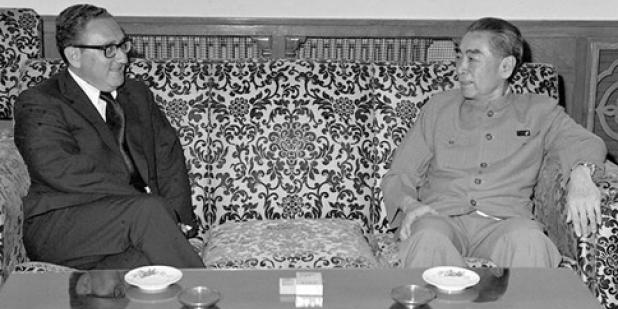
Tôi đã có các cuộc thảo luận kéo dài hai mươi giờ với Chu Ân Lai và gần hai giờ với Mao Trạch Đông, bên cạnh một số giờ trao đổi thân mật với Chu Ân Lai và các nhà lãnh đạo Tầu cộng khác. Tuân thủ khuôn khổ đã được xác lập rõ ràng từ chuyến thăm của Ngài, các cuộc thảo luận này diễn ra vô cùng thẳng thắn và nồng ấm. Với việc [Trang 204] vấn đề Việt Nam đã được giải quyết, sự đón tiếp lần này nồng hậu và thuận lợi hơn bao giờ hết. Các cuộc trò chuyện cho thấy rõ phía Tầu cộng rất quyết tâm thúc đẩy quan hệ giữa hai nước. Điều này cũng được thể hiện ra bên ngoài qua vô số biểu hiện cụ thể: cuộc gặp của tôi với Mao Trạch Đông được đưa tin nổi bật trên nửa trên trang nhất tờ *Nhân dân Nhật báo*, và một bộ phim về chuyến thăm của chúng tôi được phát sóng suốt mười hai phút trên đài truyền hình quốc gia. Lần đầu tiên, lực lượng bảo vệ đã chào đón chúng tôi khi chúng tôi bước vào Đại lễ đường Nhân dân và Nhà khách; máy bay của chúng tôi lăn bánh thẳng đến tận nhà ga, v.v.
Tôi sẽ gửi cho Ngài các bản ghi nhớ riêng về bầu không khí cũng như nội dung các cuộc thảo luận thực chất tại Bắc Kinh.
Dưới đây là những kết luận chính.
Chúng ta đang ở trong một tình thế đặc biệt: ngoại trừ Vương quốc Anh, Cộng hòa Nhân dân Trung Hoa có lẽ là quốc gia có quan điểm về thế giới gần gũi với chúng ta nhất. Không một nhà lãnh đạo thế giới nào khác có được tầm nhìn bao quát và trí tưởng tượng như Mao Trạch Đông và Chu Ân Lai, hay có đủ năng lực và ý chí để theo đuổi một chính sách dài hạn. Dù hệ tư tưởng và quan điểm lịch sử của hai bên có sự xung đột, các yếu tố khách quan vẫn thúc đẩy sự hợp tác ngầm trong ít nhất vài năm tới. Nếu mối đe dọa từ Liên Xô suy giảm và/hoặc Trung Quốc trở nên mạnh hơn theo thời gian, họ có thể sẽ chuyển sang chính sách đối đầu với cùng một sự kiên định tuyệt đối. Tuy nhiên, vào lúc này, họ cần chúng ta và lộ trình của họ đã được xác định.
Bắc Kinh đã chọn con đường bình thường hóa quan hệ chính nhờ vào sức mạnh của chúng ta. Chính việc khẳng định vai trò toàn cầu đầy trách nhiệm của Hoa Kỳ, cùng với những hành động kiên quyết khi cần thiết, đã thuyết phục được Cộng hòa Nhân dân Trung Hoa rằng Mỹ là một đối trọng hữu hiệu trước mối đe dọa từ Liên Xô. Quả thực, tình thế đã thay đổi hoàn toàn so với thời điểm tháng 7 năm 1971. Trong chuyến thăm đầu tiên tới Bắc Kinh, tôi đã phải nghe Thủ tướng Chu Ân Lai thuyết giảng về việc Mỹ đang "vươn tay can thiệp" khắp thế giới chẳng khác nào Liên Xô. Đúng là quan điểm của Tầu cộng khi đó đã thay đổi: họ cho rằng chủ nghĩa đế quốc Mỹ về cơ bản đã lùi vào dĩ vãng, trong khi chủ nghĩa đế quốc kiểu Liên Xô lại đang trỗi dậy mạnh mẽ. Tuy nhiên, trọng tâm chú ý của Tầu cộng vẫn là việc Mỹ rút quân khỏi châu Á; họ coi quan hệ quân sự Mỹ-Nhật là điều bất lợi; họ yêu cầu chúng ta rút khỏi Triều Tiên; họ đặc biệt quan tâm đến vấn đề Đài Loan; hầu như không đoái hoài gì đến châu Âu; và họ từng lo ngại rằng Mỹ có thể thông đồng với Liên Xô, Nhật Bản và Ấn Độ để xâu xé Tầu cộng.
Chúng ta đã đi một chặng đường rất dài. Bước ngoặt rõ ràng chính là những cuộc thảo luận của ông với Mao Trạch Đông và Chu Ân Lai, khi ông in đậm dấu ấn cá nhân lên định hướng của chúng ta. Những biểu hiện cụ thể về thế giới quan chung [Trang 205] đã lộ rõ trong chuyến thăm của tôi vào tháng 6 sau đó – như ông hẳn còn nhớ – nhưng cuộc chiến tranh Việt Nam vẫn kìm hãm các động thái của phía Tầu cộng. Đến chuyến đi này thì mọi rào cản đã được dỡ bỏ. Mao và Chu đặc biệt bận tâm về những ý đồ của Moscow. Khi vấn đề Việt Nam không còn là trở ngại và tuổi tác đã cao, họ đã trò chuyện với sự thẳng thắn tuyệt đối cùng thái độ vô cùng nồng hậu – điều được thể hiện rõ nét trong mọi khía cạnh của công tác đón tiếp chúng tôi.
Quan điểm của họ khác biệt rõ rệt so với thời điểm tháng 7 năm 1971. Thay vì bị chỉ trích vì sự hiện diện toàn cầu của mình, chúng tôi lại bị phê bình vì đã không hành động đủ mạnh mẽ để đối phó với áp lực từ phía Liên Xô. Mao Trạch Đông cho rằng lực lượng của chúng tôi bị dàn trải quá mỏng. Chu Ân Lai phàn nàn rằng chúng tôi hành động quá chậm chạp và thiếu quyết liệt tại các khu vực như Vịnh Ba Tư, Nam Á và Ấn Độ Dương. Chẳng hạn, ông thúc giục chúng tôi viện trợ quân sự cho Pakistan, hỗ trợ kinh tế cho Bangladesh, cũng như cải thiện quan hệ với Sri Lanka (Ceylon) và Nepal, v.v., nhằm đối trọng với Moscow và "tay sai" của họ là New Delhi. Tôi đã khẳng định với phía Tầu cộng về quyết tâm của ngài trong việc duy trì một chính sách đối ngoại mạnh mẽ, cũng như thiện chí của chúng tôi trong việc thực hiện một số bước đi cụ thể mà ông ấy đã đề nghị.
Mao và Chu cũng thúc giục chúng tôi hợp tác chặt chẽ hơn với Nhật Bản. Quan điểm của chúng tôi cho rằng Hiệp ước An ninh Mỹ-Nhật đóng vai trò kìm hãm chủ nghĩa quân phiệt Nhật Bản nay đã được chấp nhận. Tôi được khuyên nên dành nhiều hơn một ngày để tham vấn các nhà lãnh đạo Nhật Bản. Tôi đã trả lời rằng chúng tôi dự định duy trì mối quan hệ chặt chẽ với Tokyo và ủng hộ việc cải thiện quan hệ Trung-Nhật.
Ngay cả đối với vấn đề Đông Dương – nơi lập trường chính thức của hai bên tất yếu có sự khác biệt – chúng ta vẫn có chung lợi ích trong việc duy trì các quốc gia độc lập thay vì để Hà Nội thống trị với tư cách là tay sai của Liên Xô. Tôi đã nhấn mạnh quan điểm chủ đạo này cũng như sự cần thiết phải kiềm chế từ phía tất cả các bên. Chúng ta sẵn sàng bình thường hóa quan hệ với Hà Nội, nhưng chỉ khi họ thực hiện đúng các nghĩa vụ của mình và sẵn sàng theo đuổi các mục tiêu thông qua tiến trình chuyển biến chính trị. Tôi tin rằng Chu Ân Lai hiểu rõ các yêu cầu của chúng ta về vấn đề này, và Bắc Kinh chắc chắn không muốn thấy Hà Nội mạo hiểm gây ra một cuộc đối đầu mới với chúng ta. Về việc Tầu cộng cần kiềm chế trong vấn đề chuyển giao khí tài quân sự, Chu Ân Lai đã chỉ ra vai trò viện trợ áp đảo của Liên Xô, song tôi cho rằng chúng ta có thể kỳ vọng Tầu cộng sẽ có những bước điều chỉnh chừng mực hơn.
Tôi cũng nhấn mạnh sự cần thiết phải sớm đạt được lệnh ngừng bắn tại Lào và tiến hành đàm phán trực tiếp giữa các bên Campuchia. Về cơ bản, Tầu cộng vẫn giữ thái độ không can thiệp. Tuy nhiên, Chu Ân Lai tỏ rõ mong muốn sớm chấm dứt xung đột tại Lào và cam kết sẽ rút lực lượng phòng không cũng như các đội thi công đường bộ của Tầu cộng về nước sau khi con đường hoàn tất. Đối với vấn đề Campuchia, ông đã đưa ra vài nhận xét đầy vẻ hoài nghi về Sihanouk. Mối quan hệ giữa họ rõ ràng đã trở nên lạnh nhạt, mặc dù Chu Ân Lai vẫn đưa ra lời đề nghị mang tính thủ tục là tôi nên nói chuyện với Sihanouk – một đề nghị mà tôi đã từ chối. Ông đồng ý xem xét đề xuất của tôi về việc chính quyền Lon Nol đàm phán trực tiếp với đại diện của Sihanouk, và chúng tôi đồng ý [Trang 206] sẽ tiếp tục thông tin cho nhau về tình hình Campuchia thông qua kênh liên lạc tại New York.
Các cuộc thảo luận của chúng tôi về Hội nghị Quốc tế đã không mang lại kết quả cụ thể và cũng chẳng mấy khả quan. Tầu cộng sẽ hành động theo định hướng của Hà Nội; nghĩa là họ ủng hộ một hội nghị ngắn gọn, mang tính hình thức và chung chung, ít có tác động thực chất trong việc đảm bảo thỏa thuận về Việt Nam, đồng thời né tránh đề cập đến vấn đề Lào và Campuchia.
Chu Ân Lai bày tỏ mong muốn về một khu vực Đông Nam Á ổn định, bao gồm các quốc gia độc lập, nơi mà việc tiến hành cách mạng là trách nhiệm của chính người dân các nước đó. Phía Trung Quốc thậm chí không hề đưa ra dù chỉ là lời cam kết suông về việc ủng hộ những nỗ lực này. Tại đây—cũng như ở những nơi khác trên thế giới—Bắc Kinh coi trọng việc đối phó với các toan tính của Liên Xô và Ấn Độ hơn cả.
Chu không hề đả động đến vấn đề Triều Tiên cho đến tận cuối các cuộc thảo luận của chúng tôi. Ông ta chỉ đưa ra một đề nghị mang tính hình thức về việc Mỹ rút quân dần dần. Hầu như không có cuộc thảo luận nào về Đài Loan, và nếu có thì cũng chỉ là do tôi chủ động nêu ra. Khi tôi trình bày ý định của ngài về việc rút quân, Chou tỏ ý coi nhẹ, cho rằng thời điểm rút quân là vấn đề mà họ không mấy bận tâm.
Châu Âu hiện là mối quan tâm lớn của Bắc Kinh. Một loạt các nhà lãnh đạo châu Âu đã đến thăm Tầu cộng và Bộ trưởng Ngoại giao nước này cũng đang thực hiện chuyến công du tại khu vực đó. Phía Trung Quốc lo ngại rằng châu Âu đang bị mê hoặc bởi những ảo tưởng hòa bình do Liên Xô cổ xúy, và do đó sẽ không còn đóng vai trò là một nhân tố trong thế cân bằng toàn cầu. Chou đã so sánh sự lớn mạnh về kinh tế của châu Âu với sự yếu kém về mặt quân sự của khu vực này. Tóm lại, Trung Quốc nhìn nhận tình trạng hòa hoãn giả tạo trong khu vực này là yếu tố giúp giải phóng sườn phía Tây của Nga và "đẩy luồng nước độc hại của Liên Xô sang phía Đông".
Tôi nhấn mạnh rằng chúng tôi không hề ảo tưởng về những toan tính của Liên Xô tại châu Âu. Chúng tôi sẽ cố gắng để Hội nghị An ninh châu Âu diễn ra ngắn gọn và không mang lại kết quả thực chất nào. Chúng tôi sẽ tận dụng tiến trình MBFR (Cắt giảm Lực lượng Chung và Cân bằng) để giúp các đồng minh nhận thức rõ về mối đe dọa quân sự cũng như sự cần thiết phải luôn cảnh giác, đồng thời để hóa giải áp lực từ Quốc hội Mỹ đòi rút quân đơn phương. Mọi đợt cắt giảm lực lượng theo khuôn khổ MBFR sẽ không diễn ra trước năm 1975 và mức cắt giảm sẽ không vượt quá 10–15%. Chúng tôi sẽ khuyến khích sự thống nhất về chính trị và an ninh tại châu Âu. Ngoài ra, chúng tôi cũng hoan nghênh việc Tầu cộng giúp giới lãnh đạo thiển cận của châu Âu "sáng mắt ra".
Cuối cùng, mặc dù lên tiếng cảnh báo về các mối quan hệ của chúng ta với Liên Xô, Mao và Chu vẫn thẳng thắn bác bỏ mọi nghi ngại về ý đồ của Mỹ đối với Tầu cộng, đồng thời thúc giục tăng cường quan hệ giữa Mỹ và CHND Trung Hoa. Như vậy, bên cạnh việc khuyến khích Mỹ duy trì sự hiện diện mạnh mẽ trên trường quốc tế, họ cũng rất mong muốn đẩy mạnh quan hệ song phương trên mọi lĩnh vực. Họ không chỉ chấp thuận đề nghị của chúng ta về việc mở văn phòng liên lạc của Mỹ tại Bắc Kinh, mà còn đề xuất mở văn phòng tương ứng của họ tại Washington. Các văn phòng phi ngoại giao này sẽ được thành lập vào tháng Năm. Mao và Chu cũng thúc đẩy việc mở rộng giao thương giữa hai bên. Họ đã nhất trí triển khai một chương trình trao đổi quy mô lớn, cụ thể và mang tính hai chiều trong các lĩnh vực khoa học, văn hóa cùng nhiều lĩnh vực khác.
Họ nhấn mạnh sự cần thiết phải tăng cường đi lại và việc học tiếng Anh. Những bước tiến tích cực này [Trang 207] đã được phản ánh trong Thông cáo Chung của chúng tôi. Điển hình là họ đã chấp nhận bản dự thảo của chúng tôi gần như nguyên văn; trong khi với hầu hết các quốc gia khác, thường sẽ có ít nhiều sự mặc cả, ngay cả khi văn bản đó nhìn chung đã có thể chấp nhận được. Ngoài ra, Chu Ân Lai còn thông báo với tôi rằng hai phi công Mỹ bị bắt giữ khi đang thực hiện các nhiệm vụ liên quan đến Việt Nam sẽ được trả tự do trong thời hạn 60 ngày theo quy định của Hiệp định về Việt Nam; còn Downey, nhân viên CIA, sẽ được thả vào giai đoạn sau của năm nay.
Trong bối cảnh đó, những yếu tố sau đây là thiết yếu đối với chính sách của chúng ta đối với CHND Trung Hoa:
—Chúng ta cần tiếp tục duy trì sự cẩn trọng và chu đáo trong các hoạt động song phương. Việc chúng ta thường xuyên thông báo cho Bắc Kinh về những diễn biến chính sách quan trọng rõ ràng đã mang lại kết quả tích cực. Chúng ta đã thể hiện thiện chí nhất quán trong việc cân nhắc quan điểm của CHND Trung Hoa và phối hợp hành động song song bất cứ khi nào có thể. Cách tiếp cận này đã giúp củng cố lòng tin của Bắc Kinh; nếu lơi lỏng vào lúc này, chúng ta sẽ làm xói mòn tài sản quý giá đó.
—Chúng ta cần thể chế hóa mối quan hệ này. Như đã trình bày ở trên, chuyến thăm này đã tạo ra những bước tiến đáng kể theo hướng đó. Việc thiết lập các văn phòng liên lạc cùng sự gia tăng mạnh mẽ về thương mại và giao lưu sẽ là minh chứng rõ nét cho mối quan hệ ngày càng phát triển giữa hai bên—một thực tế mà các bên khác buộc phải tính đến. Đồng thời, những bước đi này cũng giúp người dân hai nước dần làm quen với một mối quan hệ toàn diện, qua đó đặt nền móng vững chắc để duy trì quan hệ ngay cả khi ban lãnh đạo cao tuổi của Tầu cộng rời nhiệm sở và khi một chính quyền mới của Mỹ lên nắm quyền sau bốn năm nữa.
—Chúng ta cần tiếp tục đóng vai trò mạnh mẽ trên trường quốc tế, đặc biệt là tại châu Á. Một nước Mỹ yếu kém hay thụ động sẽ chẳng mang lại lợi ích gì cho CHND Trung Hoa. Mao và Chu rõ ràng đã rất ấn tượng trước các chính sách mạnh mẽ cũng như sự sẵn sàng đưa ra những quyết định cứng rắn của ông bất chấp áp lực trong nước. Nếu phía Tầu cộng thấy chúng ta quay vào bên trong hay đánh mất ý chí, họ sẽ tìm kiếm những phương thức khác để đối phó với mối đe dọa từ "những Sa hoàng mới". Khi đó, rất có thể họ sẽ quay sang chú trọng vào yếu tố ý thức hệ.
—Chúng ta cần hết sức thận trọng trong các chính sách đối với Moscow và New Delhi. Đây hiện là hai mối đe dọa chính đối với Bắc Kinh; sau khi rơi vào tình trạng gần như bị cô lập hoàn toàn cách đây vài năm, CHND Trung Hoa đã chọn cách bình thường hóa quan hệ với chúng ta và Tokyo. Cả Mao Trạch Đông và Chu Ân Lai đều bày tỏ sự nghi ngại rằng—dù có chủ ý hay không—chúng ta có thể góp phần gia tăng sức ép lên Tầu cộng. Do đó, mặc dù không nên để chính sách đối với Liên Xô và Ấn Độ bị tê liệt—và thực tế là chúng ta có những lợi ích rất quan trọng cần giải quyết với Moscow—chúng ta vẫn cần hành động một cách thận trọng, cân nhắc kỹ lưỡng và giữ cho phía Tầu cộng được thông tin đầy đủ.
Sự đón tiếp và các cuộc trao đổi trong chuyến đi này khiến tôi tin chắc rằng CHND Trung Hoa đã xác định rõ lộ trình của mình: công khai hướng tới bình thường hóa quan hệ và ngầm định vai trò như một đồng minh. Họ sẵn sàng hành động nhanh chóng—trong bối cảnh mối đe dọa từ Liên Xô [Trang 208] đang gia tăng, Chiến tranh Việt Nam đã kết thúc, và vấn đề tuổi tác đang đặt ra thách thức cho giới lãnh đạo Tầu cộng. Nếu chúng ta tiến hành một cách thận trọng và lưu tâm đến những yếu tố đã nêu trên, chúng ta sẽ mở ra một mối quan hệ hoàn toàn mới, hứa hẹn sẽ duy trì xuyên suốt nhiệm kỳ thứ hai của Ngài.
1. Nguồn: Cơ quan Lưu trữ Quốc gia, Tài liệu Tổng thống Nixon, Hồ sơ NSC, Hồ sơ Văn phòng Kissinger, Hồ sơ Quốc gia, Viễn Đông, Hộp 98, Chuyến thăm Trung Quốc của HAK, Biên bản thảo luận & Báo cáo (bản gốc), tháng 2 năm 1973. Tuyệt mật; Nhạy cảm; Chỉ dành cho người có thẩm quyền trực tiếp xem (Exclusively Eyes Only). Được gửi để thông tin. Không có dấu hiệu nào trên bản ghi nhớ cho thấy Nixon đã xem tài liệu này.↩
2. Xem Tài liệu 18. Vào ngày 2 tháng 3, Kissinger cũng gửi cho Nixon một bản ghi nhớ về "Bầu không khí trong chuyến thăm Bắc Kinh của tôi." (Cơ quan Lưu trữ Quốc gia, Tài liệu Tổng thống Nixon, Hồ sơ NSC, Hồ sơ Văn phòng Kissinger, Hộp 98, Hồ sơ Quốc gia, Viễn Đông, Chuyến thăm Tầu cộng của HAK, Biên bản thảo luận & Báo cáo (bản gốc), tháng 2 năm 1973). Báo cáo của Kissinger về cuộc gặp với Mao Trạch Đông vào ngày 24 tháng 2 cũng nằm trong cùng nguồn tài liệu này.↩
3. Xem chú thích 2, Tài liệu 14.↩
https://history.state.gov/historicaldocuments/frus1969-76v18/sources
https://history.state.gov/historicaldocuments/frus1969-76v18/terms
https://history.state.gov/historicaldocuments/frus1969-76v18/persons
https://history.state.gov/historicaldocuments/frus1969-76v18/comp1
https://history.state.gov/historicaldocuments/frus1969-76v18/ch1
1. Document 17
Foreign Relations of the United States, 1969–1976, Volume XVIII, China, 1973–1976
17. Memorandum From the President’s Assistant for National Security Affairs(Kissinger) to President Nixon1
Washington, February 27, 1973.
SUBJECT
- My Asian Trip
My trip to Bangkok, Vientiane, Hanoi, Peking, and Tokyo was timely.
We have just concluded a Vietnam settlement: I was able to tell ally and adversary alike that you will insist on strict implementation of the Agreement, maintain forces in the region to deter violation, and key economic aid to compliance.
The war continued in Laos and Cambodia: I stressed the need for early ceasefires and North Vietnamese withdrawals. The conversations on Laos served to hasten the ceasefire; the ones on Cambodia may lead to a negotiating process, but the many forces at play make this problem especially difficult.
This is the start of your second term: I expressed your determination to maintain a strong world leadership role the next four years. This message not only reassured our friends but also remains the key element in our developing relations with Peking. With the Chinese we are now entering into a positive new relationship of greatly expanded bilateral contacts and tacit cooperation in our global approach. With the North Vietnamese we may have laid the foundation for better relations; we have at least made clear that they must choose between restraint, reconciliation and reconstruction on the one hand and cheating and confrontation on the other.
Following are the highlights of each of my stops.
[Omitted here is discussion unrelated to China that was excised by the NSC staff.]
China
I had twenty hours of talks with Chou and almost two with Mao in addition to several informal hours with Chou and other Chinese leaders. Following within the framework which your trip clearly established, these talks were exceedingly frank and cordial. With the [Page 204] Vietnam settlement behind us, the reception was the warmest and easiest ever. The conversations made clear that the Chinese are bent on accelerating our relationship. This was reflected outwardly as well in innumerable ways. My meeting with Mao was splashed across the top half of the People’s Daily and a film on our trip ran for twelve minutes on national television. Guards saluted us for the first time as we entered the Great Hall and our Guest House. Our plane taxied right up to the terminal, etc., etc.
I will send you separate memoranda on the atmospherics and substantive discussions in Peking.2 Following are the main conclusions.
We are now in the extraordinary situation that, with the exception of the United Kingdom, the PRC might well be closest to us in its global perceptions. No other world leaders have the sweep and imagination of Mao and Chou nor the capacity and will to pursue a long range policy. Our ideologies and views of history clash, but objective factors induce tacit cooperation for at least several years. If the Soviet danger fades and/or China becomes stronger over a period of time, the Chinese could follow an antagonistic policy with the same single-mindedness. For now, however, they need us, and their course is set.
Peking has chosen normalization because of our strength. It is precisely your assertion of a responsible American world role and taking strong measures when necessary that has convinced the PRC that the U.S. is a useful counterweight to the Soviet menace. Indeed, we have come full circle since July 1971. In my first trip to Peking I was treated to dissertations by Chou on our “stretching out our hands” around the world like the Soviet Union. It is true that Chinese perceptions had already evolved to the point that American imperialism was largely in the past while the Soviet variety was in full bloom. But the Chinese emphasis was nevertheless on American withdrawals from Asia; the Japan-U.S. military ties were at a minimum unhelpful; we were told to get out of Korea; there was considerable attention to Taiwan; there was almost no interest in Europe; and the U.S. might be capable of colluding with the USSR, Japan and India to carve up China.
We have come a very long way. The watershed clearly was your discussions with Mao and Chou when you stamped your personal imprint on our course. Substantial manifestation of our shared world view [Page 205] showed up in my subsequent June visit, as you will recall, but the Vietnam war still inhibited Chinese moves. On this trip the floodgates opened. Mao and Chou were obsessed by Moscow’s intentions. With Vietnam out of the way as an obstacle and age closing in, they spoke with complete candor and an extreme cordiality which was reflected in every facet of our reception.
The contrast of their views with July 1971 was remarkable. Rather than being scolded for our global presence we were scolded for not doing enough to counter Soviet pressures. Mao said our forces were spread too thin. Chou complained that we were too slow and too slack in such areas as the Persian Gulf, South Asia and the Indian Ocean. For example, he urged us to give military aid to Pakistan, grant economic aid to Bangladesh, improve relations with Sri Lanka (Ceylon) and Nepal, etc. in order to oppose Moscow and its agent, New Delhi. I assured the Chinese of your determination to maintain a strong foreign policy and our willingness to undertake some of the specific steps he recommended.
Mao and Chou also urged us in work more closely with Japan. Our view that the U.S.-Japanese Security Treaty serves to brake Japanese militarism has now been accepted. I was told that I should be spending more than one day consulting with Japanese leaders. I responded that we intended to continue our close relationship with Tokyo and favored improvement of Chinese-Japanese relations.
Even on Indochina, where our formal positions inevitably differ, we share a common interest in independent states rather than dominance by Hanoi as an agent of the Soviet Union. I stressed this general theme and the need for restraint by all parties. We were prepared to normalize relations with Hanoi but only if it honored its obligations and was prepared to pursue its objectives through political evolution. I think Chou clearly understands our requirements in this regard, and Peking can have no interest in Hanoi’s risking renewed confrontation with us. As for the need for Chinese restraint in military shipments, Chou pointed to the much more dominant Soviet aid role, but I think we can expect some Chinese moderation.
I also emphasized the need for an early ceasefire in Laos and direct negotiations among the Cambodians. The Chinese approach remained essentially hands-off. However, Chou clearly favored an early end to hostilities in Laos, and promised them to pull out Chinese anti-aircraft and withdraw their road-building teams when the road is completed. On Cambodia, he introduced some cynical remarks about Sihanouk. There is a definite cooling off in their relationship though Chou made a pro forma pitch for me to talk to Sihanouk which I rejected. He agreed to study my suggestion that Lon Nol’s government talk directly to Sihanouk’s representatives, and we agreed [Page 206] to keep each other informed on Cambodia through our New York channel.
Our talks on the International Conference were inconclusive and not very encouraging. the PRC will follow Hanoi’s lead which means they will favor a brief, anodyne Conference which would do little concrete to guarantee the Vietnam settlement and would avoid Laos and Cambodia.
Chou expressed their desire for a stable Southeast Asian region in general made up of independent countries. It was up to the people of those countries to bring about revolution. Not even lip service was paid to PRC support of such efforts. Here—as elsewhere around the globe—Peking finds it more important to counter Soviet and Indian designs.
Chou didn’t mention Korea until the very end of our discussions. He made only a pro forma pitch for gradual U.S. withdrawal. There was virtually no discussion of Taiwan and only then at my initiative. When I outlined your intentions on troop withdrawals, Chou shrugged this off, saying the timing was a matter of indifference to them.
Europe is now a major concern to Peking. A series of European leaders have visited China and the PRC Foreign Minister is undertaking a tour there. The Chinese are worried that Europe is being beguiled by the Soviet-sponsored illusions of peace and will thus cease to be a factor in the global balance. Chou contrasted Europe’s growing economic strength with its military weakness. In short, the Chinese see a false détente in the region freeing the Russians’ Western flank and “pushing the ill waters of the Soviet Union eastward.”
I emphasized that we had no illusions about Soviet motives in Europe. We would try to keep the European Security Conference brief and meaningless. We would use MBFR to educate our allies about the military threat and need for vigilance, as well as to fend off Congressional pressures for unilateral American withdrawals. Any MBFR reductions would not be before 1975 and not exceed 10–15%. We would encourage European political and security unity. And we welcomed Chinese education of Europe’s short-sighted leadership.
Finally, Mao and Chou, though they sounded warnings about our dealings with the Soviet Union, clearly dismissed any American designs on China and urged closer U.S.-PRC relations. Thus, in addition to encouraging a vigorous U.S. international presence, they were anxious to step up our bilateral relationship in every field. They not only accepted our proposal for an American liaison office in Peking, they proposed one of their own in Washington. These non-diplomatic offices will be established by May. Mao and Chou urged greater trade between us. They agreed to a large, specific, and two-way program of exchanges in the scientific, cultural and other fields. They pointed up the need for increased travel and the learning of English. These positive [Page 207] steps were reflected in our Joint Communiqué.3 Typically, they accepted our draft almost verbatim; with most countries there would have been at least some haggling, even if the document was generally acceptable. In addition, Chou informed me that the two American pilots captured while on Vietnam-related missions will be released within the 60-day period of the Vietnam Agreement; and Downey, the CIA agent, will be set free the latter part of this year.
Against this background, the following elements are essential in our policy toward the PRC:
- —We must continue being meticulous in our bilateral dealings. Our practice of keeping Peking informed of major policy developments has clearly paid off. We have shown a consistent willingness to take PRC views into account and act in parallel where possible. This approach has helped to gain Peking’s confidence and to slacken it now would erode this precious commodity.
- —We need to institutionalize our relationship. As explained above, this trip produced significant advances in this respect. The liaison offices and accelerated trade and exchanges will provide visible evidence of our growing ties which others will have to take into account. They also serve to accustom our two peoples to full-scale relations and lay a foundation that should survive the departure of China’s aging leadership and a new American Administration four years hence.
- —We must continue to play a strong world role, especially in Asia. A weak or passive America is of no use to the PRC. Mao and Chou have clearly been impressed with your strong policies and willingness to take tough decisions despite domestic pressures. If the Chinese see us turn inward or lose our will, they will cast about for other ways to deal with the threat of the “new czars.” In that case they might as well emphasize ideology.
- —We need to be very careful in our policies toward Moscow and New Delhi. These are now the two principal threats for Peking; faced with almost total isolation a couple of years ago, the PRC has opted for normalization with us and Tokyo. Mao and Chou both voiced suspicion that, whether or not by design, we could contribute to pressures on China. Therefore while we should not be paralyzed in our Soviet and India policies—and indeed with Moscow we have very important business—we will need to be deliberate and keep the PRC informed.
Our reception and conversations on this trip convince me that the PRC has firmly set its course: explicitly toward normalization and tacitly as ally. They are ready to move quickly—with the Soviet threat [Page 208] growing, the Vietnam war over, and age crowding the Chinese leadership. If we proceed carefully and observe elements such as those listed above, we are now launched on a totally new relationship that should last through your second Administration.
1. Source: National Archives, Nixon Presidential Materials, NSC Files, Kissinger Office Files, Country Files, Far East, Box 98, HAK China Trip, Memcons & Reports (originals), February 1973. Top Secret; Sensitive; Exclusively Eyes Only. Sent for information. There are no markings on the memorandum indicating that Nixon saw it.↩
2. See Document 18. On March 2, Kissinger also sent Nixon a memorandum on the “Atmospherics of My Trip to Peking.” (National Archives, Nixon Presidential Materials, NSC Files, Kissinger Office Files, Box 98, Country Files, Far East, HAK China Trip, Memcons & Reports (originals), February 1973) Kissinger’s report on his meeting with Mao, February 24, is also ibid.↩
3. See footnote 2, Document 14.↩
https://history.state.gov/historicaldocuments/frus1969-76v18/d17
https://history.state.gov/historicaldocuments/frus1969-76v18/pg_204
https://history.state.gov/historicaldocuments/frus1969-76v18/pg_205
https://history.state.gov/historicaldocuments/frus1969-76v18/pg_206
https://history.state.gov/historicaldocuments/frus1969-76v18/pg_207
https://history.state.gov/historicaldocuments/frus1969-76v18/pg_208
https://history.state.gov/historicaldocuments/frus1969-76v18/d14fn2
Thân thế (các) nhân vật
Premier of the People’s Republic of China; member, Standing Committee of the Chinese Communist Party’s Political Bureau
https://en.wikipedia.org/wiki/Zhou_Enlai
https://en.wikipedia.org/wiki/Premier_of_the_People%27s_Republic_of_China
https://en.wikipedia.org/wiki/Minister_of_Foreign_Affairs_of_the_People%27s_Republic_of_China
https://en.wikipedia.org/wiki/Vice_Chairman_of_the_Chinese_Communist_Party
https://en.wikipedia.org/wiki/Vice_Chairman_of_the_Chinese_Communist_Party
https://en.wikipedia.org/wiki/Chairman_of_the_Chinese_People%27s_Political_Consultative_Conference
https://history.state.gov/historicaldocuments/frus1969-76v17/d139
https://digitalarchive.wilsoncenter.org/document/zhou-enlai-talking-ho-chi-minh
https://digitalarchive.wilsoncenter.org/search?f[0]=topics:86538&fo[0]=86538
Tài liệu Chu Ân Lai yêu cầu Hoa Kỳ loại bỏ Tổng Thống Nguyễn Văn Thiệu và dùng Dương Văn Minh để lật đổ hai nền Đệ I và Đệ II VNCH.
https://digitalarchive.wilsoncenter.org/document/discussion-between-zhou-enlai-and-le-duc-tho
https://digitalarchive.wilsoncenter.org/document/89367/download
Henry A Kissinger
Assistant to the President for National Security Affairs until November 3, 1975; also Secretary of State from September 21, 1973
https://www.theguardian.com/world/2023/may/20/bilderberg-meeting-group-lisbon-kissinger
https://www.theguardian.com/world/bilderberg
https://history.state.gov/historicaldocuments/frus1969-76ve13/summary
https://china.usc.edu/getting-beijing-henry-kissingers-secret-1971-trip
https://china.usc.edu/catalog/documents/us-china
http://www.archives.gov/press/press-releases/2001/nr01-47.html
https://china.usc.edu/talking-points-july-22-august-3-2011
https://china.usc.edu/getting-beijing-henry-kissingers-secret-1971-trip#meetings
https://china.usc.edu/getting-beijing-henry-kissingers-secret-1971-trip#nixon-announcement
https://china.usc.edu/getting-beijing-henry-kissingers-secret-1971-trip#chinese-accept
https://china.usc.edu/getting-beijing-henry-kissingers-secret-1971-trip#signals
https://china.usc.edu/getting-beijing-henry-kissingers-secret-1971-trip#the_aim
http://www.foreignaffairs.com/articles/23927/richard-m-nixon/asia-after-viet-nam
https://history.state.gov/historicaldocuments/frus1969-76v17/d4
https://history.state.gov/historicaldocuments/frus1969-76v17/d12
https://history.state.gov/historicaldocuments/frus1969-76v17/d13
https://history.state.gov/historicaldocuments/frus1969-76v17/d141
https://2001-2009.state.gov/documents/organization/100324.pdf
https://en.wikipedia.org/wiki/Henry_Kissinger_and_the_Vietnam_War
Lesson in Vietnam from Kissinger to Nixon: “when we made it “our war” we would not let the South Vietnamese fight it; when it again became “their war”, we would not help them fight it.”
(We also had trouble with excesses here: when we made it “our war” we would not let the South Vietnamese fight it; when it again became “their war,” we would not help them fight it. Ironically, we prepared the South Vietnamese for main force warfare after 1954 (anticipating another Korean-type attack), and they faced a political war; they had prepared themselves for political warfare after 1973 only to be faced with a main force invasion 20 years after it had been expected.)
https://history.state.gov/historicaldocuments/frus1969-76v10/d280
Lesson of Vietnam May 12 1975 by Henry A. Kissinger
https://www.fordlibrarymuseum.gov/library/exhibits/vietnam/032400091-002.pdf
https://thebattleofkontum.com/extras/kissinger.html
“Richard M. Nixon and Kissinger on 3 August 1972,” Conversation 760-006, Presidential Recordings Digital Edition [Fatal Politics, ed. Ken Huges] (Charlottesville: University of Virginia Press, 2014-). URL:https://prde.upress.virginia.edu/conversations/4006748
https://player.vimeo.com/video/889937807?h=e44572c8f3&color=e57200&title=0&byline=0&portrait=0
https://player.vimeo.com/video/889937807?h=e44572c8f3&color=e57200&title=0&byline=0&portrait=0
Discover the Truth at:
https://www.theblackvault.com/documentarchive/the-cias-vietnam-document-cd-rom/
The secret life of Henry Kissinger minutes of a 1975 meeting with Lawrence Eagleburger
https://etan.org/news/kissinger/secret.htm
Henry Kissinger and the Truth About Negotiations In Vietnam
https://www.youtube.com/watch?v=Z5fxxKVfX5g
Henry Kissinger - Secrets of a superpower | DW Documentary
https://www.youtube.com/watch?v=bWVMTKeAwlA
The Untold Truth of Henry Kissinger
https://www.youtube.com/watch?v=0iheZdvWdbI&t=1s
Was Henry Kissinger a War Criminal?
https://www.youtube.com/watch?v=COqq7862wcU&t=25s
General, Cambodian Prime Minister and Minister of National Defense, June 1969; led coup that deposed Prince Norodom Sihanouk in March 1970; Prime Minister and Minister of National Defense after March 18, 1970; President of Khmer Republic from 1972 until 1975
Nixon Richard M.,
Vice President of the United States
https://www.history.com/topics/us-presidents/richard-m-nixon
https://www.britannica.com/event/Watergate-Scandal
https://soundcloud.com/the-miller-center-at-uva/14-nov-68-lbj-and-nixon
https://en.wikipedia.org/wiki/Richard_Nixon
https://soundcloud.com/the-miller-center-at-uva
https://www.britannica.com/event/Vietnam-War
https://en.wikipedia.org/wiki/Richard_Nixon
http://www.pbs.org/wgbh/amex/honor/peopleevents/e_paris.html
https://www.britannica.com/event/Vietnam-War
http://www.nytimes.com/2016/12/31/opinion/sunday/nixons-vietnam-treachery.html
http://www.nytimes.com/interactive/2016/12/31/opinion/sunday/haldeman-notes.html
http://www.bbc.com/news/magazine-21768668
https://www.nixonlibrary.gov/index.php
https://history.state.gov/historicaldocuments/frus1964-68v07/ch5
https://www.lovethetruth.com/books/13_bloodlines/bundy.htm
https://www.lovethetruth.com/books/13_bloodlines/toc.htm
Nixon, Richard M.,
President of the United States
https://2001-2009.state.gov/documents/organization/100324.pdf
https://www.history.com/topics/us-presidents/richard-m-nixon
https://www.britannica.com/event/Watergate-Scandal
https://soundcloud.com/the-miller-center-at-uva/14-nov-68-lbj-and-nixon
https://en.wikipedia.org/wiki/Richard_Nixon
https://soundcloud.com/the-miller-center-at-uva
https://www.britannica.com/event/Vietnam-War
https://en.wikipedia.org/wiki/Richard_Nixon
http://www.pbs.org/wgbh/amex/honor/peopleevents/e_paris.html
https://www.britannica.com/event/Vietnam-War
http://www.nytimes.com/2016/12/31/opinion/sunday/nixons-vietnam-treachery.html
http://www.nytimes.com/interactive/2016/12/31/opinion/sunday/haldeman-notes.html
http://www.bbc.com/news/magazine-21768668
https://www.nixonlibrary.gov/index.php
https://history.state.gov/historicaldocuments/frus1964-68v07/ch5
https://www.lovethetruth.com/books/13_bloodlines/bundy.htm
https://www.lovethetruth.com/books/13_bloodlines/toc.htm
Nixon had a Trip to China from February 21 to 28 1972,
https://www.nixonlibrary.gov/nixons-trip-china
http://www.presidentialtimeline.org/
https://www.nixonlibrary.gov/sites/default/files/virtuallibrary/tapeexcerpts/china-656-10a.pdf
https://www.nixonlibrary.gov/sites/default/files/virtuallibrary/tapeexcerpts/china-656-10b.pdf
https://www.nixonlibrary.gov/sites/default/files/virtuallibrary/tapeexcerpts/china-92-1a.pdf
https://www.nixonlibrary.gov/sites/default/files/virtuallibrary/tapeexcerpts/china-92-1b.pdf
https://www.nixonlibrary.gov/sites/default/files/virtuallibrary/tapeexcerpts/china-21-56.pdf
https://www.nixonlibrary.gov/sites/default/files/virtuallibrary/tapeexcerpts/china-656-10a.mp3
https://www.nixonlibrary.gov/sites/default/files/virtuallibrary/tapeexcerpts/china-656-10b.mp3
https://www.nixonlibrary.gov/sites/default/files/virtuallibrary/tapeexcerpts/china-92-1a.mp3
https://www.nixonlibrary.gov/sites/default/files/virtuallibrary/tapeexcerpts/china-92-1b.mp3
https://www.nixonlibrary.gov/sites/default/files/virtuallibrary/tapeexcerpts/china-21-56.mp3
https://nsarchive.gwu.edu/briefing-book/nuclear-vault-vietnam/2023-03-24/movement-and-madman
The Vietnam War Johnson and Nixon Administrations Videos
March 2, 2016 Last Aired May 5, 2016
https://www.c-span.org/program/the-presidency/reflections-on-richard-nixon/431130
July 16, 1973 Last Aired July 22, 2013
Senate Watergate Committee Testimony
https://www.c-span.org/program/vignette/senate-watergate-committee-testimony/316346
April 26, 2016 Last Aired June 5, 2016
Vietnam War Commander in Chief
https://www.c-span.org/program/american-history-tv/vietnam-war-commanders-in-chief/439971
June 12, 2008 Last Aired July 22, 2013
Alexander Butterfield Oral History Interview, Part 2
June 12, 2008 Last Aired July 15, 2013
Alexander Butterfield Oral History Interview, Part 1
January 27, 2012 Last Aired June 11, 2012
President Nixon's Secret White House Tapes
https://www.c-span.org/program/american-history-tv/president-nixons-secret-white-house-tapes/277123
July 25, 1994 Last Aired June 20, 2008
Watergate: Corruption of American Politics
https://www.c-span.org/program/public-affairs-event/watergate-corruption-of-american-politics/119480
February 16, 2003 Last Aired December 25, 2003
Presidential Tapes: Taping Systems History
https://www.c-span.org/program/public-affairs-event/presidential-tapes-taping-systems-history/122572
Alexander Butterfield: The 60 Minutes Watergate Interview (1975)
https://www.youtube.com/watch?v=ss9AkLUmM4g
Watergate Hearing: Alexander Butterfield Testimony
Alexander Butterfield Was ‘Worried To Death’ Testifying Against Nixon
https://www.youtube.com/watch?v=c52oIe3Gj6w
How Nixon’s Invasion of Cambodia Triggered a Check on Presidential Power
Vietnam War Cambodia and Laos
https://www.history.com/articles/nixon-war-powers-act-vietnam-war-cambodia
Nixon's Vietnam Visit 1965, Rare Film Unearthed
https://www.youtube.com/watch?v=RaTi8OEpINI
Nixon on LBJ and Vietnam: Where Did It All Go Wrong?
https://www.youtube.com/watch?v=-n-4o3vOYD4
1969 July 30_Tổng Thống Hoa Kỳ 🇺🇸 Richard M. Nixon Thăm Việt Nam Cộng Hoà.
https://www.youtube.com/watch?v=ZRp4v6M6YJw&t=19s
Norodom Sihanouk,
King of Cambodia to March 1955, thereafter Prince of Cambodia; Prime Minister and Foreign Minister, October 1955–January 1956; Prime Minister, Foreign Minister, and Minister of the Interior, March–April 1956; Prime Minister, September–October 1956; Prime Minister, Foreign Minister, Minister of Plans, and Minister of the Interior, April–July 1957
Cambodian Head of State until March 1970; thereafter, leader of Cambodian Government in exile in Beijing
Prince, Head of State of Cambodia until March 18, 1970; thereafter, leader of the Cambodian government-in-exile in Beijing (GRUNK)
4/11/75 - Phnom Penh Evacuation


/https:/tf-cmsv2-smithsonianmag-media.s3.amazonaws.com/filer/f4/cb/f4cb92c9-4131-4e0f-ae4a-307144393214/nixoncampaigns.jpg)
No comments:
Post a Comment