20260710 CDTL NRM D11 17 February 1973 11. Biên bản ghi chép cuộc trao đổi.
https://history.state.gov/historicaldocuments/frus1969-76v18/d11
Google Translated
Tài liệu số 11
Quan hệ Đối ngoại của Hoa Kỳ, 1969–1976, Tập XVIII, Trung Quốc, 1973–1976
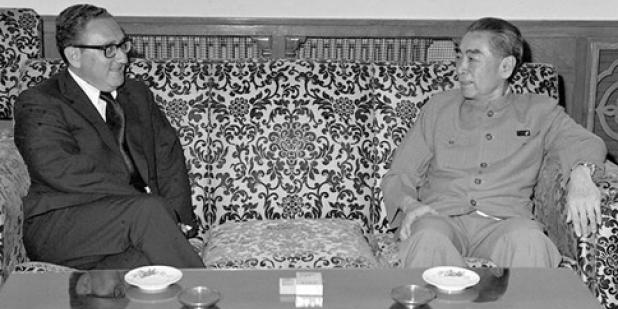
11. Biên bản ghi chép cuộc trao đổi.
Bắc Kinh, ngày 17 tháng 2 năm 1973, 22:22–23:10.
THÀNH PHẦN THAM DỰ
Chu Ân Lai, Thủ tướng Quốc vụ viện
Cơ Bằng Phi, Bộ trưởng Ngoại giao
Kiều Quán Hoa, Thứ trưởng Ngoại giao
Chương Văn Tấn, Trợ lý Bộ trưởng Ngoại giao, Quyền Vụ trưởng Vụ Châu Mỹ và Châu Đại Dương
Đinh Nguyên Hồng
Đường Văn Sinh, Phiên dịch
Thẩm Nhược Nghiên, Phiên dịch
Mã Kiệt Hiền, Thư ký ghi chép
Liên Chính Bảo, Thư ký ghi chép
Tiến sĩ Henry A. Kissinger, Trợ lý Tổng thống phụ trách An ninh Quốc gia
Alfred Le S. Jenkins, Bộ Ngoại giao
Richard T. Kennedy, Nhân viên Hội đồng An ninh Quốc gia (NSC)
Winston Lord, Nhân viên Hội đồng An ninh Quốc gia (NSC)
Bà Bonnie Andrews, Thư ký ghi chép
Tiến sĩ Kissinger: Chúng tôi rất thích buổi hòa nhạc. [Trò chuyện nhẹ nhàng về buổi hòa nhạc.] Âm nhạc trở nên dịu dàng hơn nhiều khi các bạn chơi.
Thủ tướng Chu Ân Lai: Vâng, bà Bhutto đã đến đây chiều nay. Vì vậy, chúng tôi đã nói với bà ấy rằng ông sẽ sẵn sàng gặp bà ấy vào sáng mai. Ông sẽ đến chỗ bà ấy. Còn những người khác có thể đến Cung điện Mùa hè. Chỉ có Đại sứ sẽ ở lại đó [để gặp bà Bhutto].
Tiến sĩ Kissinger: Vâng, anh trai của cô ấy đã có mặt khi chúng tôi đến thăm. Còn em gái cô ấy thì từng là học trò của tôi. Cô ấy đến Mỹ vào năm 1950 hoặc 1951 và rất đề cao sự độc lập của phụ nữ – điều mà cô ấy không phải lúc nào cũng thực hiện được ở Pakistan. Thế là chúng tôi đón cô ấy từ bến tàu rồi đưa đến công viên giải trí Coney Island; tại đó, cô ấy đã chơi một trò – tôi không rõ ở đây có trò này không – gọi là tàu lượn siêu tốc, chơi liền một mạch tới mười lần. Kết quả là cô ấy bị ốm mất hai ngày. Sau chuyện đó, chúng tôi trở thành bạn tốt của nhau.
Thủ tướng Chu: Vậy ra cô ấy cũng là người rất gan dạ.
Tiến sĩ Kissinger: Thật là lòng dũng cảm phi thường.
Thủ tướng Chu: Như vậy, chúng ta đã có ba cuộc trao đổi, bao gồm hôm kia, hôm qua và hôm nay. Chúng ta đã đề cập đến một số vấn đề chiến lược. Tại sao chúng tôi lại nói với Tiến sĩ rằng người châu Âu muốn đẩy "dòng nước dữ" của Liên Xô về phía Đông?
Bởi vì đã có những tiền lệ trong lịch sử. Đó chính là điều đã xảy ra trong hai cuộc Thế chiến. Trong Thế chiến thứ nhất, Vua Wilhelm đã giao chiến ở cả mặt trận phía Tây lẫn phía Đông. Ban đầu, Sa hoàng không có ý định tham chiến. Tuy nhiên, diễn biến của cuộc chiến đã khiến lực lượng chủ lực và mũi tấn công chính bị đẩy về phía Đông.
Tiến sĩ Kissinger: Trong Thế chiến thứ nhất hay thứ hai?
Thủ tướng Chu: Trong Thế chiến thứ nhất. Hệ quả của việc đó là cuộc cách mạng năm 1917 đã nổ ra. Hindenburg đã bố trí lực lượng ở mặt trận phía Đông, và sau đó có ý kiến cho rằng nếu ông ta không tập trung lực lượng chủ lực ở phía Đông mà chuyển sang phía Tây thì đã có thể thành công. Tuy nhiên, điều này có lẽ không hẳn đúng vì sau đó Hoa Kỳ đã tham chiến. Còn trong Thế chiến thứ hai, phương Tây cũng muốn đẩy Hitler về phía Liên Xô, nhưng kế hoạch này cũng thất bại vì ông ta [Trang 118] lại bố trí lực lượng ở phía Tây. Điều này cũng tiềm ẩn nhiều rủi ro. Tuy nhiên, kết quả là Liên Xô đã ở vào thế thuận lợi hơn. Và việc Hitler tiến quân về phía Đông đã mang lại cho các ông một cơ hội.
Như vậy, ý tưởng hướng về phía Đông là một quan điểm truyền thống, và giờ là lúc Liên Xô thực hiện điều đó. Đúng như ông đã nói hôm nọ: nếu tình hình ở phía Tây yên ổn, Liên Xô có thể điều động thêm lực lượng sang phía Nam và phía Đông. Tuy nhiên, thực tế là phần lớn lực lượng chủ lực vẫn đang tập trung ở phía Đông. Ông có nghĩ vậy không?
Tiến sĩ Kissinger: Không. Theo tính toán của chúng tôi… hiện nay, nếu tính cả khu vực phía Tây nước Nga, thì số lượng sư đoàn họ triển khai tại châu Âu nhiều gấp đôi so với số lượng bố trí dọc biên giới với các ông. Còn nếu so sánh giữa khu vực phía Tây và phía Đông dãy Ural thì tỷ lệ là 50-50. Tuy nhiên, lực lượng không quân tập trung ở phía Tây lại nhiều hơn.
Thủ tướng Chu: Nhưng ở phương Tây cũng có các nước chư hầu.
Tiến sĩ Kissinger: Vâng. Chúng ta chỉ đang tính đến các sư đoàn của Liên Xô. Tuy nhiên, các sư đoàn của những nước chư hầu lại cần có các sư đoàn Liên Xô giám sát. [Cười]
Thủ tướng Chu: Đó lại là chuyện khác. Nếu tính cả lực lượng của các nước chư hầu thì con số sẽ lớn hơn nhiều.
Tiến sĩ Kissinger: Vâng. Nếu tính cả họ vào thì lực lượng sẽ đông đảo hơn.
Thủ tướng Chu: Nhưng đối với lực lượng tại Tây Âu, nếu không tính lực lượng của phía các ông thì quân số lại rất ít. Vì vậy, ảo tưởng ngày càng lớn về hòa bình là điều rất dễ gây lầm lạc và cũng rất nguy hiểm. Về điểm này, có lẽ chúng ta có cùng quan điểm.
Tiến sĩ Kissinger: Chính xác.
Thủ tướng Chu: Nhưng có một sự khác biệt. Chúng tôi đã công khai nêu rõ quan điểm này. Điều đó đã được thể hiện trong bài phát biểu của đồng chí Kiều tại Liên Hợp Quốc vào năm ngoái.
Tiến sĩ Kissinger: Vâng.
Thủ tướng Chu: Mặc dù hai siêu cường đang tranh giành quyền bá chủ thế giới, nhưng sự lừa dối của họ càng lớn thì mối nguy hiểm cũng càng lớn.
Tiến sĩ Kissinger: Nhưng liệu ông có thực sự nghĩ rằng chúng tôi đang tranh giành quyền bá chủ vào lúc này không?
Thủ tướng Chu: Bởi vì điều đó xuất phát từ tình hình khách quan, và từ việc đất nước của ông đã triển khai lực lượng trong bối cảnh đó sau Thế chiến II.
Tiến sĩ Kissinger: Vâng, nhưng hiện nay…
Thủ tướng Chu: Và đây chính là lý do tại sao chúng tôi hoan nghênh bài phát biểu của Tổng thống Nixon vào ngày 6 tháng 7 năm 1972 tại Kansas City. [Trang 119]
Tiến sĩ Kissinger: Tôi đã nghe Thủ tướng nói về bài phát biểu đó. Lần đầu tiên tôi xem nội dung văn bản là khi Thủ tướng gửi nó cho tôi.
Thủ tướng Chu: Và tại hội nghị thường niên của Đảng Bảo thủ ở Anh, ông Heath cũng đã bày tỏ quan điểm tương tự trong bài phát biểu bế mạc.
Tiến sĩ Kissinger: Đó là một bài phát biểu khác mà Thủ tướng đã lưu ý tôi.
Thủ tướng Chu: Như vậy, đây là tình thế do phía Hoa Kỳ tạo ra, và giờ đây vấn đề đặt ra là liệu các ông có từ bỏ nó hay không. Nếu các ông từ bỏ, Liên Xô sẽ nhảy vào và các vấn đề sẽ nảy sinh. Những vấn đề như vậy vẫn tồn tại, nhưng do chúng ta có những điểm khác biệt nên quan điểm của chúng tôi cũng khác với các ông. Chúng tôi cho rằng khả năng đó là có thể xảy ra, nhưng trước hết cần phải kêu gọi người dân thức tỉnh và ngăn chặn điều này.
Nếu không thì làm sao quý vị có thể thực hiện công tác phòng thủ? Vì vậy, đối với vấn đề này—như quý vị đã đề cập gần đây—có hai khả năng được đặt ra, nhưng theo chúng tôi thì chỉ có một khả năng thực tế. Như chúng tôi đã phát biểu tại Liên Hợp Quốc, cái gọi là sự "giảm căng thẳng" (détente) của họ là giả tạo. Họ nói về việc giảm căng thẳng nhưng thực chất lại đang tiến hành bành trướng. Tất nhiên, có người có thể cho rằng thời kỳ Chiến tranh Lạnh đang quay trở lại. Nhưng tôi không nghĩ điều đó sẽ xảy ra. Mặc dù Liên Xô đang thực hiện chính sách bành trướng, họ lại e ngại việc xảy ra chiến tranh hạt nhân. Họ thậm chí còn lo ngại rằng một cuộc xung đột bằng vũ khí thông thường cũng có thể dẫn đến chiến tranh hạt nhân. Đó là lý do tại sao họ đưa ra những ý tưởng ngớ ngẩn như hiệp ước hạt nhân. Cũng chính vì vậy mà trong các cuộc trao đổi tại đây suốt ba ngày qua, chúng ta đã có cùng quan điểm. Nhờ đó, chúng ta có thể đưa ra những đánh giá về các vấn đề khác nhau trên trường quốc tế.
Đó là điểm thứ nhất. Tôi cho rằng điểm mấu chốt là Liên Xô e ngại chiến tranh và cho rằng tốt hơn là để các bên giao tranh ở những khu vực xa xôi. Thực tế những năm gần đây đã chứng minh điều này. Và khi tiếp cận vấn đề Trung Đông, họ sẽ cố gắng hết sức để kìm hãm các bên, không để họ hành động.
Tiến sĩ Kissinger: Họ chuyên dùng quân đội của mình để chống lại chính các đồng minh của họ.
Thủ tướng Chu: Và như ông thừa nhận, quả thực đang tồn tại hai khối. Như Chủ tịch Mao đã nói, một bên chỉ toàn "bắn đạn suông". Họ cung cấp rất nhiều vũ khí nhưng lại không thể sử dụng chúng.
Tiến sĩ Kissinger: Ở những khu vực nào?
Thủ tướng Chu: Ai Cập. Họ luôn nói rằng họ cung cấp vũ khí cho người Ai Cập nhưng người Ai Cập lại không biết cách sử dụng chúng để chiến đấu. Kosygin đã nói điều đó tại sân bay vào năm 1969. Và cần nhớ rằng, vào năm 1956, họ đã từng tham gia cuộc chiến liên quan đến Kênh đào Suez để chống lại Pháp và Anh.
Tiến sĩ Kissinger: Ai Cập ư? [Trang 120]
Thủ tướng Chu: Vậy làm sao có thể nói rằng họ không thể tiến hành chiến tranh? Bởi vì họ... Cứ như thể chỉ có người Việt Nam mới biết đánh trận vậy. Tất nhiên, người Việt Nam đáng được tôn trọng, nhưng không thể nói rằng chỉ người dân ở một khu vực mới biết đánh trận trong khi người dân ở khu vực khác thì không.
Đây là điểm mấu chốt liên quan đến Liên Xô. Và chính vì điều này mà những luận điệu của họ về tình hình lại dễ dàng được người khác chấp nhận và đánh lừa được dư luận. Vì vậy, tôi đồng ý với đánh giá của ông về khả năng thứ hai. Họ dường như đang đi theo hướng đó và cũng đã đạt được một số kết quả nhất định. Họ đã soạn thảo một thông cáo về việc giảm căng thẳng mà phía ông không thể phản đối. Và tại Liên Hợp Quốc, Gromyko cũng đã đưa ra đề nghị về việc không sử dụng vũ lực và cam kết vĩnh viễn không sử dụng vũ khí hạt nhân. Chúng tôi đã phản đối đề xuất đó, nhưng phía Mỹ chỉ bỏ phiếu trắng.
Và nếu bác bỏ điều đó, thì quý vị sẽ bộc lộ rằng mình là bên dùng đến vũ lực. Vì vậy, đã có rất nhiều quốc gia bỏ phiếu trắng và chỉ còn lại bốn nước. Hai nước thuộc phe cánh tả và hai nước thuộc phe cánh hữu. Bạn của chúng tôi chỉ có Albania, còn Nam Phi và Bồ Đào Nha thì thuộc phe cánh hữu. Và rồi các "Sa hoàng" Liên Xô bắt đầu bàn luận về phe cánh tả và phe cánh hữu.
Tiến sĩ Kissinger: Chúng tôi luôn đóng vai con bò tót trước vị Thủ tướng, người khiến chúng tôi phải lao vào một cách đầy dự đoán. Ông ấy luôn đến mọi cuộc họp với một quyết tâm sắt đá.
Thủ tướng Chu: Điều này cho thấy điều gì? Nó cho thấy bản chất lừa bịp vẫn có "thị trường" của nó. Đây là một thực tế. Vì vậy, chúng ta buộc phải vạch trần chúng. Nếu không làm vậy thì tình hình sẽ ra sao? Nếu không, chỉ có Bồ Đào Nha và Nam Phi phản đối chúng mà thôi. Khi đó, cục diện trên trường quốc tế sẽ như thế nào? Điều này cho thấy việc vạch trần bản chất lừa bịp của Liên Xô là một cuộc đấu tranh vô cùng phức tạp. Và có thể nói rằng nghị quyết đó đã được thông qua với sự ủng hộ của hơn bảy mươi quốc gia.
Vì vậy, xét về điểm này, điều rất quan trọng là phải vạch trần bộ mặt thật của Liên Xô: họ đang thực hiện chiêu bài "giảm căng thẳng" giả tạo trong khi thực chất lại đang tiến hành bành trướng. Điểm mấu chốt đầu tiên chính là bản chất lừa dối của họ. Và đây cũng là lý do khiến châu Âu nảy sinh những ảo tưởng về hòa bình. Do đó, chúng tôi cho rằng Hội nghị An ninh châu Âu thực chất không phải là hội nghị về an ninh, mà đúng hơn là hội nghị về sự bất an. Đây là quan điểm do ông Kiều [Quán Hoa] trình bày và cũng là lời của Chủ tịch Mao. Và giờ đây, điều đó đã được chứng minh. Kết quả nào đã bước ra từ hội nghị đó?
Tiến sĩ Kissinger: Chẳng có gì cả.
Thủ tướng Chu: Có vẻ như điều tương tự cũng đúng với Hội nghị Cắt giảm Lực lượng Quân sự Cân bằng lẫn nhau.
Tiến sĩ Kissinger: Không hẳn vậy. Chúng ta đã thảo luận về vấn đề này rồi.
Thủ tướng Chu: Đó là một điểm quan trọng: việc này sẽ phơi bày bản chất và những bước tiến của họ. Tuy nhiên, cần phải đưa ra kết luận thật rõ ràng. Nếu không thì
[Trang 121] thế giới sẽ tiếp tục bị lừa dối. Và rồi, hệ quả là họ sẽ ký hiệp ước với phía các ông, nhập khẩu một số hàng hóa, và các ông sẽ không thể từ chối được. Hơn nữa, như ông đã nói, để tăng cường năng lực quân sự, họ sẽ nhập khẩu công nghệ vũ khí. Ông từng nói rằng họ định sử dụng công nghệ của Mỹ để thu hẹp khoảng cách.
Tiến sĩ Kissinger: Không. Tôi sẽ giải thích rõ điểm này ngay. Họ muốn sử dụng công nghệ của chúng ta để cải thiện vị thế kinh tế, chứ không phải vị thế quân sự. Tuy nhiên, tôi đồng ý với Thủ tướng rằng họ cũng muốn cải thiện cả vị thế quân sự của mình nữa.
Thủ tướng Chu: Hệ quả tất yếu là việc tăng cường sức mạnh kinh tế cũng sẽ góp phần gia tăng sức mạnh quân sự, tạo nền tảng hậu thuẫn cho tiềm lực quân sự của họ. Đó là tất cả những gì họ tính toán, nhưng làm thế nào để hiện thực hóa điều đó lại là chuyện khác.
Còn điểm thứ tư mà ông đã nêu là họ muốn cô lập Trung Quốc, rêu rao rằng Trung Quốc hiếu chiến và chống lại xu thế hòa dịu; kết quả là họ sẽ vượt qua các ông. Tuy nhiên, chúng tôi cho rằng không dễ để họ đạt được mục tiêu đó. Nếu họ vươn tay ra khắp thế giới, họ sẽ rơi vào tình thế giống như Mỹ trước đây, còn các ông sẽ ở vào thế bị động. Dù vậy, cục diện chung rốt cuộc vẫn phụ thuộc vào những khía cạnh bao quát và quan trọng hơn của tình hình.
Như vậy, chúng ta đã điểm qua các vấn đề tại châu Âu, Trung Đông, Địa Trung Hải, Ấn Độ Dương, Đông Dương, Tiểu lục địa, cũng như Đông Nam Á và Nhật Bản. Họ muốn giành ưu thế về mọi mặt, nhưng thực tế điều đó là bất khả thi đối với họ.
Vì vậy, chúng ta cần nhận thức rõ tầm quan trọng của việc vạch trần họ. Cụ thể, nguyên tắc chiến lược là phải phơi bày bản chất của họ: đó là mưu đồ bành trướng trên diện rộng núp bóng chiêu bài "giảm căng thẳng" giả tạo. Trong suốt những năm qua, chúng ta chưa bao giờ ngừng vạch trần chính sách bành trướng cũng như sự "giảm căng thẳng" giả tạo của Liên Xô. Chúng ta đã thực hiện điều này kể từ sự kiện đảo Trân Bảo (Chen Pao) năm 1969. Tại cuộc gặp ở sân bay Bắc Kinh, chúng ta đã đồng ý thảo luận với họ để thăm dò thái độ. Tuy nhiên, sau các cuộc đàm phán đó, khi trở về, những gì họ cam kết đã không được thực hiện do không được giới lãnh đạo của họ tán thành; những lời Kosygin nói rốt cuộc chẳng có giá trị gì. Thực tế, chính ông ta là người đề nghị tôi đưa ra một kế hoạch, nhưng sau đó lại quay sang phản đối nó. Thậm chí, năm ngoái họ còn đề nghị ký kết một hiệp ước không xâm lược lẫn nhau với chúng ta.
Tiến sĩ Kissinger: Giữa các đồng minh ư? [Tiếng cười]
Thủ tướng Chu: Nhưng họ không đồng ý. Họ không chịu thừa nhận rằng có tồn tại các khu vực tranh chấp. Vào thế kỷ 19, đã có một hiệp ước... [Trang 122] ...bất bình đẳng, vậy mà chúng tôi vẫn coi hiệp ước đó là cơ sở xác định các khu vực tranh chấp. Thực tế là có tồn tại tranh chấp về các khu vực này, ở cả phía đông lẫn phía tây. Tuy nhiên, họ không chấp nhận coi đây là những khu vực tranh chấp, bởi vì nếu chấp nhận thì điều đó sẽ dẫn đến một phản ứng dây chuyền.
Họ cư xử rất hay lo lắng thái quá. Ban đầu, ông Kiều (Ch’iao) tranh luận với ông Kuznetsov; sau đó Bộ trưởng Hàn Niệm Long (Han Nien-long) thay thế ông Kiều, rồi Thứ trưởng Phó Hạo (Fu Hao) lại thay thế ông Hàn. Các cuộc đàm phán đã kéo dài suốt ba năm nay. Kể từ đó, ông Kuznetsov đã chuyển sang phụ trách một cuộc đàm phán khác; hiện ông ấy đang lo liệu các công việc hành chính. Có thể thấy Liên Xô luôn tỏ ra quá nhạy cảm và lo âu về mọi việc. Do đó, các vấn đề này đều có những cân nhắc mang tính chiến lược.
Đó là điều tôi muốn nói.
Tôi muốn thông báo với ông một tin mới: Chủ tịch Mao đã mời ông đến gặp. Ông có thể đi cùng đồng nghiệp của mình là ông Lord.
Tiến sĩ Kissinger: Cùng với ông Lord.
Thủ tướng Chu: Và tôi sẽ đi cùng ông.
Tiến sĩ Kissinger: Ngay bây giờ sao?
Thủ tướng Chu: Theo kế hoạch, chúng ta sẽ đến đó lúc 11 giờ 30. Ông có muốn nghỉ ngơi một chút không?
Tiến sĩ Kissinger: Tôi xin tùy thuộc vào quyết định của ông.
Thủ tướng Chu: Hôm nay đến đây thôi. Chúng ta có thể tiếp tục thảo luận vào ngày mai.
Tiến sĩ Kissinger: Và ngày mai tôi sẽ đưa ra một số ý kiến, bởi vì ông đã nêu ra những vấn đề rất quan trọng.
Thủ tướng Chu: Ông có thể gửi cho chúng tôi bản dự thảo thông cáo chung không? Khi nào hoàn tất, ông có thể chuyển cho chúng tôi.
Tiến sĩ Kissinger: Chúng tôi chưa hoàn thành xong. Có thể là tối nay hoặc ngày mai.
Thủ tướng Chu: Ngày mai.
Tiến sĩ Kissinger: Vâng. Thưa Thủ tướng, tôi nên gặp ông tại đây phải không?
Thủ tướng Chu: Tôi sẽ đến chỗ ông.
Tiến sĩ Kissinger: Đó là một vinh dự lớn.
Thủ tướng Chu: Ngày mai chúng ta có thể thảo luận sâu hơn.
1. Nguồn: Cơ quan Lưu trữ Quốc gia, Tài liệu Tổng thống Nixon, Hồ sơ NSC, Hồ sơ Văn phòng Kissinger, Hộp 98, Hồ sơ Quốc gia, Viễn Đông, Chuyến thăm Trung Quốc của HAK, Biên bản hội đàm & Báo cáo (bản gốc), tháng 2 năm 1973. Tuyệt mật; Nhạy cảm; Chỉ dành cho người có thẩm quyền xem trực tiếp (Exclusively Eyes Only). Cuộc họp diễn ra tại Biệt thự số 3. Tất cả các phần nằm trong ngoặc vuông đều có trong bản gốc.↩
2. Vào ngày 15 tháng 2, Chu Ân Lai nói với Kissinger: “Có lẽ họ [các nhà lãnh đạo Tây Âu] muốn đẩy luồng sóng nguy hại từ Liên Xô sang một hướng khác—về phía đông.” Xem Tài liệu số 8.↩
3. Bài phát biểu của Nixon thực tế diễn ra vào ngày 6 tháng 7 năm 1971. Trong đó, ông tuyên bố rằng “hiện nay thế giới có năm trung tâm quyền lực lớn” và “Trung Quốc đại lục” là một trong số các trung tâm này. (Public Papers: Nixon, 1971, tr. 802–813)↩
4. Đảo Trân Bảo (hay đảo Damansky) là nơi xảy ra cuộc đụng độ trong xung đột Trung-Xô tại sông Ussuri vào năm 1969.↩
5. Chưa xác định được quan chức Trung Quốc nào có tên là “Fu Haol”.↩
https://history.state.gov/historicaldocuments/frus1969-76v18/sources
https://history.state.gov/historicaldocuments/frus1969-76v18/terms
https://history.state.gov/historicaldocuments/frus1969-76v18/persons
https://history.state.gov/historicaldocuments/frus1969-76v18/comp1
https://history.state.gov/historicaldocuments/frus1969-76v18/ch1
1. Document 11
Foreign Relations of the United States, 1969–1976, Volume XVIII, China, 1973–1976
11. Memorandum of Conversation1
Beijing, February 17, 1973, 10:22–11:10 p.m.
PARTICIPANTS
- Chou En-lai, Premier, State Council
- Chi P’eng-fei, Minister of Foreign Affairs
- Ch’iao Kuan-hua, Vice Minister of Foreign Affairs
- Chang Wen-chin, Assistant Foreign Minister, Acting Director of American Pacific Affairs Department
- Ting Yuan-hung
- T’ang Wen-sheng, Interpreter
- Shen Jo-yen, Interpreter
- Ma Chieh-hsien, Notetaker
- Lien Cheng-pao, Notetaker
- Dr. Henry A. Kissinger, Assistant to the President for National Security Affairs
- Alfred Le S. Jenkins, Department of State
- Richard T. Kennedy, NSC Staff
- Winston Lord, NSC Staff
- Mrs. Bonnie Andrews, Notetaker
Dr. Kissinger: We enjoyed the concert very much. [Light discussion about the concert.] It is much more tender when you play the music.
PM Chou: Well, Madame Bhutto has arrived here this afternoon. So we have told her that you would be ready to meet her tomorrow morning. You will go to her place. As for the others they might go to the Summer Palace. Only the Ambassador will remain there [for the Mrs. Bhutto meeting].
Dr. Kissinger: Yes, his brother was there when we visited. And his sister was a student of mine. She arrived in America in 1950 or ’51, and she believed strongly in the independence of women, which she couldn’t always realize in Pakistan. So we picked her up at the ship and took her to an amusement park called Coney Island and she went on something, I don’t know if this exists here, a roller coaster, ten times in a row. Then she was sick for two days. After that we became good friends.
PM Chou: So she would have some courage.
Dr. Kissinger: Great courage.
PM Chou: So we have had a talk for three times already, including the day before yesterday, yesterday and today. We have touched upon some strategic issues. Why was it that we mentioned to the Doctor that the Europeans want to push the evil waters of the Soviet Union eastward?2
Because there have been historical examples. That was what happened during the two World Wars. During World War I King William fought in the West and was also in the East. The Czar at the beginning didn’t intend to get into the fight. And as a result of the battle the main force and the thrust went East.
Dr. Kissinger: In World War I or II?
PM Chou: In World War I. As a result of that the revolution of 1917 occurred. Hindenburg put his forces in the East and then someone said that if he wouldn’t put his main force in the East but in the West instead he would be successful. But this might not be true since later the U.S. entered the war.
And during World War II the Western world also wanted to push Hitler toward the Soviet Union and this also was a failure because he [Page 118] put his forces in the West. This was also dangerous. But as a result the Soviet Union had an easier time. And since Hitler advanced Eastward the war had provided you an opportunity.
So the idea of going Eastward is a traditional one and now it is time for the Soviet Union to do so. Just as you said the other day, that if there was a feeling of peace in the West then the Soviet Union could use more forces in the South and in the East. But as a matter of fact the main forces are still in the East. Do you think so?
Dr. Kissinger: No. According to our calculations … in Europe now they have twice as many divisions in Europe as they have on your border, if you count Western Russia. If you count the divisions west of the Urals and east of the Urals it is 50–50. But there are more air forces in the West.
PM Chou: But in the West there are also the satellite countries.
Dr. Kissinger: Yes. We are only counting Soviet divisions. But satellite divisions need Soviet divisions to watch them. [Laughter]
PM Chou: That is quite another matter. If the force of the satellite countries are included then it is quite a bit more.
Dr. Kissinger: Yes. If you count them, then they are larger.
PM Chou: But for the forces in Western Europe, if your forces are not included then the forces are very small. So the increasing illusion of peace is something very deceptive and also very dangerous. So on this point perhaps we have shared the same view.
Dr. Kissinger: Exactly.
PM Chou: But there is a difference. We have made this point publicly. It was made at Comrade Ch’iao’s speech in the UN last year.
Dr. Kissinger: Yes.
PM Chou: Although the two superpowers are contending for hegemony in the world, their deception is greater and the danger is greater.
Dr. Kissinger: But do you really think we are contending for hegemony right now?
PM Chou: Because it was brought out by the objective situation, and your country which has deployed in such a situation after World War II.
Dr. Kissinger: Yes, but now …
PM Chou: And this is the reason why we praised the speech made by President Nixon on July 6, 1972 in Kansas City.3
Dr. Kissinger: I heard about the speech from the Prime Minister. I first saw the text when the Prime Minister sent it to me.
PM Chou: And during the annual convention of the Conservative Party in Britain Heath also expressed the same view in his concluding speech.
Dr. Kissinger: That was another speech to which the Prime Minister called my attention.
PM Chou: So this is the situation that was brought about by the U.S., and now it is a question of whether you drop it or not. If you drop it then the Soviet Union will come and problems will arise. And there still exist such questions but because we have differences, our views are different from yours. And we say that there is the possibility, but first one must call upon the people to awake and prevent this from happening. Otherwise how can you carry out defense? So on this issue, as you have mentioned recently, there have been two possibilities but there is only one possibility we think. As we have said in the UN, their so-called détente is false. They are talking about dé;tente but actually they are engaged in expansion. Of course, some people might say that the period of Cold War has come again. But I don’t think that will come true. Although the Soviet Union is engaged in expansion, it is afraid of fighting a nuclear war. And they are even worried that fighting with conventional weapons might lead to a nuclear war. That is why they have silly ideas like a nuclear treaty. That is why during the exchange of views the past three days here too we have the same view. So we can make some assessments on the various issues in the international arena.
That is the first point. I think that the central point is that the Soviet Union is afraid of fighting a war and it thinks it is better that you fight in some remote areas. And this has been borne out by the situation in the last few years. And in approaching the Middle East they will try their best to suppress them and not let them take action.
Dr. Kissinger: They specialize in using their armies against their allies.
PM Chou: And as you admit there do exist two blocs. As Chairman Mao says, one is firing empty guns. They introduced so many weapons and yet they can’t use them.
Dr. Kissinger: In what areas?
PM Chou: Egypt. They have always said that they give the weapons to the Egyptians but that they don’t know how to fight with them. Kosygin said that at the airport in 1969. And then they were fighting a war concerning the Suez Canal in 1956 against France and Britain.
Dr. Kissinger: Egypt?
PM Chou: So how can you say they can’t fight a war? Because they … It is as if only the Vietnamese could fight a war. Of course, the Vietnamese should be respected but one can’t say that only the people in one region can fight a war while people in another region can’t.
So this is an essential point with regard to the Soviet Union. And it was principally because of this that their rhetoric about the situation will easily be accepted by others and deceives people. So I agree with your assessment about the second possibility. They seem that they are going toward that direction. And they have reaped some results to some extent. They worked out a communiqué on relaxation and you weren’t able to object to it. And again in the UN Gromyko worked out a proposal on the non-use of force and permanent non-use of nuclear weapons. We opposed it, but the U.S. only abstained. And if you rejected it then you would have shown that you resort to force. So there were a great number of countries that voted abstention and there were only four countries left. Two on the left and two on the right. Our friend was only Albania, and South Africa and Portugal were on the right. And then the Soviet Czars talked about the left faction and the right faction.
Dr. Kissinger: We always play the bull to the Prime Minister who makes us come charging predictably. He comes to every meeting with a firm intention.
PM Chou: What does this indicate? It indicates that the deceptive nature has its market. So this is a fact. So we could not but expose them. Without that what would the situation be like? Otherwise only Portugal and South Africa would oppose them. Then what would it be like in the international arena? This indicates that to expose the deceptive nature of the Soviet Union is a very complicated struggle. And possibly that resolution was adopted and more than seventy countries were for it.
So on this point it is very important to expose the true features of the Soviet Union as being engaged in false relaxation of tension and engaged in expansion. So the first point is about their deceptive nature. And this is why in Europe there have been illusions of peace. So we say that the European Security Conference is not really a security conference but really an insecurity conference. This was spoken by Ch’iao, and is the words of Chairman Mao. And now it can be proved. What is coming out of that conference?
Dr. Kissinger: Nothing.
PM Chou: It seems the same is true of the Mutual Balanced Force Reduction Conference.
Dr. Kissinger: Not exactly. We discussed this.
PM Chou: That is a strong point, that it will expose them and their advances. But the conclusion must be made very clear. Otherwise the [Page 121] world will be deceived continually. And then, as a result, they will sign a treaty with you and import some goods and you wouldn’t be able to reject it. And, as you said, in order to strengthen their arms preparation they will import arms technique. You said they were going to use technology in the U.S. to lessen the gap.
Dr. Kissinger: No. I will answer this in a minute. They want to use our technology to improve their economic position, not their military position. I agree with the Prime Minister that they want to improve their military position also.
PM Chou: The inevitable result would be that by improving their economic strength it would serve also to add to their military power and this would serve as a backing for their military strength. That is all that they have thought about, but how to realize that is another matter.
And the fourth point you have said is that they want to isolate China, claiming that China is war-like, and saying that China is against relaxation. And the result will be that they will surpass you. But we think that it is not easy for them to attain that goal. If they reach out their hands to the whole world then it will be in the same position as the U.S. was in before. You will be in a passive position. But the overall situation will be depending on the larger aspect of things.
So, we have covered the issues in Europe, the Middle East, the Mediterranean, the Indian Ocean, Indochina, the Subcontinent, and also Southeast Asia and Japan. And they want to get an upper hand in all respects, but actually that is impossible for them.
So we must realize that it is important to expose them. That is, the strategic principle should be to expose them that they are for general expansion and for false relaxation. And for the past years we have never ceased in exposing the Soviet Union’s expansionism and their false relaxation. We have done this since the Chen Pao incident in 1969.4 And in the meeting at the Peking airport we agreed to have discussions with them to test them. But after these negotiations, after they got back, what they promised would not be realized because their leadership would not endorse it. And, what Kosygin said didn’t count. Actually it was he who asked me to set forward a plan, and later he was opposed to it. They even went so far as to suggest last year that we could have a mutual non-aggression treaty with them.
Dr. Kissinger: Among Allies? [Laughter]
PM Chou: But they did not agree. They would not agree that there do exist disputed areas. In the 19th century there was a treaty that was [Page 122] unequal, and yet we took that treaty for the disputed areas. There do exist disputes about the areas, both in the east and the west. But they don’t accept these to be disputed areas, because if they accepted, that would bring about a chain reaction.
They are so neurotic. Ch’iao was locked in a quarrel with Kuznetzov and then Minister Han Nien-long took his place and then Vice Minister Fu Haol (?)5 took Mr. Han’s place. And the negotiations have been going on for three years. Kuznetzov has been conducting another negotiation since. He does administrative work now. He is taking care of the administrative work. So the Soviet Union is so neurotic about everything. So there is a strategic consideration for these questions.
This is what I have to say.
I would like to let you know a new piece of news. Chairman Mao has invited you to a meeting. You can go with your colleague, Mr. Lord.
Dr. Kissinger: With Mr. Lord.
PM Chou: And I will go with you.
Dr. Kissinger: Now?
PM Chou: We are supposed to arrive there at 11:30. Would you like to take a rest?
Dr. Kissinger: I will leave that up to you.
PM Chou: So much for today. Now we can continue our talks tomorrow.
Dr. Kissinger: And I will make some comments tomorrow because you raised some very important questions.
PM Chou: Will you be able to give us a copy of the draft communiqué? Whenever you have finished it, you can give it to us.
Dr. Kissinger: We haven’t finished it. Either tonight or tomorrow.
PM Chou: Tomorrow.
Dr. Kissinger: Fine. Should I meet you here, Mr. Prime Minister?
PM Chou: I will go to your place.
Dr. Kissinger: This is a great honor.
PM Chou: Tomorrow we can talk more deeply.
1. Source: National Archives, Nixon Presidential Materials, NSC Files, Kissinger Office Files, Box 98, Country Files, Far East, HAK China Trip, Memcons & Reports (originals), February 1973. Top Secret; Sensitive; Exclusively Eyes Only. The meeting was held in Villa 3. All brackets are in the original.↩
2. On February 15, Zhou told Kissinger, “Perhaps they [Western European leaders] want to push the ill waters of the Soviet Union in another direction—eastward.” see Document 8.↩
3. Nixon’s speech was actually on July 6, 1971. In it, he declared that “there are five great power centers in the world today,” and that “Mainland China” was one of these centers. (Public Papers: Nixon, 1971, pp. 802–813↩
4. Chen Pao (Damansky Island) was the site of a clash during Sino-Soviet fighting at the Ussuri River in 1969.↩
5. No Chinese official with the name “Fu Haol” has been identified.↩
https://history.state.gov/historicaldocuments/frus1969-76v18/d11
https://history.state.gov/historicaldocuments/frus1969-76v18/pg_118
https://history.state.gov/historicaldocuments/frus1969-76v18/pg_119
https://history.state.gov/historicaldocuments/frus1969-76v18/pg_120
https://history.state.gov/historicaldocuments/frus1969-76v18/pg_121
https://history.state.gov/historicaldocuments/frus1969-76v18/pg_122
https://history.state.gov/historicaldocuments/frus1969-76v18/d8
Thân thế (các) nhân vật
wife of Zulfikar Ali Bhutto, mother of Benazir Bhutto
https://en.wikipedia.org/wiki/Nusrat_Bhutto
https://bhutto.org/index.php/bhutto-family/begum-nusrat-bhutto/
https://pppp.org.pk/website/mohterma-begum-nusrat-bhutto/
https://www.europe-solidaire.org/spip.php?article23243
https://fatehpointarchives.org/shajrah/nusratbhutto/
Chang Wen-chin (Zhang Wenjin),
Assistant to the PRC Foreign Minister until September 1973
https://en.wikipedia.org/wiki/Zhang_Wenjin
https://2001-2009.state.gov/documents/organization/72863.pdf
https://www.fmprc.gov.cn/eng/zy/wjrw/lrfbzjbzzl_665553/202405/t20240531_11367634.html
https://history.state.gov/historicaldocuments/frus1969-76v18/persons
https://www.youtube.com/watch?v=U518nt83-Rw
https://2001-2009.state.gov/documents/organization/100323.pdf
https://nsarchive2.gwu.edu/NSAEBB/NSAEBB106/NZ-1.pdf
https://www.cia.gov/readingroom/docs/U.S.-PRC%20POLITICAL%20NEGOTI%5B16060912%5D.pdf
https://scispace.com/pdf/united-states-china-normalization-an-evaluation-of-foreign-3tebdeqzpp.pdf
Chiao Kuan-hua,
Vice Foreign Minister, People’s Republic of China
https://en.wikipedia.org/wiki/Qiao_Guanhua
https://history.state.gov/historicaldocuments/frus1969-76ve13/d124
https://www.marxists.org/subject/china/china-reconstructs/1974/CR1974-12-Sup.pdf
SYND 25-11-71 CHINESE DELEGATE CHIAO KUAN HUA SPEAKS ABOUT DISARMAMENT AT THE UN
https://www.youtube.com/watch?v=bjnyWtitbrg
Chou En-lai, (Zhou Enlai)
Premier of the People’s Republic of China; member, Standing Committee of the Chinese Communist Party’s Political Bureau
https://en.wikipedia.org/wiki/Zhou_Enlai
https://en.wikipedia.org/wiki/Premier_of_the_People%27s_Republic_of_China
https://en.wikipedia.org/wiki/Minister_of_Foreign_Affairs_of_the_People%27s_Republic_of_China
https://en.wikipedia.org/wiki/Vice_Chairman_of_the_Chinese_Communist_Party
https://en.wikipedia.org/wiki/Vice_Chairman_of_the_Chinese_Communist_Party
https://en.wikipedia.org/wiki/Chairman_of_the_Chinese_People%27s_Political_Consultative_Conference
https://history.state.gov/historicaldocuments/frus1969-76v17/d139
https://digitalarchive.wilsoncenter.org/document/zhou-enlai-talking-ho-chi-minh
https://digitalarchive.wilsoncenter.org/search?f[0]=topics:86538&fo[0]=86538
Tài liệu Chu Ân Lai yêu cầu Hoa Kỳ loại bỏ Tổng Thống Nguyễn Văn Thiệu và dùng Dương Văn Minh để lật đổ hai nền Đệ I và Đệ II VNCH.
https://digitalarchive.wilsoncenter.org/document/discussion-between-zhou-enlai-and-le-duc-tho
https://digitalarchive.wilsoncenter.org/document/89367/download
Soviet Foreign Minister
https://en.wikipedia.org/wiki/Andrei_Gromyko
https://en.wikipedia.org/wiki/List_of_heads_of_state_of_the_Soviet_Union
https://en.wikipedia.org/wiki/27th_Politburo_of_the_Communist_Party_of_the_Soviet_Union
https://en.wikipedia.org/wiki/Ministry_of_Foreign_Affairs_(Soviet_Union)
https://en.wikipedia.org/wiki/Permanent_Representative_of_the_Soviet_Union_to_the_United_Nations
https://digitalarchive.wilsoncenter.org/search?f[0]=people:81473&fo[0]=81473
https://www.fordlibrarymuseum.gov/library/exhibits/vladivostok/gromyko.pdf
British Prime Minister until March 4, 1974
https://en.wikipedia.org/wiki/Prime_Minister_of_the_United_Kingdom
https://en.wikipedia.org/wiki/Leader_of_the_Opposition_(United_Kingdom)
https://en.wikipedia.org/wiki/Leader_of_the_Conservative_Party_(UK)
https://simple.wikipedia.org/wiki/Edward_Heath
https://www.gov.uk/government/history/past-prime-ministers/edward-heath
https://history.blog.gov.uk/2014/02/28/hung-parliament-february-1974/
https://www.theguardian.com/politics/2010/may/04/1974-hung-parliament-edward-heath
Jenkins, Alfred Le S.,
staff member, National Security Council, from July 1966
https://www.discoverlbj.org/exhibits/show/loh/pres/nsf
https://en.wikipedia.org/wiki/Alfred_L._Jenkins
https://georgewbush-whitehouse.archives.gov/nsc/history.html
https://history.state.gov/historicaldocuments/frus1964-68v29p1/persons
https://history.state.gov/historicaldocuments/frus1964-68v29p1/d123
Ji Pengfei (Chi P’eng-fei),
Vice Minister of Foreign Affairs, People’s Republic of China, until April 1971; Acting Foreign Minister until February 1972; Foreign Minister from February 1972
PRC Vice Minister of Foreign Affairs until April 1971; Acting Foreign Minister until February 1972; Foreign Minister from February 1972 to November 1974
https://www.fmprc.gov.cn/eng/zy/wjrw/3606_665551/202405/t20240531_11367614.html
https://repository.lib.cuhk.edu.hk/en/item/cuhk-3011805
https://en.wikipedia.org/wiki/Ji_Pengfei
Kennedy, Richard T.,
Colonel, USA, member, National Security Council staff; Deputy Assistant to the President for National Security Council planning from 1973 until 1975
https://en.wikipedia.org/wiki/Richard_T._Kennedy
https://oac.cdlib.org/findaid/ark:/13030/tf4000034s/
https://en.wikipedia.org/wiki/Under_Secretary_of_State_for_Management
https://history.state.gov/departmenthistory/people/kennedy-richard-thomas
https://history.state.gov/departmenthistory/people/kennedy-richard-thomas
https://history.state.gov/departmenthistory/people/principalofficers/under-secretary-for-mgmt
https://history.state.gov/departmenthistory/people/chiefsofmission/representative-to-iaea
https://history.state.gov/departmenthistory/people/principalofficers/ambassador-at-large
Henry A Kissinger
Assistant to the President for National Security Affairs until November 3, 1975; also Secretary of State from September 21, 1973
https://www.theguardian.com/world/2023/may/20/bilderberg-meeting-group-lisbon-kissinger
https://www.theguardian.com/world/bilderberg
https://history.state.gov/historicaldocuments/frus1969-76ve13/summary
https://china.usc.edu/getting-beijing-henry-kissingers-secret-1971-trip
https://china.usc.edu/catalog/documents/us-china
http://www.archives.gov/press/press-releases/2001/nr01-47.html
https://china.usc.edu/talking-points-july-22-august-3-2011
https://china.usc.edu/getting-beijing-henry-kissingers-secret-1971-trip#meetings
https://china.usc.edu/getting-beijing-henry-kissingers-secret-1971-trip#nixon-announcement
https://china.usc.edu/getting-beijing-henry-kissingers-secret-1971-trip#chinese-accept
https://china.usc.edu/getting-beijing-henry-kissingers-secret-1971-trip#signals
https://china.usc.edu/getting-beijing-henry-kissingers-secret-1971-trip#the_aim
http://www.foreignaffairs.com/articles/23927/richard-m-nixon/asia-after-viet-nam
https://history.state.gov/historicaldocuments/frus1969-76v17/d4
https://history.state.gov/historicaldocuments/frus1969-76v17/d12
https://history.state.gov/historicaldocuments/frus1969-76v17/d13
https://history.state.gov/historicaldocuments/frus1969-76v17/d141
https://2001-2009.state.gov/documents/organization/100324.pdf
https://en.wikipedia.org/wiki/Henry_Kissinger_and_the_Vietnam_War
Lesson in Vietnam from Kissinger to Nixon: “when we made it “our war” we would not let the South Vietnamese fight it; when it again became “their war”, we would not help them fight it.”
(We also had trouble with excesses here: when we made it “our war” we would not let the South Vietnamese fight it; when it again became “their war,” we would not help them fight it. Ironically, we prepared the South Vietnamese for main force warfare after 1954 (anticipating another Korean-type attack), and they faced a political war; they had prepared themselves for political warfare after 1973 only to be faced with a main force invasion 20 years after it had been expected.)
https://history.state.gov/historicaldocuments/frus1969-76v10/d280
Lesson of Vietnam May 12 1975 by Henry A. Kissinger
https://www.fordlibrarymuseum.gov/library/exhibits/vietnam/032400091-002.pdf
https://thebattleofkontum.com/extras/kissinger.html
“Richard M. Nixon and Kissinger on 3 August 1972,” Conversation 760-006, Presidential Recordings Digital Edition [Fatal Politics, ed. Ken Huges] (Charlottesville: University of Virginia Press, 2014-). URL:https://prde.upress.virginia.edu/conversations/4006748
https://player.vimeo.com/video/889937807?h=e44572c8f3&color=e57200&title=0&byline=0&portrait=0
https://player.vimeo.com/video/889937807?h=e44572c8f3&color=e57200&title=0&byline=0&portrait=0
Discover the Truth at:
https://www.theblackvault.com/documentarchive/the-cias-vietnam-document-cd-rom/
The secret life of Henry Kissinger minutes of a 1975 meeting with Lawrence Eagleburger
https://etan.org/news/kissinger/secret.htm
Henry Kissinger and the Truth About Negotiations In Vietnam
https://www.youtube.com/watch?v=Z5fxxKVfX5g
Henry Kissinger - Secrets of a superpower | DW Documentary
https://www.youtube.com/watch?v=bWVMTKeAwlA
The Untold Truth of Henry Kissinger
https://www.youtube.com/watch?v=0iheZdvWdbI&t=1s
Was Henry Kissinger a War Criminal?
https://www.youtube.com/watch?v=COqq7862wcU&t=25s
Chairman, Council of Ministers of the Soviet Union
https://en.wikipedia.org/wiki/Alexei_Kosygin
https://www.britannica.com/biography/Aleksey-Nikolayevich-Kosygin
https://www.imdb.com/name/nm0467576/bio/
https://historylearning.com/modern-world-history/coldwar/alexei-kosygin/
https://history.state.gov/historicaldocuments/frus1964-68v14/d14
https://en.namu.wiki/w/%EC%95%8C%EB%A0%89%EC%84%B8%EC%9D%B4%20%EC%BD%94%EC%8B%9C%EA%B8%B4
https://www.archontology.org/nations/rus/rus_govt1/kosygin.php
https://history.state.gov/historicaldocuments/frus1964-68v19/d157
Lord, Winston,
member, National Security Council staff until 1973; Director of the Policy Planning Staff, Department of State from October 1973 until January 1977
https://en.wikipedia.org/wiki/Winston_Lord
https://en.wikipedia.org/wiki/Assistant_Secretary_of_State_for_East_Asian_and_Pacific_Affairs
https://en.wikipedia.org/wiki/List_of_ambassadors_of_the_United_States_to_China
https://en.wikipedia.org/wiki/Council_on_Foreign_Relations
https://en.wikipedia.org/wiki/Director_of_Policy_Planning
https://www.brookings.edu/wp-content/uploads/2016/07/19981208.pdf
https://www.brookings.edu/wp-content/uploads/2016/07/19991104.pdf
https://nsarchive.gwu.edu/document/22669-document-04-winston-lord-director-policy
https://www.ncafp.org/about-us/faps-board-of-advisors/ambassador-winston-lord/
Nixon Richard M.,
Vice President of the United States
https://www.history.com/topics/us-presidents/richard-m-nixon
https://www.britannica.com/event/Watergate-Scandal
https://soundcloud.com/the-miller-center-at-uva/14-nov-68-lbj-and-nixon
https://en.wikipedia.org/wiki/Richard_Nixon
https://soundcloud.com/the-miller-center-at-uva
https://www.britannica.com/event/Vietnam-War
https://en.wikipedia.org/wiki/Richard_Nixon
http://www.pbs.org/wgbh/amex/honor/peopleevents/e_paris.html
https://www.britannica.com/event/Vietnam-War
http://www.nytimes.com/2016/12/31/opinion/sunday/nixons-vietnam-treachery.html
http://www.nytimes.com/interactive/2016/12/31/opinion/sunday/haldeman-notes.html
http://www.bbc.com/news/magazine-21768668
https://www.nixonlibrary.gov/index.php
https://history.state.gov/historicaldocuments/frus1964-68v07/ch5
https://www.lovethetruth.com/books/13_bloodlines/bundy.htm
https://www.lovethetruth.com/books/13_bloodlines/toc.htm
Nixon, Richard M.,
President of the United States
https://2001-2009.state.gov/documents/organization/100324.pdf
https://www.history.com/topics/us-presidents/richard-m-nixon
https://www.britannica.com/event/Watergate-Scandal
https://soundcloud.com/the-miller-center-at-uva/14-nov-68-lbj-and-nixon
https://en.wikipedia.org/wiki/Richard_Nixon
https://soundcloud.com/the-miller-center-at-uva
https://www.britannica.com/event/Vietnam-War
https://en.wikipedia.org/wiki/Richard_Nixon
http://www.pbs.org/wgbh/amex/honor/peopleevents/e_paris.html
https://www.britannica.com/event/Vietnam-War
http://www.nytimes.com/2016/12/31/opinion/sunday/nixons-vietnam-treachery.html
http://www.nytimes.com/interactive/2016/12/31/opinion/sunday/haldeman-notes.html
http://www.bbc.com/news/magazine-21768668
https://www.nixonlibrary.gov/index.php
https://history.state.gov/historicaldocuments/frus1964-68v07/ch5
https://www.lovethetruth.com/books/13_bloodlines/bundy.htm
https://www.lovethetruth.com/books/13_bloodlines/toc.htm
Nixon had a Trip to China from February 21 to 28 1972,
https://www.nixonlibrary.gov/nixons-trip-china
http://www.presidentialtimeline.org/
https://www.nixonlibrary.gov/sites/default/files/virtuallibrary/tapeexcerpts/china-656-10a.pdf
https://www.nixonlibrary.gov/sites/default/files/virtuallibrary/tapeexcerpts/china-656-10b.pdf
https://www.nixonlibrary.gov/sites/default/files/virtuallibrary/tapeexcerpts/china-92-1a.pdf
https://www.nixonlibrary.gov/sites/default/files/virtuallibrary/tapeexcerpts/china-92-1b.pdf
https://www.nixonlibrary.gov/sites/default/files/virtuallibrary/tapeexcerpts/china-21-56.pdf
https://www.nixonlibrary.gov/sites/default/files/virtuallibrary/tapeexcerpts/china-656-10a.mp3
https://www.nixonlibrary.gov/sites/default/files/virtuallibrary/tapeexcerpts/china-656-10b.mp3
https://www.nixonlibrary.gov/sites/default/files/virtuallibrary/tapeexcerpts/china-92-1a.mp3
https://www.nixonlibrary.gov/sites/default/files/virtuallibrary/tapeexcerpts/china-92-1b.mp3
https://www.nixonlibrary.gov/sites/default/files/virtuallibrary/tapeexcerpts/china-21-56.mp3
https://nsarchive.gwu.edu/briefing-book/nuclear-vault-vietnam/2023-03-24/movement-and-madman
The Vietnam War Johnson and Nixon Administrations Videos
March 2, 2016 Last Aired May 5, 2016
https://www.c-span.org/program/the-presidency/reflections-on-richard-nixon/431130
July 16, 1973 Last Aired July 22, 2013
Senate Watergate Committee Testimony
https://www.c-span.org/program/vignette/senate-watergate-committee-testimony/316346
April 26, 2016 Last Aired June 5, 2016
Vietnam War Commander in Chief
https://www.c-span.org/program/american-history-tv/vietnam-war-commanders-in-chief/439971
June 12, 2008 Last Aired July 22, 2013
Alexander Butterfield Oral History Interview, Part 2
June 12, 2008 Last Aired July 15, 2013
Alexander Butterfield Oral History Interview, Part 1
January 27, 2012 Last Aired June 11, 2012
President Nixon's Secret White House Tapes
https://www.c-span.org/program/american-history-tv/president-nixons-secret-white-house-tapes/277123
July 25, 1994 Last Aired June 20, 2008
Watergate: Corruption of American Politics
https://www.c-span.org/program/public-affairs-event/watergate-corruption-of-american-politics/119480
February 16, 2003 Last Aired December 25, 2003
Presidential Tapes: Taping Systems History
https://www.c-span.org/program/public-affairs-event/presidential-tapes-taping-systems-history/122572
Alexander Butterfield: The 60 Minutes Watergate Interview (1975)
https://www.youtube.com/watch?v=ss9AkLUmM4g
Watergate Hearing: Alexander Butterfield Testimony
Alexander Butterfield Was ‘Worried To Death’ Testifying Against Nixon
https://www.youtube.com/watch?v=c52oIe3Gj6w
How Nixon’s Invasion of Cambodia Triggered a Check on Presidential Power
Vietnam War Cambodia and Laos
https://www.history.com/articles/nixon-war-powers-act-vietnam-war-cambodia
Nixon's Vietnam Visit 1965, Rare Film Unearthed
https://www.youtube.com/watch?v=RaTi8OEpINI
Nixon on LBJ and Vietnam: Where Did It All Go Wrong?
https://www.youtube.com/watch?v=-n-4o3vOYD4
1969 July 30_Tổng Thống Hoa Kỳ 🇺🇸 Richard M. Nixon Thăm Việt Nam Cộng Hoà.
https://www.youtube.com/watch?v=ZRp4v6M6YJw&t=19s
Nixon Richard M.,
Vice President of the United States
https://www.history.com/topics/us-presidents/richard-m-nixon
https://www.britannica.com/event/Watergate-Scandal
https://soundcloud.com/the-miller-center-at-uva/14-nov-68-lbj-and-nixon
https://en.wikipedia.org/wiki/Richard_Nixon
https://soundcloud.com/the-miller-center-at-uva
https://www.britannica.com/event/Vietnam-War
https://en.wikipedia.org/wiki/Richard_Nixon
http://www.pbs.org/wgbh/amex/honor/peopleevents/e_paris.html
https://www.britannica.com/event/Vietnam-War
http://www.nytimes.com/2016/12/31/opinion/sunday/nixons-vietnam-treachery.html
http://www.nytimes.com/interactive/2016/12/31/opinion/sunday/haldeman-notes.html
http://www.bbc.com/news/magazine-21768668
https://www.nixonlibrary.gov/index.php
https://history.state.gov/historicaldocuments/frus1964-68v07/ch5
https://www.lovethetruth.com/books/13_bloodlines/bundy.htm
https://www.lovethetruth.com/books/13_bloodlines/toc.htm
Nixon, Richard M.,
President of the United States
https://2001-2009.state.gov/documents/organization/100324.pdf
https://www.history.com/topics/us-presidents/richard-m-nixon
https://www.britannica.com/event/Watergate-Scandal
https://soundcloud.com/the-miller-center-at-uva/14-nov-68-lbj-and-nixon
https://en.wikipedia.org/wiki/Richard_Nixon
https://soundcloud.com/the-miller-center-at-uva
https://www.britannica.com/event/Vietnam-War
https://en.wikipedia.org/wiki/Richard_Nixon
http://www.pbs.org/wgbh/amex/honor/peopleevents/e_paris.html
https://www.britannica.com/event/Vietnam-War
http://www.nytimes.com/2016/12/31/opinion/sunday/nixons-vietnam-treachery.html
http://www.nytimes.com/interactive/2016/12/31/opinion/sunday/haldeman-notes.html
http://www.bbc.com/news/magazine-21768668
https://www.nixonlibrary.gov/index.php
https://history.state.gov/historicaldocuments/frus1964-68v07/ch5
https://www.lovethetruth.com/books/13_bloodlines/bundy.htm
https://www.lovethetruth.com/books/13_bloodlines/toc.htm
Nixon had a Trip to China from February 21 to 28 1972,
https://www.nixonlibrary.gov/nixons-trip-china
http://www.presidentialtimeline.org/
https://www.nixonlibrary.gov/sites/default/files/virtuallibrary/tapeexcerpts/china-656-10a.pdf
https://www.nixonlibrary.gov/sites/default/files/virtuallibrary/tapeexcerpts/china-656-10b.pdf
https://www.nixonlibrary.gov/sites/default/files/virtuallibrary/tapeexcerpts/china-92-1a.pdf
https://www.nixonlibrary.gov/sites/default/files/virtuallibrary/tapeexcerpts/china-92-1b.pdf
https://www.nixonlibrary.gov/sites/default/files/virtuallibrary/tapeexcerpts/china-21-56.pdf
https://www.nixonlibrary.gov/sites/default/files/virtuallibrary/tapeexcerpts/china-656-10a.mp3
https://www.nixonlibrary.gov/sites/default/files/virtuallibrary/tapeexcerpts/china-656-10b.mp3
https://www.nixonlibrary.gov/sites/default/files/virtuallibrary/tapeexcerpts/china-92-1a.mp3
https://www.nixonlibrary.gov/sites/default/files/virtuallibrary/tapeexcerpts/china-92-1b.mp3
https://www.nixonlibrary.gov/sites/default/files/virtuallibrary/tapeexcerpts/china-21-56.mp3
https://nsarchive.gwu.edu/briefing-book/nuclear-vault-vietnam/2023-03-24/movement-and-madman
The Vietnam War Johnson and Nixon Administrations Videos
March 2, 2016 Last Aired May 5, 2016
https://www.c-span.org/program/the-presidency/reflections-on-richard-nixon/431130
July 16, 1973 Last Aired July 22, 2013
Senate Watergate Committee Testimony
https://www.c-span.org/program/vignette/senate-watergate-committee-testimony/316346
April 26, 2016 Last Aired June 5, 2016
Vietnam War Commander in Chief
https://www.c-span.org/program/american-history-tv/vietnam-war-commanders-in-chief/439971
June 12, 2008 Last Aired July 22, 2013
Alexander Butterfield Oral History Interview, Part 2
June 12, 2008 Last Aired July 15, 2013
Alexander Butterfield Oral History Interview, Part 1
January 27, 2012 Last Aired June 11, 2012
President Nixon's Secret White House Tapes
https://www.c-span.org/program/american-history-tv/president-nixons-secret-white-house-tapes/277123
July 25, 1994 Last Aired June 20, 2008
Watergate: Corruption of American Politics
https://www.c-span.org/program/public-affairs-event/watergate-corruption-of-american-politics/119480
February 16, 2003 Last Aired December 25, 2003
Presidential Tapes: Taping Systems History
https://www.c-span.org/program/public-affairs-event/presidential-tapes-taping-systems-history/122572
Alexander Butterfield: The 60 Minutes Watergate Interview (1975)
https://www.youtube.com/watch?v=ss9AkLUmM4g
Watergate Hearing: Alexander Butterfield Testimony
Alexander Butterfield Was ‘Worried To Death’ Testifying Against Nixon
https://www.youtube.com/watch?v=c52oIe3Gj6w
How Nixon’s Invasion of Cambodia Triggered a Check on Presidential Power
Vietnam War Cambodia and Laos
https://www.history.com/articles/nixon-war-powers-act-vietnam-war-cambodia
Nixon's Vietnam Visit 1965, Rare Film Unearthed
https://www.youtube.com/watch?v=RaTi8OEpINI
Nixon on LBJ and Vietnam: Where Did It All Go Wrong?
https://www.youtube.com/watch?v=-n-4o3vOYD4
1969 July 30_Tổng Thống Hoa Kỳ 🇺🇸 Richard M. Nixon Thăm Việt Nam Cộng Hoà.


/https:/tf-cmsv2-smithsonianmag-media.s3.amazonaws.com/filer/f4/cb/f4cb92c9-4131-4e0f-ae4a-307144393214/nixoncampaigns.jpg)
No comments:
Post a Comment