20261023 CDTL NRM D115 22 July 1975 115. Bản ghi nhớ cuộc Hội đàm.
https://history.state.gov/historicaldocuments/frus1969-76v18/d115
Google Translated
Tài liệu số 115
Quan hệ Đối ngoại của Hoa Kỳ, 1969–1976, Tập
XVIII, Trung Quốc, 1973–1976
115. Bản ghi nhớ cuộc Hội đàm.
Washington, ngày 22 tháng 7 năm 1975, 18:45–20:00
THÀNH PHẦN THAM DỰ
Thượng nghị sĩ Jacob K. Javits
Thượng nghị sĩ James B. Pearson
Thượng nghị sĩ Claiborne Pell
Thượng nghị sĩ Charles H. Percy
Thượng nghị sĩ Adlai E. Stevenson, III
Dân biểu John B. Anderson
Dân biểu Paul Findley
Dân biểu Paul N. McCloskey, Jr.
Dân biểu John Slack
Henry A. Kissinger, Ngoại trưởng
Philip C. Habib, Trợ lý Ngoại trưởng phụ trách các vấn
đề Đông Á và Thái Bình Dương
Robert J. McCloskey, Trợ lý Ngoại trưởng phụ trách
quan hệ với Quốc hội
Winston Lord, Giám đốc Ban Hoạch định Chính sách, Bộ
Ngoại giao
Oscar V. Armstrong, Giám đốc Văn phòng phụ trách các vấn
đề Cộng hòa Nhân dân Tầu cộng và Mông Cổ, Bộ Ngoại
giao
Richard H. Solomon, Chuyên viên cấp cao, Hội đồng An
ninh Quốc gia
CHỦ ĐỀ
Bộ trưởng Kissinger phổ
biến thông tin cho các đại biểu Quốc hội trước chuyến thăm Cộng hòa Nhân
dân Tầu cộng của họ
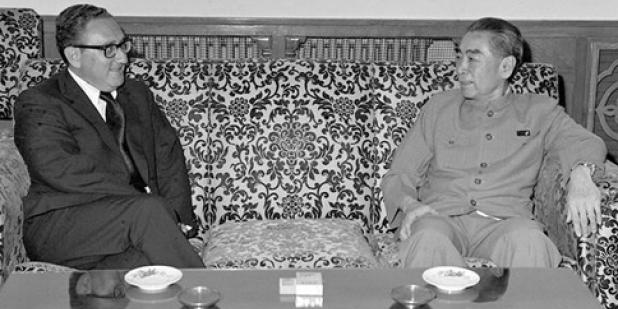
Bộ trưởng Kissinger: Tôi
rất cảm kích vì quý vị đã đến đây. Để tôi trình bày những cảm nhận của chúng
tôi về mối quan hệ với Tầu cộng, sau đó tôi rất sẵn lòng giải đáp
các câu hỏi của quý vị. Chưa ai trong số quý vị từng đến đó phải không?
Hãy để tôi chia sẻ kinh nghiệm của bản thân. Khi lần đầu
tiếp xúc với người Tầu cộng, tôi thấy họ là những con người thú vị,
thông minh và đầy cuốn hút nhất mà tôi từng biết. Ở một mức độ nào đó thì điều
này đúng, nhưng giờ đây tôi có thể nói thêm rằng họ cũng là những người đặt cái
tôi lên trên hết, lạnh lùng và đầy tính toán nhất mà tôi từng gặp. Tôi có thể
nói rằng chưa có trải nghiệm nào của tôi sánh được với điều đó. Dù là trò chuyện
với nữ nhân viên tại sân bay Thượng Hải hay với Chu Ân Lai, mọi
thứ dường như đều nằm trong một kế hoạch tổng thể lớn lao. Không có gì là ngẫu
nhiên cả. Làm việc với họ giống như một cuộc đàm phán không hồi kết. Tôi không
biết liệu điều này có đúng khi một phái đoàn Quốc hội đi thăm hay không, nhưng
đó là trải nghiệm của riêng tôi. Họ khiến những việc đã được lên kế hoạch kỹ lưỡng
trông có vẻ như hoàn toàn ngẫu hứng.
Ngay cả việc tham quan ngắm cảnh cũng là một hoạt động
đã được sắp đặt chi tiết. Ví dụ, họ sẽ đưa bạn đi thăm Thập Tam Lăng hoặc Vạn
Lý Trường Thành. Bạn có thể căn chỉnh đồng hồ theo lịch trình mà họ tuân thủ,
nhưng khi đã ở đó, chẳng ai nhìn vào đồng hồ cả; không hề có cảm giác bị hối
thúc hay áp lực thời gian. Tôi từng hỏi ông Han Hsu – người phụ
trách công tác lễ tân của họ – rằng làm thế nào họ thực hiện được điều đó.
Ông ấy trả lời:
(1) họ không đưa lịch trình
chi tiết cho khách, và
(2) họ dự tính những gì
khách sẽ làm rồi chia nhỏ hoạt động thành các phân đoạn kéo dài tám phút. Nếu
khách làm nhiều hơn dự kiến trong một phân đoạn nào đó, họ sẽ lược bỏ bớt các
phân đoạn sau; nếu khách làm ít hơn, họ sẽ bổ sung thêm các phân đoạn khác. Tôi
không chắc điều này nói lên quan điểm của họ ra sao về khả năng duy trì sự chú
ý của người nước ngoài. Tất cả những việc này được thực hiện mà không cần dùng
đến bộ đàm.
Khi xem lại các bản ghi chép về những cuộc đối thoại của
mình tại Tầu cộng, nhìn lại sự việc, ta có thể thấy chúng khớp với
một kế hoạch tổng thể lớn lao như thế nào. Lần đầu tiên Tổng thống Nixon
gặp Chủ tịch Mao, tôi đã nghĩ—với sự khiêm tốn vốn có của mình—rằng
đó chỉ là một cuộc trò chuyện hạng "B"; chẳng có gì đặc sắc cả. Mao
dường như chỉ nói lan man từ chủ đề này sang chủ đề khác. Hai tuần sau, tôi đọc
lại bản ghi chép cuộc trò chuyện đó. Những lời bình luận của Mao
[Trang 707] tựa như khúc dạo đầu trong một vở opera của Wagner. Mọi chủ
đề được thảo luận trong suốt tuần lễ [Tổng thống Nixon sang thăm] đều đã
được đề cập hoặc gợi mở trong cuộc trò chuyện với Mao. Bất kỳ
chính khách nào khác trên thế giới cũng sẽ nói: "Tôi có mười lăm điểm muốn
trình bày," rồi sau đó đọc chúng ra. Còn Mao thì cứ nói chuyện
một cách tự nhiên, lan man. Ông không hề nói kiểu: "Hãy nhớ kỹ điểm
này." Họ không giống như người Liên Xô: kiểu "Đây là mười
điểm cần lưu ý" đi kèm với một cây gậy bóng chày. Tôi cứ hình dung một
ngày nào đó mình sẽ đứng trong thang máy ở Liên Xô, nhấn một nút
và làm quá tải toàn bộ hệ thống.
Ở khía cạnh tiêu cực, về cơ bản, họ [người Tầu cộng]
chẳng hề bận tâm đến suy nghĩ của bạn. Họ thực sự coi mình là "Trung
Hoa" (Vương quốc Trung tâm). Họ mang trong mình một cảm giác tự
mãn đầy kiêu ngạo về sự tự chủ của bản thân.
Họ nghiên cứu vô cùng kỹ lưỡng những vấn đề mà họ coi
là thiết yếu cho sự sống còn của mình. Họ xem xét các yếu tố địa chính trị liên
quan đến việc kiềm chế Liên Xô với một thái độ hoàn toàn thực dụng, lạnh lùng
và không bị chi phối bởi các chuẩn mực đạo đức thông thường. Mao Trạch
Đông và Chu Ân Lai đã trải qua cuộc cách mạng ngay từ những ngày đầu, kể
cả cuộc Vạn lý Trường chinh. Họ là những con người có nguyên tắc và niềm tin
mãnh liệt. Họ kết hợp tư tưởng ý thức hệ với chủ nghĩa thực dụng lạnh lùng. Đặng
Tiểu Bình có thể không tạo ra ấn tượng này, nhưng nếu gặp Chu Ân
Lai, bạn sẽ thấy sự kết hợp giữa nguyên tắc và sự lạnh lùng đó. Lý do cốt
lõi khiến họ tìm đến chúng ta không liên quan gì đến Đài Loan; nó
hoàn toàn xuất phát từ nỗi lo ngại của họ đối với Liên Xô. Họ
không muốn tỏ ra là đang cần chúng ta; thay vào đó, họ sẽ cảnh báo mọi người về
mối đe dọa từ Liên Xô. Mối quan tâm chính của họ đối với Hoa Kỳ
nằm ở việc duy trì thế cân bằng quyền lực toàn cầu. Nếu mất đi quan điểm này, họ
sẽ không còn hứng thú với chúng ta nữa. Tôi tin rằng vấn đề viện trợ cho Thổ
Nhĩ Kỳ đã tác động đến họ. Mỗi lần gặp Mao, ông ấy đều nói về
một vành đai các quốc gia nằm ở phía nam Liên Xô. Điều này sẽ ảnh
hưởng đến cách họ nhìn nhận năng lực tự bảo vệ và duy trì sự tồn vong của chính
chúng ta.
Mỗi lần gặp Mao, ông ấy đều đưa ra những
phân tích xuất sắc về tình hình địa chính trị và nhấn mạnh sự cần thiết phải
hành động để kiềm chế Liên Xô—Chu Ân Lai cũng vậy. Ở Chu Ân
Lai, người ta không thấy những biểu hiện của thói quan liêu, hành chính
cứng nhắc.
Về vấn đề Đài Loan:
Tất nhiên chúng tôi đã thảo luận về nó, nhưng đó không phải là vấn đề trọng
tâm. Nếu liệt kê các chủ đề, họ sẽ xếp nó vào hàng cuối cùng. Họ không tỏ ra sốt
sắng, một phần vì không muốn gây rắc rối cho chúng ta. Đó không phải là vấn đề
cốt lõi trong mối quan hệ giữa hai bên. Như Tuyên bố chung Thượng Hải
đã nêu, chúng ta cần hướng tới một mối quan hệ mới; nhưng việc thực hiện điều
đó vào năm nay, năm sau hay muộn hơn nữa cũng không phải là vấn đề cấp bách hay
mang tính quyết định.
Có một quan điểm cho rằng cần phải hành động ngay khi Mao
và Chu còn tại thế. Tôi không hoàn toàn đồng tình với quan điểm này vì
họ chưa đưa ra cho chúng ta một thỏa thuận nào tốt hơn. Sai lầm của nhiều người
khi đến thăm Tầu cộng là họ cố gắng giải quyết vấn đề Đài Loan.
Việc cố gắng giải quyết vấn đề này ngay lúc này không thực sự mang lại nhiều lợi
ích. Phía Tầu cộng đã tuyên bố rằng họ sẽ chào đón Tổng thống
bất kể vấn đề Đài Loan ra sao. Nếu ông nêu vấn đề này ra, họ có
thể buộc phải có hành động đáp trả. [Trang 708]
Mối quan ngại hàng đầu của họ là việc Liên Xô
có thêm cơ hội mở rộng ảnh hưởng tại Đông Dương. Đông Dương là một thất
bại về mặt đạo đức đối với Hoa Kỳ, nhưng lại là một thất bại về mặt địa
chính trị đối với Tầu cộng. Giờ đây, ngay tại biên giới phía nam,
họ phải đối mặt với một quốc gia có 45 triệu dân đang nỗ lực xây dựng một đế chế
90 triệu dân—nếu tính cả người Lào và người Campuchia. Tình hình này có thể lan
sang cả Thái Lan. Tầu cộng nhìn nhận các vấn đề quốc tế dưới lăng
kính quan hệ quyền lực—giống như cách De Gaulle từng làm. Nếu họ [Bắc
Việt] thành công, Tầu cộng sẽ rơi vào tình thế bất lợi
khi phải đối mặt với một cường quốc quân sự ở mọi đường biên giới. Họ hiểu rõ rằng
về mặt lịch sử, người Việt Nam luôn thiếu tin tưởng Tầu cộng.
Chính vì lý do này mà Hà Nội ngả về phía Liên Xô. Tầu cộng
là thế lực nước ngoài duy nhất đang hoạt động tại Campuchia—quốc gia duy
nhất ở Đông Dương nỗ lực tách biệt Campuchia khỏi ảnh hưởng của Việt
Nam. Họ rất mong muốn chúng ta duy trì sự hiện diện tại châu Á.
Họ không quan tâm đến các hoạt động như giao lưu văn
hóa hay thương mại—điều mà bạn bè trong giới học thuật của tôi thường chú trọng.
Họ muốn chúng ta phải mạnh mẽ ở châu Á và trên toàn thế giới. Họ chính là những
đồng minh NATO tuyệt vời nhất của chúng ta. Mỗi nhà lãnh đạo châu Âu
[khi đến thăm Tầu cộng] đều được nghe họ thuyết giảng về tầm
quanílio của việc duy trì NATO. Mỗi lần tôi đến đó, tôi đều bị họ trách
móc vì không duy trì quan hệ tốt đẹp với các đồng minh của mình.
Họ có những lợi ích song hành với chúng ta. Họ muốn
chúng ta có quan hệ bền chặt với châu Âu, cũng như muốn mối quan hệ giữa Hoa
Kỳ và Nhật Bản phát triển tốt đẹp. Tuy nhiên, chúng ta không nên tự huyễn
hoặc bản thân. Trong vòng năm năm tới, nếu trở nên hùng mạnh, họ hoàn toàn có
thể lạnh lùng gạt bỏ chúng ta. Một ngày nào đó, họ có thể đối xử với chúng ta
như cách họ đối xử với Liên Xô—coi chúng ta là kẻ thù. Nhưng
trong tương lai gần, nỗi lo ngại về Liên Xô vẫn là cơ sở cho mọi
đánh giá của họ.
Họ là những người vô cùng thú vị.
Dân biểu McCloskey:
Nếu họ muốn chúng ta duy trì NATO, chẳng lẽ họ lại không muốn chúng ta
hiện diện tại Hàn Quốc sao?
Bộ trưởng Kissinger: Một
mặt, họ không muốn chúng ta can dự. Họ có những nghĩa vụ nhất định đối với Triều
Tiên, cũng như họ từng có đối với Đông Dương. Họ sẽ nói với ông
rằng họ muốn quân đội chúng ta rút đi. Nhưng họ sẽ rất lo ngại nếu Nhật Bản
đi theo con đường độc lập và quân sự hóa—điều chắc chắn sẽ xảy ra nếu chúng ta
rút khỏi Triều Tiên. Họ sẽ kiềm chế Triều Tiên
không thực hiện tấn công, nhưng sẽ ủng hộ Triều Tiên tại Liên
Hợp Quốc.
Thượng nghị sĩ Javits:
Thưa Ngài Ngoại trưởng, tôi muốn biết liệu ông có thể cho chúng tôi biết nguyện
vọng của họ đối với đất nước mình là gì, cũng như thái độ của họ đối với Nhật Bản
ra sao.
Bộ trưởng Kissinger: Tôi
chỉ quen biết những người Trung Quốc thuộc thế hệ 60, 70 tuổi. Tôi không quen
biết những người trẻ hơn ở đó. Nghe có vẻ nực cười khi nói rằng tôi chỉ quen biết
Mao, Chu, Kiều Quán Hoa và Đặng Tiểu Bình. Rất ít người Mỹ có dịp
trò chuyện với những nhân vật này, ngoại trừ các quan chức cấp cao. Mao,
Chu và Đặng vô cùng tự hào về những thành tựu của mình. Họ vẫn nhớ về Vạn
lý Trường chinh. Tôi nhớ Nguyên soái Diệp Kiếm Anh—quyền Bộ
trưởng Quốc phòng khi đó, và nay là Bộ trưởng Quốc phòng—trong
chuyến đi đầu tiên của tôi. Ông ấy đã đưa ra những nhận xét nghe có vẻ rất ngẫu
hứng. Ông nói: "Khi tôi đi theo Mao, tôi chưa bao giờ nghĩ
mình đang làm điều gì đó cho thế hệ hiện tại. Khi tham gia cách mạng, tôi nghĩ
mình đang đi theo một người thầy, vậy mà giờ đây chúng tôi ở đây và ông cũng
đang ở đây." Ông ấy coi Mao đơn thuần là một người thầy, chứ
không phải một nhà quân sự. Họ mong muốn sự phát triển kinh tế, nhưng cũng muốn
một xã hội bình đẳng. Mao có quan niệm rằng nếu xây dựng Chủ
nghĩa Cộng sản, người ta sẽ tạo ra một bộ máy quan liêu, một tầng lớp
quan lại mới. Mao tin vào cuộc cách mạng không ngừng, tin rằng cứ mười năm một
lần, người ta phải xóa bỏ tất cả những gì đã cũ. Ông ấy đã đúng.
Trong chuyến thăm Tầu cộng đầu tiên của
tôi, Chu Ân Lai đã nói chuyện với tôi về cuộc Cách mạng Văn hóa của
họ. Tôi nói: "Đây là vấn đề nội bộ của các ông." Ông ấy đáp:
"Không, không, ông phải hiểu cho." Họ muốn cuộc cách mạng không ngừng;
đây là vấn đề nguyên tắc quan trọng đối với họ. Nếu ông đề cập đến các nguyên tắc
của họ, họ sẽ rất hài lòng. Điều này không đúng với phía Liên Xô.
Họ chỉ hài lòng khi tìm cách mặc cả, ép giá hoặc tranh thủ lợi thế từ phía bạn.
Theo kinh nghiệm của tôi, người Tầu cộng thường đưa ra lập trường
thẳng thắn và kiên định với lập trường đó. Khi chúng tôi soạn thảo Thông cáo
Thượng Hải, phía Tầu cộng đã đưa vào một số câu chữ mà chúng
tôi cho là không phù hợp với một văn kiện do Tổng thống ký. Tôi đã nói với Chu
Ân Lai rằng nếu họ bỏ những câu đó đi, tôi cũng sẽ bỏ một số câu của
phía chúng tôi mà họ không hài lòng. Chu đáp: "Ông cứ giữ lại
những câu của ông đi, tôi không cần chúng đâu. Ông hãy nói cho tôi biết tại sao
ông thấy những câu của chúng tôi là khó chấp nhận. Nếu ông thuyết phục được
tôi, tôi sẽ bỏ chúng đi." Thế là chúng tôi thảo luận về vấn đề này và sau
đó họ đã bỏ những câu đó. Tuy nhiên, người Trung Quốc rất biết cách tận dụng mọi
thứ. Chỉ một thời gian ngắn sau, họ lại sử dụng chính những câu đó trong bài
phát biểu của Kiều Quán Hoa tại Liên Hợp Quốc.
Những ai từng biết về Tầu cộng trước đây
đều ấn tượng trước việc tình trạng nghèo đói lộ rõ đã bị xóa bỏ; đất nước này
không giống như Ấn Độ. Không còn cảnh nghèo nàn, xơ xác, và nguồn
cung thực phẩm rất dồi dào. Họ đã đạt được điều đó mà không cần sự trợ giúp từ
nước ngoài.
Nhật Bản:
Thái độ của họ khá mâu thuẫn. Lần đầu tiên tôi đến đây, họ tỏ thái độ rất thù địch
với Nhật Bản. Giờ đây, họ lại muốn xây dựng mối quan hệ tích cực với người
Nhật và không bao giờ chỉ trích mối quan hệ của chúng tôi với Nhật Bản.
Trong một cuộc gặp với Mao Trạch Đông, ông ấy hỏi liệu tôi đã từng
đến Nhật Bản chưa. Tôi trả lời rằng tôi đã ở đó một ngày rưỡi. Mao
nói chừng đó là chưa đủ và tôi không nên làm mất lòng người Nhật. Tuy nhiên, họ
lo ngại về một nước Nhật mang tư tưởng dân tộc chủ nghĩa. Trong vòng năm năm tới,
có thể họ sẽ tìm cách tách Nhật Bản khỏi chúng tôi, nhưng chưa phải lúc
này. Họ hoàn toàn có thể gây ra sóng gió lớn nếu ép Nhật Bản phải lựa chọn
giữa Tầu cộng và Mỹ.
Thượng nghị sĩ Percy:
Họ đang toan tính điều gì ở Việt Nam và Campuchia?
Bộ trưởng Kissinger: Phía
Tầu cộng hiện đang tuyên bố rằng Liên Xô có các căn cứ quân sự tại
Đông Dương. Thông tin này không xuất phát từ các quan chức chính phủ mà
từ một số người của họ tại Hồng Kông. Theo thông tin tình báo của chúng
tôi, điều đó không chính xác. Tôi không tin rằng Hà Nội thắng cuộc chiến
chỉ để trở thành tay sai cho Liên Xô. Họ chỉ đang khôn khéo lợi dụng
cả hai bên (Tầu cộng và Liên Xô) để phục vụ lợi ích
của mình. Tầu cộng đang cố gắng tạo dựng chỗ đứng tại Campuchia.
Hà Nội vẫn duy trì di sản của Hồ Chí Minh cùng tầm
nhìn của ông về một Đông Dương thống nhất. Phía Việt Nam hy vọng
sẽ giành quyền kiểm soát Campuchia; Lê Đức Thọ từng nói với chúng
tôi điều này khi ở Paris. Do đó, hiện nay ảnh hưởng của Liên Xô tại
Hà Nội lớn hơn ảnh trọng của Tầu cộng, nhưng Hà Nội
không phải là kẻ tay sai cho Liên Xô.
Nỗi ám ảnh của Trung Quốc là viễn cảnh một
hệ thống an ninh do Liên Xô dẫn dắt sẽ bao vây họ. Họ coi Ấn
Độ là tay sai, là cánh tay nối dài của Liên Xô và tỏ thái
độ khinh thường quốc gia này. Họ cho rằng chính Ấn Độ đã khơi mào
cuộc chiến tranh biên giới. Đây cũng là quan điểm được Neville Maxwell
trình bày trong cuốn sách viết về cuộc chiến tranh biên giới đó. Tại Đông
Dương, Tầu cộng đang hậu thuẫn Campuchia và cảnh
báo Thái Lan về mối đe dọa từ Bắc Việt Nam. Tôi có cảm
giác rằng Tầu cộng không hề thúc giục Thái Lan loại bỏ sự
hiện diện của Hoa Kỳ; họ cũng giữ lập trường tương tự đối với Philippines.
Thượng nghị sĩ Pearson:
Liệu họ có nguy cơ đối mặt với một cuộc khủng hoảng kế nhiệm không?
Bộ trưởng Kissinger:
Chúng ta hoàn toàn không biết điều gì sẽ xảy ra sau khi Mao và Chu
qua đời. Bất cứ ai khẳng định họ biết trước chuyện đó đều là nói nhảm. Ví dụ
như trường hợp của Chu Ân Lai: Chúng ta không biết liệu ông ấy
đang nằm viện, đang ẩn náu trong bệnh viện để tránh một cuộc thanh trừng, hay
đang ở đó để chỉ đạo cuộc thanh trừng. Sức khỏe của Mao đang sa
sút. Với Chu thì rất khó nắm bắt tình hình. Ông ấy đã bước ra khỏi
Đại hội Đại biểu Nhân dân Toàn quốc với vị thế áp đảo. Có bằng chứng cho thấy sức
khỏe của ông đang suy giảm. Một năm rưỡi trước, trí tuệ của Mao vẫn
còn rất minh mẫn. Đặng Tiểu Bình hiện là nhân vật chủ chốt. Nhưng
chúng ta không biết chuyện gì sẽ xảy ra khi thế hệ lãnh đạo đó qua đời.
Ông Solomon:
Chúng tôi tin rằng Trương Xuân Kiều có thể là một nhân vật quan
trọng trong tiến trình kế nhiệm. Đặng Tiểu Bình có một số bất lợi
lớn về mặt chính trị.
Bộ trưởng Kissinger:
Tình hình cũng giống như việc phỏng đoán khi Stalin còn sống vậy. Chẳng ai dự
đoán được Khrushchev sẽ lên nắm quyền. Quân đội có thể đóng vai
trò quan trọng trong cuộc tranh giành quyền lực kế nhiệm.
Thượng nghị sĩ Pell:
Mục tiêu của họ đối với vũ khí hạt nhân là gì?
Bộ trưởng Kissinger:
Họ tuyên bố không có ý định sử dụng vũ khí hạt nhân trước. Họ cũng nói rằng sẽ
không chấp nhận bất kỳ hạn chế nào đối với vũ khí hạt nhân, trừ khi đó là việc
tiêu hủy hoàn toàn chúng. Vì điều này sẽ không xảy ra, nên họ vẫn tiếp tục triển
khai chương trình vũ khí hạt nhân. Họ đang chế tạo tàu ngầm và tên lửa đạn đạo
liên lục địa (ICBM).
Ông Habib:
Họ đang gặp vấn đề với chương trình ICBM của mình.
Bộ trưởng Kissinger: Liên
Xô nằm trong tầm bắn của một số tên lửa của họ. Số lượng này còn ít,
chưa đến một trăm quả. Nhưng con số đó đang gia tăng. [Trang 711] Trước đây,
chúng ta từng ước tính rằng đến năm 1978, Liên Xô sẽ không thể tấn
công Tầu cộng mà không phải gánh chịu những thiệt hại không thể
chấp nhận được.
Ông Lord:
Họ rất nhạy cảm với vấn đề cân bằng hạt nhân giữa Mỹ và Liên Xô.
Bộ trưởng Kissinger:
Họ tán thành những tuyên bố cứng rắn của Schlesinger về việc duy trì sức mạnh của
chúng ta. Tôi muốn gặp ông khi ông trở về. Họ sẽ coi trọng những gì ông nói.
Tôi hy vọng ông sẽ ghi chép đầy đủ. Họ có thể sẽ đưa vào cuộc trò chuyện những
điều mà họ cho rằng sẽ được chuyển lại cho chúng ta biết. Họ mặc định rằng
chúng ta sẽ xem một bản báo cáo chi tiết về các cuộc đối thoại của ông.
Thượng nghị sĩ Stevenson:
Ông nghĩ chúng tôi sẽ gặp ai? Ông có gợi ý nào về các chủ đề chúng tôi nên đề cập
không?
Bộ trưởng Kissinger:
Tôi nghĩ ông sẽ thấy việc gặp Ngoại trưởng Kiều Quán Hoa (Ch’iao
Kuan-hua) mang lại kết quả tốt hơn so với gặp Đặng Tiểu Bình.
Họ sẽ hoan nghênh bất cứ điều gì mà lương tâm cho phép
ông nói về việc Hoa Kỳ duy trì vai trò toàn cầu tại châu Á và châu Âu.
Họ không muốn thấy chúng ta sụp đổ ở Trung Đông hay bắt tay hợp tác với Liên
Xô. Ông có thể nhấn mạnh rằng chúng ta sẽ không sụp đổ; rằng chúng ta
không chỉ ủng hộ Israel mà còn sẽ cạnh tranh với Liên Xô để
giành sự ủng hộ của các nước Ả Rập ôn hòa. Mối lo ngại lớn nhất của họ là Liên
Xô sẽ thâu tóm Trung Đông.
Ông có thể truyền tải thông điệp về sự tiếp nối trong
chính sách đối ngoại của chúng ta, rằng nếu đảng Dân chủ thắng cử thì chính
sách đối ngoại sẽ không thay đổi.
Vấn đề Đài Loan:
Sẽ rất hữu ích nếu ông thúc đẩy các đề nghị. Họ đã bác bỏ một số đề xuất, chẳng
hạn như việc chúng ta duy trì Văn phòng Liên lạc tại Đài Bắc. Vấn đề không nằm ở
việc tìm ra một chiêu trò nào đó. Có một điểm mấu chốt: Nếu chúng ta nhận được
sự đảm bảo rằng họ sẽ không sử dụng vũ lực thì chúng ta có thể đạt được tiến
triển. Nếu họ không cam kết điều đó, chúng ta sẽ gặp khó khăn trong việc chuyển
giao số phận của 15 triệu dân—đặc biệt là trong năm mà chúng ta đã để mất Đông
Dương. Vấn đề này quan trọng hơn cả việc chúng ta gọi văn phòng của mình tại
Đài Bắc là gì.
Họ từng nói với chúng ta rằng công thức Jackson—hoán đổi
Văn phòng Liên lạc và Đại sứ quán—là không thể chấp nhận được ngay cả trước khi
chúng ta chính thức đề xuất nó. Việc duy trì cơ quan đại diện của chúng ta tại Đài
Loan sẽ không phải là vấn đề. Vấn đề nằm ở mối quan hệ tương lai giữa Đài
Loan và đại lục. Đây mới là vấn đề cốt lõi. Nếu ông đề cập đến điểm này
thì sẽ rất hữu ích. Hãy nhấn mạnh mong muốn giải quyết vấn đề này một cách hòa
bình, không sử dụng vũ lực. Đặc biệt, với tư cách là một phái đoàn lưỡng đảng,
điều này có thể giúp họ chuyển hướng theo chiều hướng đó.
Thượng nghị sĩ Percy: Ông
Hàn Húc nói với tôi rằng họ muốn quan hệ bình thường hơn với Liên
Xô và sẵn sàng hành xử hợp lý, nhưng phía Liên Xô lại tỏ
thái độ thù địch với họ. Đâu mới là sự thật?
Thượng nghị sĩ Javits: Ông
Hoàng Hoa lại nói điều hoàn toàn ngược lại.
Bộ trưởng Kissinger:
Tất cả họ đều cho rằng Liên Xô có thái độ thù địch với Tầu
cộng. Một số vấn đề có thể dễ dàng giải quyết. Tuy nhiên, điều khiến
phía Tầu cộng bận tâm là việc Liên Xô rút các
chuyên gia kỹ thuật về nước vào năm 1960, hành động đã làm tê liệt nền kinh tế Tầu
cộng. Thứ hai, họ coi Liên Xô về bản chất là một cường quốc
theo đuổi chính sách bành trướng. Nếu tập hợp đủ lực lượng, Liên Xô
có thể tấn công Tầu cộng. Ông Mao, và ở một mức độ
nào đó là cả ông Chu, đều có tâm lý ám ảnh cực độ về vấn đề này.
Tôi nghĩ thế hệ kế cận có thể sẽ bớt thù địch hơn với Liên Xô và
có thái độ hòa dịu hơn đôi chút. Xét từ góc độ của Liên Xô, họ
đang đối mặt với hơn 800 triệu người Trung Quốc có tính kỷ luật
cao. Sẽ có những thăng trầm, nhưng thực tế địa chính trị là hai nước có chung
đường biên giới dài 3.000 dặm. Họ sẽ tiếp tục là những cường quốc cạnh tranh lẫn
nhau.
Có đồng nghiệp nào muốn bổ sung ý kiến không? Mời
ông Win.
Ông Lord:
Hiện nay, họ đang nhấn mạnh rằng mối đe dọa từ Liên Xô chủ yếu nhắm
vào châu Âu. Một phần đây là chiêu bài chiến thuật, nhưng họ thực sự coi hội
nghị CSCE là yếu tố làm suy yếu châu Âu.
Bộ trưởng Kissinger: Tầu
cộng phản đối các chính phủ "mặt trận nhân dân" ở châu Âu. Phil,
ông có muốn bổ sung gì không?
Ông Habib:
Về vấn đề Triều Tiên, ông có thể nhấn mạnh thêm quan điểm rằng Bắc
Triều Tiên không nên thực hiện bất kỳ hành động phiêu lưu quân sự nào
chống lại miền Nam.
Thượng nghị sĩ Percy:
Ông có nghĩ rằng họ sẽ cảm thấy không hài lòng về việc chúng ta mới đến thăm Liên
Xô không? Tôi đã cố gắng hết sức để cởi mở chia sẻ với họ về chuyến đi
vừa qua. Có vẻ như ông Hàn Húc đã được thông báo rất kỹ lưỡng về chuyến đi này.
Ông Solomon:
Tôi không nghĩ họ sẽ bận tâm về chuyện đó đâu. Họ dường như rất tự tin rằng
mình sẽ vượt trội hơn Liên Xô. Hầu như tất cả những người tôi từng
trò chuyện—những người đã đến cả Nga và Tầu cộng —đều nhận thấy
người Tầu cộng tinh tế và cuốn hút hơn nhiều.
Dân biểu Findley:
Họ có bày tỏ sự quan tâm nào đến việc đạt được quy chế Tối huệ quốc (MFN)
không?
Bộ trưởng Kissinger:
Một số nhà báo đã hỏi phía Tầu cộng xem họ nghĩ gì về Tu chính án
Jackson-Vanik. Phía Tầu cộng trả lời rằng họ sẵn sàng xuất
khẩu 30 triệu người Tầu cộng sang Hoa Kỳ bất cứ
khi nào chúng ta quan tâm. Họ không hề gây sức ép với chúng ta về vấn đề này.
Tôi rất mong được gặp bạn khi bạn trở về.
1. Nguồn:
Thư viện Ford, Cố vấn An ninh Quốc gia, Hồ sơ Văn phòng Cánh Tây của
Kissinger–Scowcroft, 1969–1977, Hộp 5, Trung Quốc, các tài liệu không đánh số
(16), 06/07/1975–23/07/1975. Mật; Nhạy cảm. Cuộc họp diễn ra tại Phòng
Madison–Monroe thuộc Bộ Ngoại giao. Tất cả các phần nằm trong ngoặc vuông đều
có trong bản gốc.↩
2. Neville
Maxwell, *India’s China War* (London, Cape, 1970).↩
Historical Documents - Office of the Historian
https://history.state.gov/historicaldocuments/frus1969-76v18/sources
https://history.state.gov/historicaldocuments/frus1969-76v18/terms
https://history.state.gov/historicaldocuments/frus1969-76v18/persons
https://history.state.gov/historicaldocuments/frus1969-76v18/comp1
Move Toward Normalization of Relations, October 1974–July 1975 (Documents 88–116)
https://history.state.gov/historicaldocuments/frus1969-76v18/ch3
1.
Document 115
Foreign Relations of the United States, 1969–1976, Volume
XVIII, China, 1973–1976
115.
Memorandum of Conversation1
Washington,
July 22, 1975, 6:45–8:00 p.m.
PARTICIPANTS
· Senator
Jacob K. Javits
· Senator
James B. Pearson
· Senator
Claiborne Pell
· Senator
Charles H. Percy
· Senator
Adlai E. Stevenson, III
· Representative
John B. Anderson
· Representative
Paul Findley
· Representative
Paul N. McCloskey, Jr.
· Representative
John Slack
· Henry
A. Kissinger, Secretary of State
· Philip
C. Habib, Assistant Secretary of State for East Asian and Pacific Affairs
· Robert
J. McCloskey, Assistant Secretary of State for Congressional Relations
· Winston
Lord, Director, Policy Planning, Department of State
· Oscar
V. Armstrong, Director, People’s Republic of China and Mongolia Affairs,
Department of State
· Richard
H. Solomon, Senior Staff Member, National Security Council
SUBJECT
· Secretary
Kissinger’s Briefing of Congressional Delegates Before Their Visit to the
People’s Republic of China
Secretary Kissinger: I appreciate your coming. Let me give
you our impressions of our relations with China, and then I will be glad to
answer your questions. None of you have been there before?
Let me give you my experience. When I first met the Chinese
I found them the most fascinating, intelligent and charming people I had known.
To some extent this is true, but I can add to it now that they are the most
self-centered, the most cold-blooded, analytical people I have encountered. I’d
say that nothing in my experience matches it. Whether it’s talking with a
counter girl at the Shanghai Airport, or with Chou En-lai, everything seems to
have one grand design. Nothing is accidental. Dealing with them is like one
endless negotiation. I don’t know if this is true when a Congressional
delegation travels but it has been my experience. They make the totally planned
appear spontaneous.
Even their sight-seeing is a totally planned activity. For
example they will take you out to the Ming Tombs or the Great Wall. You can set
your clock on the schedule they follow, but when you are there no one is
looking at their watches; there is no sense of pressure. I asked their protocol
chief Han Hsu how they did it. He replied: (1) they don’t give a detailed
schedule to the guests, and (2) they estimate what their guests will do and
then segment the activity into eight minute segments. If the guests do more in
any given segment then they just take out some of the later segments; if they
do less, they just add on some segments. I am not sure what this says about
their view of the attention span of foreigners. All this is done without using
walkie-talkies.
When I have reviewed the records of my talks in China, in
retrospect you can see how it fits into one grand scheme. The first time that
President Nixon met Chairman Mao I thought—with my characteristic humility—that
it was a “B” conversation; there was nothing spectacular. Mao just seemed to
ramble from one subject to another. Two weeks later I reread the record of the
conversation. Mao’s comments [Page 707]were like the overture
to a Wagner opera. Every theme discussed during the week [of the Nixon visit]
had its predicate in the Mao conversation. Every other statesman in the world
would say, “I have fifteen points I want to make,” and then he would read them.
Mao just rambled along. He didn’t say, “Remember this point.” They are not like
the Soviets: “Here are ten points” and a baseball bat. Someday I expect to be
in an elevator in the Soviet Union and to push a button and I will over load
the whole system.
On the negative side, they [the Chinese] basically don’t
give a damn about what you think. They truly consider themselves the Middle
Kingdom. They have such a feeling of arrogant self-sufficiency.
Those things that they see as essential to their survival
they study with meticulous attention. They give the most cold-blooded, amoral
attention to the geopolitical factors of containing the Soviet Union. Mao and
Chou En-lai have been through the revolution from the beginning, on the Great
March. They are men of principle, of great conviction. They combine the
ideological level with a cold-blooded pragmatism. Teng might not impress you
this way, but if you were to meet Chou, you would see this combination of
principle and cold-bloodedness. Their basic reason for moving to us has nothing
to do with Formosa. It has everything to do with their fear of the Soviet
Union. They don’t want to appear to want us, rather they will warn everyone
about the Soviet threat. Their basic interest in the U.S. is in maintaining a
world balance of power. If they lose this view, they will lose interest in us.
I believe the Turkish aid situation has had an impact on them. Everytime I have
seen Mao he talks about a tier of states to the south of the Soviet Union. This
will affect their perception of our ability to effect our own survival.
Everytime I see Mao he gives a magnificant explanation of
the geopolitical situation and talks of the need to take actions to control the
Soviet Union— Chou En-lai also. You don’t see the bureaucratic factor in Chou.
Formosa:Of course we have
discussed it, but it is not central. If they make a list of topics they put it
last. They are not eager, partly because they don’t want to create
complications for us. It is not the central issue in our relationship. As the
Shanghai Communiqué says, we have to move toward a new relationship; but
whether it is this year or next, or later, it is not critical.
There is one school of thought that says you have to move
while Mao and Chou are alive. I don’t fully agree with this view as they
haven’t offered us a better deal. The mistake of many visitors is that they try
to solve the Taiwan problem. It is not excessively helpful for people to try to
solve it now. The Chinese have said that the President will be welcome
regardless of the Taiwan problem. If you raise this question they may be
compelled to take some action.
Their overriding concern is with the Soviets having new
openings in Indochina. Indochina was a moral defeat for the U.S., but a
geopolitical defeat for the Chinese. They now have on their southern border a
country of 45 million trying to create an empire of 90 million—if you include
the Laotians and the Cambodians. This may spill over into Thailand. The Chinese
look at international affairs in terms of power relationships—as De Gaulle did.
If they [the North Vietnamese] succeed, China will be in the unenviable
position of having a major military power on every border. They know that the
Vietnamese historically distrust China. Hanoi leans on the Soviets because of
this. The Chinese are the only foreign power active in Cambodia—the only
country in Indochina trying to insulate Cambodia against the Vietnamese. They
are anxious to keep us in Asia.
They are not interested in—unlike my academic
friends—cultural exchanges and trade. They want us to be strong in Asia, strong
in the world. They are our best NATO allies. Every European leader [who visits
China] gets a lecture on maintaining NATO. Everytime I go there I get scolded
for not maintaining good relations with our allies.
They have certain parallel interests with us. They want us
to have strong relations with Europe, want to have good relations between the
United States and Japan. But we shouldn’t delude ourselves. In five years if
they become strong they could just cold-bloodedly push us away. Someday they
may treat us like the Soviet Union, like an enemy. But for the foreseeable
future, their fear of the Soviet Union is the basis of their assessments.
They are endlessly fascinating.
Representative McCloskey: If they want us to maintain NATO,
do they not want us in Korea?
Secretary Kissinger: On the one hand they don’t want us
involved. They have certain obligations to North Korea, as they did in
Indochina. They will tell you that they want our troops out. But they would be
very disturbed if Japan struck out on an independent and militaristic
path—which would happen if we withdrew from Korea. They will restrain North
Korea from making an attack, but will support them in the UN.
Senator Javits: Mr. Secretary, I wonder if you could tell
us what their aspirations are for their country; and what is their attitude
toward Japan.
Secretary Kissinger: I only know Chinese in their 60s and
70s. I don’t know younger people there. It sounds ridiculous to say that I only
know Mao, Chou, Ch’iao Kuan-hua and Teng Hsiao-p’ing. Very few Americans have
conversations with these people outside of their senior officials. Mao, Chou,
and Teng have enormous pride in their accomplishments. They remember the Long
March. I remember Marshal [Page 709]Yeh Chien-ying—their
acting Defense Minister, now their Defense Minister—on my first trip. He made
some comments that sounded spontaneous. He said, “When I joined Mao, I never
thought I was doing anything for the present generation. When I joined the
revolution, I thought I was joining a teacher, yet here we are and here you
are.” He saw Mao just as a teacher, not a military man. They want economic
advancement, but also an egalitarian society. Mao has a conception that if you
have Communism you create a bureaucracy, a new Mandarin class. Mao believes in
permanent revolution, that every ten years you have to do away with it all. He
is right.
On my first trip to China Chou En-lai talked to me about
their Cultural Revolution. I said, “This is your domestic problem.” He said,
“No, no, you have to understand.” They want permanent revolution; this is a
major issue of principle to them. If you appeal to their principles they are
happy. Not the Soviets. They are happy only when they are chiseling you. My
experience is that the Chinese give you an honest position and then stick to
it. When we were drafting the Shanghai Communiqué, the Chinese included several
sentences we felt were inappropriate to a document that the President would
sign. I said to Chou En-lai that if you take out these sentences, I’ll give you
several of ours that are objectionable to your side. Chou said, “Keep your
sentences, I don’t want them. You tell me why you find our sentences offensive.
If you can convince me, I will take them out.” So we talked about them and they
later took out those sentences. But the Chinese are very thrifty. A short time
later they used these same sentences in a speech that Ch’iao Kuan-hua gave at
the United Nations.
Those who knew China before are impressed that visible
poverty has been eliminated; it is not like India. There is no squalor, plenty
of food. And they have done it without foreign help.
Japan:They are ambivalent. The first time I
came they were very hostile toward Japan. Now they want a positive relationship
with the Japanese, and they never attack our relations with Japan. In one of my
meetings with Mao he asked if I had been in Japan. I said I had been there for
a day and a half. Mao said that that was not enough, that I should not offend
the Japanese. But they are afraid of a nationalistic Japan. In five years, they
might try to move Japan away from us, but not now. They could raise hell by
forcing Japan to chose between China and the U.S.
Senator Percy: What are they up to in Vietnam and Cambodia?
Secretary Kissinger: The Chinese are now saying that the
Soviets have military bases in Indochina. This is not their governmental people
but some of their people in Hong Kong. According to our information that is not
correct. I don’t believe Hanoi won the war to become a Soviet stooge. They are
just playing them both off (the Chinese [Page 710]and the Soviets). The
Chinese are trying to gain a foothold in Cambodia. Hanoi sustains the heritage
of Ho Chi Minh. His vision of a united Indochina. The Vietnamese hope to gain
control of Cambodia. Le Duc Tho told us this in Paris. So at present there is
greater Soviet influence than Chinese in Hanoi, but Hanoi isn’t a Soviet
stooge.
The Chinese nightmare is of a Soviet security system coming
down to surround them. They see India as a Soviet stooge, an extension of the
Soviet Union. They have contempt for them. They think India started the border
war. This is the view expressed by Neville Maxwell in his book on the border
war.2 In
Indochina the Chinese are supporting the Cambodians; they warn the Thai against
the North Vietnamese. I have the impression that the Chinese did not urge the
Thai to get rid of the United States. This was also the position they took with
the Filipinos.
Senator Pearson: Are they likely to have a succession
crisis?
Secretary Kissinger: We don’t have any idea of what will
happen after Mao and Chou die. Anyone who tells you that he does is full of
nonsense. For example, Chou En-lai’s situation: We don’t know whether he is in
the hospital; whether he is hiding in the hospital during a purge; or whether
he is there masterminding the purge. Mao is slipping. With Chou it is very hard
to know. He came out of the National People’s Congress in a dominant position.
There is evidence that his health is failing. Mao a year and a half ago was
intellectually in good shape. Teng Hsiao-p’ing now is the dominant figure. But
we don’t know what will happen when that age-group goes.
Mr. Solomon: We believe Chang Ch’un-ch’iao may be an
important figure in the succession. Teng Hsiao-p’ing has some major political
liabilities.
Secretary Kissinger: It’s like the guessing when Stalin was
alive. No one picked Khrushchev. The military could be influential in a
succession struggle.
Senator Pell: What are their objectives regarding nuclear
weaponry?
Secretary Kissinger: They say that they have no intention
of using nuclear weapons first. They also say they will not accept any
limitations on nuclear weapons short of their total destruction. Since this
won’t happen, they are proceeding with their nuclear weapons program. They are
building a submarine and ICBMs.
Mr. Habib: They are having problems with their ICBM
program.
Secretary Kissinger: The Soviets are in range of a number
of their rockets. It is a minor number; less than a hundred. But it is growing.
[Page 711]We used to estimate that
by 1978 the Soviets would not be able to strike China without suffering
unacceptable damage.
Mr. Lord: They are very sensitive to the U.S. nuclear
balance with the Soviets.
Secretary Kissinger: They like Schlesinger’s tough
statements about maintaining our strength.
I would like to meet with you when you get back. They will
take seriously what you have to say. I hope you will take full notes. They are
likely to drop things into the conversation that they assume will get back to
us. They assume that we will see a full report on your conversations.
Senator Stevenson: Whom do you think we’ll see? Do you have
any suggestions about topics we might raise?
Secretary Kissinger: I think you will find the Foreign
Minister— Ch’iao Kuan-hua—more rewarding than Teng.
Anything that your conscience would enable you to say about
the United States maintaining a global role in Asia and Europe they will
welcome. They don’t want us to collapse in the Middle East or to collaborate
with the Soviet Union. You could emphasize that we will not collapse; that it’s
not just that we support Israel but that we will also compete with the Soviets
for the moderate Arabs. Their major concern is that the Soviets will inherit
the Middle East.
You might convey a sense of continuity in our foreign
policy, that if the Democrats win there will be no change in our foreign
policy.
Taiwan:It would be helpful for you to push
suggestions. They have already rejected a number of them, like our leaving a
Liaison Office in Taipei. This is not a question of finding some gimmick. There
is one point: If we had some assurance that they would not use force then we
could make progress. If they won’t, we will have difficulty in turning over 15
million—especially in the year when we lost Indochina. This issue is more
important than what we call our office in Taipei.
They told us that the Jackson formula—switching our Liaison
Office and Embassy—was unacceptable before we raised it as a proposition. Our
representation in Taiwan will not be a problem. Our problem is the future
relationship of Taiwan with the mainland. This is the basic problem. If you
raise this, this point would be helpful. Stress the desire for a peaceful
settlement of this issue, that there be no use of force. Especially in a
bipartisan group this might help them move in that direction.
Senator Percy: Han Hsu told me that they want more normal
relations with the Soviet Union and are willing to be reasonable, but the
Soviets are hostile toward them. Where’s the truth?
Senator Javits: Huang Hua says just the opposite.
Secretary Kissinger: All of them say that the Soviets are
hostile to China. Some of the issues could be easily settled. But what bothers
the [Page 712]Chinese is the
withdrawal of the Soviet technicians in 1960 which paralyzed the Chinese
economy. Secondly, they see the Soviets as basically expansionist. If they
could concentrate enough force they could go after China. Mao, and to some
extent Chou, are psychopathic on this point. I think the next generation may be
less hostile to the Soviets; somewhat more accommodating. From the Soviet point
of view, there are over 800 million highly disciplined Chinese. There will be
ups and downs, but a 3,000 mile border is a geopolitical fact. They will
continue to be competitive powers.
Do any of my colleagues want to add anything? Win.
Mr. Lord: They are now stressing that the Soviet threat is
directed at Europe. This is partly for tactical effect, but they do see the
CSCE conference as weakening Europe.
Secretary Kissinger: The Chinese are against popular front
governments in Europe. Phil, did you want to add anything?
Mr. Habib: Regarding Korea, you might reinforce the thought
that North Korea should not engage in any adventurism against the South.
Senator Percy: Do you think they will be troubled by the
fact that we were recently in the Soviet Union? I took pains to be as open with
them about our recent trip as possible. Han Hsu seemed to have been fully
briefed on it.
Mr. Solomon: I don’t think you will find them upset about
this. They seem to have great confidence that they will outshine the Soviets.
Virtually every group I have talked to who has been to both Russia and China
has found the Chinese much more sophisticated and appealing.
Representative Findley: Have they expressed any interest in
getting MFN?
Secretary Kissinger: Some newsmen asked the Chinese what
they thought of the Jackson–Vanik amendment. The Chinese responded that they
will be glad to export 30 million Chinese to the United States any time we are
interested. They are not pushing us on this.
I look forward to seeing you when you get back.
1.
Source: Ford Library, National Security Adviser,
Kissinger–Scowcroft West Wing Office Files, 1969–1977, Box 5, China, unnumbered
items (16), 7/6/75–7/23/75. Confidential; Sensitive. The meeting took place in
the Madison–Monroe Room at the Department of State. All brackets are in the
original.↩
2.
Neville Maxwell, India’s China War (London, Cape,
1970).↩
https://history.state.gov/historicaldocuments/frus1969-76v18/d115
https://history.state.gov/historicaldocuments/frus1969-76v18/pg_707
https://history.state.gov/historicaldocuments/frus1969-76v18/pg_708
https://history.state.gov/historicaldocuments/frus1969-76v18/pg_709
https://history.state.gov/historicaldocuments/frus1969-76v18/pg_710
https://history.state.gov/historicaldocuments/frus1969-76v18/pg_711
https://history.state.gov/historicaldocuments/frus1969-76v18/pg_712
Thân thế (các) nhân vật
Political Advisor to CINPAC until July 1973;
Director of People’s Republic of China and Mongolian Affairs from July 1973;
Deputy Assistant Secretary for East Asian and Pacific Affairs from August 1976
https://www.wikitree.com/wiki/Armstrong-28783
https://history.state.gov/historicaldocuments/frus1969-76v18/persons
https://adst.org/Readers/China.pdf
https://www.govinfo.gov/content/pkg/GPO-CRECB-1977-pt17/pdf/GPO-CRECB-1977-pt17-1-2.pdf
https://www.governmentattic.org/2docs/FOIA_Logs_NARA-ADDRES_2001-2009.pdf
https://tile.loc.gov/storage-services/service/mss/mfdip/2004/2004gle01/2004gle01.pdf
https://archive.org/stream/allhands7087unit/allhands7087unit_djvu.txt
Zhang Chunqiao (Chang Chun-chiao),
Politburo member until 1976, Vice Premier from
January 1975 until October 1976
https://en.wikipedia.org/wiki/Zhang_Chunqiao
https://historica.fandom.com/wiki/Zhang_Chunqiao
https://alphahistory.com/chineserevolution/zhang-chunqiao/
https://chineseposters.net/themes/zhangchunqiao
https://www.cmcarchive.org/figures/zhang-chunqiao
https://liberationschool.org/05-06-01-zhang-chunqiao-communist-leader-html/
Chiao Kuan-hua, (Qiao
Guanhua)
Vice Foreign Minister, People’s Republic of
China
https://en.wikipedia.org/wiki/Qiao_Guanhua
https://history.state.gov/historicaldocuments/frus1969-76ve13/d124
https://www.marxists.org/subject/china/china-reconstructs/1974/CR1974-12-Sup.pdf
SYND 25-11-71 CHINESE DELEGATE CHIAO KUAN HUA
SPEAKS ABOUT DISARMAMENT AT THE UN
https://www.youtube.com/watch?v=bjnyWtitbrg
Premier of the People’s Republic of China;
member, Standing Committee of the Chinese Communist Party’s Political Bureau
https://en.wikipedia.org/wiki/Zhou_Enlai
https://en.wikipedia.org/wiki/Premier_of_the_People%27s_Republic_of_China
https://en.wikipedia.org/wiki/Minister_of_Foreign_Affairs_of_the_People%27s_Republic_of_China
https://en.wikipedia.org/wiki/Vice_Chairman_of_the_Chinese_Communist_Party
https://en.wikipedia.org/wiki/Vice_Chairman_of_the_Chinese_Communist_Party
https://en.wikipedia.org/wiki/Chairman_of_the_Chinese_People%27s_Political_Consultative_Conference
https://history.state.gov/historicaldocuments/frus1969-76v17/d139
https://digitalarchive.wilsoncenter.org/document/zhou-enlai-talking-ho-chi-minh
https://digitalarchive.wilsoncenter.org/search?f[0]=topics:86538&fo[0]=86538
Tài liệu Chu Ân Lai yêu cầu Hoa Kỳ loại bỏ Tổng Thống Nguyễn Văn Thiệu
và dùng Dương Văn Minh để lật đổ hai nền Đệ I và Đệ II VNCH.
https://digitalarchive.wilsoncenter.org/document/discussion-between-zhou-enlai-and-le-duc-tho
https://digitalarchive.wilsoncenter.org/document/89367/download
Charles De Gaulle,
President of France
https://en.wikipedia.org/wiki/Charles_de_Gaulle
https://en.wikipedia.org/wiki/President_of_France
https://en.wikipedia.org/wiki/Prime_Minister_of_France
https://en.wikipedia.org/wiki/Provisional_Government_of_the_French_Republic
https://en.wikipedia.org/wiki/Free_France
https://en.wikipedia.org/wiki/Minister_of_Defense_(France)
https://en.wikipedia.org/wiki/Ministry_of_Algerian_Affairs
https://www.biography.com/political-figures/charles-de-gaulle
https://www.history.com/this-day-in-history/de-gaulle-elected
https://en.wikipedia.org/wiki/Presidency_of_Charles_de_Gaulle
https://www.bbc.co.uk/history/historic_figures/gaulle_charles_de.shtml
Habib, Philip C.,
member, U.S. Delegation to the Paris Peace
Talks from May 1968 until October 1971; Ambassador to Korea from September 30,
1971, until August 19, 1974; Assistant Secretary of State for East Asian and
Pacific Affairs from September 27, 1974
https://en.wikipedia.org/wiki/Philip_C._Habib
https://en.wikipedia.org/wiki/Under_Secretary_of_State_for_Political_Affairs
https://en.wikipedia.org/wiki/Assistant_Secretary_of_State_for_East_Asian_and_Pacific_Affairs
https://en.wikipedia.org/wiki/United_States_Ambassador_to_Korea
https://diplomacy.state.gov/u-s-diplomact-philip-c-habib-presidential-medal-of-freedom-winner/
https://nsuworks.nova.edu/nsudigital_forums/13/
https://www.arabamerica.com/arabamericans/philip-habib-3/
https://www.britannica.com/biography/Philip-Charles-Habib
Han Xu (Han Hsu),
Deputy Head of the PRC Liaison Office in the
United States from 1973
https://2001-2009.state.gov/documents/organization/100323.pdf
https://history.state.gov/historicaldocuments/frus1969-76v18/persons
https://brill.com/edcollbook/title/58094
https://2001-2009.state.gov/documents/organization/100324.pdf
https://storage.googleapis.com/rua-uplo/files/books/934/416ef3c1-6c7a-4586-b2ec-709a41760bbf.pdf
https://apps.dtic.mil/sti/pdfs/ADA279207.pdf
https://www.aei.org/wp-content/uploads/2023/07/ForeignPolicyRev603.pdf?x97961
President of the Democratic Republic
of Vietnam; also Chairman and General Secretary of Dang Lao Dong, Workers’
Party of Vietnam, leader of the Vietnamese Communist Party and President of the
Democratic Republic of Vietnam until his death in 1969
Huang Hua,
Counselor in the Ministry of Foreign Affairs,
People’s Republic of China; Adviser and Spokesman for the P.R.C. Delegation at
the Geneva Conference.
https://en.wikipedia.org/wiki/Huang_Hua
https://www.nytimes.com/2010/11/25/world/asia/25huang.html
https://www.fmprc.gov.cn/eng/zy/wjrw/3606_665551/202405/t20240531_11367612.html
https://www.latimes.com/local/obituaries/la-me-huang-hua-20101125-story.html
https://www.theguardian.com/world/2010/nov/25/huang-hua-obituary
Democratic
Senator from Washington
https://en.wikipedia.org/wiki/Henry_M._Jackson
https://www.senate.gov/artandhistory/history/minute/Henry_Scoop_Jackson.htm
https://henryjacksonsociety.org/who-was-henry-jackson/
https://www.congress.gov/member/henry-jackson/J000013
https://hmjackson.org/about-us/biography/
https://content.lib.washington.edu/jacksonweb/index.html
https://www.k-state.edu/landon/speakers/henry-jackson/
https://guides.lib.uw.edu/research/henry_jackson/campaigns
https://history.house.gov/People/Detail?id=15709
Henry A Kissinger
Assistant to the President for National
Security Affairs until November 3, 1975; also Secretary of State from September
21, 1973
https://www.theguardian.com/world/2023/may/20/bilderberg-meeting-group-lisbon-kissinger
https://www.theguardian.com/world/bilderberg
https://history.state.gov/historicaldocuments/frus1969-76ve13/summary
https://china.usc.edu/getting-beijing-henry-kissingers-secret-1971-trip
https://china.usc.edu/catalog/documents/us-china
http://www.archives.gov/press/press-releases/2001/nr01-47.html
https://china.usc.edu/talking-points-july-22-august-3-2011
https://china.usc.edu/getting-beijing-henry-kissingers-secret-1971-trip#meetings
https://china.usc.edu/getting-beijing-henry-kissingers-secret-1971-trip#nixon-announcement
https://china.usc.edu/getting-beijing-henry-kissingers-secret-1971-trip#chinese-accept
https://china.usc.edu/getting-beijing-henry-kissingers-secret-1971-trip#signals
https://china.usc.edu/getting-beijing-henry-kissingers-secret-1971-trip#the_aim
http://www.foreignaffairs.com/articles/23927/richard-m-nixon/asia-after-viet-nam
https://history.state.gov/historicaldocuments/frus1969-76v17/d4
https://history.state.gov/historicaldocuments/frus1969-76v17/d12
https://history.state.gov/historicaldocuments/frus1969-76v17/d13
https://history.state.gov/historicaldocuments/frus1969-76v17/d141
https://2001-2009.state.gov/documents/organization/100324.pdf
https://en.wikipedia.org/wiki/Henry_Kissinger_and_the_Vietnam_War
Lesson in Vietnam from
Kissinger to Nixon: “when we made it “our war” we would not let
the South Vietnamese fight it; when it again became “their war”, we would not
help them fight it.”
(We also had trouble with excesses here: when we made it “our war” we
would not let the South Vietnamese fight it; when it again became “their war,”
we would not help them fight it. Ironically, we prepared the South Vietnamese for main force warfare
after 1954 (anticipating another Korean-type attack), and they faced a political
war; they had prepared themselves for political warfare after 1973 only to be
faced with a main force invasion 20 years after it had been expected.)
https://history.state.gov/historicaldocuments/frus1969-76v10/d280
Lesson of Vietnam May 12 1975 by Henry A.
Kissinger
https://www.fordlibrarymuseum.gov/library/exhibits/vietnam/032400091-002.pdf
https://thebattleofkontum.com/extras/kissinger.html
“Richard M. Nixon and Kissinger on 3 August
1972,” Conversation 760-006, Presidential Recordings Digital Edition [Fatal
Politics, ed. Ken Huges] (Charlottesville: University of Virginia Press,
2014-). URL:https://prde.upress.virginia.edu/conversations/4006748
https://player.vimeo.com/video/889937807?h=e44572c8f3&color=e57200&title=0&byline=0&portrait=0
https://player.vimeo.com/video/889937807?h=e44572c8f3&color=e57200&title=0&byline=0&portrait=0
Discover the Truth at:
https://www.theblackvault.com/documentarchive/the-cias-vietnam-document-cd-rom/
The secret life of Henry Kissinger minutes of a
1975 meeting with Lawrence Eagleburger
https://etan.org/news/kissinger/secret.htm
Henry Kissinger and the Truth About Negotiations
In Vietnam
https://www.youtube.com/watch?v=Z5fxxKVfX5g
Henry Kissinger - Secrets of a superpower | DW
Documentary
https://www.youtube.com/watch?v=bWVMTKeAwlA
The Untold Truth of Henry Kissinger
https://www.youtube.com/watch?v=0iheZdvWdbI&t=1s
Was Henry Kissinger a War Criminal?
https://www.youtube.com/watch?v=COqq7862wcU&t=25s
member of the Politburo of the Democratic
Republic of Vietnam and Special Advisor to negotiating team, and de facto head
of, the DRV Delegation to the Paris Peace Talks on Vietnam until 1973; Special
Adviser to the President of the Democratic Republic of Vietnam from January
1973
https://digitalarchive.wilsoncenter.org/people
https://digitalarchive.wilsoncenter.org/people/le-duc-tho-le-duc-tho
https://www.nobelprize.org/prizes/peace/1973/tho/speedread/
Lord, Winston,
member,
National Security Council staff until 1973; Director of the Policy Planning
Staff, Department of State from October 1973 until January 1977
https://en.wikipedia.org/wiki/Winston_Lord
https://en.wikipedia.org/wiki/Assistant_Secretary_of_State_for_East_Asian_and_Pacific_Affairs
https://en.wikipedia.org/wiki/List_of_ambassadors_of_the_United_States_to_China
https://en.wikipedia.org/wiki/Council_on_Foreign_Relations
https://en.wikipedia.org/wiki/Director_of_Policy_Planning
https://www.brookings.edu/wp-content/uploads/2016/07/19981208.pdf
https://www.brookings.edu/wp-content/uploads/2016/07/19991104.pdf
https://nsarchive.gwu.edu/document/22669-document-04-winston-lord-director-policy
https://www.ncafp.org/about-us/faps-board-of-advisors/ambassador-winston-lord/
McCloskey, Robert J.,
Deputy Assistant Secretary of State for Press Relations and Special
Assistant to the Secretary until May 1973
https://www.nytimes.com/1996/11/30/world/robert-j-mccloskey-state-dept-spokesman-dies-at-74.html
https://history.state.gov/departmenthistory/people/mccloskey-robert-james
https://www.state.gov/biographies-list/
https://www.state.gov/resources-bureau-of-global-talent-management/#ambassadors
https://en.wikipedia.org/wiki/Robert_J._McCloskey
https://en.wikipedia.org/wiki/United_States_Ambassador_to_the_Netherlands
https://en.wikipedia.org/wiki/United_States_Ambassador_to_Cyprus
https://en.wikipedia.org/wiki/United_States_Ambassador_to_Greece
https://www.latimes.com/archives/la-xpm-1996-11-30-mn-4307-story.html
Nixon Richard M.,
Vice President of the United States
https://www.history.com/topics/us-presidents/richard-m-nixon
https://www.britannica.com/event/Watergate-Scandal
https://soundcloud.com/the-miller-center-at-uva/14-nov-68-lbj-and-nixon
https://en.wikipedia.org/wiki/Richard_Nixon
https://soundcloud.com/the-miller-center-at-uva
https://www.britannica.com/event/Vietnam-War
https://en.wikipedia.org/wiki/Richard_Nixon
http://www.pbs.org/wgbh/amex/honor/peopleevents/e_paris.html
https://www.britannica.com/event/Vietnam-War
http://www.nytimes.com/2016/12/31/opinion/sunday/nixons-vietnam-treachery.html
http://www.nytimes.com/interactive/2016/12/31/opinion/sunday/haldeman-notes.html
http://www.bbc.com/news/magazine-21768668
https://www.nixonlibrary.gov/index.php
https://history.state.gov/historicaldocuments/frus1964-68v07/ch5
https://www.lovethetruth.com/books/13_bloodlines/bundy.htm
https://www.lovethetruth.com/books/13_bloodlines/toc.htm
Nixon, Richard M.,
President of the United States
https://2001-2009.state.gov/documents/organization/100324.pdf
https://www.history.com/topics/us-presidents/richard-m-nixon
https://www.britannica.com/event/Watergate-Scandal
https://soundcloud.com/the-miller-center-at-uva/14-nov-68-lbj-and-nixon
https://en.wikipedia.org/wiki/Richard_Nixon
https://soundcloud.com/the-miller-center-at-uva
https://www.britannica.com/event/Vietnam-War
https://en.wikipedia.org/wiki/Richard_Nixon
http://www.pbs.org/wgbh/amex/honor/peopleevents/e_paris.html
https://www.britannica.com/event/Vietnam-War
http://www.nytimes.com/2016/12/31/opinion/sunday/nixons-vietnam-treachery.html
http://www.nytimes.com/interactive/2016/12/31/opinion/sunday/haldeman-notes.html
http://www.bbc.com/news/magazine-21768668
https://www.nixonlibrary.gov/index.php
https://history.state.gov/historicaldocuments/frus1964-68v07/ch5
https://www.lovethetruth.com/books/13_bloodlines/bundy.htm
https://www.lovethetruth.com/books/13_bloodlines/toc.htm
Nixon
had a Trip to China from February 21 to 28 1972,
https://www.nixonlibrary.gov/nixons-trip-china
http://www.presidentialtimeline.org/
https://www.nixonlibrary.gov/sites/default/files/virtuallibrary/tapeexcerpts/china-656-10a.pdf
https://www.nixonlibrary.gov/sites/default/files/virtuallibrary/tapeexcerpts/china-656-10b.pdf
https://www.nixonlibrary.gov/sites/default/files/virtuallibrary/tapeexcerpts/china-92-1a.pdf
https://www.nixonlibrary.gov/sites/default/files/virtuallibrary/tapeexcerpts/china-92-1b.pdf
https://www.nixonlibrary.gov/sites/default/files/virtuallibrary/tapeexcerpts/china-21-56.pdf
https://www.nixonlibrary.gov/sites/default/files/virtuallibrary/tapeexcerpts/china-656-10a.mp3
https://www.nixonlibrary.gov/sites/default/files/virtuallibrary/tapeexcerpts/china-656-10b.mp3
https://www.nixonlibrary.gov/sites/default/files/virtuallibrary/tapeexcerpts/china-92-1a.mp3
https://www.nixonlibrary.gov/sites/default/files/virtuallibrary/tapeexcerpts/china-92-1b.mp3
https://www.nixonlibrary.gov/sites/default/files/virtuallibrary/tapeexcerpts/china-21-56.mp3
https://nsarchive.gwu.edu/briefing-book/nuclear-vault-vietnam/2023-03-24/movement-and-madman
The Vietnam War Johnson
and Nixon Administrations Videos
March 2, 2016 Last
Aired May 5, 2016
https://www.c-span.org/program/the-presidency/reflections-on-richard-nixon/431130
July 16, 1973 Last
Aired July 22, 2013
Senate Watergate Committee Testimony
https://www.c-span.org/program/vignette/senate-watergate-committee-testimony/316346
April 26, 2016 Last Aired June 5, 2016
Vietnam War Commander in Chief
https://www.c-span.org/program/american-history-tv/vietnam-war-commanders-in-chief/439971
June 12, 2008 Last
Aired July 22, 2013
Alexander Butterfield Oral History Interview, Part 2
June 12, 2008 Last
Aired July 15, 2013
Alexander Butterfield Oral History Interview, Part 1
January 27, 2012
Last Aired June 11, 2012
President Nixon's Secret White House Tapes
https://www.c-span.org/program/american-history-tv/president-nixons-secret-white-house-tapes/277123
July 25, 1994 Last
Aired June 20, 2008
Watergate: Corruption of American Politics
https://www.c-span.org/program/public-affairs-event/watergate-corruption-of-american-politics/119480
February 16, 2003
Last Aired December 25, 2003
Presidential Tapes: Taping Systems History
https://www.c-span.org/program/public-affairs-event/presidential-tapes-taping-systems-history/122572
Alexander
Butterfield: The 60 Minutes Watergate Interview (1975)
https://www.youtube.com/watch?v=ss9AkLUmM4g
Watergate Hearing:
Alexander Butterfield Testimony
Alexander
Butterfield Was ‘Worried To Death’ Testifying Against Nixon
https://www.youtube.com/watch?v=c52oIe3Gj6w
How Nixon’s Invasion
of Cambodia Triggered a Check on Presidential Power
Vietnam War Cambodia
and Laos
https://www.history.com/articles/nixon-war-powers-act-vietnam-war-cambodia
Nixon's Vietnam Visit 1965, Rare Film Unearthed
https://www.youtube.com/watch?v=RaTi8OEpINI
Nixon on LBJ and Vietnam: Where Did It All Go Wrong?
https://www.youtube.com/watch?v=-n-4o3vOYD4
1969 July 30_Tổng Thống Hoa Kỳ 🇺🇸 Richard M. Nixon Thăm Việt Nam Cộng Hoà.
https://www.youtube.com/watch?v=ZRp4v6M6YJw&t=19s
Chairman
of the Atomic Energy Commission until February 1973; Director of Central
Intelligence from February 2 until July 2, 1973; Secretary of Defense from July
2, 1973, until November 19, 1975
https://en.wikipedia.org/wiki/James_R._Schlesinger
https://en.wikipedia.org/wiki/James_R._Schlesinger
https://en.wikipedia.org/wiki/United_States_Secretary_of_Energy
https://en.wikipedia.org/wiki/United_States_Secretary_of_Defense
https://en.wikipedia.org/wiki/Director_of_Central_Intelligence
https://en.wikipedia.org/wiki/United_States_Atomic_Energy_Commission
https://history.defense.gov/Multimedia/Biographies/Article-View/Article/571289/james-r-schlesinger/
https://apnews.com/obituaries-ecc8779791ee4ab7973cf58b7d355305
https://www.encyclopedia.com/people/history/us-history-biographies/james-rodney-schlesinger
Scowcroft, Brent,
General, USAF, Military Assistant to the President until 1973; Deputy
Assistant to the President for National Security Affairs from August 1973 until
1975
https://warontherocks.com/2020/08/brent-scowcroft-and-american-military-intervention/
https://warontherocks.com/2020/08/blame-it-on-the-blob-how-to-evaluate-american-grand-strategy/
https://www.aspeninstitute.org/programs/aspen-strategy-group/about-asg/
https://www.whitehouse.gov/piab/
https://www.publicaffairsbooks.com/titles/bartholomew-sparrow/the-strategist/9781586489632/
http://web1.millercenter.org/poh/transcripts/ohp_1999_1112_scowcroft.pdf
https://www.nytimes.com/2020/08/12/us/politics/brent-scowcroft.html
https://www.foreignaffairs.com/articles/united-states/2020-08-13/scowcroft-model
https://archive.org/stream/towercommission00unit?ref=ol#mode/2up
https://www.twelvebooks.com/titles/philip-zelikow/to-build-a-better-world/9781538764688/
https://yalebooks.yale.edu/book/9780300233827/post-wall-post-square
https://yalebooks.yale.edu/book/9780300233827/post-wall-post-square
https://www.simonandschuster.com/books/War-in-a-Time-of-Peace/David-Halberstam/9781501141508
https://www.adst.org/OH%20TOCs/Inderfurth,Karl%20F.toc.pdf
https://www.wsj.com/articles/SB1029371773228069195
https://www.nytimes.com/2002/08/25/opinion/the-right-way-to-change-a-regime.html
https://www.penguinrandomhouse.com/books/592622/to-start-a-war-by-robert-draper/
https://pdfs.semanticscholar.org/de9b/be3fa428073b76a05fbb58739bf3279c3664.pdf
https://www.ft.com/content/de843f6e-0be1-4667-8a9f-f397cf840e72
https://www.houseofnames.com/brent-family-crest
https://www.houseofnames.com/dpreview/BRENT/EN/Brent/family-crest-coat-of-arms.png
https://www.houseofnames.com/cdn/webp/i/prod/520x520/surnamecomplete_gold.webp
https://www.aspeninstitute.org/programs/aspen-strategy-group/lt-general-brent-scowcroft/
https://dpaa-mil.sites.crmforce.mil/dpaaProfile?id=a0Jt000000sxxIFEAY
https://www.fordlibrarymuseum.gov/library/document/0204/7505562.pdf
https://news.virginia.edu/content/uvas-miller-center-releases-secret-brent-scowcroft-oral-history
Solomon, Richard H.,
member, National Security Council
staff
https://en.wikipedia.org/wiki/Richard_H._Solomon
https://www.academyofdiplomacy.org/members-1/solomon/richard-h.
https://carnegiecouncil.org/people/richard-h-solomon
https://www.c-span.org/person/richard-h-solomon/9004/
https://www.chinafile.com/contributors/richard-h-solomon
https://findingaids.lib.umich.edu/catalog/umich-bhl-2008034
https://www.presidency.ucsb.edu/documents/nomination-richard-h-solomon-be-assistant-secretary-state
Deng Xiaoping (Teng Hsiao-p’ing),
Vice Premier of State Council after 1973
https://en.wikipedia.org/wiki/Deng_Xiaoping
https://www.britannica.com/biography/Deng-Xiaoping
https://www.britannica.com/summary/Deng-Xiaoping
https://www.ebsco.com/research-starters/history/deng-xiaoping
http://www.cppcc.gov.cn/zxww/2012/07/03/ARTI1341300716750109.shtml
https://www.encyclopedia.com/people/history/chinese-and-taiwanese-history-biographies/deng-xiaoping
https://simple.wikipedia.org/wiki/Deng_Xiaoping
Yeh Chien-ying (Ye Jianying),
senior Chinese Communist Party (CCP) military cadre; Marshal, People’s
Liberation Army; Vice Chairman, Central Military Council of the Chinese
Communist party; member of the Central Committee and Politburo
https://en.wikipedia.org/wiki/Ye_Jianying
https://www.britannica.com/biography/Ye-Jianying
https://chineseposters.net/themes/yejianying
https://xboorman.enpchina.eu/biographie/ye-jianying/
https://generals.dk/general/Ye_Jianying/_/China.html
https://en.people.cn/data/people/yejianying.shtml
https://en.namu.wiki/w/%EC%98%88%EC%A0%A0%EC%9E%89



No comments:
Post a Comment