20261010 CDTL DDE D739 14 Jun 1954 Điện tín về cuộc gặp Heath–Dac Khe–Bonsal, Geneva, sáng ngày 14 tháng 6 – Phái đoàn Hoa Kỳ gửi Bộ Ngoại giao
https://history.state.gov/historicaldocuments/frus1952-54v16/d739
Google Translated
Tài liệu số 739
Quan hệ Đối ngoại của Hoa Kỳ, 1952–1954, Hội
nghị Geneva, Tập XVI
396.1 GE/6–1454: Điện tín Cuộc gặp giữa
Heath, Đắc Khê và Bonsal, Geneva, sáng ngày 14 tháng 6: Phái đoàn Hoa Kỳ gửi Bộ
Ngoại giao
Tuyệt mật
Geneva, ngày 14 tháng 6 năm 1954 — 8 giờ tối
Secto 437.
Đồng gửi Paris (số 430) và Sài Gòn (số 164). Ông Đắc Khê, Bộ trưởng Bộ Dân
chủ hóa của Việt Nam kiêm Phó trưởng phái đoàn tại Geneva, đã trao đổi với Đại
sứ Heath và ông Bonsal vào sáng nay.
Theo quan điểm của ông Đắc Khê, có một hướng
hành động có thể cứu Việt Nam khỏi việc bị Cộng sản thâu tóm hoàn
toàn. Đó là việc Bảo Đại cần trở về Việt Nam ngay lập tức để sát
cánh cùng quân đội và hậu thuẫn một chính phủ mới do Ngô Đình Diệm đứng
đầu, thực hiện chiến dịch đề cao sự thanh liêm, tiết kiệm và thái độ cứng
rắn không khoan nhượng đối với những kẻ tham nhũng trong bộ máy chính quyền,
cả trong quá khứ lẫn hiện tại. Đó là bước đầu tiên. Theo ông Đắc Khê, bước
tiếp theo phải là một chương trình cải cách ruộng đất thực chất và cải thiện đời
sống xã hội cho tầng lớp nông dân – vốn chiếm 9/10 dân số. Chương trình viện
trợ kinh tế của Mỹ cần được điều chỉnh để phục vụ riêng cho nhu cầu của cộng
đồng nông nghiệp. Bước thứ ba, điều mà cá nhân ông Đắc Khê ủng hộ, là
thành lập một hội đồng tư vấn có quyền lập pháp hạn chế nhưng bao gồm cả quyền
quyết định về ngân sách.
Một lý do chính khiến Việt Minh đạt
được những bước tiến là do người dân không còn tin tưởng vào các chính quyền dưới
thời Bảo Đại từ trước đến nay. Nếu cuộc bầu cử
được tổ chức vào thời điểm hiện tại, Việt Minh sẽ giành chiến thắng.
Nếu một cuộc bầu cử thực sự tự do và có sự giám sát quốc tế được tổ chức sau
sáu tháng nữa, thì cả Việt Minh lẫn phe Bảo Đại đều sẽ
không giành được đa số phiếu. Tuy nhiên, tình hình này có thể thay đổi theo chiều
hướng tích cực đáng kể chỉ trong vài ngày hoặc vài tuần. Chính quyền mới cần bắt
giữ và đày ra Côn Đảo (Poulo Condor) những kẻ tham nhũng – những người
mà chính phủ đã có sẵn danh sách – và tốt nhất là nên xử bắn 4 hoặc 5 kẻ phạm tội
nghiêm trọng nhất. Đắc Khê cho rằng vẫn còn thời gian để triển khai
thành công các biện pháp cải cách này. Mặc dù Pháp mong muốn một lệnh ngừng bắn,
nhưng việc đạt được thỏa thuận ngừng bắn thông qua đàm phán trong tương lai gần
là điều gần như bất khả thi, xét đến thái độ cứng rắn của Việt Minh
cũng như sự phản đối của người dân Việt Nam đối với động thái như vậy.
Đắc Khê nhận định rằng uy
tín của Bảo Đại tại Việt Nam đã sụt giảm kể từ năm 1949, nhưng uy tín của
Hồ Chí Minh cũng chịu chung số phận. Tuy nhiên, Bảo Đại vẫn
giữ được một phần uy tín còn sót lại và điều này hoàn toàn có thể được vực dậy.
Đắc Khê cho rằng dù Bảo
Đại thiếu cá tính mạnh mẽ, ông vẫn có thể được thuyết phục để thực hiện những
hành động quyết liệt cần thiết; song chỉ có Hoa Kỳ, với sự hậu thuẫn
của Pháp, mới có thể "thuyết phục" được Bảo Đại hành động.
Cần phải có những lời lẽ thẳng thắn và cứng rắn – điều
mà cả Pháp lẫn Hoa Kỳ đều chưa từng áp dụng với Bảo Đại. Đó sẽ là
một cuộc trao đổi đầy khó chịu cho cả hai bên, bởi những thất bại trong quá khứ
của Bảo Đại và các chính phủ của ông sẽ phải được nhìn nhận một cách thẳng thắn.
Đắc Khê tin rằng Bảo Đại sẽ chấp nhận những lời chỉ trích và khuyến
nghị từ Heath nhờ vào niềm tin của ông đối với tình bạn của Heath.
Heath và Bonsal
lắng nghe tất cả những điều này mà không đưa ra bình luận gì. Tuy nhiên, khi Đắc
Khê nói rằng Bảo Đại có thể sẽ khăng khăng đòi sự đảm bảo về việc Mỹ
sẽ hậu thuẫn nếu ông thực hiện hành động được yêu cầu, Heath liền nhắc lại
rằng vài tuần trước, khi Bảo Đại tuyên bố sẽ kiên quyết đòi quyền tự chủ
cho Quân đội Quốc gia Việt Nam, chính Đắc Khê đã nói với ông rằng
đó là yêu cầu cần được đưa ra từ chiến trường chứ không phải từ Cannes
hay Paris. Heath đặt câu hỏi tại sao nhận định tương tự lại không áp dụng
cho yêu cầu về sự hậu thuẫn của nước ngoài; nghĩa là, nếu Bảo Đại và
chính quyền của ông thể hiện hiệu quả và hành động thực tế tốt hơn tại chiến
trường, thì đó mới là lúc thích hợp để đề nghị bạn bè hỗ trợ. Đắc Khê
tán thành ý kiến này.
Chuyển sang nói về Diệm, Đắc Khê cho rằng ông
là người xuất sắc để tiên phong trong công cuộc bài trừ tham nhũng,
nhưng lại không phù hợp để tập hợp, vận động nông dân. Về bản chất, Diệm
là mẫu quan lại lý tưởng theo quan niệm của Khổng Tử. Diệm chỉ trích
các chính quyền của Bảo Đại vì có quá nhiều quan lại thuộc loại kém cỏi. Diệm
là một người có tâm hồn hướng nội, chính trực nhưng mang phong thái của
một thời đại đã qua. Ông không tin vào cải cách ruộng đất theo hướng nào khác
ngoài kiểu cải cách hành chính do quan lại thực hiện, và cũng không tin vào việc
thành lập một hội nghị đại diện cho quần chúng. Theo quan điểm của Đắc Khê,
cả hai biện pháp này – đặc biệt là biện pháp đầu tiên – đều hoàn toàn cần thiết.
Cá nhân Đắc Khê ủng hộ việc triệu tập một hội nghị nông dân được tuyển
chọn kỹ lưỡng để xác định các định hướng chung cho công cuộc cải cách ruộng đất.
Một chính quyền mạnh có thể định hướng các cuộc thảo luận tại hội nghị như vậy,
tránh để tình hình vượt khỏi tầm kiểm soát như đã xảy ra với "đại hội quốc
dân" hồi tháng Mười năm ngoái.
Smith.
Historical Documents - Office of the Historian
List of
Abbreviations and Symbols
https://history.state.gov/historicaldocuments/frus1952-54v16/terms
https://history.state.gov/historicaldocuments/frus1952-54v16/persons
The Geneva Conference on Indochina May 8–July 21, 1954
https://history.state.gov/historicaldocuments/frus1952-54v16/comp2
https://history.state.gov/historicaldocuments/frus1952-54v16/ch7
June 14, 1954 (Documents 739–746)
https://history.state.gov/historicaldocuments/frus1952-54v16/ch7subch38
1.
Document 739
Foreign Relations of the United States, 1952–1954, The
Geneva Conference, Volume XVI
396.1 GE/6–1454: Telegram
Heath–Dac
Khe–Bonsal Meeting, Geneva, June 14, Morning: The United States Delegation to
the Department of State
top secret
Geneva, June 14, 1954—8 p.m.
Secto 437. Repeated information Paris 430, Saigon 164. Dac
Khe, Vietnam Minister of Democratization and Deputy Chief of Geneva delegation,
talked to Ambassador Heath and Bonsal this morning.
In Dac Khe’s view, there was a course of action which could
save Vietnam from complete takeover by the Communists. That would be for Bao
Dai to return immediately to Vietnam to be with his troops and to back up a new
government presided by Ngo Dinh Diem, in a campaign of official austerity,
honesty of pitiless severity against past [Page 1135]and present governmental
grafters. That was the first step. The next step must, in Dac Khe’s view, be a
program of real agrarian reform and social betterment for the peasant 9/10ths
of the population. The American economic aid program should be revised to serve
exclusively needs of the agricultural population. A third step, which Dac Khe
personally favored, was creation of a consultative assembly of limited
legislative powers but inclusion the right to legislate on the budget.
A major reason that Viet Minh had made progress was general
disbelief in the various Bao Dai governments to date. If elections were held at
present, Viet Minh would win it. If really free supervised elections were held
six months from now, neither the Viet Minh nor Bao Dai would gain a majority.
But this situation could be changed substantially for the better in a matter of
days or weeks. The new regime should arrest and send to Poulo Condor, the
grafters, of which the government has already a list, preferably shooting the 4
or 5 most guilty.
There would be time successfully to initiate these reform
measures Dac Khe thought. In spite of French desires for a cease-fire, it would
be almost impossible for the French to arrive at a negotiated cease-fire in the
immediate future in view of Viet Minh intransigence and Vietnamese resistance
to such a move.
Bao Dai’s stock had fallen in Vietnam since 1949, Dac Khe
said, but so had Ho Chi Minh’s. Bao Dai had retained, however, a residual
prestige which could be improved.
Dac Khe said that while Bao Dai lacked character, he,
nevertheless, could be persuaded to undertake the decisive action necessary,
but only the United States seconded by France could “persuade” Bao Dai to go
into action.
There had to be plain talk of a firmness that neither
France nor the United States had yet used with Bao Dai. It would be a most
disagreeable interview for both sides because the past failings of Bao Dai and
his governments would have to be frankly reviewed. Dac Khe suggested that Bao
Dai would accept Heath’s criticism and recommendations because of his belief in
the latter’s friendship.
Heath and Bonsal listened to all this without comment. When
Dac Khe said, however, that Bao Dai would probably insist on assurance of
American backing if he took the action requested, Heath remarked that some
weeks ago when Bao Dai said he would insist on autonomy for Vietnam national
army, Dac Khe had said to him that was a request to be made from the field of
battle and not from Cannes or Paris. Heath asked why the same observation would
not apply for a request for foreign backing; viz., if Bao Dai and his regime
showed improved [Page 1136]performance and action
on the ground, then would be the time to ask their friends for support. Dac Khe
agreed.
Returning to Diem, Dac Khe said he would be an excellent
man to lead off in exterminating corruption but would not be good in rallying
the peasants. Diem was essentially a mandarin of the ideal type described by
Confucius. Diem’s criticism of Bao Dai’s regimes was that there were too many
mandarins of the bad type. Diem was an honest mystic of an age that had passed.
Diem did not believe in agrarian reform except of an administrative mandarin
type. He did not believe in a popular assembly. Both these measures,
particularly the first, in Dac Khe’s opinion, were absolutely necessary. The
latter personally favored calling a selected peasant congress to determine the
general lines of an agrarian reform. A strong government could guide the
deliberations of such a congress and not let it get out of hand as did the
“national congress” of last October.
Smith
https://history.state.gov/historicaldocuments/frus1952-54v16/d739
https://history.state.gov/historicaldocuments/frus1952-54v16/pg_1135
https://history.state.gov/historicaldocuments/frus1952-54v16/pg_1136
Thân
thế (các) nhân vật
Chief of State of Vietnam.
Bonsal, Philip W.,
Counselor of Embassy in France to March 1952; Director of the Office of
Philippine and Southeast Asian Affairs, Department of State, from August 1952.
https://history.state.gov/historicaldocuments/frus1952-54v13p1/d48
https://history.state.gov/historicaldocuments/frus1952-54v13p2/persons
https://afsa.org/sites/default/files/fsj-1954-03-march_0.pdf
https://history.state.gov/historicaldocuments/frus1952-54v13p1/d223
https://www.jaas.gr.jp/jjas/pdf/1981/No.01-119.pdf
Ambassador (Minister to June 1952) at Saigon
accredited to Vietnam, Laos, and Cambodia. Appointments terminated October
(Cambodia) and November (Vietnam, Laos) 1954.
https://en.wikipedia.org/wiki/Donald_R._Heath
https://history.state.gov/departmenthistory/people/heath-donald-read
https://oac.cdlib.org/findaid/ark:/13030/c81260v0/
President
of the Democratic Republic of Vietnam; also Chairman and General Secretary of
Dang Lao Dong, Workers’ Party of Vietnam, leader of the Vietnamese Communist Party and President of the
Democratic Republic of Vietnam until his death in 1969
Ngo Dinh Diem,
President of the Council of Ministers of the State of Vietnam to
October 1955; thereafter President and Chief of State of the Republic of
Vietnam
https://en.wikipedia.org/wiki/Ngo_Dinh_Diem
https://millercenter.org/the-presidency/educational-resources/diem-coup
https://www.jfklibrary.org/search?f[0]=subject:Vietnam%20War,%201961-1975
The Diem Coup audio
https://soundcloud.com/the-miller-center-at-uva/sets/the-diem-coup
February 1, 1966: President Johnson remembers Diem coup
(admitted) to Eugene McCarthy
https://soundcloud.com/the-miller-center-at-uva/february-1-1966-president
November 4, 1963: President Kennedy on the Diem coup
https://soundcloud.com/the-miller-center-at-uva/november-4-1963-president-kennedy-on-the-diem-coup
NHỚ LẠI NHỮNG NGÀY Ở CẠNH TỔNG THỐNG NGÔ ĐÌNH
DIỆM (Full) - Tài Nguyễn Diễn Đọc
https://www.youtube.com/watch?v=sWTTgB7oE6U&t=6927
Một phụ nữ miền Bắc viết về cố TT Ngô Đình Diệm.
https://www.youtube.com/watch?v=UMEkUQRp01o
"The Death of Diem and Nhu"
https://www.youtube.com/watch?v=U8O1HOTXS8A
"The Coup in
Saigon"
https://www.youtube.com/watch?v=k4IaJYiNanc
"Everybody'll
Say We Did It"
https://www.youtube.com/watch?v=Jaai1NdZ70k
"We Have Plans for Withdrawal"
https://www.youtube.com/watch?v=0BABdRu7FY0
"The Road to
Disaster"
https://www.youtube.com/watch?v=dr5dRFVV-ok
https://www.youtube.com/channel/UChty22qJfdeAd8dAee9Mo7g/featured
“The President Is
Dead”
https://www.youtube.com/watch?v=lD-akTUBFWs
“That Wasn't What
Killed Kennedy”
https://www.youtube.com/watch?v=LAF0JGttS3E
Kennedy and Vietnam:
The great what-if
https://www.youtube.com/watch?v=6XLhqXt2pww
JFK, LBJ and the Paradox of Vietnam
https://www.youtube.com/watch?v=TYRsahM-GqQ&t=2054
BÀI 305: NHÌN LẠI LỊCH SỬ: ĐỆ NHẤT CỘNG HÒA
http://www.bacaytruc.com/index.php/16996-bai-305-nhin-l-i-l-ch-s-d-nh-t-c-ng-hoa-tac-gi-vu-linh-ddtc
BÀI 306: NHÌN LẠI LỊCH SỬ: ĐỆ NHỊ CỘNG HÒA
https://diendantraichieu.blogspot.com/2023/11/bai-306-nhin-lai-lich-su-e-nhi-cong-hoa.html
BÀI 307: NHÌN LẠI LỊCH SỬ: VAI TRÒ CỦA MỸ
http://www.bacaytruc.com/index.php/17092-bai-307-nhin-l-i-l-ch-s-vai-tro-c-a-m-tac-gi-vu-linh-ddtc
JFK and the Diem Coup
https://nsarchive2.gwu.edu/NSAEBB/NSAEBB101/
Evidence on the Diem Coup in South Vietnam 1963
https://www.tokyoprogressive.org/evidence-on-the-diem-coup-in-south-vietnam-1963/
Tập 1 - Đời
Một Phóng Viên & Những Ngày Bên Chí Sĩ Ngô Đình Diệm
https://www.youtube.com/watch?v=2CJ1CXSWwpI
Tập 2. Đời
Một Phóng Viên & Những Ngày Bên Chí Sĩ Ngô Đình Diệm
https://www.youtube.com/watch?v=Po5Hlbfk6Zc
Tập 3 - Đời
Một Phóng Viên & Những Ngày Bên Chí Sĩ Ngô Đình Diệm
https://www.youtube.com/watch?v=vdluTn-L8sc
Tập 4 : Đời
Một Phóng Viên & Những Ngày Bên Chí Sĩ Ngô Đình Diệm
https://www.youtube.com/watch?v=p58HIMAy_Hg
Tập 5 - Đời
Một Phóng Viên & Những Ngày Bên Chí Sĩ Ngô Đình Diệm
https://www.youtube.com/watch?v=ti24AXG12YE
Tập 6 - Đời
Một Phóng Viên & Những Ngày Bên Chí Sĩ Ngô Đình Diệm
https://www.youtube.com/watch?v=LB0xpBPX9UI
Tập 7 - Đời
Một Phóng Viên & Những Ngày Bên Chí Sĩ Ngô Đình Diệm
https://www.youtube.com/watch?v=Rvv0ze1mG_8
Tập 8 - Đời
một Phóng Viên và Những ngày chung sống với Chí Sĩ Ngô Đình Diệm
https://www.youtube.com/watch?v=Ht1u6A62KXk
Tập 9 - Đời
một Phóng Viên và những ngày chung sống với Chí Sĩ Ngô Đình Diệm
https://www.youtube.com/watch?v=bcZZ9O5cwgA&t=18s
Tập 10 - Đời
một Phóng Viên & Những ngày chung sống với Chí Sĩ Ngô Đình Diệm
https://www.youtube.com/watch?v=bgJnv7kALSA
Interview with Madame
Ngo Dinh Nhu, 1982
https://video.alexanderstreet.com/watch/interview-with-madame-ngo-dinh-nhu-1982
Tài liệu cộng sản giặc Hồ
xuyên tạc Tổng thống Diệm và quân đội Mỹ
https://sachhiem.net/LICHSU/N/NgoDacTriet.php
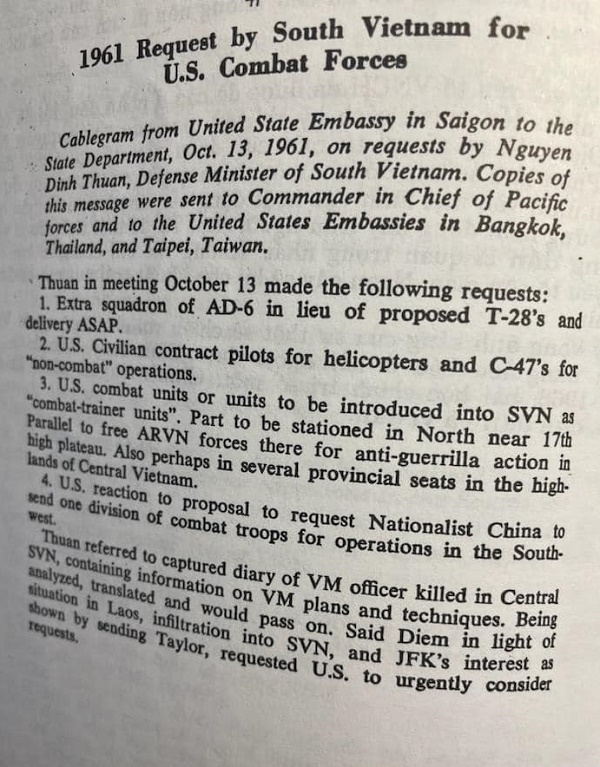
https://sachhiem.net/LICHSU/IMG/NGODD/1961XinQuanMy.jpg
Minister of Democratization of the State of
Vietnam; Deputy Chief of the State of Vietnam Delegation at the Geneva
Conference.
https://ideas.repec.org/a/bcp/journl/v6y2022i4p61-67.html
https://history.state.gov/historicaldocuments/frus1952-54v16/d452
https://history.state.gov/historicaldocuments/frus1952-54v16/d739
Under
Secretary of State; Head of the United States Delegation at the Geneva
Conference, May 3–June 20, and July 17–21, 1954.
https://history.state.gov/historicaldocuments/frus1952-54v16/ch5subch4
https://avalon.law.yale.edu/20th_century/inch006.asp
https://www.cia.gov/readingroom/docs/CIA-RDP80B01676R002500010001-5.pdf
https://history.state.gov/historicaldocuments/frus1952-54v16/d1027
https://search.library.wisc.edu/digital/ABHSHVCERGRA6I86/pages/ALUZ5OG5PRZCCH83?as=text&view=scroll


No comments:
Post a Comment