20261009 CDTLDDE D271 7 May 1953 Bản ghi nhớ cuộc Hội đàm do Edmund A. Gullion soạn thảo. Ông Diệm nhi ngờ thân thế Hồ Chí Minh.
https://history.state.gov/historicaldocuments/frus1952-54v13p1/d271
Google Translated
Tài liệu số 271
Quan hệ Đối ngoại của Hoa Kỳ, 1952–1954,
Đông Dương, Tập XIII, Phần 1
751G.00/5–753
Biên bản ghi chép cuộc trao đổi, do Edmund
A. Gullion thuộc Ban Hoạch định Chính sách thực hiện
Mật
[Washington,] ngày 7 tháng 5 năm 1953.
Chủ đề:
Thảo luận về Đông Dương
Thành phần tham dự:
Thẩm phán Tòa án Tối cao W. O. Douglas
Thượng nghị sĩ Mansfield, bang Ohio [Montana]
Thượng nghị sĩ Kennedy, bang Massachusetts1
Ông Newton, Ủy ban Phục vụ của Hội Hữu nghị Mỹ
(American Friends Service Committee)
Ông Costello, Đài Phát thanh và Truyền hình Columbia
(CBS)
Ông Edmund Gullion, Bộ Ngoại giao
Ông Gene Gregory, Bộ Ngoại giao
[Tên bị lược bỏ]
Ông Ngô Đình Diệm,
nhà lãnh đạo theo chủ nghĩa dân tộc Công giáo Việt Nam.
Những người nêu trên đã tham dự một bữa trưa tại Tòa
nhà Tòa án Tối cao do Thẩm phán Douglas tổ chức. Trong bữa trưa và khoảng
một giờ sau đó, [tên bị lược bỏ] và ông Diệm đã trình bày về tình hình Đông
Dương và giải đáp các câu hỏi, chủ yếu từ Thẩm phán Douglas và Thượng
nghị sĩ Kennedy.
Nhìn chung, ông Diệm tin rằng chỉ có một lời hứa
ngay lập tức về quy chế Tự trị (Dominion status) mới có thể thuyết phục
người dân Việt Nam rằng họ có mục tiêu chính đáng để chiến đấu tại Đông
Dương. Ông và [tên bị lược bỏ] cho rằng phía Pháp hiện đang có xu hướng nhượng
bộ nhiều hơn, nhưng những nhượng bộ này lại "quá ít và quá muộn"
(Diem đã dùng chính cụm từ tiếng Anh này). Ông Diệm đặc biệt nhấn mạnh
và phân tích kỹ lưỡng về bản chất của Liên hiệp Pháp cũng như các cơ quan quản
lý của liên hiệp này, trong đó chủ quyền của các Quốc gia Liên kết (Associated
States) bị hạn chế một cách cụ thể.
. . . . . . .
Ông Diệm có cái nhìn ít
thiện cảm hơn về Hồ Chí Minh. Ông cho rằng không thể có tự do dưới
chế độ Cộng sản. Ông không tin Hồ Chí Minh có toàn
quyền quyết định và thậm chí còn không chắc liệu người này còn sống hay không. Theo ông, vấn
đề tại Việt Nam là thiếu một điểm tập hợp lực lượng nằm giữa phe Cộng sản
và người Pháp. Khi được hỏi, ông cho biết người Việt Nam vẫn cần
đến quân đội Pháp. Nếu quân Pháp rút đi, người Việt Nam
sẽ không thể hy vọng có được tự do dưới ách thống trị của Cộng sản; tuy
nhiên, lỗi sẽ thuộc về chính quyền Pháp - Bảo Đại, vốn đã chần chừ
trong việc xây dựng quân đội hay chính quyền, và sẽ không để lại
bất cứ điều gì có thể mang lại sự bảo vệ và chủ quyền thực sự cho người Việt
Nam.
Ông Diệm kể lại mối quan hệ
của mình với Hồ Chí Minh: Năm 1946, Hồ Chí Minh đã
"cô lập" ông tại một bản làng miền núi. Sau sáu tháng, ông Hồ
đề nghị ông Diệm tham gia chính phủ. Ông Diệm cho biết mình đã nói với Hồ
Chí Minh rằng, vì biết ông Hồ là người Cộng sản, ông cần sự bảo đảm
rằng mình sẽ được tham gia vào mọi quyết định và nắm bắt đầy đủ thông tin. Người
dân Việt Nam không muốn chịu sự kiểm soát của Cộng sản. Những
người ủng hộ ông Diệm yêu cầu ông phải được giao chức Bộ trưởng Bộ Nội vụ và
quyền chỉ huy lực lượng Cảnh sát trong chính phủ của Hồ Chí Minh.
Ông Hồ đã do dự trước yêu cầu này trong vài tuần, nhưng cuối
cùng, theo lời khuyên của các cộng sự, ông đã từ chối.
Cả hai người Việt Nam có mặt tại bữa trưa đều bày tỏ
quan điểm tiêu cực về Bảo Đại; họ cho rằng ông này có rất ít ảnh hưởng
và không được nể trọng. Thủ tướng Tâm là người "trung thực"
nhưng lại rất thiếu uy tín trong dân chúng; ông bị coi là "người Pháp"
và do là người miền Nam nên không được lòng người dân miền Bắc.
Khi được hỏi, ông Diệm cho biết ông dự định sớm
sang Pháp để tìm kiếm sự thấu hiểu từ một số nhóm người Pháp – những
người đang bắt đầu cảm thấy bối rối và bất bình trước những thất bại của nước
Pháp tại Đông Dương. Tuy nhiên, khi đã sang Pháp, ông không chắc
liệu mình có thể xin được thị thực xuất cảnh để trở lại Việt Nam hay
không. Phe Cộng sản đã thề sẽ ám sát ông nếu ông về Việt
Nam, nhưng ông cũng nhận thức rõ rằng có nhiều người khác cũng muốn loại
bỏ ông. Ông phủ nhận rằng đây là lý do khiến ông đứng ngoài cuộc; điều ông
thiếu là một nền tảng hay bối cảnh chính trị phù hợp để có thể thực hiện những
công việc hữu ích cho đất nước.
Ông cho rằng giới quân sự Pháp hiểu rõ vấn đề
hơn là chính quyền dân sự Pháp. Dù sao đi nữa, người Pháp không
thể đánh bại phe Cộng sản và sẽ phải dựa vào người Việt Nam để
làm điều đó. Tuy nhiên, họ không thể thuyết phục người Việt đảm nhận nhiệm vụ
này nếu người Việt không có thêm quyền tự do.
Cả hai người đều bày tỏ sự ngưỡng mộ đối với tuyên bố
mà Quốc vương Campuchia mới đưa ra trên tờ *New York Times*.
Cả hai đều cho rằng Việt Nam sẽ có cơ hội giành độc
lập cao hơn dưới thời Tướng de Lattre so với thời ông Letourneau.
1.Vào ngày 7 tháng 5 năm 1953, Thượng nghị sĩ John
F. Kennedy bang Massachusetts đã gửi thư cho Ngoại trưởng Dulles về
vấn đề Đông Dương. Thượng nghị sĩ Kennedy bày tỏ lo ngại về tình
hình đang ngày càng xấu đi. Với quan điểm cho rằng người Pháp đã không thành
công trong việc huy động sự ủng hộ đáng kể từ người dân bản địa, ông tuyên bố rằng
"người dân Mỹ muốn đổi lấy sự hỗ trợ của mình bằng việc thiết lập các điều
kiện sao cho thành công trở thành một triển vọng thực tế chứ không phải là sự
thất bại tất yếu." Ông gửi kèm một danh sách gồm 47 câu hỏi về tình hình
này. Ông Thruston B. Morton, Trợ lý Ngoại trưởng phụ trách Quan hệ với
Quốc hội, đã trả lời Thượng nghị sĩ vào ngày 13 tháng 5 về những nét chính
trong chính sách của Hoa Kỳ đối với Đông Dương. Trong lá thư đề ngày 12
tháng 6 năm 1953, vị Phụ tá Ngoại trưởng này đã giải đáp 47 câu hỏi cụ thể đó.
Các văn bản trao đổi không mật này hiện nằm trong hồ sơ số 751G.00/5–753.↩
Historical Documents - Office of the Historian
https://history.state.gov/historicaldocuments/frus1952-54v13p1/sources
List of
Abbreviations and Symbol
https://history.state.gov/historicaldocuments/frus1952-54v13p1/terms
https://history.state.gov/historicaldocuments/frus1952-54v13p1/persons
https://history.state.gov/historicaldocuments/frus1952-54v13p1/comp2
1.
Document 271
Foreign Relations of the United States, 1952–1954,
Indochina, Volume XIII, Part 1
751G.00/5–753
Memorandum
of Conversation, by Edmund A. Gullion of the Policy Planning Staff
secret
[Washington,] May 7, 1953.
Subject:
· Discussion
of Indochina
Participants:
· Mr.
Justice W. O. Douglas
· Senator
Mansfield, Ohio [Montana]
· Senator
Kennedy, Massachusetts1
· Mr.
Newton, American Friends Service Committee
· Mr.
Costello, Columbia Broadcasting System
· Mr.
Edmund Gullion, Dept. of State
· Mr.
Gene Gregory, Dept. of State
· [Name
deleted]
· M. Ngo
Dinh Diem, Catholic Vietnamese Nationalist leader.
The above were present at a luncheon at the Supreme Court
Building arranged by Mr. Justice Douglas. During lunch and for about an hour
afterwards, [name deleted] and Mr. Diem discoursed on Indochina and answered
questions, chiefly from Mr. Douglas and Senator Kennedy.
In general, Mr. Diem believes that nothing less than an
immediate promise of Dominion status will satisfy the Vietnamese populations
that they have something to fight for in Indochina. He and [name deleted]
believe that the French are now showing a tendency to grant more concessions
but that these are “too little and too late”. (Diem used the English phrase.)
Diem insisted particularly and at length on the character of the French Union
and its governing bodies in which Associated States sovereignty was specifically
circumscribed.
. . . . . . .
Diem took a less charitable view of Ho Chi Minh. He thought
there could be no liberty under the Communists. He did not believe that Ho Chi
Minh [Page 554]was free to make
decisions and he was not even sure that he was alive. The trouble in Vietnam
was, he said, that there was no rallying point in between the Communists and
the French. In response to questions, he said the Vietnamese still needed
French troops. If they were withdrawn, the Vietnamese could not look forward to
any liberty under Communist domination, but the fault would be attributable to
the Franco-Bao Dai regime, which had balked at building up an army or
government and would leave nothing behind which could offer the Vietnamese real
protection and sovereignty.
Diem recounted his relations with Ho Chi Minh: In 1946, Ho
Chi Minh had “isolated” Diem in a tribal mountain village. After six months, he
asked him to join his government. Diem says he told Ho Chi Minh that since he
knew Ho was a Communist, he would require assurance that he would be privy to
all decisions and get full information. The Vietnamese people did not want
Communist control. Diem’s supporters required that Diem be given the Interior
Ministry and charge of Police in the Ho Chi Minh Government. Ho hesitated
before this request for some weeks, but on the advice of his colleagues,
eventually refused.
Both Vietnamese at the luncheon expressed a poor opinion of
Bao Dai, who they thought had little influence or respect. Premier Tam was
“honest”, but he had very little popularity, he was a “Frenchman” and as a
Southerner, he had little credit in the North.
In response to questions, Diem said that he expected to go
to France shortly where he would find understanding among some French groups,
who had begun to be puzzled and resentful of France’s failures in Indochina.
Once in France, however, he was not sure that he could get an exit visa for
Vietnam. The Communists had sworn to assassinate him in Vietnam, but he was
equally aware that many others would like to be rid of him. He denied that this
was his reason for staying away; what he lacked was a platform of any political
context in which he could do useful work for his country.
He thought that the French military understood the problem
better than the French civil Government. In any case, the French could not beat
the Communists and would have to rely on the Vietnamese to do it. They could
not get the Vietnamese to undertake the task, however, unless the Viets had
more freedom.
Both men expressed admiration of the declaration recently
made by the King of Cambodia to the New York Times.
Both men thought Vietnam would have had a better chance to
gain its independence under General DeLattre than under M. Letourneau.
1.
On May 7, 1953, Sen. John F. Kennedy of Massachusetts
addressed a letter to Secretary of State Dulles concerning Indochina. Senator
Kennedy expressed concern regarding the deterioration of the situation.
Contending that the French had not succeeded in mobilizing the support of the
native population to any significant degree, he stated that “the American
people want in exchange for their assistance the establishment of conditions
that will make success a prospect and not defeat inevitable.” He enclosed a list
of 47 questions on the situation. Thruston B. Morton, Assistant Secretary of
State for Congressional Relations, replied to the Senator on May 13 with regard
to the general outlines of U.S. policy toward Indochina. By letter of June 12,
1953, the Assistant Secretary responded to the 47 specific questions. This
unclassified correspondence is in file 751G.00/5–753.↩
https://history.state.gov/historicaldocuments/frus1952-54v13p1/d271
https://history.state.gov/historicaldocuments/frus1952-54v13p1/pg_554
Thân thế (các) nhân vật
Chief of State of Vietnam.
De Lattre De Tassigny, Général d’Armée Jean,
French
High Commissioner and Commander of French Forces in Indochina, December
1950–November 1951; died January 1952.
https://en.wikipedia.org/wiki/Jean_de_Lattre_de_Tassigny
https://history.state.gov/historicaldocuments/frus1952-54v13p1/d8
https://www.britannica.com/biography/Jean-de-Lattre-de-Tassigny
https://ww2db.com/person_bio.php?person_id=738
Dulles, John Foster,
https://en.wikipedia.org/wiki/John_Foster_Dulles
https://history.state.gov/departmenthistory/people/dulles-john-foster
https://www.britannica.com/biography/John-Foster-Dulles
https://diplomacy.state.gov/encyclopedia/john-foster-dulles-secretary-of-state/
https://www.acton.org/publications/transatlantic/2020/03/10/john-foster-dulles-cold-war-architect
https://www.youtube.com/watch?v=BtyFClyli9c
Gullion, Edmund A.,
Counselor of Embassy at Saigon, 1952; Member, Policy Planning Staff,
Department of State, from September 26, 1952.
https://en.wikipedia.org/wiki/Edmund_A._Gullion
https://www.jfklibrary.org/asset-viewer/archives/eagpp
https://history.state.gov/historicaldocuments/frus1952-54v13p2/persons
https://dl.tufts.edu/teiviewer/parent/f1881x54h/chapter/G00020
https://history.state.gov/historicaldocuments/frus1952-54v13p1/comp1?start=91
https://history.state.gov/historicaldocuments/frus1952-54v02p2/d75
https://uscpublicdiplomacy.org/blog/public-diplomacy-gullion-evolution-phrase
https://afsa.org/sites/default/files/fsj-1952-12-december_0.pdf
President
of the Democratic Republic of Vietnam; also Chairman and General Secretary of
Dang Lao Dong, Workers’ Party of Vietnam, leader of the Vietnamese Communist Party and President of the
Democratic Republic of Vietnam until his death in 1969
French Minister in Charge of Relations with
the Associated States until July 1953; also served as French High Commissioner
in Indochina, April 1952–July 19, 1953.
https://history.state.gov/historicaldocuments/frus1952-54v13p1/d220
https://en.wikipedia.org/wiki/Jean_Letourneau
https://avalon.law.yale.edu/20th_century/inch012.asp
https://history.state.gov/historicaldocuments/frus1952-54v13p1/d53
https://granger.com/0146908-jean-letourneau-frech-minister-jean-letourneau-at-the-depar-image.html
Senator
(D–MT), Senate Majority Leader
Democratic
Senator from Montana; Majority Leader and member of the Senate Foreign
Relations Committee
https://en.wikipedia.org/wiki/Mike_Mansfield
https://en.wikipedia.org/wiki/United_States_Ambassador_to_Japan
https://en.wikipedia.org/wiki/Party_leaders_of_the_United_States_Senate
https://en.wikipedia.org/wiki/Senate_Democratic_Caucus#Chairs
https://en.wikipedia.org/wiki/Party_leaders_of_the_United_States_Senate
https://en.wikipedia.org/wiki/United_States_Senate
https://en.wikipedia.org/wiki/United_States_House_of_Representatives
https://www.k-state.edu/landon/speakers/mike-mansfield/
https://www.k-state.edu/landon/speakers/mike-mansfield/audio-1977.html
https://www.k-state.edu/landon/speakers/mike-mansfield/audio.html
Morton, Thruston B.,
Assistant Secretary of State for Congressional Relations from January
30, 1953.
https://en.wikipedia.org/wiki/Thruston_Morton
https://history.house.gov/People/Detail/18607
https://kentuckyoralhistory.org/ark:/16417/xt7ttd9n615n
https://history.state.gov/departmenthistory/people/morton-thruston-ballard
https://filsonhistorical.org/research-doc/mortonthrustonb/
https://www.conservapedia.com/index.php?title=Thruston_B._Morton&mobileaction=toggle_view_desktop
Ngo Dinh Diem,
President of the Council of Ministers of the State of Vietnam to
October 1955; thereafter President and Chief of State of the Republic of
Vietnam
https://en.wikipedia.org/wiki/Ngo_Dinh_Diem
https://millercenter.org/the-presidency/educational-resources/diem-coup
https://www.jfklibrary.org/search?f[0]=subject:Vietnam%20War,%201961-1975
The Diem Coup audio
https://soundcloud.com/the-miller-center-at-uva/sets/the-diem-coup
February 1, 1966: President Johnson remembers Diem coup
(admitted) to Eugene McCarthy
https://soundcloud.com/the-miller-center-at-uva/february-1-1966-president
November 4, 1963: President Kennedy on the Diem coup
https://soundcloud.com/the-miller-center-at-uva/november-4-1963-president-kennedy-on-the-diem-coup
NHỚ LẠI NHỮNG NGÀY Ở CẠNH TỔNG THỐNG NGÔ ĐÌNH
DIỆM (Full) - Tài Nguyễn Diễn Đọc
https://www.youtube.com/watch?v=sWTTgB7oE6U&t=6927
Một phụ nữ miền Bắc viết về cố TT Ngô Đình Diệm.
https://www.youtube.com/watch?v=UMEkUQRp01o
"The Death of Diem and Nhu"
https://www.youtube.com/watch?v=U8O1HOTXS8A
"The Coup in
Saigon"
https://www.youtube.com/watch?v=k4IaJYiNanc
"Everybody'll
Say We Did It"
https://www.youtube.com/watch?v=Jaai1NdZ70k
"We Have Plans for Withdrawal"
https://www.youtube.com/watch?v=0BABdRu7FY0
"The Road to
Disaster"
https://www.youtube.com/watch?v=dr5dRFVV-ok
https://www.youtube.com/channel/UChty22qJfdeAd8dAee9Mo7g/featured
“The President Is
Dead”
https://www.youtube.com/watch?v=lD-akTUBFWs
“That Wasn't What
Killed Kennedy”
https://www.youtube.com/watch?v=LAF0JGttS3E
Kennedy and Vietnam:
The great what-if
https://www.youtube.com/watch?v=6XLhqXt2pww
JFK, LBJ and the Paradox of Vietnam
https://www.youtube.com/watch?v=TYRsahM-GqQ&t=2054
BÀI 305: NHÌN LẠI LỊCH SỬ: ĐỆ NHẤT CỘNG HÒA
http://www.bacaytruc.com/index.php/16996-bai-305-nhin-l-i-l-ch-s-d-nh-t-c-ng-hoa-tac-gi-vu-linh-ddtc
BÀI 306: NHÌN LẠI LỊCH SỬ: ĐỆ NHỊ CỘNG HÒA
https://diendantraichieu.blogspot.com/2023/11/bai-306-nhin-lai-lich-su-e-nhi-cong-hoa.html
BÀI 307: NHÌN LẠI LỊCH SỬ: VAI TRÒ CỦA MỸ
http://www.bacaytruc.com/index.php/17092-bai-307-nhin-l-i-l-ch-s-vai-tro-c-a-m-tac-gi-vu-linh-ddtc
JFK and the Diem Coup
https://nsarchive2.gwu.edu/NSAEBB/NSAEBB101/
Evidence on the Diem Coup in South Vietnam 1963
https://www.tokyoprogressive.org/evidence-on-the-diem-coup-in-south-vietnam-1963/
Tập 1 - Đời
Một Phóng Viên & Những Ngày Bên Chí Sĩ Ngô Đình Diệm
https://www.youtube.com/watch?v=2CJ1CXSWwpI
Tập 2. Đời Một
Phóng Viên & Những Ngày Bên Chí Sĩ Ngô Đình Diệm
https://www.youtube.com/watch?v=Po5Hlbfk6Zc
Tập 3 - Đời
Một Phóng Viên & Những Ngày Bên Chí Sĩ Ngô Đình Diệm
https://www.youtube.com/watch?v=vdluTn-L8sc
Tập 4 : Đời
Một Phóng Viên & Những Ngày Bên Chí Sĩ Ngô Đình Diệm
https://www.youtube.com/watch?v=p58HIMAy_Hg
Tập 5 - Đời Một
Phóng Viên & Những Ngày Bên Chí Sĩ Ngô Đình Diệm
https://www.youtube.com/watch?v=ti24AXG12YE
Tập 6 - Đời
Một Phóng Viên & Những Ngày Bên Chí Sĩ Ngô Đình Diệm
https://www.youtube.com/watch?v=LB0xpBPX9UI
Tập 7 - Đời
Một Phóng Viên & Những Ngày Bên Chí Sĩ Ngô Đình Diệm
https://www.youtube.com/watch?v=Rvv0ze1mG_8
Tập 8 - Đời
một Phóng Viên và Những ngày chung sống với Chí Sĩ Ngô Đình Diệm
https://www.youtube.com/watch?v=Ht1u6A62KXk
Tập 9 - Đời
một Phóng Viên và những ngày chung sống với Chí Sĩ Ngô Đình Diệm
https://www.youtube.com/watch?v=bcZZ9O5cwgA&t=18s
Tập 10 - Đời
một Phóng Viên & Những ngày chung sống với Chí Sĩ Ngô Đình Diệm
https://www.youtube.com/watch?v=bgJnv7kALSA
Interview with Madame
Ngo Dinh Nhu, 1982
https://video.alexanderstreet.com/watch/interview-with-madame-ngo-dinh-nhu-1982
Tài liệu cộng sản giặc Hồ
xuyên tạc Tổng thống Diệm và quân đội Mỹ
https://sachhiem.net/LICHSU/N/NgoDacTriet.php
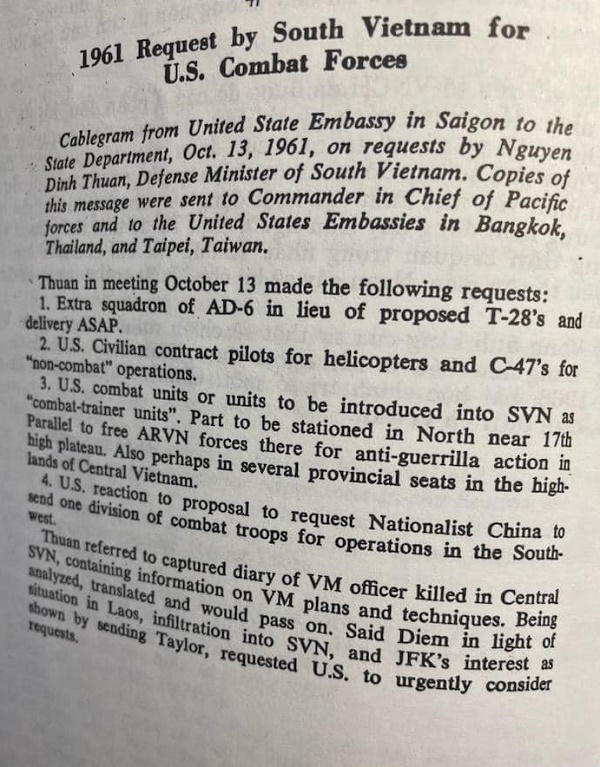
https://sachhiem.net/LICHSU/IMG/NGODD/1961XinQuanMy.jpg
Nguyen Van Tam,
Minister of the Interior of the State of Vietnam and Acting Governor of
Northern Vietnam to June 3, 1952; Prime Minister of the State of Vietnam, June
3, 1952–December 17, 1953.


No comments:
Post a Comment