20261016 CDTL NRM D108 8 May 1975 108. Bản ghi nhớ của các Phụ tá Ngoại trưởng Habib, Gleysteen, Lord và Richard H. Solomon gửi Ngoại trưởng Kissinger.
https://history.state.gov/historicaldocuments/frus1969-76v18/d108
Google Translated
Tài liệu số 108
Quan hệ Đối ngoại Hoa Kỳ, 1969–1976, Tập
XVIII, Trung Quốc, 1973–1976
108. Bản ghi nhớ của các Phụ tá Ngoại trưởng
phụ trách các vấn đề Đông Á và Thái Bình Dương (Habib), Phó Trợ lý Ngoại trưởng
phụ trách các vấn đề Đông Á và Thái Bình Dương (Gleysteen), Giám đốc Ban Hoạch
định Chính sách (Lord) và Richard H. Solomon thuộc Ban tham mưu Hội đồng An
ninh Quốc gia gửi Ngoại trưởng Kissinger
Washington, ngày 8 tháng 5 năm 1975.
CHỦ ĐỀ
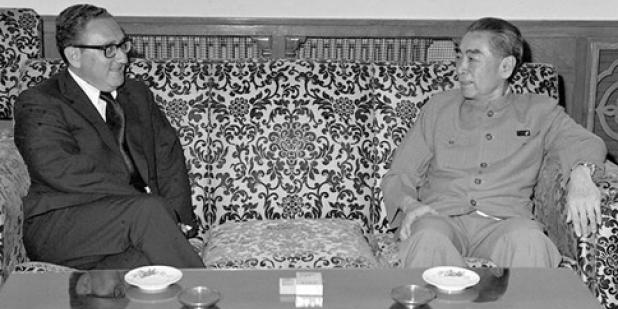
Cuộc trao đổi tổng quan tình hình quốc tế của ông với Hoàng
Trấn vào thứ Sáu, ngày 9 tháng 5 năm 1975, lúc 5 giờ chiều.
Ông đã yêu cầu cuộc gặp này với Trưởng Văn phòng Liên
lạc CHND Tầu cộng, Hoàng Trấn, để rà soát tổng thể các diễn biến
quốc tế. Phiên dịch viên tiếng Trung cho buổi làm việc này nhiều
khả năng sẽ là cô Thẩm Nhược Vân (Shen Jo-yun). Ông Kỳ
(Chi) đã trở về Bắc Kinh. Chúng tôi đề cập đến chi tiết
này một phần vì trình độ tiếng Anh của cô Thẩm không đạt mức như ông Kỳ,
do đó, một số cách diễn đạt hàm súc khi thảo luận về các vấn đề nhạy cảm trong
buổi làm việc có thể sẽ không được cô ấy truyền tải trọn vẹn. Ngoài ra, chúng
tôi luôn băn khoăn về mối quan hệ đặc biệt thân thiết giữa cô Thẩm
và vợ của Mao Trạch Đông là Giang Thanh. Cô Thẩm không tỏ ra cởi
mở, linh hoạt trong các vấn đề chính trị hay có thái độ thiện cảm với mối quan
hệ với Mỹ như ông Kỳ.
Bản ghi nhớ dưới đây được soạn thảo với hai mục đích.
Mục đích chính là để tóm tắt thông tin phục vụ cuộc gặp của ông với ông
Hoàng. Tuy nhiên, chúng tôi cũng sử dụng các phần được đánh dấu riêng
cho từng chủ đề thảo luận để điểm lại những diễn biến kể từ chuyến thăm Bắc
Kinh của ông vào tháng 11 năm 1974, do ông từng bày tỏ mong muốn thảo
luận nhiều chủ đề đa dạng với ông Hoàng. Chúng tôi có chút lo ngại
về độ dài của bản ghi nhớ, nhưng tin rằng đây là cách tốt nhất để cập nhật
thông tin cho ông trước cuộc trao đổi tổng quan này. Mục tiêu của cuộc gặp
Đây sẽ là cuộc thảo luận thực chất quan trọng đầu tiên
của ông với một quan chức CHND Tầu cộng kể từ chuyến thăm Bắc
Kinh lần trước vào tháng 11 năm 1974. Trong khoảng thời gian đó, những
diễn biến tại Đông Dương và các nơi khác đã làm thay đổi căn bản bối cảnh
chính trị mà cả chúng ta và phía Tầu cộng đang hoạt động. (Chúng
tôi sẽ điểm lại chi tiết những thay đổi trong bối cảnh này ở phần dưới.) Chúng
tôi xác định bốn mục đích chính của cuộc gặp này: [Trang 662]
—Ở cấp độ toàn cầu: Thể hiện sự kiên định và
tính chủ đích trong chính sách đối ngoại của Chính quyền; thể hiện quyết tâm tiếp
tục nỗ lực tác động đến các sự kiện thế giới nhằm đạt được những mục tiêu cốt
lõi của chính sách đối ngoại—bất chấp những diễn biến tại Đông Dương và
tâm trạng chính trị trong nước. Về vấn đề này, ông cần phác thảo tình hình thực
tế và các mục tiêu của chúng ta trong nhiều lĩnh vực then chốt, bao gồm: vai
trò của Liên Xô trong các vấn đề thế giới; chuyến thăm châu Âu
của Tổng thống cũng như quan hệ của chúng ta với NATO và Nhật Bản;
triển vọng tại Trung Đông và Vịnh Ba Tư, v.v.
—Châu Á: Cảnh báo phía Tầu cộng về
mối đe dọa đối với lợi ích chung của hai bên nếu những diễn biến gần đây tại Đông
Dương làm gia tăng căng thẳng ở các khu vực khác của châu Á. Đặc biệt,
ông cần bày tỏ lo ngại về những diễn biến có thể xảy ra tại Triều Tiên
sau chuyến thăm Bắc Kinh của Kim Nhật Thành. Đồng thời, ông nên đề
cập đến những vấn đề mà cả hai bên đang đối mặt trong việc ổn định khu vực nhằm
ngăn chặn nỗ lực của Liên Xô trong việc mở rộng ảnh hưởng tại Đông
Nam Á và Đông Bắc Á. Về thực chất, ông nên khéo léo gợi ý về mối liên hệ giữa
sự hợp tác của Tầu cộng đối với các vấn đề liên quan đến nước thứ
ba và những bước tiến xa hơn trong quan hệ song phương giữa hai nước.
—Quan hệ song phương: Tiếp tục tạo thế chủ động
cho cuộc đối thoại về bình thường hóa quan hệ sẽ diễn ra trong những tháng tới.
Quan hệ song phương không nên là trọng tâm của cuộc thảo luận cụ thể này. Tuy
nhiên, ông cần khéo léo ám chỉ với ông Hoàng rằng các lực lượng
chính trị trong nước—vốn đã trỗi dậy mạnh mẽ sau sự sụp đổ vị thế của Mỹ tại
Đông Dương—sẽ không có lợi cho sự phát triển quan hệ Mỹ-Tầu.
Đồng thời, ông cần khẳng định rằng chúng ta vẫn kiên định với tiến trình bình
thường hóa, và có thể đề cập một cách tế nhị về thời điểm Tổng thống thăm Bắc
Kinh. Ông cũng có thể bày tỏ mong muốn duy trì một mối quan hệ chính trị
công khai trong những tháng tới, chẳng hạn như bằng cách đặt vấn đề về thời
gian cho chuyến thăm Tầu cộng của phái đoàn Quốc hội trong
vòng bốn tháng tới (theo nguyên tắc đã được thống nhất vào tháng 11 năm ngoái),
hoặc phản hồi đề nghị của ông Hoàng về việc tạo điều kiện để phu
nhân của ông được gặp gỡ Đệ nhất Phu nhân Mỹ.
Ông nên lường trước việc phía Tầu cộng đang
có phần bối rối, thậm chí là lo ngại thực sự, trước những tuyên bố có vẻ mâu
thuẫn về chính sách đối với Tầu cộng do Tổng thống, chính
ông và Bộ trưởng Schlesinger đưa ra gần đây—đặc biệt là tuyên bố
của ông Ford trong cuộc họp báo ngày 6 tháng 5 về ý định "tái khẳng
định các cam kết của chúng ta đối với Đài Loan". Ông không
nên chủ động đưa ra lời giải thích mang tính thanh minh về những tuyên bố có vẻ
mâu thuẫn này, mà hãy chờ xem liệu ông Hoàng có đặt câu hỏi về
chúng hay không. Nếu ông ta không làm vậy, vào cuối buổi họp, ông có thể [Trang
663] kết luận bằng cách khẳng định rằng cam kết của chúng ta về việc bình thường
hóa quan hệ vẫn không thay đổi, đồng thời nhấn mạnh cần đặc biệt lưu ý đến bài
phát biểu của Tổng thống trước Quốc hội ngày 10 tháng 4 và cuộc họp
báo của ông vào ngày 29 tháng 4, coi đó là những tuyên bố chính thức thể hiện lập
trường nhất quán của chúng ta.
—Quan điểm của Trung Quốc: Cố gắng khơi gợi để Huang
Chen (Hoàng Trấn) chia sẻ về cách nhìn nhận của CHND Tầu cộng
đối với các diễn biến gần đây cũng như ý định trước mắt của họ tại khu vực châu
Á và những nơi khác. Khi chuẩn bị cho cuộc thảo luận này, chắc hẳn ông ta
đã nhận được những chỉ đạo mới mang tính thực chất từ Bắc Kinh.
Có khả năng ông sẽ nắm bắt được những thông tin giá trị từ ông ta về quan điểm
của Tầu cộng đối với các diễn biến gần đây—thay vì chỉ thực hiện
kiểu độc thoại vốn thường thấy trong hầu hết các cuộc gặp trước đây giữa ông và
Huang.
Bối cảnh chính trị đã thay đổi
Sự suy giảm nhanh chóng vị thế của Hoa Kỳ tại Đông
Dương cùng các diễn biến khác (ví dụ: tình hình sườn phía nam NATO và Trung
Đông) đã làm thay đổi đáng kể cục diện chính trị mà chúng ta và Cộng hòa
Nhân dân Tầu cộng (PRC) sẽ hoạt động trong năm tới. Đối với Hoa
Kỳ, sự sụp đổ của các chính quyền thân Mỹ tại Sài Gòn và Phnom Penh
đã mở ra giai đoạn đánh giá lại quan hệ với các chính phủ khác ở châu Á. Tất
yếu, viễn cảnh trước mắt là khả năng duy trì và phát huy ảnh hưởng của Hoa Kỳ tại
khu vực này sẽ bị hạn chế thêm.
Các diễn biến gần đây cũng làm phức tạp thêm bối cảnh
chính trị ảnh hưởng đến tiến trình bình thường hóa quan hệ. Những người trong
nước phản đối việc bình thường hóa sẽ nhấn mạnh sự cần thiết phải duy trì mọi
quan hệ an ninh hiện có nhằm ngăn chặn tình trạng xói mòn thêm lòng tin vào ý định
cũng như uy tín đối với các cam kết của chúng ta. Các chính phủ thân thiện vẫn
trông cậy vào sự hỗ trợ an ninh từ Hoa Kỳ sẽ coi những hành động của
chúng ta trong vài tháng tới là thước đo cho thấy cách chúng ta sắp xếp lại các
ưu tiên và ứng phó với những hạn chế mà Quốc hội đặt ra đối với chính
sách đối ngoại.
Về phản ứng của Bắc Kinh trước các sự kiện
gần đây, chúng ta đã nhận được nhiều tín hiệu từ các báo cáo ngoại giao và tình
báo (CAS) cho thấy phía Tầu cộng mong muốn Hoa Kỳ duy
trì vai trò ổn định và vững chắc tại châu Á cũng như trên thế giới—đặc
biệt là trong việc đối trọng với Liên Xô. Như Ngoại trưởng
Kiều Quán Hoa (Ch’iao Kuan-hua) đã phát biểu trước một nhóm nhà báo
Anh vào cuối tháng 4 (có thể là nhằm mục đích tạo dựng hình ảnh trước công
chúng): "Chiến thắng của phe Cộng sản tại Việt Nam đã trút bỏ gánh nặng
khỏi vai Hoa Kỳ, và giờ đây có lẽ họ có thể đóng vai trò tích cực hơn tại khu vực
Thái Bình Dương. Chắc chắn rằng Liên Xô sẽ mở rộng ảnh hưởng ở
bất cứ nơi nào có thể." [Trang 664]
Đối với Bắc Kinh, những thắng lợi
nhanh chóng đến mức gây kinh ngạc của lực lượng nổi dậy tại Việt Nam
và Campuchia đã tạo ra những nhân tố mới quan trọng, buộc Cộng
hòa Nhân dân Tầu cộng phải đóng vai trò tích cực hơn tại khu vực châu
Á. Tầu cộng đang phải đối mặt với những lựa chọn chính sách ngày
càng nan giải giữa các tuyên bố về ý thức hệ, lợi ích của các đồng minh láng giềng,
các mục tiêu quốc gia của chính mình và những nước đi chiến lược của Liên
Xô. Như đã được thể hiện rõ nét nhất qua chuyến thăm Bắc Kinh của
Kim Nhật Thành, các nước láng giềng (cả về mặt địa lý lẫn ý thức hệ) của
Trung Quốc đang nỗ lực theo đuổi lợi ích riêng—trong bối cảnh sự
hiện diện của Mỹ tại khu vực còn nhiều bất định—theo những cách đi ngược lại
các mục tiêu chính sách đối ngoại của Bắc Kinh. Cả Bình Nhưỡng
và Hà Nội đều tỏ ra rất khéo léo trong việc gây ảnh hưởng lên Bắc
Kinh thông qua sự kết hợp giữa việc duy trì quan hệ với Liên Xô
và việc tranh thủ sự ủng hộ từ các quốc gia "thế giới thứ ba" mà Tầu
cộng muốn lôi kéo.
Chắc chắn rằng hiện nay, Trung Quốc đang
lo ngại hơn bao giờ hết về việc Nga tìm cách thâm nhập vào các
khu vực ngay sát biên giới của họ. Điều này có thể diễn ra thông qua các nước
đi ngoại giao, khi Hà Nội, Bangkok và các quốc gia khác trong khu vực tìm kiếm
sự an ninh cao hơn cũng như sự linh hoạt về chính trị bằng cách cân bằng áp lực
từ các cường quốc. Nó cũng có thể nảy sinh từ sự xuất hiện của những điểm nóng
bất ổn mới—điều dường như rất dễ xảy ra tại bán đảo Triều Tiên. Mọi
bằng chứng đều cho thấy Bắc Kinh vẫn coi việc phát triển quan hệ
với Mỹ là có lợi cho mình và không hề muốn loại bỏ hoàn toàn sự hiện diện của
Mỹ khỏi châu Á. Tuy nhiên, Tầu cộng dường như lại mong muốn củng
cố hơn nữa sự hiện diện quân sự của Mỹ, dù có thể chỉ giới hạn ở Nhật Bản,
Okinawa và Guam.
Vấn đề đặt ra ở đây là làm thế nào để xây dựng mối
quan hệ hợp tác tích cực với phía Tầu cộng về các vấn đề khu vực
mà hai bên cùng quan tâm (đặc biệt là trường hợp bán đảo Triều Tiên).
Chúng ta ngày càng đối mặt với tình huống mà phía Tầu cộng mong đợi
sự hỗ trợ của ta trong những lĩnh vực họ đặc biệt quan tâm nhưng lại bị hạn chế
về khả năng hành động (chẳng hạn như các yêu cầu liên tục về việc viện trợ cho Pakistan,
sự ủng hộ về mặt ngoại giao đối với các nỗ lực đàm phán của ông tại Trung
Đông, và—ở phạm vi rộng hơn—việc họ khuyến khích các nỗ lực của ta nhằm đối
phó với Liên Xô); trong khi đó, họ lại tỏ ra xa cách và thiếu hợp
tác trong các vấn đề cốt yếu đối với an ninh của chính họ (như vấn đề Đông
Dương và Triều Tiên).
Mặc dù có thể lý giải tình trạng này bằng những nước
đi phức tạp mà Bắc Kinh buộc phải thực hiện để cân bằng giữa lợi
ích của các nước láng giềng nhỏ bé ở vùng ngoại vi và áp lực từ phía Liên
Xô, nhưng thực tế này vẫn dẫn đến việc ngày càng nhiều người đặt câu hỏi:
"Chúng ta nhận được gì từ mối quan hệ với CHND Tầu cộng?"
Tóm lại, phía Tầu cộng cần hiểu rõ (và có lẽ họ cũng đã hiểu) rằng
sự đồng thuận chính trị trong nước—yếu tố vốn ủng hộ tiến trình bình thường hóa
quan hệ bấy lâu nay—đang dần thay đổi; kéo theo đó là sự thay đổi về triển vọng
phát triển một mối quan hệ có khả năng tăng cường an ninh cho cả CHND Tầu
cộng lẫn Hoa Kỳ. [Trang 665]
Các lĩnh vực cụ thể cần thảo luận
Tại các mục đánh dấu dưới đây là phần tóm tắt ngắn gọn
về những diễn biến gần đây trong các lĩnh vực cụ thể mà chúng tôi cho rằng ông
nên đề cập trong cuộc thảo luận. Theo sau phần tóm tắt là các gợi ý về nội dung
trao đổi. Chúng tôi sắp xếp các chủ đề theo trình tự dự kiến nên được đưa ra
thảo luận. Như đã lưu ý ở trên, chúng tôi cho rằng các vấn đề song phương nên
được đề cập ở mức độ hạn chế và để lại cho phần cuối của cuộc thảo luận, mặc dù
cũng cần có sự làm rõ một cách nhẹ nhàng về những phát biểu của Tổng thống
tại cuộc họp báo ngày 6 tháng 5 liên quan đến vấn đề Đài Loan.
1. Nguồn:
Thư viện Ford, Cố vấn An ninh Quốc gia, Hồ sơ Văn phòng Cánh Tây của Kissinger-Scowcroft,
1969–1977, Hộp 5, Tầu cộng, các tài liệu không đánh số (12),
8/5/75–9/5/75. Mật; Nhạy cảm. Được gửi đi để xử lý. Solomon ký tắt thay
mặt cho Habib, Gleysteen và Lord. Một ghi chú viết tay cho thấy một bản
sao đã được gửi cho Scowcroft. Bản ghi nhớ được soạn trên giấy tiêu đề của
Hội đồng An ninh Quốc gia.↩
2. Bản
ghi chép cuộc họp báo này được in trong *Public Papers: Ford, 1975* (Các
văn bản công khai: Ford, 1975), Tập I, tr. 641–652.↩
3. Xem
chú thích số 3, Tài liệu 106. Nội dung cuộc họp báo ngày 29 tháng 4 của Kissinger
được in trong *Department of State Bulletin* (Bản tin Bộ Ngoại giao),
ngày 19 tháng 5 năm 1975, tr. 625–633.↩
4. Các
tài liệu tóm tắt và các ý chính (talking points) do nhân viên NSC soạn
thảo về Đông Dương, Triều Tiên, Liên Xô, Châu Âu, Trung Đông, Nam Á và
quan hệ song phương Mỹ–Tầu cộng được đính kèm nhưng không
được in trong tài liệu này.↩
Historical Documents - Office of the Historian
https://history.state.gov/historicaldocuments/frus1969-76v18/sources
https://history.state.gov/historicaldocuments/frus1969-76v18/terms
https://history.state.gov/historicaldocuments/frus1969-76v18/persons
https://history.state.gov/historicaldocuments/frus1969-76v18/comp1
Move Toward Normalization of Relations, October 1974–July 1975 (Documents 88–116)
https://history.state.gov/historicaldocuments/frus1969-76v18/ch3
1.
Document 108
Foreign Relations of the United States, 1969–1976, Volume
XVIII, China, 1973–1976
108.
Memorandum From the Assistant Secretary of State for East Asian and Pacific
Affairs (Habib), the Deputy Assistant Secretary of State for East Asian and
Pacific Affairs (Gleysteen), the Director of the Policy Planning Staff (Lord),
and Richard H. Solomon of the National Security Council Staff to Secretary of
State Kissinger1
Washington,
May 8, 1975.
SUBJECT
· Your
Tour d’Horizon with Huang Chen on Friday, May 9, 1975, at 5:00 p.m.
You requested this meeting with PRC Liaison Office Chief
Huang Chen for a general review of international developments. The Chinese
interpreter for this session is likely to be Miss Shen Jo-yun. Mr. Chi has
returned to Peking. We mention this in part because Miss Shen’s English is not
up to Mr. Chi’s standard, and hence some of the more elliptical ways of
discussing the delicate issues which will be covered in this session may not
get through to her. In addition, we have always wondered about Miss Shen’s
particularly close association with Mao’s wife, Chiang Ch’ing. She (Shen) has
not presented herself as open and flexible on political issues, or as
sympathetic to the American connection, as Mr.Chi.
The following memorandum has been put together with two
purposes in mind. Primarily it is to brief you for your meeting with Huang.
However, we also use the tabbed sections on the various topics for discussion
to review developments since your November, 1974 visit to Peking, inasmuch as
you indicated an interest in covering a wide range of topics with Huang. We are
concerned about the length of the memo, but feel it is the best way to bring
you up to date for your tour d’horizon.
The Objectives of the Meeting
This will be your first major substantive discussion with a
PRC official since your last trip to Peking in November, 1974. In the interim,
developments in Indochina and elsewhere have radically transformed the
political context within which both we and the Chinese are operating. (We
review changes in this context in some detail below.) We see four primary
purposes to be served by the meeting:[Page 662]
- —Global: To project firmness and purposefulness regarding the
Administration’s foreign policy; a sense of determination to persist in
efforts to influence world events in order to attain the primary goals of
our foreign policy—despite the developments in Indochina and our domestic
political mood. In this regard, you should outline the state of play and
our objectives in various key areas, including: the Soviet factor in world
affairs; the President’s trip to Europe and our relations with NATO and
Japan; prospects for the Middle East and Persian Gulf, etc.
- —Asia: To caution the Chinese about the threat to our shared
interests if recent developments in Indochina heighten tensions in other
parts of Asia. You should, in particular, indicate concern about possible
developments in Korea in the wake of Kim Il-song’s visit to Peking. At the
same time, you should mention the problems we both now face in stabilizing
the region so that the Soviets are impeded in their efforts to seek
greater access to Southeast and Northeast Asia. In effect, you should
imply possible linkage between Chinese cooperation on third-country issues
and further progress in our bilateral relations.
·
—Bilateral: To further position ourselves for the
dialogue in coming months on normalization. Bilateral relations should not
comprise a major element in this particular discussion. However, you should
obliquely indicate to Huang that the domestic political forces which have been
mobilized in the wake of the collapse of the American position in Indochina
will not be helpful to the evolution of U.S.–PRC relations. At the same time,
you should state that we continue to adhere to the normalization process, and
perhaps make some low-key reference to the question of the timing of the
President’s visit to Peking. You may also wish to indicate an interest in
sustaining a visible political relationship over the coming months, as by
raising the question of the timing of a Congressional visit to the PRC in the
next four months (as was agreed to in principle last November), or by
responding to Huang’s request that his wife have an opportunity to call on the
First Lady.
You should assume that
the Chinese are somewhat confused, and perhaps actively disturbed, by
apparently contradictory statements on China policy made recently by the
President, yourself, and Secretary Schlesinger—particularly Mr. Ford’s
statement in his press conference of May 6 that he intends to “reaffirm our
commitments to Taiwan.”2 You
should not initiate a defensive comment on these apparently contradictory
statements, but wait to see whether Huang raises any questions about them. If
he does not, at the end of the session you might [Page 663]conclude by stating that
our commitment to normalization is unchanged, and that particular attention
should be paid to the President’s speech to the Congress of April 10, and your
press conference of April 29, as authoritative expressions of our constant
position.3
- —Chinese views: To seek to draw Huang Chen out on PRC
perceptions of recent developments and their immediate intentions in the
Asian region and elsewhere. In preparing for this discussion he will have
received some new substantive guidance from Peking. Conceivably you will
be able to gain some insight from him regarding Chinese perspectives on
recent developments—rather than just conducting the kind of monologue that
has characterized most of your sessions with Huang.
The Altered Political Context
The rapid erosion of the American presence in Indochina and
other developments (e.g., southern NATO and the Middle East) has substantially
altered the political climate within which we and the PRC will operate over the
coming year. For the U.S. the collapse of friendly governments in Saigon and
Phnom Penh has initiated a period of retesting our relationships with other
governments in Asia. Inevitably the prospect is one of some further reduction
of our ability to project American influence in the region.
Recent developments have also substantially complicated the
political context which will affect the normalization process. Domestic critics
of normalization will assert the need to hold to all existing security
relationships to prevent the further erosion of trust in our intentions and the
credibility of our commitments. Friendly foreign governments which still look
to the U.S. for security assistance will interpret our actions over the coming
months as indicators of how we are reordering our priorities and coping with
Congressional constraints on foreign policy.
As far as Peking’s reaction to recent devents is concerned,
we have received multiple indications from diplomatic and CAS reporting that
the Chinese hope for a sustained, if consolidated, American role in Asia and
the world—principally in countering the Soviets. As Foreign Minister Ch’iao
Kuan-hua (perhaps posturing somewhat for his audience) told a group of British
journalists in late April, “The Communist victory in Vietnam has unloaded a
burden off the back of the United States, and now they can maybe play a more
positive role in the Pacific. Certainly, the Soviets will expand anywhere they
are able.”
For Peking, the stunningly rapid insurgent victories in
Vietnam and Cambodia have generated substantial new forces which will require
the PRC to play a more active role in the Asian region. The Chinese already
face increasingly difficult policy choices between their ideological
pretentions, the interests of neighboring allies, the PRC’s own national
objectives, and the maneuverings of the Soviets. As was most vividly revealed
in Kim Il-song’s visit to Peking, China’s ideological and geographical neighbors
are pressing (in the face of an uncertain American presence in the region) to
pursue their own interests in ways which cut across Peking’s foreign policy
objectives. Both Pyongyang and Hanoi have shown considerable skill in
influencing Peking through a combination of dealings with the Soviets and
cultivation of China’s would-be “third world” constituency.
The Chinese are undoubtedly more concerned than ever now
about the Russians finding openings in areas on their immediate periphery. This
might come about through diplomatic maneuvering, as Hanoi, Bangkok, and other
states in the region seek greater security and political flexibility through
balanced big-power pressures. It might also come about as a result of the
development of new areas of instability—as seems most likely in Korea. By all
evidence, Peking continues to see its interests served by further developing
its relationship with the U.S. and does not desire to push the American
presence totally out of Asia. The Chinese do, however, seem to look toward
further consolidation of our military presence, limited perhaps to Japan,
Okinawa, and Guam.
Our problem, in this regard, is how to develop a positive
working relationship with the Chinese on regional issues of mutual concern (as
should be the case, in particular, in Korea). We are increasingly faced with a
situation where the Chinese expect our help in areas of high concern to them
where their ability to act is limited (as in their repeated requests for aid to
Pakistan, their diplomatic support for your negotiating efforts in the Middle
East, and—most generally—their encouragement of our efforts to counter the
Soviets) while they remain aloof and generally uncooperative in areas central
to their security (as in Indochina and Korea).
While one can explain away this situation in terms of the
complicated game Peking must play in maneuvering between the interests of its
small peripheral neighbors and Soviet pressures, it nonetheless creates a
situation where people increasingly ask, “What are we getting out of our
relationship with the PRC?” In short, the Chinese must understand (as perhaps
they do) that the domestic political consensus which thus far has supported
normalization is changing—and with it the prospects for developing the kind of
a relationship which would enhance the security of both the PRC and the U.S.
Specific Areas for Discussion
At the following tabs are brief summaries of recent
developments in the specific areas we believe you should cover in the
discussion. The summaries are followed by suggestive talking points. We present
the various topics roughly in the order we think they should be raised.4 As
noted above, we believe bilateral issues should be downplayed, and left for the
end of the discussion, although some low-key clarification of the President’s
May 6 press conference remarks on Taiwan is in order.
1.
Source: Ford Library, National Security Adviser,
Kissinger-Scowcroft West Wing Office Files, 1969–1977, Box 5, China, unnumbered
items (12), 5/8/75–5/9/75. Secret; Sensitive. Sent for action. Solomon
initialed for Habib, Gleysteen, and Lord. A handwritten notation indicates that
a copy was sent to Scowcroft. The memorandum is on National Security Council
stationery.↩
2.
A transcript of this press conference is printed in Public
Papers: Ford, 1975, vol. I, pp. 641–652.↩
3.
See footnote 3,
Document 106. The text of Kissinger’s April 29 press conference is
printed in Department of State Bulletin, May 19, 1975, pp. 625–633.↩
4.
Attached but not printed are briefing papers and talking
points prepared by the NSC Staff on Indochina, Korea, the Soviet Union, Europe,
the Middle East, South Asia, and U.S.–PRC bilateral relations.↩
https://history.state.gov/historicaldocuments/frus1969-76v18/d108
https://history.state.gov/historicaldocuments/frus1969-76v18/pg_662
https://history.state.gov/historicaldocuments/frus1969-76v18/pg_663
https://history.state.gov/historicaldocuments/frus1969-76v18/pg_664
https://history.state.gov/historicaldocuments/frus1969-76v18/pg_665
https://history.state.gov/historicaldocuments/frus1969-76v18/d106fn3
Thân thế (các) nhân vật
Jiang Qing (Chiang Ching), Giang Thanh
wife of Mao Zedong; member of the CCP Politburo until October 1976
https://en.wikipedia.org/wiki/Jiang_Qing
https://www.britannica.com/biography/Jiang-Qing
https://www.nytimes.com/2026/03/06/world/asia/jiang-qing-dead.html
https://www.marxists.org/archive/jiang-qing/index.htm
https://www.marxists.org/archive/jiang-qing/index.htm
Jiang Qing: Blood and Revenge in the Cultural Revolution
https://www.youtube.com/watch?v=chk0Cc9ks0w
Jiang Qing - The Madness of Madame Mao Documentary
https://www.youtube.com/watch?v=ObWsxjp3w8w
Jiang Qing vs Deng Xiaoping | Duels of History | ARTE.tv Documentary
https://www.youtube.com/watch?v=Im1Z-r_xsec
Jiang Qing Giang Thanh
https://chineseposters.net/themes/jiangqing
https://alphahistory.com/chineserevolution/jiang-qing/
Ford, Gerald R.,
Republican Representative from Michigan until October 13, 1973; House
Minority Leader until October 13, 1973; Vice President of the United States
from October 13, 1973, until August 8, 1974; President of the United States
from August 8, 1974
https://en.wikipedia.org/wiki/Gerald_Ford
https://en.wikipedia.org/wiki/President_of_the_United_States
https://en.wikipedia.org/wiki/Vice_President_of_the_United_States
https://en.wikipedia.org/wiki/House_Minority_Leader
https://en.wikipedia.org/wiki/Leader_of_the_House_Republican_Conference
https://en.wikipedia.org/wiki/Chair_of_the_House_Republican_Conference
https://en.wikipedia.org/wiki/United_States_House_of_Representatives
https://www.whitehouse.gov/about-the-white-house/presidents/gerald-r-ford/
https://www.whitehouse.gov/administration/
https://geraldrfordfoundation.org/gerald-r-ford-biography/
https://www.fordlibrarymuseum.gov/grf/timeline.asp
https://en.wikipedia.org/wiki/Presidency_of_Gerald_Ford
https://www.fordlibrarymuseum.gov/library/guides/findingaid/ford_vp_papers.asp
Gleysteen, William H., Jr.,
Deputy Director, Office of United Nations Political Affairs, Bureau of
International Organization Affairs, Department of State, from August 1966
https://en.wikipedia.org/wiki/William_H._Gleysteen
https://en.wikipedia.org/wiki/United_States_Ambassador_to_South_Korea
https://adst.org/OH%20TOCs/Gleysteen,%20William%20H.,%20Jr.toc.pdf
member, U.S. Delegation to the Paris Peace
Talks from May 1968 until October 1971; Ambassador to Korea from September 30,
1971, until August 19, 1974; Assistant Secretary of State for East Asian and
Pacific Affairs from September 27, 1974
https://en.wikipedia.org/wiki/Philip_C._Habib
https://en.wikipedia.org/wiki/Under_Secretary_of_State_for_Political_Affairs
https://en.wikipedia.org/wiki/Assistant_Secretary_of_State_for_East_Asian_and_Pacific_Affairs
https://en.wikipedia.org/wiki/United_States_Ambassador_to_Korea
https://diplomacy.state.gov/u-s-diplomact-philip-c-habib-presidential-medal-of-freedom-winner/
https://nsuworks.nova.edu/nsudigital_forums/13/
https://www.arabamerica.com/arabamericans/philip-habib-3/
https://www.britannica.com/biography/Philip-Charles-Habib
Huang Zhen (Huang Chen),
PRC Ambassador to France until March 1973; Chief of the PRC Liaison
Office in the United States from March 1973
https://en.wikipedia.org/wiki/Huang_Zhen
https://en.wikisource.org/wiki/Author:Huang_Zhen
https://2001-2009.state.gov/documents/organization/72591.pdf
https://nsarchive2.gwu.edu/NSAEBB/NSAEBB79/BEBB23.pdf
https://www.fordlibrarymuseum.gov/sites/default/files/2024-06/1552743.pdf
https://www.britishpathe.com/asset/236303/
https://mediaclip.ina.fr/en/caf97507056-credentials-huang-chen-at-the-elysee.html
https://history.state.gov/historicaldocuments/frus1969-76ve13/d12
Kim Il-sung (Kim Il Sung),
President (Chairman of the Presidium of the Supreme People’s Assembly)
of the DPRK and General Secretary of the Central Committee of the Workers’
Party of Korea
https://en.wikipedia.org/wiki/Kim_Il_Sung
https://www.britannica.com/biography/Kim-Il-Sung
https://2009-2017.state.gov/outofdate/bgn/northkorea/74220.htm
https://world.kbs.co.kr/special/northkorea/contents/archives/supreme_leader/kim_il_sung.htm?lang=e
Henry A Kissinger
Assistant to the President for National Security Affairs until
November 3, 1975; also Secretary of State from September 21, 1973
https://www.theguardian.com/world/2023/may/20/bilderberg-meeting-group-lisbon-kissinger
https://www.theguardian.com/world/bilderberg
https://history.state.gov/historicaldocuments/frus1969-76ve13/summary
https://china.usc.edu/getting-beijing-henry-kissingers-secret-1971-trip
https://china.usc.edu/catalog/documents/us-china
http://www.archives.gov/press/press-releases/2001/nr01-47.html
https://china.usc.edu/talking-points-july-22-august-3-2011
https://china.usc.edu/getting-beijing-henry-kissingers-secret-1971-trip#meetings
https://china.usc.edu/getting-beijing-henry-kissingers-secret-1971-trip#nixon-announcement
https://china.usc.edu/getting-beijing-henry-kissingers-secret-1971-trip#chinese-accept
https://china.usc.edu/getting-beijing-henry-kissingers-secret-1971-trip#signals
https://china.usc.edu/getting-beijing-henry-kissingers-secret-1971-trip#the_aim
http://www.foreignaffairs.com/articles/23927/richard-m-nixon/asia-after-viet-nam
https://history.state.gov/historicaldocuments/frus1969-76v17/d4
https://history.state.gov/historicaldocuments/frus1969-76v17/d12
https://history.state.gov/historicaldocuments/frus1969-76v17/d13
https://history.state.gov/historicaldocuments/frus1969-76v17/d141
https://2001-2009.state.gov/documents/organization/100324.pdf
https://en.wikipedia.org/wiki/Henry_Kissinger_and_the_Vietnam_War
Lesson in Vietnam from
Kissinger to Nixon: “when we made it “our war” we would not let
the South Vietnamese fight it; when it again became “their war”, we would not
help them fight it.”
(We
also had trouble with excesses here: when we
made it “our war” we would not let the South Vietnamese fight it; when it again
became “their war,” we would not help them fight it. Ironically, we
prepared the South Vietnamese for main force warfare after 1954 (anticipating another Korean-type attack), and they faced a political war; they had prepared
themselves for political warfare after 1973 only to be faced with a main force
invasion 20 years after it had been expected.)
https://history.state.gov/historicaldocuments/frus1969-76v10/d280
Lesson of Vietnam May 12 1975 by Henry A. Kissinger
https://www.fordlibrarymuseum.gov/library/exhibits/vietnam/032400091-002.pdf
https://thebattleofkontum.com/extras/kissinger.html
“Richard M. Nixon and Kissinger on 3 August 1972,” Conversation 760-006,
Presidential Recordings Digital Edition [Fatal Politics, ed. Ken Huges]
(Charlottesville: University of Virginia Press, 2014-). URL:https://prde.upress.virginia.edu/conversations/4006748
https://player.vimeo.com/video/889937807?h=e44572c8f3&color=e57200&title=0&byline=0&portrait=0
https://player.vimeo.com/video/889937807?h=e44572c8f3&color=e57200&title=0&byline=0&portrait=0
Discover the Truth at:
https://www.theblackvault.com/documentarchive/the-cias-vietnam-document-cd-rom/
The secret life of Henry
Kissinger minutes of a 1975 meeting with Lawrence Eagleburger
https://etan.org/news/kissinger/secret.htm
Henry Kissinger and the Truth About Negotiations In Vietnam
https://www.youtube.com/watch?v=Z5fxxKVfX5g
Henry Kissinger - Secrets of a superpower | DW Documentary
https://www.youtube.com/watch?v=bWVMTKeAwlA
The Untold Truth of Henry Kissinger
https://www.youtube.com/watch?v=0iheZdvWdbI&t=1s
Was Henry Kissinger a War Criminal?
https://www.youtube.com/watch?v=COqq7862wcU&t=25s
member, National Security Council staff until
1973; Director of the Policy Planning Staff, Department of State from October
1973 until January 1977
https://en.wikipedia.org/wiki/Winston_Lord
https://en.wikipedia.org/wiki/Assistant_Secretary_of_State_for_East_Asian_and_Pacific_Affairs
https://en.wikipedia.org/wiki/List_of_ambassadors_of_the_United_States_to_China
https://en.wikipedia.org/wiki/Council_on_Foreign_Relations
https://en.wikipedia.org/wiki/Director_of_Policy_Planning
https://www.brookings.edu/wp-content/uploads/2016/07/19981208.pdf
https://www.brookings.edu/wp-content/uploads/2016/07/19991104.pdf
https://nsarchive.gwu.edu/document/22669-document-04-winston-lord-director-policy
https://www.ncafp.org/about-us/faps-board-of-advisors/ambassador-winston-lord/
Chiao Kuan-hua, (Qiao
Guanhua)
Vice Foreign Minister, People’s Republic of China
https://en.wikipedia.org/wiki/Qiao_Guanhua
https://history.state.gov/historicaldocuments/frus1969-76ve13/d124
https://www.marxists.org/subject/china/china-reconstructs/1974/CR1974-12-Sup.pdf
SYND 25-11-71 CHINESE DELEGATE CHIAO KUAN HUA SPEAKS ABOUT DISARMAMENT
AT THE UN
https://www.youtube.com/watch?v=bjnyWtitbrg
Chairman
of the Atomic Energy Commission until February 1973; Director of Central
Intelligence from February 2 until July 2, 1973; Secretary of Defense from July
2, 1973, until November 19, 1975
https://en.wikipedia.org/wiki/James_R._Schlesinger
https://en.wikipedia.org/wiki/James_R._Schlesinger
https://en.wikipedia.org/wiki/United_States_Secretary_of_Energy
https://en.wikipedia.org/wiki/United_States_Secretary_of_Defense
https://en.wikipedia.org/wiki/Director_of_Central_Intelligence
https://en.wikipedia.org/wiki/United_States_Atomic_Energy_Commission
https://history.defense.gov/Multimedia/Biographies/Article-View/Article/571289/james-r-schlesinger/
https://apnews.com/obituaries-ecc8779791ee4ab7973cf58b7d355305
https://www.encyclopedia.com/people/history/us-history-biographies/james-rodney-schlesinger
General, USAF, Military Assistant to the
President until 1973; Deputy Assistant to the President for National Security
Affairs from August 1973 until 1975
https://warontherocks.com/2020/08/brent-scowcroft-and-american-military-intervention/
https://warontherocks.com/2020/08/blame-it-on-the-blob-how-to-evaluate-american-grand-strategy/
https://www.aspeninstitute.org/programs/aspen-strategy-group/about-asg/
https://www.whitehouse.gov/piab/
https://www.publicaffairsbooks.com/titles/bartholomew-sparrow/the-strategist/9781586489632/
http://web1.millercenter.org/poh/transcripts/ohp_1999_1112_scowcroft.pdf
https://www.nytimes.com/2020/08/12/us/politics/brent-scowcroft.html
https://www.foreignaffairs.com/articles/united-states/2020-08-13/scowcroft-model
https://archive.org/stream/towercommission00unit?ref=ol#mode/2up
https://www.twelvebooks.com/titles/philip-zelikow/to-build-a-better-world/9781538764688/
https://yalebooks.yale.edu/book/9780300233827/post-wall-post-square
https://yalebooks.yale.edu/book/9780300233827/post-wall-post-square
https://www.simonandschuster.com/books/War-in-a-Time-of-Peace/David-Halberstam/9781501141508
https://www.adst.org/OH%20TOCs/Inderfurth,Karl%20F.toc.pdf
https://www.wsj.com/articles/SB1029371773228069195
https://www.nytimes.com/2002/08/25/opinion/the-right-way-to-change-a-regime.html
https://www.penguinrandomhouse.com/books/592622/to-start-a-war-by-robert-draper/
https://pdfs.semanticscholar.org/de9b/be3fa428073b76a05fbb58739bf3279c3664.pdf
https://www.ft.com/content/de843f6e-0be1-4667-8a9f-f397cf840e72
https://www.houseofnames.com/brent-family-crest
https://www.houseofnames.com/dpreview/BRENT/EN/Brent/family-crest-coat-of-arms.png
https://www.houseofnames.com/cdn/webp/i/prod/520x520/surnamecomplete_gold.webp
https://www.aspeninstitute.org/programs/aspen-strategy-group/lt-general-brent-scowcroft/
https://dpaa-mil.sites.crmforce.mil/dpaaProfile?id=a0Jt000000sxxIFEAY
https://www.fordlibrarymuseum.gov/library/document/0204/7505562.pdf
https://news.virginia.edu/content/uvas-miller-center-releases-secret-brent-scowcroft-oral-history
Shen, James C. H.,
ROC Ambassador to the United States
https://en.wikipedia.org/wiki/James_Shen
https://history.state.gov/historicaldocuments/frus1969-76v18/d46
https://grokipedia.com/page/james_shen
https://taiwantoday.tw/AMP/Politics/Taiwan-Review/4824/The-anatomy-of-a-traumatic-decade
https://rotaryinchina.org/shen-james-c-h-%E6%B2%88%E5%8A%8D%E8%99%B9%E8%87%BA%E5%8C%97/
Solomon, Richard H.,
member, National Security Council
staff
https://en.wikipedia.org/wiki/Richard_H._Solomon
https://www.academyofdiplomacy.org/members-1/solomon/richard-h.
https://carnegiecouncil.org/people/richard-h-solomon
https://www.c-span.org/person/richard-h-solomon/9004/
https://www.chinafile.com/contributors/richard-h-solomon
https://findingaids.lib.umich.edu/catalog/umich-bhl-2008034
https://www.presidency.ucsb.edu/documents/nomination-richard-h-solomon-be-assistant-secretary-state


No comments:
Post a Comment