20260830 CDTL NRM D61 14 November 1973 61. Biên bản ghi chép cuộc Hội đàm.
https://history.state.gov/historicaldocuments/frus1969-76v18/d61
Google Translated
Tài liệu số 61
Quan hệ Đối ngoại của Hoa Kỳ, 1969–1976, Tập
XVIII, Trung Quốc, 1973–1976
61. Biên bản ghi chép cuộc hội đàm.
Bắc Kinh, ngày 14 tháng 11 năm 1973, 7:35–8:25 sáng.
THÀNH PHẦN THAM DỰ
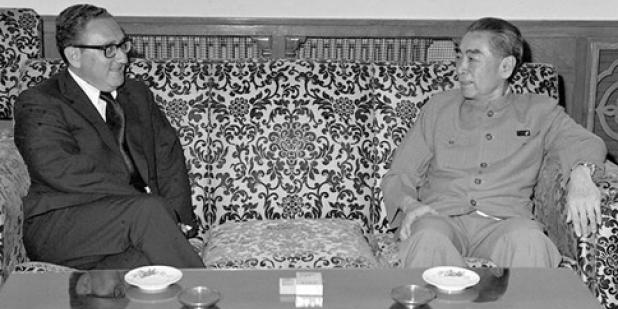
Thủ tướng Chu Ân Lai
Đường Văn Sinh, Phiên dịch viên
Ngoại trưởng Henry A. Kissinger
Chỉ huy Jonathan T. Howe, Cán bộ Hội đồng An ninh Quốc
gia (NSC)
Bà Bonnie Andrews,
Thư ký ghi chép
CHỦ ĐỀ
Nhật Bản, Quốc hội,
Pakistan
Thủ tướng Chu: Tôi muốn thảo luận với ông về đánh giá của chúng tôi đối
với Nhật Bản. Ông đã đề cập đến hai khả năng có thể xảy ra. Còn có một khả năng
thứ ba, bởi vì họ đang nằm dưới chiếc ô hạt nhân của các ông và họ có một quan
điểm rất rõ ràng. Và khi đặt chân đến đất Nhật, ông sẽ thấy rằng nếu thiếu đi
chiếc ô bảo trợ của Mỹ, họ sẽ rơi vào tình cảnh như thế nào. Khi đó, họ sẽ phải
nương tựa vào một chiếc ô hạt nhân khác. Tôi nghĩ đó là xu hướng mà cả hai bên
chúng ta cần cố gắng ngăn chặn. Và những chính khách có tầm nhìn xa trông rộng
của Nhật Bản hẳn phải nhận thấy mối nguy hiểm này.
Tất nhiên, chúng tôi
không cho rằng ông có thể tiết lộ cho họ biết toàn bộ kế hoạch của mình liên
quan đến chiếc ô hạt nhân bảo vệ Nhật Bản. Ông có hiệp ước phòng thủ với họ và
không thể chia sẻ mọi chi tiết, nhưng chúng tôi cảm thấy ông có thể tạo dựng mối
quan hệ rất gần gũi với họ. Bởi lẽ, vào thời điểm hiện tại, họ không thể rời bỏ
chiếc ô hạt nhân hay nguồn cung năng lượng của các ông. Và đối với họ, nhu cầu
không chỉ giới hạn ở năng lượng mà còn bao gồm tất cả các nguồn lực cho nền
kinh tế. Điểm yếu chính của họ là một số chính khách có xu hướng thiển cận,
nhưng tôi tin rằng giữa những biến động của thế giới, những nhân vật kiệt xuất
sẽ dần xuất hiện. Ông cũng đã đưa họ vào khía cạnh kinh tế của Hiến chương Đại
Tây Dương mới.2 Điều đó sẽ giúp họ an tâm hơn. Họ sẽ phải đối mặt với những khó
khăn mới và có nhiều ý niệm kỳ lạ.
Bộ trưởng Kissinger: Họ rất giỏi về khoản đó.
Thủ tướng Chu: Ông không thể đòi hỏi quá nhiều khi xét đến nền tảng của
họ. Nếu nền tảng còn tương đối nông cạn, [Trang 428] thì ông cần phải có trí tưởng
tượng, và cũng cần tính đến việc dư luận của họ rất hỗn tạp. Có lẽ họ cũng chẳng
kém gì chúng tôi về điểm này. (Gửi ông.)
Bộ trưởng Kissinger: Dư luận của họ còn phức tạp hơn của chúng ta và chính phủ
của họ có ít quyền tự chủ hành động hơn. Trong lĩnh vực đối ngoại, chính phủ
chúng ta có nhiều dư địa hành động hơn.
Thủ tướng Chu:
Mặc dù Quốc hội đã giới hạn thời gian tham chiến của Tổng thống các ông chỉ
trong vòng 60 ngày, nhưng điều đó chỉ mang tính tạm thời.
Bộ trưởng Kissinger: Đúng
vậy. Và trên thực tế, điều đó sẽ không tạo ra nhiều khác biệt, bởi vì họ sẽ làm
gì nếu chúng ta thực sự bước vào một cuộc chiến?
Thủ tướng Chu:
Nhưng các ông vẫn sẽ phải báo cáo việc đó cho họ.
Bộ trưởng Kissinger: Đúng,
nhưng đâu thể giấu giếm một cuộc chiến tranh.
Thủ tướng Chu:
Một số biện pháp của các ông xem ra không được khoa học cho lắm.
Bộ trưởng Kissinger: Một
khi chúng ta đã tham chiến, họ không thể ngăn cản chúng ta.
Lẽ ra họ đã có thể ngăn chúng ta lại ở Việt Nam bằng
cách cắt ngân sách. Nhưng dù họ đã ồn ào phản đối dữ dội, họ vẫn bỏ phiếu thông
qua ngân sách hàng năm.
Thủ tướng Chu:
Đó là hệ quả từ hệ thống hiến pháp của các ông, vì các nghị sĩ muốn bày tỏ quan
điểm của mình với cử tri.
Bộ trưởng Kissinger: Ông
đã gặp Thượng nghị sĩ Magnuson rồi.
Thủ tướng Chu:
Và lần này chuyến thăm thứ hai của Thượng nghị sĩ Mansfield đã bị hoãn lại. Khi
nào có thời điểm thích hợp, các ông có thể cân nhắc lại và thông báo kết quả
cho chúng tôi. Chúng tôi cũng sẽ xác định thời điểm thích hợp. Chúng tôi không
nghĩ rằng việc trì hoãn vô thời hạn là điều hay.
Bộ trưởng Kissinger: Tôi
đồng ý. Chúng tôi không có ý kiến gì về việc để ông Mansfield sang thăm.
Thủ tướng Chu:
Và cả Thượng nghị sĩ Jackson nữa.
Bộ trưởng Kissinger: Tiếp
xúc với Jackson sẽ là một trải nghiệm đáng kể. Ý tôi là, điều đó sẽ rất hữu
ích.
Thủ tướng Chu:
Ông ấy thuộc Đảng Cộng hòa ư?
Bộ trưởng Kissinger: Không,
ông ấy thuộc Đảng Dân chủ. Nếu tôi được phép đưa ra một gợi ý với tư cách là bạn
bè về Thượng nghị sĩ Jackson. Ông ấy là bạn của tôi. Ông sẽ thấy rằng ông ấy
hoàn toàn đồng quan điểm với các ông về Liên Xô, nhưng ông ấy lại có những kẻ
thù ở Mỹ - những người có khuynh hướng thân Liên Xô hơn nhưng lại không chống đối
các ông. Vì vậy, cần ứng xử với ông ấy sao cho khi trở về từ đây, ông ấy không
đưa ra quan điểm quá cực đoan đến mức gây rạn nứt quan hệ với những người như
Thượng nghị sĩ Fulbright – người mà chúng ta cần tranh thủ sự ủng hộ nhưng lại
là đối thủ của Jackson.
Thủ tướng Chu:
[Cười với vẻ thắc mắc] Ồ?
Bộ trưởng Kissinger: Đây
là một tình huống phức tạp, nhưng tôi nghĩ ông ấy nên đến.
Thủ tướng Chu:
Một vấn đề khác là tình hình Nam Á mà Chủ tịch đã đề cập với ông vào tối hôm
trước. Đó là chúng tôi rất ủng hộ việc ông hỗ trợ Pakistan và xây dựng một cảng
hải quân tại nước này. Tất nhiên, việc đó sẽ cần thời gian nhưng sẽ là một bước
đi quan trọng. Và như ông đã nói với chúng tôi, cũng như Thủ tướng Bhutto và những
người bạn Pakistan khác đã đề cập, ông cũng đang cân nhắc các phương án hỗ trợ
quân sự cho họ. Chúng tôi không thể giúp họ nhiều vì vũ khí của chúng tôi chủ yếu
là loại nhẹ; chúng tôi có vũ khí bộ binh nhẹ chứ không có vũ khí hạng nặng.
Trong khi đó, ông lại sở hữu vũ khí hạng nặng. Liên Xô luôn muốn tháo gỡ nút thắt
đó. Tại Nam Á, điểm mấu chốt nằm ở mối quan hệ Ấn Độ - Pakistan. Còn ở Trung
Đông thì......sẽ là Iraq. Và chúng ta có thể thấy rằng hiện nay, những tham vọng
lớn nhất của họ đều tập trung ở đó và nhằm mục đích kết nối chuỗi liên kết này.
Bộ trưởng Kissinger:
Chúng tôi gặp nhiều khó khăn với Quốc hội về vấn đề Pakistan—và thái độ của họ
thật nực cười. Ông nên trao đổi với Thượng nghị sĩ Mansfield khi ông ấy đến
đây.
Thủ tướng Chu:
Có lẽ họ có thiện cảm với Ấn Độ.
Bộ trưởng Kissinger:
Vâng.
Thủ tướng Chu:
Có lẽ bản tính của người Mỹ là dễ bị thuyết phục bởi những ai tỏ ra hiền lành
và ôn hòa.
Bộ trưởng Kissinger: Vâng.
Thủ tướng Chu:
Nhưng thế giới đâu có đơn giản như vậy.
Bộ trưởng Kissinger:
Về Thượng nghị sĩ Mansfield. Nếu ông ấy đến, có lẽ tôi sẽ đưa ra một ý kiến
khác. Chúng tôi hiểu rằng thật khó để ông ấy không gặp Hoàng thân Sihanouk,
nhưng sẽ rất hữu ích cho chúng tôi nếu ông ấy không nhận quá nhiều "đạn dược"
(lập luận) từ phía Trung Quốc về vấn đề Campuchia.
Thủ tướng Chu:
Chúng tôi hiểu. Có lẽ ông ấy có phần thiên vị trong một số vấn đề nhất định.
Bộ trưởng Kissinger:
Đúng vậy, ông ấy là người có quan điểm rất kiên định.
Thủ tướng Chu:
Nhưng xét về tư cách cá nhân, ông ấy là người rất đáng trọng.
Bộ trưởng Kissinger:
Vâng, ông ấy là một người tốt và đàng hoàng.
Thủ tướng Chu:
Và khi nhận thấy Tổng thống của các ông đúng đắn, hoặc khi các ông thuyết phục
được ông ấy, ông ấy không phải là người cố chấp. Có lẽ giờ đây, trên cương vị
Ngoại trưởng, ông có thể đóng vai trò đó. Bởi vì sắp tới ông sẽ làm việc với Quốc
hội.
Bộ trưởng Kissinger:
Vâng, và tôi đang thực hiện việc đó một cách bài bản. Như Thủ tướng có thể đã
nhận thấy, nhiều nghị sĩ Quốc hội đã đưa ra những nhận xét tích cực ủng hộ
chính sách đối ngoại của chúng tôi kể từ khi tôi nhậm chức Ngoại trưởng. Và khi
trở về, tôi sẽ làm việc với bốn Ủy ban của Quốc hội cũng như các nhà lãnh đạo tại
đó.
Thủ tướng Chu:
Chúng tôi chúc ông thành công, và cũng chúc Tổng thống thành công.
Bộ trưởng Kissinger:
Cảm ơn ông, và cảm ơn sự đón tiếp nồng hậu mà chúng tôi luôn nhận được.
Thủ tướng Chu:
Đó là điều ông xứng đáng được hưởng. Và một khi lộ trình đã được xác định, như
hồi năm 1971, chúng tôi sẽ kiên trì theo đuổi lộ trình đó.
Bộ trưởng Kissinger:
Chúng tôi cũng vậy.
Thủ tướng Chu:
Đó là lý do tại sao chúng tôi dùng từ "tầm nhìn xa" để mô tả cuộc gặp
gỡ giữa ông và Chủ tịch.
Bộ trưởng Kissinger:
Chúng tôi có thể có nhiều bước xoay xở linh hoạt hơn các ông, nhưng chúng ta sẽ
cùng đi về một hướng. Thủ tướng Chu: Cách nói đó mang tính biện chứng, nhưng
chúng tôi hiểu. Có lẽ ông cần phải có những bước đi linh hoạt. Còn chúng tôi
thì muốn thẳng thắn hơn.
Bộ trưởng Kissinger:
Chúng tôi không phàn nàn gì cả. Về thời điểm công bố thông cáo chung, liệu 10
giờ tối (giờ Nhật Bản) có thuận tiện không?
Thủ tướng Chu:
Rất thuận tiện.
Bộ trưởng Kissinger:
Vậy chúng ta sẽ kết thúc cuộc họp tại đây.
Thủ tướng Chu:
Xin hãy chuyển lời thăm hỏi của chúng tôi tới Tổng thống và phu nhân của ông.
Cuộc họp kết thúc lúc 8 giờ 25 phút sáng. Khi Thủ tướng
rời đi, cuộc trao đổi sau đây đã diễn ra:
Thủ tướng Chu:
Hãy chuyển lời thăm hỏi của tôi tới Thủ tướng Tanaka và Ngoại trưởng Ohira.
Bộ trưởng Kissinger:
Tôi có thể làm vậy chứ?
Thủ tướng Chu:
Vâng, tất nhiên rồi. Đó là lý do tôi nhắc đến việc này.
Bộ trưởng Kissinger:
Tôi sẽ thực hiện điều đó.
1. Nguồn:
Cơ quan Lưu trữ Quốc gia, Tài liệu Tổng thống Nixon, Hồ sơ NSC, Hồ sơ
Văn phòng Kissinger, Hộp 100, Hồ sơ Quốc gia, Viễn Đông, Các cuộc hội đàm của
Bộ trưởng Kissinger tại Bắc Kinh, tháng 11 năm 1973. Tuyệt mật; Nhạy cảm;
Chỉ dành cho người có thẩm quyền xem trực tiếp (Exclusively Eyes Only). Cuộc họp
diễn ra tại Nhà khách. Tất cả các phần trong ngoặc vuông đều có trong bản gốc.↩
2. Vào
ngày 23 tháng 4, Kissinger đã kêu gọi xây dựng "một Hiến chương
Đại Tây Dương mới" bao gồm cả Tây Âu và Nhật Bản, nhằm tạo điều
kiện thuận lợi cho hợp tác kinh tế và an ninh trong khối Liên minh phương Tây.
Văn bản bài phát biểu của Kissinger đã được đăng trên tờ The New York
Times, ngày 24 tháng 4 năm 1973, trang 14.↩
3. Xem
chú thích số 3, Tài liệu 41 và chú thích số 7, Tài liệu 43.↩
https://history.state.gov/historicaldocuments/frus1969-76v18/sources
https://history.state.gov/historicaldocuments/frus1969-76v18/terms
https://history.state.gov/historicaldocuments/frus1969-76v18/persons
https://history.state.gov/historicaldocuments/frus1969-76v18/comp1
Political Turmoil in the United States, June 1973–September
1974 (Documents 35–87)
https://history.state.gov/historicaldocuments/frus1969-76v18/ch2
1.
Document 61
Foreign Relations of the United
States, 1969–1976, Volume XVIII, China, 1973–1976
61. Memorandum of Conversation1
Beijing, November
14, 1973, 7:35–8:25 a.m.
PARTICIPANTS
- Prime Minister
Chou En-lai
- T’ang
Wen-sheng, Interpreter
- Secretary of
State, Henry A. Kissinger
- Commander
Jonathan T. Howe, NSC Staff
- Mrs. Bonnie
Andrews, Notetaker
SUBJECT
- Japan,
Congress, Pakistan
Prime Minister Chou: I wish to discuss with you our assessment of Japan.
You mentioned two probable alternatives. There is a third alternative because
they are under your nuclear umbrella and they have a very clear conception. And
when you arrive on Japanese soil you will see that without the American
umbrella, you will see what state they would be in. Then they would be under a
different nuclear umbrella. I think that is a tendency that both of us should
try to deviate. And the more farsighted statesmen of Japan must see the danger.
Of course, we don’t think it would be possible for you to tell them all
of your own plans with regard to your nuclear umbrella over Japan. You have a
defense treaty with them and you can’t tell them all the details but we feel
you can come very close to them. Because at the present they cannot leave your
nuclear umbrella or your energy resources. And to them their needs are not
confined to energy but to all resources of their economy. Their main
shortcoming is that some of their statesmen tend to be shortsighted, but I
believe that in the turmoil of the world persons of great stature will
gradually emerge. You have also included them in the economic aspect of the new
Atlantic Charter.2 That will reassure them. They will
meet with new difficulties and they have various odd notions.
Secretary Kissinger: They specialize in that.
Prime Minister Chou: You cannot ask too much out of consideration of
their foundations. If the foundations are comparatively shallow, [Page 428] then you must have
imagination and also when you have such hodge-podge public opinion. They are
perhaps not second to us. (To you.)
Secretary Kissinger: Their public opinion is even more complex than ours
and their government has even less freedom of action. In foreign affairs our
government has greater possibility for action.
Prime Minister Chou: Although Congressional action has limited your
President to war only 60 days, it would be temporary.
Secretary Kissinger: Yes. And in practice, it will not make much
difference, because what will they do if we go into a war?
Prime Minister Chou: But you would have to report that to them.
Secretary Kissinger: Yes, but you can’t hide a war.
Prime Minister Chou: Some of your measures do not seem too scientific.
Secretary Kissinger: Once we are in a war, they cannot stop us.
They could have always stopped us in Vietnam by withholding
appropriations. But while they made unbelievable amounts of noise, they voted
the appropriations each year.
Prime Minister Chou: That is the result of your constitutional system
because various members wanted to make their views known to their constituents.
Secretary Kissinger: You saw Senator Magnuson.3
Prime Minister Chou: And this time the second visit of Senator Mansfield
has been postponed. When there is a good time you might reconsider and tell us
the result. We will also determine when the appropriate time would be. We don’t
think it would be good to have it put off indefinitely.
Secretary Kissinger: I agree. We don’t have any objections to Mansfield.
Prime Minister Chou: And Senator Jackson.
Secretary Kissinger: Jackson will be quite an experience. I meant, it
would be helpful.
Prime Minister Chou: He is a Republican?
Secretary Kissinger: No, he is a Democrat. If I may make a suggestion as
a friend about Senator Jackson. He is a friend of mine. You will find that he
agrees with you completely about the Soviet Union but he has enemies in America
who are more pro-Soviet but who are not against you. So, he should be handled
in a way that when he comes back from here he doesn’t take such an extreme
position that he alienates men like Senator Fulbright whom we need and who is
his enemy.
Prime Minister Chou: [Laughs questioningly] Oh?
Secretary Kissinger: It is a complex situation, but I think he should
come.
Prime Minister Chou: Another issue would be that of South Asia which the
Chairman mentioned to you the other night. And that is that we will be in great
favor of your assisting Pakistan and building a naval port in Pakistan. Of
course, that would take time but it would be a significant step. And as you
told us, and as Prime Minister Bhutto and other Pakistani friends have
mentioned, you are also considering how to assist them in military ways. We
cannot help them much because our arms are lightweight. We have small arms but
not heavy arms. You have heavy arms. The Soviet Union is always wanting to
break through that knot. In South Asia it would be through India/Pakistan. And
in the Middle East—it would be Iraq. And we can see that at present their
greatest ambitions are there and to link the chain.
Secretary Kissinger: We have a tough time with our Congress on
Pakistan—and their attitude is ridiculous. You should talk to Senator Mansfield
when he comes.
Prime Minister Chou: They are probably favorable toward India.
Secretary Kissinger: Yes.
Prime Minister Chou: Perhaps it is the national character of the
Americans to be taken in by those who seem kind and mild.
Secretary Kissinger: Yes.
Prime Minister Chou: But the world is not so simple.
Secretary Kissinger: On Senator Mansfield. If he comes, I might perhaps
offer another thought. And we know it is difficult for him not to see Prince
Sihanouk but it could help us if he does not receive too much ammunition from
the Chinese side on Cambodia.
Prime Minister Chou: We understand. Perhaps he is partial on certain
matters.
Secretary Kissinger: Right, he is singleminded.
Prime Minister Chou: But as a man, he is quite honorable.
Secretary Kissinger: Yes, he is a fine and decent man.
Prime Minister Chou: And when he feels that your President is correct or
when you are able to convince him, he is not obstinate. Perhaps you now, as
Secretary of State, can play that role. Because you will now meet with
Congress.
Secretary Kissinger: Yes and now I am doing that systematically. And as
the Prime Minister may have noted, many Congressmen have made favorable
comments supporting our foreign policy since I became Secretary of State. And
when I return, I will meet with four Congressional Committees and with the
leaders.
Prime Minister Chou: We wish you success and also success to the
President.
Secretary Kissinger: Thank you and thank you for the reception we have
received as always.
Prime Minister Chou: It is what you deserve. And once the course has been
set, as in 1971, we will persevere in the course.
Secretary Kissinger: So will we.
Prime Minister Chou: That is why we use the term farsightedness to
describe your meeting with the Chairman.
Secretary Kissinger: We maneuver more than you but we will get in the
same direction.
Prime Minister Chou: That is dialectic but we understand. Perhaps you
need to maneuver. We want to be more straightforward.
Secretary Kissinger: We don’t complain. On the release time on the
communiqué, would 10:00 Japan time in the evening be convenient?
Prime Minister Chou: It is most convenient.
Secretary Kissinger: We will adjourn then.
Prime Minister Chou: Please convey our regards to your President and his
wife.
The meeting adjourned at 8:25 a.m. As the Prime Minister was leaving, the
following exchange took place:
Prime Minister Chou: Give my regards to Prime Minister Tanaka and Foreign
Minister Ohira.
Secretary Kissinger: Can I?
Prime Minister Chou: Yes, of course. That is why I mentioned it.
Secretary Kissinger: I will do so.
1. Source: National
Archives, Nixon Presidential Materials, NSC Files, Kissinger Office Files, Box
100, Country Files, Far East, Secretary Kissinger’s Conversations in Peking,
November 1973. Top Secret; Sensitive; Exclusively Eyes Only. The meeting was
held at the Guest House. All brackets are in the original.↩
2. On April 23,
Kissinger called for “a new Atlantic Charter,” which would include both Western
Europe and Japan, to facilitate economic and security cooperation within the
Western Alliance. The text of Kissinger’s speech appeared in The New York
Times, April 24, 1973, p. 14.↩
3. See footnote 3, Document 41 and footnote 7, Document 43.↩
https://history.state.gov/historicaldocuments/frus1969-76v18/d61
https://history.state.gov/historicaldocuments/frus1969-76v18/pg_428
https://history.state.gov/historicaldocuments/frus1969-76v18/pg_429
https://history.state.gov/historicaldocuments/frus1969-76v18/pg_430
https://history.state.gov/historicaldocuments/frus1969-76v18/d43fn7
Thân thế (các) nhân vật
Premier
of the People’s Republic of China; member, Standing Committee of the Chinese
Communist Party’s Political Bureau
https://en.wikipedia.org/wiki/Zhou_Enlai
https://en.wikipedia.org/wiki/Premier_of_the_People%27s_Republic_of_China
https://en.wikipedia.org/wiki/Minister_of_Foreign_Affairs_of_the_People%27s_Republic_of_China
https://en.wikipedia.org/wiki/Vice_Chairman_of_the_Chinese_Communist_Party
https://en.wikipedia.org/wiki/Vice_Chairman_of_the_Chinese_Communist_Party
https://en.wikipedia.org/wiki/Chairman_of_the_Chinese_People%27s_Political_Consultative_Conference
https://history.state.gov/historicaldocuments/frus1969-76v17/d139
https://digitalarchive.wilsoncenter.org/document/zhou-enlai-talking-ho-chi-minh
https://digitalarchive.wilsoncenter.org/search?f[0]=topics:86538&fo[0]=86538
Tài liệu
Chu Ân Lai yêu
cầu Hoa Kỳ loại bỏ Tổng Thống Nguyễn Văn Thiệu và dùng Dương Văn Minh để lật
đổ hai nền Đệ I và Đệ II VNCH.
https://digitalarchive.wilsoncenter.org/document/discussion-between-zhou-enlai-and-le-duc-tho
https://digitalarchive.wilsoncenter.org/document/89367/download
Democratic Senator from Arkansas and Chairman of the Senate
Foreign Relations Committee
https://www.senate.gov/senators/FeaturedBios/Featured_Bio_Fulbright.htm
https://fulbrightacademylaw.org/senator-fulbright-biography/
https://encyclopediaofarkansas.net/entries/bill-fulbright-1652/
Howe, Jonathan,
Lieutenant Commander, USN; member, National Security Council Staff
from 1970 until 1972
https://en.wikipedia.org/wiki/Jonathan_Howe
https://www.pbs.org/wgbh/pages/frontline/shows/ambush/interviews/howe.html
https://www.gao.gov/products/b-255792
https://aei.pitt.edu/75325/1/BIO_-_EN_-_Howe.pdf
https://www.govinfo.gov/content/pkg/GAOREPORTS-B-255792-2/html/GAOREPORTS-B-255792-2.htm
https://valor.militarytimes.com/recipient/recipient-315370/
https://digitallibrary.un.org/record/1314390?ln=en
Democratic Senator from Washington
https://en.wikipedia.org/wiki/Henry_M._Jackson
https://www.senate.gov/artandhistory/history/minute/Henry_Scoop_Jackson.htm
https://henryjacksonsociety.org/who-was-henry-jackson/
https://www.congress.gov/member/henry-jackson/J000013
https://hmjackson.org/about-us/biography/
https://content.lib.washington.edu/jacksonweb/index.html
https://www.k-state.edu/landon/speakers/henry-jackson/
https://guides.lib.uw.edu/research/henry_jackson/campaigns
https://history.house.gov/People/Detail?id=15709
Henry A Kissinger
Assistant to the President for National Security Affairs until
November 3, 1975; also Secretary of State from September 21, 1973
https://www.theguardian.com/world/2023/may/20/bilderberg-meeting-group-lisbon-kissinger
https://www.theguardian.com/world/bilderberg
https://history.state.gov/historicaldocuments/frus1969-76ve13/summary
https://china.usc.edu/getting-beijing-henry-kissingers-secret-1971-trip
https://china.usc.edu/catalog/documents/us-china
http://www.archives.gov/press/press-releases/2001/nr01-47.html
https://china.usc.edu/talking-points-july-22-august-3-2011
https://china.usc.edu/getting-beijing-henry-kissingers-secret-1971-trip#meetings
https://china.usc.edu/getting-beijing-henry-kissingers-secret-1971-trip#nixon-announcement
https://china.usc.edu/getting-beijing-henry-kissingers-secret-1971-trip#chinese-accept
https://china.usc.edu/getting-beijing-henry-kissingers-secret-1971-trip#signals
https://china.usc.edu/getting-beijing-henry-kissingers-secret-1971-trip#the_aim
http://www.foreignaffairs.com/articles/23927/richard-m-nixon/asia-after-viet-nam
https://history.state.gov/historicaldocuments/frus1969-76v17/d4
https://history.state.gov/historicaldocuments/frus1969-76v17/d12
https://history.state.gov/historicaldocuments/frus1969-76v17/d13
https://history.state.gov/historicaldocuments/frus1969-76v17/d141
https://2001-2009.state.gov/documents/organization/100324.pdf
https://en.wikipedia.org/wiki/Henry_Kissinger_and_the_Vietnam_War
Lesson in Vietnam from
Kissinger to Nixon: “when we made it “our war” we would not let
the South Vietnamese fight it; when it again became “their war”, we would not
help them fight it.”
(We
also had trouble with excesses here: when we
made it “our war” we would not let the South Vietnamese fight it; when it again
became “their war,” we would not help them fight it. Ironically, we
prepared the South Vietnamese for main force warfare after 1954 (anticipating another Korean-type attack), and they faced a political war; they had prepared
themselves for political warfare after 1973 only to be faced with a main force
invasion 20 years after it had been expected.)
https://history.state.gov/historicaldocuments/frus1969-76v10/d280
Lesson of Vietnam May 12 1975 by Henry A. Kissinger
https://www.fordlibrarymuseum.gov/library/exhibits/vietnam/032400091-002.pdf
https://thebattleofkontum.com/extras/kissinger.html
“Richard M. Nixon and Kissinger on 3 August 1972,” Conversation 760-006,
Presidential Recordings Digital Edition [Fatal Politics, ed. Ken Huges]
(Charlottesville: University of Virginia Press, 2014-). URL:https://prde.upress.virginia.edu/conversations/4006748
https://player.vimeo.com/video/889937807?h=e44572c8f3&color=e57200&title=0&byline=0&portrait=0
https://player.vimeo.com/video/889937807?h=e44572c8f3&color=e57200&title=0&byline=0&portrait=0
Discover the Truth at:
https://www.theblackvault.com/documentarchive/the-cias-vietnam-document-cd-rom/
The secret life of Henry
Kissinger minutes of a 1975 meeting with Lawrence Eagleburger
https://etan.org/news/kissinger/secret.htm
Henry Kissinger and the Truth About Negotiations In Vietnam
https://www.youtube.com/watch?v=Z5fxxKVfX5g
Henry Kissinger - Secrets of a superpower | DW Documentary
https://www.youtube.com/watch?v=bWVMTKeAwlA
The Untold Truth of Henry Kissinger
https://www.youtube.com/watch?v=0iheZdvWdbI&t=1s
Was Henry Kissinger a War Criminal?
https://www.youtube.com/watch?v=COqq7862wcU&t=25s
Magnuson, Warren,
Democratic Senator from Washington State
https://en.wikipedia.org/wiki/Warren_Magnuson
https://history.house.gov/People/Listing/M/MAGNUSON,-Warren-Grant-(M000053)/
https://www.congress.gov/member/warren-magnuson/M000053
https://www.sos.wa.gov/legacy/legacymakers/detail.aspx?personid=777
https://www.govtrack.us/congress/members/warren_magnuson/407081
https://fascinatingpolitics.com/2026/07/22/warren-magnuson-washingtons-legislative-powerhouse/
https://news.prairiepublic.org/show/dakota-datebook-archive/2022-05-02/warren-magnuson-wa-senator
https://www.legistorm.com/person/bio/128095/Warren_Grant_Magnuson.html
Senator
(D–MT), Senate Majority Leader
Democratic
Senator from Montana; Majority Leader and member of the Senate Foreign
Relations Committee
https://en.wikipedia.org/wiki/Mike_Mansfield
https://en.wikipedia.org/wiki/United_States_Ambassador_to_Japan
https://en.wikipedia.org/wiki/Party_leaders_of_the_United_States_Senate
https://en.wikipedia.org/wiki/Senate_Democratic_Caucus#Chairs
https://en.wikipedia.org/wiki/Party_leaders_of_the_United_States_Senate
https://en.wikipedia.org/wiki/United_States_Senate
https://en.wikipedia.org/wiki/United_States_House_of_Representatives
https://www.k-state.edu/landon/speakers/mike-mansfield/
https://www.k-state.edu/landon/speakers/mike-mansfield/audio-1977.html
https://www.k-state.edu/landon/speakers/mike-mansfield/audio.html
Nixon Richard M.,
Vice President of the United States
https://www.history.com/topics/us-presidents/richard-m-nixon
https://www.britannica.com/event/Watergate-Scandal
https://soundcloud.com/the-miller-center-at-uva/14-nov-68-lbj-and-nixon
https://en.wikipedia.org/wiki/Richard_Nixon
https://soundcloud.com/the-miller-center-at-uva
https://www.britannica.com/event/Vietnam-War
https://en.wikipedia.org/wiki/Richard_Nixon
http://www.pbs.org/wgbh/amex/honor/peopleevents/e_paris.html
https://www.britannica.com/event/Vietnam-War
http://www.nytimes.com/2016/12/31/opinion/sunday/nixons-vietnam-treachery.html
http://www.nytimes.com/interactive/2016/12/31/opinion/sunday/haldeman-notes.html
http://www.bbc.com/news/magazine-21768668
https://www.nixonlibrary.gov/index.php
https://history.state.gov/historicaldocuments/frus1964-68v07/ch5
https://www.lovethetruth.com/books/13_bloodlines/bundy.htm
https://www.lovethetruth.com/books/13_bloodlines/toc.htm
Nixon, Richard M.,
President of the United States
https://2001-2009.state.gov/documents/organization/100324.pdf
https://www.history.com/topics/us-presidents/richard-m-nixon
https://www.britannica.com/event/Watergate-Scandal
https://soundcloud.com/the-miller-center-at-uva/14-nov-68-lbj-and-nixon
https://en.wikipedia.org/wiki/Richard_Nixon
https://soundcloud.com/the-miller-center-at-uva
https://www.britannica.com/event/Vietnam-War
https://en.wikipedia.org/wiki/Richard_Nixon
http://www.pbs.org/wgbh/amex/honor/peopleevents/e_paris.html
https://www.britannica.com/event/Vietnam-War
http://www.nytimes.com/2016/12/31/opinion/sunday/nixons-vietnam-treachery.html
http://www.nytimes.com/interactive/2016/12/31/opinion/sunday/haldeman-notes.html
http://www.bbc.com/news/magazine-21768668
https://www.nixonlibrary.gov/index.php
https://history.state.gov/historicaldocuments/frus1964-68v07/ch5
https://www.lovethetruth.com/books/13_bloodlines/bundy.htm
https://www.lovethetruth.com/books/13_bloodlines/toc.htm
Nixon
had a Trip to China from February 21 to 28 1972,
https://www.nixonlibrary.gov/nixons-trip-china
http://www.presidentialtimeline.org/
https://www.nixonlibrary.gov/sites/default/files/virtuallibrary/tapeexcerpts/china-656-10a.pdf
https://www.nixonlibrary.gov/sites/default/files/virtuallibrary/tapeexcerpts/china-656-10b.pdf
https://www.nixonlibrary.gov/sites/default/files/virtuallibrary/tapeexcerpts/china-92-1a.pdf
https://www.nixonlibrary.gov/sites/default/files/virtuallibrary/tapeexcerpts/china-92-1b.pdf
https://www.nixonlibrary.gov/sites/default/files/virtuallibrary/tapeexcerpts/china-21-56.pdf
https://www.nixonlibrary.gov/sites/default/files/virtuallibrary/tapeexcerpts/china-656-10a.mp3
https://www.nixonlibrary.gov/sites/default/files/virtuallibrary/tapeexcerpts/china-656-10b.mp3
https://www.nixonlibrary.gov/sites/default/files/virtuallibrary/tapeexcerpts/china-92-1a.mp3
https://www.nixonlibrary.gov/sites/default/files/virtuallibrary/tapeexcerpts/china-92-1b.mp3
https://www.nixonlibrary.gov/sites/default/files/virtuallibrary/tapeexcerpts/china-21-56.mp3
https://nsarchive.gwu.edu/briefing-book/nuclear-vault-vietnam/2023-03-24/movement-and-madman
The Vietnam War Johnson
and Nixon Administrations Videos
March 2, 2016 Last
Aired May 5, 2016
https://www.c-span.org/program/the-presidency/reflections-on-richard-nixon/431130
July 16, 1973 Last
Aired July 22, 2013
Senate Watergate Committee Testimony
https://www.c-span.org/program/vignette/senate-watergate-committee-testimony/316346
April 26, 2016 Last Aired June 5, 2016
Vietnam War Commander in Chief
https://www.c-span.org/program/american-history-tv/vietnam-war-commanders-in-chief/439971
June 12, 2008 Last
Aired July 22, 2013
Alexander Butterfield Oral History Interview, Part 2
June 12, 2008 Last
Aired July 15, 2013
Alexander Butterfield Oral History Interview, Part 1
January 27, 2012
Last Aired June 11, 2012
President Nixon's Secret White House Tapes
https://www.c-span.org/program/american-history-tv/president-nixons-secret-white-house-tapes/277123
July 25, 1994 Last
Aired June 20, 2008
Watergate: Corruption of American Politics
https://www.c-span.org/program/public-affairs-event/watergate-corruption-of-american-politics/119480
February 16, 2003
Last Aired December 25, 2003
Presidential Tapes: Taping Systems History
https://www.c-span.org/program/public-affairs-event/presidential-tapes-taping-systems-history/122572
Alexander
Butterfield: The 60 Minutes Watergate Interview (1975)
https://www.youtube.com/watch?v=ss9AkLUmM4g
Watergate Hearing:
Alexander Butterfield Testimony
Alexander
Butterfield Was ‘Worried To Death’ Testifying Against Nixon
https://www.youtube.com/watch?v=c52oIe3Gj6w
How Nixon’s Invasion
of Cambodia Triggered a Check on Presidential Power
Vietnam War Cambodia
and Laos
https://www.history.com/articles/nixon-war-powers-act-vietnam-war-cambodia
Nixon's Vietnam Visit 1965, Rare Film Unearthed
https://www.youtube.com/watch?v=RaTi8OEpINI
Nixon on LBJ and Vietnam: Where Did It All Go Wrong?
https://www.youtube.com/watch?v=-n-4o3vOYD4
1969 July 30_Tổng Thống Hoa Kỳ 🇺🇸 Richard M. Nixon Thăm Việt Nam Cộng Hoà.
https://www.youtube.com/watch?v=ZRp4v6M6YJw&t=19s
Ohira, Masayoshi,
Japanese Foreign Minister until July 12, 1974
https://www.britannica.com/biography/Ohira-Masayoshi
https://en.wikipedia.org/wiki/Masayoshi_%C5%8Chira
https://history.state.gov/historicaldocuments/frus1969-76v18/persons
https://simple.wikipedia.org/wiki/Masayoshi_%C5%8Chira
Norodom Sihanouk,
King of Cambodia to March 1955, thereafter
Prince of Cambodia; Prime Minister and Foreign Minister, October 1955–January
1956; Prime Minister, Foreign Minister, and Minister of the Interior,
March–April 1956; Prime Minister, September–October 1956; Prime Minister,
Foreign Minister, Minister of Plans, and Minister of the Interior, April–July
1957
Cambodian Head of State until March 1970;
thereafter, leader of Cambodian Government in exile in Beijing
Prince, Head of State of Cambodia until March
18, 1970; thereafter, leader of the Cambodian government-in-exile in Beijing
(GRUNK)
4/11/75 - Phnom Penh Evacuation
Tanaka Kakuei,
Japanese Prime Minister from July 7, 1972, until
December 9, 1974
https://www.britannica.com/biography/Tanaka-Kakuei
https://en.wikipedia.org/wiki/Kakuei_Tanaka
https://history.state.gov/historicaldocuments/frus1969-76ve12/d227
https://grokipedia.com/page/Kakuei_Tanaka
https://www.jimin.jp/english/about-ldp/history/104281.html
https://scholar.lib.vt.edu/VA-news/ROA-Times/issues/1993/rt9312/931217/12170054.htm
https://www.fccj.or.jp/number-1-shimbun-article/day-reckoning-kakuei-tanaka-and-fccj
https://historica.fandom.com/wiki/Kakuei_Tanaka


/https:/tf-cmsv2-smithsonianmag-media.s3.amazonaws.com/filer/f4/cb/f4cb92c9-4131-4e0f-ae4a-307144393214/nixoncampaigns.jpg)
No comments:
Post a Comment