20260815 CDTL DDE D683 6 Jun 1954 Cố vấn Đặc biệt ông Heath của Phái đoàn Hoa Kỳ gửi Trưởng đoàn Smith.
https://history.state.gov/historicaldocuments/frus1952-54v16/d683
Google Translated
Tài liệu số 683
Quan hệ Đối ngoại của Hoa Kỳ, 1952–1954, Hội nghị Geneva, Tập XVI
Hồ sơ hội nghị, mã số lot 60 D 627, CF 320
Cố vấn Đặc biệt ông Heath của Phái đoàn Hoa Kỳ gửi Trưởng đoàn Smith.
Tuyệt mật
Geneva, ngày 6 tháng 6 năm 1954.
Thưa tướng quân:
Ngoài kinh nghiệm quân sự và tầm nhìn sâu rộng, ngài còn có nhiều năm kinh nghiệm xử lý thành công các vấn đề quốc tế trực tiếp và ở cấp cao.
Vì bức thư mật đính kèm thể hiện đánh giá thận trọng của ngài về tình hình hiện tại và giải pháp khả thi, nên với tư cách là người đứng đầu phái đoàn này, đương nhiên ngài phải gửi nó.
Tuy nhiên, tôi hy vọng ngài sẽ sửa đổi nó theo hướng chấp nhận một giải pháp thay thế khả thi, một kẽ hở có thể xảy ra, nếu không muốn nói là không quá chắc chắn, để tìm ra cách giải quyết tốt hơn cho mớ hỗn độn này.
Kẽ hở đó phụ thuộc vào một số điều kiện tiên quyết quan trọng: nếu có thể tập hợp được sự ủng hộ từ giới quân sự, Quốc hội và công chúng đối với ý tưởng Mỹ can thiệp quân sự vào Đông Dương; nếu có thể thuyết phục Philippines và Thái Lan tham gia can thiệp—dù chỉ mang tính tượng trưng; nếu quan điểm của Bidault chiếm ưu thế và Quốc hội Pháp đồng ý tiếp tục cuộc chiến; nếu có thể dựng lên một chính quyền Việt Nam liêm chính và đầy quyết tâm (có thể là dưới sự lãnh đạo của Ngô Đình Diệm), dù có hay không có Bảo Đại; và nếu EDC được phê chuẩn, qua đó đặt nước Nga trước một Tây Âu thống nhất về mặt quân sự với các sư đoàn Đức hiện diện ngay sát ngưỡng cửa—thì có lẽ Tầu cộng sẽ tự thuyết phục bản thân, hoặc để Nga thuyết phục, rằng không nên can thiệp công khai vào Đông Dương, ngay cả khi cục diện chiến trường chuyển hướng bất lợi cho Việt Minh (điều hoàn toàn có thể xảy ra).
Trước khi tiến hành can thiệp quân sự—vốn tiềm ẩn nguy cơ lôi kéo không chỉ Tầu cộng mà cả toàn bộ khối cộng sản vào vòng chiến—chúng ta nên đưa ra một giải pháp thay thế mang tính hòa bình để dư luận thế giới xem xét. Giải pháp đó là: thành lập một ủy ban kiểm soát quốc tế quy mô lớn, thực sự trung lập (tốt nhất là dưới sự bảo trợ của Liên Hợp Quốc) và có lực lượng vũ trang riêng (chẳng hạn như hai sư đoàn). Các đơn vị của ủy ban này sẽ đóng quân tại cả vùng do Việt Minh kiểm soát lẫn vùng do chính quyền Việt Nam kiểm soát, có quyền tự do di chuyển trong các khu vực đó cũng như dọc theo biên giới Tầu cộng; có khả năng cưỡng chế giải giáp tất cả các lực lượng vũ trang không chính quy, ngăn chặn việc đưa thêm quân và khí tài mới vào; và—nhằm chuẩn bị cho cuộc bầu cử dưới sự giám sát của Liên Hợp Quốc—đảm bảo để các đảng phái chính trị, báo chí và đài phát thanh của cả hai bên đều có thể tự do vận động tranh cử trên lãnh thổ của bên kia. Các cuộc bầu cử toàn quốc có thể được tổ chức, chẳng hạn như trong vòng một năm sau khi các hành động thù địch—và cả nạn khủng bố—đã chấm dứt. Chúng ta có thể phải đối mặt với rủi ro là kết quả bầu cử sẽ bất lợi cho chính quyền Việt Nam. Tuy nhiên, tôi không cho rằng rủi ro đó sẽ thực sự xảy ra, bởi lẽ phe cộng sản sẽ không bao giờ chấp nhận một cơ chế kiểm soát được quy định cụ thể và chặt chẽ như vậy. [Trang 1049]
Nếu ông thấy giải pháp nêu trên có vẻ khó khả thi, tôi vẫn xin mạn phép đề nghị hai thay đổi đối với bức thư của ông:
1. Cá nhân tôi tin rằng phe Cộng sản sẽ chấp nhận một đường chia cắt nằm xa hơn về phía bắc so với Đèo Hải Vân (Col de Nuages) – vị trí vốn sẽ mang lại cho họ tới 60% dân số và lãnh thổ. Tôi tin họ sẽ chấp nhận phần miền Bắc Việt Nam, nơi vẫn mang lại cho họ Hà Nội – thủ đô văn hóa, cùng với những người dân Việt Nam kiên cường nhất và gần một nửa dân số cả nước.
2. Cá nhân tôi muốn điều chỉnh nhận định cho rằng việc chia cắt sẽ gây ra "ảnh hưởng ngược-phản tác dụng" đối với dư luận châu Á. Tôi cho rằng Đài Loan, Thái Lan, Philippines và thậm chí cả Miến Điện sẽ hiểu rằng sự can thiệp của chúng ta không mang tính thực dân, và chúng ta cũng có thể tạo dựng được sự thấu hiểu từ phía Ceylon, Pakistan và Thổ Nhĩ Kỳ.
DRH.
1. Tham chiếu thư của Thứ trưởng Smith gửi Bộ trưởng Dulles. Để xem nội dung thư, vui lòng xem điện văn Dulte 157, ngày 7 tháng 6, tr. 1054.↩
List of Abbreviations and Symbols
https://history.state.gov/historicaldocuments/frus1952-54v16/terms
https://history.state.gov/historicaldocuments/frus1952-54v16/persons
The Geneva Conference on Indochina May 8–July 21, 1954
https://history.state.gov/historicaldocuments/frus1952-54v16/comp2
https://history.state.gov/historicaldocuments/frus1952-54v16/ch7
June 6, 1954 (Documents 681–683)
https://history.state.gov/historicaldocuments/frus1952-54v16/ch7subch30
1. Document 683
Foreign Relations of the United States, 1952–1954, The Geneva Conference, Volume XVI
Conference files, lot 60 D 627, CF 320
The Special Adviser to the United States Delegation (Heath) to the Head of the Delegation (Smith)
top secret
Geneva, June 6, 1954.
My Dear General: In addition to your vast military experience and insight you have for years now successfully dealt at first hand and at high level with international affairs.
Since the attached confidential letter1 represents your considered judgment of the present situation and its possible solution, you as the boss of this delegation must, of course, send it.
I would hope, however, that you will modify it to the extent of admitting a possible alternative, a possible if not too likely loophole for a better way out of this mess.
That loophole consists of several big “ifs”—if military, congressional and public opinion can be rallied to the idea of American military intervention in Indochina, if we can persuade the Philippines and Thailand to at least token co-intervention, if Bidault’s ideas prevail and the French Assembly agrees to keep up the fight, if with or without Bao Dai we can install a Vietnamese regime of honesty and will (perhaps under Ngo Dinh Diem) and if EDC is ratified presenting Russia with a militarily United Western Europe with German divisions at its back-door, perhaps China might persuade herself or be persuaded by Russia not to intervene overtly in Indochina even if the battle turned against the Vietminh, which indeed it could.
Before embarking on intervention with its risk of bringing not only China but the entire Communist world into war we should offer a peaceful alternative to world opinion. That alternative would be: a massive genuinely neutral, preferably United Nations, international control commission—disposing of say, two divisions—with its elements stationed in the Vietminh as well as the Vietnam zones, able to move at will within them and along the Chinese frontier, able to enforce disarmament of all irregular troops, able to prevent entry of fresh troops and matériel and, in preparation of UN supervised elections, able to ensure that political parties, press and radio of both sides could campaign freely in the territories of the other. National elections might be held, say, within one year after hostilities—and terrorism—had ceased. We would run the risk that elections would go against the Vietnam Government. I don’t think that risk would ever develop because the Communists would not really accept such a spelled-out control.
If the foregoing seems to you too unlikely an alternative I nevertheless venture to suggest two changes in your letter:
1.
I personally believe the Communists would accept a partition line further north than the Col de Nuages which latter would give them a good 60 percent of the population and the territory. I believe they would accept northern Vietnam which would still give them Hanoi, the cultural capital, the hardiest breed of Vietnamese and nearly one-half of the Vietnam’s population.
2.
I personally would modify the phrase “the enormous adverse effect” partition would have on Asiatic opinion. I suggest that Formosa, Thailand, Philippines and even Burma would understand our intervention is not colonialist and that we might develop understanding in Ceylon, Pakistan and Turkey.
DRH
1. Reference to letter from Under Secretary Smith to Secretary Dulles. For text of letter, see telegram Dulte 157, June 7, p. 1054.↩
https://history.state.gov/historicaldocuments/frus1952-54v16/d683
https://history.state.gov/historicaldocuments/frus1952-54v16/pg_1049
https://history.state.gov/historicaldocuments/frus1952-54v16/pg_1054
Thân thế (các) nhân vật
Chief of State of Vietnam.
French Minister for Foreign Affairs until June 18, 1954; Head of the French Delegation at the Geneva Conference until June 18, 1954.
https://en.wikipedia.org/wiki/Georges_Bidault
https://history.state.gov/historicaldocuments/frus1952-54v16/d338
https://www.britannica.com/biography/Georges-Bidault
https://history.state.gov/historicaldocuments/frus1952-54v16/d398
https://www.wilsoncenter.org/sites/default/files/media/documents/publication/CWIHPBulletin16_p1.pdf
https://spartacus-educational.com/2WWbidault.htm
https://apps.dtic.mil/sti/tr/pdf/ADA007286.pdf
https://avalon.law.yale.edu/20th_century/inch020.asp
Dulles, John Foster,
https://en.wikipedia.org/wiki/John_Foster_Dulles
https://history.state.gov/departmenthistory/people/dulles-john-foster
https://www.britannica.com/biography/John-Foster-Dulles
https://diplomacy.state.gov/encyclopedia/john-foster-dulles-secretary-of-state/
https://www.acton.org/publications/transatlantic/2020/03/10/john-foster-dulles-cold-war-architect
https://www.youtube.com/watch?v=BtyFClyli9c
Ambassador (Minister to June 1952) at Saigon accredited to Vietnam, Laos, and Cambodia. Appointments terminated October (Cambodia) and November (Vietnam, Laos) 1954.
https://en.wikipedia.org/wiki/Donald_R._Heath
https://history.state.gov/departmenthistory/people/heath-donald-read
https://oac.cdlib.org/findaid/ark:/13030/c81260v0/
Ngo Dinh Diem,
President of the Council of Ministers of the State of Vietnam to October 1955; thereafter President and Chief of State of the Republic of Vietnam
https://en.wikipedia.org/wiki/Ngo_Dinh_Diem
https://millercenter.org/the-presidency/educational-resources/diem-coup
https://www.jfklibrary.org/search?f[0]=subject:Vietnam%20War,%201961-1975
The Diem Coup audio
https://soundcloud.com/the-miller-center-at-uva/sets/the-diem-coup
February 1, 1966: President Johnson remembers Diem coup (admitted) to Eugene McCarthy
https://soundcloud.com/the-miller-center-at-uva/february-1-1966-president
November 4, 1963: President Kennedy on the Diem coup
https://soundcloud.com/the-miller-center-at-uva/november-4-1963-president-kennedy-on-the-diem-coup
NHỚ LẠI NHỮNG NGÀY Ở CẠNH TỔNG THỐNG NGÔ ĐÌNH DIỆM (Full) - Tài Nguyễn Diễn Đọc
https://www.youtube.com/watch?v=sWTTgB7oE6U&t=6927
Một phụ nữ miền Bắc viết về cố TT Ngô Đình Diệm.
https://www.youtube.com/watch?v=UMEkUQRp01o
"The Death of Diem and Nhu"
https://www.youtube.com/watch?v=U8O1HOTXS8A
"The Coup in Saigon"
https://www.youtube.com/watch?v=k4IaJYiNanc
"Everybody'll Say We Did It"
https://www.youtube.com/watch?v=Jaai1NdZ70k
"We Have Plans for Withdrawal"
https://www.youtube.com/watch?v=0BABdRu7FY0
"The Road to Disaster"
https://www.youtube.com/watch?v=dr5dRFVV-ok
https://www.youtube.com/channel/UChty22qJfdeAd8dAee9Mo7g/featured
“The President Is Dead”
https://www.youtube.com/watch?v=lD-akTUBFWs
“That Wasn't What Killed Kennedy”
https://www.youtube.com/watch?v=LAF0JGttS3E
Kennedy and Vietnam: The great what-if
https://www.youtube.com/watch?v=6XLhqXt2pww
JFK, LBJ and the Paradox of Vietnam
https://www.youtube.com/watch?v=TYRsahM-GqQ&t=2054
BÀI 305: NHÌN LẠI LỊCH SỬ: ĐỆ NHẤT CỘNG HÒA
http://www.bacaytruc.com/index.php/16996-bai-305-nhin-l-i-l-ch-s-d-nh-t-c-ng-hoa-tac-gi-vu-linh-ddtc
BÀI 306: NHÌN LẠI LỊCH SỬ: ĐỆ NHỊ CỘNG HÒA
https://diendantraichieu.blogspot.com/2023/11/bai-306-nhin-lai-lich-su-e-nhi-cong-hoa.html
BÀI 307: NHÌN LẠI LỊCH SỬ: VAI TRÒ CỦA MỸ
http://www.bacaytruc.com/index.php/17092-bai-307-nhin-l-i-l-ch-s-vai-tro-c-a-m-tac-gi-vu-linh-ddtc
JFK and the Diem Coup
https://nsarchive2.gwu.edu/NSAEBB/NSAEBB101/
Evidence on the Diem Coup in South Vietnam 1963
https://www.tokyoprogressive.org/evidence-on-the-diem-coup-in-south-vietnam-1963/
Tập 1 - Đời Một Phóng Viên & Những Ngày Bên Chí Sĩ Ngô Đình Diệm
https://www.youtube.com/watch?v=2CJ1CXSWwpI
Tập 2. Đời Một Phóng Viên & Những Ngày Bên Chí Sĩ Ngô Đình Diệm
https://www.youtube.com/watch?v=Po5Hlbfk6Zc
Tập 3 - Đời Một Phóng Viên & Những Ngày Bên Chí Sĩ Ngô Đình Diệm
https://www.youtube.com/watch?v=vdluTn-L8sc
Tập 4 : Đời Một Phóng Viên & Những Ngày Bên Chí Sĩ Ngô Đình Diệm
https://www.youtube.com/watch?v=p58HIMAy_Hg
Tập 5 - Đời Một Phóng Viên & Những Ngày Bên Chí Sĩ Ngô Đình Diệm
https://www.youtube.com/watch?v=ti24AXG12YE
Tập 6 - Đời Một Phóng Viên & Những Ngày Bên Chí Sĩ Ngô Đình Diệm
https://www.youtube.com/watch?v=LB0xpBPX9UI
Tập 7 - Đời Một Phóng Viên & Những Ngày Bên Chí Sĩ Ngô Đình Diệm
https://www.youtube.com/watch?v=Rvv0ze1mG_8
Tập 8 - Đời một Phóng Viên và Những ngày chung sống với Chí Sĩ Ngô Đình Diệm
https://www.youtube.com/watch?v=Ht1u6A62KXk
Tập 9 - Đời một Phóng Viên và những ngày chung sống với Chí Sĩ Ngô Đình Diệm
https://www.youtube.com/watch?v=bcZZ9O5cwgA&t=18s
Tập 10 - Đời một Phóng Viên & Những ngày chung sống với Chí Sĩ Ngô Đình Diệm
https://www.youtube.com/watch?v=bgJnv7kALSA
Interview with Madame Ngo Dinh Nhu, 1982
https://video.alexanderstreet.com/watch/interview-with-madame-ngo-dinh-nhu-1982
Tài liệu cộng sản giặc Hồ xuyên tạc Tổng thống Diệm và quân đội Mỹ
https://sachhiem.net/LICHSU/N/NgoDacTriet.php
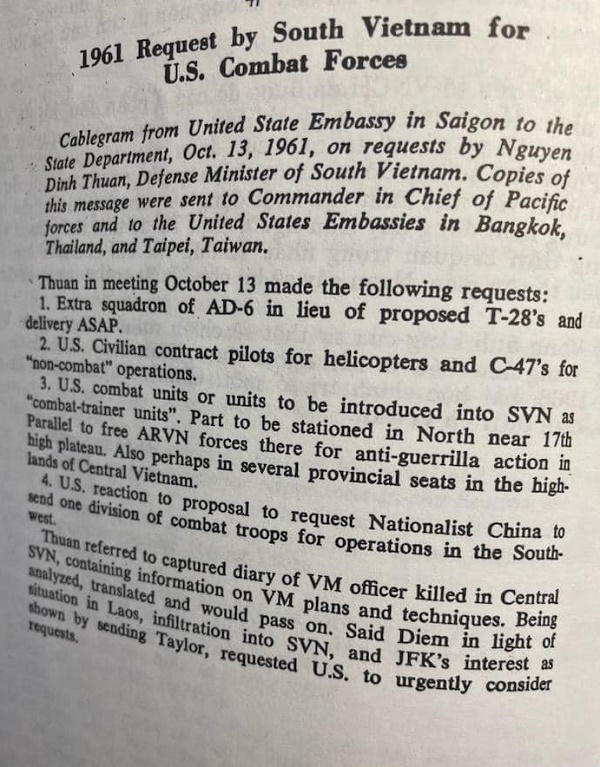
https://sachhiem.net/LICHSU/IMG/NGODD/1961XinQuanMy.jpg
Smith, Walter Bedell,
Under Secretary of State; Head of the United States Delegation at the Geneva Conference, May 3–June 20, and July 17–21, 1954.
https://history.state.gov/historicaldocuments/frus1952-54v16/ch5subch4
https://avalon.law.yale.edu/20th_century/inch006.asp
https://www.cia.gov/readingroom/docs/CIA-RDP80B01676R002500010001-5.pdf
https://history.state.gov/historicaldocuments/frus1952-54v16/d1027
https://search.library.wisc.edu/digital/ABHSHVCERGRA6I86/pages/ALUZ5OG5PRZCCH83?as=text&view=scroll
https://en.wikipedia.org/wiki/Walter_Bedell_Smith


No comments:
Post a Comment