20260806 CDTL NRM D37 19 June 1973 37. Biên bản cuộc trao đổi
https://history.state.gov/historicaldocuments/frus1969-76v18/d37
Google Translated
Tài liệu số 37
Quan hệ Đối ngoại của Hoa Kỳ, 1969–1976, Tập XVIII, Trung Quốc, 1973–1976
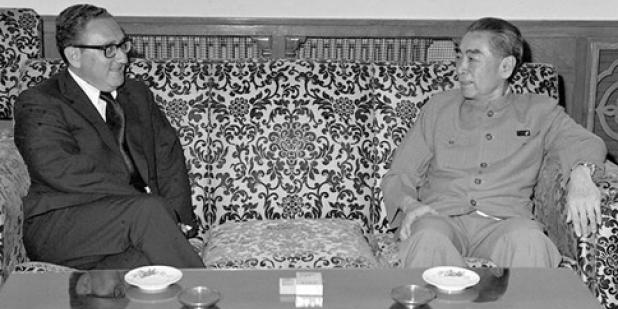
37. Biên bản cuộc trao đổi
Washington, ngày 19 tháng 6 năm 1973, 10:00–10:50 sáng
THÀNH PHẦN THAM DỰ
Đại sứ Hoàng Trấn (Huang Chen), Trưởng Văn phòng Liên lạc CHND Trung Hoa tại Washington
Hàn Húc (Han Hsu), Phó Trưởng Văn phòng Liên lạc CHND Trung Hoa
Kỳ Kiều Chu (Chi Chiao-chu), Phiên dịch viên
Tiến sĩ Henry A. Kissinger, Trợ lý Tổng thống phụ trách An ninh Quốc gia
Lawrence S. Eagleburger, Phó Trợ lý Tổng thống phụ trách Các hoạt động An ninh Quốc gia
Peter W. Rodman, Cán bộ Hội đồng An ninh Quốc gia (NSC)
Hoàng Trần: Ngài bận rộn quá.
Tiến sĩ Kissinger: Với các đồng minh của ông ở đây! Chúng tôi đã trích ra ba đoạn trong bài phát biểu mà ông ấy định đọc tối qua. Tôi sẽ cho ông xem. [Trang 273]
[Những đoạn này sau đó được chuyển cho Đại sứ. Mục A] Ông ấy muốn tấn công các quốc gia phản đối việc cải thiện quan hệ Mỹ-Liên Xô, vì điều đó thể hiện ý định hiếu chiến. Chúng tôi đã nói với ông ấy rằng ông ấy không thể chỉ trích các nước thứ ba tại Tòa Bạch Ốc.
[Sau đó, Tiến sĩ Kissinger đưa cho Hoàng Trần một bức ảnh có chữ ký của Tổng thống và Hoàng Trần.]
Hoàng Trần: Cảm ơn ngài.
Tiến sĩ Kissinger: Hôm qua chúng tôi đã yêu cầu Đại sứ Bruce xin gặp Thủ tướng, và chúng tôi đã yêu cầu ông ấy chuyển một bức thư cho Thủ tướng, mà chúng tôi đã điện báo cho ông ấy. Và tôi muốn đưa cho ông bản gốc của bức thư. Sao ông không đọc thử? Và nếu ông có bất kỳ câu hỏi nào, tôi có thể giải thích cho ông. [Ông ta đưa bức thư ở mục B. Đại sứ xem xét bức thư.]
Tôi biết Đại sứ đang học tiếng Anh!
Huang Chen: Tiến triển chậm thôi.
Tiến sĩ Kissinger: Ồ, thật sao. Việc tìm nhà của anh tiến triển thế nào rồi?
Huang Chen: Han Hsu có thể cho anh biết.
Han Hsu: Chúng tôi đã xem xét một tòa nhà lớn và một khu chung cư ở phía bắc đường 16.
Tiến sĩ Kissinger: Gần Đại sứ quán Liên Xô!
Han Hsu: Không, xa hơn về phía bắc. Qua cây cầu. [Chi sau đó dịch bức thư cho Đại sứ.]
Tiến sĩ Kissinger: Xin lưu ý rằng tôi đang thực hiện một chiến dịch đơn độc để thay đổi chức danh Thủ hiến [thành Thủ tướng]. Đó là vì tôi không thể phát âm được từ Thủ hiến. Đó là lỗi của Thứ trưởng; ông ấy đã đặt cho ông ấy chức danh đó ở Yên An. [Chi dịch bức thư.] Và chúng tôi đã yêu cầu Đại sứ Bruce chuyển bản sao điện tín cho Thủ tướng. Chúng tôi đã gửi nó tối qua. Phòng trường hợp ông ấy có bất kỳ câu hỏi nào.
Nhưng tôi nghĩ chúng tôi đã nêu rõ chính sách của mình ở đây khá rõ ràng rồi.
Hoàng Trấn: Điều đó rất rõ ràng.
Tiến sĩ Kissinger: Và chúng tôi coi đó là một nghĩa vụ.
Hoàng Trấn: Và tôi tin rằng Đại sứ Bruce sẽ gặp Thủ tướng trong hôm nay.
Tiến sĩ Kissinger: Tôi thực sự kinh ngạc trước hệ thống thông tin liên lạc của các ông. Tôi còn chẳng thể nắm bắt được Eagleburger làm gì trong suốt 24 giờ đồng hồ.
[Trang 274]
Hoàng Trấn: Hệ thống thông tin liên lạc của các ông rất nhanh chóng.
Tiến sĩ Kissinger: Hệ thống của các ông dường như cực kỳ hiệu quả. Một điều nữa gây ấn tượng với tôi ở Trung Quốc là mọi việc diễn ra như một cuộc đối thoại liên tục. Bất cứ điều gì được nói ra—trước hết, Thủ tướng đều biết đến, và thứ hai, rất có thể sẽ có một người Trung Quốc khác phúc đáp lại điều đó. [Cười]
Hoàng Trấn: Chúng tôi có thông lệ mà các ông gọi là "briefing" (cung cấp thông tin/báo cáo vắn tắt). Các ông không có việc này sao, việc cung cấp thông tin cho các phóng viên ấy?
Tiến sĩ Kissinger: Có chứ, nhưng chúng tôi không thực hiện một cách tinh tế như vậy. Có lần, khi tôi mới đưa Jenkins đến đó, Thủ tướng đã đến thăm Nhà khách chỉ trong vòng nửa giờ sau khi chúng tôi tới nơi; ông ấy thậm chí đã biết rõ về ngôi nhà mà Jenkins từng ở cách đây hai mươi năm và biết liệu ngôi nhà đó còn tồn tại hay không.
Khi viết hồi ký, tôi sẽ xin xem hồ sơ mà phía Trung Quốc lưu giữ về tôi. Chắc hẳn nó còn đầy đủ và chi tiết hơn cả hồ sơ của chính tôi nữa.
Hoàng Trần: Nếu Tiến sĩ Kissinger đồng ý, tôi muốn chuyển cho ngài một thông điệp từ Chính phủ chúng tôi. [Mục C]
Tiến sĩ Kissinger: Nếu tôi không thích thì tôi sẽ không đưa cho ông cái này! [ám chỉ ghi chú của UNCURK trong tay]
[Đại sứ đưa ghi chú ở Mục C, và Tiến sĩ Kissinger đọc.]
Tiến sĩ Kissinger: Họ đang làm với các ông những gì họ đang cố gắng làm với chúng tôi.
Chúng tôi đánh giá cao sự liên lạc này. Và nó nằm trong tinh thần tham vấn song phương của chúng ta. Và tôi sẽ tiếp tục thông báo đầy đủ cho ngài về các cuộc thảo luận của chúng tôi ở đây, và tôi sẽ nói chuyện với ngài về chúng trong giây lát.
Tôi có một bài báo về tình hình Triều Tiên. [Ông đưa ghi chú về UNCURK/UNC ở Mục D.] Để tôi sửa một từ. [Ông lấy lại, gạch bỏ cụm từ trong đoạn thứ tư.] Nó không phải là “ít nhất”. [Chi dịch ghi chú cho Đại sứ.]
Cụ thể hơn, thưa ngài Đại sứ, để nói rõ hơn một chút, chúng tôi sẵn sàng thúc đẩy việc chấm dứt UNCURK trong Đại hội đồng Liên Hợp Quốc năm 1973 và Bộ Chỉ huy Liên Hợp Quốc tại phiên họp Đại hội đồng năm 1974.
Han Hsu: Ông đã đưa cho tôi một công văn khác vào ngày 14. Công văn này cụ thể hơn. [Trang 275]
Tiến sĩ Kissinger: Vâng. Đây là phần mở rộng của công văn kia. Công văn kia mang tính sơ bộ hơn.
Ngoài ra, chúng tôi có lý do để tin rằng Chính phủ Seoul sẵn sàng thiết lập một số liên hệ với chính phủ của ông, và nếu chúng tôi có thể giúp đỡ về mặt này, chúng tôi sẵn lòng làm điều đó. Đồng thời, trong chừng mực ông có liên hệ với Seoul, chúng tôi sẵn sàng làm điều này với Bình Nhưỡng.
Huang Chen: Chúng tôi sẽ báo cáo điều này với Chính phủ của chúng tôi.
Những gì ông nói về việc chấm dứt UNCURK trong năm nay và UNC vào năm tới, không có trong đây [trong công văn].
Tiến sĩ Kissinger: Đó là sự triển khai chi tiết thêm. Và chúng tôi sẽ khuyến khích Chính phủ Hàn Quốc công khai một số đề nghị này trong thời gian tới. Tuy nhiên, điều này không bao gồm vấn đề về Bộ Chỉ huy Liên Hợp Quốc.
Một vấn đề khác là chuyến thăm của Thượng nghị sĩ Mansfield tới Cộng hòa Nhân dân Trung Hoa. Nếu xét mọi yếu tố, chúng tôi muốn ông ấy thực hiện chuyến thăm sau khi tôi đã đến Bắc Kinh.
Hoàng Trấn: Việc đó tùy thuộc vào phía các ông, tùy vào sự sắp xếp thuận tiện cho các ông.
Tiến sĩ Kissinger: Điều đó còn tùy thuộc vào tài xoay xở của các ông nữa. Các ông có thể xử lý khéo léo hơn tôi đấy!
Hoàng Trấn: Thứ Năm tuần trước, khi các Thượng nghị sĩ Mansfield và Scott mời tôi ăn trưa, họ có nói rằng họ đã mời Tiến sĩ Kissinger nhưng ông không thể tham dự.
Tiến sĩ Kissinger: Khi đó tôi vừa mới từ Paris trở về.
Hoàng Trấn: Thượng nghị sĩ Mansfield cũng có nhắc đến chuyện này. Ông ấy nói rằng có nhiều yếu tố liên quan.
Tiến sĩ Kissinger: Chúng tôi ủng hộ việc ông ấy thực hiện chuyến đi này.
Hoàng Trấn: Ông đã trao đổi với ông ấy chưa?
Tiến sĩ Kissinger: Tối qua ông ấy có đề cập rằng ông ấy đang cân nhắc thời điểm tháng Tám. Tại sao các ông không xếp lịch chuyến thăm của ông ấy ngay sau chuyến thăm của tôi?
Hoàng Trấn: Ông đã có quyết định sơ bộ về ngày thực hiện chuyến thăm của mình chưa?
Tiến sĩ Kissinger: Ông có muốn nhận một đề xuất cụ thể không? Chúng tôi sẽ sớm thực hiện việc đó. Tôi sẽ đưa ra đề nghị trong vòng một tuần nữa. Có thể là khi ông đến San Clemente. [Cười]
Tôi muốn nhắn với Thủ tướng của các ông rằng, nếu vào thời điểm tôi đến Bắc Kinh mà một lệnh ngừng bắn đã được thiết lập tại Campuchia, tôi sẵn sàng gặp Hoàng thân Sihanouk để thảo luận về các vấn đề chính trị. Tuy nhiên, việc này không nên được công bố trước.
Hoàng Trấn: Tôi sẽ chuyển ý kiến này của ông tới Thủ tướng. Khi nói về chuyến thăm của Thượng nghị sĩ Mansfield, ông có nhắc đến việc Thượng nghị sĩ Jackson cũng quan tâm đến chuyến đi này. Chúng tôi hoan nghênh ông ấy đến thăm, nhưng chúng tôi muốn ông ấy đi cùng với phái đoàn Quốc hội hiện tại. [Trang 276]
Tiến sĩ Kissinger: Tôi nghĩ Thủ tướng và Thượng nghị sĩ Jackson sẽ rất hợp ý nhau. Một người khác cũng muốn đi thăm — người mà Thủ tướng và tôi đã thảo luận — là Thống đốc Rockefeller của bang New York.
Chi Chiao-chu: Nelson Rockefeller.
Tiến sĩ Kissinger: Vâng. Ông biết David mà.
Huang Chen: Tôi đã mời em trai ông ấy đi ăn trưa.
Tiến sĩ Kissinger: Ông ấy có thể là một nhân tố quan trọng trong năm 1976.
Huang Chen: Trong bữa trưa với tôi, David Rockefeller có nói rằng nhà của ông ấy ở Maine nằm gần nhà Đại sứ Watson.
Tiến sĩ Kissinger: Đúng vậy.
Huang Chen: Đại sứ Watson đã mời tôi đến thăm Maine. Vì thế, ông David Rockefeller cũng mời tôi ghé thăm nhà ông ấy ở Maine nếu tôi đến thăm ông Watson vào tháng Tám. Tôi chưa biết liệu mình có thể đến Maine vào tháng Tám hay không, vì chưa rõ liệu vấn đề nhà ở của chúng tôi có được giải quyết xong vào thời điểm đó hay chưa.
Liên quan đến vấn đề này, tôi muốn đề cập đến gợi ý của ông. Cho đến nay, chúng tôi đã đến gặp một số nhân vật tại Washington theo danh sách do Bộ Ngoại giao cung cấp. Chúng tôi đã gặp các Thượng nghị sĩ Mansfield và Scott, Phó Tổng thống, và sẽ gặp Bộ trưởng Tài chính cùng Bộ trưởng Nông nghiệp. Hiện có nhiều người bạn khác muốn liên hệ với chúng tôi, nhưng chúng tôi đành phải từ chối vì bận rộn. Chúng tôi muốn xin ý kiến của ông xem nên gặp gỡ những ai.
Tiến sĩ Kissinger: Các ông có danh sách không? Chúng tôi có thể đưa ra gợi ý hoặc khuyến nghị cho các ông. Trong vòng 48 giờ.
Hoàng Trần: Không cần phải vội vàng như vậy.
Tiến sĩ Kissinger: Chúng tôi sẽ làm. Nhưng tất nhiên, ông hoàn toàn tự do gặp bất cứ ai ông muốn.
Khi ông nói về bạn bè, ông có ý nói đến những người bình thường hay những người trong chính phủ?
Hoàng Trần: Trong chính phủ, hoặc các thành viên Quốc hội hoặc Thượng viện, hoặc những nhân vật nổi tiếng.
Tiến sĩ Kissinger: Chúng tôi sẽ lập một danh sách đề cử cho ông.
Hoàng Trần: Còn về danh sách do Bộ Ngoại giao cung cấp, chúng tôi đã nói với Tướng Scowcroft qua điện thoại rồi.
Rồi về cuộc gặp với Phó Tổng thống. Tôi muốn nói với ông rằng Phó Tổng thống đã tiếp đón chúng tôi rất thân thiện nhưng không đề cập đến mong muốn thăm Tầu cộng như Tướng Dunn đã nói.
Tiến sĩ Kissinger: Chúng tôi muốn hoãn việc đó lại cho đến khi chúng tôi thống nhất được thời gian chuyến thăm của Tổng thống—và chuyến thăm của Thủ tướng tới Mỹ. [Tiếng cười]
Hoàng Trần: Đây đều là những vấn đề chúng ta nên thảo luận vào tháng Tám.
Tiến sĩ Kissinger: Có lẽ ông ấy nên thực hiện một chuyến thăm bí mật. [Tiếng cười] [Trang 277]
Hoàng Trấn: Như tôi đã nói với Tiến sĩ Kissinger trước đây, vào thời điểm tôi rời Bắc Kinh, Thủ tướng chưa có kế hoạch đi nước ngoài.
Tiến sĩ Kissinger: Tôi hiểu. Ông đã có quyết định gì về việc liệu mình có thể đến thăm chúng tôi tại San Clemente hay chưa?
Hoàng Trấn: Về mặt cá nhân, tất nhiên tôi rất vui nếu có cơ hội đến thăm ông. Nhưng vẫn còn chút thời gian.
Tiến sĩ Kissinger: Tất nhiên rồi. Ông có thể báo cho chúng tôi biết sau. Thực ra, tuần sau nữa sẽ thuận tiện hơn cho chúng tôi.
Hoàng Trấn: Tuần sau nữa. Đầu tuần hay giữa tuần?
Tiến sĩ Kissinger: Tùy ông chọn. Tuần tới, Ngoại trưởng Pháp sẽ đến gặp tôi tại San Clemente.
Hoàng Trấn: Jobert.
Tiến sĩ Kissinger: Jobert. Ông biết ông ấy đấy! Một người rất hay hoài nghi nhưng cũng rất thông minh. Chúng tôi trông cậy vào việc Thủ tướng sẽ hỗ trợ chúng tôi về chương trình nghị sự với châu Âu khi ông Pompidou sang [Bắc Kinh] vào tháng Chín.
Hoàng Trấn: Ông Pompidou sẽ đến đây ư? Hay đến Trung Quốc?
Tiến sĩ Kissinger: Đến Trung Quốc.
Hoàng Trấn: Sẽ có nhiều vấn đề được thảo luận.
Tiến sĩ Kissinger: Về cuộc gặp với Brezhnev – tôi không rõ ông có biết ông ấy không – nhưng tư duy của ông ấy không sắc bén và chính xác như Thủ tướng của các ông. Hôm qua, khi Tổng thống hỏi liệu ông ấy có muốn phát biểu mở đầu hay không, ông ấy bắt đầu nói; hai tiếng rưỡi sau, ông ấy bảo sẽ đưa ra lời kết ngắn gọn, rồi thêm một tiếng rưỡi nữa trôi qua, ông ấy mới thực sự kết thúc phần phát biểu mở đầu của mình. [Cười] Những lời đó rất giàu cảm xúc nhưng lại rất chung chung. Và thực sự là kém chính xác hơn nhiều so với những gì tôi đã kể cho ông nghe về cuộc gặp ở Zavidovo.
Chiến lược cơ bản của ông ấy là cố gắng chứng minh rằng không còn sự khác biệt nào giữa Hoa Kỳ và Liên Xô, và rằng hai bên hoàn toàn đoàn kết trên phạm vi toàn cầu.
Hoàng Trấn: Vậy là ông ấy cho rằng đó là mối quan hệ đối tác, như chính ông ấy đã nói.
Tiến sĩ Kissinger: Đó là ấn tượng mà ông ấy cố gắng tạo ra. Nhưng đó không phải là chính sách của chúng tôi. Xét trên khía cạnh thực tế, việc ủng hộ bên mạnh hơn chống lại bên yếu hơn là điều vô lý. Và chúng tôi sẽ không thực hiện bất kỳ hành động cụ thể nào để ủng hộ chính sách đó.
Hoàng Trấn: Tôi không quen biết cá nhân ông này. Tôi chỉ biết Gromyko thôi.
Tiến sĩ Kissinger: Gromyko rất chính xác, chặt chẽ. Còn Brezhnev thì rất giàu cảm xúc. Và cũng rất thô bạo. Tôi sẽ cung cấp cho ông báo cáo đầy đủ khi các cuộc thảo luận diễn ra.
Hoàng Trần: Ông có nhắc đến ba đoạn văn ông muốn ông ấy xóa. [Trang 278]
Tiến sĩ Kissinger: Tôi sẽ gửi chúng cho ông chiều nay. Chúng không đề cập đến Trung Quốc nhưng điều đó rất rõ ràng. Họ đã gửi cho chúng tôi một tin nhắn, và chúng tôi nói rằng việc chuyển giao chúng tại Tòa Bạch Ốc là không phù hợp. Điều đó không hoàn toàn đúng theo nghi thức, thưa Bộ trưởng. [Tiếng cười]
Dù sao thì tôi cũng sẽ cố gắng gặp ông trước khi chúng ta rời đi, nhưng nếu ông đến San Clemente, chúng ta có thể nói chuyện lâu hơn. Và chúng tôi sẽ sắp xếp chỗ ở cho ông khi ông ở đó.
Hoàng Trần: Sẽ mất bao nhiêu tiếng?
Tiến sĩ Kissinger: Nếu ông muốn, ông có thể sử dụng một trong những máy bay của chúng tôi. Nhưng khoảng 4 tiếng rưỡi. Ông có thể ở lại bao lâu tùy thích. Có thể hoàn thành trong hai ngày. Cũng có thể hoàn thành trong một ngày nhưng sẽ rất mệt mỏi. Ông nên ở lại một đêm. Nếu ông thấy phù hợp, tôi có thể mời một vài người bạn California đến ăn tối với ông.
Hoàng Trần: Nếu tôi đi, chắc chắn tôi rất vui được dùng bữa tối với anh. Và tôi xin cảm ơn anh trước vì đã sắp xếp cho tôi đi.
Anh rất bận nên tôi sẽ không giữ anh lại.
[Cuộc gặp kết thúc.]
1. Nguồn: Cơ quan Lưu trữ Quốc gia, Tài liệu Tổng thống Nixon, Hồ sơ NSC, Hồ sơ Văn phòng Kissinger, Hộp 95, Hồ sơ Quốc gia, Viễn Đông, Các cuộc trao đổi với Tầu cộng, ngày 14 tháng 6 – ngày 9 tháng 7 năm 1973. Tuyệt mật; Nhạy cảm; Chỉ dành cho người có thẩm quyền xem trực tiếp (Exclusively Eyes Only). Cuộc họp diễn ra tại văn phòng của Kissinger ở Tòa Bạch Ốc. Tất cả các phần nằm trong ngoặc vuông đều có trong bản gốc. ↩
2. Được đính kèm nhưng không in ra. Mục A là bản sao bài phát biểu của Brezhnev vào tối ngày 18 tháng 6. Ba đoạn văn chỉ trích những kẻ gièm pha sự hợp tác Mỹ-Xô đã được gửi kèm theo thư của Scowcroft gửi Văn phòng Liên lạc (LO) của CHND Trung Hoa vào ngày 19 tháng 6. (Sđd.) ↩
3. Tài liệu 38. ↩
4. Được đính kèm nhưng không in ra. Mục C là thông điệp từ Chính phủ Tầu cộng về đề nghị của Liên Xô đối với "Hiệp ước Không xâm lược giữa Liên bang Cộng hòa Xã hội chủ nghĩa Xô viết và Cộng hòa Nhân dân Trung Hoa." ↩
5. Được đính kèm nhưng không in ra. ↩
6. Xem Tài liệu 36. ↩
https://history.state.gov/historicaldocuments/frus1969-76v18/sources
https://history.state.gov/historicaldocuments/frus1969-76v18/terms
https://history.state.gov/historicaldocuments/frus1969-76v18/persons
https://history.state.gov/historicaldocuments/frus1969-76v18/comp1
Political Turmoil in the United States, June 1973–September 1974 (Documents 35–87)
https://history.state.gov/historicaldocuments/frus1969-76v18/ch2
1. Document 37
Foreign Relations of the United States, 1969–1976, Volume XVIII, China, 1973–1976
37. Memorandum of Conversation1
Washington, June 19, 1973, 10:00–10:50 a.m.
PARTICIPANTS
- Ambassador Huang Chen, Chief, PRC Liaison Office, Washington
- Han Hsu, Deputy Chief, PRC Liaison Office
- Chi Chiao-chu, Interpreter
- Dr. Henry A. Kissinger, Assistant to the President for National Security Affairs
- Lawrence S. Eagleburger, Deputy Assistant to the President for National Security Operations
- Peter W. Rodman, NSC Staff
Huang Chen: You are very busy.
Dr. Kissinger: With your allies here! We took out three paragraphs of a speech he wanted to make last night. I will show them to you. [Page 273] [These were later delivered to the Ambassador. Tab A]2 He wanted to attack countries who were opposed to the improvement of US-Soviet relations, because it showed warlike intentions. We told him he couldn’t criticize third countries in the White House.
[Dr. Kissinger then hands over an autographed picture of the President and Huang Chen, signed by the President.]
Huang Chen: Thank you.
Dr. Kissinger: We have yesterday asked Ambassador Bruce to request an appointment with the Prime Minister, and we have asked him to deliver a letter to the Prime Minister, which we telegraphed to him. And I wanted to give you the original of the letter. Why don’t you read it? And if you have any questions, I can explain it to you. [He hands over the letter at Tab B.3 The Ambassador examines it.].
I knew the Ambassador was learning English!
Huang Chen: It is progressing slowly.
Dr. Kissinger: Oh, really. How is your search for a house coming?
Huang Chen: Han Hsu can tell you.
Han Hsu: We have been looking at a large building and apartment house north of 16th Street.
Dr. Kissinger: Near the Soviet Embassy!
Han Hsu: No, much further north. Past the bridge.
[Chi then translates the letter for the Ambassador.]
Dr. Kissinger: Notice I am on a one-man campaign to change the Premier’s title [to Prime Minister]. It is because I can’t pronounce Premier. It is the Assistant Minister’s fault; he gave him the title in Yenan. [Chi translates the letter.] And we have asked Ambassador Bruce to hand the telegraphic copy to the Prime Minister. We sent it last night. In case he has any questions.
But I think we have stated our policy here quite clearly.
Huang Chen: It is very clear.
Dr. Kissinger: And we consider that an obligation.
Huang Chen: And I believe Ambassador Bruce will see the Premier today.
Dr. Kissinger: I am amazed by your communications. I cannot find out what Eagleburger does in 24 hours.
Huang Chen: Your communications are very rapid.
Dr. Kissinger: Yours seems to be extremely efficient. Another thing that impresses me in China is that one is in a continuous conversation. Anything one says—first of all, the Prime Minister knows about it, and second, it is likely to be answered by another Chinese. [Laughter]
Huang Chen: We have the practice of what you call briefing. Don’t you have this, this briefing of correspondents?
Dr. Kissinger: Yes, but we don’t do it so elegantly. Once, when I first took Jenkins there, the Prime Minister came to visit the Guest House within one-half hour of our arrival, and he already knew about the house Jenkins had stayed in twenty years ago and whether it was still standing.
When I write my biography, I will ask for the Chinese file on me. It is probably better than my own.
Huang Chen: If Dr. Kissinger agrees, I would like to give you a message from our Government. [Tab C]4
Dr. Kissinger: If I don’t like it I won’t give you this one! [referring to UNCURK note in his hand]
[The Ambassador hands over the note at Tab C, and Dr. Kissinger reads it.]
Dr. Kissinger: They are doing to you what they are trying to do to us.
We appreciate the communication. And it is within the spirit of our mutual consultation. And I will keep you fully informed about our discussions here, and I will talk to you in a minute about them.
I have a paper on the Korean situation. [He hands over note on UNCURK/UNC at Tab D.]5 Let me fix one word. [He takes it back, crosses out phrase in fourth paragraph.] It is not “at least.”
[Chi translates the note for the Ambassador.]
Specifically, Mr. Ambassador, to make it slightly more concrete, we are prepared to bring about the termination of UNCURK during the 1973 UN General Assembly and the United Nations Command by the session of the 1974 General Assembly.
Han Hsu: You handed me another note on the 14th.6 This one is more specific.
Dr. Kissinger: Yes. This is an elaboration of the other one. The other one was more preliminary.
Also, we have reason to believe the Seoul Government would be prepared to establish some contacts with your government, and if we can be helpful in this respect we are willing to do this. At the same time, to the extent that you have contacts with Seoul, we are prepared to have this with Pyongyang.
Huang Chen: We will report this to our Government.
What you said about the termination of UNCURK this year and of the UNC next year, it is not in here [in the note].
Dr. Kissinger: It is an elaboration. And we will encourage the Government of South Korea to make some of these proposals publicly, in the near future. Not about the United Nations Command.
One other matter, about Senator Mansfield’s visit to the People’s Republic. Everything being equal, we would prefer it if he came after I have been to Peking.
Huang Chen: That is up to you, to your convenience.
Dr. Kissinger: It is up to your skill in managing. You can do it more tactfully than I can!
Huang Chen: Last Thursday, when Senators Mansfield and Scott invited me to lunch, they said they had invited Dr. Kissinger but Dr. Kissinger had not been able to attend.
Dr. Kissinger: I had just returned from Paris.
Huang Chen: Senator Mansfield mentioned this. He said there were various factors involved.
Dr. Kissinger: We are in favor of his going.
Huang Chen: Didn’t you speak with him?
Dr. Kissinger: He mentioned last night that he was thinking of August. Why don’t you just schedule it after mine?
Huang Chen: Have you preliminarily decided on the date of your visit?
Dr. Kissinger: Would you like a proposal? We will do it soon. I will make a proposal within a week. Maybe when you come to San Clemente. [Laughter]
I want to tell your Prime Minister that if by the time I get to Peking a ceasefire exists in Cambodia, I would be prepared to meet Prince Sihanouk to have political discussions. But it should not be announced in advance.
Huang Chen: I will convey this view of yours to the Prime Minister. In talking about the visit of Senator Mansfield, you mentioned the interest of Senator Jackson. We welcome him to go but we would welcome him to go with the present Congressional delegation.
Dr. Kissinger: I think the Prime Minister and Senator Jackson will get along very well. Another person who would like to go, whom the Prime Minister and I discussed, is Govenor Rockefeller of New York.
Chi Chiao-chu: Nelson Rockefeller.
Dr. Kissinger: Yes. David you know.
Huang Chen: I invited his brother to lunch.
Dr. Kissinger: He may be an important factor in 1976.
Huang Chen: David Rockefeller, at a luncheon with me, said his house in Maine is near Ambassador Watson’s house.
Dr. Kissinger: That is right.
Huang Chen: Ambassador Watson has invited me to visit Maine. So Mr. David Rockefeller invited me to visit him in Maine if I come to visit Watson in August. I don’t know whether I can visit Maine in August because I don’t know whether our housing situation will be solved by then.
On this subject, I would like to come to your suggestion. We have so far called upon various people in Washington, according to a list provided by the State Department. We called upon Senators Mansfield and Scott, the Vice President, and we will call on the Secretaries of Finance and Agriculture. So far there are many other friends who would like to contact us, but we have had to say we are busy. We would like to ask your advice of which friends we should visit.
Dr. Kissinger: Do you have a list? We can give you our suggestions. Or we can give you our recommendations. In 48 hours.
Huang Chen: There is no need for such a hurry.
Dr. Kissinger: We will do it. But you are of course free to see anybody you like.
When you speak of friends, do you mean private people or people in government?
Huang Chen: In government, or members of Congress or the Senate, or well-known personages.
Dr. Kissinger: We will make a list of recommendations for you.
Huang Chen: As for the list provided by the State Department, we told it to General Scowcroft over the phone.
Then about the call on the Vice President. I would like to tell you that the Vice President gave us a very friendly reception but didn’t mention his wish to visit China as had been indicated by General Dunn.
Dr. Kissinger: We would like to defer that until we have settled the time of the visit by the President—and of the visit of the Prime Minister to America. [Laughter]
Huang Chen: These are all questions we should discuss in August.
Dr. Kissinger: Maybe he should come on a secret visit. [Laughter]
Huang Chen: As I told Dr. Kissinger some time ago, as of my departure from Peking the Prime Minister had no plans to go abroad.
Dr. Kissinger: I understand. Have you any decision on whether you can visit us in San Clemente?
Huang Chen: Personally speaking, of course I would be happy to have the chance to visit you. But there still is some time.
Dr. Kissinger: Of course. You can let us know. It would be better for us, actually, the week after next.
Huang Chen: The week after next. The beginning or the middle?
Dr. Kissinger: It is up to you. Next week the French Foreign Minister will visit me in San Clemente.
Huang Chen: Jobert.
Dr. Kissinger: Jobert. You know him! Very cynical and very intelligent. We are counting on the Prime Minister to help us with the European program when Pompidou comes [to Peking] in September.
Huang Chen: Mr. Pompidou is coming here? Or to China?
Dr. Kissinger: China.
Huang Chen: Many questions will be discussed.
Dr. Kissinger: On the meeting with Brezhnev, I don’t know whether you know him, but he doesn’t have the same precision of mind as your Prime Minister. So the President asked him yesterday if he wanted to make any opening remarks. He started, and 2½ hours later he said he would make a brief conclusion, and then 1½ hour later he finished his opening remarks. [Laughter] And they were very emotional and very general. And really less precise than what I had already told you from Zavidovo.
His basic strategy is to attempt to prove there are no differences left between the United States and the Soviet Union and that there is total solidarity on a global basis.
Huang Chen: So he thinks there is a relationship of partnership, as he said.
Dr. Kissinger: That is the impression he is trying to create. But that is not our policy. On very practical grounds it makes no sense to support the stronger against the weaker. And we will not do anything practical to support that policy.
Huang Chen: I don’t know this man personally. I only know Gromyko.
Dr. Kissinger: Gromyko is very precise. But Brezhnev is very emotional. And very brutal. I will give you a full report as the discussions develop.
Huang Chen: You mentioned there are three paragraphs you wanted him to delete.
Dr. Kissinger: I will send them to you this afternoon. They don’t mention China but it is obvious. They sent us over a text, and we said it was inappropriate to deliver at the White House. It is not exactly according to protocol, Mr. Minister. [Laughter]
I will in any event try to see you before we leave, but if you come to San Clemente we can have a long talk. And we will arrange housing for you when you are there.
Huang Chen: How many hours will it take?
Dr. Kissinger: If you wanted to, you could use one of our planes. But about 4½ hours. You are welcome to stay as long as you can. It can be done in two days. It can be done in one day but it is very exhausting. You should stay one night. If you think it is appropriate, I could invite some California friends for a dinner with you.
Huang Chen: Certainly if I go I would be happy to have dinner with you. And I thank you in advance for arranging if I go.
You are very busy, so I won’t keep you.
[The meeting then ended.]
1. Source: National Archives, Nixon Presidential Materials, NSC Files, Kissinger Office Files, Box 95, Country Files, Far East, China Exchanges, June 14–July 9, 1973. Top Secret; Sensitive; Exclusively Eyes Only. The meeting was held in Kissinger’s office at the White House. All brackets are in the original.↩
2. Attached but not printed. Tab A is a copy of Brezhnev’s speech on the evening of June 18. The three paragraphs, which criticized those who cast aspersions on U.S.-Soviet cooperation, were delivered with a covering letter from Scowcroft to the PRC LO on June 19. (Ibid.)↩
3. Document 38.↩
4. Attached but not printed. Tab C is a message from the Chinese Government about the Soviet Union’s proposed “Treaty of Non-Aggression Between the Union of the Soviet Socialist Republics and the People’s Republic of China.”↩
5. Attached but not printed.↩
6. See Document 36.↩
https://history.state.gov/historicaldocuments/frus1969-76v18/d37
https://history.state.gov/historicaldocuments/frus1969-76v18/pg_273
https://history.state.gov/historicaldocuments/frus1969-76v18/pg_274
https://history.state.gov/historicaldocuments/frus1969-76v18/pg_275
https://history.state.gov/historicaldocuments/frus1969-76v18/pg_276
https://history.state.gov/historicaldocuments/frus1969-76v18/pg_277
https://history.state.gov/historicaldocuments/frus1969-76v18/pg_278
https://history.state.gov/historicaldocuments/frus1969-76v18/d36
https://history.state.gov/historicaldocuments/frus1969-76v18/d38
Thân thế (các) nhân vật
General Secretary of the Communist Party of the Soviet Union
https://en.wikipedia.org/wiki/Leonid_Brezhnev
https://www.britannica.com/biography/Leonid-Ilich-Brezhnev
https://en.wikipedia.org/wiki/General_Secretary_of_the_Communist_Party_of_the_Soviet_Union
https://www.britannica.com/place/Soviet-Union/The-Brezhnev-era
Head of the U.S. Delegation to the (plenary) Paris Peace Talks from July 1970 until July 1971
https://en.wikipedia.org/wiki/David_K._E._Bruce
https://www.trumanlibrary.gov/library/oral-histories/bruce
https://history.state.gov/historicaldocuments/frus1969-76v07/d41
https://history.state.gov/historicaldocuments/frus1969-76v42/persons
https://www.britishpathe.com/asset/235113/
https://digitalcommons.chapman.edu/upi_vietnam/95/
member, National Security Council staff from June 1973; Executive Assistant to the Secretary of State from October 1973; Acting Deputy Under Secretary for Management from February 1975 until May 1975; Under Secretary of State for Management from May 1975, Staff Member, Office of the Assistant to the President for National Security Affairs.
https://history.state.gov/departmenthistory/people/eagleburger-lawrence-sidney
https://en.wikipedia.org/wiki/Lawrence_Eagleburger
https://2001-2009.state.gov/secretary/former/40402.htm
https://history.state.gov/historicaldocuments/frus1969-76v38p2/d118
Soviet Foreign Minister
https://en.wikipedia.org/wiki/Andrei_Gromyko
https://en.wikipedia.org/wiki/List_of_heads_of_state_of_the_Soviet_Union
https://en.wikipedia.org/wiki/27th_Politburo_of_the_Communist_Party_of_the_Soviet_Union
https://en.wikipedia.org/wiki/Ministry_of_Foreign_Affairs_(Soviet_Union)
https://en.wikipedia.org/wiki/Permanent_Representative_of_the_Soviet_Union_to_the_United_Nations
https://digitalarchive.wilsoncenter.org/search?f[0]=people:81473&fo[0]=81473
https://www.fordlibrarymuseum.gov/library/exhibits/vladivostok/gromyko.pdf
Han Xu (Han Hsu),
Deputy Head of the PRC Liaison Office in the United States from 1973
https://2001-2009.state.gov/documents/organization/100323.pdf
https://history.state.gov/historicaldocuments/frus1969-76v18/persons
https://brill.com/edcollbook/title/58094
https://2001-2009.state.gov/documents/organization/100324.pdf
https://storage.googleapis.com/rua-uplo/files/books/934/416ef3c1-6c7a-4586-b2ec-709a41760bbf.pdf
https://apps.dtic.mil/sti/pdfs/ADA279207.pdf
https://www.aei.org/wp-content/uploads/2023/07/ForeignPolicyRev603.pdf?x97961
Huang Zhen (Huang Chen),
PRC Ambassador to France until March 1973; Chief of the PRC Liaison Office in the United States from March 1973
https://en.wikipedia.org/wiki/Huang_Zhen
https://en.wikisource.org/wiki/Author:Huang_Zhen
https://2001-2009.state.gov/documents/organization/72591.pdf
https://nsarchive2.gwu.edu/NSAEBB/NSAEBB79/BEBB23.pdf
https://www.fordlibrarymuseum.gov/sites/default/files/2024-06/1552743.pdf
https://www.britishpathe.com/asset/236303/
https://mediaclip.ina.fr/en/caf97507056-credentials-huang-chen-at-the-elysee.html
https://history.state.gov/historicaldocuments/frus1969-76ve13/d12
Democratic Senator from Washington
https://en.wikipedia.org/wiki/Henry_M._Jackson
https://www.senate.gov/artandhistory/history/minute/Henry_Scoop_Jackson.htm
https://henryjacksonsociety.org/who-was-henry-jackson/
https://www.congress.gov/member/henry-jackson/J000013
https://hmjackson.org/about-us/biography/
https://content.lib.washington.edu/jacksonweb/index.html
https://www.k-state.edu/landon/speakers/henry-jackson/
https://guides.lib.uw.edu/research/henry_jackson/campaigns
https://history.house.gov/People/Detail?id=15709
Jenkins, Alfred Le S.,
staff member, National Security Council, from July 1966
https://www.discoverlbj.org/exhibits/show/loh/pres/nsf
https://en.wikipedia.org/wiki/Alfred_L._Jenkins
https://georgewbush-whitehouse.archives.gov/nsc/history.html
https://history.state.gov/historicaldocuments/frus1964-68v29p1/persons
https://history.state.gov/historicaldocuments/frus1964-68v29p1/d123
Henry A Kissinger
Assistant to the President for National Security Affairs until November 3, 1975; also Secretary of State from September 21, 1973
https://www.theguardian.com/world/2023/may/20/bilderberg-meeting-group-lisbon-kissinger
https://www.theguardian.com/world/bilderberg
https://history.state.gov/historicaldocuments/frus1969-76ve13/summary
https://china.usc.edu/getting-beijing-henry-kissingers-secret-1971-trip
https://china.usc.edu/catalog/documents/us-china
http://www.archives.gov/press/press-releases/2001/nr01-47.html
https://china.usc.edu/talking-points-july-22-august-3-2011
https://china.usc.edu/getting-beijing-henry-kissingers-secret-1971-trip#meetings
https://china.usc.edu/getting-beijing-henry-kissingers-secret-1971-trip#nixon-announcement
https://china.usc.edu/getting-beijing-henry-kissingers-secret-1971-trip#chinese-accept
https://china.usc.edu/getting-beijing-henry-kissingers-secret-1971-trip#signals
https://china.usc.edu/getting-beijing-henry-kissingers-secret-1971-trip#the_aim
http://www.foreignaffairs.com/articles/23927/richard-m-nixon/asia-after-viet-nam
https://history.state.gov/historicaldocuments/frus1969-76v17/d4
https://history.state.gov/historicaldocuments/frus1969-76v17/d12
https://history.state.gov/historicaldocuments/frus1969-76v17/d13
https://history.state.gov/historicaldocuments/frus1969-76v17/d141
https://2001-2009.state.gov/documents/organization/100324.pdf
https://en.wikipedia.org/wiki/Henry_Kissinger_and_the_Vietnam_War
Lesson in Vietnam from Kissinger to Nixon: “when we made it “our war” we would not let the South Vietnamese fight it; when it again became “their war”, we would not help them fight it.”
(We also had trouble with excesses here: when we made it “our war” we would not let the South Vietnamese fight it; when it again became “their war,” we would not help them fight it. Ironically, we prepared the South Vietnamese for main force warfare after 1954 (anticipating another Korean-type attack), and they faced a political war; they had prepared themselves for political warfare after 1973 only to be faced with a main force invasion 20 years after it had been expected.)
https://history.state.gov/historicaldocuments/frus1969-76v10/d280
Lesson of Vietnam May 12 1975 by Henry A. Kissinger
https://www.fordlibrarymuseum.gov/library/exhibits/vietnam/032400091-002.pdf
https://thebattleofkontum.com/extras/kissinger.html
“Richard M. Nixon and Kissinger on 3 August 1972,” Conversation 760-006, Presidential Recordings Digital Edition [Fatal Politics, ed. Ken Huges] (Charlottesville: University of Virginia Press, 2014-). URL:https://prde.upress.virginia.edu/conversations/4006748
https://player.vimeo.com/video/889937807?h=e44572c8f3&color=e57200&title=0&byline=0&portrait=0
https://player.vimeo.com/video/889937807?h=e44572c8f3&color=e57200&title=0&byline=0&portrait=0
Discover the Truth at:
https://www.theblackvault.com/documentarchive/the-cias-vietnam-document-cd-rom/
The secret life of Henry Kissinger minutes of a 1975 meeting with Lawrence Eagleburger
https://etan.org/news/kissinger/secret.htm
Henry Kissinger and the Truth About Negotiations In Vietnam
https://www.youtube.com/watch?v=Z5fxxKVfX5g
Henry Kissinger - Secrets of a superpower | DW Documentary
https://www.youtube.com/watch?v=bWVMTKeAwlA
The Untold Truth of Henry Kissinger
https://www.youtube.com/watch?v=0iheZdvWdbI&t=1s
Was Henry Kissinger a War Criminal?
https://www.youtube.com/watch?v=COqq7862wcU&t=25s
Senator (D–MT), Senate Majority Leader
Democratic Senator from Montana; Majority Leader and member of the Senate Foreign Relations Committee
https://en.wikipedia.org/wiki/Mike_Mansfield
https://en.wikipedia.org/wiki/United_States_Ambassador_to_Japan
https://en.wikipedia.org/wiki/Party_leaders_of_the_United_States_Senate
https://en.wikipedia.org/wiki/Senate_Democratic_Caucus#Chairs
https://en.wikipedia.org/wiki/Party_leaders_of_the_United_States_Senate
https://en.wikipedia.org/wiki/United_States_Senate
https://en.wikipedia.org/wiki/United_States_House_of_Representatives
https://www.k-state.edu/landon/speakers/mike-mansfield/
https://www.k-state.edu/landon/speakers/mike-mansfield/audio-1977.html
https://www.k-state.edu/landon/speakers/mike-mansfield/audio.html
Nixon Richard M.,
Vice President of the United States
https://www.history.com/topics/us-presidents/richard-m-nixon
https://www.britannica.com/event/Watergate-Scandal
https://soundcloud.com/the-miller-center-at-uva/14-nov-68-lbj-and-nixon
https://en.wikipedia.org/wiki/Richard_Nixon
https://soundcloud.com/the-miller-center-at-uva
https://www.britannica.com/event/Vietnam-War
https://en.wikipedia.org/wiki/Richard_Nixon
http://www.pbs.org/wgbh/amex/honor/peopleevents/e_paris.html
https://www.britannica.com/event/Vietnam-War
http://www.nytimes.com/2016/12/31/opinion/sunday/nixons-vietnam-treachery.html
http://www.nytimes.com/interactive/2016/12/31/opinion/sunday/haldeman-notes.html
http://www.bbc.com/news/magazine-21768668
https://www.nixonlibrary.gov/index.php
https://history.state.gov/historicaldocuments/frus1964-68v07/ch5
https://www.lovethetruth.com/books/13_bloodlines/bundy.htm
https://www.lovethetruth.com/books/13_bloodlines/toc.htm
Nixon, Richard M.,
President of the United States
https://2001-2009.state.gov/documents/organization/100324.pdf
https://www.history.com/topics/us-presidents/richard-m-nixon
https://www.britannica.com/event/Watergate-Scandal
https://soundcloud.com/the-miller-center-at-uva/14-nov-68-lbj-and-nixon
https://en.wikipedia.org/wiki/Richard_Nixon
https://soundcloud.com/the-miller-center-at-uva
https://www.britannica.com/event/Vietnam-War
https://en.wikipedia.org/wiki/Richard_Nixon
http://www.pbs.org/wgbh/amex/honor/peopleevents/e_paris.html
https://www.britannica.com/event/Vietnam-War
http://www.nytimes.com/2016/12/31/opinion/sunday/nixons-vietnam-treachery.html
http://www.nytimes.com/interactive/2016/12/31/opinion/sunday/haldeman-notes.html
http://www.bbc.com/news/magazine-21768668
https://www.nixonlibrary.gov/index.php
https://history.state.gov/historicaldocuments/frus1964-68v07/ch5
https://www.lovethetruth.com/books/13_bloodlines/bundy.htm
https://www.lovethetruth.com/books/13_bloodlines/toc.htm
Nixon had a Trip to China from February 21 to 28 1972,
https://www.nixonlibrary.gov/nixons-trip-china
http://www.presidentialtimeline.org/
https://www.nixonlibrary.gov/sites/default/files/virtuallibrary/tapeexcerpts/china-656-10a.pdf
https://www.nixonlibrary.gov/sites/default/files/virtuallibrary/tapeexcerpts/china-656-10b.pdf
https://www.nixonlibrary.gov/sites/default/files/virtuallibrary/tapeexcerpts/china-92-1a.pdf
https://www.nixonlibrary.gov/sites/default/files/virtuallibrary/tapeexcerpts/china-92-1b.pdf
https://www.nixonlibrary.gov/sites/default/files/virtuallibrary/tapeexcerpts/china-21-56.pdf
https://www.nixonlibrary.gov/sites/default/files/virtuallibrary/tapeexcerpts/china-656-10a.mp3
https://www.nixonlibrary.gov/sites/default/files/virtuallibrary/tapeexcerpts/china-656-10b.mp3
https://www.nixonlibrary.gov/sites/default/files/virtuallibrary/tapeexcerpts/china-92-1a.mp3
https://www.nixonlibrary.gov/sites/default/files/virtuallibrary/tapeexcerpts/china-92-1b.mp3
https://www.nixonlibrary.gov/sites/default/files/virtuallibrary/tapeexcerpts/china-21-56.mp3
https://nsarchive.gwu.edu/briefing-book/nuclear-vault-vietnam/2023-03-24/movement-and-madman
The Vietnam War Johnson and Nixon Administrations Videos
March 2, 2016 Last Aired May 5, 2016
https://www.c-span.org/program/the-presidency/reflections-on-richard-nixon/431130
July 16, 1973 Last Aired July 22, 2013
Senate Watergate Committee Testimony
https://www.c-span.org/program/vignette/senate-watergate-committee-testimony/316346
April 26, 2016 Last Aired June 5, 2016
Vietnam War Commander in Chief
https://www.c-span.org/program/american-history-tv/vietnam-war-commanders-in-chief/439971
June 12, 2008 Last Aired July 22, 2013
Alexander Butterfield Oral History Interview, Part 2
June 12, 2008 Last Aired July 15, 2013
Alexander Butterfield Oral History Interview, Part 1
January 27, 2012 Last Aired June 11, 2012
President Nixon's Secret White House Tapes
https://www.c-span.org/program/american-history-tv/president-nixons-secret-white-house-tapes/277123
July 25, 1994 Last Aired June 20, 2008
Watergate: Corruption of American Politics
https://www.c-span.org/program/public-affairs-event/watergate-corruption-of-american-politics/119480
February 16, 2003 Last Aired December 25, 2003
Presidential Tapes: Taping Systems History
https://www.c-span.org/program/public-affairs-event/presidential-tapes-taping-systems-history/122572
Alexander Butterfield: The 60 Minutes Watergate Interview (1975)
https://www.youtube.com/watch?v=ss9AkLUmM4g
Watergate Hearing: Alexander Butterfield Testimony
Alexander Butterfield Was ‘Worried To Death’ Testifying Against Nixon
https://www.youtube.com/watch?v=c52oIe3Gj6w
How Nixon’s Invasion of Cambodia Triggered a Check on Presidential Power
Vietnam War Cambodia and Laos
https://www.history.com/articles/nixon-war-powers-act-vietnam-war-cambodia
Nixon's Vietnam Visit 1965, Rare Film Unearthed
https://www.youtube.com/watch?v=RaTi8OEpINI
Nixon on LBJ and Vietnam: Where Did It All Go Wrong?
https://www.youtube.com/watch?v=-n-4o3vOYD4
1969 July 30_Tổng Thống Hoa Kỳ 🇺🇸 Richard M. Nixon Thăm Việt Nam Cộng Hoà.
https://www.youtube.com/watch?v=ZRp4v6M6YJw&t=19s
Georges Jean Raymond Pompidou
President of France from 1969 until 1974
https://en.wikipedia.org/wiki/Georges_Pompidou
https://www.elysee.fr/en/georges-pompidou
https://www.ebsco.com/research-starters/history/georges-pompidou
https://artsandculture.google.com/entity/georges-pompidou/m01lbpj?hl=en
Rockefeller, Nelson A.,
Governor of New York until 1973; Vice President of the United States from December 19, 1974, until January 20, 1977
https://en.wikipedia.org/wiki/Nelson_Rockefeller
https://en.wikipedia.org/wiki/Vice_President_of_the_United_States
https://en.wikipedia.org/wiki/Governor_of_New_York
https://en.wikipedia.org/wiki/United_States_Deputy_Secretary_of_Health_and_Human_Services
https://en.wikipedia.org/wiki/Assistant_Secretary_of_State_for_Western_Hemisphere_Affairs
https://simple.wikipedia.org/wiki/Nelson_Rockefeller
https://dimes.rockarch.org/agents/nQV9zedPVBqFgyGrXPQvBw?
member, National Security Council staff
https://georgewbush-whitehouse.archives.gov/government/rodman-bio.html
https://www.fordlibrarymuseum.gov/library/guides/findingaid/nsarodmanfiles.asp
https://www.henryakissinger.com/remembrances/eulogy-for-peter-w-rodman/
https://en.wikipedia.org/wiki/Peter_Rodman
Republican Senator from Pennsylvania; Senate Minority Leader
https://en.wikipedia.org/wiki/Hugh_Scott
https://en.wikipedia.org/wiki/Party_leaders_of_the_United_States_Senate
https://en.wikipedia.org/wiki/Senate_Republican_Conference#Floor_Leaders
https://en.wikipedia.org/wiki/Party_leaders_of_the_United_States_Senate
https://en.wikipedia.org/wiki/United_States_Senate
https://en.wikipedia.org/wiki/Republican_National_Committee
https://en.wikipedia.org/wiki/U.S._House_of_Representatives
https://www.senate.gov/senators/FeaturedBios/Featured_Bio_ScottHugh.htm
General, USAF, Military Assistant to the President until 1973; Deputy Assistant to the President for National Security Affairs from August 1973 until 1975
https://warontherocks.com/2020/08/brent-scowcroft-and-american-military-intervention/
https://warontherocks.com/2020/08/blame-it-on-the-blob-how-to-evaluate-american-grand-strategy/
https://www.aspeninstitute.org/programs/aspen-strategy-group/about-asg/
https://www.whitehouse.gov/piab/
https://www.publicaffairsbooks.com/titles/bartholomew-sparrow/the-strategist/9781586489632/
http://web1.millercenter.org/poh/transcripts/ohp_1999_1112_scowcroft.pdf
https://www.nytimes.com/2020/08/12/us/politics/brent-scowcroft.html
https://www.foreignaffairs.com/articles/united-states/2020-08-13/scowcroft-model
https://archive.org/stream/towercommission00unit?ref=ol#mode/2up
https://www.twelvebooks.com/titles/philip-zelikow/to-build-a-better-world/9781538764688/
https://yalebooks.yale.edu/book/9780300233827/post-wall-post-square
https://yalebooks.yale.edu/book/9780300233827/post-wall-post-square
https://www.simonandschuster.com/books/War-in-a-Time-of-Peace/David-Halberstam/9781501141508
https://www.adst.org/OH%20TOCs/Inderfurth,Karl%20F.toc.pdf
https://www.wsj.com/articles/SB1029371773228069195
https://www.nytimes.com/2002/08/25/opinion/the-right-way-to-change-a-regime.html
https://www.penguinrandomhouse.com/books/592622/to-start-a-war-by-robert-draper/
https://pdfs.semanticscholar.org/de9b/be3fa428073b76a05fbb58739bf3279c3664.pdf
https://www.ft.com/content/de843f6e-0be1-4667-8a9f-f397cf840e72
https://www.houseofnames.com/brent-family-crest
https://www.houseofnames.com/dpreview/BRENT/EN/Brent/family-crest-coat-of-arms.png
https://www.houseofnames.com/cdn/webp/i/prod/520x520/surnamecomplete_gold.webp
https://www.aspeninstitute.org/programs/aspen-strategy-group/lt-general-brent-scowcroft/
https://dpaa-mil.sites.crmforce.mil/dpaaProfile?id=a0Jt000000sxxIFEAY
https://www.fordlibrarymuseum.gov/library/document/0204/7505562.pdf
https://news.virginia.edu/content/uvas-miller-center-releases-secret-brent-scowcroft-oral-history
Sihanouk, Prince Norodom,
Norodom Sihanouk,
King of Cambodia to March 1955, thereafter Prince of Cambodia; Prime Minister and Foreign Minister, October 1955–January 1956; Prime Minister, Foreign Minister, and Minister of the Interior, March–April 1956; Prime Minister, September–October 1956; Prime Minister, Foreign Minister, Minister of Plans, and Minister of the Interior, April–July 1957
Cambodian Head of State until March 1970; thereafter, leader of Cambodian Government in exile in Beijing
Prince, Head of State of Cambodia until March 18, 1970; thereafter, leader of the Cambodian government-in-exile in Beijing (GRUNK)
4/11/75 - Phnom Penh Evacuation


/https:/tf-cmsv2-smithsonianmag-media.s3.amazonaws.com/filer/f4/cb/f4cb92c9-4131-4e0f-ae4a-307144393214/nixoncampaigns.jpg)
No comments:
Post a Comment