20260824 CDTL NRM D55 10 November 1973 55. Biên bản cuộc hội đàm.
https://history.state.gov/historicaldocuments/frus1969-76v18/d55
Google Translated
Tài liệu 55
Quan hệ đối ngoại của Hoa Kỳ, 1969–1976, Tập XVIII, Trung Quốc, 1973–1976
55. Biên bản cuộc hội đàm
Bắc Kinh, ngày 10 tháng 11 năm 1973, 9:25–10:00 tối
NGƯỜI THAM GIA
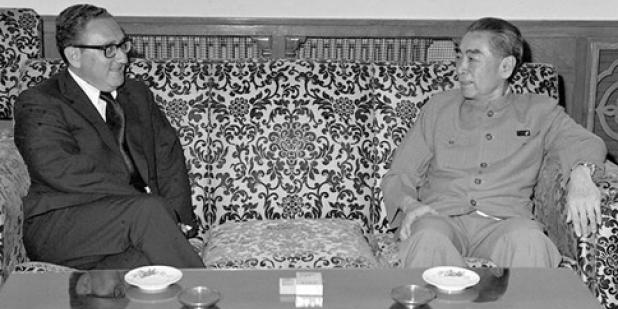
Thủ tướng Chu Ân Lai
Lê Trì Anh, Chủ tịch Ủy ban Quân sự
Phó Thủ tướng Giao Hoa
Tạng Vương Thần, Phiên dịch viên
Thẩm Viên Nhan, Phiên dịch viên
Henry A. Kissinger, Ngoại trưởng
Winston Lord, Giám đốc Kế hoạch và Điều phối, Bộ Ngoại giao
(Khi đoàn đang đi về phía phòng họp, Nguyên soái Trì nói với Ngoại trưởng rằng ông hiện đang gánh vác nhiều trách nhiệm hơn với tư cách là Ngoại trưởng. Ngoại trưởng trả lời rằng mọi việc phức tạp hơn, nhưng định hướng chính sách vẫn như cũ. Đã có những thay đổi nhân sự lớn.)
Bộ trưởng:
Thưa Thủ tướng, tôi nghĩ chúng ta có thể thảo luận ngắn gọn về một vấn đề cụ thể nảy sinh trong chuyến thăm Hoa Kỳ của Tổng Bí thư Brezhnev. Sự việc diễn ra như sau – và tôi xin kể lại bối cảnh vì có thể ông sẽ thấy thú vị: Trong tuần lễ diễn ra chuyến thăm, ông Brezhnev đã tìm cách gặp riêng Tổng thống mà không có mặt tôi (tiếng cười). Ông ấy đã thực hiện những nước đi cực kỳ phức tạp để đạt được mục đích này (tiếng cười). Ví dụ, khi ở California, ông ấy lưu trú tại tư dinh của Tổng thống; ông ấy giả vờ đi ngủ để tôi tưởng rằng mình có thể rời đi. Khi tin chắc là tôi đã đi rồi, ông ấy liền đứng dậy và đề nghị gặp Tổng thống – người lúc đó cũng đã đi ngủ (tiếng cười). Tôi kể lại chuyện này chỉ để làm rõ rằng cuộc trò chuyện đó không phải là ngẫu nhiên. Sau tất cả những toan tính ấy, Tổng thống vẫn kiên quyết yêu cầu tôi phải có mặt. Rốt cuộc, thành phần tham dự gồm có tôi, Tổng thống, ông Brezhnev và một phiên dịch viên.
Ông ấy (Brezhnev) nói rằng mình muốn có một cuộc trao đổi mà chỉ ông và Tổng thống biết, không ai khác hay tin. Điều này dẫn đến việc ông trình bày một cách gay gắt và dài dòng về cái mà ông gọi là "vấn đề Tầu cộng", [Trang 327] trong đó ông nêu nhiều ví dụ về cách người Nga bị đối xử tại Tầu cộng. Chuyện đó không quan trọng. Tuy nhiên, có hai điểm chính mà ông muốn nhấn mạnh trong cuộc trao đổi này. Thứ nhất, Liên Xô sẽ dùng vũ lực để ngăn chặn bất kỳ thỏa thuận quân sự nào giữa Hoa Kỳ và Tầu cộng, và ông hỏi liệu có thỏa thuận quân sự nào như vậy đang tồn tại hay không. Chúng tôi cho rằng ông không có quyền đặt câu hỏi đó. Tôi biết là không có thỏa thuận nào cả, nhưng chúng tôi cảm thấy ông không có quyền hỏi điều đó. Vì vậy, chúng tôi trả lời rằng phía Tầu cộng chưa bao giờ đề cập đến bất kỳ thỏa thuận quân sự nào với chúng tôi – và điều này hoàn toàn đúng sự thật. Sau đó, ông yêu cầu một sự đảm bảo rằng sẽ không bao giờ có bất kỳ thỏa thuận quân sự nào trong tương lai, đồng thời nhắc lại quan điểm rằng ông sẽ sử dụng vũ lực nếu có chuyện như vậy xảy ra.
Điểm thứ hai mà ông ấy nêu ra không liên quan đến mối quan hệ giữa Hoa Kỳ và Tầu cộng, mà chỉ liên quan riêng đến Tầu cộng. Ông ấy cho rằng việc Tầu cộng gia tăng năng lực hạt nhân là điều Liên Xô không thể chấp nhận được, và đề xuất trao đổi thông tin về những gì chúng ta biết được liên quan đến chương trình hạt nhân của nước này. Chúng tôi đã trả lời rằng chúng tôi không thực hiện việc trao đổi thông tin tình báo. Kể từ lúc đó... để tôi kể lại theo trình tự thời gian. Sự việc này diễn ra vào một buổi chiều muộn; cuộc thảo luận kéo dài rất lâu, nhưng tôi chỉ xin tóm tắt những ý chính. Đêm muộn hôm đó, Gromyko đề nghị gặp tôi và hỏi tôi nghĩ gì về những điều Brezhnev đã nói với Tổng thống trước đó, mặc dù Brezhnev đã cam kết rằng ngoài ông và Tổng thống ra, sẽ không ai biết về nội dung cuộc trò chuyện này. Ông ấy nói rằng Brezhnev chỉ đề cập hai vấn đề với Tổng thống và tôi hẳn phải biết về chúng. Tôi đáp rằng đó là một đề xuất chưa từng có tiền lệ, và tôi chưa bao giờ nghe thấy kiểu trao đổi như vậy giữa các quốc gia không phải là đồng minh của nhau.
Sau đó, ông ta nói rằng ông ta muốn làm rõ một điều: họ có thể coi các mối quan hệ chính trị của Tầu cộng – chứ không chỉ các mối quan hệ quân sự – là một hành động khiêu khích.
Thủ tướng Chu: Quan hệ quân sự của Tầu cộng hay quan hệ với các nước khác?
Bộ trưởng: Và tôi đã hỏi: "Chẳng hạn như hiệp ước hữu nghị của các ông với Ấn Độ ư?" Sau đó, ông ta lảng tránh câu trả lời, và tôi nói với ông ta rằng đây là hướng thảo luận không thể chấp nhận được và chúng tôi sẽ không tiếp tục bàn về vấn đề đó nữa.
Kể từ đó, Liên Xô đã ba bốn lần tìm cách trao đổi thông tin về Tầu cộng với chúng tôi bằng cách lồng ghép nội dung này vào các cuộc thảo luận về hạn chế vũ khí hạt nhân chiến lược. Cách họ đặt vấn đề là: họ phải được hưởng quyền bình đẳng với Hoa Kỳ, và bên cạnh sự bình đẳng đó, họ còn phải có đủ vũ khí để tiêu diệt Tầu cộng. Hơn nữa, số lượng vũ khí này phải gia tăng hàng năm do tình hình liên quan đến Tầu cộng.
Thưa Thủ tướng, tôi nói điều này với ông không phải vì lòng vị tha, mà bởi tôi tin rằng việc Liên Xô hủy diệt Tầu cộng – hay thậm chí chỉ là một cuộc tấn công quy mô lớn của Liên Xô nhắm vào Tầu cộng – sẽ gây ra những hậu quả khôn lường đối với toàn bộ cục diện quốc tế. (Người phiên dịch [Trang 328] cho thấy họ chưa hoàn toàn nắm bắt được ý này.) Tôi không nói điều này xuất phát từ lòng vị tha trừu tượng, mà vì tôi tin rằng việc ngăn chặn một cuộc tấn công như vậy là vì lợi ích của chính chúng ta. Thưa Thủ tướng, ông cũng hiểu rõ như tôi về những hậu quả sẽ ập đến với Nhật Bản, châu Âu, Nam Á và Trung Đông nếu một cuộc tấn công như thế dù chỉ mới có vẻ như thành công.
Trước những cuộc thảo luận này, tôi từng nghĩ rằng Liên Xô chỉ có thái độ thù địch chung chung đối với Tầu cộng chứ không có một kế hoạch cụ thể nào. Có thể ông đã có suy nghĩ khác. Còn hiện tại, tôi không loại trừ khả năng tồn tại một số ý đồ cụ thể.
Giờ đây, xuất phát từ những cuộc trao đổi này, tôi đã chỉ đạo thực hiện một số nghiên cứu trong nội bộ chính phủ—vốn chỉ có bốn hoặc năm người được biết—nhằm đánh giá bản chất của mối đe dọa đó, xác định các biện pháp ngăn chặn khả thi dựa trên hiểu biết của chúng tôi, cũng như tìm ra những cách thức hỗ trợ kín đáo; bởi lẽ tôi cho rằng việc thiết lập một mối quan hệ chính thức là điều không có lợi cho cả hai bên. Các nghiên cứu này mang tính chất kỹ thuật. Hiện tôi không mang theo các tài liệu đó ở đây, nhưng chúng đang được lưu giữ tại nhà khách nơi tôi ở. Chúng tôi có một số ý tưởng về việc giảm thiểu mức độ dễ bị tổn thương của lực lượng phía các bạn cũng như kéo dài thời gian cảnh báo; tuy nhiên, tôi xin nhấn mạnh lại rằng mọi việc cần được triển khai theo phương thức tuyệt đối bí mật và kín đáo.
Nếu Thủ tướng quan tâm, tôi có thể cử Chỉ huy Howe đến trình bày, hoặc ở một khía cạnh nào đó, tôi có thể trực tiếp chia sẻ chi tiết trong một nhóm nhỏ—với Thủ tướng hoặc người do ông chỉ định. Đây không phải là vấn đề đòi hỏi sự đáp lại hay thiết lập quan hệ chính thức, mà đơn thuần là những tư vấn dựa trên kinh nghiệm của chúng tôi cùng một số thông tin tình báo được cung cấp theo quy trình định kỳ. (Thông dịch viên đặt câu hỏi về ý nghĩa của từ “regularized” – định kỳ/có quy trình). Cụm từ “thông tin tình báo được cung cấp theo quy trình định kỳ” ở đây có nghĩa là luồng thông tin được chúng tôi chuyển đến phía các bạn một cách đều đặn, chứ không phải theo chiều ngược lại.
Ngoài ra, tôi nghĩ việc biết được quan điểm của Brezhnev – như đã được trình bày với chúng tôi – có thể là điều quan trọng đối với ông. Về phần mình, chúng tôi không cho rằng mình có thể chấp nhận điều này, mặc dù việc triển khai thực tế là một vấn đề rất nan giải.
Thủ tướng Chu: Trong chuyến thăm ngắn ngày gần đây của ông, có lẽ vấn đề đó đã không được đề cập lại.
Bộ trưởng: Không, ông ấy đã nêu lại vấn đề đó. Ông ấy lại đặt vấn đề về việc trao đổi thông tin quân sự. [Trang 329]
Thủ tướng Chu: Họ có các vệ tinh có thể quan sát Tầu cộng mỗi ngày.
Bộ trưởng: Tôi biết.
Thủ tướng Chu: Vậy mà họ vẫn muốn điều đó sao?
Bộ trưởng: Chúng tôi tin rằng năng lực chụp ảnh của họ không tốt bằng của chúng tôi. Nhưng tôi nghĩ điều họ muốn là một tín hiệu từ phía chúng tôi – một tín hiệu mà họ có thể coi là biểu tượng của sự hợp tác – chứ không hẳn là bản thân thông tin đó. Họ muốn chúng tôi tán thành việc cần thiết phải phá hủy hoặc hạn chế năng lực hạt nhân của Tầu cộng hơn là quan tâm đến chính thông tin kia. Tuy nhiên, việc trao đổi thông tin không phải là vấn đề lớn, vì rõ ràng là chúng tôi sẽ không làm điều đó, và có lẽ họ cũng đã có những gì họ cần rồi.
Thủ tướng Chu: Ngay cả khi tình hình Trung Đông đang căng thẳng như vậy mà họ vẫn thảo luận về vấn đề đó sao?
Bộ trưởng: Khi tôi ở đó, sự việc diễn ra trong thời gian thảo luận về lệnh ngừng bắn.
Thủ tướng Chu: Chuyện đó xảy ra trước khi chúng tôi đặt quân đội vào tình trạng báo động. Ban đầu ông đến đó là để bàn về lệnh ngừng bắn.
Bộ trưởng: Vâng.
Thủ tướng Chu: Họ đã mời ông đến à?
Bộ trưởng: Vào thời điểm đó, không hề có vấn đề gì về việc gây áp lực quân sự lên chúng tôi. Áp lực quân sự bắt đầu xuất hiện bốn ngày sau đó, và kể từ lúc ấy, họ không còn đề cập đến vấn đề này nữa.
Thủ tướng Chu: Vấn đề đó chỉ được nhắc đến trong chuyến thăm mà thôi.
Bộ trưởng: Chỉ trong chuyến thăm của tôi chứ không phải sau đó.
Thủ tướng Chu: Tôi tin rằng họ cũng sẽ đề xuất những vấn đề tương tự với Nhật Bản.
Bộ trưởng: Điều đó hoàn toàn có thể xảy ra. Dù sao đi nữa, ngay cả khi họ không làm vậy, thì nếu họ thực sự đi theo hướng này, theo nhận định của tôi, vẫn chưa rõ Nhật Bản sẽ hành động ra sao. Chúng tôi chưa nghe tin họ đề xuất bất cứ điều gì như vậy với Nhật Bản.
Thủ tướng Chu: Họ luôn muốn kéo Nhật Bản lại gần mình hơn và tách khỏi chúng tôi. Họ biết mình không thể cắt đứt hoàn toàn quan hệ giữa quý vị và Nhật Bản, nhưng ít nhất họ cũng muốn Nhật Bản gần gũi với họ hơn là với quý vị.
Bộ trưởng: Vâng.
Thủ tướng Chu: Chúng tôi cũng đã nói với phía Nhật Bản rằng nếu họ muốn khai thác Siberia, thì tốt hơn hết là nên hợp tác với quý vị thay vì tự mình thực hiện. Tôi tin rằng Thủ tướng Tanaka sẽ nói với quý vị điều này khi ông ấy gặp quý vị.
Bộ trưởng: Đó cũng là quan điểm của chúng tôi.
Thủ tướng Chu: Tôi đã nói với họ rằng nếu họ định làm điều đó, thì tốt hơn hết là nên hợp tác với Hoa Kỳ. Chúng tôi tuyên bố rằng mình không ngại việc họ khai thác tài nguyên ở Siberia. Điều duy nhất khiến chúng tôi lo ngại là họ có thể bị lừa gạt. [Trang 330]
Ông có nhận thấy những khó khăn nào trong nội bộ giới lãnh đạo Liên Xô hiện nay, giữa ba hay bốn nhân vật chủ chốt của họ không?
Bộ trưởng: Không, vì chúng tôi luôn làm việc với Brezhnev.
Thủ tướng Chu: Đúng vậy, ông ta nắm quyền chi phối mọi việc.
Bộ trưởng: Ban đầu, chúng tôi thường làm việc với Kosygin hoặc Podgorny và cả Brezhnev. Còn Gromyko chỉ là một quan chức thừa hành chứ không phải là nhà lãnh đạo.
Thủ tướng Chu: Suslov không tham gia vào các cuộc đàm phán.
Bộ trưởng: Chỉ có một lần duy nhất khi Tổng thống đang ở Moscow. Chúng tôi không có thông tin cụ thể nào về vấn đề đó. Người của chúng tôi cho rằng ông ta thiên về tư tưởng hơn và ít mang tính quan liêu hơn so với những người còn lại. Ông ta thiên về tư tưởng và ít quan liêu hơn những người khác, nhưng tôi cũng không rõ làm sao chúng ta lại biết được điều đó.
Thủ tướng Chu: Ông ta am hiểu lý luận lịch sử nhưng lại đi theo một luồng tư duy khác. Ông ta chỉ diễn giải lại lý thuyết của người khác. Lịch sử Đảng Cộng sản Liên Xô đã được sửa đổi ba lần, và cả ba lần đều dưới sự chỉ đạo của ông ta.
Viên thư ký: Chuyện đó thì tôi không biết. Tôi biết là nó đã được sửa đổi ba lần, nhưng không biết chính ông ta là người thực hiện việc đó.
Thủ tướng Chu: Ông ta là người hoàn thiện bản dự thảo cuối cùng; vì vậy, ông ta thuộc kiểu tác giả chỉ đi theo tư tưởng của người khác.
Viên thư ký: Liên Xô không có nhà lãnh đạo trí thức nào kiệt xuất cả.
Thủ tướng Chu: Đúng vậy, họ không có ai cả. Làm sao có thể có được chứ, vì họ áp đặt sự kìm kẹp quá ngặt nghèo.
Dù sao cũng cảm ơn ông về những thông tin và thông báo này. Đại sứ Hoàng Trấn đã chuyển lại những gì ông nói, và chúng tôi đã ghi nhận điều đó. Hiện nay, dù khá bận rộn với các chính sách thường nhật và những vấn đề khác, họ vẫn phải chửi bới chúng tôi hàng ngày trên báo chí. Trong Đảng chúng tôi cũng có một số người đọc và nghiên cứu các tài liệu đó, nhưng chúng tôi không có đủ thời gian để xem xét tất cả.
Vậy chúng ta nên bắt đầu bằng một phiên họp toàn thể vào ngày mai chứ?
Bộ trưởng: Vâng.
Thủ tướng Chu: Ông muốn họp toàn thể hay bắt đầu với nhóm năm, sáu người như tôi vừa đề cập?
Bộ trưởng: Ý kiến của ông thế nào?
Thủ tướng Chu: Tôi nghĩ khoảng bốn hoặc năm người.
Bộ trưởng: Được thôi. Chúng ta sẽ chọn con số bốn hoặc năm. Tôi nghĩ như vậy tốt hơn.
Thủ tướng Chu: Bởi vì ông đã đi qua rất nhiều quốc gia. [Trang 331]
Bộ trưởng: Còn về vấn đề kia, nếu Nguyên soái hoặc ai đó muốn xem các bản nghiên cứu, họ có thể liên hệ với ông Lord, và Chỉ huy Howe sẽ cung cấp các kết luận đó.
Thủ tướng Chu: Được rồi. Ông sẽ rời đi vào ngày 14, đúng không?
Bộ trưởng: Vâng, vào buổi sáng.
Thủ tướng Chu: Càng di chuyển về phía đông, ông càng mất nhiều thời gian.
Bộ trưởng: Đúng là vậy, nhưng rốt cuộc thì ông cũng sẽ lấy lại được tất cả thời gian đó.
1. Nguồn: Cơ quan Lưu trữ Quốc gia, RG 59, Ban Hoạch định Chính sách (S/P), Hồ sơ của Giám đốc (Winston Lord) 1969–1977, Mục 5027, Hộp 380, Hồ sơ về Tầu cộng của Lord. Tuyệt mật; Nhạy cảm; Chỉ dành cho người có thẩm quyền xem trực tiếp (Exclusively Eyes Only). Cuộc họp diễn ra tại Đại lễ đường Nhân dân ở Bắc Kinh. Các dấu chấm lửng (...) đều có trong văn bản gốc. Kissinger đã thăm Tầu cộng từ ngày 10 đến 14 tháng 11 để trấn an về triển vọng cải thiện quan hệ Mỹ– Tầu cộng, bất chấp những căng thẳng do cuộc chiến tại Campuchia, vụ Watergate và chính sách hòa dịu Mỹ–Xô gây ra. Winston Lord đã soạn thảo các tài liệu tóm tắt cho chuyến đi của Kissinger; các tài liệu này nằm trong cùng nguồn lưu trữ nêu trên, mục Tài liệu Tổng thống Nixon, Hồ sơ NSC, Hồ sơ Văn phòng Kissinger, Hộp 99, Hồ sơ Quốc gia, Khu vực Viễn Đông.↩
2. Leonid Brezhnev đã thăm Hoa Kỳ từ ngày 16 đến 25 tháng 6.↩
3. Trong bản ghi nhớ gửi Kissinger ngày 22 tháng 10, Fred Iklé, Giám đốc Cơ quan Kiểm soát Vũ khí và Giải trừ Quân bị, đã đề nghị cung cấp cho Tầu cộng thông tin tình báo về mối đe dọa từ Liên Xô. Solomon đã chuyển bản ghi nhớ của Iklé cho Kissinger kèm theo một bản ghi nhớ đề ngày 1 tháng 11. (Cơ quan Lưu trữ Quốc gia, RG 59, Ban Hoạch định Chính sách (S/P), Hồ sơ của Giám đốc (Winston Lord) 1969–1977, Mục 5027, Hộp 370, Chuyến thăm Bắc Kinh của Ngoại trưởng Kissinger, tháng 10 năm 1973, S/PC, Ông Lord, Tập II)↩
4. Kissinger đã thăm Moscow từ ngày 20 đến 22 tháng 10, chủ yếu để thảo luận về cuộc chiến ở Trung Đông.↩
https://history.state.gov/historicaldocuments/frus1969-76v18/sources
https://history.state.gov/historicaldocuments/frus1969-76v18/terms
https://history.state.gov/historicaldocuments/frus1969-76v18/persons
https://history.state.gov/historicaldocuments/frus1969-76v18/comp1
Political Turmoil in the United States, June 1973–September 1974 (Documents 35–87)
https://history.state.gov/historicaldocuments/frus1969-76v18/ch2
1. Document 55
Foreign Relations of the United States, 1969–1976, Volume XVIII, China, 1973–1976
55. Memorandum of Conversation1
Beijing, November 10, 1973, 9:25–10:00 p.m.
PARTICIPANTS
- Prime Minister Chou En-lai
- Yeh Chien-ying, Chairman of the Military Affairs Committee
- Vice Prime Minister Chiao Kuan-hua
- Tang Wang-shen, Interpreter
- Shen Jo-yen, Interpreter
- Henry A. Kissinger, Secretary of State
- Winston Lord, Director of Planning and Coordination, State Department
(As the group was walking toward the meeting room, Marshal Yeh indicated to the Secretary that he now had heavier burdens as Secretary of State. The Secretary replied that it was more complicated, but the direction of policy was the same. There had been major personnel changes.)
The Secretary: I thought, Mr. Prime Minister, we might have a brief talk on a particular problem that came up during the visit of General Secretary Brezhnev to the United States.2 It rose in the following manner, and I’ll give you the circumstances because they may be of some interest to you. During that week, during the visit, Mr. Brezhnev attempted to see the President alone without me (laughter). He went through extremely complicated maneuvers to accomplish this (laughter). For example, in California, he stayed in the house of the President and he pretended to go to bed, and then he thought I would leave. When he thought I had left, he got up and asked to see the President, who himself had gone to bed (laughter). I mention it only because it was not an accidental conversation. After all the maneuvers the President insisted that I be present. So it was myself, the President, Mr. Brezhnev and an interpreter.
And he (Brezhnev) said he wanted to have a conversation which only he and the President would know about and no one else. This led him into a long diagnosis of what he called the “China problem” which [Page 327] was extremely violent and reported many examples of how the Russians were treated in China. That is of no consequence. But there were two major points he was making in this conversation. First, that the Soviet Union would resist by force any military arrangement between the United States and China, and he asked whether there existed a military arrangement. We didn’t feel he had a right to ask that question. I know there doesn’t exist one, but we do not feel that he had the right to ask that question. So we said the Chinese have never raised any military arrangement with us, which is correct. He then demanded an assurance that there would never by any military arrangements in the future, and he repeated the thought again that he would use force if anything like this happened.
The second point he made was independent of the United States and China. It had to do only with China. He said that the growth of the Chinese nuclear capability was unacceptable to the Soviet Union, and he proposed an exchange of information about what we knew about their nuclear program. We told them that we don’t engage in an exchange of intelligence information. Since then … let me do this in sequence. This happened late one afternoon; it lasted a very long time, but I’m just giving the essence. Late that night Gromyko asked to see me, and asked me what I thought of what Brezhnev had earlier said to the President, even though Brezhnev had given his word that no one would know except Brezhnev and the President what he said. He said that Brezhnev had said to the President only two things and that I would know about them. I said it was an unheard of proposition, and I’d never heard this kind of talk between countries who were not allies.
He then said he wanted it understood that they might consider Chinese political relationships, and not only military relations, a provocation.
Prime Minister Chou: Chinese military relations or relations with other countries?
The Secretary: And I said like your friendship treaty with India? He then evaded the answer, and I told him that this was an inadmissible line of discussion and that we would not pursue it.
Since then, the Soviet Union has tried on three or four occasions to exchange information on China with us by putting it in the context of a discussion on strategic nuclear limitations. The way they do it is to say they should be entitled to have equality with the United States, and, in addition to this equality, enough weapons to destroy China. And those weapons must increase each year because of the Chinese situation.
I tell you this, Mr. Prime Minister, not out of altruism, but because I believe the destruction of China by the Soviet Union, or even a massive attack on China by the Soviet Union, would have unforeseeable consequences for the entire international situation. (The interpreter [Page 328] indicated that there was not total understanding of this point.) I don’t tell this out of abstract altruism because I believe it is in our interest to prevent such an attack. You know as well as I do, Mr. Prime Minister, the consequences on Japan, Europe, South Asia, and the Middle East if such an attack even had the appearance of success.
Before these conversations, I believed the Soviets had a generalized hostility toward China, but I did not believe they had a specific plan. You may have had another idea. I do not now exclude the possibility of some specific ideas.
Now, as a result of these conversations, I ordered some studies in our government that only four or five people know about, of what we know about what such a threat could be, and what from our knowledge could be done to prevent it, and of what help we could be in ways that are not obvious, because I don’t think a formal relationship is desirable for either of us. These would be of a technical nature. I don’t have those papers with me here now, but I have them in my guest house. We have some ideas on how to lessen the vulnerability of your forces and how to increase the warning time, and I repeat that it has to be done in such a way that it is very secret and not obvious.3
If the Prime Minister is interested, I can have Commander Howe, or in some respects I could mention the details in a small group—either to the Prime Minister or someone he designates. This is not something that involves reciprocity or any formal relationship, but advice based on our experience and some regularized intelligence information. (The interpreter questions the meaning of “regularized.”) “Regularized intelligence information” means the regularized information from us to you, not the other way.
Apart from that, I thought it might be of some importance to you to know the state of mind of Brezhnev as stated to us. As far as we are concerned, we don’t believe we can permit this, though it is a very difficult problem how to work out in practice.
Prime Minister Chou: During your recent short visit,4 it was probably not raised again.
The Secretary: No, he raised it again. He raised the question of exchanging military information again.
Prime Minister Chou: They have satellites that can survey China every day.
The Secretary: I know.
Prime Minister Chou: And they still want it?
The Secretary: Our belief is their photography is not as good as ours. But I think what they want is an indication from us that they would use as a symbol of cooperation rather than using it. They want us to accept the desirability of destroying China’s nuclear capability or limiting it rather than the information itself. But the exchange of information is not a big problem, as that obviously we won’t do, and they probably have what they need.
Prime Minister Chou: Even though the Middle East was so tense, they still discuss such an issue?
The Secretary: When I was there it was during the ceasefire discussion.
Prime Minister Chou: It was before our alert. You went originally for the ceasefire.
The Secretary: Yes.
Prime Minister Chou: They invited you?
The Secretary: At that time there was no question of military pressure on us. The military pressure started four days later, and since then, they have not raised it.
Prime Minister Chou: It was only mentioned during the visit.
The Secretary: During my visit and not since then.
Prime Minister Chou: I believe they would suggest such matters to Japan, too.
The Secretary: It is conceivable. In any event, even if they don’t, if they started on this course, it is in my judgment not clear what Japan will do. We have not heard that they have proposed anything like this to Japan.
Prime Minister Chou: They always wanted to get Japan brought closer to them and away from us. They know they can’t sever relations completely between you and Japan, but at least they want to get Japan closer to them than to you.
The Secretary: Yes.
Prime Minister Chou: We have also said to Japan that if they want to exploit Siberia, it is better to be done with you than alone. I believe Prime Minister Tanaka will tell you that when he meets you.
The Secretary: That is our view, too.
Prime Minister Chou: I told them that if they do, it is better to do it with the United States. We said we do not fear their exploiting Siberian resources. The only thing is that we are afraid that they might be taken in.
Have you found some difficulties within the Soviet leadership at present, among the three or four of them?
The Secretary: No, because we always deal with Brezhnev.
Prime Minister Chou: Yes, he monopolizes the scene.
The Secretary: At first we always dealt with Kosygin or Podgorny and Brezhnev. Gromyko is a functionary and not a leader.
Prime Minister Chou: Suslov doesn’t take part in the negotiations.
The Secretary: Only once when the President was in Moscow. We have no special information on that. Our people think he’s more ideological and less bureaucratic than the others. He’s ideological and less bureaucratic than the others, but I don’t know how we would know that.
Prime Minister Chou: He knows historical theory, but he follows the other line of thinking. He explains other peoples’ theories. The Soviet party history has been changed three times, and all three times under his guidance.
The Secretary: That I didn’t know. I knew it had changed three times; I didn’t know he did it.
Prime Minister Chou: He is the one who finalized the draft, so he is that kind of author who follows the others.
The Secretary: There is no outstanding intellectual leader in the Soviet Union.
Prime Minister Chou: No, they don’t have any. It is impossible to have any, because they are so oppressive.
Thank you for anyway for your information and for your notification. Anyway, Ambassador Huang Chen has passed on what you have told him, and we have taken note of that. At present, though they are quite busy on day-to-day policies and other matters, they have to curse us everyday in the newspapers anyway. There are some people here in our party who read and study the materials, but we don’t have the time to go through them all.
So should we begin with a plenary session tomorrow?
The Secretary: Yes.
Prime Minister Chou: Would you like a plenary session or begin with five or six people as I just said now?
The Secretary: What do you think?
Prime Minister Chou: I think about four or five.
The Secretary: All right. We’ll make it four or five. I think that’s better.
Prime Minister Chou: Because you have travelled through so many countries.
The Secretary: If on the other matter, the Marshal or someone else wants the studies, they can get in touch with Mr. Lord, and Commander Howe can give those conclusions.
Prime Minister Chou: All right. You’re leaving on the 14th, is that so?
The Secretary: Yes, in the morning.
Prime Minister Chou: The more you move eastward, the more time you lose.
The Secretary: That is true, but at the end you finally gain it all back.
1. Source: National Archives, RG 59, Policy Planning Staff (S/P), Director’s Files (Winston Lord) 1969–1977, Entry 5027, Box 380, Lord China Files. Top Secret; Sensitive; Exclusively Eyes Only. The meeting took place in the Great Hall of the People in Beijing. All ellipses are in the original. Kissinger visited China November 10–14 to provide reassurance about the prospect for improved U.S.–PRC relations despite the stresses produced by the Cambodian war, Watergate, and U.S.-Soviet détente. Winston Lord produced briefing papers for Kissinger’s trip, which are ibid., Nixon Presidential Materials, NSC Files, Kissinger Office Files, Box 99, Country Files, Far East.↩
2. Leonid Brezhnev visited the United States June 16–25.↩
3. In an October 22 memorandum to Kissinger, Fred Iklé, Director of the Arms Control and Disarmament Agency, suggested offering intelligence to China about the Soviet threat. Solomon sent Iklé’s memorandum to Kissinger under a November 1 covering memorandum. (National Archives, RG 59, Policy Planning Staff (S/P), Director’s Files (Winston Lord) 1969–1977, Entry 5027, Box 370, Secretary Kissinger’s Visit to Peking, October 1973, S/PC, Mr. Lord, Vol. II)↩
4. Kissinger visited Moscow October 20–22, mainly to discuss the Middle East war.↩
https://history.state.gov/historicaldocuments/frus1969-76v18/d55
https://history.state.gov/historicaldocuments/frus1969-76v18/pg_327
https://history.state.gov/historicaldocuments/frus1969-76v18/pg_328
https://history.state.gov/historicaldocuments/frus1969-76v18/pg_329
https://history.state.gov/historicaldocuments/frus1969-76v18/pg_330
https://history.state.gov/historicaldocuments/frus1969-76v18/pg_331
Thân thế (các) nhân vật
General Secretary of the Communist Party of the Soviet Union
https://en.wikipedia.org/wiki/Leonid_Brezhnev
https://www.britannica.com/biography/Leonid-Ilich-Brezhnev
https://en.wikipedia.org/wiki/General_Secretary_of_the_Communist_Party_of_the_Soviet_Union
https://www.britannica.com/place/Soviet-Union/The-Brezhnev-era
Chiao Kuan-hua,
Vice Foreign Minister, People’s Republic of China
https://en.wikipedia.org/wiki/Qiao_Guanhua
https://history.state.gov/historicaldocuments/frus1969-76ve13/d124
https://www.marxists.org/subject/china/china-reconstructs/1974/CR1974-12-Sup.pdf
SYND 25-11-71 CHINESE DELEGATE CHIAO KUAN HUA SPEAKS ABOUT DISARMAMENT AT THE UN
https://www.youtube.com/watch?v=bjnyWtitbrg
Premier of the People’s Republic of China; member, Standing Committee of the Chinese Communist Party’s Political Bureau
https://en.wikipedia.org/wiki/Zhou_Enlai
https://en.wikipedia.org/wiki/Premier_of_the_People%27s_Republic_of_China
https://en.wikipedia.org/wiki/Minister_of_Foreign_Affairs_of_the_People%27s_Republic_of_China
https://en.wikipedia.org/wiki/Vice_Chairman_of_the_Chinese_Communist_Party
https://en.wikipedia.org/wiki/Vice_Chairman_of_the_Chinese_Communist_Party
https://en.wikipedia.org/wiki/Chairman_of_the_Chinese_People%27s_Political_Consultative_Conference
https://history.state.gov/historicaldocuments/frus1969-76v17/d139
https://digitalarchive.wilsoncenter.org/document/zhou-enlai-talking-ho-chi-minh
https://digitalarchive.wilsoncenter.org/search?f[0]=topics:86538&fo[0]=86538
Tài liệu Chu Ân Lai yêu cầu Hoa Kỳ loại bỏ Tổng Thống Nguyễn Văn Thiệu và dùng Dương Văn Minh để lật đổ hai nền Đệ I và Đệ II VNCH.
https://digitalarchive.wilsoncenter.org/document/discussion-between-zhou-enlai-and-le-duc-tho
https://digitalarchive.wilsoncenter.org/document/89367/download
Soviet Foreign Minister
https://en.wikipedia.org/wiki/Andrei_Gromyko
https://en.wikipedia.org/wiki/List_of_heads_of_state_of_the_Soviet_Union
https://en.wikipedia.org/wiki/27th_Politburo_of_the_Communist_Party_of_the_Soviet_Union
https://en.wikipedia.org/wiki/Ministry_of_Foreign_Affairs_(Soviet_Union)
https://en.wikipedia.org/wiki/Permanent_Representative_of_the_Soviet_Union_to_the_United_Nations
https://digitalarchive.wilsoncenter.org/search?f[0]=people:81473&fo[0]=81473
https://www.fordlibrarymuseum.gov/library/exhibits/vladivostok/gromyko.pdf
Howe, Jonathan,
Lieutenant Commander, USN; member, National Security Council Staff from 1970 until 1972
https://en.wikipedia.org/wiki/Jonathan_Howe
https://www.pbs.org/wgbh/pages/frontline/shows/ambush/interviews/howe.html
https://www.gao.gov/products/b-255792
https://aei.pitt.edu/75325/1/BIO_-_EN_-_Howe.pdf
https://www.govinfo.gov/content/pkg/GAOREPORTS-B-255792-2/html/GAOREPORTS-B-255792-2.htm
https://valor.militarytimes.com/recipient/recipient-315370/
https://digitallibrary.un.org/record/1314390?ln=en
Huang Zhen (Huang Chen),
PRC Ambassador to France until March 1973; Chief of the PRC Liaison Office in the United States from March 1973
https://en.wikipedia.org/wiki/Huang_Zhen
https://en.wikisource.org/wiki/Author:Huang_Zhen
https://2001-2009.state.gov/documents/organization/72591.pdf
https://nsarchive2.gwu.edu/NSAEBB/NSAEBB79/BEBB23.pdf
https://www.fordlibrarymuseum.gov/sites/default/files/2024-06/1552743.pdf
https://www.britishpathe.com/asset/236303/
https://mediaclip.ina.fr/en/caf97507056-credentials-huang-chen-at-the-elysee.html
https://history.state.gov/historicaldocuments/frus1969-76ve13/d12
Henry A Kissinger
Assistant to the President for National Security Affairs until November 3, 1975; also Secretary of State from September 21, 1973
https://www.theguardian.com/world/2023/may/20/bilderberg-meeting-group-lisbon-kissinger
https://www.theguardian.com/world/bilderberg
https://history.state.gov/historicaldocuments/frus1969-76ve13/summary
https://china.usc.edu/getting-beijing-henry-kissingers-secret-1971-trip
https://china.usc.edu/catalog/documents/us-china
http://www.archives.gov/press/press-releases/2001/nr01-47.html
https://china.usc.edu/talking-points-july-22-august-3-2011
https://china.usc.edu/getting-beijing-henry-kissingers-secret-1971-trip#meetings
https://china.usc.edu/getting-beijing-henry-kissingers-secret-1971-trip#nixon-announcement
https://china.usc.edu/getting-beijing-henry-kissingers-secret-1971-trip#chinese-accept
https://china.usc.edu/getting-beijing-henry-kissingers-secret-1971-trip#signals
https://china.usc.edu/getting-beijing-henry-kissingers-secret-1971-trip#the_aim
http://www.foreignaffairs.com/articles/23927/richard-m-nixon/asia-after-viet-nam
https://history.state.gov/historicaldocuments/frus1969-76v17/d4
https://history.state.gov/historicaldocuments/frus1969-76v17/d12
https://history.state.gov/historicaldocuments/frus1969-76v17/d13
https://history.state.gov/historicaldocuments/frus1969-76v17/d141
https://2001-2009.state.gov/documents/organization/100324.pdf
https://en.wikipedia.org/wiki/Henry_Kissinger_and_the_Vietnam_War
Lesson in Vietnam from Kissinger to Nixon: “when we made it “our war” we would not let the South Vietnamese fight it; when it again became “their war”, we would not help them fight it.”
(We also had trouble with excesses here: when we made it “our war” we would not let the South Vietnamese fight it; when it again became “their war,” we would not help them fight it. Ironically, we prepared the South Vietnamese for main force warfare after 1954 (anticipating another Korean-type attack), and they faced a political war; they had prepared themselves for political warfare after 1973 only to be faced with a main force invasion 20 years after it had been expected.)
https://history.state.gov/historicaldocuments/frus1969-76v10/d280
Lesson of Vietnam May 12 1975 by Henry A. Kissinger
https://www.fordlibrarymuseum.gov/library/exhibits/vietnam/032400091-002.pdf
https://thebattleofkontum.com/extras/kissinger.html
“Richard M. Nixon and Kissinger on 3 August 1972,” Conversation 760-006, Presidential Recordings Digital Edition [Fatal Politics, ed. Ken Huges] (Charlottesville: University of Virginia Press, 2014-). URL:https://prde.upress.virginia.edu/conversations/4006748
https://player.vimeo.com/video/889937807?h=e44572c8f3&color=e57200&title=0&byline=0&portrait=0
https://player.vimeo.com/video/889937807?h=e44572c8f3&color=e57200&title=0&byline=0&portrait=0
Discover the Truth at:
https://www.theblackvault.com/documentarchive/the-cias-vietnam-document-cd-rom/
The secret life of Henry Kissinger minutes of a 1975 meeting with Lawrence Eagleburger
https://etan.org/news/kissinger/secret.htm
Henry Kissinger and the Truth About Negotiations In Vietnam
https://www.youtube.com/watch?v=Z5fxxKVfX5g
Henry Kissinger - Secrets of a superpower | DW Documentary
https://www.youtube.com/watch?v=bWVMTKeAwlA
The Untold Truth of Henry Kissinger
https://www.youtube.com/watch?v=0iheZdvWdbI&t=1s
Was Henry Kissinger a War Criminal?
https://www.youtube.com/watch?v=COqq7862wcU&t=25s
Kosygin, Alexei N.,
Chairman, Council of Ministers of the Soviet Union
https://en.wikipedia.org/wiki/Alexei_Kosygin
https://www.britannica.com/biography/Aleksey-Nikolayevich-Kosygin
https://www.imdb.com/name/nm0467576/bio/
https://historylearning.com/modern-world-history/coldwar/alexei-kosygin/
https://history.state.gov/historicaldocuments/frus1964-68v14/d14
https://en.namu.wiki/w/%EC%95%8C%EB%A0%89%EC%84%B8%EC%9D%B4%20%EC%BD%94%EC%8B%9C%EA%B8%B4
https://www.archontology.org/nations/rus/rus_govt1/kosygin.php
https://history.state.gov/historicaldocuments/frus1964-68v19/d157
member, National Security Council staff until 1973; Director of the Policy Planning Staff, Department of State from October 1973 until January 1977
https://en.wikipedia.org/wiki/Winston_Lord
https://en.wikipedia.org/wiki/Assistant_Secretary_of_State_for_East_Asian_and_Pacific_Affairs
https://en.wikipedia.org/wiki/List_of_ambassadors_of_the_United_States_to_China
https://en.wikipedia.org/wiki/Council_on_Foreign_Relations
https://en.wikipedia.org/wiki/Director_of_Policy_Planning
https://www.brookings.edu/wp-content/uploads/2016/07/19981208.pdf
https://www.brookings.edu/wp-content/uploads/2016/07/19991104.pdf
https://nsarchive.gwu.edu/document/22669-document-04-winston-lord-director-policy
https://www.ncafp.org/about-us/faps-board-of-advisors/ambassador-winston-lord/
Nixon Richard M.,
Vice President of the United States
https://www.history.com/topics/us-presidents/richard-m-nixon
https://www.britannica.com/event/Watergate-Scandal
https://soundcloud.com/the-miller-center-at-uva/14-nov-68-lbj-and-nixon
https://en.wikipedia.org/wiki/Richard_Nixon
https://soundcloud.com/the-miller-center-at-uva
https://www.britannica.com/event/Vietnam-War
https://en.wikipedia.org/wiki/Richard_Nixon
http://www.pbs.org/wgbh/amex/honor/peopleevents/e_paris.html
https://www.britannica.com/event/Vietnam-War
http://www.nytimes.com/2016/12/31/opinion/sunday/nixons-vietnam-treachery.html
http://www.nytimes.com/interactive/2016/12/31/opinion/sunday/haldeman-notes.html
http://www.bbc.com/news/magazine-21768668
https://www.nixonlibrary.gov/index.php
https://history.state.gov/historicaldocuments/frus1964-68v07/ch5
https://www.lovethetruth.com/books/13_bloodlines/bundy.htm
https://www.lovethetruth.com/books/13_bloodlines/toc.htm
Nixon, Richard M.,
President of the United States
https://2001-2009.state.gov/documents/organization/100324.pdf
https://www.history.com/topics/us-presidents/richard-m-nixon
https://www.britannica.com/event/Watergate-Scandal
https://soundcloud.com/the-miller-center-at-uva/14-nov-68-lbj-and-nixon
https://en.wikipedia.org/wiki/Richard_Nixon
https://soundcloud.com/the-miller-center-at-uva
https://www.britannica.com/event/Vietnam-War
https://en.wikipedia.org/wiki/Richard_Nixon
http://www.pbs.org/wgbh/amex/honor/peopleevents/e_paris.html
https://www.britannica.com/event/Vietnam-War
http://www.nytimes.com/2016/12/31/opinion/sunday/nixons-vietnam-treachery.html
http://www.nytimes.com/interactive/2016/12/31/opinion/sunday/haldeman-notes.html
http://www.bbc.com/news/magazine-21768668
https://www.nixonlibrary.gov/index.php
https://history.state.gov/historicaldocuments/frus1964-68v07/ch5
https://www.lovethetruth.com/books/13_bloodlines/bundy.htm
https://www.lovethetruth.com/books/13_bloodlines/toc.htm
Nixon had a Trip to China from February 21 to 28 1972,
https://www.nixonlibrary.gov/nixons-trip-china
http://www.presidentialtimeline.org/
https://www.nixonlibrary.gov/sites/default/files/virtuallibrary/tapeexcerpts/china-656-10a.pdf
https://www.nixonlibrary.gov/sites/default/files/virtuallibrary/tapeexcerpts/china-656-10b.pdf
https://www.nixonlibrary.gov/sites/default/files/virtuallibrary/tapeexcerpts/china-92-1a.pdf
https://www.nixonlibrary.gov/sites/default/files/virtuallibrary/tapeexcerpts/china-92-1b.pdf
https://www.nixonlibrary.gov/sites/default/files/virtuallibrary/tapeexcerpts/china-21-56.pdf
https://www.nixonlibrary.gov/sites/default/files/virtuallibrary/tapeexcerpts/china-656-10a.mp3
https://www.nixonlibrary.gov/sites/default/files/virtuallibrary/tapeexcerpts/china-656-10b.mp3
https://www.nixonlibrary.gov/sites/default/files/virtuallibrary/tapeexcerpts/china-92-1a.mp3
https://www.nixonlibrary.gov/sites/default/files/virtuallibrary/tapeexcerpts/china-92-1b.mp3
https://www.nixonlibrary.gov/sites/default/files/virtuallibrary/tapeexcerpts/china-21-56.mp3
https://nsarchive.gwu.edu/briefing-book/nuclear-vault-vietnam/2023-03-24/movement-and-madman
The Vietnam War Johnson and Nixon Administrations Videos
March 2, 2016 Last Aired May 5, 2016
https://www.c-span.org/program/the-presidency/reflections-on-richard-nixon/431130
July 16, 1973 Last Aired July 22, 2013
Senate Watergate Committee Testimony
https://www.c-span.org/program/vignette/senate-watergate-committee-testimony/316346
April 26, 2016 Last Aired June 5, 2016
Vietnam War Commander in Chief
https://www.c-span.org/program/american-history-tv/vietnam-war-commanders-in-chief/439971
June 12, 2008 Last Aired July 22, 2013
Alexander Butterfield Oral History Interview, Part 2
June 12, 2008 Last Aired July 15, 2013
Alexander Butterfield Oral History Interview, Part 1
January 27, 2012 Last Aired June 11, 2012
President Nixon's Secret White House Tapes
https://www.c-span.org/program/american-history-tv/president-nixons-secret-white-house-tapes/277123
July 25, 1994 Last Aired June 20, 2008
Watergate: Corruption of American Politics
https://www.c-span.org/program/public-affairs-event/watergate-corruption-of-american-politics/119480
February 16, 2003 Last Aired December 25, 2003
Presidential Tapes: Taping Systems History
https://www.c-span.org/program/public-affairs-event/presidential-tapes-taping-systems-history/122572
Alexander Butterfield: The 60 Minutes Watergate Interview (1975)
https://www.youtube.com/watch?v=ss9AkLUmM4g
Watergate Hearing: Alexander Butterfield Testimony
Alexander Butterfield Was ‘Worried To Death’ Testifying Against Nixon
https://www.youtube.com/watch?v=c52oIe3Gj6w
How Nixon’s Invasion of Cambodia Triggered a Check on Presidential Power
Vietnam War Cambodia and Laos
https://www.history.com/articles/nixon-war-powers-act-vietnam-war-cambodia
Nixon's Vietnam Visit 1965, Rare Film Unearthed
https://www.youtube.com/watch?v=RaTi8OEpINI
Nixon on LBJ and Vietnam: Where Did It All Go Wrong?
https://www.youtube.com/watch?v=-n-4o3vOYD4
1969 July 30_Tổng Thống Hoa Kỳ 🇺🇸 Richard M. Nixon Thăm Việt Nam Cộng Hoà.
https://www.youtube.com/watch?v=ZRp4v6M6YJw&t=19s
Podgorny, Nikolai V.,
President of the Presidium of the Supreme Soviet of the USSR
https://en.wikipedia.org/wiki/Nikolai_Podgorny
https://www.britannica.com/biography/Nikolay-Podgorny
https://history.state.gov/historicaldocuments/frus1969-76v14/d276
Solomon, Richard H.,
member, National Security Council staff
https://en.wikipedia.org/wiki/Richard_H._Solomon
https://www.academyofdiplomacy.org/members-1/solomon/richard-h.
https://carnegiecouncil.org/people/richard-h-solomon
https://www.c-span.org/person/richard-h-solomon/9004/
https://www.chinafile.com/contributors/richard-h-solomon
https://findingaids.lib.umich.edu/catalog/umich-bhl-2008034
https://www.presidency.ucsb.edu/documents/nomination-richard-h-solomon-be-assistant-secretary-state
Tanaka Kakuei,
Japanese Prime Minister from July 7, 1972, until December 9, 1974
https://www.britannica.com/biography/Tanaka-Kakuei
https://en.wikipedia.org/wiki/Kakuei_Tanaka
https://history.state.gov/historicaldocuments/frus1969-76ve12/d227
https://grokipedia.com/page/Kakuei_Tanaka
https://www.jimin.jp/english/about-ldp/history/104281.html
https://scholar.lib.vt.edu/VA-news/ROA-Times/issues/1993/rt9312/931217/12170054.htm
https://www.fccj.or.jp/number-1-shimbun-article/day-reckoning-kakuei-tanaka-and-fccj
https://historica.fandom.com/wiki/Kakuei_Tanaka
Yeh Chien-ying (Ye Jianying),
senior Chinese Communist Party (CCP) military cadre; Marshal, People’s Liberation Army; Vice Chairman, Central Military Council of the Chinese Communist party; member of the Central Committee and Politburo
https://en.wikipedia.org/wiki/Ye_Jianying
https://www.britannica.com/biography/Ye-Jianying
https://chineseposters.net/themes/yejianying
https://xboorman.enpchina.eu/biographie/ye-jianying/
https://generals.dk/general/Ye_Jianying/_/China.html
https://en.people.cn/data/people/yejianying.shtml
https://en.namu.wiki/w/%EC%98%88%EC%A0%A0%EC%9E%89


/https:/tf-cmsv2-smithsonianmag-media.s3.amazonaws.com/filer/f4/cb/f4cb92c9-4131-4e0f-ae4a-307144393214/nixoncampaigns.jpg)
No comments:
Post a Comment