20261126 CDTL DDE D022 18 January 1955 22. Bản ghi nhớ về một cuộc thảo luận từ Bộ Ngoại giao, Washington, ngày 18 tháng 1 năm 1955.
https://history.state.gov/historicaldocuments/frus1955-57v01/d22
Google Translated
Tài liệu 22
Quan hệ Đối ngoại Hoa Kỳ, 1955–1957, Việt Nam, Tập I
22. Bản ghi nhớ về một cuộc trao đổi từ Bộ Ngoại giao, Washington, ngày 18 tháng 1 năm 1955
Washington, ngày 18 tháng 1 năm 1955
CHỦ ĐỀ
Các vấn đề khác nhau liên quan đến ba quốc gia liên kết (Ba nước Đông Dương)
THÀNH PHẦN THAM GIA
Bộ trưởng Ngoại giao
Thứ trưởng Bộ Quốc phòng Robert Anderson
Đô đốc Arthur W. Radford
Thứ trưởng Ngoại giao Hoover
C — Ông Douglas MacArthur II
FE (Vụ Viễn Đông) — Ông Walter S. Robertson
EUR (Vụ Âu châu) — Ông Livingston T. Merchant
S/MSA — Ông Frederick E. Nolting
PSA — Ông Kenneth T. Young, Jr.
1. Việt Nam
Mở đầu cuộc họp, Bộ trưởng Ngoại giao cho biết theo quan điểm của ông, tình hình tại Việt Nam dường như đang tiến triển tốt hơn. Ông đề cập đến bức điện tín mới nhất của Tướng Collins (điện số 2811 từ Sài Gòn). Một cuộc thảo luận đã diễn ra xoay quanh biên bản ghi nhớ giữa Tướng Collins và Tướng Ely về việc tổ chức và huấn luyện các lực lượng vũ trang tự chủ của Việt Nam. Bộ trưởng Ngoại giao bày tỏ nhận định rằng Tướng Collins đang tiến hành đàm phán một cách thuận lợi với phía Việt Nam trên cơ sở thực tế. Nhận định này đã được xác nhận. Khi Bộ trưởng Ngoại giao đặt câu hỏi về tình trạng của bản ghi nhớ này, ông Robertson cho biết dường như có một sự hiểu lầm hoàn toàn tại Paris; Đại sứ quán Pháp sáng nay đã thông báo với Bộ Ngoại giao rằng, theo một bức điện từ Paris, Tướng Collins đã đồng ý trình bản sửa đổi của phía Pháp cho phía Việt Nam.
2. Ước tính chi phí
Tiếp đó, ông Anderson nêu mối quan tâm chính của mình là ước tính chi phí từ 700 đến 800 triệu đô la trong giai đoạn hai năm, con số mà Tướng Collins đã đưa ra trong một bức điện tín gần đây. Ông Anderson cho rằng dù các con số này nghe có vẻ ổn thỏa, nhưng cần phải xem xét chúng trên cơ sở so sánh đối với toàn bộ khu vực. Liệu khả năng đạt được kết quả thực chất là bao nhiêu? Ông nhớ lại rằng khi Tướng Collins lên đường sang Việt Nam, Bộ trưởng Dulles đã [Trang 49] cho biết các triển vọng còn rất mơ hồ, có lẽ chỉ ở mức mười, hai mươi hoặc ba mươi phần trăm. Vấn đề đặt ra là tìm nguồn kinh phí cho những dự toán lớn như vậy. Nguồn duy nhất hiện có là quỹ 700 triệu đô la theo Mục 121. Các dự toán cho Đông Dương chiếm khoảng một nửa số quỹ đó. Ông tỏ ra lo ngại vì Bộ Quốc phòng còn có rất nhiều khoản mục khác cần chi trả từ chính nguồn quỹ này.
Sau đó trong cuộc họp, theo yêu cầu của Bộ trưởng, ông Nolting đã tham gia để thảo luận về bảng kê các yêu cầu chi trả trị giá 1.100 triệu đô la từ Mục 121 – bảng kê mà ông Stassen vừa gửi cho Ủy ban Điều phối Hoạt động (OCB). Ông Anderson cho biết các dự toán mới do Tướng Collins đưa ra dường như cao hơn đáng kể so với những con số trước đó. Ông muốn biết liệu quỹ này có đủ kinh phí để đáp ứng các dự toán của Tướng Collins hay không.
Ông Nolting trả lời rằng số tiền hiện có là đủ để đáp ứng các dự toán của ông Collins. Tuy nhiên, tổng các khoản yêu cầu chi tiêu đã vượt quá hạn mức 700 triệu đô la, chủ yếu là do các hạng mục khí tài quân sự với trị giá khoảng 550 triệu đô la. Con số này bao gồm 154 triệu đô la dành cho việc khôi phục trang thiết bị tại Đông Dương. Ông Nolting lưu ý rằng tổng các khoản yêu cầu đang vượt mức khoảng 400 triệu đô la. Vấn đề đặt ra là đâu mới là những yêu cầu hợp lệ đối với quỹ này. Cần phải thiết lập thứ tự ưu tiên cao nhất cho các hạng mục khác nhau để đưa tổng số yêu cầu chi tiêu về đúng mức 700 triệu đô la. Trước câu hỏi của ông Anderson về việc liệu có phải ngân sách không đủ để thực hiện tất cả các cam kết với các chính phủ liên quan hay không, ông Nolting đáp rằng ngân sách hiện tại đủ để đáp ứng các cam kết đã có, nhưng không đủ để chi trả cho các yêu cầu bổ sung – dù những yêu cầu đó được xem là đáng cân nhắc.
Ông Nolting cho biết Thống đốc Stassen đã sắp xếp một cuộc họp với ông Hensel và chính ông để xác định thứ tự ưu tiên, nhằm cắt giảm các yêu cầu chi tiêu từ quỹ này. Đô đốc Radford đặt câu hỏi liệu có thể tiết kiệm được khoản nào từ ngân sách 785 triệu đô la của năm 1954 hay không. Ông Nolting cho rằng tối đa có thể tiết kiệm được 50 triệu đô la, nhưng ngay cả điều đó cũng còn chưa chắc chắn.
3. Phái đoàn huấn luyện của Hoa Kỳ tại Campuchia
Bộ trưởng cho biết dường như Bộ Quốc phòng muốn có một thỏa thuận bí mật bằng văn bản, trong đó Chính phủ Campuchia cam kết loại bỏ dần sự hiện diện của phía Pháp. Theo quan điểm của ông, vấn đề này nên được giải quyết thông qua thực tiễn theo thời gian, thay vì thông qua một văn bản thỏa thuận; bởi lẽ, một văn bản như vậy có thể dẫn đến những hệ lụy rất tiêu cực. Đô đốc Radford nhận xét rằng khi ông còn ở Phnom Penh, một thông điệp từ Bộ Ngoại giao đã được gửi đến, cho thấy Bộ Ngoại giao phần nào đồng tình với hướng tiếp cận này. [Trang 50]
Ông Robertson cho rằng vấn đề chính nằm ở những tác động nghiêm trọng mà một thỏa thuận như vậy chắc chắn sẽ gây ra đối với phía Pháp. Nếu chỉ xét riêng trường hợp Campuchia thì có lẽ sẽ không có vấn đề gì, nhưng một thỏa thuận bí mật có thể gây ảnh hưởng to lớn đến toàn bộ mối quan hệ của chúng ta với Pháp. Đây là một trong những trường hợp mà một vấn đề ở lĩnh vực này lại kéo theo nhiều vấn đề khác ở các lĩnh vực khác. Ông tự hỏi tại sao không thể đạt được một thỏa thuận, theo đó công tác huấn luyện các lực lượng Campuchia sẽ nằm dưới sự chỉ đạo và chịu trách nhiệm hoàn toàn của Phái đoàn Cố vấn Quân sự Mỹ (MAAG). Bộ trưởng đặt câu hỏi với ông Anderson và Đô đốc Radford rằng liệu chúng ta có thể áp dụng phương thức tương tự như đã thực hiện tại Việt Nam hay không.
Đô đốc Radford chỉ ra rằng, dường như phía Pháp không có thỏa thuận nào với Chính phủ Campuchia về một sứ mệnh huấn luyện. Nếu chúng ta có thể đạt được thỏa thuận với Campuchia, thì phía Pháp sẽ không còn là một bên tham gia. Tuy nhiên, ông đặt vấn đề liệu chúng ta có thể trao đổi lại với phía Campuchia, đề nghị họ dần loại bỏ sự hiện diện của Pháp mà không cần một thỏa thuận chính thức bằng văn bản hay không. Ông Anderson giải thích rằng Bộ Quốc phòng Mỹ đặc biệt quan ngại về vấn đề này, bởi trước đây, mọi nỗ lực hợp tác với quân đội Pháp đều không mang lại kết quả. Các sĩ quan tại Ngũ Giác Đài đều e ngại viễn cảnh phải rơi vào một tình huống tương tự tại Campuchia. Những người có mặt tại cuộc họp đều nhất trí rằng việc hợp tác với quân đội Pháp đã bộc lộ rất nhiều khó khăn.
Bộ trưởng nhận định rằng, dù các cam kết miệng từ phía Campuchia có thể là một phương án, nhưng chắc chắn chúng sẽ không hiệu quả bằng một thỏa thuận bằng văn bản. Dẫu vậy, ông cho rằng cần chấp nhận thực tế hiện tại và để mọi việc tự diễn tiến trong quá trình thực hiện, đặc biệt là đối với các huấn luyện viên quân sự người Pháp.
Sau đó, ông Robertson đề nghị một dự thảo thỏa thuận với phía Campuchia như một giải pháp khả thi:
“Chính phủ Campuchia, khi nhận thấy rằng việc chỉ đạo thực tế một chương trình hiệu quả trong lĩnh vực huấn luyện và tổ chức quân sự cần phải được giao cho một thẩm quyền duy nhất, đã đồng ý rằng trách nhiệm toàn diện trong việc hỗ trợ Chính phủ Campuchia tổ chức và huấn luyện các lực lượng vũ trang của nước này sẽ do Người đứng đầu Nhóm Cố vấn Viện trợ Quân sự Hoa Kỳ đảm nhận, bắt đầu từ ngày ———— năm 1955.”
Đô đốc Radford cho biết cá nhân ông có thể chấp nhận phương án này, vì phía Pháp chắc chắn sẽ không thể tiếp tục ở lại nếu chúng ta nắm toàn quyền chỉ đạo. Ông lưu ý rằng đây chỉ là ý kiến cá nhân, không đại diện cho Hội đồng Tham mưu trưởng Liên quân (JCS), bởi quan điểm của hội đồng này là cần phải có một thỏa thuận bằng văn bản về việc phía Pháp rút dần sự hiện diện.
Bộ trưởng Anderson cho biết ông đồng tình với đề xuất từ phía Bộ Ngoại giao. [Trang 51]
4. Cung cấp thêm trực thăng cho Ủy ban Kiểm soát Quốc tế
Bộ trưởng đọc nội dung từ bức điện số 2784 gửi từ Sài Gòn. Ông chỉ ra rằng tình hình tại Lào đang trở nên ngày càng nghiêm trọng, trong khi Ủy ban Kiểm soát Quốc tế lại gặp khó khăn do thiếu trực thăng.
Ông Anderson bày tỏ lo ngại về dư luận tại Hoa Kỳ. Người dân Mỹ đã nghe quá nhiều thông tin về những thất bại của phía Pháp cũng như tình trạng mất mát thiết bị quân sự; do đó, việc tiếp tục bàn giao thêm khí tài — đặc biệt là trực thăng, vốn đang khan hiếm — cho phía Pháp có thể vấp phải phản ứng tiêu cực. Ông đề nghị phương án cho Chính phủ Canada mượn số trực thăng này, sau đó phía Canada có thể để phía Pháp vận hành và bảo dưỡng. Ông cho rằng cách làm này sẽ dễ được công chúng chấp nhận hơn. Đô đốc Radford lưu ý rằng phương án này có thể nảy sinh một số khó khăn về mặt tác chiến, vì hiện chỉ có lực lượng không quân Pháp mới có đủ năng lực bảo dưỡng và cung ứng cho các loại máy bay tại Đông Dương.
Ông Robertson nhấn mạnh rằng tất cả các bên có mặt tại thực địa — bao gồm Tướng Collins, Tướng O’Daniel, phía Anh, phía Canada và cả phía Ấn Độ — đều xác nhận tình trạng thiếu hụt này là hoàn toàn có thật. Ông MacArthur cho biết Yost đã tiếp tục nhấn mạnh nhu cầu cấp thiết về trực thăng nhằm tăng cường khả năng cơ động cho Ủy ban, đồng thời cảnh báo rằng tình hình tại Lào có nguy cơ đổ vỡ.
Bộ trưởng đặt câu hỏi với ông Merchant rằng liệu phía Pháp có coi việc chúng ta chuyển giao trực thăng cho phía Canada thay vì trực tiếp cho phía Pháp là một hành động gây hấn công khai hay không. Ông Merchant cho rằng phía Pháp có thể cảm thấy bị coi thường, nhưng vấn đề này có lẽ sẽ được giải quyết bằng cách cho phía Canada thuê các trực thăng, rồi phía Canada sẽ đề nghị phía Pháp vận hành chúng. Ông Merchant cho biết Đại sứ Canada sẽ đến gặp ông vào chiều nay và hỏi liệu có nên nêu vấn đề này với vị đại sứ đó hay không.
Ông Anderson đề nghị Đô đốc Radford xem xét vấn đề này và sớm báo cáo lại với Bộ trưởng về việc liệu có thể cung cấp các trực thăng đó hay không. Ông hy vọng rằng trước tiên có thể trao đổi với phía Canada về phương án cho mượn trong thời hạn sáu tháng. Đô đốc Radford cho biết có thể lấy trực thăng từ Hàn Quốc hoặc Nhật Bản. Cũng có ý kiến cho rằng bản thân phía Canada có thể đang sở hữu các trực thăng do Mỹ cung cấp, vì họ không tự sản xuất loại phương tiện này. Các bên đồng ý rằng ông Merchant sẽ thảo luận vấn đề này với Đại sứ Canada vào chiều nay. [Trang 52]
5. Các khí tài thuộc Chương trình Viện trợ Quốc phòng (MDA) tại Việt Nam
Ông Anderson lưu ý rằng đây có thể trở thành một vấn đề “nóng”, vì nhiều nghị sĩ Quốc hội — đặc biệt là một số thành viên có tầm ảnh hưởng trong các ủy ban — đã bày tỏ quan ngại sâu sắc về nguy cơ số khí tài này rơi vào tay phe Cộng sản. Ông chỉ ra rằng phần lớn các khí tài đã được di chuyển từ miền Bắc vào Sài Gòn. Theo bản ghi nhớ Ely–Collins ngày 1 tháng 12, phía Mỹ sẽ thu hồi các thiết bị dư thừa. Đô đốc Radford cho biết chúng ta đang thu hồi phần lớn số khí tài đó và hiện đang tiến hành kiểm kê.
Ông Anderson nhận định rằng vấn đề hiện nay không nằm ở chỗ đã di chuyển bao nhiêu khí tài từ miền Bắc hay miền Nam, mà là làm thế nào để đưa số khí tài đó ra khỏi Sài Gòn. Lẽ ra sẽ tốt hơn nếu phần lớn số khí tài này được chuyển từ Hải Phòng đến một địa điểm khác ở Viễn Đông thay vì Sài Gòn. Hiện tại, vấn đề cấp thiết là phải đưa chúng ra khỏi Sài Gòn trước khi xuất hiện nguy cơ số khí tài này bị mất.
Bộ trưởng đề nghị nên lập một bản báo cáo gửi các nghị sĩ Quốc hội này để cho họ thấy rằng công tác vừa qua đã được thực hiện rất hiệu quả.
1. Nguồn: Bộ Ngoại giao, Hồ sơ FE/SEA: Lô 59 D 630, PSA. Tuyệt mật. Do Young soạn thảo.↩
2. Trong bức điện ngày 17 tháng 1, Collins báo cáo rằng cùng ngày hôm đó, ông đã thông báo cho Diệm về việc ông được triệu hồi về Washington để tham vấn về vấn đề Việt Nam. Collins đã trình bày chuyến đi của mình theo cách tích cực nhất có thể trong bối cảnh tình hình tại Việt Nam, điều này giúp Diệm cảm thấy an tâm hơn. (Sđd., Hồ sơ Trung tâm, 120.1515G/1–1755)↩
3. Có khả năng là tham chiếu đến bức điện số 2636, Tài liệu 12.↩
4. Tham chiếu này đề cập đến mục 121 của Đạo luật An ninh hỗ tương năm 1954 (Mutual Security Act of 1954), Luật Công cộng 665, được ban hành ngày 26 tháng 8 năm 1954; để xem nội dung mục này, vui lòng tham khảo 68 Stat. 837.↩
5. Trong bức điện ngày 15 tháng 1, Đại sứ quán tại Sài Gòn đã báo cáo tóm lược nội dung một bản ghi nhớ (aide-mémoire) từ phía Pháp, trong đó tái khẳng định tính nghiêm trọng và cấp bách của nhu cầu về trực thăng và máy bay hạng nhẹ để Ủy ban Quốc tế Kiểm soát và Giám sát (ICC) sử dụng. (Bộ Ngoại giao, Hồ sơ Trung tâm, 751G.00/1–1555)↩
6. Nội dung biên bản thỏa thuận, được Collins và Ely ký tại Sài Gòn — quy định về việc Mỹ và Pháp sẽ ngay lập tức đàm phán để thiết lập các thủ tục chuyển giao lại quyền kiểm soát cho phía Mỹ đối với các thiết bị dư thừa thuộc Chương trình Viện trợ Quốc phòng (MDAP) — nằm trong bức điện số 1793 từ Sài Gòn ngày 10 tháng 11 năm 1954, với các sửa đổi được nêu trong bức điện số 2023 gửi Sài Gòn ngày 18 tháng 11 năm 1954. (Sđd., 751G.5–MSP/11–1054)↩
https://history.state.gov/historicaldocuments/frus1955-57v01/sources
List of Abbreviations and Symbols
https://history.state.gov/historicaldocuments/frus1955-57v01/terms
https://history.state.gov/historicaldocuments/frus1955-57v01/persons
https://history.state.gov/historicaldocuments/frus1955-57v01/comp1
https://history.state.gov/historicaldocuments/frus1955-57v01/ch1
1. Document 22
Foreign Relations of the United States, 1955–1957, Vietnam, Volume I
22. Memorandum of a Conversation, Department of State Washington, January 18, 19551
Washington, January 18, 1955
SUBJECT
- Various Matters Concerning the Three Associated States
PARTICIPANTS
- Secretary of State
- Deputy Secretary Robert Anderson, Defense Department
- Admiral Arthur W. Radford
- Under Secretary Hoover
- C—Mr. Douglas MacArthur II
- FE—Mr. Walter S. Robertson
- EUR—Mr. Livingston T. Merchant
- S/MSA—Mr. Frederick E. Nolting
- PSA—Mr. Kenneth T. Young, Jr.
1. Viet-Nam
In opening the meeting the Secretary said that in his opinion things seemed to be going better in Viet-Nam. He referred to General Collins’ most recent telegram, Saigon’s 2811.2 There was some discussion of the Collins–Ely minute of understanding on the organization and training of autonomous Vietnamese armed forces. The Secretary said that he had the impression that General Collins was proceeding to negotiate satisfactorily with the Vietnamese on a de facto basis. This was confirmed. In reply to the Secretary’s question on the status of this memorandum, Mr. Robertson reported that there appeared to be a complete misunderstanding in Paris since the French Embassy had informed the Department this morning that, according to a telegram from Paris, General Collins had agreed to present the French revision to the Vietnamese.
2. Cost Estimates
Mr. Anderson then said that his principal concern was the costs estimate of $700 to $800 million over a two-year period which General Collins had submitted in a recent telegram.3 Mr. Anderson said that these figures were all well and good but that he thought the figures should be considered on a comparative basis for the area as a whole. What are the chances for effective results? He recalled that when General Collins went out to Viet-Nam, Secretary Dulles had [Page 49] indicated that prospects were very vague, perhaps ten, twenty or thirty percent. The problem was to find the source of funds of such large estimates. The only one in existence is the $700 million fund under Section 121.4 The Indochina estimates amount to about one-half of that fund. He was worried because Defense has a large number of other items to charge against this same fund.
Later on in the meeting Mr. Nolting came in at the Secretary’s request to discuss the table of $1,100 million claims on Section 121, which Mr. Stassen had given the OCB recently. Mr. Anderson said that new estimates presented by General Collins appear to be substantially more than previous figures. He wanted to know if there was enough money in this fund to take care of Collins’ estimates.
Mr. Nolting replied that there was sufficient money to take care of Collins’ estimates. However, the $700 million is oversubscribed by other items, mainly, military hardware amounting to some $550 million. This includes the item of $154 million for the rehabilitation of equipment in Indochina. Mr. Nolting noted that there was about $400 million oversubscribed. The question is what are legitimate claims against this fund. The problem is to place the highest priority tag on these various items to bring the total of claims down to $700 million. In answer to Mr. Anderson’s question that there did not seem to be enough money for all the promises made to the various governments, Mr. Nolting replied there was enough to meet existing commitments but not enough to meet additional claims that are considered desirable.
Mr. Nolting said that Governor Stassen had arranged for a meeting with Mr. Hensel and himself to establish priority tags in order to scale down claims against the fund. Admiral Radford asked whether or not there would be any savings out of the $785 million of the 1954 funds. Mr. Nolting said there might be $50 million at most, but that was even doubtful.
3. United States Training Mission in Cambodia
The Secretary said that apparently the Defense Department wanted an explicit secret agreement in writing from the Cambodian Government to phase out the French. It seemed to him that this matter could better be taken care of in practice as time went on rather than by a written agreement. That could have pretty bad repercussions. Admiral Radford commented that when he was in Phnom Penh a State Department message had arrived which indicated that the State Department more or less agreed.
Mr. Robertson said that the principal problem was the great repercussion that such an agreement would certainly cause with the French. If there were nothing to consider but Cambodia there might be no problem but a secret agreement could have a tremendous effect on all our relations with the French across the board. This was one of those cases where a problem in one area leads to more problems in others. He wondered why it would not be just as adequate to seek an agreement which would put the training of the Cambodian forces under the full charge and full responsibility of the US MAAG. The Secretary asked Mr. Anderson and Admiral Radford if we could not use the same formula as in Viet-Nam.
Admiral Radford pointed out that apparently the French have no agreement with the Cambodian Government on a training mission. If we can get an agreement with Cambodia, then the French will not be a party. But he said the question is whether we can go back to the Cambodians and ask them to phase out the French without an explicit agreement. Mr. Anderson explained that the Defense Department feels strongly about this since the US has had no success with the French military where we have tried to work with them. Officers in the Pentagon shudder to think of getting into another such situation in Cambodia. There was general agreement around the table that there had been many difficulties with the French military.
The Secretary commented that oral assurances from the Cambodians might be a possibility, although of course they would not be nearly as effective as a written agreement. Nevertheless, he felt it was necessary to live with the situation and let it work itself out in practice, as far as French military instructors were concerned.
Mr. Robertson then proposed the following draft agreement with the Cambodians as a possible solution:
“The Cambodian Government, recognizing that the actual direction of an effective program in field of military training and organization must be vested in a single authority, agrees that full responsibility for assisting the Government of Cambodia in the organization and training of its armed forces will be assumed by the Chief of the United States Military Assistance Advisory Group on ———— 1955.”
Admiral Radford said he personally could accept this formula since the French could not expect to stay if we had full authority. He pointed out that he was speaking personally and not for the JCS, since their position was that a written agreement on a French phase out was a prerequisite.
Secretary Anderson said that he would go along with State’s suggestion.
4. Additional Helicopters for the International Control Commission
The Secretary read from Saigon’s 2784.5 He pointed out that the situation in Laos was becoming more acute and that the Commission was handicapped by lack of helicopters.
Mr. Anderson said that he was worried about opinion in the US. The Americans had heard so much about the failures of the French and the loss of equipment that there might be unfavorable reaction to turning more equipment, especially helicopters in short supply, over to the French. He thought it might be better to loan the helicopters to the Canadian Government which could then make them available to the French to fly and maintain. He thought this would be a much more popular issue. Admiral Radford pointed out that there might be certain operational difficulties since only the French air force has the capability of maintaining and supplying aircraft in Indochina.
Mr. Robertson pointed out that everyone on the spot had underlined the very real shortage—General Collins, General O’Daniel, the British, the Canadians and even the Indians. Mr. MacArthur said that Yost had again urged the very real need for such helicopters to give the Commission more mobility, and pointed out that the situation in Laos could disintegrate.
The Secretary asked Mr. Merchant if the French would regard it as openly offensive if we made the helicopters available to the Canadians instead of the French. Mr. Merchant thought that the French would be slighted but that this could be circumvented perhaps by leasing the helicopters to the Canadians who would ask the French to operate them. Mr. Merchant said that the Canadian Ambassador was coming in to see him this afternoon and asked whether this should be raised with him then.
Mr. Anderson asked Admiral Radford to check up on this matter and report as soon as possible to the Secretary as to whether the helicopters could be made available. He hoped that the matter could be explored first with Canada on a loan basis for six months. Admiral Radford said that the helicopters might be obtained in Korea and Japan. Mention was made of the possibility that the Canadians themselves might have helicopters which they had obtained from the US since they do not manufacture them. It was agreed that Mr. Merchant would explore this matter with the Canadian Ambassador this afternoon.
5. MDA Matériel in Viet-Nam
Mr. Anderson pointed out that this could be a “hot” issue since many members of Congress, particularly certain influential committee members, had expressed great concern over the possible loss of this matériel to the Communists. He pointed out that most of the matériel had been moved out of the north to Saigon. The excess equipment is to be recovered by the US in accordance with the Ely–Collins memorandum of December 1.6 Admiral Radford pointed out that we were getting most of this back and that it was now undergoing an inventory.
Mr. Anderson said that the problem now was not how much matériel had been moved out of the north and the south but how to get the matériel out of Saigon. It would have been preferable if most of this matériel could have been moved from Haiphong to some other place in the Far East than Saigon. Now it was a question of getting out of Saigon before there was danger that it might be lost.
The Secretary suggested that a report ought to be made to these Congressmen to show them what a good job has actually been done.
1. Source: Department of State, FE/SEA Files: Lot 59 D 630, PSA. Top Secret. Drafted by Young.↩
2. In this telegram, January 17, Collins reported that he had that day informed Diem that he was being recalled to Washington for consultations on Vietnam. Collins put the most favorable light possible on his trip vis-à-vis the Vietnamese situation, which reassured Diem. (Ibid., Central Files, 120.1515G/1–1755)↩
3. Apparent reference to telegram 2636, Document 12.↩
4. The reference is to section 121 of the Mutual Security Act of 1954, Public Law 665, enacted August 26, 1954; for text of this section, see 68 Stat. 837.↩
5. In this telegram, January 15, the Embassy in Saigon reported the gist of an aide-mémoire from the French reaffirming the gravity and urgency of the need for helicopters and light aircraft for use by the ICC. (Department of State, Central Files, 751G.00/1–1555)↩
6. The text of the minute of understanding, signed by Collins and Ely in Saigon and providing for immediate U.S.-French negotiations to establish procedures for the return to U.S. control of excess MDAP equipment is in telegram 1793 from Saigon, November 10, 1954, as changed by telegram 2023 to Saigon, November 18, 1954. (Ibid., 751G.5–MSP/11–1054)↩
https://history.state.gov/historicaldocuments/frus1955-57v01/d22
https://history.state.gov/historicaldocuments/frus1955-57v01/pg_49
https://history.state.gov/historicaldocuments/frus1955-57v01/pg_50
https://history.state.gov/historicaldocuments/frus1955-57v01/pg_51
https://history.state.gov/historicaldocuments/frus1955-57v01/pg_52
https://history.state.gov/historicaldocuments/frus1955-57v01/d12
Thân thế (các) nhân vật
Anderson, Robert B.,
Deputy Secretary of Defense to August 1955; appointed Secretary of the Treasury, July 1957
https://en.wikipedia.org/wiki/Robert_B._Anderson
https://home.treasury.gov/about/history/prior-secretaries/robert-b-anderson-1957-1961
https://www.eisenhowerlibrary.gov/research/finding-aids/anderson-robert-b-0
https://www.history.navy.mil/our-collections/photography/us-people/a/anderson-robert-b.html
https://www.eisenhowerlibrary.gov/sites/default/files/finding-aids/pdf/anderson-robert-papers.pdf
Collins, General J. Lawton,
USA, Special Representative in Vietnam, with the personal rank of Ambassador, to May 1955
https://en.wikipedia.org/wiki/J._Lawton_Collins
https://history.state.gov/historicaldocuments/frus1952-54v13p2/d1298
https://www.eisenhowerlibrary.gov/sites/default/files/finding-aids/pdf/collins-j-lawton-papers.pdf
https://snaccooperative.org/history_diff/84588277?version1=11392636&version2=11392638
https://openvault.wgbh.org/catalog/V_64B6745EABC44990BD6B1DC89364675B
https://www.christies.com/en/lot/lot-4713893
https://avalon.law.yale.edu/20th_century/inch033.asp
https://en.wikipedia.org/wiki/John_Foster_Dulles
https://history.state.gov/departmenthistory/people/dulles-john-foster
https://www.britannica.com/biography/John-Foster-Dulles
https://diplomacy.state.gov/encyclopedia/john-foster-dulles-secretary-of-state/
https://www.acton.org/publications/transatlantic/2020/03/10/john-foster-dulles-cold-war-architect
https://www.youtube.com/watch?v=BtyFClyli9c
Ely, Paul, General,
French High Commissioner and Commander in Chief, French Forces in Indochina after June 3, 1954.
https://en.wikipedia.org/wiki/Paul_%C3%89ly
https://time.com/archive/6868229/foreign-news-new-commander-for-indo-china/
https://history.state.gov/historicaldocuments/frus1952-54v13p1/d626
https://www.vietnamgear.com/Indochina1954.aspx
https://history.army.mil/portals/143/Images/Publications/catalog/90-8-1.pdf
https://history.state.gov/historicaldocuments/frus1952-54v13p1/d371
https://webdoc.sub.gwdg.de/ebook/p/2005/CMH_2/www.army.mil/cmh-pg/books/vietnam/devtrainrvn/ch1.htm
https://www.jcs.mil/Portals/36/Documents/History/Vietnam/Vietnam_1947-1954.pdf
Hensel, H. Struve,
Assistant Secretary of Defense for International Security Affairs.
https://en.wikipedia.org/wiki/H._Struve_Hensel
https://policy.defense.gov/Offices/ASW-for-International-Security-Affairs/History/
https://history.state.gov/historicaldocuments/frus1955-57v06/d21
https://time.com/archive/6609495/the-administration-changing-cast/
https://history.state.gov/historicaldocuments/frus1955-57v07/d14
Ngo Dinh Diem,
President of the Council of Ministers of the State of Vietnam to October 1955; thereafter President and Chief of State of the Republic of Vietnam
https://en.wikipedia.org/wiki/Ngo_Dinh_Diem
https://millercenter.org/the-presidency/educational-resources/diem-coup
https://www.jfklibrary.org/search?f[0]=subject:Vietnam%20War,%201961-1975
The Diem Coup audio
https://soundcloud.com/the-miller-center-at-uva/sets/the-diem-coup
February 1, 1966: President Johnson remembers Diem coup (admitted) to Eugene McCarthy
https://soundcloud.com/the-miller-center-at-uva/february-1-1966-president
November 4, 1963: President Kennedy on the Diem coup
https://soundcloud.com/the-miller-center-at-uva/november-4-1963-president-kennedy-on-the-diem-coup
NHỚ LẠI NHỮNG NGÀY Ở CẠNH TỔNG THỐNG NGÔ ĐÌNH DIỆM (Full) - Tài Nguyễn Diễn Đọc
https://www.youtube.com/watch?v=sWTTgB7oE6U&t=6927
Một phụ nữ miền Bắc viết về cố TT Ngô Đình Diệm.
https://www.youtube.com/watch?v=UMEkUQRp01o
"The Death of Diem and Nhu"
https://www.youtube.com/watch?v=U8O1HOTXS8A
"The Coup in Saigon"
https://www.youtube.com/watch?v=k4IaJYiNanc
"Everybody'll Say We Did It"
https://www.youtube.com/watch?v=Jaai1NdZ70k
"We Have Plans for Withdrawal"
https://www.youtube.com/watch?v=0BABdRu7FY0
"The Road to Disaster"
https://www.youtube.com/watch?v=dr5dRFVV-ok
https://www.youtube.com/channel/UChty22qJfdeAd8dAee9Mo7g/featured
“The President Is Dead”
https://www.youtube.com/watch?v=lD-akTUBFWs
“That Wasn't What Killed Kennedy”
https://www.youtube.com/watch?v=LAF0JGttS3E
Kennedy and Vietnam: The great what-if
https://www.youtube.com/watch?v=6XLhqXt2pww
JFK, LBJ and the Paradox of Vietnam
https://www.youtube.com/watch?v=TYRsahM-GqQ&t=2054
BÀI 305: NHÌN LẠI LỊCH SỬ: ĐỆ NHẤT CỘNG HÒA
http://www.bacaytruc.com/index.php/16996-bai-305-nhin-l-i-l-ch-s-d-nh-t-c-ng-hoa-tac-gi-vu-linh-ddtc
BÀI 306: NHÌN LẠI LỊCH SỬ: ĐỆ NHỊ CỘNG HÒA
https://diendantraichieu.blogspot.com/2023/11/bai-306-nhin-lai-lich-su-e-nhi-cong-hoa.html
BÀI 307: NHÌN LẠI LỊCH SỬ: VAI TRÒ CỦA MỸ
http://www.bacaytruc.com/index.php/17092-bai-307-nhin-l-i-l-ch-s-vai-tro-c-a-m-tac-gi-vu-linh-ddtc
JFK and the Diem Coup
https://nsarchive2.gwu.edu/NSAEBB/NSAEBB101/
Evidence on the Diem Coup in South Vietnam 1963
https://www.tokyoprogressive.org/evidence-on-the-diem-coup-in-south-vietnam-1963/
Tập 1 - Đời Một Phóng Viên & Những Ngày Bên Chí Sĩ Ngô Đình Diệm
https://www.youtube.com/watch?v=2CJ1CXSWwpI
Tập 2. Đời Một Phóng Viên & Những Ngày Bên Chí Sĩ Ngô Đình Diệm
https://www.youtube.com/watch?v=Po5Hlbfk6Zc
Tập 3 - Đời Một Phóng Viên & Những Ngày Bên Chí Sĩ Ngô Đình Diệm
https://www.youtube.com/watch?v=vdluTn-L8sc
Tập 4 : Đời Một Phóng Viên & Những Ngày Bên Chí Sĩ Ngô Đình Diệm
https://www.youtube.com/watch?v=p58HIMAy_Hg
Tập 5 - Đời Một Phóng Viên & Những Ngày Bên Chí Sĩ Ngô Đình Diệm
https://www.youtube.com/watch?v=ti24AXG12YE
Tập 6 - Đời Một Phóng Viên & Những Ngày Bên Chí Sĩ Ngô Đình Diệm
https://www.youtube.com/watch?v=LB0xpBPX9UI
Tập 7 - Đời Một Phóng Viên & Những Ngày Bên Chí Sĩ Ngô Đình Diệm
https://www.youtube.com/watch?v=Rvv0ze1mG_8
Tập 8 - Đời một Phóng Viên và Những ngày chung sống với Chí Sĩ Ngô Đình Diệm
https://www.youtube.com/watch?v=Ht1u6A62KXk
Tập 9 - Đời một Phóng Viên và những ngày chung sống với Chí Sĩ Ngô Đình Diệm
https://www.youtube.com/watch?v=bcZZ9O5cwgA&t=18s
Tập 10 - Đời một Phóng Viên & Những ngày chung sống với Chí Sĩ Ngô Đình Diệm
https://www.youtube.com/watch?v=bgJnv7kALSA
Interview with Madame Ngo Dinh Nhu, 1982
https://video.alexanderstreet.com/watch/interview-with-madame-ngo-dinh-nhu-1982
Tài liệu cộng sản giặc Hồ xuyên tạc Tổng thống Diệm và quân đội Mỹ
https://sachhiem.net/LICHSU/N/NgoDacTriet.php
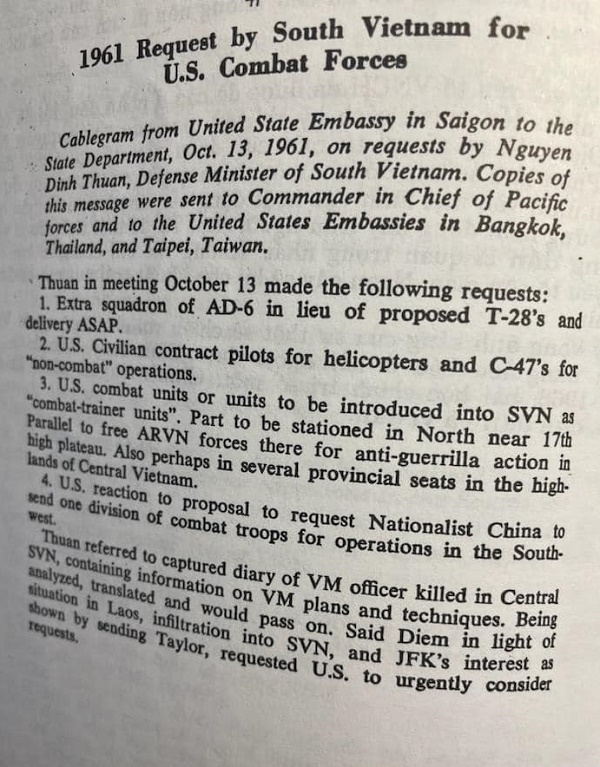
https://sachhiem.net/LICHSU/IMG/NGODD/1961XinQuanMy.jpg
Nolting, Frederick E., Jr.,
Ambassador to Vietnam until August 15, 1963
https://en.wikipedia.org/wiki/Frederick_Nolting
https://en.wikipedia.org/wiki/United_States_Ambassador_to_South_Vietnam
https://history.state.gov/departmenthistory/people/nolting-frederick-ernest
https://www.state.gov/resources-bureau-of-global-talent-management/#ambassadors
https://www.state.gov/biographies-list/
https://history.state.gov/departmenthistory/people/chiefsofmission/vietnam-south
https://en.citizendium.org/wiki/Frederick_Nolting_Jr.
https://openvault.wgbh.org/catalog/V_A2513CA622CC4C8E8454EB2B1F7F5A0C
https://ead.lib.virginia.edu/vivaxtf/view?docId=uva-sc/viu01884.xml
https://www.trumanlibrary.gov/library/oral-histories/nolting
O’Daniel, Lieutenant General John W.,
USA, Chief of the Military Assistance Advisory Group, Indochina to October 1955
https://en.wikipedia.org/wiki/John_W._O%27Daniel
https://valor.militarytimes.com/hero/13907
http://www.vietnamgear.com/bio/7.aspx
http://www.dogfacesoldier.org/vips/vips_odaniel.htm
Radford, Admiral Arthur W.,
Chairman of the Joint Chiefs of Staff to August 1957
https://www.jcs.mil/About/The-Joint-Staff/Chairman/Admiral-Arthur-William-Radford/
https://www.history.navy.mil/research/histories/ship-histories/danfs/a/arthur-w-radford.html
https://en.wikipedia.org/wiki/Arthur_W._Radford
Robertson, Walter S.,
Assistant Secretary of State for Far Eastern Affairs
https://en.wikipedia.org/wiki/Walter_Robertson
https://history.state.gov/departmenthistory/people/robertson-walter-spencer
https://en.wikipedia.org/wiki/Assistant_Secretary_of_State_for_East_Asian_and_Pacific_Affairs
Stassen, Harold E.,
Director for Mutual Security from January 20, 1953; Director for Foreign Operations from August 1, 1953.
https://en.wikipedia.org/wiki/Harold_Stassen
https://1997-2001.state.gov/about_state/history/officers/dfoa.html
https://www.nga.org/governor/harold-edward-stassen/
https://president.upenn.edu/university-leadership/history/harold-stassen
https://history.state.gov/departmenthistory/people/principalofficers/director-mutual-security-agency
https://horatioalger.org/members/detail/harold-e-stassen/
Young, Kenneth T.,
Director of the Office of Philippine and Southeast Asian Affairs, Department of State, January 1955–April 1956; thereafter Director of the Office of Southeast Asian Affairs


No comments:
Post a Comment