20261105 CDTL DDE D001 15 December1954 1. Thư của Quyền Giám đốc Ông Young gửi Đại diện Đặc biệt tại Việt Nam Ông Collins
https://history.state.gov/historicaldocuments/frus1955-57v01/d1
Google Translated
Tài liệu 1
Quan hệ Đối ngoại Hoa Kỳ, 1955–1957, Việt
Nam, Tập I
1. Thư của Quyền Giám đốc Văn phòng phụ
trách các vấn đề Philippines và Đông Nam Á Young gửi Đại diện Đặc biệt tại Việt
Nam Collins
Washington, ngày 15 tháng 12 năm 1954.
Thưa Tướng quân:
Tôi vẫn luôn mong tìm được thời gian để viết thư cho ông về một vài vấn đề mà
việc trình bày qua thư sẽ phù hợp hơn là qua điện tín.
Trước hết, tôi khó có thể diễn tả hết sự an tâm và
lòng cảm kích mà những nỗ lực của ông đã tạo ra tại Washington. Các bức điện
tín của ông được theo dõi sát sao và thảo luận tại tất cả các cơ quan, các bộ
ngành và ở mọi cấp độ. Chúng tôi đánh giá cao cách tiếp cận quyết liệt, thực tế
trong chương trình bảy điểm của ông.[Trang 2]
Vấn đề lớn nhất vẫn là năng lực lãnh đạo hiệu quả tại
Việt Nam. Tôi nhận thấy những hạn chế của ông Diệm trong việc tạo ra
nguồn năng lượng và sức mạnh đầy năng động, tích cực và mạnh mẽ – những yếu tố
đang vô cùng cần thiết vào thời điểm này. Đây chính là thành tố duy nhất mà
không một quốc gia nước ngoài hay chương trình viện trợ từ bên ngoài nào có thể
cung cấp được. Một quốc gia hoặc là có một nhà lãnh đạo cùng một lực lượng ủng
hộ thống nhất, hoặc là không. Theo suy nghĩ của cá nhân tôi, nếu có đủ thời
gian, một tập thể lãnh đạo có thể sẽ hình thành tại Việt Nam. Đôi khi, dưới
áp lực, các quốc gia – cũng giống như con người – có thể vươn tới những tầm cao
chưa từng thấy. Còn quá sớm để khẳng định liệu Việt Nam có hy vọng đạt được tầm
vóc và quy mô lớn hơn như vậy hay không. Ông Diệm là một người tốt, một biểu
tượng sáng ngời và không tì vết của chủ nghĩa dân tộc. Đó là một yếu tố vô cùng
quý giá. Với yếu tố này, chúng ta có thể kêu gọi người dân Việt Nam ở cả miền Bắc
và miền Nam cùng tập hợp lại, ủng hộ một chính phủ hiệu quả đang thực hiện
chương trình cải cách quốc gia. Điều đó có thể vô hiệu hóa các luận
điệu tuyên truyền của phe Cộng sản, đồng thời thu hút sự ủng hộ và hỗ
trợ từ các quốc gia bạn bè khác tại châu Á. Nhiều đại diện các nước châu Á tại
Washington đã bày tỏ với tôi rằng họ rất vui mừng khi thấy Hoa Kỳ ủng hộ ông
Diệm, thay vì một kẻ bù nhìn hay một kẻ trục lợi nào đó.
Trên thực tế, việc thành lập một chính phủ liên hiệp
quốc gia xoay quanh ông Diệm là một phương án khả thi, với điều kiện ông
Diệm có thể thu hút được một vài nhân vật mạnh mẽ và năng lực, chẳng hạn
như ông Quát. Tại Bộ Ngoại giao, chúng tôi hình dung mô hình này theo hướng:
ông Diệm sẽ tập trung chủ yếu vào vai trò phát ngôn viên và tiếng nói đại
diện cho những người Việt Nam theo chủ nghĩa dân tộc tự do. Công tác điều
hành chính phủ sẽ được giao cho một vị trí tương đương phó chủ tịch điều hành —
có thể là ông Quát — người sẽ phụ trách các bộ trọng yếu như quốc
phòng, nội vụ, kinh tế quốc gia, v.v. Một hội đồng khẩn cấp hoặc hội đồng
quốc gia sẽ hoạch định các quyết định chính sách lớn để trình ông Diệm phê chuẩn.
Ông hiểu rõ hơn tôi những trở ngại đối với phương án này — đó là cuộc tranh
giành quyền lực và những sự đố kỵ, cạnh tranh lẫn nhau.
Dù sao đi nữa, tôi cho rằng vấn đề kế nhiệm cũng như vấn
đề liên quan đến Bảo Đại sẽ được giải quyết tốt nhất nếu xuất phát từ
chính nguyện vọng chân thực của người Việt Nam. Trong ba tháng qua, khó khăn mà
chúng ta gặp phải với phía Pháp liên quan đến ông Diệm chủ yếu nằm ở việc
tránh một cuộc khủng hoảng chính trị, đồng thời tránh để việc chọn
người kế nhiệm mang vẻ như là do phía Pháp áp đặt. Theo quan điểm của tôi,
việc đề nghị một thủ tướng mới sẽ hiệu quả hơn nếu xuất phát từ chính
người Việt Nam — có thể kèm theo những tác động khéo léo, kín đáo nếu thời
điểm thích hợp thực sự đến.
Hiện tại, Bộ Ngoại giao hoàn toàn đồng ý rằng
chưa phải lúc để cân nhắc tích cực về vấn đề kế nhiệm. Tôi xin khẳng định với
ông rằng, một số người trong chúng tôi vẫn đang âm thầm lưu tâm đến vấn đề này
và cân nhắc các khả năng có thể xảy ra. Tất nhiên, Thượng nghị sĩ Mansfield
tin rằng hiện không có lựa chọn nào khác ngoài ông Diệm, và bất kỳ
tiến trình thay thế nào cũng sẽ chỉ tạo ra sự hỗn loạn và rối ren còn tồi tệ
hơn cả tình hình tại Việt Nam tự do hiện nay. [Trang 3]
Tôi xin viết tiếp đôi dòng nữa để đề cập đến những
thông tin gần đây trên báo chí về các cuộc thảo luận của ông với Tướng Ely.
Phần lớn thông tin này dần rò rỉ kể từ khi ông Mendès-France đến Washington.
Báo chí bắt đầu nắm bắt được định hướng chung của chúng ta thông qua các buổi
thông tin nền (background briefings) do phía Pháp thực hiện trong chuyến
thăm Washington của ông ấy. Tuy nhiên, vào thời điểm đó, chưa có nhiều
thông tin cụ thể được công bố. Sau đó, một vài bài báo xuất hiện trên truyền
thông Paris đề cập đến quy mô các lực lượng Việt Nam. Toàn bộ vấn đề này
đã lên đến đỉnh điểm trong một bài viết trên tạp chí *U.S. News & World
Report* số ra ngày 10 tháng 12, với tiêu đề: “Mỹ gánh thêm một nỗi đau đầu
mới — Pháp chuyển giao công việc tại Đông Dương cho Mỹ”. Bài viết
này đưa ra những số liệu khá chính xác, cùng với tường thuật chi tiết đến mức
gây khó xử về các cuộc trao đổi quan điểm giữa Mỹ và Pháp. Vào khoảng thời
gian bài báo này xuất hiện, phóng viên của tạp chí *Time* đã đến gặp tôi, mang
theo một bức điện từ văn phòng *Time* tại Paris có nội dung tương tự như bài viết
trên *U.S. News & World Report*. Tôi được biết rằng văn phòng tại
Paris đã nhận được thông tin này từ các nguồn phía Pháp.
Tất nhiên, chúng tôi đã cố gắng giữ kín các vấn đề an
ninh, và chúng tôi cũng cảm thấy lo ngại, thậm chí là bàng hoàng không kém gì
quý vị khi thấy mọi thông tin này bị phơi bày trên các phương tiện truyền thông
đại chúng trong khi các chương trình vẫn chưa hoàn tất. Những người dày dạn
kinh nghiệm ở đây chỉ nhún vai và bảo rằng: “Với người Pháp thì chuyện này vẫn
thường xảy ra”.
Cuối cùng, tôi xin chân thành nhờ quý vị cho biết –
qua thư từ hoặc bằng cách khác – liệu sự hỗ trợ mà chúng tôi cung cấp từ
Washington đã thỏa đáng hay chưa. Xin hãy cho tôi biết chúng tôi có thể cải thiện
sự hỗ trợ dành cho quý vị như thế nào.
Chúc quý vị mọi điều tốt đẹp nhất.
Trân trọng,
Ken
Kenneth T. Young, Jr.
1. Nguồn:
Hồ sơ Collins, Tập tài liệu về Việt Nam, Chuỗi VII, Z; đính kèm trong một lá
thư từ Collins gửi Young, ngày 31 tháng 12. Tài liệu mật; văn bản chính thức –
không chính thức.↩
2. Ngày
13 tháng 12 năm 1954, các tướng Collins và Ely đã thay mặt quốc gia mình ký kết
một biên bản ghi nhớ về việc phát triển và huấn luyện các lực lượng vũ trang độc
lập của Việt Nam. Biên bản này gồm bảy điều khoản, được tóm tắt như sau:
I.
Với sự phê duyệt từ phía Hoa Kỳ, cơ cấu lực
lượng Việt Nam cần đạt được vào ngày 1 tháng 7 năm 1955 sẽ bao gồm tổng cộng
77.685 quân nhân và 4.000 nhân viên dân sự.
II.
Việc cắt giảm quân số xuống mức này sẽ được
thực hiện thông qua hình thức giải ngũ có chọn lọc đối với những nhân sự kém hiệu
quả nhất trong Quân đội Quốc gia Việt Nam (VNA).
III.
Pháp sẽ trao quyền tự chủ hoàn toàn (tất cả
các đơn vị thuộc VNA đều do người Việt Nam chỉ huy và đảm nhiệm nhân
sự) cho miền Nam Việt Nam, chậm nhất là vào ngày 1
tháng 7 năm 1955.
IV.
Trách nhiệm hỗ trợ miền Nam Việt Nam
tổ chức và huấn luyện các lực lượng vũ trang sẽ do Trưởng
phái đoàn Cố vấn Viện trợ Quân sự Hoa Kỳ (MAAG) đảm nhận, dưới thẩm quyền
chung của Tổng tư lệnh Pháp tại Đông Dương.
V.
Trưởng phái đoàn MAAG phải thừa nhận
thẩm quyền này trong các vấn đề liên quan đến chiến lược và an ninh.
VI.
Các nhân sự Hoa Kỳ và Pháp được phân công
làm cố vấn và huấn luyện viên cho VNA sẽ đặt dưới sự chỉ đạo của Trưởng
phái đoàn MAAG.
VII. Các
thỏa thuận và dàn xếp này phải được sự đồng ý của Chính phủ Việt Nam. Để
xem toàn văn biên bản ghi nhớ này cùng một văn bản ghi nhớ kèm theo (lưu hồ
sơ), vui lòng tham khảo điện văn số 2261, ngày 14 tháng 12 năm 1954, trong tập
tài liệu *Quan hệ Đối ngoại (Foreign Relations), 1952–1954*, tập XIII, Phần 2,
trang 2366.↩
Historical Documents - Office of the Historian
https://history.state.gov/historicaldocuments/frus1955-57v01/sources
List of Abbreviations and Symbols
https://history.state.gov/historicaldocuments/frus1955-57v01/terms
https://history.state.gov/historicaldocuments/frus1955-57v01/persons
https://history.state.gov/historicaldocuments/frus1955-57v01/ch1
1.
Document 1
Foreign Relations of the United States, 1955–1957, Vietnam,
Volume I
1.
Letter From the Acting Director of the Office of Philippine and Southeast Asian
Affairs (Young) to the Special Representative in Vietnam (Collins)2
Washington, December
15, 1954.
Dear General: I
have been hoping to find time to write you a letter about a few things that are
better expressed in this manner than by telegram.
First, I can hardly convey the sense of reassurance and
appreciation which your efforts have created in Washington. Your telegrams are
followed closely and discussed in all the agencies, in all the departments and
at all levels. We like the hard-hitting, businesslike approach of your
seven-point program.3 [Page 2]
The big problem is still effective leadership in Viet-Nam.
I realize Diem’s deficiencies in providing dynamic, positive, dramatic energy
and force at a time when it is so desperately needed. This is the one component
above all that no foreign country or external aid program can supply. A country
either has a leader and a unified following or it doesn’t. My own thinking is
that time may evolve a leadership group in Viet-Nam if there is time. Sometimes
under pressure nations like people rise to unknown heights. It is too early to
tell whether there is any hope in Viet-Nam for this larger dimension and
stature. Diem is a good man and a resonant untarnished symbol of Nationalism.
That is a precious ingredient. With it we can perhaps appeal to the Vietnamese
people in the north and in the south to rally behind an effective government in
a program of national reform. It could spike the Communist propaganda guns. It
could attract the support and assistance of our other Asian friends. So many
Asian representatives in Washington have told me how glad they are the United
States is supporting Diem and not some puppet or profiteer.
As a practical matter the government of a national union
around Diem is a good formula if Diem can bring in a few strong competent men
like Quat. We here in the Department have thought of this formula as meaning
Diem would concentrate primarily on serving as spokesman and voice for Free
Vietnamese Nationalists. The running of the government would be left to
something of an executive vice president who might be Quat, in charge of key
ministries such as defense, interior, national economy, etc. An emergency council
or national council would frame up the major policy decisions for Diem’s
approval. You know the obstacles to this better than I do—the jockeying for
power and the jealous rivalries.
In any event it seems to me that the question of succession
as well as the problem of Bao Dai can best be handled if originated out of
genuine Vietnamese impulses. The problem we have had with the French regarding
Diem for the past three months is primarily to avoid a political crisis and the
selection of a successor which would appear dictated by the French. In my
opinion, the promptings for the new premier would be more effective if arising
from the Vietnamese themselves—perhaps with discreet proddings here and there,
if the time ever comes.
For the moment the Department fully agrees that the time
has not yet come to consider actively the question of succession. Some of us
are keeping it in the back of our minds and studying possibilities amongst
ourselves, I assure you. Of course Senator Mansfield believes that there isn’t
much else besides Diem and the process of replacement would create far more
chaos and confusion than is even present today in Free Viet-Nam. [Page 3]
I would like to continue this letter just a little longer
to refer to recent press items about your discussions with General Ely. Most of
this has been dribbling out since Mendes-France came to Washington. The press
got the first notion of our general approach from French background briefings
during his visit to Washington. But nothing much appeared at that time. Then
there were a few articles in the Paris press on the Vietnamese force levels.
The whole business came to a head in the article in the U.S. News &
World Report dated December 10 entitled “U.S. Inherits Another
Headache—French Turns Over Indo-China Job to America”. This gave figures
substantially accurate, and an account of US-French exchange of views
embarrassingly complete. About the time this appeared, the Time
correspondent came in to see me with a cable from the Time office in
Paris along the same line as the U.S. News & World Report article. I
was informed that the Paris office had received the story from French sources.
We have, of course, tried to keep the security questions
under close wraps and are just as concerned and even shocked as you probably
are to have this all out in public print before the programs are completed. The
hard-bitten fellows around here shrugged their shoulders and said “that’s what
always happens with the French”.
In closing, may I earnestly ask that you let me know by
letter or otherwise whether or not we are giving you adequate backstopping here
in Washington. Please let me know how we can improve our help to you.
With very best wishes,
Sincerely,
Ken
Kenneth T. Young, Jr.
1. Source:
Collins Papers, Vietnam File, Series VII, Z; attached to a letter from Collins
to Young, December 31. Secret; Official–Informal.↩
2. On
December 13, 1954, Generals Collins and Ely signed for their respective
countries a memorandum of understanding on development and training of
autonomous Vietnamese armed forces. The memorandum consisted of seven
paragraphs which are summarized as follows:
I.
Subject to American approval, the Vietnamese force
structure to be attained by July 1, 1955 to total 77,685 military and 4,000
civilian personnel.
II.
Reduction to this level by selective discharge of the least
effective personnel of the Vietnamese National Army (VNA).
III.
Full autonomy (all units in the VNA commanded and staffed
by Vietnamese personnel) to be granted by France to South Vietnam not later
than July 1, 1955.
IV.
Responsibility for assisting South Vietnam in organizing
and training its armed forces to be assumed by the Chief, U.S. Military
Assistance Advisory Group(MAAG) under the overall authority of the French
Commander-in-Chief in Indochina.
V.
Chief, MAAG to recognize this authority in strategic and
security matters.
VI.
U.S. and French personnel assigned as advisers and
instructors to the VNA to be under the direction of the Chief, MAAG.
VII.
These arrangements and agreements to be subject to the
consent of the Government of Vietnam.For the complete text of this memorandum
and an accompanying memorandum for the record, see telegram 2261, December 14,
1954, Foreign Relations, 1952–1954, vol. xiii, Part 2, p. 2366.↩
https://history.state.gov/historicaldocuments/frus1955-57v01/d1
https://history.state.gov/historicaldocuments/frus1955-57v01/pg_2
https://history.state.gov/historicaldocuments/frus1955-57v01/pg_3
https://history.state.gov/historicaldocuments/frus1952-54v13p2/pg_2366
Thân thế (các) nhân vật
Bao Dai,
Vietnamese Chief of State to October 1955
Collins, General J. Lawton,
USA, Special Representative in Vietnam, with the personal rank of
Ambassador, to May 1955
https://en.wikipedia.org/wiki/J._Lawton_Collins
https://history.state.gov/historicaldocuments/frus1952-54v13p2/d1298
https://www.eisenhowerlibrary.gov/sites/default/files/finding-aids/pdf/collins-j-lawton-papers.pdf
https://snaccooperative.org/history_diff/84588277?version1=11392636&version2=11392638
https://openvault.wgbh.org/catalog/V_64B6745EABC44990BD6B1DC89364675B
https://www.christies.com/en/lot/lot-4713893
https://avalon.law.yale.edu/20th_century/inch033.asp
Ely, Paul, General,
French High Commissioner and Commander in Chief, French Forces in
Indochina after June 3, 1954.
https://en.wikipedia.org/wiki/Paul_%C3%89ly
https://time.com/archive/6868229/foreign-news-new-commander-for-indo-china/
https://history.state.gov/historicaldocuments/frus1952-54v13p1/d626
https://www.vietnamgear.com/Indochina1954.aspx
https://history.army.mil/portals/143/Images/Publications/catalog/90-8-1.pdf
https://history.state.gov/historicaldocuments/frus1952-54v13p1/d371
https://webdoc.sub.gwdg.de/ebook/p/2005/CMH_2/www.army.mil/cmh-pg/books/vietnam/devtrainrvn/ch1.htm
https://www.jcs.mil/Portals/36/Documents/History/Vietnam/Vietnam_1947-1954.pdf
Senator
(D–MT), Senate Majority Leader
Democratic
Senator from Montana; Majority Leader and member of the Senate Foreign
Relations Committee
https://en.wikipedia.org/wiki/Mike_Mansfield
https://en.wikipedia.org/wiki/United_States_Ambassador_to_Japan
https://en.wikipedia.org/wiki/Party_leaders_of_the_United_States_Senate
https://en.wikipedia.org/wiki/Senate_Democratic_Caucus#Chairs
https://en.wikipedia.org/wiki/Party_leaders_of_the_United_States_Senate
https://en.wikipedia.org/wiki/United_States_Senate
https://en.wikipedia.org/wiki/United_States_House_of_Representatives
https://www.k-state.edu/landon/speakers/mike-mansfield/
https://www.k-state.edu/landon/speakers/mike-mansfield/audio-1977.html
https://www.k-state.edu/landon/speakers/mike-mansfield/audio.html
Mendès-France, Pierre,
French Prime Minister and Minister of Foreign Affairs from June 19,
1954.
https://en.wikipedia.org/wiki/Pierre_Mend%C3%A8s_France
https://www.britannica.com/biography/Pierre-Mendes-France
https://www.ebsco.com/research-starters/history/pierre-mendes-france
https://history.state.gov/historicaldocuments/frus1952-54v13p2/d1069
https://www.jta.org/archive/pierre-mendes-france-dead-at-75
https://kids.kiddle.co/Pierre_Mend%C3%A8s_France
Ngo Dinh Diem,
President of the Council of Ministers of the State of Vietnam to
October 1955; thereafter President and Chief of State of the Republic of
Vietnam
https://en.wikipedia.org/wiki/Ngo_Dinh_Diem
https://millercenter.org/the-presidency/educational-resources/diem-coup
https://www.jfklibrary.org/search?f[0]=subject:Vietnam%20War,%201961-1975
The Diem Coup audio
https://soundcloud.com/the-miller-center-at-uva/sets/the-diem-coup
February 1, 1966: President Johnson remembers Diem coup
(admitted) to Eugene McCarthy
https://soundcloud.com/the-miller-center-at-uva/february-1-1966-president
November 4, 1963: President Kennedy on the Diem coup
https://soundcloud.com/the-miller-center-at-uva/november-4-1963-president-kennedy-on-the-diem-coup
NHỚ LẠI NHỮNG NGÀY Ở CẠNH TỔNG THỐNG NGÔ ĐÌNH
DIỆM (Full) - Tài Nguyễn Diễn Đọc
https://www.youtube.com/watch?v=sWTTgB7oE6U&t=6927
Một phụ nữ miền Bắc viết về cố TT Ngô Đình Diệm.
https://www.youtube.com/watch?v=UMEkUQRp01o
"The Death of Diem and Nhu"
https://www.youtube.com/watch?v=U8O1HOTXS8A
"The Coup in
Saigon"
https://www.youtube.com/watch?v=k4IaJYiNanc
"Everybody'll
Say We Did It"
https://www.youtube.com/watch?v=Jaai1NdZ70k
"We Have Plans for Withdrawal"
https://www.youtube.com/watch?v=0BABdRu7FY0
"The Road to
Disaster"
https://www.youtube.com/watch?v=dr5dRFVV-ok
https://www.youtube.com/channel/UChty22qJfdeAd8dAee9Mo7g/featured
“The President Is
Dead”
https://www.youtube.com/watch?v=lD-akTUBFWs
“That Wasn't What
Killed Kennedy”
https://www.youtube.com/watch?v=LAF0JGttS3E
Kennedy and Vietnam:
The great what-if
https://www.youtube.com/watch?v=6XLhqXt2pww
JFK, LBJ and the Paradox of Vietnam
https://www.youtube.com/watch?v=TYRsahM-GqQ&t=2054
BÀI 305: NHÌN LẠI LỊCH SỬ: ĐỆ NHẤT CỘNG HÒA
http://www.bacaytruc.com/index.php/16996-bai-305-nhin-l-i-l-ch-s-d-nh-t-c-ng-hoa-tac-gi-vu-linh-ddtc
BÀI 306: NHÌN LẠI LỊCH SỬ: ĐỆ NHỊ CỘNG HÒA
https://diendantraichieu.blogspot.com/2023/11/bai-306-nhin-lai-lich-su-e-nhi-cong-hoa.html
BÀI 307: NHÌN LẠI LỊCH SỬ: VAI TRÒ CỦA MỸ
http://www.bacaytruc.com/index.php/17092-bai-307-nhin-l-i-l-ch-s-vai-tro-c-a-m-tac-gi-vu-linh-ddtc
JFK and the Diem Coup
https://nsarchive2.gwu.edu/NSAEBB/NSAEBB101/
Evidence on the Diem Coup in South Vietnam 1963
https://www.tokyoprogressive.org/evidence-on-the-diem-coup-in-south-vietnam-1963/
Tập 1 - Đời
Một Phóng Viên & Những Ngày Bên Chí Sĩ Ngô Đình Diệm
https://www.youtube.com/watch?v=2CJ1CXSWwpI
Tập 2. Đời Một
Phóng Viên & Những Ngày Bên Chí Sĩ Ngô Đình Diệm
https://www.youtube.com/watch?v=Po5Hlbfk6Zc
Tập 3 - Đời
Một Phóng Viên & Những Ngày Bên Chí Sĩ Ngô Đình Diệm
https://www.youtube.com/watch?v=vdluTn-L8sc
Tập 4 : Đời
Một Phóng Viên & Những Ngày Bên Chí Sĩ Ngô Đình Diệm
https://www.youtube.com/watch?v=p58HIMAy_Hg
Tập 5 - Đời Một
Phóng Viên & Những Ngày Bên Chí Sĩ Ngô Đình Diệm
https://www.youtube.com/watch?v=ti24AXG12YE
Tập 6 - Đời
Một Phóng Viên & Những Ngày Bên Chí Sĩ Ngô Đình Diệm
https://www.youtube.com/watch?v=LB0xpBPX9UI
Tập 7 - Đời
Một Phóng Viên & Những Ngày Bên Chí Sĩ Ngô Đình Diệm
https://www.youtube.com/watch?v=Rvv0ze1mG_8
Tập 8 - Đời
một Phóng Viên và Những ngày chung sống với Chí Sĩ Ngô Đình Diệm
https://www.youtube.com/watch?v=Ht1u6A62KXk
Tập 9 - Đời
một Phóng Viên và những ngày chung sống với Chí Sĩ Ngô Đình Diệm
https://www.youtube.com/watch?v=bcZZ9O5cwgA&t=18s
Tập 10 - Đời
một Phóng Viên & Những ngày chung sống với Chí Sĩ Ngô Đình Diệm
https://www.youtube.com/watch?v=bgJnv7kALSA
Interview with Madame
Ngo Dinh Nhu, 1982
https://video.alexanderstreet.com/watch/interview-with-madame-ngo-dinh-nhu-1982
Tài liệu cộng sản giặc Hồ
xuyên tạc Tổng thống Diệm và quân đội Mỹ
https://sachhiem.net/LICHSU/N/NgoDacTriet.php
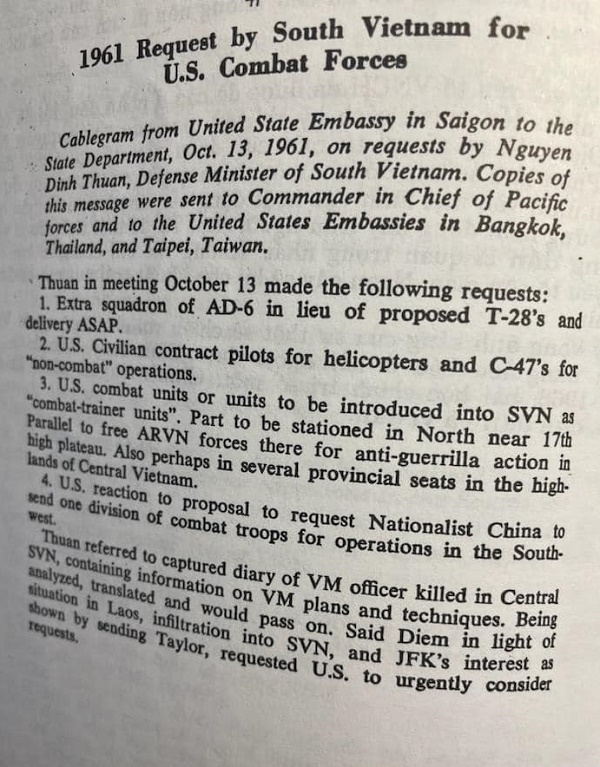
https://sachhiem.net/LICHSU/IMG/NGODD/1961XinQuanMy.jpg
Phan
Huy Quat,
Vietnamese
Minister of Foreign Affairs, February 4–November 4, 1964, former Vietnamese
Minister of Defense
Presidents Timeline
https://www.whitehousehistory.org/the-presidents-timeline
https://en.wikipedia.org/wiki/List_of_presidents_of_the_United_States
https://georgewbush-whitehouse.archives.gov/history/presidents/chronological.html
https://georgewbush-whitehouse.archives.gov/history/presidents/chronological.html
https://millercenter.org/president
https://www.presidentsusa.net/uspresidents.html
https://history.house.gov/Institution/Presidents-Coinciding/Presidents-Coinciding/
Young, Kenneth T.,
Director of the Office of Philippine and Southeast Asian Affairs,
Department of State, January 1955–April 1956; thereafter Director of the Office
of Southeast Asian Affairs
https://en.wikipedia.org/wiki/Kenneth_Todd_Young


No comments:
Post a Comment