20261106 CDTL NRM D129 25 October 1975 129. Bản ghi nhớ cuộc Hội đàm.
https://history.state.gov/historicaldocuments/frus1969-76v18/d129
Google Translated
Tài liệu 129
Quan hệ Đối ngoại Hoa Kỳ, 1969–1976, Tập
XVIII, Trung Quốc, 1973–1976
129. Bản ghi nhớ cuộc Hội đàm.
Washington, ngày 25 tháng 10 năm 1975, 9:30 sáng
THÀNH PHẦN THAM GIA
Tổng thống Gerald Ford
Tiến sĩ Henry A. Kissinger, Bộ trưởng Ngoại giao kiêm
Trợ lý Tổng thống phụ trách các vấn đề An ninh Quốc gia
Trung tướng Brent Scowcroft, Phó Trợ lý Tổng thống phụ
trách các vấn đề An ninh Quốc gia
[Phần thảo luận về công tác hậu cần, lịch trình cho
chuyến thăm Đông Á dự kiến của Tổng thống và các vấn đề khác không liên quan
đến Tầu cộng đã được lược bỏ.]
[Bộ trưởng Ngoại giao trao cho Tổng thống bản tóm tắt/phân
tích về cuộc trò chuyện của ông với Mao Trạch Đông.]
Tổng thống:
Sức khỏe của Mao Trạch Đông thế nào?
Kissinger:
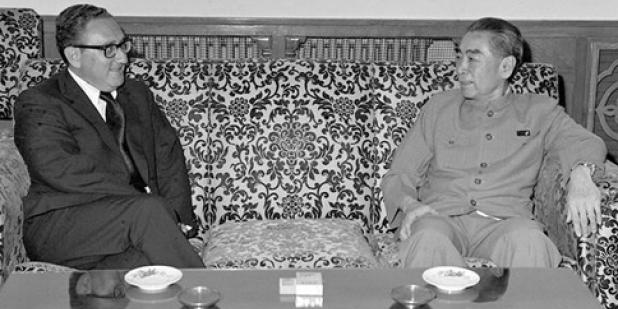
Khi gặp ông ta, ngài sẽ nghĩ rằng ông ta đã đến hồi kết; ông ta hầu như không
thể diễn đạt thành lời. Ông ta nói được vài từ tiếng Anh nhưng không thể hiểu nổi.
Người phiên dịch phải đoán từng từ cho đến khi ông ta gật đầu—hoặc ông ta tự viết
những từ đó ra. Chủ đề mà Mao Trạch Đông nhấn mạnh là sự yếu kém
của chúng ta. Chúng ta giống như “con chim én trước cơn bão”. Chúng ta bất lực.
Những gì chúng ta nói không đáng tin cậy. Ông ta cho rằng chúng ta sẽ không sử
dụng vũ khí hạt nhân ở châu Âu và sẽ phải hứng chịu một thất bại kiểu Dunkirk
khác. Ông ta nói rằng chúng ta không thể tiếp tục đứng trên vai Tầu cộng để
tiếp cận Liên Xô được nữa. “Trung Quốc phải tự lực
cánh sinh.” Điều đó cũng đáng ngưỡng mộ. Họ chính là những con người từng tham
gia cuộc Vạn lý Trường chinh năm xưa.
Tôi nói rằng chúng ta có một đối thủ chung. Ông ta đáp
rằng ông ta thích quan điểm của Schlesinger về Liên Xô hơn
là quan điểm của tôi. Họ muốn Schlesinger đến thăm. Điều đó chắc chắn sẽ
khiến Liên Xô nổi giận. Nhưng tôi đề nghị chúng ta có thể thực hiện
các trao đổi quân sự để xem có thể làm được gì. Ông ta trả lời: “Không. Khi chiến
tranh nổ ra rồi chúng ta mới nói chuyện, chứ không phải trước khi chiến tranh bắt
đầu.” Họ muốn hành xử giống như Stalin trong Thế chiến II—đảm bảo
rằng chiến tranh bùng nổ ở phương Tây để các bên đều kiệt quệ trước khi Tầu
cộng buộc phải tham chiến.
Tôi đảm bảo với ông rằng nếu chúng ta đối đầu với Liên
Xô, họ sẽ tấn công chúng ta, đồng thời lôi kéo các nước thuộc Thế giới
thứ ba về phía mình. Duy trì quan hệ tốt với Liên Xô là điều có lợi
nhất cho mối quan hệ của chúng ta với Tầu cộng — và ngược lại. Vấn
đề nằm ở chỗ chúng ta đang bộc lộ điểm yếu — họ thấy chúng ta đang gặp khó khăn
với các cuộc đàm phán SALT và chính sách hòa hoãn (détente). Điều
đó hoàn toàn có lợi cho họ. Họ không thể hiểu nổi Quốc hội Mỹ — chẳng hạn
như những gì Quốc hội đã làm liên quan đến Thổ Nhĩ Kỳ, tên lửa Hawk,
v.v.
Tôi cho rằng ông không nên để họ lấn lướt, và trong
bài phát biểu nâng ly, ông cần phải thể hiện thái độ bình tĩnh, điềm đạm hơn cả
Nixon.
[Thảo luận về lịch trình.]
Kissinger:
Tôi nghĩ ông không nên chỉ đến thăm Tầu cộng. Người ta sẽ đặt câu
hỏi: Ông đến đó để làm gì? Nếu không có kết quả rõ ràng, họ sẽ nắm thóp ông,
khiến chuyến đi trở nên vô nghĩa. Cách tốt nhất là tạo ra sự khác biệt so với
chuyến thăm của Nixon: Đừng ở lại quá lâu, cũng đừng ghé thăm thêm thành
phố nào khác. Bất kỳ chuyến thăm thành phố nào khác — dù khác với những nơi
Nixon từng đến — trong mắt người dân Mỹ, nó vẫn sẽ chỉ giống như một sự
lặp lại mà thôi.
Khi đọc bản thông cáo chung, phản ứng đầu tiên của tôi
là muốn hủy chuyến đi của ông. Bush cũng có suy nghĩ tương tự. Nhưng sau
khi cân nhắc kỹ, chúng tôi đã thay đổi ý định. Nếu hủy chuyến đi, chúng ta sẽ mất
hết lợi thế trong quan hệ với Liên Xô, làm phật lòng phía Nhật
Bản, và tạo cơ hội cho phía Tầu cộng mời các ứng viên Đảng
Dân chủ sang thăm, từ đó tuyên bố rằng chính quyền hiện tại đã làm hỏng
chính sách đối với Tầu cộng.
Tổng thống:
Còn việc bổ sung Ấn Độ vào lịch trình thì sao?
Kissinger:
Không nên. Như vậy thì gây sốc quá. Còn Manila và Jakarta thì chỉ giống
như một cú huých nhẹ đối với họ thôi. Nếu thêm Ấn Độ và Pakistan,
lịch trình sẽ kéo dài thêm ít nhất hai ngày nữa. Trong khi đó, việc ghé thăm Manila
và Jakarta sẽ củng cố quan hệ với các đồng minh của chúng ta; hơn nữa, ông
chắc chắn sẽ được chào đón nồng nhiệt tại Manila.
Tổng thống:
Tôi đồng ý. Manila sẽ làm hài lòng phe bảo thủ. Có lẽ ông nói đúng. Để
tôi suy nghĩ thêm một chút rồi sẽ báo lại cho ông.
[Ông trao cho Tổng thống bản dự thảo tuyên bố báo chí
của phía Mỹ về chuyến Tầu cộng.]
Tổng thống:
Nghe ổn đấy. Câu nói về việc chính người Tầu cộng tự giải quyết vấn
đề Đài Loan một cách hòa bình — đây chẳng phải là điều chúng ta từng
đề cập trước đây sao?
Kissinger:
Vâng. Những người bảo thủ sẽ thích điều đó; còn phía Cộng hòa Nhân dân Tầu
cộng thì chắc là không mấy hài lòng đâu.
Tổng thống: George
Bush dạo này thế nào rồi?
Kissinger:
Rất tuyệt vời. Tôi thực sự vô cùng ấn tượng với ông ấy. Trước đây, tôi không mấy
hào hứng với việc bổ nhiệm ông ấy, nhưng ông ấy đã ngày càng trưởng thành trong
vai trò này. Tôi tin rằng một ngày nào đó, ông ấy sẽ trở thành một nhà lãnh đạo
tầm cỡ quốc gia. Ông ấy vượt xa Moynihan — người mà giờ đây đang
trở thành một thảm họa. Gọi Brazil là một chế độ độc tài phát xít [chỉ
vì cách họ bỏ phiếu trong nghị quyết chống chủ nghĩa phục quốc Do Thái]…
Tổng thống:
Ông ấy nói vậy khi nào? [Trang 834]
Kissinger:
Ông ấy đang phản ứng rất gay gắt về các vấn đề liên quan đến Israel. [một
dòng bị lược bỏ do chưa được giải mật]
Tổng thống:
Tôi đồng ý với ông về George. Ông ấy là một người tử tế.
Kissinger:
[Đọc một số đoạn từ bản phân tích cuộc trò chuyện với Mao Trạch Đông.]
Điều gì sẽ xảy ra khi Mao Trạch Đông qua
đời?
Kissinger:
Chẳng ai có thể biết trước được điều đó. Ông ấy hiện đang ở tình trạng gần như
mất hết khả năng nhận thức, nhưng lại có một năng lực kỳ lạ là luôn đi thẳng
vào bản chất của vấn đề. Không hề có những lời tán gẫu vô bổ; mọi điều ông ấy
nói đều mang ý nghĩa riêng.
[Phần thảo luận không liên quan đến Tầu cộng đã
được lược bỏ.]
1. Nguồn:
Thư viện Ford, Cố vấn An ninh Quốc gia, Các bản ghi nhớ hội đàm
của Cố vấn An ninh Quốc gia, Hộp 16, tháng 7–tháng 10 năm 1975. Mật; Nodis
(không được phổ biến). Cuộc họp diễn ra tại Phòng Bầu dục. Tất cả các phần nằm
trong dấu ngoặc vuông đều có sẵn trong văn bản gốc, ngoại trừ những phần bổ
sung trong ngoặc vuông mô tả việc lược bỏ nội dung. Theo Nhật ký Hàng ngày của Tổng
thống, Ford, Kissinger và Scowcroft đã họp từ 9 giờ 35 phút đến 11
giờ 05 phút sáng. (Sđd.)↩
2. Tài
liệu 128.↩
3. Xem
chú thích 5, Tài liệu 127.↩
Historical Documents - Office of the Historian
https://history.state.gov/historicaldocuments/frus1969-76v18/sources
https://history.state.gov/historicaldocuments/frus1969-76v18/terms
https://history.state.gov/historicaldocuments/frus1969-76v18/persons
https://history.state.gov/historicaldocuments/frus1969-76v18/comp1
The Summit in Beijing, August–December 1975 (Documents 117–137)
https://history.state.gov/historicaldocuments/frus1969-76v18/ch4
1.
Document 129
Foreign Relations of the United States, 1969–1976, Volume
XVIII, China, 1973–1976
129.
Memorandum of Conversation1
Washington, October 25, 1975, 9:30
a.m.
PARTICIPANTS
· President
Gerald Ford
· Dr.
Henry A. Kissinger, Secretary of State and Assistant to the President for
National Security Affairs
· Lt.
General Brent Scowcroft, Deputy Assistant to the President for National
Security Affairs
[Omitted here is discussion of the loigistics and timetable
for the President’s proposed visit to East Asia, and of other matters unrelated
to China.]
[The Secretary hands the President a summary/analysis of
his conversation with Mao.]2
President: How is Mao’s health?
Kissinger: When you see him you think he is finished; he
can hardly articulate. He speaks a few words of English but it is impossible to
understand. The interpreter has to guess at the words until he nods—or he
writes out the words. Mao’s theme is our weakness. We are the “swallow before
the storm.” We are ineffectual. What we say is not reliable. He thinks we won’t
use nuclear weapons in Europe and would suffer another Dunkirk. He says we can
no longer stand on Chinese shoulders to reach the Soviet Union. “China must be
self-reliant.” It is sort of admirable. These are the same people of the Long
March.
I said we had a common opponent. He said he likes
Schlesinger’s view of the Soviet Union better than mine. They wanted
Schlesinger to visit. That would drive the Soviet Union wild. But I said we
could have military exchanges to see what we could do. He said, “No. After the
war starts we will talk, not before the war.” They want to do the same as
Stalin did in World War II—be sure that a war starts in the West so both will
be exhausted by the time China has to get in.
I guarantee you that if we do go into confrontation with
the Soviet Union, they will attack us and the Soviet Union and draw the Third
World around them. Good relations with the Soviet Union are the best for our
Chinese relations—and vice versa. Our weakness is the problem—they see us in
trouble with SALT and détente. That plays into their hands. [Page 833]They can’t understand
the Congress—what the Congress did on Turkey, Hawk missiles, etc.
I think you can’t take any guff from them, and you have to
be cooler than Nixon in your toast.
[Discussion of schedule.]
Kissinger: I don’t think you should not just go to China.
People will say what did you go for? Then they will have you by the balls in
terms of making it look worthwhile. The best thing you can do is something in
contrast with Nixon: Don’t stay long, don’t go to another city. Any other city
visit, even if it’s different from where Nixon went, will look like a repeat to
the American people.
When I saw the communiqué my first reaction was to cancel
your trip. Bush’s reaction was the same. But when we thought about it, we
changed our minds. It would lose us all our leverage with the Soviet Union. It
would upset the Japanese. It would give the Chinese a chance to invite all the
Democratic candidates over to say you screwed up the Chinese policy.
President: How about adding India?
Kissinger: No. That’s too big a shock. Manila and Djakarta
is just a jab at them. India and Pakistan would add two days minimum.
Manila/Djakarta bolsters our friends, and you’ll get a big reception in Manila.
President: I agree. Manila will please the Conservatives. I
think you are probably right. Let me think it over just a bit and I’ll let you
know.
[He hands the President the U.S. draft press statement on
the China trip.]3
President: It sounds all right. This sentence about
peaceful settlement of Taiwan by the Chinese themselves—this is what we have
said before, isn’t it?
Kissinger: Yes. The conservatives will like it; the PRC
won’t like it much.
President: How is George Bush doing?
Kissinger: Magnificently. I am very, very impressed with
him. I was not enthusiastic about his appointment, but he has grown into the
job and I think he will one day be a considerable national leader. He is a big
cut above Moynihan—who is turning into a disaster. To call Brazil a fascist
dictatorship [because of its vote on the anti-Zionism resolution]…
President: When did he do that?
Kissinger: He is going wild about the Israeli issues. [less
than 1 line not declassified]
President: I agree with you about George. He is a fine man.
Kissinger: [Reads parts from the analysis of the Mao
conversation.]
What is going to happen when Mao dies?
Kissinger: There is no way anyone can know that. He is on
the verge of becoming a vegetable, but he has the uncanny ability to go right
to the heart of things. No small talk, in the sense that everything has
meaning.
[Omitted here is discussion unrelated to China.]
1.
Source: Ford Library, National Security Adviser, National
Security Adviser Memcons, Box 16, July–October 1975. Secret; Nodis. The meeting
took place in the Oval Office. All brackets are in the original, except those
bracketed insertions describing the omission of material. According to the
President’s Daily Diary, Ford, Kissinger, and Scow-croft met from 9:35 until
11:05 a.m. (Ibid.)↩
2.
Document 128.↩
3.
See footnote 5,
Document 127.↩
https://history.state.gov/historicaldocuments/frus1969-76v18/d129
https://history.state.gov/historicaldocuments/frus1969-76v18/pg_833
https://history.state.gov/historicaldocuments/frus1969-76v18/pg_834
https://history.state.gov/historicaldocuments/frus1969-76v18/d127fn5
https://history.state.gov/historicaldocuments/frus1969-76v18/d128
Thân thế (các) nhân vật
Head
of the U.S. Liaison Office in Beijing from October 21, 1974, until December 7,
1975
https://en.wikipedia.org/wiki/George_H._W._Bush
https://en.wikipedia.org/wiki/President_of_the_United_States
https://en.wikipedia.org/wiki/Vice_President_of_the_United_States
https://en.wikipedia.org/wiki/Director_of_Central_Intelligence
https://en.wikipedia.org/wiki/Chief_of_the_U.S._Liaison_Office_to_the_People%27s_Republic_of_China
https://en.wikipedia.org/wiki/Republican_National_Committee
https://en.wikipedia.org/wiki/United_States_Ambassador_to_the_United_Nations
https://en.wikipedia.org/wiki/United_States_House_of_Representatives
https://history.state.gov/departmenthistory/people/chiefsofmission/china
https://www.state.gov/biographies-list/
https://www.state.gov/resources-bureau-of-global-talent-management/#ambassadors
https://www.cnn.com/2018/12/01/asia/george-h-w-bush-china-intl/index.html
https://en.wikipedia.org/wiki/List_of_ambassadors_of_the_United_States_to_China
https://www.chinadaily.com.cn/china/09usofficials/2009-05/31/content_7956346.htm
https://bush41library.tamu.edu/audiovisual/photos/35
Ford, Gerald R.,
Republican Representative from Michigan until October 13, 1973; House
Minority Leader until October 13, 1973; Vice President of the United States
from October 13, 1973, until August 8, 1974; President of the United States
from August 8, 1974
https://en.wikipedia.org/wiki/Gerald_Ford
https://en.wikipedia.org/wiki/President_of_the_United_States
https://en.wikipedia.org/wiki/Vice_President_of_the_United_States
https://en.wikipedia.org/wiki/House_Minority_Leader
https://en.wikipedia.org/wiki/Leader_of_the_House_Republican_Conference
https://en.wikipedia.org/wiki/Chair_of_the_House_Republican_Conference
https://en.wikipedia.org/wiki/United_States_House_of_Representatives
https://www.whitehouse.gov/about-the-white-house/presidents/gerald-r-ford/
https://www.whitehouse.gov/administration/
https://geraldrfordfoundation.org/gerald-r-ford-biography/
https://www.fordlibrarymuseum.gov/grf/timeline.asp
https://en.wikipedia.org/wiki/Presidency_of_Gerald_Ford
https://www.fordlibrarymuseum.gov/library/guides/findingaid/ford_vp_papers.asp
Henry A Kissinger
Assistant to the President for National Security Affairs until
November 3, 1975; also Secretary of State from September 21, 1973
https://www.theguardian.com/world/2023/may/20/bilderberg-meeting-group-lisbon-kissinger
https://www.theguardian.com/world/bilderberg
https://history.state.gov/historicaldocuments/frus1969-76ve13/summary
https://china.usc.edu/getting-beijing-henry-kissingers-secret-1971-trip
https://china.usc.edu/catalog/documents/us-china
http://www.archives.gov/press/press-releases/2001/nr01-47.html
https://china.usc.edu/talking-points-july-22-august-3-2011
https://china.usc.edu/getting-beijing-henry-kissingers-secret-1971-trip#meetings
https://china.usc.edu/getting-beijing-henry-kissingers-secret-1971-trip#nixon-announcement
https://china.usc.edu/getting-beijing-henry-kissingers-secret-1971-trip#chinese-accept
https://china.usc.edu/getting-beijing-henry-kissingers-secret-1971-trip#signals
https://china.usc.edu/getting-beijing-henry-kissingers-secret-1971-trip#the_aim
http://www.foreignaffairs.com/articles/23927/richard-m-nixon/asia-after-viet-nam
https://history.state.gov/historicaldocuments/frus1969-76v17/d4
https://history.state.gov/historicaldocuments/frus1969-76v17/d12
https://history.state.gov/historicaldocuments/frus1969-76v17/d13
https://history.state.gov/historicaldocuments/frus1969-76v17/d141
https://2001-2009.state.gov/documents/organization/100324.pdf
https://en.wikipedia.org/wiki/Henry_Kissinger_and_the_Vietnam_War
Lesson in Vietnam from
Kissinger to Nixon: “when we made it “our war” we would not let
the South Vietnamese fight it; when it again became “their war”, we would not
help them fight it.”
(We
also had trouble with excesses here: when we
made it “our war” we would not let the South Vietnamese fight it; when it again
became “their war,” we would not help them fight it. Ironically, we
prepared the South Vietnamese for main force warfare after 1954 (anticipating another Korean-type attack), and they faced a political war; they had prepared
themselves for political warfare after 1973 only to be faced with a main force
invasion 20 years after it had been expected.)
https://history.state.gov/historicaldocuments/frus1969-76v10/d280
Lesson of Vietnam May 12 1975 by Henry A. Kissinger
https://www.fordlibrarymuseum.gov/library/exhibits/vietnam/032400091-002.pdf
https://thebattleofkontum.com/extras/kissinger.html
“Richard M. Nixon and Kissinger on 3 August 1972,” Conversation 760-006,
Presidential Recordings Digital Edition [Fatal Politics, ed. Ken Huges]
(Charlottesville: University of Virginia Press, 2014-). URL:https://prde.upress.virginia.edu/conversations/4006748
https://player.vimeo.com/video/889937807?h=e44572c8f3&color=e57200&title=0&byline=0&portrait=0
https://player.vimeo.com/video/889937807?h=e44572c8f3&color=e57200&title=0&byline=0&portrait=0
Discover the Truth at:
https://www.theblackvault.com/documentarchive/the-cias-vietnam-document-cd-rom/
The secret life of Henry
Kissinger minutes of a 1975 meeting with Lawrence Eagleburger
https://etan.org/news/kissinger/secret.htm
Henry Kissinger and the Truth About Negotiations In Vietnam
https://www.youtube.com/watch?v=Z5fxxKVfX5g
Henry Kissinger - Secrets of a superpower | DW Documentary
https://www.youtube.com/watch?v=bWVMTKeAwlA
The Untold Truth of Henry Kissinger
https://www.youtube.com/watch?v=0iheZdvWdbI&t=1s
Was Henry Kissinger a War Criminal?
https://www.youtube.com/watch?v=COqq7862wcU&t=25s
Ambassador
to India until 1975; U.S. Permanent Representative to the UN from 1975 until
1976
Vice
President of the United States
https://www.history.com/topics/us-presidents/richard-m-nixon
https://www.britannica.com/event/Watergate-Scandal
https://soundcloud.com/the-miller-center-at-uva/14-nov-68-lbj-and-nixon
https://en.wikipedia.org/wiki/Richard_Nixon
https://soundcloud.com/the-miller-center-at-uva
https://www.britannica.com/event/Vietnam-War
https://en.wikipedia.org/wiki/Richard_Nixon
http://www.pbs.org/wgbh/amex/honor/peopleevents/e_paris.html
https://www.britannica.com/event/Vietnam-War
http://www.nytimes.com/2016/12/31/opinion/sunday/nixons-vietnam-treachery.html
http://www.nytimes.com/interactive/2016/12/31/opinion/sunday/haldeman-notes.html
http://www.bbc.com/news/magazine-21768668
https://www.nixonlibrary.gov/index.php
https://history.state.gov/historicaldocuments/frus1964-68v07/ch5
https://www.lovethetruth.com/books/13_bloodlines/bundy.htm
https://www.lovethetruth.com/books/13_bloodlines/toc.htm
Nixon,
Richard M.,
President
of the United States
https://2001-2009.state.gov/documents/organization/100324.pdf
https://www.history.com/topics/us-presidents/richard-m-nixon
https://www.britannica.com/event/Watergate-Scandal
https://soundcloud.com/the-miller-center-at-uva/14-nov-68-lbj-and-nixon
https://en.wikipedia.org/wiki/Richard_Nixon
https://soundcloud.com/the-miller-center-at-uva
https://www.britannica.com/event/Vietnam-War
https://en.wikipedia.org/wiki/Richard_Nixon
http://www.pbs.org/wgbh/amex/honor/peopleevents/e_paris.html
https://www.britannica.com/event/Vietnam-War
http://www.nytimes.com/2016/12/31/opinion/sunday/nixons-vietnam-treachery.html
http://www.nytimes.com/interactive/2016/12/31/opinion/sunday/haldeman-notes.html
http://www.bbc.com/news/magazine-21768668
https://www.nixonlibrary.gov/index.php
https://history.state.gov/historicaldocuments/frus1964-68v07/ch5
https://www.lovethetruth.com/books/13_bloodlines/bundy.htm
https://www.lovethetruth.com/books/13_bloodlines/toc.htm
Nixon
had a Trip to China from February 21 to 28 1972,
https://www.nixonlibrary.gov/nixons-trip-china
http://www.presidentialtimeline.org/
https://www.nixonlibrary.gov/sites/default/files/virtuallibrary/tapeexcerpts/china-656-10a.pdf
https://www.nixonlibrary.gov/sites/default/files/virtuallibrary/tapeexcerpts/china-656-10b.pdf
https://www.nixonlibrary.gov/sites/default/files/virtuallibrary/tapeexcerpts/china-92-1a.pdf
https://www.nixonlibrary.gov/sites/default/files/virtuallibrary/tapeexcerpts/china-92-1b.pdf
https://www.nixonlibrary.gov/sites/default/files/virtuallibrary/tapeexcerpts/china-21-56.pdf
https://www.nixonlibrary.gov/sites/default/files/virtuallibrary/tapeexcerpts/china-656-10a.mp3
https://www.nixonlibrary.gov/sites/default/files/virtuallibrary/tapeexcerpts/china-656-10b.mp3
https://www.nixonlibrary.gov/sites/default/files/virtuallibrary/tapeexcerpts/china-92-1a.mp3
https://www.nixonlibrary.gov/sites/default/files/virtuallibrary/tapeexcerpts/china-92-1b.mp3
https://www.nixonlibrary.gov/sites/default/files/virtuallibrary/tapeexcerpts/china-21-56.mp3
https://nsarchive.gwu.edu/briefing-book/nuclear-vault-vietnam/2023-03-24/movement-and-madman
The
Vietnam War Johnson and Nixon Administrations Videos
March 2, 2016 Last
Aired May 5, 2016
https://www.c-span.org/program/the-presidency/reflections-on-richard-nixon/431130
July 16, 1973 Last
Aired July 22, 2013
Senate
Watergate Committee Testimony
https://www.c-span.org/program/vignette/senate-watergate-committee-testimony/316346
April 26, 2016 Last Aired June 5, 2016
Vietnam
War Commander in Chief
https://www.c-span.org/program/american-history-tv/vietnam-war-commanders-in-chief/439971
June 12, 2008 Last
Aired July 22, 2013
Alexander
Butterfield Oral History Interview, Part 2
June 12, 2008 Last
Aired July 15, 2013
Alexander
Butterfield Oral History Interview, Part 1
January 27, 2012
Last Aired June 11, 2012
President
Nixon's Secret White House Tapes
https://www.c-span.org/program/american-history-tv/president-nixons-secret-white-house-tapes/277123
July 25, 1994 Last
Aired June 20, 2008
Watergate:
Corruption of American Politics
https://www.c-span.org/program/public-affairs-event/watergate-corruption-of-american-politics/119480
February 16, 2003
Last Aired December 25, 2003
Presidential
Tapes: Taping Systems History
https://www.c-span.org/program/public-affairs-event/presidential-tapes-taping-systems-history/122572
Alexander
Butterfield: The 60 Minutes Watergate Interview (1975)
https://www.youtube.com/watch?v=ss9AkLUmM4g
Watergate Hearing:
Alexander Butterfield Testimony
Alexander
Butterfield Was ‘Worried To Death’ Testifying Against Nixon
https://www.youtube.com/watch?v=c52oIe3Gj6w
How Nixon’s Invasion
of Cambodia Triggered a Check on Presidential Power
Vietnam War Cambodia
and Laos
https://www.history.com/articles/nixon-war-powers-act-vietnam-war-cambodia
Nixon's
Vietnam Visit 1965, Rare Film Unearthed
https://www.youtube.com/watch?v=RaTi8OEpINI
Nixon
on LBJ and Vietnam: Where Did It All Go Wrong?
https://www.youtube.com/watch?v=-n-4o3vOYD4
1969
July 30_Tổng Thống Hoa Kỳ 🇺🇸 Richard M. Nixon Thăm Việt Nam Cộng Hoà.
https://www.youtube.com/watch?v=ZRp4v6M6YJw&t=19s
Schlesinger, James R.,
Chairman of the Atomic Energy
Commission until February 1973; Director of Central Intelligence from February
2 until July 2, 1973; Secretary of Defense from July 2, 1973, until November
19, 1975
https://en.wikipedia.org/wiki/James_R._Schlesinger
https://en.wikipedia.org/wiki/James_R._Schlesinger
https://en.wikipedia.org/wiki/United_States_Secretary_of_Energy
https://en.wikipedia.org/wiki/United_States_Secretary_of_Defense
https://en.wikipedia.org/wiki/Director_of_Central_Intelligence
https://en.wikipedia.org/wiki/United_States_Atomic_Energy_Commission
https://history.defense.gov/Multimedia/Biographies/Article-View/Article/571289/james-r-schlesinger/
https://apnews.com/obituaries-ecc8779791ee4ab7973cf58b7d355305
https://www.encyclopedia.com/people/history/us-history-biographies/james-rodney-schlesinger
Scowcroft, Brent,
General, USAF, Military Assistant to the President until 1973; Deputy
Assistant to the President for National Security Affairs from August 1973 until
1975
https://warontherocks.com/2020/08/brent-scowcroft-and-american-military-intervention/
https://warontherocks.com/2020/08/blame-it-on-the-blob-how-to-evaluate-american-grand-strategy/
https://www.aspeninstitute.org/programs/aspen-strategy-group/about-asg/
https://www.whitehouse.gov/piab/
https://www.publicaffairsbooks.com/titles/bartholomew-sparrow/the-strategist/9781586489632/
http://web1.millercenter.org/poh/transcripts/ohp_1999_1112_scowcroft.pdf
https://www.nytimes.com/2020/08/12/us/politics/brent-scowcroft.html
https://www.foreignaffairs.com/articles/united-states/2020-08-13/scowcroft-model
https://archive.org/stream/towercommission00unit?ref=ol#mode/2up
https://www.twelvebooks.com/titles/philip-zelikow/to-build-a-better-world/9781538764688/
https://yalebooks.yale.edu/book/9780300233827/post-wall-post-square
https://yalebooks.yale.edu/book/9780300233827/post-wall-post-square
https://www.simonandschuster.com/books/War-in-a-Time-of-Peace/David-Halberstam/9781501141508
https://www.adst.org/OH%20TOCs/Inderfurth,Karl%20F.toc.pdf
https://www.wsj.com/articles/SB1029371773228069195
https://www.nytimes.com/2002/08/25/opinion/the-right-way-to-change-a-regime.html
https://www.penguinrandomhouse.com/books/592622/to-start-a-war-by-robert-draper/
https://pdfs.semanticscholar.org/de9b/be3fa428073b76a05fbb58739bf3279c3664.pdf
https://www.ft.com/content/de843f6e-0be1-4667-8a9f-f397cf840e72
https://www.houseofnames.com/brent-family-crest
https://www.houseofnames.com/dpreview/BRENT/EN/Brent/family-crest-coat-of-arms.png
https://www.houseofnames.com/cdn/webp/i/prod/520x520/surnamecomplete_gold.webp
https://www.aspeninstitute.org/programs/aspen-strategy-group/lt-general-brent-scowcroft/
https://dpaa-mil.sites.crmforce.mil/dpaaProfile?id=a0Jt000000sxxIFEAY
https://www.fordlibrarymuseum.gov/library/document/0204/7505562.pdf
https://news.virginia.edu/content/uvas-miller-center-releases-secret-brent-scowcroft-oral-history



No comments:
Post a Comment