20261111 CDTL NRM D134 2 December1975 134. Bản ghi nhớ cuộc Hội đàm.
https://history.state.gov/historicaldocuments/frus1969-76v18/d134
Google Translated
Tài liệu 134
Quan hệ Đối ngoại Hoa Kỳ, 1969–1976, Tập XVIII, Trung Quốc, 1973–1976
134. Bản ghi nhớ cuộc Hội đàm.
Bắc Kinh, ngày 2 tháng 12 năm 1975, 16:10–18:00 CÁC THÀNH PHẦN THAM DỰ
Chủ tịch Mao Trạch Đông
Phó Thủ tướng Đặng Tiểu Bình
Phó Thủ tướng Lý Tiên Niệm
Bộ trưởng Ngoại giao Kiều Quán Hoa
Đại sứ Hoàng Trấn, Trưởng Văn phòng Liên lạc nước Cộng hòa Nhân dân Trung Hoa
Thứ trưởng Ngoại giao Vương Hải Dung
Chương Hàm Chi, phiên dịch viên, Phó Vụ trưởng Bộ Ngoại giao
Đường Văn Sinh, phiên dịch viên, Phó Vụ trưởng Bộ Ngoại giao
Y tá/Phiên dịch viên
Tổng thống Gerald R. Ford
Ngoại trưởng Henry A. Kissinger
Đại sứ George Bush, Trưởng Văn phòng Liên lạc Hoa Kỳ
Ông Brent Scowcroft, Trợ lý Tổng thống
Ông Winston Lord, Giám đốc Ban Hoạch định Chính sách, Bộ Ngoại giao
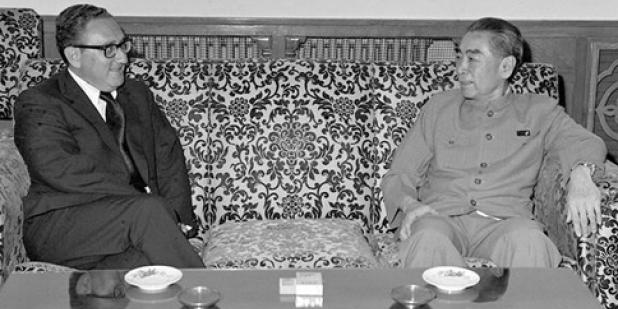
(Vào khoảng 3 giờ chiều, phía Tầu cộng thông báo với đoàn Hoa Kỳ rằng Chủ tịch Mao muốn gặp Tổng thống Ford. Tổng thống, cùng phu nhân, con gái và các thành viên khác trong đoàn Hoa Kỳ đã rời biệt thự của Tổng thống vào lúc 4 giờ chiều, di chuyển đến nơi ở của Chủ tịch Mao thông qua một cổng trước của quần thể Tử Cấm Thành. Tại lối vào nơi ở, họ được Phó Thủ tướng Đặng Tiểu Bình cùng các quan chức Tầu cộng khác chào đón và dẫn vào phòng làm việc của Chủ tịch. Chủ tịch đứng dậy chào các vị khách Mỹ. Trong khi các nhiếp ảnh gia chụp ảnh, ông đã bắt tay và trao đổi những lời chào hỏi ngắn gọn với từng người: Tổng thống Ford, bà Ford, Susan Ford, Ngoại trưởng Kissinger, Đại sứ Bush, ông Scowcroft, Thứ trưởng Sisco, Trợ lý Bộ trưởng Habib, ông Lord và ông Solomon. Sau phần chào hỏi và chụp ảnh, các vị khách Mỹ khác rời khỏi phòng, chỉ còn lại Tổng thống Ford, Ngoại trưởng Kissinger, Đại sứ Bush, ông Scowcroft và ông Lord. Các quan chức Tầu cộng có mặt là những người đã nêu tên ở trên. Nhóm người ngồi thành hình bán nguyệt trên những chiếc ghế bành lớn và cuộc trò chuyện bắt đầu.)
Chủ tịch Mao: Ông khỏe không?
Tổng thống Ford: Tôi khỏe. Hy vọng ông cũng vậy.
Chủ tịch Mao: Tôi không được khỏe. Tôi đang ốm.
Tổng thống Ford: Tôi thấy ông trông vẫn rất khỏe, thưa ông.
Chủ tịch Mao: Bề ngoài của tôi thì cũng không đến nỗi tệ. Còn ông Bộ trưởng Ngoại giao thì sao?
Bộ trưởng Kissinger: Tôi rất khỏe. Tôi rất vui khi có mặt ở đây.
Chủ tịch Mao: Thế còn những người bạn Mỹ khác thì sao?
Tổng thống Ford: Họ đều rất khỏe mạnh. Sáng nay chúng tôi đã có một cuộc thảo luận rất tốt, thưa Chủ tịch.
Chủ tịch Mao: Vậy hai bên đã thảo luận những gì?
Tổng thống Ford: Chúng tôi đã thảo luận về các vấn đề liên quan đến Liên Xô và sự cần thiết phải có những hành động song hành khi xem xét tình hình quốc tế nói chung; hai nước chúng ta cần phối hợp với nhau để đạt được những điều có lợi cho cả hai bên. [Trang 858]
Chủ tịch Mao: Chúng tôi chẳng có mấy năng lực đâu. Chúng tôi chỉ biết bắn vài “phát đại bác rỗng” thôi.
Tổng thống Ford: Tôi không nghĩ vậy, thưa Chủ tịch.
Chủ tịch Mao: Nếu nói về chuyện chửi bới, thì chúng tôi cũng có chút khả năng đấy.
Tổng thống Ford: Chúng tôi cũng vậy.
Chủ tịch Mao: Các ông cũng thế ư? Vậy thì chúng ta đạt được một thỏa thuận rồi.
Tổng thống Ford: Chúng tôi cũng có thể sử dụng vũ lực đối với quốc gia nào gây ra nhiều rắc rối.
Chủ tịch Mao: Không tệ. Vậy là chúng ta lại đạt được thêm một thỏa thuận nữa.
Tổng thống Ford: Sáng nay, chúng tôi đã thảo luận rất cụ thể về đối tượng mà chúng tôi đang nhắc đến.
Chủ tịch Mao: Chắc chắn không thể là ai khác ngoài bọn “đế quốc xã hội chủ nghĩa”.
Tổng thống Ford: Sáng nay đã có những lời lẽ khá gay gắt được đưa ra, thưa Chủ tịch.
Chủ tịch Mao: (chỉ vào Đặng Tiểu Bình) Ý ông là các ông đã chỉ trích ông ấy à?
Tổng thống Ford: Chúng tôi đã chỉ trích mạnh mẽ một quốc gia khác.
Chủ tịch Mao: Quốc gia ở phương Bắc ấy à?
Tổng thống Ford: Vâng.
Chủ tịch Mao: Bộ trưởng Ngoại giao của các ông đang can thiệp vào công việc nội bộ của tôi đấy.
Tổng thống Ford: Ông nói rõ hơn xem nào.
Chủ tịch Mao: Ông ấy không cho tôi đi gặp Thượng đế. Ông ấy thậm chí còn bảo tôi hãy chống lại mệnh lệnh mà Thượng đế đã ban cho tôi. Thượng đế đã gửi lời mời tôi, vậy mà ông ấy (Bộ trưởng Kissinger) lại bảo: “Đừng đi”.
Bộ trưởng Kissinger: Nếu ông ấy mà đến đó thì sẽ tạo thành một sự kết hợp quá đỗi hùng mạnh mất.
Chủ tịch Mao: Ông ấy (Bộ trưởng Kissinger) là một người vô thần. Ông ấy chống lại Thượng đế. Hơn nữa, ông ấy còn đang phá hoại mối quan hệ của tôi với Thượng đế đấy. Ông ấy là một người vô cùng hung dữ, tôi chẳng còn cách nào khác ngoài việc tuân theo mệnh lệnh của ông ấy.
Bộ trưởng Kissinger: Chúng tôi rất vui mừng.
Chủ tịch Mao: Đúng vậy. Tôi chẳng còn lối thoát nào khác, hoàn toàn không còn cách nào cả. Ông ấy (Bộ trưởng Kissinger) đã đưa ra mệnh lệnh.
Tổng thống Ford: Cho Chúa sao?
Chủ tịch Mao: Không, cho tôi.
(Chủ tịch Mao nói chuyện với Đại sứ Hoàng bằng tiếng Trung.)
Mọi việc thế nào rồi, ông Hoàng Trấn? Ông vẫn sẽ quay lại (Hoa Kỳ) chứ?
Đại sứ Hoàng: Tôi xin tuân theo chỉ thị của Chủ tịch. [Trang 859]
Chủ tịch Mao: Thưa Tổng thống, ông có cần ông ấy không?
Tổng thống Ford: Chúng tôi chắc chắn muốn ông ấy trở về. Mối quan hệ giữa chúng ta rất tốt đẹp. Việc Đại sứ quay lại và ông Bush có mặt tại Bắc Kinh là điều quan trọng.
Chủ tịch Mao: (hỏi Đại sứ Bush) Ông sẽ ở lại chứ?
Đại sứ Bush: Chỉ vài ngày thôi ạ.
Chủ tịch Mao: Ông đã được thăng chức rồi.
Tổng thống Ford: Vâng, đúng vậy. Chúng tôi sẽ đề cử người thay thế trong vòng một tháng tới.
Chủ tịch Mao: Chúng tôi thực sự không muốn để ông ấy đi.
Tổng thống Ford: Ông ấy là một người xuất sắc, đó là lý do tôi yêu cầu ông ấy trở về Hoa Kỳ. Nhưng chúng tôi sẽ cử một người giỏi không kém sang thay thế.
Chủ tịch Mao: Như vậy thì tốt. Và tôi nghĩ, việc để Hoàng Trấn trở về Hoa Kỳ cũng là một lựa chọn tốt hơn.
Đại sứ Hoàng: Tôi sẽ kiên quyết thực hiện chỉ thị của Chủ tịch. Bản thân tôi rất muốn trở về (Tầu cộng) vì đã ở nước ngoài quá lâu rồi. Nhưng tôi sẽ làm theo những gì Chủ tịch chỉ đạo.
Chủ tịch Mao: Ông nên ở lại đó thêm một hoặc hai năm nữa.
Đại sứ Hoàng: Vâng, tôi chắc chắn sẽ quay lại và kiên quyết thực hiện chỉ thị của Chủ tịch.
Chủ tịch Mao: Có một số người trẻ tuổi đưa ra những lời phê bình đối với ông ấy (Đại sứ Hoàng). Hai người này (Vương và Đường) cũng có vài ý kiến phê bình đối với ông Kiều. Những người này không phải là đối tượng dễ đụng vào đâu. Nếu không cẩn thận, ông sẽ phải chịu thiệt thòi từ phía họ—nói cách khác là xảy ra nội chiến đấy. Hiện nay đang có rất nhiều "đại tự báo" (áp phích chữ lớn) được dán lên. Có lẽ ông nên ghé thăm Đại học Thanh Hoa hoặc Đại học Bắc Kinh để xem thử.
Tổng thống Ford: Tôi e là mình sẽ không hiểu được nội dung trên đó.
Thưa Chủ tịch, tôi hy vọng việc ông yêu cầu Đại sứ ở lại thêm hai năm nữa đồng nghĩa với việc chúng ta sẽ tiếp tục duy trì mối quan hệ tốt đẹp giữa hai nước.
Chủ tịch Mao: Đúng vậy. Đúng vậy, mối quan hệ giữa hai nước chúng ta cần được tiếp tục duy trì. Hiện tại, tôi thấy giữa hai nước chúng ta — nước ông và nước tôi — không có vấn đề gì đáng kể. Có lẽ trong năm nay, năm tới và năm sau nữa, cũng sẽ không có sự kiện lớn nào xảy ra giữa hai nước. Biết đâu sau đó, tình hình có thể cải thiện hơn đôi chút.
Tổng thống Ford: Trong thời gian chờ đợi, thưa Chủ tịch, tôi nghĩ chúng ta cần nỗ lực phối hợp tốt hơn trên trường quốc tế, đặc biệt là trước những thách thức từ một số quốc gia, chẳng hạn như Liên Xô.
Chủ tịch Mao: Đúng vậy. Dù sao thì chúng tôi cũng chẳng tin tưởng gì Liên Xô. Bản thân Đặng Tiểu Bình cũng không ưa gì Liên Xô. [Trang 860]
Tổng thống Ford: Chúng tôi cũng có cùng nhận định về các âm mưu của họ nhằm mở rộng tầm ảnh hưởng trên quy mô toàn cầu — về mặt lãnh thổ, kinh tế và các phương diện khác. Nhưng chúng tôi sẽ đối mặt với thách thức đó.
Chủ tịch Mao: Tốt. Chúng ta cũng sẽ đối mặt với thách thức từ phía họ.
Tổng thống Ford: Thưa Chủ tịch, chúng tôi kỳ vọng rằng trên phương diện song phương, quan hệ giữa hai nước sẽ được cải thiện sau năm tới. Chúng tôi cho rằng đó là thời điểm có thể đạt được những tiến bộ thực chất trong quan hệ song phương.
Chủ tịch Mao: Ý ông là giữa chúng ta?
Tổng thống Ford: Vâng.
Chủ tịch Mao: Như vậy thì tốt.
Tổng thống Ford: Trong thời gian chờ đợi, thưa Chủ tịch, nếu đất nước của ông và đất nước của tôi cùng nỗ lực đối mặt với thách thức từ Liên Xô – ở cả phương Đông lẫn phương Tây – thì điều đó sẽ tạo thêm sự ủng hộ tại Hoa Kỳ cho tiến trình bình thường hóa quan hệ giữa Hoa Kỳ và Cộng hòa Nhân dân Tầu cộng.
Chủ tịch Mao: Tốt. Dù sao thì đây cũng mới chỉ là lời nói. Còn Liên Xô thực sự sẽ hành động ra sao thì chúng ta vẫn còn phải chờ xem.
Tổng thống Ford: Thưa Chủ tịch, trong lúc này, chúng ta cần phải khiến Liên Xô hiểu rõ thông qua những hành động cụ thể từ phía Hoa Kỳ và Cộng hòa Nhân dân Tầu cộng – không chỉ bằng lời nói, mà phải bằng hành động thực tế. Chúng tôi sẽ tiếp tục duy trì áp lực lên họ. Tôi hy vọng rằng áp lực từ phương Đông cũng sẽ mạnh mẽ như những hành động mà chúng tôi thực hiện từ phía mình.
Chủ tịch Mao: Chỉ là bắn vài phát đại bác rỗng, chửi bới vài câu thôi.
Tổng thống Ford: Chúng tôi sẽ làm nhiều hơn thế, thưa Chủ tịch, giống như chúng tôi đã từng làm trong quá khứ. Người dân Mỹ kỳ vọng Tổng thống của họ phải giữ vững lập trường. Chúng tôi đã làm như vậy, và trong tương lai cũng sẽ tiếp tục như thế. Không chỉ dừng lại ở lời nói hay những phát đại bác rỗng.
Chủ tịch Mao: Vậy là các ông có những khẩu đại bác thực thụ?
Tổng thống Ford: Vâng, và chúng tôi sẽ luôn giữ cho thuốc súng của mình khô ráo – trừ khi họ tìm cách thách thức chúng ta; khi đó, thuốc súng sẽ không còn khô ráo nữa.
Chủ tịch Mao: Được thôi. Như vậy cũng tốt. Phải rồi, hiện tại các ông đang chung sống hòa bình.
Tổng thống Ford: Nhưng điều đó không có nghĩa là chúng tôi sẽ không đáp trả thách thức từ bất kỳ quốc gia theo đuổi chủ nghĩa bành trướng nào. Trên thực tế, chúng tôi đã từng đối mặt với những thách thức như vậy và sẽ tiếp tục làm như thế.
Chủ tịch Mao: Tốt lắm. Vậy chúng ta đạt được thỏa thuận chứ?
Tổng thống Ford: (gật đầu) Chúng ta hoàn toàn có thể đạt được điều đó thông qua những nỗ lực mang lại kết quả tương xứng. Ông gây áp lực từ phía Đông, còn chúng tôi sẽ gây áp lực từ phía Tây.
Chủ tịch Mao: Vâng. Một thỏa thuận giữa những người quân tử.
Tổng thống Ford: Đó là cách tốt nhất để đạt được thành công khi đối đầu với một kẻ không phải là quân tử. [Trang 861]
Chủ tịch Mao: Họ không phải là những người quân tử.
Tổng thống Ford: Cách nói đó còn nhẹ nhàng hơn những từ ngữ chúng ta đã dùng sáng nay.
Chủ tịch Mao: Tôi rất cảm ơn Ngài Tổng thống đã đến gặp tôi. Và tôi hy vọng rằng trong tương lai, hai nước chúng ta có thể đối xử hữu nghị với nhau.
Tổng thống Ford: Thưa Chủ tịch, đó chính là niềm hy vọng lớn lao của nhân dân Mỹ cũng như của cá nhân tôi. Tôi muốn khẳng định rõ rằng, những bước tiến mang tính lịch sử mà đất nước ngài và đất nước tôi đã thực hiện trong ba năm qua nhận được sự ủng hộ hoàn toàn từ nhân dân Mỹ. Họ cũng như chúng ta đều nhận thức được rằng, cần phải có sức mạnh để ngăn chặn các hành động từ những quốc gia theo đuổi chính sách bành trướng, chẳng hạn như Liên Xô. Chúng tôi sẽ duy trì năng lực quân sự của mình và sẵn sàng sử dụng nó. Theo quan điểm của chúng tôi, đây là cách tốt nhất để giữ cho thế giới ở trạng thái ổn định và tốt đẹp hơn.
Chủ tịch Mao: Tốt. Vậy là chúng ta không có xung đột gì cả.
Tổng thống Ford: Đúng vậy. Và nếu có nảy sinh xung đột, chúng ta có thể cùng ngồi lại, thảo luận, thấu hiểu và hy vọng sẽ loại bỏ được những xung đột đó.
Chủ tịch Mao: Quả thực là vậy. Tất nhiên, xung đột là điều khó tránh khỏi vì hai nước chúng ta – Trung Quốc và Hoa Kỳ – có hệ thống xã hội và hệ tư tưởng khác biệt.
Tổng thống Ford: Nhưng điều đó không nên cản trở khả năng của chúng ta trong việc nhìn nhận bức tranh quốc tế rộng lớn, cùng phối hợp hành động và kiên quyết đạt được những kết quả mang lại lợi ích tốt nhất cho cả hai quốc gia cũng như cho tất cả các dân tộc.
Chủ tịch Mao: (Sau một cơn ho ngắn.) Chẳng hạn, chúng tôi chưa từng có những cuộc thảo luận hay đối thoại với Liên Xô giống như cách chúng tôi đã thực hiện với phía các ngài. Tôi từng đến Moscow hai lần, còn Khrushchev cũng đã ba lần tới Bắc Kinh. Trong tất cả những lần đó, các cuộc đàm phán đều không thực sự suôn sẻ.
Tổng thống Ford: Thưa Chủ tịch, tôi đã gặp ông Brezhnev hai lần. Có những lúc đàm phán diễn ra tốt đẹp, nhưng cũng có lúc không như ý. Tôi cho rằng đây là minh chứng cho sự kiên định của chúng tôi, bởi chúng tôi không chấp nhận mọi đề xuất từ phía họ, và chúng tôi sẽ không bao giờ làm vậy. Chúng tôi sẽ giữ vững lập trường và duy trì năng lực quân sự cần thiết để đảm bảo sự kiên định đó. Họ hiểu rõ điều này, và tôi tin rằng việc chúng ta giữ vững lập trường – điều mà chúng tôi chắc chắn sẽ thực hiện – chính là vì lợi ích tốt nhất cho cả đất nước ngài và đất nước chúng tôi.
Chủ tịch Mao: Tốt.
Còn quan hệ của các ngài với Nhật Bản hiện nay thì sao? Có tốt hơn trước không?
Tổng thống Ford: Vâng, tốt hơn nhiều. Thưa Chủ tịch, như ngài đã biết, tôi đã đến thăm Nhật Bản cách đây khoảng một năm. Đó là lần đầu tiên một vị Tổng thống đương nhiệm tới thăm quốc gia này. Khoảng một tháng trước, Nhật hoàng và Hoàng hậu đã đến thăm Hoa Kỳ; đây là lần đầu tiên hai vị đến đất nước chúng tôi. Chúng tôi [Trang 862] nhận thấy quan hệ với Nhật Bản hiện đang ở mức tốt nhất kể từ sau Chiến tranh thế giới thứ hai.
Chủ tịch Mao: Nhật Bản cũng đang bị Liên Xô đe dọa.
Tổng thống Ford: Tôi đồng ý. Vì vậy, thưa Chủ tịch, tôi cho rằng việc Tầu cộng và Nhật Bản xây dựng mối quan hệ ngày càng tốt đẹp hơn là điều quan trọng — cũng giống như quan hệ giữa Nhật Bản và Hoa Kỳ đang ngày càng cải thiện, thực tế là đang ở mức tốt nhất từ trước đến nay.
Chủ tịch Mao: Còn đối với Nhật Bản, quan hệ với các ông là ưu tiên hàng đầu, còn quan hệ với chúng tôi chỉ đứng hàng thứ hai.
Tổng thống Ford: Quan hệ của các ông với Nhật Bản có tốt kh
Chủ tịch Mao: Cũng không tệ, nhưng cũng chẳng phải là quá tốt.
Tổng thống Ford: Các ông muốn mối quan hệ đó tốt đẹp hơn, phải không?
Chủ tịch Mao: Đúng vậy. Ở Nhật Bản có một phe thân Liên Xô, họ phản đối việc thảo luận về vấn đề bá quyền.
Bộ trưởng Kissinger: Hay nói đúng hơn là họ sợ hãi.
Chủ tịch Mao: Vâng, quả thực là vậy.
Tổng thống Ford: Thưa Chủ tịch, quan hệ của các ông với các nước Tây Âu hiện nay như thế nào?
Chủ tịch Mao: Tốt hơn, tốt hơn so với quan hệ của chúng tôi với Nhật Bản.
Tổng thống Ford: Việc duy trì quan hệ tốt đẹp giữa chúng ta cũng như giữa các ông với Tây Âu là điều quan trọng để đối phó với thách thức từ bất kỳ sự bành trướng nào của Liên Xô tại khu vực này.
Chủ tịch Mao: Đúng vậy. Về điểm này, chúng ta có chung quan điểm. Chúng ta không có xung đột lợi ích nào ở châu Âu cả.
Tổng thống Ford: Thưa Chủ tịch, thực tế là một số người trong chúng tôi cho rằng Trung Quốc đang đóng góp cho sự đoàn kết của Tây Âu và việc củng cố NATO còn nhiều hơn cả chính một số quốc gia trong khu vực đó.
Chủ tịch Mao: Họ còn quá rời rạc.
Tổng thống Ford: Một số nước trong số đó không đủ mạnh mẽ và thẳng thắn như họ cần phải có.
Chủ tịch Mao: Theo tôi thấy, Thụy Điển không tệ. Tây Đức cũng không tệ. Nam Tư cũng tốt. Hà Lan và Bỉ thì còn hơi chậm chân.
Tổng thống Ford: Đúng vậy. Liên Xô đang tìm cách khai thác những điểm yếu tại Bồ Đào Nha và Ý. Chúng ta phải ngăn chặn điều đó, và chúng tôi đang nỗ lực thực hiện việc này.
Chủ tịch Mao: Vâng, hiện tại Bồ Đào Nha có vẻ đã ổn định hơn. Tình hình có vẻ khả quan hơn rồi.
Tổng thống Ford: Đúng vậy, trong 48 giờ qua, tình hình đã có những chuyển biến rất đáng khích lệ. Các lực lượng mà chúng tôi ủng hộ đã hành động đầy mạnh mẽ, thực hiện những bước cần thiết để ổn định tình hình. [Trang 863]
Chúng tôi đồng ý với ông rằng Nam Tư là một quốc gia quan trọng và thể hiện sự kháng cự mạnh mẽ đối với Liên Xô, nhưng chúng tôi lo ngại về những gì có thể xảy ra sau thời kỳ của Tito.
Chủ tịch Mao: Vâng, có lẽ sau Tito sẽ là Kardelj.
Bộ trưởng Kissinger: Chúng tôi lo ngại về các áp lực từ bên ngoài cũng như từ bên trong đất nước này. Chúng tôi đang theo dõi sát sao vấn đề đó. Hiện có nhiều phe phái đang liên hệ với các nhóm bên ngoài.
Chủ tịch Mao: Đúng vậy, quốc gia đó có rất nhiều tỉnh và được hợp thành từ nhiều quốc gia trước đây.
Tổng thống Ford: Mùa hè này, tôi đã có một chuyến thăm rất thú vị tới Romania, và tôi thực sự ấn tượng trước sự mạnh mẽ cũng như tinh thần độc lập của Tổng thống Ceausescu. Chủ tịch Mao: Tốt.
Tổng thống Ford: Thưa Chủ tịch, chúng tôi cũng rất quan tâm đến tình hình tại Tây Ban Nha. Chúng tôi ủng hộ Nhà vua. Chúng tôi hy vọng ngài ấy sẽ có thể kiểm soát được các thế lực muốn phá hoại chế độ của mình. Chúng tôi sẽ phối hợp với ngài ấy để cố gắng duy trì sự kiểm soát cần thiết đối với tình hình trong giai đoạn chuyển tiếp này.
Chủ tịch Mao: Vâng. Dù sao thì chúng tôi cho rằng sẽ rất tốt nếu Cộng đồng Kinh tế châu Âu (EEC) chấp nhận họ. Tại sao EEC lại không muốn kết nạp Tây Ban Nha và Bồ Đào Nha?
Tổng thống Ford: Thưa Chủ tịch, chúng tôi đã thúc giục liên minh NATO hãy thân thiện hơn với Tây Ban Nha, ngay cả khi ông Franco còn nắm quyền. Chúng tôi hy vọng rằng dưới thời vị vua mới, Tây Ban Nha sẽ được liên minh NATO chấp nhận dễ dàng hơn. Ngoài ra, chúng tôi cho rằng EEC nên phản hồi tích cực trước những bước đi của Chính phủ Tây Ban Nha hướng tới sự gắn kết với toàn bộ Tây Âu. Chúng tôi sẽ nỗ lực thúc đẩy theo cả hai hướng này trong khả năng có thể.
Bộ trưởng Kissinger: Đối với người châu Âu, họ vẫn chưa đủ cấp tiến.
Chủ tịch Mao: Vậy sao? Đúng vậy, trước đây họ từng đánh lẫn nhau. Và trước đây, các ông cũng đâu có chỉ trích Franco.
Tổng thống Ford: Không. Chúng tôi ủng hộ vị vua mới vì toàn bộ sườn phía nam của Tây Âu cần phải vững mạnh—bao gồm Bồ Đào Nha, Tây Ban Nha, Ý, Hy Lạp, Thổ Nhĩ Kỳ và Nam Tư. Tất cả những quốc gia này đều cần được củng cố nếu chúng ta muốn đối phó với bất kỳ nỗ lực bành trướng nào từ phía Liên Xô.
Chủ tịch Mao: Tốt. Phải, và chúng tôi cũng cho rằng tình hình ở Hy Lạp nên được cải thiện.
Tổng thống Ford: Đúng vậy, họ đã trải qua một giai đoạn khó khăn, nhưng chúng tôi nhận thấy chính phủ mới đang đi đúng hướng và chúng tôi sẽ hỗ trợ họ. Chúng tôi cũng hy vọng họ sẽ sớm trở lại là một đối tác đầy đủ trong khối NATO.
Chủ tịch Mao: Như vậy thì tốt.
Tổng thống Ford: Tất nhiên, tại Hy Lạp vẫn tồn tại một bộ phận cực đoan; theo quan điểm của chúng tôi, điều này không có lợi, vì nó có thể làm suy yếu NATO và tạo điều kiện cho Liên Xô.
Chủ tịch Mao: Ồ?
Tổng thống Ford: Thưa Chủ tịch, khi tiến sâu hơn về phía đông Địa Trung Hải, chúng tôi nhận thấy Hiệp định Sinai đã góp phần giảm bớt ảnh hưởng của Liên Xô. Tuy nhiên, chúng tôi hiểu rằng tiến trình hướng tới một nền hòa bình toàn diện hơn không được phép chững lại. Ngay sau cuộc bầu cử sắp tới tại Hoa Kỳ, chúng tôi dự định sẽ nỗ lực mạnh mẽ để đạt được một nền hòa bình toàn diện, công bằng và lâu dài tại khu vực đó.
Chủ tịch Mao: Đạt được một nền hòa bình lâu dài là điều khó khăn.
Tổng thống Ford: Đúng vậy, khu vực đó đã không có hòa bình suốt nhiều thế kỷ qua. Nhưng nếu nỗ lực này thành công, nó sẽ loại bỏ đáng kể ảnh hưởng của Liên Xô tại khu vực này trên thế giới. Nếu tiến trình bị đình trệ, Liên Xô sẽ có cơ hội gây rối. Do đó, chúng tôi tin rằng cần phải duy trì sự vận động liên tục. Hiệp định Sinai đã giúp chúng tôi xây dựng mối quan hệ tốt đẹp với Ai Cập. Nếu sau cuộc bầu cử tới, chúng ta tiếp tục thúc đẩy các bên hướng tới một nền hòa bình rộng mở hơn, điều đó sẽ có tác động đáng kể trong việc ngăn chặn ảnh hưởng của Liên Xô tại khu vực này.
Chủ tịch Mao: Tôi không phản đối điều đó.
Tổng thống Ford: Khi tiến vào tiểu lục địa, chúng tôi kỳ vọng sẽ tạo được ảnh hưởng tại đó nhờ căn cứ của mình ở Diego Garcia. Tất nhiên, chúng tôi vẫn tiếp tục cải thiện quan hệ với Pakistan. Chúng tôi đã dỡ bỏ lệnh cấm vận vũ khí đối với họ, để họ có thể tự lực và phát triển năng lực quân sự đủ mạnh, qua đó thuyết phục Ấn Độ rằng bất kỳ hành động quân sự nào từ phía Ấn Độ cũng sẽ không mang lại kết quả thành công.
Chủ tịch Mao: Như vậy thì tốt.
Tổng thống Ford: Thưa Chủ tịch, ông đánh giá thế nào về tình hình tại Bangladesh?
Chủ tịch Mao: Tình hình ở đó hiện đã tốt hơn, nhưng vẫn chưa ổn định. Chúng tôi dự định sẽ cử một đại sứ đến đó, dù có lẽ ông ấy sẽ cần một khoảng thời gian mới có thể tới nơi.
Tổng thống Ford: Ngài có lo ngại rằng Ấn Độ sẽ can thiệp và thực hiện các hành động quân sự chống lại Bangladesh để lợi dụng tình hình hiện nay không?
Chủ tịch Mao: Nguy cơ đó là có thật, chúng ta phải cảnh giác.
Tổng thống Ford: Thưa Chủ tịch, Ấn Độ từng có tiền lệ thực hiện những hành động thiếu khôn ngoan đối với các quốc gia khác. Tôi hy vọng họ sẽ không làm điều đó ở đây (Bangladesh). [Trang 865]
Chủ tịch Mao: Đúng vậy. Nếu họ thực hiện hành động như thế tại khu vực đó, chúng tôi sẽ phản đối.
Tổng thống Ford: Chúng tôi đang phối hợp với Pakistan và Iran để ngăn chặn bất kỳ hành động nào như vậy, và chúng tôi sẽ lên án nếu Ấn Độ thực hiện những hành động đó.
Chủ tịch Mao: Vâng. Chúng ta đã đạt được một thỏa thuận khác.
Tổng thống Ford: Tôi tin rằng ngài cũng lo ngại như chúng tôi về sự hiện diện của Liên Xô tại Ấn Độ Dương, cũng như những nỗ lực của họ ở phía đông châu Phi. Chúng tôi cực lực phản đối những diễn biến này. Tôi đang muốn nói đến Angola, nơi chúng tôi đang thực hiện các biện pháp quyết liệt nhằm ngăn chặn Liên Xô thiết lập chỗ đứng tại khu vực đó của châu lục rộng lớn này.
Chủ tịch Mao: Có vẻ như các ông chẳng có phương cách nào cả. Chúng tôi cũng vậy.
Tổng thống Ford: Tôi nghĩ cả hai bên đều có thể làm tốt hơn, thưa Chủ tịch.
Chủ tịch Mao: Tôi ủng hộ việc đẩy Liên Xô ra ngoài.
Tổng thống Ford: Nếu cả hai cùng nỗ lực, chúng ta có thể làm được.
Chủ tịch Mao: Thông qua Congo-Kinshasa, tức Zaire.
Phó Thủ tướng Đặng: (Nói bằng tiếng Trung với Chủ tịch) Yếu tố gây phức tạp ở đây chính là Nam Phi – sự can dự của Nam Phi. Điều này đã gây bất bình cho toàn bộ châu Phi da đen, làm cho vấn đề trở nên phức tạp hơn.
Chủ tịch Mao: Nam Phi vốn không có danh tiếng tốt đẹp gì.
Tổng thống Ford: Nhưng họ đang chiến đấu để ngăn chặn sự bành trướng của Liên Xô, và chúng tôi cho rằng điều đó đáng hoan nghênh. Chúng tôi đang cung cấp một khoản kinh phí đáng kể thông qua Zambia và Zaire. Chúng tôi tin rằng nếu chúng ta, Cộng hòa Nhân dân Tầu cộng và các bên khác cùng hành động trên quy mô rộng, chúng ta có thể ngăn chặn Liên Xô thiết lập một cơ sở hải quân quan trọng và kiểm soát các nguồn tài nguyên đáng kể tại Angola. Chúng tôi cũng cực lực phản đối sự tham gia sâu rộng của Cuba – quốc gia hiện đang có từ năm đến sáu nghìn quân tại Angola. Chúng tôi cho rằng điều đó không phải là một tín hiệu tốt; và điều tương tự cũng áp dụng với Liên Xô.
Phó Thủ tướng Đặng: Ý ông là ông ngưỡng mộ Nam Phi sao?
Tổng thống Ford: Không phải vậy. Họ đã thể hiện lập trường cứng rắn chống lại Liên Xô. Họ tự mình thực hiện điều đó, hoàn toàn không có sự thúc đẩy nào từ phía Hoa Kỳ.
Phó Thủ tướng Đặng: Tại Angola ư?
Tổng thống Ford: Nam Phi phản đối phong trào MPLA.
Chủ tịch Mao: Vấn đề này cần phải được nghiên cứu thêm.
Tổng thống Ford: Thời gian là yếu tố then chốt.
Chủ tịch Mao: Theo tôi thấy, phong trào MPLA sẽ không thể thành công.
Tổng thống Ford: Chúng tôi thực sự hy vọng là không như vậy. [Trang 866]
Bộ trưởng Kissinger: Nếu hai lực lượng kia có đủ kỷ luật và chúng ta có thể cung cấp thiết bị cho họ, thì chúng ta có thể ngăn cản phe MPLA giành thắng lợi. Họ (phe FNLA và UNITA) cần được huấn luyện bởi những người am hiểu về chiến tranh du kích. Chúng ta có thể cung cấp thiết bị nếu các bên khác đảm nhận việc huấn luyện cho họ.
Chủ tịch Mao: Trước đây chúng tôi từng hỗ trợ họ thông qua Tanzania, nhưng Tanzania lại giữ lại một số hàng hóa lẽ ra phải được chuyển đi. Có lẽ giờ đây chúng ta nên thực hiện thông qua Zaire.
Phó Thủ tướng Đặng: Có lẽ thông qua Zaire thì tốt hơn.
Bộ trưởng Kissinger: Thông qua Zaire. Và phía Tầu cộng có thể tận dụng ảnh hưởng của mình đối với Mozambique. Nếu Mozambique không ủng hộ phe thân Liên Xô là MPLA, thì điều đó sẽ mang ý nghĩa tinh thần quan trọng tại châu Phi. (Phía Tầu cộng trao đổi với nhau.)
Tổng thống Ford: Nhưng ông biết đấy, Mozambique lại ủng hộ MPLA. Có lẽ sẽ rất khó khăn.
Phó Thủ tướng Đặng: Không thể nào.
Bộ trưởng Kissinger: Tôi hiểu. Có lẽ họ không nhận thức được việc mình đang làm, bởi họ cũng rất ngưỡng mộ Tầu cộng.
Chủ tịch Mao: Chúng ta có thể thử xem sao.
Bộ trưởng Kissinger: Tôi không nghĩ Mozambique hiểu rõ vấn đề tại Angola. Họ cần được tư vấn, và họ lắng nghe Tầu cộng hơn là lắng nghe chúng ta.
Chủ tịch Mao: Chúng ta có thể thử.
Phó Thủ tướng Đặng: Chúng ta có thể thử, nhưng chưa chắc đã mang lại hiệu quả.
Bộ trưởng Kissinger: Đúng vậy.
Chủ tịch Mao: Zaire có lẽ đáng tin cậy hơn.
Bộ trưởng Kissinger: Zaire nên là căn cứ để triển khai các hoạt động hỗ trợ. Chúng ta không thể trông đợi sự giúp đỡ từ Mozambique, nhưng có lẽ họ sẽ chọn cách đứng ngoài cuộc. Nếu không thể nhận được sự hỗ trợ từ Mozambique, thì ít nhất họ cũng có thể giữ thái độ trung lập.
Chủ tịch Mao: Chúng ta có thể thử.
Tổng thống Ford: Tôi xin nhắc lại rằng thời gian là yếu tố then chốt, vì hai lực lượng kia cần được khích lệ. Cho đến gần đây, họ vẫn đang chiến đấu rất tốt. Hiện tại, tình hình đang rơi vào thế bế tắc. Sẽ thật bi kịch nếu MPLA giành thắng lợi, sau tất cả những nỗ lực mà chúng ta, phía các ông và các bên khác đã bỏ ra.
Chủ tịch Mao: Khó mà nói trước được.
Vậy ông cho rằng chỉ có thế thôi sao?
Tổng thống Ford: Về vấn đề Angola, tôi xin chia sẻ thêm rằng ngay trước khi rời Washington, tôi đã phê duyệt khoản hỗ trợ 35 triệu đô la nữa cho hai lực lượng còn lại. Đây là một minh chứng rõ ràng cho quyết tâm đối đầu với thách thức từ Liên Xô và đánh bại MPLA. [Trang 867]
Chủ tịch Mao: Tốt. (Các nhiếp ảnh gia Tầu cộng bước vào phòng và quay phim.)
Tổng thống Ford: Tôi xin cảm ơn Chủ tịch đã dành thời gian để chúng ta thảo luận về tình hình thế giới, đồng thời khẳng định mong muốn của chúng tôi trong việc mở rộng quan hệ song phương và cùng phối hợp giải quyết nhiều vấn đề trên phạm vi toàn cầu.
Chủ tịch Mao: Đúng là hiện nay có một số bài báo mô tả quan hệ giữa hai bên chúng ta rất tồi tệ. Có lẽ ông nên tiết lộ cho họ biết đôi chút về tình hình thực tế, hoặc phổ biến thông tin cho họ.
Bộ trưởng Kissinger: Ở cả hai phía. Họ nghe được những thông tin đó ngay tại Bắc Kinh.
Chủ tịch Mao: Nhưng điều đó không xuất phát từ phía chúng tôi. Chính những người nước ngoài đó đã đưa ra thông tin như vậy.
Tổng thống Ford: Thưa Chủ tịch, chúng tôi không tin tất cả những gì mình đọc trên báo chí. (Các nhiếp ảnh gia rời khỏi phòng.) Tôi cho rằng điều cực kỳ quan trọng là cả hai nước cần tạo ấn tượng với toàn thế giới rằng quan hệ giữa chúng ta đang tốt đẹp. Khi trở về Hoa Kỳ, tôi sẽ khẳng định rằng quan hệ giữa hai nước rất tốt, và tôi hy vọng phía các ông cũng sẽ làm như vậy. Việc duy trì quan hệ tốt đẹp là chưa đủ, mà còn cần phải để thế giới tin rằng mối quan hệ đó thực sự tốt đẹp.
Chủ tịch Mao: Chúng ta có thể từng bước thực hiện điều đó.
Tổng thống Ford: Chúng tôi cũng sẽ nỗ lực vì mục tiêu này.
Chủ tịch Mao: Được thôi.
(Mọi người đứng dậy; các vị khách Mỹ bắt tay và nói lời tạm biệt với Chủ tịch trong khi các nhiếp ảnh gia chụp ảnh. Sau đó, Chủ tịch ra hiệu sẽ tiễn Tổng thống ra phòng ngoài. Với sự hỗ trợ của y tá, ông cùng Tổng thống đi ra phòng ngoài, nơi các vị khách Mỹ một lần nữa nói lời tạm biệt với Chủ tịch trong khi những bức ảnh tiếp tục được ghi lại. Tổng thống Ford cảm ơn Chủ tịch và bày tỏ rằng các cuộc hội đàm mang lại lợi ích cho cả hai bên. Bộ trưởng Kissinger nói rằng ông rất vui vì Chủ tịch đã tuân thủ mệnh lệnh của mình, đó là không được lên thiên đàng. Tổng thống Ford nói rằng ông hy vọng sẽ thuyết phục được Bộ trưởng thay đổi ý định để Chủ tịch có thể lên thiên đàng, nhưng cả ông và Bộ trưởng đều nói thêm rằng họ hy vọng điều đó sẽ chưa xảy ra sớm. Chủ tịch Mao đáp rằng ông không thể đi được vì đang phải tuân theo mệnh lệnh của Bộ trưởng. Bộ trưởng Kissinger khẳng định ông sẽ duy trì mệnh lệnh đó. Những người Mỹ khác cũng cảm ơn Chủ tịch và nói lời tạm biệt. Sau đó, đoàn khách được Phó Thủ tướng Đặng Tiểu Bình cùng các quan chức Tầu cộng tiễn ra bên ngoài. Phái đoàn Mỹ lên xe và rời đi.
Phía Tầu cộng sau đó đã đưa ra thông cáo báo chí về cuộc gặp này; thông cáo được đính kèm tại Mục A.)
1. Nguồn: Thư viện Ford, Cố vấn An ninh Quốc gia, Các báo cáo của Kissinger về các cuộc thảo luận liên quan đến Liên Xô, Tầu cộng và Trung Đông, Hộp 2, Các biên bản hội đàm và báo cáo về Tầu cộng, ngày 1–5 tháng 12 năm 1975, Chuyến thăm Bắc Kinh của Tổng thống Ford. Mật; Nodis (không được phổ biến). Cuộc gặp diễn ra tại nơi ở của Mao Trạch Đông. Ford đến Bắc Kinh vào ngày 1 tháng 12.↩
2. Edvard Kardelj là một chính trị gia người Slovenia và là người kế nhiệm tiềm năng của Tổng thống Nam Tư Josip Broz Tito.↩
3. Đề ngày 2 tháng 12, có đính kèm nhưng không được in ra.↩
Historical Documents - Office of the Historian
https://history.state.gov/historicaldocuments/frus1969-76v18/sources
https://history.state.gov/historicaldocuments/frus1969-76v18/terms
https://history.state.gov/historicaldocuments/frus1969-76v18/persons
https://history.state.gov/historicaldocuments/frus1969-76v18/comp1
The Summit in Beijing, August–December 1975 (Documents 117–137)
https://history.state.gov/historicaldocuments/frus1969-76v18/ch4
1. Document 134
Foreign Relations of the United States, 1969–1976, Volume XVIII, China, 1973–1976
134. Memorandum of Conversation1
Beijing, December 2, 1975, 4:10–6:00 p.m.
PARTICIPANTS
· Chairman Mao Tse-Tung
· Vice Premier Teng Hsiao-p’ing
· Vice Premier Li Hsien-Nien
· Foreign Minister Chiao Kuan-hua
· Ambassador Huang Chen, Chief of the PRC Liaison Office
· Vice Foreign Minister Wang Jai-Hung
· Chang Han-chih, Interpreter, Deputy Director, MFA
· Tang Weng-shen, Interpreter, Deputy Director, MFA
· Nurse/Interpreter
· President Gerald R. Ford
· Secretary of State Henry A. Kissinger
· Ambassador George Bush, Chief of the United States Liaison Office
· Mr. Brent Scowcroft, Assistant to the President
· Mr. Winston Lord, Director, Policy Planning Staff, Department of State
(At approximately 3:00 p.m. the Chinese informed the United States party that Chairman Mao wished to see President Ford. The President, his wife and daughter, and other members of the United States party left the President’s villa at 4:00 p.m. and drove to Chairman Mao’s residence through a front gate of the Forbidden City complex. They were greeted at the entrance to the residence by Vice Premier Teng and the other Chinese officials and were escorted into the Chairman’s den. The Chairman stood up to greet the American guests. While photographers took pictures, he shook hands and exchanged brief greetings with each of the following: President Ford, Mrs. Ford, Susan Ford, Secretary Kissinger, Ambassador Bush, Mr. Scowcroft, Under Secretary Sisco, Assistant Secretary Habib, Mr. Lord, and Mr. Solomon. After these greetings and pictures, the American guests left the room except for President Ford, Secretary Kissinger, Ambassador Bush, Mr. Scow-croft, and Mr. Lord. The Chinese officials present were those listed above. The group sat in a semi-circle on large arm chairs and the conversation began.)
Chairman Mao: So how are you?
President Ford: Fine. I hope you are too.
Chairman Mao: I am not well. I am sick.
President Ford: I think you look very well, Sir.
Chairman Mao: My appearance is not so bad. And how is Mr. Secretary of State?
Secretary Kissinger: I am very well. I am happy to be here.
Chairman Mao: And how are all the other American friends?
President Ford: They are all very healthy. We had a very good discussion this morning, Mr. Chairman.
Chairman Mao: So what did you discuss?
President Ford: We discussed the problems we have with the Soviet Union and the need to have parallel actions as we look at the overall circumstances internationally, the need for your country and mine to work in parallel to achieve what is good for both of us.
Chairman Mao: We do not have much ability. We can only fire such empty cannons.
President Ford: I do not believe that, Mr. Chairman.
Chairman Mao: With regard to cursing, we have some ability in that respect.
President Ford: We can too.
Chairman Mao: And you also? Then we shall reach an agreement.
President Ford: We can also use force against a country which causes much trouble.
Chairman Mao: That is not bad. Then we have reached another agreement.
President Ford: We were very specific this morning in discussing whom we were talking about.
Chairman Mao: It can be none other but the Socialist Imperialists.
President Ford: There was some strong language used this morning, Mr. Chairman.
Chairman Mao: (pointing to Teng) That is, you criticized him.
President Ford: We strongly criticized another country.
Chairman Mao: The one in the North.
President Ford: Yes.
Chairman Mao: Your Secretary of State has been interfering in my internal affairs.
President Ford: Tell me about it.
Chairman Mao: He does not allow me to go and meet God. He even tells me to disobey the order that God has given to me. God has sent me an invitation, yet he (Secretary Kissinger) says, don’t go.
Secretary Kissinger: That would be too powerful a combination if he went there.
Chairman Mao: He is an atheist (Secretary Kissinger). He is opposed to God. And he is also undermining my relations with God. He is a very ferocious man and I have no other recourse than to obey his orders.
Secretary Kissinger: We are very glad.
Chairman Mao: Yes indeed. I have no other way out, no way at all. He gave an order (Secretary Kissinger).
President Ford: To God?
Chairman Mao: No, to me.
(Chairman Mao speaks with Ambassador Huang in Chinese.)
How are things going, Mr. Huang Chen? Are you still going back (to the United States)?
Ambassador Huang: I listen to the Chairman’s instructions.
Chairman Mao: Mr. President, do you want him?
President Ford: We certainly want him back. Our relationship has been excellent. It is important that the Ambassador be back and that Mr. Bush be here in Peking.
Chairman Mao: (to Ambassador Bush) Are you staying?
Ambassador Bush: Just a few days.
Chairman Mao: You have been promoted.
President Ford: Yes, he has been. We are going to submit a name for a replacement within a month.
Chairman Mao: We are reluctant to let him go.
President Ford: He is an outstanding person and that is why I have asked him to come back to the United States. But we will replace him with an equally good man.
Chairman Mao: That would be good. And it seems to me that it will also be better for Huang Chen to go back to the United States.
Ambassador Huang: I will firmly carry out the Chairman’s instructions. I do want to come back (to China) because I have been abroad too long. But I will do what the Chairman says.
Chairman Mao: You should stay there one or two years more.
Ambassador Huang: All right, I definitely will go back and firmly carry out the Chairman’s instructions.
Chairman Mao: There are some young people who have some criticism about him (Ambassador Huang). And these two (Wang and Tang) also have some criticism of Lord Chiao. And these people are not to be trifled with. Otherwise, you will suffer at their hands—that is, a civil war. There are now many big character posters out. And you perhaps can go to Tsinghua University and Peking University to have a look at them.
President Ford: I would not understand the signs.
I hope your telling the Ambassador to stay two more years means that we are going to continue the good relations between our two countries, Mr. Chairman.
Chairman Mao: Yes. Yes, relations between our two countries should continue. It seems to me at present there is nothing very much between our two countries, your country and mine. Probably this year, next year, and the year after there will not be anything great happening between our two countries. Perhaps afterwards the situation might become a bit better.
President Ford: In the meantime, Mr. Chairman, I think we have to work in trying to achieve better coordination on the international scene, with emphasis on the challenges from some countries such as the Soviet Union.
Chairman Mao: Yes. Anyway we have no confidence in the Soviet Union. And Teng Hsiao-p’ing does not like the Soviet Union either.
President Ford: We have similar feelings as to their overall designs to expand on a worldwide basis—territorially, economically and otherwise. But we are going to meet the challenge.
Chairman Mao: Good. We are also going to meet their challenge.
President Ford: We expect on a bilateral basis, Mr. Chairman, to improve our relations after next year. We think that is the time real progress can be made on a bilateral basis.
Chairman Mao: You mean between us?
President Ford: Yes.
Chairman Mao: That would be good.
President Ford: In the meantime, Mr. Chairman, if your country and mine work to meet the challenge, in the East and West, from the Soviet Union, it will develop greater support in the United States toward continued progress for normalization between the United States and the People’s Republic.
Chairman Mao: Good. Anyway, this is just talk. And how the Soviet Union will actually act is something we will still have to wait and see.
President Ford: Mr. Chairman, in the meantime we will have to convince the Soviet Union by what is done by the United States and the People’s Republic—not words, but backed up by action. We will continue to keep the pressure on them. I hope the pressure from the East will be strong like our actions on our side.
Chairman Mao: Just firing of some empty cannon, cursing.
President Ford: We will do more than that, Mr. Chairman, as we have in the past. And the American people expect their President to be firm. We have, and we will in the future. More than words and more than empty cannons.
Chairman Mao: So you have solid cannons?
President Ford: Yes, and we will keep our powder dry unless they seek to challenge us, and then it will not be kept dry.
Chairman Mao: That is all right. That will not be bad. Yes, now you peacefully coexist.
President Ford: But that does not mean that we will not meet a challenge of any expansionist country. As a matter of fact we have met those challenges and will continue to do so.
Chairman Mao: That is good. Shall we reach an agreement?
President Ford: (nodding yes) And we can with an effort that achieves the same result. You put pressure from the East, and we will put on pressure from the West.
Chairman Mao: Yes. A gentlemen’s agreement.
President Ford: That is the best way to achieve success against a person who is not a gentleman.
Chairman Mao: They are not gentlemen.
President Ford: Those are kinder words than we used this morning.
Chairman Mao: I thank Mr. President very much for having come to see me. And I hope that in the future our two countries can be friendly to each other.
President Ford: Mr. Chairman, that is the great hope of the American people and myself. I want it clearly understood that the historic steps taken over the last three years by your country and my country are fully supported by the American people. They recognize, as we do, that there must be strength to prevent actions by expansionist countries such as the Soviet Union. We will maintain our military capability and be prepared to use it. In our opinion this is the best way to maintain the world in a stable and better position.
Chairman Mao: Good. So we don’t have any conflicts.
President Ford: That’s correct. And if we do have conflicts, we can sit down and discuss them and understand them and hope to eliminate them.
Chairman Mao: Indeed. Yes, there are bound to be conflicts because our two countries, China and the United States, have different social systems and different ideologies.
President Ford: But that should not interfere with our capability for looking at the broad international scene and working in parallel and working firmly for results that are in the best interests of both countries and all the peoples.
Chairman Mao: (After a brief coughing spell.) For instance, we have not had discussions, conversations with the Soviet Union like the ones we have had with you. I went to Moscow twice and Khrushchev came three times to Peking. On none of these occasions did the talks go really well.
President Ford: Mr. Chairman, I have met with Mr. Brezhnev twice. Sometimes the talks went well, sometimes badly. I think this is an indication of our firmness because we do not agree to all that they propose, and we will not. We are going to be firm and have the military capability to be firm. They understand it, and I think it is in the best interests of your country and our country if we are firm, which we intend to be.
Chairman Mao: Good.
How are your relations with Japan now? Better than before?
President Ford: Yes they are. As you know Mr. Chairman, I visited Japan about a year ago. It was the first time a President in office visited there. About a month ago the Emperor and Empress came to the United States, the first time their Majesties came to our country. We [Page 862]feel relations with Japan are the best they have been at any time since World War II.
Chairman Mao: Japan also is threatened by the Soviet Union.
President Ford: I would agree and therefore, Mr. Chairman, I think it is important that China and Japan have better and better relations—just as Japan and U.S. relations are getting better, in fact the best they have been.
Chairman Mao: And for Japan, its relations with you come first and their relations with us are second.
President Ford: Are your relations with Japan very good?
Chairman Mao: They are not bad. Nor are they so good.
President Ford: You want them to be better, don’t you?
Chairman Mao: Yes. They have a pro-Soviet faction that is opposed to talking about hegemony.
Secretary Kissinger: Or just afraid.
Chairman Mao: Yes, indeed.
President Ford: How are your relations with Western European countries, Mr. Chairman?
Chairman Mao: They are better, better than our relations with Japan.
President Ford: It’s important that our relations with Western Europe as well as yours be good to meet the challenge of any Soviet expansion in Western Europe.
Chairman Mao: Yes. Yes, and on this we have a common point there with you. We have no conflict of interests in Europe.
President Ford: As a matter of fact, Mr. Chairman, some of us believe that China does more for Western European unity and the strengthening of NATO than some of those countries do for themselves.
Chairman Mao: They are too scattered.
President Ford: Some of them are not as strong and forthright as they should be.
Chairman Mao: As I see it, Sweden is not bad. West Germany is not bad. Yugoslavia is also good. Holland and Belgium are lagging a bit behind.
President Ford: That’s correct. And the Soviet Union is seeking to exploit some weaknesses in Portugal and Italy. We must prevent it, and we are trying to do so.
Chairman Mao: Yes, and now Portugal seems to be more stable. It seems to be better.
President Ford: Yes, in the last forty-eight hours it has gotten very encouraging. The forces we support have moved with great strength and taken the action that is needed to stabilize the situation.
We agree with you that Yugoslavia is important and is strong in its resistance against the Soviet Union, but we are concerned about what might happen after Tito.
Chairman Mao: Yes, perhaps after Tito it will be Kardelj.2.
Secretary Kissinger: But we are concerned about outside pressures and within the country. And we are working on this now. Various factions are working with outside groups.
Chairman Mao: Yes, it has so many provinces and it is made up of so many former states.
President Ford: I had a very interesting trip, Mr. Chairman, to Romania this summer, and I was impressed by the strength and independence of President Ceausescu.
Chairman Mao: Good.
President Ford: We are very concerned about the situation in Spain as well, Mr. Chairman. The King we do support. We hope he will be able to handle the elements that would undermine his regime. And we will work with him in trying to have the necessary control of the situation during this period of transition.
Chairman Mao: Yes. And anyway we think it would be good if the European Common Market accepted them. Why doesn’t the EEC want Spain and Portugal?
President Ford: Mr. Chairman, we urged the NATO alliance to be more friendly to Spain even under Franco. And we hope with the new King that Spain will be more acceptable to the NATO alliance. In addition we feel that the EEC ought to be responsive to movement by the Spanish Government toward unity with Western Europe as a whole. We will work in both directions as much as we can.
Secretary Kissinger: They are not radical enough for the Europeans.
Chairman Mao: Is that so? Yes, in the past they had fought each other. Yes, and in the past you did not curse Franco.
President Ford: No. And we support the new King because the whole southern belly of Western Europe must remain strong—Portugal, Spain, Italy, Greece, Turkey, Yugoslavia. All that must be strengthened if we are to meet any expansionist efforts by the Soviet Union.
Chairman Mao: Good. Yes, and we think Greece should get better.
President Ford: Yes, they went through a difficult time, but the new government we feel is moving in the right direction and we [Page 864]will help them. And we hope they will come back as a full partner in NATO.
Chairman Mao: That would be good.
President Ford: There is a radical element, of course, in Greece that would not be favorable from our point of view and would tend to weaken NATO and give encouragement to the Soviet Union.
Chairman Mao: Oh?
President Ford: As we move further east in the Mediterranean, Mr. Chairman, we think the Sinai Agreement has helped reduce the Soviet influence, but we recognize there cannot be any stagnation in advancing toward a broader peace. As soon as the next election in the U.S. has taken place we expect to move with vigor to try and achieve a broad, just and permanent peace in that area.
Chairman Mao: Permanent peace would be difficult to achieve.
President Ford: Yes they have not had it there for centuries. But the effort to achieve it, a successful effort, would eliminate a great deal of Soviet influence in that area of the world. If there is stagnation, that gives the Soviet Union the opportunity to stir up trouble. Therefore, we are convinced that there must be continual movement. And the Sinai Agreement has helped us develop good relations with Egypt. And if we move forward after the next election and help move others toward a broader peace, it will have a significant impact in keeping the Soviet Union’s influence out of that part of the world.
Chairman Mao: I don’t oppose that.
President Ford: As we move into the subcontinent, we expect to have influence there with our base in Diego Garcia. Of course, we continue to improve our relations with Pakistan. We have lifted our arms ban so that they can help themselves and develop sufficient military capability to convince India that it would not be a successful venture if the Indians should attempt any military operation.
Chairman Mao: That would be good.
President Ford: What is your appraisal, Mr. Chairman, of the situation in Bangladesh?
Chairman Mao: The situation there now is better, but it is not yet stable. And we are prepared to send an ambassador there. Perhaps he will take some time in getting there.
President Ford: Are you concerned that India will move in and take any military action against Bangladesh to take advantage of the current situation?
Chairman Mao: There is such a danger, and we must beware.
President Ford: India has been known, Mr. Chairman, to do some unwise things against other nations. I would hope that they would not do it here (Bangladesh).
Chairman Mao: Indeed. If they should take such action in that area we would oppose it.
President Ford: We are working with Pakistan and Iran to prevent any such action, and we would condemn any such action by India.
Chairman Mao: Yes. We have reached another agreement.
President Ford: I am sure you are as concerned as well as we about the Soviet Union in the Indian Ocean, and of course their efforts on the east side of Africa. These developments are vigorously opposed by us. I speak here of course about Angola where we are taking forthright actions to prevent the Soviet Union from getting a stronghold in that part of that great continent.
Chairman Mao: You don’t seem to have any means. Nor do we.
President Ford: I think we both could do better, Mr. Chairman.
Chairman Mao: I am in favor of driving the Soviet Union out.
President Ford: If we both make a good effort, we can.
Chairman Mao: Through the Congo—Kinshasha, Zaire.
Vice Premier Teng: (Talks in Chinese to the Chairman) The complicating factor here is that of South Africa, the involvement of South Africa. This has offended the whole of black Africa. This complicates the whole matter.
Chairman Mao: South Africa does not have a very good reputation.
President Ford: But they are fighting to keep the Soviet Union from expanding, and we think that’s admirable. We are putting substantial money through Zambia and Zaire. We believe that if there is broad action by ourselves, the People’s Republic and others, we can prevent the Soviet Union from having a very important naval facility and controlling substantial resources in Angola. And we are violently opposed to the substantial participation of Cuba. They now have five to six thousand troops in Angola. We think that’s not a healthy thing; and the Soviet Union.
Vice Premier Teng: You mean you admire South Africa?
President Ford: No. They have taken a strong stance against the Soviet Union. And they are doing that totally on their own, without any stimulation by the United States.
Vice Premier Teng: In Angola.
President Ford: South Africa is against the MPLA.
Chairman Mao: This is a question that needs study.
President Ford: Time is of the essence.
Chairman Mao: It seems to me that the MPLA will not be successful.
President Ford: We certainly hope not.
Secretary Kissinger: If the other two forces get enough discipline and we can give them equipment, then we can prevent them (the MPLA) from being successful. They (the FNLA and UNITA) need training from those who understand guerrilla war. We can get them the equipment if others give them the training.
Chairman Mao: We supported them in the past through Tanzania, but Tanzania has a hold on certain things that were supposed to go through. Perhaps now we should work through Zaire.
Vice Premier Teng: Perhaps it is better through Zaire.
Secretary Kissinger: Through Zaire. And the Chinese side could perhaps use its influence with Mozambique. It would have a moral significance in Africa if Mozambique did not support the Soviet group, the MPLA. (There is discussion among the Chinese.)
President Ford: But, you know, Mozambique supports the MPLA. It would probably be difficult.
Vice Premier Teng: Impossible.
Secretary Kissinger: I know. They may not understand what they are doing because they also look up to China very much.
Chairman Mao: We might make a try.
Secretary Kissinger: I don’t think Mozambique understands the issue in Angola. They need advice and they listen to China more than to us.
Chairman Mao: We can make a try.
Vice Premier Teng: We can make a try but it might not necessarily be effective.
Secretary Kissinger: That’s true.
Chairman Mao: Zaire is probably more reliable.
Secretary Kissinger: Zaire should be a base for active assistance. We can’t get help from Mozambique, but maybe they will stay out of it. We can’t get help from Mozambique, but maybe at least they will stay neutral.
Chairman Mao: We can make a try.
President Ford: I say again that time is of the essence because the other two forces need encouragement. They were doing well up until recently. There is a stalemate at the moment. It would be tragic if the MPLA should prevail after the efforts that have been made by us and by you and others.
Chairman Mao: That’s hard to say.
So you think that’s about all?
President Ford: I might say in reference to Angola, just before I left Washington I approved another $35 million to help the other two forces. This is a solid indication to meet the challenge of the Soviet Union and defeat the MPLA.
Chairman Mao: Good. (Chinese photographers enter room and take movies.)
President Ford: I wish to thank you, Mr. Chairman, for the opportunity to discuss the world situation and indicate our desire to expand our bilateral relations and work in parallel on many, many problems on the global scene.
Chairman Mao: Yes there are now some newspaper reports that describe relations between us two as being very bad. Perhaps you should let them in on the story a bit and maybe brief them.
Secretary Kissinger: On both sides. They hear some of it in Peking.
Chairman Mao: But that is not from us. Those foreigners give that briefing.
President Ford: We don’t believe all we read in our papers, Mr. Chairman. (The photographers leave the room.) I think it is vitally important that both countries create the impression on a world-wide basis that our relations are good. When I return to the United States I will report that they are good, and I hope your people will do the same. It’s not only important to have good relations, but to have the world believe that they are good.
Chairman Mao: We can go at it bit by bit.
President Ford: We will work on it, too.
Chairman Mao: So.
(The group stood up and the American guests shook hands and said good-bye with the Chairman as the photographers took pictures. The Chairman then indicated that he would escort the President to the outside room. With the help of the nurse, he walked with the President to the outer room where once again the American guests said goodbye to the Chairman as pictures were taken. President Ford thanked the Chairman and said that he thought that the talks were mutually beneficial. Secretary Kissinger said that he was glad that the Chairman obeyed his orders, i.e. not to go to heaven. President Ford said that he hoped to straighten the Secretary out so that the Chairman could go to heaven, but he and the Secretary added that they hoped that this would not be soon. Chairman Mao indicated that he could not go since he was under orders from the Secretary. Secretary Kissinger said that he would maintain those orders. The other Americans thanked the Chairman and said good-bye. The party was then escorted outside by Vice Premier Teng and the Chinese officials. The Americans entered their cars and drove away.
The Chinese later issued a press announcement of the meeting which is attached at Tab A.)3
1. Source: Ford Library, National Security Adviser, Kissinger Reports on USSR, China, and Middle East Discussions, Box 2, China Memcons and Reports, December 1–5, 1975, President Ford’s Visit to Peking. Secret; Nodis. The meeting took place at Mao’s residence. Ford arrived in Beijing on December 1.↩
2. Edvard Kardelj was a Slovene politician and the heir apparent to Yugoslav President Josip Broz Tito.↩
3. Dated December 2, attached but not printed.↩
https://history.state.gov/historicaldocuments/frus1969-76v18/d134
https://history.state.gov/historicaldocuments/frus1969-76v18/pg_858
https://history.state.gov/historicaldocuments/frus1969-76v18/pg_859
https://history.state.gov/historicaldocuments/frus1969-76v18/pg_860
https://history.state.gov/historicaldocuments/frus1969-76v18/pg_861
https://history.state.gov/historicaldocuments/frus1969-76v18/pg_862
https://history.state.gov/historicaldocuments/frus1969-76v18/pg_863
https://history.state.gov/historicaldocuments/frus1969-76v18/pg_864
https://history.state.gov/historicaldocuments/frus1969-76v18/pg_865
https://history.state.gov/historicaldocuments/frus1969-76v18/pg_866
https://history.state.gov/historicaldocuments/frus1969-76v18/pg_867
Thân thế (các) nhân vật
General Secretary of the Communist Party of the Soviet Union
https://en.wikipedia.org/wiki/Leonid_Brezhnev
https://www.britannica.com/biography/Leonid-Ilich-Brezhnev
https://en.wikipedia.org/wiki/General_Secretary_of_the_Communist_Party_of_the_Soviet_Union
https://www.britannica.com/place/Soviet-Union/The-Brezhnev-era
Bush, George H.W.,
Head of the U.S. Liaison Office in Beijing from October 21, 1974, until December 7, 1975
https://en.wikipedia.org/wiki/George_H._W._Bush
https://en.wikipedia.org/wiki/President_of_the_United_States
https://en.wikipedia.org/wiki/Vice_President_of_the_United_States
https://en.wikipedia.org/wiki/Director_of_Central_Intelligence
https://en.wikipedia.org/wiki/Chief_of_the_U.S._Liaison_Office_to_the_People%27s_Republic_of_China
https://en.wikipedia.org/wiki/Republican_National_Committee
https://en.wikipedia.org/wiki/United_States_Ambassador_to_the_United_Nations
https://en.wikipedia.org/wiki/United_States_House_of_Representatives
https://bush41library.tamu.edu/audiovisual/photos/35
https://www.chinadaily.com.cn/china/09usofficials/2009-05/31/content_7956346.htm
https://www.cnn.com/2018/12/01/asia/george-h-w-bush-china-intl/index.html
https://www.diva-portal.org/smash/get/diva2:555797/fulltext01.pdf
https://history.state.gov/departmenthistory/people/chiefsofmission/china
https://www.state.gov/biographies-list/
https://www.state.gov/resources-bureau-of-global-talent-management/#ambassadors
https://en.wikipedia.org/wiki/List_of_ambassadors_of_the_United_States_to_China
Chiao Kuan-hua, (Qiao Guanhua)
Vice Foreign Minister, People’s Republic of China
https://en.wikipedia.org/wiki/Qiao_Guanhua
https://history.state.gov/historicaldocuments/frus1969-76ve13/d124
https://www.marxists.org/subject/china/china-reconstructs/1974/CR1974-12-Sup.pdf
SYND 25-11-71 CHINESE DELEGATE CHIAO KUAN HUA SPEAKS ABOUT DISARMAMENT AT THE UN
https://www.youtube.com/watch?v=bjnyWtitbrg
Ford, Gerald R.,
Republican Representative from Michigan until October 13, 1973; House Minority Leader until October 13, 1973; Vice President of the United States from October 13, 1973, until August 8, 1974; President of the United States from August 8, 1974
https://en.wikipedia.org/wiki/Gerald_Ford
https://en.wikipedia.org/wiki/President_of_the_United_States
https://en.wikipedia.org/wiki/Vice_President_of_the_United_States
https://en.wikipedia.org/wiki/House_Minority_Leader
https://en.wikipedia.org/wiki/Leader_of_the_House_Republican_Conference
https://en.wikipedia.org/wiki/Chair_of_the_House_Republican_Conference
https://en.wikipedia.org/wiki/United_States_House_of_Representatives
https://www.whitehouse.gov/about-the-white-house/presidents/gerald-r-ford/
https://www.whitehouse.gov/administration/
https://geraldrfordfoundation.org/gerald-r-ford-biography/
https://www.fordlibrarymuseum.gov/grf/timeline.asp
https://en.wikipedia.org/wiki/Presidency_of_Gerald_Ford
https://www.fordlibrarymuseum.gov/library/guides/findingaid/ford_vp_papers.asp
Franco, Francisco,
Spanish head of state until 1975
https://en.wikipedia.org/wiki/Francisco_Franco
https://www.history.com/articles/francisco-franco
https://www.student-notes.net/spain-under-franco-1939-1975-dictatorship-isolation-and-transition/
https://en.wikipedia.org/wiki/Francoist_Spain
https://www.britannica.com/biography/Francisco-Franco
member, U.S. Delegation to the Paris Peace Talks from May 1968 until October 1971; Ambassador to Korea from September 30, 1971, until August 19, 1974; Assistant Secretary of State for East Asian and Pacific Affairs from September 27, 1974
https://en.wikipedia.org/wiki/Philip_C._Habib
https://en.wikipedia.org/wiki/Under_Secretary_of_State_for_Political_Affairs
https://en.wikipedia.org/wiki/Assistant_Secretary_of_State_for_East_Asian_and_Pacific_Affairs
https://en.wikipedia.org/wiki/United_States_Ambassador_to_Korea
https://diplomacy.state.gov/u-s-diplomact-philip-c-habib-presidential-medal-of-freedom-winner/
https://nsuworks.nova.edu/nsudigital_forums/13/
https://www.arabamerica.com/arabamericans/philip-habib-3/
https://www.britannica.com/biography/Philip-Charles-Habib
Huang Zhen (Huang Chen),
PRC Ambassador to France until March 1973; Chief of the PRC Liaison Office in the United States from March 1973
https://en.wikipedia.org/wiki/Huang_Zhen
https://en.wikisource.org/wiki/Author:Huang_Zhen
https://2001-2009.state.gov/documents/organization/72591.pdf
https://nsarchive2.gwu.edu/NSAEBB/NSAEBB79/BEBB23.pdf
https://www.fordlibrarymuseum.gov/sites/default/files/2024-06/1552743.pdf
https://www.britishpathe.com/asset/236303/
https://mediaclip.ina.fr/en/caf97507056-credentials-huang-chen-at-the-elysee.html
https://history.state.gov/historicaldocuments/frus1969-76ve13/d12
Henry A Kissinger
Assistant to the President for National Security Affairs until November 3, 1975; also Secretary of State from September 21, 1973
https://www.theguardian.com/world/2023/may/20/bilderberg-meeting-group-lisbon-kissinger
https://www.theguardian.com/world/bilderberg
https://history.state.gov/historicaldocuments/frus1969-76ve13/summary
https://china.usc.edu/getting-beijing-henry-kissingers-secret-1971-trip
https://china.usc.edu/catalog/documents/us-china
http://www.archives.gov/press/press-releases/2001/nr01-47.html
https://china.usc.edu/talking-points-july-22-august-3-2011
https://china.usc.edu/getting-beijing-henry-kissingers-secret-1971-trip#meetings
https://china.usc.edu/getting-beijing-henry-kissingers-secret-1971-trip#nixon-announcement
https://china.usc.edu/getting-beijing-henry-kissingers-secret-1971-trip#chinese-accept
https://china.usc.edu/getting-beijing-henry-kissingers-secret-1971-trip#signals
https://china.usc.edu/getting-beijing-henry-kissingers-secret-1971-trip#the_aim
http://www.foreignaffairs.com/articles/23927/richard-m-nixon/asia-after-viet-nam
https://history.state.gov/historicaldocuments/frus1969-76v17/d4
https://history.state.gov/historicaldocuments/frus1969-76v17/d12
https://history.state.gov/historicaldocuments/frus1969-76v17/d13
https://history.state.gov/historicaldocuments/frus1969-76v17/d141
https://2001-2009.state.gov/documents/organization/100324.pdf
https://en.wikipedia.org/wiki/Henry_Kissinger_and_the_Vietnam_War
Lesson in Vietnam from Kissinger to Nixon: “when we made it “our war” we would not let the South Vietnamese fight it; when it again became “their war”, we would not help them fight it.”
(We also had trouble with excesses here: when we made it “our war” we would not let the South Vietnamese fight it; when it again became “their war,” we would not help them fight it. Ironically, we prepared the South Vietnamese for main force warfare after 1954 (anticipating another Korean-type attack), and they faced a political war; they had prepared themselves for political warfare after 1973 only to be faced with a main force invasion 20 years after it had been expected.)
https://history.state.gov/historicaldocuments/frus1969-76v10/d280
Lesson of Vietnam May 12 1975 by Henry A. Kissinger
https://www.fordlibrarymuseum.gov/library/exhibits/vietnam/032400091-002.pdf
https://thebattleofkontum.com/extras/kissinger.html
“Richard M. Nixon and Kissinger on 3 August 1972,” Conversation 760-006, Presidential Recordings Digital Edition [Fatal Politics, ed. Ken Huges] (Charlottesville: University of Virginia Press, 2014-). URL:https://prde.upress.virginia.edu/conversations/4006748
https://player.vimeo.com/video/889937807?h=e44572c8f3&color=e57200&title=0&byline=0&portrait=0
https://player.vimeo.com/video/889937807?h=e44572c8f3&color=e57200&title=0&byline=0&portrait=0
Discover the Truth at:
https://www.theblackvault.com/documentarchive/the-cias-vietnam-document-cd-rom/
The secret life of Henry Kissinger minutes of a 1975 meeting with Lawrence Eagleburger
https://etan.org/news/kissinger/secret.htm
Henry Kissinger and the Truth About Negotiations In Vietnam
https://www.youtube.com/watch?v=Z5fxxKVfX5g
Henry Kissinger - Secrets of a superpower | DW Documentary
https://www.youtube.com/watch?v=bWVMTKeAwlA
The Untold Truth of Henry Kissinger
https://www.youtube.com/watch?v=0iheZdvWdbI&t=1s
Was Henry Kissinger a War Criminal?
https://www.youtube.com/watch?v=COqq7862wcU&t=25s
Li Xiannian (Li Hsien-nien),
Vice Premier of the PRC State Council until 1975
https://en.wikipedia.org/wiki/Li_Xiannian
https://www.britannica.com/biography/Li-Xiannian
https://history.state.gov/historicaldocuments/frus1969-76v18/persons
https://www.marxists.org/archive/li-xiannian/index.htm
https://aaqib.fandom.com/wiki/Li_Xiannian
https://www.wikidata.org/wiki/Q311413
member, National Security Council staff until 1973; Director of the Policy Planning Staff, Department of State from October 1973 until January 1977
https://en.wikipedia.org/wiki/Winston_Lord
https://en.wikipedia.org/wiki/Assistant_Secretary_of_State_for_East_Asian_and_Pacific_Affairs
https://en.wikipedia.org/wiki/List_of_ambassadors_of_the_United_States_to_China
https://en.wikipedia.org/wiki/Council_on_Foreign_Relations
https://en.wikipedia.org/wiki/Director_of_Policy_Planning
https://www.brookings.edu/wp-content/uploads/2016/07/19981208.pdf
https://www.brookings.edu/wp-content/uploads/2016/07/19991104.pdf
https://nsarchive.gwu.edu/document/22669-document-04-winston-lord-director-policy
https://www.ncafp.org/about-us/faps-board-of-advisors/ambassador-winston-lord/
Chairman of the Central Committee of the People’s Republic of China
https://en.wikipedia.org/wiki/Mao_Zedong
https://en.wikipedia.org/wiki/Chairman_of_the_Communist_Party_of_China
https://en.wikipedia.org/wiki/Chairman_of_the_People%27s_Republic_of_China
https://en.wikipedia.org/wiki/Chairman_of_the_Central_Military_Commission_(China)
https://www.biography.com/political-figures/mao-tse-tung
https://www.newworldencyclopedia.org/entry/Mao_Zedong
https://en.wikipedia.org/wiki/Red_Guards
Scowcroft, Brent,
General, USAF, Military Assistant to the President until 1973; Deputy Assistant to the President for National Security Affairs from August 1973 until 1975
https://warontherocks.com/2020/08/brent-scowcroft-and-american-military-intervention/
https://warontherocks.com/2020/08/blame-it-on-the-blob-how-to-evaluate-american-grand-strategy/
https://www.aspeninstitute.org/programs/aspen-strategy-group/about-asg/
https://www.whitehouse.gov/piab/
https://www.publicaffairsbooks.com/titles/bartholomew-sparrow/the-strategist/9781586489632/
http://web1.millercenter.org/poh/transcripts/ohp_1999_1112_scowcroft.pdf
https://www.nytimes.com/2020/08/12/us/politics/brent-scowcroft.html
https://www.foreignaffairs.com/articles/united-states/2020-08-13/scowcroft-model
https://archive.org/stream/towercommission00unit?ref=ol#mode/2up
https://www.twelvebooks.com/titles/philip-zelikow/to-build-a-better-world/9781538764688/
https://yalebooks.yale.edu/book/9780300233827/post-wall-post-square
https://yalebooks.yale.edu/book/9780300233827/post-wall-post-square
https://www.simonandschuster.com/books/War-in-a-Time-of-Peace/David-Halberstam/9781501141508
https://www.adst.org/OH%20TOCs/Inderfurth,Karl%20F.toc.pdf
https://www.wsj.com/articles/SB1029371773228069195
https://www.nytimes.com/2002/08/25/opinion/the-right-way-to-change-a-regime.html
https://www.penguinrandomhouse.com/books/592622/to-start-a-war-by-robert-draper/
https://pdfs.semanticscholar.org/de9b/be3fa428073b76a05fbb58739bf3279c3664.pdf
https://www.ft.com/content/de843f6e-0be1-4667-8a9f-f397cf840e72
https://www.houseofnames.com/brent-family-crest
https://www.houseofnames.com/dpreview/BRENT/EN/Brent/family-crest-coat-of-arms.png
https://www.houseofnames.com/cdn/webp/i/prod/520x520/surnamecomplete_gold.webp
https://www.aspeninstitute.org/programs/aspen-strategy-group/lt-general-brent-scowcroft/
https://dpaa-mil.sites.crmforce.mil/dpaaProfile?id=a0Jt000000sxxIFEAY
https://www.fordlibrarymuseum.gov/library/document/0204/7505562.pdf
https://news.virginia.edu/content/uvas-miller-center-releases-secret-brent-scowcroft-oral-history
Sisco, Joseph J.,
Assistant Secretary of State for Near Eastern and South Asian Affairs until February 18, 1974; Under Secretary of State for Political Affairs from February 19, 1974
https://en.wikipedia.org/wiki/Joseph_J._Sisco
https://history.state.gov/departmenthistory/people/sisco-joseph-john
https://www.state.gov/biographies-list/
https://www.state.gov/resources-bureau-of-global-talent-management/#ambassadors
Solomon, Richard H.,
member, National Security Council staff
https://en.wikipedia.org/wiki/Richard_H._Solomon
https://www.academyofdiplomacy.org/members-1/solomon/richard-h.
https://carnegiecouncil.org/people/richard-h-solomon
https://www.c-span.org/person/richard-h-solomon/9004/
https://www.chinafile.com/contributors/richard-h-solomon
https://findingaids.lib.umich.edu/catalog/umich-bhl-2008034
https://www.presidency.ucsb.edu/documents/nomination-richard-h-solomon-be-assistant-secretary-state
Teng Hsiao-p’ing (Deng Xiaoping),
Vice Premier of State Council after 1973
https://en.wikipedia.org/wiki/Deng_Xiaoping
https://www.britannica.com/biography/Deng-Xiaoping
https://www.britannica.com/summary/Deng-Xiaoping
https://www.ebsco.com/research-starters/history/deng-xiaoping
http://www.cppcc.gov.cn/zxww/2012/07/03/ARTI1341300716750109.shtml
https://www.encyclopedia.com/people/history/chinese-and-taiwanese-history-biographies/deng-xiaoping
https://simple.wikipedia.org/wiki/Deng_Xiaoping
Tito, Josip Broz,
President of Yugoslavia
https://en.wikipedia.org/wiki/Josip_Broz_Tito
https://www.britannica.com/biography/Josip-Broz-Tito
https://ehistory.osu.edu/biographies/josip-broz-tito
https://en.wikipedia.org/wiki/President_of_Yugoslavia


No comments:
Post a Comment