20251030 CDTL Cuộc Họp Nội Bộ Của Bộ Ngoại Giao Washington 25 April 1974 D126
126. Minutes of the Secretary of State’s Principals and Regionals Staff Meeting 1
Washington, April 25, 1974, 3:13–4:16 p.m.
https://history.state.gov/historicaldocuments/frus1969-76v10/d126
https://history.state.gov/historicaldocuments/frus1969-76v10/pg_524
https://history.state.gov/historicaldocuments/frus1969-76v10/pg_525
Washington, April 25, 1974, 3:13–4:16 p.m.
[Omitted here are decisions unrelated to Cambodia.]
Recent Cambodian military defeats and their significance. The Secretary asked that Amb. Dean be asked for his evaluation and what he plans to do and be told of our perception that the RKG must give up its losers before they’re seized.
PROCEEDINGS
[Omitted here is discussion unrelated to Cambodia.]
Mr. Ingersoll: Well, there are two items, suggested by your staff.
One is the Cambodian Government defeats in recent weeks—which has sort of reversed the psychological—
Secretary Kissinger: Is it my staff that’s suggested these topics? There’s no prohibition against Assistant Secretaries sharing that information that they consider most important.
Mr. Ingersoll: We do that; we do that. But sometimes we don’t have any real hot topic. You fellows have good ideas on it, but this one—there seems to be a psychological reversal of the—
Secretary Kissinger: Just because the Deputy Secretary is running an empire all by himself doesn’t mean everyone can do it. (Laughter)
O.K., Bob.
Mr. Ingersoll: Well, the psychological effect of these recent defeats by the Communists has been a setback to the government and it may also have some impact on the Cuson Bond’s2 visit to Europe and Africa.
Secretary Kissinger: What’s the reason for these defeats?
Mr. Ingersoll: Well, the Communists were making a major effort to take Phnom Penh. They were defeated in January and February. They regrouped later and went after some of the provincial capitals and are really beating off small outposts. And it’s in this area that they seem [Page 524] to have been successful. I would say their success has been due to the same reason that they’ve had success before—possibly ineffective leadership on the part of the Khmers. Here’s the specialist (pointing to Mr. Enders)—
Secretary Kissinger: What’s the problem?
Mr. Enders: The problem, I think, since I’ve been away—the problem is the failure of the Khmer Government—particularly the Khmer High Command—to make a hard decision to evacuate threatened provincial capitals. There were two involved. One is slightly to the north of Phnom Penh. There’s another one now off the Mekong River to the east—a place called Prey Veng. Both of them should have been evacuated. But in order to get them evacuated, one has to kick ass very, very hard and—
Secretary Kissinger: I hope you remember you’re in a very respectable place here. (Laughter.)
Mr. Ingersoll: He’s back from the front. (Laughter.)
Mr. Enders: It’s really as simple as that. They’re all of the things Bob mentioned.
Secretary Kissinger: But then why didn’t you get them to evacuate the provincial capitals when you were there? No—I mean, seriously, is that something your successor should do?
Mr. Enders: It’s something he should do. There was an agreement to evacuate one of them. The other one is now threatened. That’s because we didn’t push them hard enough. They’ve got to be pushed. Lon Nol agreed to that in late March.
I can’t sit here, Mr. Secretary, trying to kibbitz my own successor, but that’s my own feeling.
Secretary Kissinger: But, frankly, I’m not interested in maintaining lines of authority; I’m interested in maintaining Cambodia. Bob, you kibbitz the successor; they don’t give any awards for losing the chain of command.
Mr. Rush: There’s something very heavy in individual losses in these special towns?
Mr. Enders: Yes; it’s dangerous—very dangerous. And they didn’t have to lose the one that they lost because it was understood—
Secretary Kissinger: Why don’t we ask him, first of all, to give us his evaluation—and what he intends to do about it? Secondly, tell him what our perception of it is.
Mr. Ingersoll: His concern has been that the leadership—and just as Tom points out—you ask them to do a certain thing; they don’t follow through. They go to the opposite—they reinforce instead of evacuate.
Mr. Enders: But I think you should specifically mention in this cable that they should redefine the provincial capital, as Lon Nol agreed, from Prey Veng, reinforce the Mekong—and maybe it’s too late to do that, but it was agreed. The other enclave—it was agreed; they had two enclaves to the north. One of them just fell. It was agreed the two of them could be put together. One of them was put together.
Mr. Ingersoll: They don’t seem to make progress. They haven’t been able to open any of the roads. They haven’t been able to relieve some of the garrisons, even though they put superior forces in the field. It sounds like leadership.
[Omitted here is discussion unrelated to Cambodia.]
Google Translated
Washington, ngày 25 tháng 4 năm 1974, 3:13–4:16 chiều
[Bỏ qua ở đây là những quyết định không liên quan đến Campuchia.]
Những thất bại quân sự gần đây của Campuchia và tầm quan trọng của chúng. Bộ trưởng yêu cầu Đại sứ Dean được hỏi về đánh giá của ông và những dự định của ông, đồng thời được thông báo về nhận định của chúng tôi rằng RKG phải giao nộp những kẻ thua cuộc trước khi họ bị bắt giữ.
DIỂN TIẾN BUỔI HỢP
[Bỏ qua ở đây là những thảo luận không liên quan đến Campuchia.]
Ông Ingersoll: Vâng, có hai vấn đề do nhân viên của ông đề nghị.
Một là những thất bại của Chính phủ Campuchia trong những tuần gần đây—điều này phần nào đã đảo ngược tâm lý—
Ngoại trưởng Kissinger: Có phải nhân viên của tôi đã đề nghị những chủ đề này không? Không có quy định nào cấm các Trợ lý Ngoại trưởng chia sẻ thông tin mà họ cho là quan trọng nhất.
Ông Ingersoll: Chúng tôi làm vậy; chúng tôi làm vậy. Nhưng đôi khi chúng tôi không có chủ đề thực sự nóng hổi nào. Các anh có những ý tưởng hay về vấn đề này, nhưng vấn đề này—dường như có một sự đảo ngược tâm lý—
Ngoại trưởng Kissinger: Việc một mình Thứ trưởng điều hành cả một đế chế không có nghĩa là ai cũng có thể làm được. (Cười)
Được rồi, Bob.
Ông Ingersoll: Vâng, tác động tâm lý của những thất bại gần đây trước phe Cộng sản đã là một trở ngại cho chính phủ và nó cũng có thể ảnh hưởng đến chuyến thăm châu Âu và châu Phi của Ngoại trưởng Cuson Bond.
Ngoại trưởng Kissinger: Nguyên nhân của những thất bại này là gì?
Ông Ingersoll: Vâng, Cộng sản đã nỗ lực rất lớn để chiếm Phnom Penh. Họ đã bị đánh bại vào tháng 1 và tháng 2. Sau đó, họ tập hợp lại và tấn công một số thủ phủ tỉnh và thực sự đang đánh chiếm các tiền đồn nhỏ. Và chính tại khu vực này, họ dường như đã thành công. Tôi cho rằng thành công của họ đến từ cùng một lý do mà họ đã từng thành công trước đây—có thể là do sự lãnh đạo kém hiệu quả của phía Khmer. Đây là chuyên gia (chỉ vào ông Enders)—
Ngoại trưởng Kissinger: Vấn đề là gì?
Ông Enders: Vấn đề, theo tôi, là do Chính phủ Khmer—đặc biệt là Bộ Tư lệnh Tối cao Khmer—đã rất khó khăn đưa ra quyết định để di tản các tỉnh đang bị đe dọa. Có hai vấn đề liên quan. Một vấn đề nằm hơi chếch về phía bắc Phnom Penh. Còn một vấn đề nữa hiện nằm ngoài khơi sông Mê Kông về phía đông—một nơi gọi là Prey Veng. Cả hai vấn đề này đáng lẽ phải được di tản. Nhưng để họ được di tản, người ta phải đánh rất, rất mạnh và—
Ngoại trưởng Kissinger: Tôi hy vọng ông nhớ rằng ông đang ở một vị trí rất đáng kính trọng ở đây. (Tiếng cười.)
Ông Ingersoll: Ông ấy đã trở về từ mặt trận. (Tiếng cười.)
Ông Enders: Thực ra chỉ đơn giản như vậy thôi. Tất cả đều là những điều Bob đã đề cập.
Bộ trưởng Kissinger: Nhưng tại sao ông không yêu cầu họ di tản khỏi các tỉnh khi ông còn ở đó? Không—ý tôi là, nghiêm túc mà nói, đó có phải là điều người kế nhiệm ông nên làm không?
Ông Enders: Đó là điều ông ấy nên làm. Đã có thỏa thuận di tản một trong hai tỉnh. Tỉnh còn lại hiện đang bị đe dọa. Đó là bởi vì chúng ta đã không gây sức ép đủ mạnh. Họ phải bị gây sức ép. Lon Nol đã đồng ý điều đó vào cuối tháng Ba.
Tôi không thể ngồi đây, thưa Bộ trưởng, cố gắng hạ bệ người kế nhiệm của mình, nhưng đó là cảm nhận của riêng tôi.
Bộ trưởng Kissinger: Nhưng, thẳng thắn mà nói, tôi không quan tâm đến việc duy trì các đường lối quyền lực; tôi quan tâm đến việc duy trì Campuchia. Bob, ông hãy hạ bệ người kế nhiệm; họ không trao bất kỳ phần thưởng nào cho việc mất đi chuỗi chỉ huy.
Ông Rush: Có điều gì đó rất nặng nề trong những mất mát cá nhân ở những thị trấn đặc biệt này không?
Ông Enders: Đúng vậy; nó rất nguy hiểm—rất nguy hiểm. Và họ không phải mất đi người mà họ đã mất vì điều đó được hiểu—
Ngoại trưởng Kissinger: Trước hết, tại sao chúng ta không yêu cầu ông ấy đưa ra đánh giá của mình - và ông ấy dự định làm gì về vấn đề này? Thứ hai, hãy cho ông ấy biết nhận định của chúng ta về vấn đề này.
Ông Ingersoll: Mối quan tâm của ông ấy là ban lãnh đạo - và như Tom đã chỉ ra - ông yêu cầu họ làm một việc gì đó; họ không thực hiện. Họ đi ngược lại - họ tăng cường thay vì rút quân. [Trang 525]
Ông Enders: Nhưng tôi nghĩ ông nên đề cập cụ thể trong bức điện này rằng họ nên xác định lại thủ phủ tỉnh, như Lon Nol đã đồng ý, từ Prey Veng, tăng cường cho sông Mê Kông - và có lẽ đã quá muộn để làm điều đó, nhưng đã được thống nhất. Vùng đất bị bao vây còn lại - đã được thống nhất; họ có hai vùng đất bị bao vây ở phía bắc. Một trong hai vùng vừa mới thất thủ. Đã được thống nhất là có thể hợp nhất hai vùng đất lại với nhau. Một trong hai vùng đất đã được hợp nhất.
Ông Ingersoll: Dường như họ không đạt được tiến triển nào. Họ vẫn chưa thể mở được bất kỳ con đường nào. Họ vẫn chưa thể giải vây cho một số đơn vị đồn trú, mặc dù đã điều động lực lượng hùng hậu ra chiến trường. Nghe có vẻ như họ đang lãnh đạo.
[Bỏ qua phần thảo luận không liên quan đến Campuchia ở đây.]
https://history.state.gov/historicaldocuments/frus1969-76v10/d126
https://history.state.gov/historicaldocuments/frus1969-76v10/pg_524
https://history.state.gov/historicaldocuments/frus1969-76v10/pg_525
Thân thế (các) nhân vật/
Enders, Thomas O.,
Deputy Chief of Mission, U.S. Embassy in Phnom Penh until February 1974
https://en.wikipedia.org/wiki/Thomas_O._Enders
https://www.courant.com/1996/03/18/thomas-o-enders-was-hartford-born-diplomat/
https://www.sun-sentinel.com/1988/03/17/w-porter-former-under-secretary-of-state/
Ingersoll, Robert S.,
Assistant Secretary of State for East Asian and Pacific Affairs from January 8 until July 9, 1974; Deputy Secretary of State from July 10, 1974, until March 31, 1976
https://history.state.gov/departmenthistory/people/ingersoll-robert-stephen
https://www.state.gov/biographies-list/
https://www.state.gov/resources-bureau-of-global-talent-management/#ambassadors
https://history.state.gov/departmenthistory/people/chiefsofmission/japan
https://history.state.gov/departmenthistory/people/principalofficers/deputy-secretary
https://en.wikipedia.org/wiki/Robert_S._Ingersoll
https://www.nytimes.com/2010/08/29/world/asia/29ingersoll.html
https://www.latimes.com/local/obituaries/la-me-robert-ingersoll-20100828-story.html
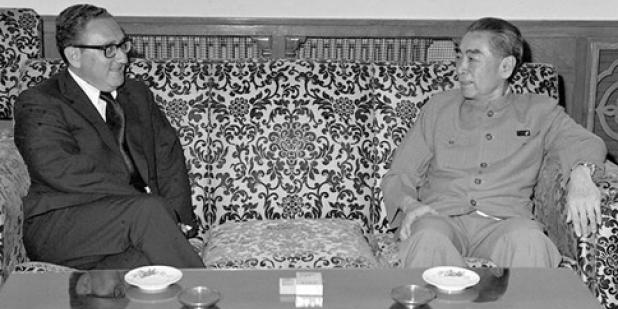
Henry A Kissinger
Assistant to the President for National Security Affairs until November 3, 1975; also Secretary of State from September 21, 1973
https://www.theguardian.com/world/2023/may/20/bilderberg-meeting-group-lisbon-kissinger
https://www.theguardian.com/world/bilderberg
https://history.state.gov/historicaldocuments/frus1969-76ve13/summary
https://china.usc.edu/getting-beijing-henry-kissingers-secret-1971-trip
https://china.usc.edu/catalog/documents/us-china
http://www.archives.gov/press/press-releases/2001/nr01-47.html
https://china.usc.edu/talking-points-july-22-august-3-2011
https://china.usc.edu/getting-beijing-henry-kissingers-secret-1971-trip#meetings
https://china.usc.edu/getting-beijing-henry-kissingers-secret-1971-trip#nixon-announcement
https://china.usc.edu/getting-beijing-henry-kissingers-secret-1971-trip#chinese-accept
https://china.usc.edu/getting-beijing-henry-kissingers-secret-1971-trip#signals
https://china.usc.edu/getting-beijing-henry-kissingers-secret-1971-trip#the_aim
http://www.foreignaffairs.com/articles/23927/richard-m-nixon/asia-after-viet-nam
https://history.state.gov/historicaldocuments/frus1969-76v17/d4
https://history.state.gov/historicaldocuments/frus1969-76v17/d12
https://history.state.gov/historicaldocuments/frus1969-76v17/d13
https://history.state.gov/historicaldocuments/frus1969-76v17/d141
https://2001-2009.state.gov/documents/organization/100324.pdf
https://en.wikipedia.org/wiki/Henry_Kissinger_and_the_Vietnam_War
Lesson in Vietnam from Kissinger to Nixon: “when we made it “our war” we would not let the South Vietnamese fight it; when it again became “their war”, we would not help them fight it.”
(We also had trouble with excesses here: when we made it “our war” we would not let the South Vietnamese fight it; when it again became “their war,” we would not help them fight it. Ironically, we prepared the South Vietnamese for main force warfare after 1954 (anticipating another Korean-type attack), and they faced a political war; they had prepared themselves for political warfare after 1973 only to be faced with a main force invasion 20 years after it had been expected.)
https://history.state.gov/historicaldocuments/frus1969-76v10/d280
Lesson of Vietnam May 12 1975 by Henry A. Kissinger
https://www.fordlibrarymuseum.gov/library/exhibits/vietnam/032400091-002.pdf
https://thebattleofkontum.com/extras/kissinger.html
“Richard M. Nixon and Kissinger on 3 August 1972,” Conversation 760-006, Presidential Recordings Digital Edition [Fatal Politics, ed. Ken Huges] (Charlottesville: University of Virginia Press, 2014-). URL:https://prde.upress.virginia.edu/conversations/4006748
https://player.vimeo.com/video/889937807?h=e44572c8f3&color=e57200&title=0&byline=0&portrait=0
https://player.vimeo.com/video/889937807?h=e44572c8f3&color=e57200&title=0&byline=0&portrait=0
Discover the Truth at:
https://www.theblackvault.com/documentarchive/the-cias-vietnam-document-cd-rom/
Korologos, Tom C.,
Deputy Assistant to the President for Congressional Relations until 1973; Deputy Assistant to the President for Legislative Affairs, 1974
https://geraldrfordfoundation.org/centennial/oralhistory/tom-korologos/
https://www.dlapiper.com/en-us/people/k/korologos-tom-c
https://en.wikipedia.org/wiki/Tom_C._Korologos
https://en.wikipedia.org/wiki/United_States_Ambassador_to_Belgium
https://www.usagm.gov/who-we-are/board/tom-c-korologos/
https://2001-2009.state.gov/outofdate/bios/k/34098.htm
https://millercenter.org/conversations/conversants/lawrence-f-larry-obrien-jr
General, Cambodian Prime Minister and Minister of National Defense, June 1969; led coup that deposed Prince Norodom Sihanouk in March 1970; Prime Minister and Minister of National Defense after March 18, 1970; President of Khmer Republic from 1972 until 1975
Rush, Kenneth,
Deputy Secretary of Defense until January 29, 1973; Deputy Secretary of State from February 2, 1973, until May 29, 1974
https://en.wikipedia.org/wiki/Kenneth_Rush
https://en.wikipedia.org/wiki/United_States_Deputy_Secretary_of_Defense
https://www.wikiwand.com/en/Kenneth_Rush
Agreement on Ending the War and Restoring Peace in Vietnam Paris 27 January 1973
Paris Peace Accords
https://en.wikipedia.org/wiki/Paris_Peace_Accords
Peace Negotiations and the Paris Agreement
https://edmoise.sites.clemson.edu/paris.html
Text of Declaration by Paris Conference on Vietnam
https://www.nytimes.com/1973/03/03/archives/text-of-declaration-by-paris-conference-on-vietnam.html
Vietnam War Bibliography Translation Series
https://edmoise.sites.clemson.edu/trans.html#fbis
1954 1955 Vietnam Operation Passage to Freedom
Agreement on Ending the War and Restoring Peace in Vietnam Paris 27 January 1973
20120414 Hải Chiến Hoàng Sa
https://bachvietnhan.blogspot.com/2012/04/20120414-hai-chien-hoang-sa.html
Điều chưa kể sau cuộc hải chiến Hoàng Sa 1974
https://saigonnhonews.com/thoi-su/thay-gi-tren-mang/dieu-chua-ke-sau-cuoc-hai-chien-hoang-sa-1974/
Anouncements
20241214 CDTL South Vietnam Not Bound by Geneva Accords 1954
https://bachvietnhan.blogspot.com/2024/12/20241214-cdtl-south-vietnam-not-bound.html
20241110 CDTL Tuyên Cáo Lãnh Thổ Lãnh Hải VN
https://bachvietnhan.blogspot.com/2024/11/20241110-cdtl-tuyen-cao-lanh-tho-lanh.html
20190910 Petition of the citizens of the Republic of Vietnam
https://bachvietnhan.blogspot.com/2019/09/20190910-petition-of-citizens-of.html
20250130 Cộng Sản Giặc Hồ Đầu Hàng Hoa Kỳ Năm 1973
https://bachvietnhan.blogspot.com/2024/12/20241231-ap-ba-chuc-dau-moi-mot-tham-hoa.html
http://www.youtube.com/watch?v=hwvXyzo7MjM
http://vietnamsaigon.multiply.com/jou
Agreement on Ending the War and Restoring Peace in Vietnam Paris 27 January 1973
Tiểu Đoàn 92 BĐQ Trung Tá Lê Văn Ngôn Với Huyền Thoại Tử Thủ 510 Ngày
https://www.youtube.com/watch?v=iq-IHTqo4es&t=2908s
20251008 Lê Văn Ngôn Hùng Khí Trời Nam
https://bachvietnhan.blogspot.com/2024/04/20240413-cdtl-hung-khi-troi-nam.html
20230322 Cong Dong Tham Luan Tonle Tchombe
https://bachvietnhan.blogspot.com/2023/03/20230322-cong-dong-tham-luan-tong-le.html
20170722 Lê Văn Ngôn với Tống Lệ Chân
https://bachvietnhan.blogspot.com/2017/07/20170722-le-van-ngon-voi-tong-le-chan.html


No comments:
Post a Comment