20260412 CDTL DDE D558 20 May 1954 Biên bản Cuộc đàm thoại của ông Bonsal Cố vấn Phái đoàn Hoa Kỳ.
https://history.state.gov/historicaldocuments/frus1952-54v16/d558
Google Translated
Tài liệu số 558
Quan hệ Đối ngoại của Hoa Kỳ, 1952–1954, Hội nghị Geneva, Tập XVI
396.1 GE/5–2054
Biên bản Cuộc đàm thoại của ông Bonsal Cố vấn Phái đoàn Hoa Kỳ.
Tối mật
Geneva, ngày 20 tháng 5 năm 1954.
Thành phần tham dự:
Ngô Đình Luyện, Đại diện Cá nhân của Bảo Đại; Philip W. Bonsal
Chủ đề:
Mối quan ngại của Bảo Đại về kết quả Hội nghị Geneva và mong muốn của ông về sự hỗ trợ trực tiếp từ Hoa Kỳ dành cho Việt Nam
Ông Ngô Đình Luyện đã đến gặp theo yêu cầu của chính ông. Sau khi cho tôi biết rằng Bảo Đại gần như đã quyết định cải tổ chính phủ, ông Ngô Đình Luyện bày tỏ rằng Bảo Đại có phần lo ngại trước những tuyên bố gần đây của Tổng thống và Ngoại trưởng. Cụ thể, ông muốn biết liệu Hoa Kỳ có sẵn lòng viện trợ cho Việt Nam hay không, và dưới hình thức nào.
Bảo Đại tự hỏi liệu sự hỗ trợ dành cho quân đội Việt Nam có thể được thực hiện ngay lập tức hay không, xét theo tình hình hiện tại. Mặc dù Bảo Đại hy vọng rằng quân đội Việt Nam sẽ có khả năng chặn đứng quân địch, ông vẫn [Trang 860] mong muốn được biết liệu chúng ta đã quyết định cung cấp sự hỗ trợ trực tiếp hay chưa, trong trường hợp sự hỗ trợ đó trở nên cần thiết. Bảo Đại nhận định rằng nỗ lực quân sự của phía Pháp đang ngày càng trở nên thiếu hụt.
Theo Ngô Đình Luyện, Bảo Đại vô cùng lo ngại về những hệ quả của việc Việt Minh chiếm quyền kiểm soát vùng Đồng bằng. Vùng Đồng bằng là nguồn cung cấp tân binh to lớn cho Quân đội Quốc gia Việt Nam, và việc để mất vùng này sẽ là một đòn giáng cực kỳ nặng nề. Bảo Đại hình dung rằng Hoa Kỳ sẽ can thiệp trực tiếp nếu phía Pháp từ bỏ vùng Đồng bằng.
Tôi đã nói rằng mình không nhận thấy bất kỳ dấu hiệu nào cho thấy phía Pháp đang thực hiện chính sách bỏ mặc vùng Châu thổ. Trên thực tế, tôi cảm thấy rất được khích lệ trước phản ứng của ông Bidault — cũng như của Chính phủ Pháp nói chung — đối với tình hình quân sự vốn được thừa nhận là đang rất nghiêm trọng. Ông Ngô Đình Luyện đáp lại rằng Bảo Đại lo ngại dư luận Pháp có thể buộc Chính phủ Pháp phải áp dụng một chính sách xoa dịu.
Theo ông Ngô Đình Luyện, Bảo Đại cho rằng Hội nghị Geneva nhiều khả năng sẽ dẫn đến thắng lợi cho phe Cộng sản. Ông đang cân nhắc thái độ mà Chính phủ Việt Nam cần thể hiện trong trường hợp đó. Trong tâm trí, ông đang cân nhắc những bất đồng quan điểm dường như đang hiện hữu giữa các cường quốc phương Tây. Ông đang nỗ lực xác định thái độ mà Chính phủ Việt Nam cần áp dụng trong trường hợp Hội nghị tại Geneva đưa ra lập trường trái ngược với lập trường nguyên thủy của Chính phủ Việt Nam.
Ông Ngô Đình Luyện đã đề cập đến một bức điện mà Bảo Đại nhận được từ Thống đốc Trí, trong đó tình hình tại Bắc Việt Nam được mô tả là "bi thảm".
Khi mô tả chính sách mới mà Bảo Đại mong muốn áp dụng, ông Ngô Đình Luyện cho biết rằng Hoàng thượng rất thiết tha muốn thực hiện một lập trường chính trị hoàn toàn mới, đồng thời xây dựng một Quân đội Quốc gia Việt Nam thực sự. Tuy nhiên, Ngài vẫn chưa đưa ra quyết định cuối cùng về việc chủ động hành động vào thời điểm này, và sẽ chỉ thực hiện điều đó khi có sự ủng hộ từ phía Hoa Kỳ. Ông Ngô Đình Luyện đã đặt câu hỏi liệu sự ủng hộ đó có được cung cấp hay không. Đáp lại, ông Bonsal đã đưa ra tuyên bố theo thông lệ về việc chúng tôi không muốn can thiệp vào các vấn đề nội bộ của Việt Nam.
Ông Ngô Đình Luyện sau đó cho biết rằng tư duy của Bảo Đại nghiêng về hướng mời ông Ngô Đình Diệm đảm nhiệm chức Thủ tướng và thực hiện một cuộc cải tổ nội các toàn diện. Ông Ngô Đình Luyện cũng nhân dịp này bày tỏ rằng người Pháp từ trước đến nay vẫn luôn chi phối `Đức Vua; và chính do ảnh hưởng của Pháp mà nhiều nhân vật được Đức Vua mời ra tham gia chính quyền—hậu quả là sau thời gian phục vụ đó—đã chứng kiến uy tín và tầm ảnh hưởng của mình tại Việt Nam bị suy giảm nghiêm trọng. Ông Ngô Đình Luyện khẳng định rằng Bảo Đại sẽ hoan nghênh mọi đề nghị chính trị từ phía chúng tôi. [Trang 861]
Ông Ngô Đình Luyện cho biết ông đã chuyển đạt tới Bảo Đại những nhận định mà Tướng Smith đã trao đổi với ông, liên quan đến khoảng thời gian cần thiết để xây dựng được những đơn vị quân đội thực sự có khả năng chiến đấu (17 tháng), cũng như khoảng thời gian dài hơn nữa để đào tạo được những sĩ quan thực sự hiệu quả ở cả cấp chỉ huy chiến trường lẫn cấp tướng lĩnh. Nhận định của Đức Vua là hiện có các binh sĩ Việt Nam đang phục vụ trong Quân đoàn Viễn chinh Pháp, trong Quân đội Quốc gia, cũng như trong nhiều lực lượng bán quân sự không chính quy và các lực lượng bổ trợ khác nhau. Ý định của Đức Vua là sẽ hợp nhất tất cả các lực lượng này lại thành một quân đội Việt Nam mới. Bảo Đại nhận thức rõ rằng phía Pháp sẽ phản đối việc làm nầy vì hai lý do. Thứ nhất, bởi lẽ họ muốn duy trì toàn bộ các lực lượng thuộc Liên hiệp Pháp dưới sự kiểm soát của chính họ, trong khi hơn một nửa số lực lượng đó lại là người Việt Nam. (Đây có lẽ là một sự phóng đại; tỷ lệ chính xác có lẽ chỉ vào khoảng 40%.) Lý do thứ hai là, theo nhận định của Đức Vua, phía Pháp lo ngại về khả năng đạt được một thỏa thuận giữa Việt Nam và Việt Minh—một thỏa thuận hoàn toàn có thể xảy ra nếu cán cân lực lượng ở phía liên minh Pháp-Việt chuyển dịch, trong đó Quân đội Quốc gia Việt Nam do Chính phủ Việt Nam kiểm soát sẽ nắm giữ ưu thế chủ đạo.
Ý tưởng chính của Bảo Đại là xây dựng một hạt nhân gồm những binh sĩ có đủ năng lực chiến đấu—lực lượng này chủ yếu sẽ được tuyển chọn từ Quân đoàn Viễn chinh Pháp hiện hành. Quan niệm của ông là đội quân này sẽ trở thành một lực lượng có tính cơ động cao, đầy tính chiến đấu và luôn chủ động tấn công. Ngô Đình Luyện đã khép lại phần trình bày về những quan điểm được cho là của Bảo Đại bằng lời kêu gọi rằng chúng ta hãy thấu hiểu lập trường của Đức Hoàng thượng.
Ông Bonsal đặt câu hỏi liệu những biện pháp khá quyết liệt được đề nghị—dù kết cuộc có thể dẫn đến việc thành lập một Quân đội Quốc gia Việt Nam theo đúng định hướng mà Đức Vua hằng mong muốn—có gây ra tình trạng xáo trộn và làm suy yếu, ít nhất là trong giai đoạn đầu, các đơn vị chiến đấu chủ lực—vốn là nền tảng quyết định sự tiếp nối thành công của cuộc kháng chiến chống lại Việt Minh—hay không. Đáp lại, ông Ngô Đình Luyện khẳng định rằng lẽ dĩ nhiên Đức Vua sẽ chủ trương tiến hành từng bước một, nhằm tránh tuyệt đối bất kỳ tình huống nào như điều mà ông Bonsal đã nêu trong câu hỏi của mình.
Bảo Đại rất mong muốn nhận được sự hỗ trợ trực tiếp từ Hoa Kỳ dành cho quân đội Việt Nam. Tại đây, Ngô Đình Luyện đang đề cập đến khoản viện trợ MDAP. Quan điểm của Bảo Đại là khoản viện trợ này nên được chuyển trực tiếp đến quân đội Việt Nam, thay vì phải thông qua chính quyền Pháp như hiện nay; hoặc, nếu việc này tỏ ra không khả thi, thì ít nhất cũng cần có sự phân bổ cụ thể một số hạng mục viện trợ nhất định của Hoa Kỳ để dành riêng cho Quân đội Quốc gia Việt Nam. Nếu một cơ chế sắp xếp như vậy được thiết lập, nó cần được bổ sung bằng một bộ máy kiểm soát nào đó nhằm đảm bảo rằng các hạng mục đã được phân bổ riêng thực sự đến được tay quân đội Việt Nam. [Trang 862] Ông Luyện nhấn mạnh rằng Bảo Đại không hề muốn thực hiện bất kỳ thay đổi mang tính cách mạng nào có thể gây ảnh hưởng bất lợi đến tình hình chiến sự hiện tại, mặc dù trên lý thuyết, những thay đổi như vậy có thể là điều đáng mong muốn.
Tóm lại, ông Bonsal cho biết với ông Ngô Đình Luyện rằng ông sẽ chuyển đạt những nội dung nêu trên tới Tướng Smith, đồng thời sẽ thông báo lại cho ông Ngô Đình Luyện trong trường hợp vị Tướng này muốn đưa ra bất kỳ phúc đáp hay bình luận cụ thể nào vào thời điểm hiện tại.
1. Xem bản ghi nhớ về cuộc hội đàm giữa Smith và Ngô Đình Luyện, ngày 18 tháng 5, tr. 843. ↩
List of Abbreviations and Symbols
https://history.state.gov/historicaldocuments/frus1952-54v16/terms
https://history.state.gov/historicaldocuments/frus1952-54v16/persons
The Geneva Conference on Indochina May 8–July 21, 1954
https://history.state.gov/historicaldocuments/frus1952-54v16/comp2
https://history.state.gov/historicaldocuments/frus1952-54v16/ch7
May 20, 1954 (Documents 556–570)
https://history.state.gov/historicaldocuments/frus1952-54v16/ch7subch13
4. Document 558
Foreign Relations of the United States, 1952–1954, The Geneva Conference, Volume XVI
396.1 GE/5–2054
Memorandum of Conversation, by the Adviser to the United States Delegation (Bonsal)
top secret
Geneva, May 20, 1954.
Participants:
- Ngo Dinh Luyen, Bao Dai’s Personal Representative Philip W. Bonsal
Subject:
- Bao Dai’s concern over the outcome of the Geneva Conference and his desire for direct US assistance for Viet-Nam
Mr. Ngo Dinh Luyen called at his request. After telling me that Bao Dai has almost decided to change his government, Mr. Ngo Dinh Luyen said that Bao Dai is somewhat worried about recent declarations by the President and the Secretary. Specifically, he would like to know whether the US is disposed to give assistance to Viet-Nam and in what form.
Bao Dai wonders whether help for the Vietnamese army could be immediate in view of the present situation. Although Bao Dai hopes that the Vietnamese army will be able to hold back the enemy, he would [Page 860] like to know whether we have decided to give direct assistance if such assistance should be necessary. Bao Dai considers that the French military effort is becoming daily more insufficient.
According to Ngo Dinh Luyen, Bao Dai is very worried about the consequences of a take-over in the Delta by the Vietminh. The Delta is the great reservoir of recruits for the Vietnamese National Army and its loss would be a tremendous blow. Bao Dai would envisage direct US intervention if the French were to abandon the Delta.
I said that I saw no signs of a policy of abandonment of the Delta on the part of the French. In fact I had been much encouraged by the reaction to the admittedly serious military situation on the part of Bidault and of the French Government in general. Ngo Dinh Luyen replied that Bao Dai fears that French public opinion may force the French Government to adopt a policy of appeasement.
According to Ngo Dinh Luyen, Bao Dai thinks that the Geneva Conference will probably result in a Communist victory. He is considering the attitude which the Vietnamese Government should adopt in that eventuality. He is weighing in his mind the apparent divisions of opinion between Western powers. He is trying to determine the attitude which the Vietnamese Government should adopt in the event that the Conference in Geneva takes a position contrary to the basic position of the Vietnamese Government.
Ngo Dinh Luyen mentioned a telegram which Bao Dai had received from Governor Tri in which the situation in North Viet-Nam is described as “tragique”.
In describing the new policy which Bao Dai would like to adopt, Ngo Dinh Luyen stated that His Majesty is anxious to take an entirely new political stand and at the same time create a real Vietnamese National Army. He has, however, not finally decided to proceed actively at this time and would only do so with US support. Ngo Dinh Luyen asked whether that support would be forthcoming. In reply Bonsal made the customary statement regarding our unwillingness to interfere in internal Vietnamese affairs.
Ngo Dinh Luyen then said that Bao Dai’s thinking was along the lines of bringing Ngo Dinh Diem in as Prime Minister and making a complete change in the cabinet. Ngo Dinh Luyen took occasion to say that the French have always dominated His Majesty and that French influence has had the result that many of the men whom His Majesty has called in to serve the governments have, as a consequence of that service, seen their influence and prestige in Viet-Nam seriously diminished. Ngo Dinh Luyen stated that Bao Dai would welcome political suggestions from us.
Ngo Dinh Luyen stated that he had conveyed to Bao Dai the remarks made by General Smith to Ngo Dinh Luyen concerning the time which it takes to form truly combat worthy troops (17 months) as well as the longer period required to train really effective officers at field and general levels.1 His Majesty’s comment is that there are Vietnamese soldiers in the French Expeditionary Corps, in the national army and in various irregular paramilitary, and suppletif forces. It is His Majesty’s intention to group all these forces in a new Vietnamese army. Bao Dai is aware that the French will oppose this move for two reasons. First, because they want to keep all French Union forces under their own control and over half of those forces are Vietnamese. (This is probably an exaggeration; the accurate proportion is perhaps 40%.) The second reason is that, according to His Majesty, the French fear a possible agreement between Viet-Nam and the Vietminh, an agreement which would be possible if the preponderance of forces on the Franco-Vietnamese side were to become that of the Vietnamese National Army controlled by the Vietnamese Government.
Bao Dai’s general idea is to create a nucleus of combat-worthy troops which would largely be those taken from the present French Expeditionary Corps. His concept is that the army would be a highly mobile, aggressive, offensive-minded force. Ngo Dinh Luyen concluded this exposition of Bao Dai’s alleged views by an appeal that we should understand His Majesty’s position.
Bonsal asked whether the rather drastic measures proposed, while they might eventually result in the creation of a Vietnamese National Army along the lines envisaged by His Majesty, would not at least at first disorganize and weaken the major fighting units upon which the continuation of successful resistance to the Vietminh depends. In reply Ngo Dinh Luyen stated that of course His Majesty would envisage proceeding gradually and avoiding any such situation as that contemplated in Bonsal’s question.
Bao Dai is anxious to obtain direct US assistance for the Vietnamese army. Ngo Dinh Luyen here was referring to MDAP assistance. Bao Dai’s thought is that such assistance should come direct to the Vietnamese army instead of through the French authorities as at present or that, if this should prove impractical, there should at least be a specific earmarking of certain items of US assistance as being destined for the Vietnamese National Army. If such an arrangement could be made it should be supplemented by some sort of control machinery to see that earmarked items actually did get to the Vietnamese army. [Page 862] Luyen stressed that Bao Dai did not wish to introduce any revolutionary changes which might adversely affect the present combat situation even though theoretically such changes might be desirable.
In conclusion Bonsal told Ngo Dinh Luyen that he would convey the above to General Smith and would advise Ngo Dinh Luyen in the event the General wished to make any specific replies or comments at this time.
1. See memorandum of Smith–Ngo Dinh Luyen conversation, May 18, p. 843.↩
https://history.state.gov/historicaldocuments/frus1952-54v16/d558
https://history.state.gov/historicaldocuments/frus1952-54v16/pg_860
https://history.state.gov/historicaldocuments/frus1952-54v16/pg_861
https://history.state.gov/historicaldocuments/frus1952-54v16/pg_862
https://history.state.gov/historicaldocuments/frus1952-54v16/pg_843
Thân thế (các) nhân vật
Chief of State of Vietnam.
French Minister for Foreign Affairs until June 18, 1954; Head of the French Delegation at the Geneva Conference until June 18, 1954.
https://en.wikipedia.org/wiki/Georges_Bidault
https://history.state.gov/historicaldocuments/frus1952-54v16/d338
https://www.britannica.com/biography/Georges-Bidault
https://history.state.gov/historicaldocuments/frus1952-54v16/d398
https://www.wilsoncenter.org/sites/default/files/media/documents/publication/CWIHPBulletin16_p1.pdf
https://spartacus-educational.com/2WWbidault.htm
https://apps.dtic.mil/sti/tr/pdf/ADA007286.pdf
https://avalon.law.yale.edu/20th_century/inch020.asp
Bonsal, Philip W.,
Counselor of Embassy in France to March 1952; Director of the Office of Philippine and Southeast Asian Affairs, Department of State, from August 1952.
https://history.state.gov/historicaldocuments/frus1952-54v13p1/d48
https://history.state.gov/historicaldocuments/frus1952-54v13p2/persons
https://afsa.org/sites/default/files/fsj-1954-03-march_0.pdf
https://history.state.gov/historicaldocuments/frus1952-54v13p1/d223
https://www.jaas.gr.jp/jjas/pdf/1981/No.01-119.pdf
Ngo Dinh Diem,
President of the Council of Ministers of the State of Vietnam to October 1955; thereafter President and Chief of State of the Republic of Vietnam
https://en.wikipedia.org/wiki/Ngo_Dinh_Diem
https://millercenter.org/the-presidency/educational-resources/diem-coup
https://www.jfklibrary.org/search?f[0]=subject:Vietnam%20War,%201961-1975
The Diem Coup audio
https://soundcloud.com/the-miller-center-at-uva/sets/the-diem-coup
February 1, 1966: President Johnson remembers Diem coup (admitted) to Eugene McCarthy
https://soundcloud.com/the-miller-center-at-uva/february-1-1966-president
November 4, 1963: President Kennedy on the Diem coup
https://soundcloud.com/the-miller-center-at-uva/november-4-1963-president-kennedy-on-the-diem-coup
NHỚ LẠI NHỮNG NGÀY Ở CẠNH TỔNG THỐNG NGÔ ĐÌNH DIỆM (Full) - Tài Nguyễn Diễn Đọc
https://www.youtube.com/watch?v=sWTTgB7oE6U&t=6927
Một phụ nữ miền Bắc viết về cố TT Ngô Đình Diệm.
https://www.youtube.com/watch?v=UMEkUQRp01o
"The Death of Diem and Nhu"
https://www.youtube.com/watch?v=U8O1HOTXS8A
"The Coup in Saigon"
https://www.youtube.com/watch?v=k4IaJYiNanc
"Everybody'll Say We Did It"
https://www.youtube.com/watch?v=Jaai1NdZ70k
"We Have Plans for Withdrawal"
https://www.youtube.com/watch?v=0BABdRu7FY0
"The Road to Disaster"
https://www.youtube.com/watch?v=dr5dRFVV-ok
https://www.youtube.com/channel/UChty22qJfdeAd8dAee9Mo7g/featured
“The President Is Dead”
https://www.youtube.com/watch?v=lD-akTUBFWs
“That Wasn't What Killed Kennedy”
https://www.youtube.com/watch?v=LAF0JGttS3E
Kennedy and Vietnam: The great what-if
https://www.youtube.com/watch?v=6XLhqXt2pww
JFK, LBJ and the Paradox of Vietnam
https://www.youtube.com/watch?v=TYRsahM-GqQ&t=2054
BÀI 305: NHÌN LẠI LỊCH SỬ: ĐỆ NHẤT CỘNG HÒA
http://www.bacaytruc.com/index.php/16996-bai-305-nhin-l-i-l-ch-s-d-nh-t-c-ng-hoa-tac-gi-vu-linh-ddtc
BÀI 306: NHÌN LẠI LỊCH SỬ: ĐỆ NHỊ CỘNG HÒA
https://diendantraichieu.blogspot.com/2023/11/bai-306-nhin-lai-lich-su-e-nhi-cong-hoa.html
BÀI 307: NHÌN LẠI LỊCH SỬ: VAI TRÒ CỦA MỸ
http://www.bacaytruc.com/index.php/17092-bai-307-nhin-l-i-l-ch-s-vai-tro-c-a-m-tac-gi-vu-linh-ddtc
JFK and the Diem Coup
https://nsarchive2.gwu.edu/NSAEBB/NSAEBB101/
Evidence on the Diem Coup in South Vietnam 1963
https://www.tokyoprogressive.org/evidence-on-the-diem-coup-in-south-vietnam-1963/
Tập 1 - Đời Một Phóng Viên & Những Ngày Bên Chí Sĩ Ngô Đình Diệm
https://www.youtube.com/watch?v=2CJ1CXSWwpI
Tập 2. Đời Một Phóng Viên & Những Ngày Bên Chí Sĩ Ngô Đình Diệm
https://www.youtube.com/watch?v=Po5Hlbfk6Zc
Tập 3 - Đời Một Phóng Viên & Những Ngày Bên Chí Sĩ Ngô Đình Diệm
https://www.youtube.com/watch?v=vdluTn-L8sc
Tập 4 : Đời Một Phóng Viên & Những Ngày Bên Chí Sĩ Ngô Đình Diệm
https://www.youtube.com/watch?v=p58HIMAy_Hg
Tập 5 - Đời Một Phóng Viên & Những Ngày Bên Chí Sĩ Ngô Đình Diệm
https://www.youtube.com/watch?v=ti24AXG12YE
Tập 6 - Đời Một Phóng Viên & Những Ngày Bên Chí Sĩ Ngô Đình Diệm
https://www.youtube.com/watch?v=LB0xpBPX9UI
Tập 7 - Đời Một Phóng Viên & Những Ngày Bên Chí Sĩ Ngô Đình Diệm
https://www.youtube.com/watch?v=Rvv0ze1mG_8
Tập 8 - Đời một Phóng Viên và Những ngày chung sống với Chí Sĩ Ngô Đình Diệm
https://www.youtube.com/watch?v=Ht1u6A62KXk
Tập 9 - Đời một Phóng Viên và những ngày chung sống với Chí Sĩ Ngô Đình Diệm
https://www.youtube.com/watch?v=bcZZ9O5cwgA&t=18s
Tập 10 - Đời một Phóng Viên & Những ngày chung sống với Chí Sĩ Ngô Đình Diệm
https://www.youtube.com/watch?v=bgJnv7kALSA
Interview with Madame Ngo Dinh Nhu, 1982
https://video.alexanderstreet.com/watch/interview-with-madame-ngo-dinh-nhu-1982
Tài liệu cộng sản giặc Hồ xuyên tạc Tổng thống Diệm và quân đội Mỹ
https://sachhiem.net/LICHSU/N/NgoDacTriet.php
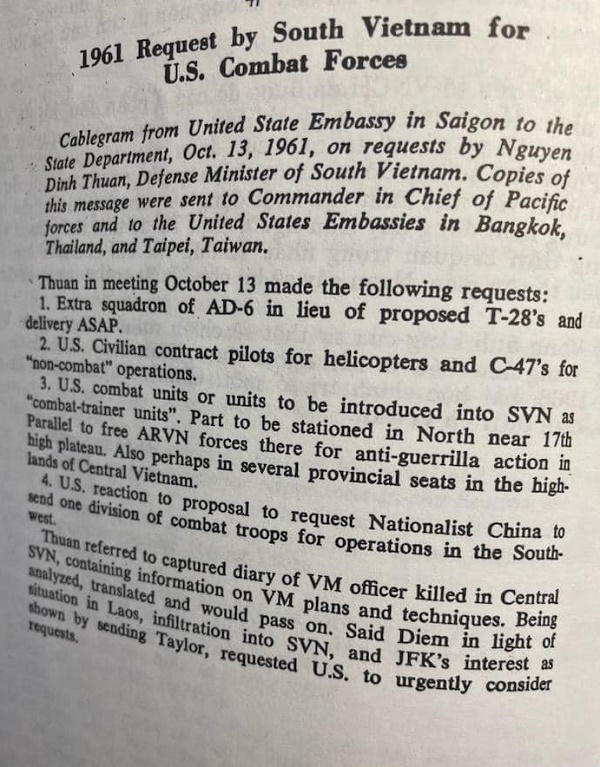
https://sachhiem.net/LICHSU/IMG/NGODD/1961XinQuanMy.jpg
Ngo Dinh Luyen,
Personal Representative of Vietnamese Chief of State Bao Dai at the Geneva Conference.
Ambassador-at-large of Vietnam; Vietnamese Ambassador to the United Kingdom from March 1956; youngest brother of Ngo Dinh Diem
Nguyen Huu Tri,
Governor of Northern Vietnam, 1952–1954; leader of the Dai Viet (Vietnamese political party).
Under Secretary of State; Head of the United States Delegation at the Geneva Conference, May 3–June 20, and July 17–21, 1954.
https://history.state.gov/historicaldocuments/frus1952-54v16/ch5subch4
https://avalon.law.yale.edu/20th_century/inch006.asp
https://www.cia.gov/readingroom/docs/CIA-RDP80B01676R002500010001-5.pdf
https://history.state.gov/historicaldocuments/frus1952-54v16/d1027
https://search.library.wisc.edu/digital/ABHSHVCERGRA6I86/pages/ALUZ5OG5PRZCCH83?as=text&view=scroll


No comments:
Post a Comment