20260205 CDTL GRF 11 April 1975 D224 Biên bản cuộc họp của Bộ Ngoại giao
https://history.state.gov/historicaldocuments/frus1969-76v10/d224
Google Translated
Tài liệu 224
Quan hệ đối ngoại của Hoa Kỳ, 1969–1976, Tập X, Việt Nam, tháng 1 năm 1973 – tháng 7 năm 1975
224. Biên bản cuộc họp của Bộ Ngoại giao
Washington, ngày 11 tháng 4 năm 1975, 8:31–8:51 sáng
DIỄN BIẾN CUỘC HỌP
(Cuộc họp bắt đầu lúc 8:31 sáng, Bộ trưởng Ngoại giao Kissinger chủ trì với tư cách Chủ tịch.)
Bộ trưởng Kissinger: Tôi cần phải kết thúc cuộc họp khá nhanh. Tôi muốn đưa ra một vài nhận xét về bài phát biểu tối hôm qua.
Tôi nghĩ tất cả chúng ta đều biết rằng Việt Nam là một thảm kịch quốc gia và việc rút quân khỏi Việt Nam và Campuchia có lẽ là hồi kết của một thảm kịch quốc gia. Và khi làm điều này, chúng ta phải ghi nhớ nhiều yếu tố. Chúng ta phải ghi nhớ cách người Việt Nam nhìn nhận chúng ta, bởi vì điều đó liên quan đến 6.000 người Mỹ và hàng trăm nghìn người Việt Nam, những người có mọi lý do để tin rằng họ đang làm việc với một thể chế ít nhiều là lâu dài.
Điều quan trọng là cách các quốc gia khác nhìn nhận chúng ta, liệu Hoa Kỳ có chỉ đơn giản là bỏ đi và thậm chí không cung cấp đạn dược cho những người đã chiến đấu cùng với họ hay không. Và cuối cùng, điều đó phụ thuộc vào cách người dân của chúng ta nhìn nhận chúng ta, không chỉ qua những tiêu đề báo chí hàng ngày mà còn khi các bà mẹ tự hỏi họ đã mất 50.000 người vì điều gì.
Vì tất cả những lý do này, chúng ta phải làm điều đúng đắn, bất kể điều đó có không được lòng dân đến đâu. Và điều đúng đắn vào thời điểm này, theo chúng tôi, là phải đặt mình vào vị trí mà bất kể điều gì xảy ra ở Việt Nam, chúng ta vẫn giữ được một phần ảnh hưởng đối với các sự kiện. Nếu tối qua Tổng thống nói những gì mà nhiều nghị sĩ nói ông nên nói—cụ thể là, “Chúng ta đã làm đủ rồi; chúng ta không thể tiếp tục viện trợ quân sự nữa,” tôi nghĩ Phil Habib sẽ đồng ý rằng sẽ có một sự sụp đổ hỗn loạn hoàn toàn không thể kiểm soát ở Sài Gòn bắt đầu từ sáng nay. Một khi Tổng thống quyết định không làm gì cả, ông ấy cũng có thể yêu cầu những gì cần thiết vì sự phản đối ở Quốc hội không dựa trên một con số cụ thể; mà dựa trên nguyên tắc. Và việc yêu cầu 300 triệu đô la, số tiền vốn đã cần thiết ngay cả khi không có tình trạng khẩn cấp, là không có ý nghĩa gì. Ông ấy đã làm điều đó rồi. Và sự phản đối ở Quốc hội—tôi không biết liệu Phil có đồng ý với tôi không—sẽ không đáng kể nếu chúng ta thông qua khoản bổ sung ngay lập tức. [Trang 795]
Ngược lại, họ sẽ nói, “Đó là những gì ông đã yêu cầu vào tháng Giêng. Làm sao điều đó có thể hợp lý trong điều kiện sụp đổ?” Vì vậy, nếu nhìn từ quan điểm của Tổng thống và của một chính quyền có trách nhiệm lâu dài, tôi nghĩ bạn sẽ đi đến kết luận—ít nhất, chúng tôi đã đi đến kết luận—rằng chúng ta có những lựa chọn sau: Chúng ta có thể không làm gì cả. Chúng ta có thể yêu cầu khoản bổ sung 300 triệu đô la. Chúng ta có thể yêu cầu khoản bổ sung 300 triệu đô la và nói, “Chúng ta sẽ quay lại yêu cầu 500 triệu đô la nữa trong vài tuần nếu 500 triệu đô la này vẫn còn.” Hoặc chúng ta có thể yêu cầu toàn bộ số tiền ngay bây giờ. “Chúng ta muốn kết thúc cuộc tranh luận. Chúng ta sẽ không yêu cầu 300 triệu đô la bây giờ rồi quay lại yêu cầu 500 triệu đô la sau.”
Phil Habib sẽ ra điều trần từ giờ đến Giáng sinh, và điều đó không làm thay đổi bản chất của tình hình một cách đáng kể.
Tôi nhắc lại: Bất kể kết quả nào được ưu tiên tại bàn đàm phán này, thì vẫn phải có một kết quả quân sự đạt đến mức độ đó. Nếu có một kết quả đàm phán, thì nó cũng phải đạt đến mức độ đó, bởi vì chỉ có một kết quả đàm phán—chỉ có nỗi sợ hãi của phía Bắc Việt Nam rằng chúng ta có thể tái can thiệp mới có thể khiến họ đưa ra những điều khoản có thể chấp nhận được. Nếu có một cuộc di tản, chúng ta cũng phải đến đó. Vì vậy, bất kể lựa chọn nào chúng ta sẽ theo đuổi, chúng ta không có lựa chọn nào khác.
Hơn nữa, Tổng thống cảm thấy rất mạnh mẽ, và tôi cũng cảm thấy rất mạnh mẽ, rằng trong cuộc khủng hoảng dân chủ mà chúng ta đang đối mặt, nhánh hành pháp phải được nhìn nhận là đã làm điều đúng đắn và đã yêu cầu điều đúng đắn—và đã làm điều gì đó mà họ có thể biện minh được.
Bob, ông đã tham dự cuộc họp của Hội đồng An ninh Quốc gia phải không?
Ông Ingersoll: Vâng.
Bộ trưởng Kissinger: —và các vị biết rằng những quyết định này không được đưa ra một cách dễ dàng. Vì vậy, tôi muốn các vị hiểu rằng đây không phải là vấn đề nhỏ đối với chúng ta và trong cuộc tranh luận gay gắt đang diễn ra ở Mỹ hiện nay, cách các quốc gia khác nhìn nhận chúng ta có tầm quan trọng không nhỏ.
Hiện tại, tôi tin rằng những bản tin mà chúng ta nhận được về việc các quốc gia khác không quan tâm và vui mừng khi chúng ta rút khỏi miền Nam Việt Nam là hoàn toàn vô lý. Những quốc gia lo ngại nhất lại có ít lý do nhất để nói với chúng ta rằng họ lo ngại, đặc biệt là trên báo chí. Và hơn nữa, câu hỏi thường sai vì không ai quan tâm đến Sài Gòn; và nếu Sài Gòn sụp đổ mười năm trước, sẽ không có người châu Âu nào biết nó ở đâu, chứ đừng nói đến... nhưng kết luận, khi Hoa Kỳ kết thúc nỗ lực kéo dài mười năm, chỉ có thể phản ánh sự khôn ngoan, năng lực, độ tin cậy, sự kiên định, sức mạnh của chúng ta—tất cả những điều mà họ đều phụ thuộc vào. [Trang 796]
Tôi nói tất cả những điều này vì tôi biết có nhiều người trong Bộ Ngoại giao có thái độ phản đối mạnh mẽ chiến tranh Việt Nam. Tôi muốn nhấn mạnh rằng vấn đề hiện nay không còn là việc bạn ủng hộ hay phản đối chiến tranh Việt Nam nữa, vì theo đánh giá của tôi, cuộc chiến sẽ kết thúc trong tương lai gần, mà vấn đề quan trọng hơn là phẩm giá và lòng tự trọng của Hoa Kỳ—và trên hết, là khả năng của chúng ta trong việc thực hiện một chính sách đối ngoại hiệu quả sau khi chiến tranh kết thúc—và liệu các quốc gia khác có nhìn nhận chúng ta là một quốc gia kiên định, mạnh mẽ và có năng lực hay không. Và đó sẽ là nhiệm vụ lớn của chúng ta trong Bộ này. Chúng ta sẽ phải thực hiện một chính sách đối ngoại cứng rắn hơn.
Chúng ta sẽ đánh giá những gì chúng ta nên làm. Đó không phải là vấn đề. Nhưng điều tôi muốn trong thời gian trước mắt là tất cả những bộ óc xuất sắc đang tập hợp trong Bộ này hãy kiềm chế những suy nghĩ viển vông và tập trung vào tính nghiêm trọng của vấn đề, chứ không phải nói rằng tổng số tiền mà Tổng thống nên yêu cầu là 687,5 triệu đô la hay ông ấy đã mắc sai lầm khủng khiếp khi đưa ra con số này, hoặc than vãn khắp nơi về việc họ không muốn tranh luận về nhiều biến thể của các đề xuất, về nhiều ý tưởng mà chúng ta có thể nghĩ ra. Nhưng nhìn chung, mỗi khi tôi tranh luận về vấn đề này, khi tôi nghĩ rằng tinh thần làm việc của Bộ đang rất tốt, thì lại có người nào đó tiết lộ thông tin khiến tôi phải đặt câu hỏi về điều đó.
Nhưng giả sử cuộc họp này diễn ra trước vụ rò rỉ thông tin của Carlucci, tôi sẽ nói – ý tôi là, chúng ta đã làm tốt trong những tháng qua. Hãy để các Cục của các vị ủng hộ việc này. Và những người trong chúng ta phải ra làm chứng hãy làm điều đó một cách đàng hoàng và kiên quyết, bởi vì tôi nghĩ chúng ta đã làm điều tốt nhất có thể.
Khi tôi nói điều này, tôi không nhắm đến Phil Habib, người đã là một anh hùng, và đối với ông ấy, điều này chắc chắn còn đau lòng hơn bất cứ ai khác, bởi vì tôi nhớ ông ấy vào năm 1965 khi tất cả những điều này bắt đầu và ông ấy đã cố gắng giải quyết mọi chuyện. Và tôi nghĩ ông ấy xứng đáng nhận được tất cả lòng biết ơn của chúng ta vì những gì ông ấy đã làm. Nhưng đối với nhiều người trong mỗi Cục của chúng ta, những người chắc chắn có quan điểm mạnh mẽ về vấn đề này, hãy nhớ rằng bây giờ không phải là lúc để dùng những thủ đoạn. Vấn đề này sẽ không tự giải quyết; diễn biến của nó khá dễ đoán. Và những gì chúng ta đang cố gắng làm là quản lý nó một cách đàng hoàng và duy trì một nền tảng để chúng ta có thể thực hiện chính sách đối ngoại, trong đó mọi người có thể tin tưởng vào chúng ta.
Đó là những gì đang bị đe dọa đối với chúng ta.
Phil, anh có muốn bổ sung thêm điều gì không?
Ông Habib: Không, thưa ngài. Ngài đã nói hết rồi. Tôi đồng ý với tất cả những gì ngài đã nói. Chúng ta sẽ gặp rất nhiều khó khăn từ Quốc hội, nhưng tôi nghĩ—
[Trang 797]
Bộ trưởng Kissinger: Ông biết đấy, tôi vừa ăn sáng với Hubert Humphrey và ông ấy nói, “Tôi tự hào về ông. Đó là việc đúng đắn cần làm, nhưng tôi không thể ủng hộ ông.”
Ông Habib: Ông ấy sẽ không ủng hộ.
Bộ trưởng Kissinger: Ông biết đấy, có một cảm giác mâu thuẫn.
Ông Sisco: Vâng, Henry, tôi nghĩ một số người trong số họ có lương tâm, nhưng tôi không nghĩ rằng từ Humphrey—
Ông McCloskey: Tại sao ông ấy không làm điều đó tối qua?
Bộ trưởng Kissinger: Họ sẽ chỉ trích chúng ta thậm tệ nếu chúng ta đưa ra con số 287 triệu đô la và mười xu. Mọi lập luận mà tôi nghe được trên truyền hình tối qua đều có giá trị chống lại một đô la cũng như chống lại 700 triệu đô la—
Ông McCloskey: Đúng vậy.
Bộ trưởng Kissinger: —bởi vì nếu chúng ta viện trợ quá nhiều, thì số tiền đó hoàn toàn không còn ý nghĩa nữa.
Ông Habib: Tôi nghĩ chúng ta sẽ nhận được hai lập luận chính: Thứ nhất, “Chúng tôi sẽ cung cấp cho các ông những gì các ông cần cho mục đích nhân đạo.” Điều đó sẽ làm dịu lương tâm của họ. Điều thứ hai họ sẽ làm là nói, “Tất nhiên, nếu các ông loại bỏ Thiệu và đạt được một giải pháp hòa bình—các ông biết đấy, một điều gì đó để giúp các ông vượt qua giai đoạn khó khăn—thì đó sẽ là một vấn đề khác.” Và khi tình hình trên chiến trường trở nên khó khăn hơn, điều chắc chắn sẽ xảy ra, chúng ta sẽ càng nghe nhiều hơn lập luận thứ hai này. Sẽ có những người cố gắng tìm cách đàm phán một giải pháp chính trị cho các ông—mà thực chất chỉ là, các ông biết đấy, một sự nhượng bộ theo các điều khoản của Việt Cộng.
Có thể mọi chuyện sẽ đi đến đó. Đó là một cách để kết thúc mọi chuyện với ít khó khăn nhất—nhưng đó là điều mà người Việt Nam sẽ tự mình nhận ra.
Bộ trưởng Kissinger: Phil, nếu chúng ta học được điều gì đó, thì đó là người ta sẽ không ghi nhận công lao của bạn khi bạn thực hiện những gì họ nói rằng họ muốn. Đối với tất cả chúng ta, những người đã đàm phán thỏa thuận năm 1972 [1973], nếu có một thông điệp nào mà mọi người đều nói với chúng ta, đó là “Hãy đưa chúng tôi ra khỏi đó càng sớm càng tốt”. Nếu chúng ta bị chỉ trích về bất cứ điều gì, thì đó là vì chúng ta đã kiên quyết giữ vững các điều khoản quá cứng rắn. Mọi người đều nói, “Hãy đưa chúng tôi ra khỏi đó càng sớm càng tốt. Chúng tôi sẽ trả bất cứ giá nào. Chúng tôi sẽ làm bất cứ điều gì.” Điều đó có ngăn cản ai đó ngày nay nói rằng, “Thỏa thuận đó là một thảm họa” không?
Tôi không lo lắng về tình hình cá nhân; tôi lo lắng về những gì người dân Mỹ sẽ nghĩ, ngay cả 85% những người hiện muốn chúng ta rút quân, khi mọi chuyện kết thúc và khi chính phủ của họ đã hợp tác trong việc giết hại những người mà họ đã chiến đấu cùng trong mười năm, những người mà họ đã đưa lên nắm quyền – đất nước của họ đã bị tàn phá – hàng triệu người đã bị giết – tôi biết tất cả những lập luận này; chúng ta sẽ nghe thấy tất cả những lập luận này. Và nhiều người đưa ra những lập luận đó, sâu thẳm trong lòng họ biết rằng họ sai và đang cố gắng biện minh cho bản thân. [Trang 798]
Chúng ta không có lựa chọn nào khác ngoài việc kiên trì. Chúng ta đã đặt ra một thời hạn chót. Vì vậy, ít nhất nỗi đau khổ này sẽ kết thúc. Và không thể thỏa hiệp được, bởi vì, bạn biết đấy, nếu họ nói với chúng ta, "Các ông có chấp nhận 600 triệu đô la không?", bạn biết rõ, Bill, bất kể họ cho chúng ta bao nhiêu, khả năng là không đến 30% số tiền đó có thể đến được Việt Nam trước khi giai đoạn tiếp theo xảy ra. Ông có nghĩ vậy không, Bill?
Ông Hyland: Giai đoạn tiếp theo đã bắt đầu rồi.
Bộ trưởng Kissinger: Chúng ta không nói về chuyện đó. Chúng ta không nói về số tiền có thể sẽ được chi tiêu. Chúng ta đang nói về cách mà Hoa Kỳ có thể bị nhìn nhận trên toàn thế giới sau mười năm nỗ lực, và đó không phải là vấn đề nhỏ. Hiện tại, Liên Xô đang lo sợ rằng trong sự thất vọng, chúng ta sẽ phản ứng dữ dội. Nhưng rồi Liên Xô nhận ra rằng chúng ta trở nên yếu đuối đến mức không chỉ phản ứng dữ dội mà còn chìm đắm trong thất bại, và thay vì tấn công họ, chúng ta lại rút ra bài học, kiểu như “Đó là một điều khá tốt, bạn biết đấy, một khi bạn bị đánh bại.”
Tôi đã nghe thấy hôm qua, “Chúng ta phải viện trợ cho Israel vì họ thắng trong các cuộc chiến tranh, nhưng chúng ta không thể viện trợ cho các quốc gia khác đang thua trong các cuộc chiến tranh.” Chà, với cái lý thuyết chết tiệt đó, thật kỳ lạ là Liên Xô vẫn chưa chiếm được Bonn. Với lý thuyết đó, Đức Quốc xã đã có thể chiếm được cả thế giới rồi.
Vì vậy, đây không phải là vấn đề nhỏ. Nó thực sự đã trở thành một vấn đề đạo đức lớn, về lập trường của chúng ta.
Chúng ta sẽ thua; không có cơ hội nào để chúng ta thắng ở Quốc hội cả. Và dù chúng ta yêu cầu điều gì đi nữa thì cũng không có cơ hội thắng ở Quốc hội đâu – đừng tự lừa dối bản thân nữa.
Ông Habib: Nếu tôi nghĩ có cơ hội, tôi đã thuyết phục ông yêu cầu ít hơn rồi, nhưng tôi không nghĩ đó là vấn đề.
Bộ trưởng Kissinger: Phil, ông sẽ không nhận được một xu nào trong số 300 triệu đô la đó đâu—
Ông Habib: Không.
Bộ trưởng Kissinger: —và nếu chúng ta ngay lập tức nói, “Hãy cấp cho chúng tôi khoản bổ sung,” thì câu hỏi tiếp theo sẽ là: “Ông Habib, ông vui lòng giải thích cho chúng tôi tại sao 300 triệu đô la lại cần thiết trong khi bất kỳ số tiền nào khác cũng có thể là số tiền phù hợp? Và nếu ông biết đó không phải là số tiền phù hợp, thì tại sao lại yêu cầu chúng tôi cấp một số tiền không đủ?” Và nếu chúng ta nói, “Chúng ta sẽ yêu cầu 400 triệu đô la bây giờ và 300 triệu đô la sau đó,” thì chỉ riêng việc các nghị sĩ này phải bỏ phiếu hai lần trong ba tháng cũng đủ khiến họ phát điên. Và nếu chúng ta yêu cầu 300 triệu đô la và đến gặp Thiệu và nói, “Nghe này, cậu bé, cậu cần 300 triệu đô la vào tháng Giêng và bây giờ chúng tôi đến đây, sau nhiều tuần nghiên cứu tại một cuộc họp của Hội đồng An ninh Quốc gia, và chúng tôi đã kết luận rằng bằng một phép màu nào đó, 300 triệu đô la mà cậu cần trước [Trang 799] một cuộc tấn công lại chính là số tiền cậu cần sau một cuộc tấn công,” điều đó sẽ khiến Sài Gòn sụp đổ.
Vì vậy, chúng ta không có lựa chọn nào khác. Và nếu chúng ta không nhận được nó, thì tốt nhất là chúng ta không nên nhận được số tiền không đủ.
Ông Habib: Tôi nghĩ chúng ta sẽ nhận được một khoản nào đó từ một số ủy ban, nhưng một cuộc tranh luận gay gắt tại Quốc hội là điều không tốt. Chúng ta nên nghĩ xem làm thế nào để chiến đấu trong các ủy ban trước.
Bộ trưởng Kissinger: Chúng ta sẽ không hành động tàn nhẫn. Chúng ta sẽ không buộc tội bất cứ ai đã sai lầm. Tôi không có ý định, khi mọi chuyện kết thúc, biến nó thành một cuộc trả thù và đi khắp đất nước để chỉ trích. Tôi nghĩ mọi người sẽ cảm thấy tồi tệ khi mọi chuyện kết thúc. Tôi không nghĩ sẽ còn nhiều anh hùng nào trong chuyện này. Nhưng Bộ Ngoại giao này, chừng nào tôi còn ở đây, sẽ luôn đứng về lẽ phải. Chúng ta không còn lựa chọn nào khác trên thế giới này. Chúng ta đang ở trong một tình thế rất khó khăn. Chúng ta đã mất đi một lượng uy tín khổng lồ. Có trợ lý Bộ trưởng nào nghi ngờ điều này không?
Bill, anh có nghĩ ở Mỹ Latinh, điều này không phải là một sự phản ánh vô cùng tiêu cực về chúng ta không?
Ông Rogers: Đúng vậy.
Bộ trưởng Kissinger: Và ngoài ra, họ chẳng quan tâm ai sở hữu miền Nam Việt Nam. Nếu chúng ta chưa từng can thiệp vào đó, tôi không nghĩ điều đó sẽ tạo ra bất kỳ sự khác biệt nào đối với họ. Đó là một sự phản ánh vô cùng tiêu cực về chúng ta. Chúng ta phải xây dựng lại chính sách đối ngoại của mình. Chúng ta phải trở thành một quốc gia mà mọi người tự hào khi được liên kết, điều mà tôi không tin là đúng vào thời điểm hiện nay.
Chúng ta là một quốc gia mà một số quốc gia khác cần phải liên kết. Thật không may cho họ, theo nhận thức của họ, họ có điều gì đáng tự hào khi liên kết với chúng ta như thời kỳ Kennedy và thậm chí như một số giai đoạn cách đây vài năm? Tôi không thấy điều đó. Và điều đó có nghĩa là Bộ Ngoại giao cần phải giảm bớt bản năng tự hành hạ bản thân – nếu tôi có thể nói như vậy – một chút, và những người trong số các bạn đang tiết lộ thông tin từ các Cục của mình – ý tôi là, chúng ta nên cố gắng truyền đạt lý tưởng này trong vài tuần tới và không để mọi người chạy lung tung thể hiện cảm xúc và truyền đạt rằng chúng ta đang…
Ông Habib: Vấn đề đối với Bộ Ngoại giao là họ bị chỉ trích từ những nơi khác trong thành phố.
Bộ trưởng Kissinger: Tôi biết.
Ông Habib: Thật đáng xấu hổ khi những người khác đang chỉ trích chúng ta từ những nơi khác trong thành phố. Những người ở tòa Bạch Ốc đang cố gắng làm cho mọi chuyện trông như thể họ luôn nắm giữ sự khôn ngoan. Bộ Quốc phòng – Ngũ Giác Đài – đang cố gắng nói với chúng ta rằng nếu chúng ta không làm một số việc đủ nhanh, thì Chúa sẽ trừng phạt chúng ta. Nếu có tai nạn xảy ra, họ sẽ đổ lỗi cho chúng ta. [Trang 800]
Bộ trưởng Kissinger: Chắc chắn rồi. Ngũ Giác Đài đã nói, “Đó là lỗi của các ông.” Tôi đã nghe điều đó ba lần rồi.
Ông McCloskey: Bài báo trên tờ Post nói rằng Dean đã gọi điện và yêu cầu được cấp quyền, và cuộc gọi đã được chuyển đến Ngũ Giác Đài.
Ông Habib: Và rằng chúng ta đã trì hoãn. Ngũ Giác Đài đã đưa ra một tuyên bố cho các hãng thông tấn rằng họ muốn hành động nhanh hơn và rằng chúng ta—Bộ Ngoại giao—đã trì hoãn vấn đề.
Bộ trưởng Kissinger: Thực tế thì tại sao lại bị trì hoãn?
Ông Habib: Nó bị trì hoãn vì Dean đến với một thông điệp nói rằng, “Tôi không thể làm điều đó vào lúc này,” và tất cả các cố vấn quân sự của ông ấy đều đồng ý. Và tôi đã nói điều đó với Schlesinger. Tôi đã nói chuyện với Schlesinger hai lần ngày hôm qua theo chỉ thị của ông. Tôi nói, “Tôi phải tin tưởng vào phán đoán của người đang ở hiện trường.” Ông ấy nói, “Anh ấy cần thêm 24 giờ nữa. Tôi sẽ cho anh ấy thêm 24 giờ.”
Bộ trưởng Kissinger: Anh đã làm đúng rồi, Phil. Chắc chắn là những gì đang diễn ra ở thành phố hiện nay là mọi người đều đang cố gắng tìm cách bảo vệ vị trí của mình.
Ông Habib: Và tôi bắt đầu nhận được điện thoại từ các tướng lĩnh ở đó nói rằng, “Tại sao lại cần trực thăng? Tại sao không sử dụng sân bay? Sân bay vẫn mở cửa.” Trời ạ, sân bay đang bị pháo kích mỗi phút! Tôi nói, “Được rồi, John. Anh là người quyết định.” Cuối cùng, hôm qua tôi đã gọi cho Dean, tôi muốn anh hiểu điều đó.
Bộ trưởng Kissinger: Nghe này, Phil. Tất cả những gì anh làm đều theo lệnh của tôi, và tôi hoàn toàn chịu trách nhiệm—
Ông Habib: Trong khuôn khổ chỉ thị của ông.
Bộ trưởng Kissinger: —và tôi hoàn toàn chịu trách nhiệm về việc đó, và những gì anh đã làm hoàn toàn là đúng đắn.
Ông Habib: Rõ ràng là có lúc quân đội đã gửi tin nhắn cho ông ấy, yêu cầu ông ấy làm theo cách khác, và tôi đã nói với ông ấy rằng ông ấy phải tuân theo. Tôi gọi điện thoại cho ông ấy và nói, “Nghe này, ông phải tuân theo mệnh lệnh từ chúng ta.”
Bộ trưởng Kissinger: Ai cũng có thể nói vậy – tôi đã trải qua chuyện Việt Nam này rất nhiều lần rồi.
Ông Lord: Ai đó cần phải kiểm soát tòa Bạch Ốc. Điều này quen thuộc đến mức đáng lo ngại.
Ông Eagleburger: Chúng ta đang được mô tả là những người cứng rắn nhất trong thành phố. Điều này không xảy ra thường xuyên! (Cười.)
Bộ trưởng Kissinger: Tôi chưa xem báo chí hôm nay. [Trang 801]
Ông McCloskey: Không có chuyện đó trên báo chí hôm nay; nhưng hai ngày trước bài phát biểu, có những bài báo nói về một cuộc tranh giành nội bộ và chúng ta là những kẻ xấu, mà người đại diện là ông, còn những người ở phía bên kia thì là những người tốt và họ đang cố gắng khuyên Tổng thống hãy hành động một cách đạo đức. (Tiếng cười.)
Bộ trưởng Kissinger: Điều đó đúng. Và, dù sao đi nữa, tất cả chúng ta đều biết Tổng thống đã làm gì. Hơn nữa, điều đó chẳng có ý nghĩa gì cả, bởi vì một năm nữa sẽ không ai biết ai thắng ai thua—vấn đề là gì. Hãy tin tôi, một năm nữa tất cả những chuyện vớ vẩn đang được đưa ra này sẽ không còn quan trọng nữa. Điều duy nhất quan trọng là liệu ai đó có giữ vững lập trường hay không. Và điều mà đất nước này cần bây giờ là nhìn vào một số người và có thể nói, "Trời ơi, họ đã cố gắng vì lợi ích quốc gia." Và nếu đó là lời buộc tội tồi tệ nhất mà họ sẽ đưa ra chống lại Bộ Ngoại giao, thì chúng ta đang đi đúng hướng để trở thành tổ chức hàng đầu trong lĩnh vực này, điều mà chúng ta xứng đáng được như vậy.
Chúng ta đang đối mặt với một vấn đề nghiêm trọng ở Trung Đông; chúng ta cũng đang đối mặt với một vấn đề nghiêm trọng ở Đông Nam Á. Không có cách nào chúng ta có thể vượt qua được bằng cách chỉ hành động theo chiến thuật. Tôi biết tất cả những người này quanh đây và tôi biết lập trường của họ—rằng nếu một người nào đó bị gãy chân trong quá trình sơ tán thì đó sẽ là lỗi của chúng ta. Chúng ta sẽ phải chấp nhận điều đó.
Được rồi; tôi cần gặp Tổng thống.
Ông Ingersoll: Cho phép tôi nói một điều về vấn đề ân xá này. Chúng ta có những người đang được thả ra và sẽ đến đất nước này. Chúng ta có thể đến các ủy ban và thảo luận về vấn đề đó ngay bây giờ không?
Bộ trưởng Kissinger: Được.
Levi cũng đang tự định vị bản thân mình.
Ông Ingersoll: Tôi biết.
(Cuộc họp của nhân viên Bộ trưởng kết thúc lúc 8:51 sáng)
1. Nguồn: Cục Lưu trữ Quốc gia, RG 59, Biên bản cuộc họp của Bộ trưởng Ngoại giao Kissinger với các nhân viên, 1973–1977, Mục 5177, Hộp 7, Các cuộc họp của Bộ trưởng với nhân viên. Tuyệt mật. Kissinger chủ trì cuộc họp, có sự tham dự của tất cả các quan chức cấp cao, bao gồm các thứ trưởng phụ trách các cục khu vực nhưng không phải các cục chức năng của Bộ hoặc người đại diện được chỉ định của họ. Danh sách người tham dự được đính kèm nhưng không được in ra.↩
2. Xem Tài liệu 217.↩
3. Xem Tài liệu 212.↩
4. Tài liệu 216.↩
5. Kissinger đã gặp Tổng thống từ 9:12 đến 10:10 sáng. Họ đã thảo luận, trong số những vấn đề khác, về khả năng Sihanouk trở lại Campuchia và liệu Đại sứ có nên ở lại sau khi di tản khỏi Phnom Penh hay không. Bản ghi nhớ cuộc trò chuyện nằm trong Thư viện Ford, Cố vấn An ninh Quốc gia, Biên bản các cuộc trò chuyện, Hộp 10.↩
https://history.state.gov/historicaldocuments/frus1969-76v10/sources
https://history.state.gov/historicaldocuments/frus1969-76v10/terms
https://history.state.gov/historicaldocuments/frus1969-76v10/persons
https://history.state.gov/historicaldocuments/frus1969-76v10/note
Vietnam, January 1973–July 1975
https://history.state.gov/historicaldocuments/frus1969-76v10/comp1
4. Document 224
Foreign Relations of the United States, 1969–1976, Volume X, Vietnam, January 1973–July 1975
224. Minutes of the Secretary of State’s Regionals Staff Meeting1
Washington, April 11, 1975, 8:31–8:51 a.m.
PROCEEDINGS
(The meeting was convened at 8:31 a.m., Secretary of State Kissinger presiding as Chairman.)
Secretary Kissinger: I’ve got to make it a fairly short meeting. I want to make a few observations about yesterday evening’s speech.2
I think we all know that Viet-Nam has been a national tragedy and that the phasing out in Viet-Nam and Cambodia is probably the last act of a national tragedy. And in doing this we have to keep in mind many factors. We have to keep in mind how we are perceived by the Vietnamese because that involves 6,000 Americans and hundreds of thousands of Vietnamese who had every reason to believe that they were working with a more or less permanent institution.
It matters how we’re perceived by other countries, whether the United States just walks away and won’t even give ammunition to people who have fought with them. And, finally, it depends on how we are perceived by our own people, not just in the headlines of the day but when the mothers ask themselves what they lost 50,000 people for.
So for all of these reasons, we have to do what is right, no matter how unpopular it is. And what is right at this moment seems to us to put ourselves into a position where no matter what happens in Viet-Nam, we retain some influence over events. If the President last night had said what so many Congressmen say he should have said—namely, “We’ve done enough; we can no longer give military aid,” I think Phil Habib will agree there will be a total uncontrollable, chaotic collapse in Saigon starting this morning. Once the President decided he was not going to do nothing, he might just as well ask for what the rights on this are because the opposition on the Hill is not hinged on a figure; it’s hinged on the principle. And it didn’t make any sense to ask for the $300 million which was already necessary when there was no emergency. He had done that. And the opposition on the Hill—I don’t know whether Phil agrees with me—wouldn’t have been significant if we had passed the supplemental immediately.
On the contrary, they would have said, “That’s what you asked for in January. How could it possibly make sense under conditions of collapse?” So if you look at it from the point of view of the President and of an Administration that has a long-term responsibility, I think you will come to the conclusion—at least, we came to the conclusion—that we had these choices: We could do nothing. We could ask for the 300 million supplemental. We would ask for the 300 million supplemental and say, “We’ll be back for the other 500 million in a few weeks if this 500 million stays.” Or we could ask for the full amount now. “We want to get the debate over with. We won’t ask for the 300 million now and then come back for 500 million later.”
Phil Habib is going to be testifying between now and Christmas, and it does not change the nature of the situation in any significant respect.
I repeat: Whatever outcome around this table is preferred, there’s a military outcome that’s got to be that amount. If there’s to be a negotiated outcome, it’s got to be that amount, because only a negotiated outcome—because only some fear of the North Vietnamese that we might reenter might induce them to give slightly tolerable terms. If there’s an evacuation, we’d have to go there too. So whatever option we were going to follow, we had no choice.
Moreover, the President feels very strongly, and I feel very strongly, that in this crisis of democracy which we are facing, the Executive must be perceived to have done the right thing and have asked for the right thing—and done something that it can justify.
Bob, you were at the NSC meeting3—
Mr. Ingersoll: Yes.
Secretary Kissinger: —and you know that these decisions weren’t lightly taken. So I want you to understand that this is not just a minor matter to us and that in this vicious debate that is now going on in America how we are perceived by other countries is of no insignificant proportion.
Now, I happen to believe that the news reports we get about how other countries don’t care and are glad we’re getting out of South Viet-Nam are total balderdash. The countries that are most concerned have the least reason to tell us that they’re concerned, especially in print. And, besides, the question is usually wrong because no one gives one goddam about Saigon; and if Saigon had gone ten years ago, there isn’t a European who would know where it is much less—but the conclusion, as the United States winds up a ten-year effort, can only [Page 796] reflect on our wisdom, our competence, our reliability, our steadiness, our strength—all of which they depend on.
Well, I have said all of this because I know there are many people in the Department who have had very strong feelings against the Viet-Nam war. I’m trying to suggest that it’s no longer now a question of whether you are for or against the Viet-Nam war for, in my judgment, it’s going to come to a conclusion within the foreseeable future, but it has more to do with the dignity and self-respect of the United States—and, above all, with our ability to conduct an effective foreign policy after it is over—and whether we are perceived by other nations to be steady and strong and capable. And that’s going to be our big task in this Department. We will have to conduct a somewhat sterner foreign policy now.
We’re going to assess what we should do. That’s not the issue. But what I do want for the immediate future is that all brilliant intellects that are assembled in this Department constrain their flights of fancy and concentrate on the gravity of the problem and not say that the sum the President should have requested is $687.50 million or that he made a horrible mistake by going for this sum or plead all over the place about how they don’t want a debate on the many variations of offers, of many ideas that we can think of. But, on the whole, every time that I argue the point, when I think the Department is really getting good morale, somebody leaks something that makes me question it.
But assuming this meeting had taken place before the Carlucci leak, I would say—I mean, we’ve done well in these months. Let’s get your Bureaus behind this thing. And let those of us who have to testify do it with dignity and conviction because I think we did the best thing that could be done.
Now, when I say this, it’s not addressed to Phil Habib, who’s been a hero, and for whom this must be more heartbreaking than anyone else, because I remember him in 1965 when all of this started and he tried to put it together. And I think he deserves all our gratitude for what he’s done. But for the many people in each of our Bureaus who no doubt have strong views on the subject, let them remember now that it’s not a time for gimmicks. This thing is not going to go its course; its course is reasonably predictable. And what we are trying to do is to manage it with dignity and to preserve a basis for which we can conduct the foreign policy, in which people can have some confidence in us.
That’s what’s now at stake for us.
Phil, do you want to add anything to this?
Mr. Habib: No, sir. You’ve done it. I agree with everything you’ve said. We’re going to get a very difficult time from the Hill, but I think—
Secretary Kissinger: You know, I just had breakfast with Hubert Humphrey and he said, “I was proud of you. That was the right thing to do, but I can’t support you.”
Mr. Habib: He won’t support it.
Secretary Kissinger: You know, there’s an ambivalent feeling.
Mr. Sisco: Well, Henry, a number of these people I think do have consciences, but I don’t think that from Humphrey—
Mr. McCloskey: Why the hell didn’t he do that last night?
Secretary Kissinger: They would have beaten us to death if we had come in with a figure of $287 million and ten cents. Every argument that I heard on television last night was as valid against one dollar as against $700 million—
Mr. McCloskey: That’s right.
Secretary Kissinger: —because if we had given too much aid, then the amount is totally irrelevant.
Mr. Habib: I think we’re going to get two principal arguments: No. 1, “We’ll give you what you want for humanitarian purposes.” That salves their consciences. The second thing they’re going to do is say, “Of course, if you get rid of Thieu and you get a peaceful settlement—you know, something to tide you over—that would be a different matter.” And as things get rougher on the ground as they will, we’ll get more and more of the latter argument that’s going to come up. There will be people who will try to find a way to negotiate for you a political settlement—which is nothing but, you know, but a turn toward the terms for the VC.
It may come to that. It is a way in which you can sort of cut it off with the least hardship—but that will be something that the Vietnamese will discover for themselves.
Secretary Kissinger: Phil, if we have learned anything, it is that people do not give you credit for carrying out what they said they wanted when you do it. For all of us who negotiated the agreement in 1972 [1973], if there was one message that everyone said to us it was “Just get us the hell out of there.” If we were criticized for anything, it was for holding out for too stiff terms. Everyone said, “Just get us the hell out of there. We’ll pay any amount. We’ll do anything.” Does it keep anyone today from saying, “The agreement was a disaster”?
I’m not concerned about the personal situation; I’m concerned about what the American people will think even the 85 percent who now want us out, when it’s all gone and when their government has cooperated in killing off the people with whom it fought for ten years whom it put into office—whose country was torn up—the millions of whom it killed—I know all these arguments; we’ll get all these arguments. And many of the people who make them deep down know they’re wrong and are trying to vindicate themselves.
We have no choice except to persist. We’ve put a cutoff date on it. So at least the agony is terminal. And it’s not compromisable because, you know, if they say to us, “Will you take 600 million?” you know damn well, Bill, no matter what they give us, the probability is that not 30 percent of it could get to Viet-Nam before the next phase occurs. Don’t you think so, Bill?
Mr. Hyland: The next phase has already started.
Secretary Kissinger: We’re not talking about it. We’re not talking about money that is likely to be spent. We’re talking about how the United States is likely to be perceived around the world after a ten-year effort, and that is not a matter of indifference. Right now, the Soviets are scared that in our frustration we will react violently. But then the Soviets catch on that we become so weak that not only do we react violently but we sort of wallow in our defeat and that far from lashing out at them we sort of draw the lesson, say “That’s a pretty good thing, you know, once you get defeated.”
I heard yesterday, “You’ve got to give aid to Israel because they win their wars, but we can’t give aid to other countries that are losing their wars.” Well, on that goddam theory it’s a wonder that the Soviets are not in Bonn already. On that theory the Nazis would have taken over the world.
So it’s not a minor problem. It has really now become a major moral issue, how we stand.
We’re going to lose; there’s not a chance of our winning on the Hill. And there would have been no chance of winning on the Hill no matter what we asked for—let’s not kid ourselves.
Mr. Habib: If I had thought there were, I would have persuaded you to ask for less, but I don’t think that’s the issue.
Secretary Kissinger: Phil, you weren’t getting a cent of the 300 million—
Mr. Habib: No.
Secretary Kissinger: —and if we had said immediately, “Give us the supplemental,” the next question would have been: “Mr. Habib, will you kindly explain to us how $300 million is essential when whatever is good could have been the right amount? And if you know it’s not the right amount, why in God’s name are you asking us to give an inadequate amount?” And if you had said, “We’ll ask for $400 million now and 300 million later,” the mere fact that these Congressmen would have had to vote twice in three months would have been enough to drive them crazy. And if we had asked for 300 million and gone to Thieu and said, “Listen, boy, you needed 300 million in January and we’ve come now, after several weeks of study at an NSC meeting, and we have concluded that by some miracle the 300 million you need before [Page 799] an offensive is just the amount you need after an offensive,” that would have collapsed Saigon.
So we have no choices. And if we’re not going to get it, we might just as well not get the right amount.
Mr. Habib: I think we’re going to get something out of some of the committees, but a floor fight is bad. We ought to think about how we’re going to fight the battle in the committees first.
Secretary Kissinger: We’re not going to be vicious. We’re not going to accuse anybody of having been wrong. I have no intention, when this thing is over, of turning it into a vendetta and going around the country. I think people are going to feel badly when it’s over. I don’t think there are going to be many heroes left in this. But this Department, as long as I’m in it, is now going to stand for what’s right. We have no other choice in the world. We are in a very difficult situation. We have lost an enormous amount of prestige. Is there any Assistant Secretary who doubts this?
Bill, do you think in Latin America this is not an enormous reflection on us?
Mr. Rogers: It is.
Secretary Kissinger: And quite apart from this, they don’t give a damn who owns South Viet-Nam. If we had never been in there, I don’t think it would have made any bloody difference to them. It is an enormous reflection on us. We’ve got to put our foreign policy together now again. We’ve got to be a country again that people will be proud to be associated with, which I do not believe is the case today.
We’re a country that some countries have to be associated with. Unfortunately for them, in their perception, what do they have to be proud to be associated with us the way it was in the Kennedy period and the way it was even at some periods a few years ago? I don’t see that. And that means that this Department has to reduce its masochistic instincts—if I may say so—for a bit, and those of you who leak your Bureaus—I mean, we should try to instill some of this ideal for the next few weeks and not have everybody run around emoting and get across that we’re—
Mr. Habib: The problem for the Department is that they get sniped at from other places in town.
Secretary Kissinger: I know.
Mr. Habib: It’s disgraceful the way other people are sniping at us from other places in town. The White House people are trying to make it out as if they had a lock on wisdom all along. Defense—the Pentagon—is trying to tell us that if we don’t do certain things fast enough, God help us. If they have an accident, they’re going to blame us.
Secretary Kissinger: No doubt. The Pentagon has said, “It’s your fault.” I’ve heard it three times.
Mr. McCloskey: The story in the Post is that Dean called in and asked for the authority and was routed to the Pentagon.
Mr. Habib: And that we delayed. The Pentagon put out a statement to the wire services that they wanted to move faster and that we—the State Department—were delaying the matter.
Secretary Kissinger: Why was it delayed, as a matter of fact?
Mr. Habib: It was delayed because Dean came in with a message saying, “I can’t do it at this time,” and all his military advisers agreed.4 And I told that to Schlesinger. I talked to Schlesinger twice yesterday in accordance with your instructions. I said, “I have to trust the judgment of the man on the ground.” He said, “He needs 24 more hours’ time. I’m going to give him 24 more hours.”
Secretary Kissinger: You did the right thing, Phil. There is absolutely no question that what is going on in town now is that everyone is trying to position himself.
Mr. Habib: And I’m beginning to get calls from generals over there saying, “Why do you have to have helicopters? Why don’t you use the airport? The airport is open.” Christ, the airport is being shelled every minute! I said, “O.K., John. You’re the man.” Finally, I called Dean yesterday, I want you to understand.
Secretary Kissinger: Look, Phil. Everything you did you did on my orders, and I’m fully responsible—
Mr. Habib: Within the terms of your guidance.
Secretary Kissinger: —and I’m fully responsible for it, and what you did is absolutely the right thing.
Mr. Habib: At one stage evidently the military was sending messages out telling him to do it differently, and I said to him he was to abide. I called him on the telephone saying, “Look, you’re to abide by the orders from us.”
Secretary Kissinger: Everyone can say—I’ve gone through this Viet-Nam thing many, many times.
Mr. Lord: Someone has got to get control over the White House. This is distressingly familiar.
Mr. Eagleburger: We’re being described as the toughest people in town. It doesn’t happen very often! (Laughter.)
Secretary Kissinger: I haven’t seen today’s press.
Mr. McCloskey: There’s none of that in today’s press; but for two days before the speech there were stories about an intramural fight and that we were the heavies, personified by you, and the guys over there were in the white hats and they were trying to tell the President to be moral about it. (Laughter.)
Secretary Kissinger: That’s true. And, after all, we all know what the President did. Moreover, it doesn’t make a goddam bit of difference, because a year from now no one will know who was up, who was down—what the issue was. Believe me, a year from now all this crap that’s being put out will not make any difference. All that will make any difference is whether somebody steered a steady course. And what this country needs now is to look at some people and be able to say, “By God, they tried to do the national interest.” And if that’s the worst charge they’re going to make against the Department, we are well on the road to becoming the preeminent institution in this thing that we ought to be.
We’ve got a massive problem in the Middle East; we’ve got a massive problem in Southeast Asia. There’s no way we can survive it by being tactical. I know all these guys around town and I know their position—that if one guy breaks a leg in the evacuation it will be our fault. We’ll just have to take that.
O.K.; I’ve got to see the President.5
Mr. Ingersoll: Let me say one thing on this matter of parole. We’ve got people out who are going to this country. May we go to the committees and talk about that now?
Secretary Kissinger: Yes.
Levi is positioning himself too.
Mr. Ingersoll: I know.
(Whereupon the Secretary’s staff meeting was concluded at 8:51 a.m.)
1. Source: National Archives, RG 59, Transcripts of Secretary of State Kissinger’s Staff Meetings, 1973–1977, Entry 5177, Box 7, Secretary’s Staff Meetings. Secret. Kissinger chaired the meeting, which was attended by all the principal officers including the assistant secretaries for the regional but not functional bureaus of the Department or their designated alternates. List of attendees attached but not printed.↩
2. See Document 217.↩
3. See Document 212.↩
4. Document 216.↩
5. Kissinger met with the President from 9:12 to 10:10 a.m. They discussed, among other things, Sihanouk’s possible return to Cambodia and whether the Ambassador should stay behind after the evacuation from Phnom Penh. The memorandum of conversation is in the Ford Library, National Security Adviser, Memoranda of Conversations, Box 10.↩
Collapse and Evacuation, February 26–July 22, 1975 (Documents 178–283)
https://history.state.gov/historicaldocuments/frus1969-76v10/ch3
https://history.state.gov/historicaldocuments/frus1969-76v10/d224
https://history.state.gov/historicaldocuments/frus1969-76v10/pg_795
https://history.state.gov/historicaldocuments/frus1969-76v10/pg_796
https://history.state.gov/historicaldocuments/frus1969-76v10/pg_797
https://history.state.gov/historicaldocuments/frus1969-76v10/pg_798
https://history.state.gov/historicaldocuments/frus1969-76v10/pg_799
https://history.state.gov/historicaldocuments/frus1969-76v10/pg_800
https://history.state.gov/historicaldocuments/frus1969-76v10/pg_801
https://history.state.gov/historicaldocuments/frus1969-76v10/d217
https://history.state.gov/historicaldocuments/frus1969-76v10/d216
https://history.state.gov/historicaldocuments/frus1969-76v10/d212
Thân thế (các) nhân vật/
member, National Security Council staff from June 1973; Executive Assistant to the Secretary of State from October 1973; Acting Deputy Under Secretary for Management from February 1975 until May 1975; Under Secretary of State for Management from May 1975, Staff Member, Office of the Assistant to the President for National Security Affairs.
https://history.state.gov/departmenthistory/people/eagleburger-lawrence-sidney
https://en.wikipedia.org/wiki/Lawrence_Eagleburger
https://2001-2009.state.gov/secretary/former/40402.htm
https://history.state.gov/historicaldocuments/frus1969-76v38p2/d118
Ford, Gerald R.,
Republican Representative from Michigan until October 13, 1973; House Minority Leader until October 13, 1973; Vice President of the United States from October 13, 1973, until August 8, 1974; President of the United States from August 8, 1974
https://en.wikipedia.org/wiki/Gerald_Ford
https://en.wikipedia.org/wiki/President_of_the_United_States
https://en.wikipedia.org/wiki/Vice_President_of_the_United_States
https://en.wikipedia.org/wiki/House_Minority_Leader
https://en.wikipedia.org/wiki/Leader_of_the_House_Republican_Conference
https://en.wikipedia.org/wiki/Chair_of_the_House_Republican_Conference
https://en.wikipedia.org/wiki/United_States_House_of_Representatives
https://www.whitehouse.gov/about-the-white-house/presidents/gerald-r-ford/
https://www.whitehouse.gov/administration/
https://geraldrfordfoundation.org/gerald-r-ford-biography/
https://www.fordlibrarymuseum.gov/grf/timeline.asp
https://en.wikipedia.org/wiki/Presidency_of_Gerald_Ford
https://www.fordlibrarymuseum.gov/library/guides/findingaid/ford_vp_papers.asp
member, U.S. Delegation to the Paris Peace Talks from May 1968 until October 1971; Ambassador to Korea from September 30, 1971, until August 19, 1974; Assistant Secretary of State for East Asian and Pacific Affairs from September 27, 1974
https://en.wikipedia.org/wiki/Philip_C._Habib
https://en.wikipedia.org/wiki/Under_Secretary_of_State_for_Political_Affairs
https://en.wikipedia.org/wiki/Assistant_Secretary_of_State_for_East_Asian_and_Pacific_Affairs
https://en.wikipedia.org/wiki/United_States_Ambassador_to_Korea
https://diplomacy.state.gov/u-s-diplomact-philip-c-habib-presidential-medal-of-freedom-winner/
https://nsuworks.nova.edu/nsudigital_forums/13/
https://www.arabamerica.com/arabamericans/philip-habib-3/
https://www.britannica.com/biography/Philip-Charles-Habib
Assistant Secretary of Defense for International Security Affairs from May 11, 1973, until January 5, 1974
https://archives-manuscripts.dartmouth.edu/agents/people/1226
https://en.wikipedia.org/wiki/Assistant_Secretary_of_Defense_for_International_Security_Affairs
https://en.wikipedia.org/wiki/Robert_C._Hill
https://en.wikipedia.org/wiki/United_States_Ambassador_to_Costa_Rica
https://en.wikipedia.org/wiki/United_States_Ambassador_to_El_Salvador
https://en.wikipedia.org/wiki/United_States_Ambassador_to_Mexico
https://en.wikipedia.org/wiki/United_States_Ambassador_to_Spain
https://en.wikipedia.org/wiki/United_States_Ambassador_to_Argentina
Humphrey, Hubert H.,
Democratic Senator from Minnesota
https://en.wikipedia.org/wiki/Hubert_Humphrey
https://en.wikipedia.org/wiki/Vice_President_of_the_United_States
https://en.wikipedia.org/wiki/Party_leaders_of_the_United_States_Senate
https://en.wikipedia.org/wiki/United_States_Senate
https://en.wikipedia.org/wiki/List_of_mayors_of_Minneapolis
https://www.senate.gov/senators/FeaturedBios/Featured_Bio_HumphreyHubert.htm
https://www.history.com/topics/1960s/hubert-h-humphrey
https://www.mnopedia.org/person/humphrey-hubert-h-1911-1978
https://www.britannica.com/biography/Hubert-Humphrey
https://www.thoughtco.com/hubert-humphrey-biography-4174360
https://digitalarchive.wilsoncenter.org/people/humphrey-hubert-h
https://mn.gov/law-library-stat/archive/urlarchive/a111831-3.PDF
https://libguides.mnhs.org/hhh/overview
Hyland, William G.,
Director, Bureau of Intelligence and Research, Department of State from January 1974 until November 1975
https://en.wikipedia.org/wiki/William_G._Hyland
https://en.wikipedia.org/wiki/United_States_Deputy_National_Security_Advisor
https://2001-2009.state.gov/r/pa/ho/po/12146.htm
https://www.fordlibrarymuseum.gov/library/guides/findingaid/hylandpapers.asp
https://www.brookings.edu/wp-content/uploads/2016/07/20000325.pdf
https://history.state.gov/historicaldocuments/frus1969-76v38p1/persons
Assistant Secretary of State for East Asian and Pacific Affairs from January 8 until July 9, 1974; Deputy Secretary of State from July 10, 1974, until March 31, 1976
https://history.state.gov/departmenthistory/people/ingersoll-robert-stephen
https://www.state.gov/biographies-list/
https://www.state.gov/resources-bureau-of-global-talent-management/#ambassadors
https://history.state.gov/departmenthistory/people/chiefsofmission/japan
https://history.state.gov/departmenthistory/people/principalofficers/deputy-secretary
https://en.wikipedia.org/wiki/Robert_S._Ingersoll
https://www.nytimes.com/2010/08/29/world/asia/29ingersoll.html
https://www.latimes.com/local/obituaries/la-me-robert-ingersoll-20100828-story.html
Colonel, USA, member, National Security Council staff; Deputy Assistant to the President for National Security Council planning from 1973 until 1975
https://en.wikipedia.org/wiki/Richard_T._Kennedy
https://oac.cdlib.org/findaid/ark:/13030/tf4000034s/
https://en.wikipedia.org/wiki/Under_Secretary_of_State_for_Management
https://history.state.gov/departmenthistory/people/kennedy-richard-thomas
https://history.state.gov/departmenthistory/people/kennedy-richard-thomas
https://history.state.gov/departmenthistory/people/principalofficers/under-secretary-for-mgmt
https://history.state.gov/departmenthistory/people/chiefsofmission/representative-to-iaea
https://history.state.gov/departmenthistory/people/principalofficers/ambassador-at-large
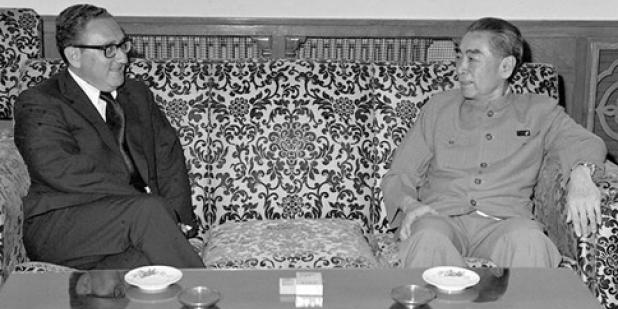
Henry A Kissinger
Assistant to the President for National Security Affairs until November 3, 1975; also Secretary of State from September 21, 1973
https://www.theguardian.com/world/2023/may/20/bilderberg-meeting-group-lisbon-kissinger
https://www.theguardian.com/world/bilderberg
https://history.state.gov/historicaldocuments/frus1969-76ve13/summary
https://china.usc.edu/getting-beijing-henry-kissingers-secret-1971-trip
https://china.usc.edu/catalog/documents/us-china
http://www.archives.gov/press/press-releases/2001/nr01-47.html
https://china.usc.edu/talking-points-july-22-august-3-2011
https://china.usc.edu/getting-beijing-henry-kissingers-secret-1971-trip#meetings
https://china.usc.edu/getting-beijing-henry-kissingers-secret-1971-trip#nixon-announcement
https://china.usc.edu/getting-beijing-henry-kissingers-secret-1971-trip#chinese-accept
https://china.usc.edu/getting-beijing-henry-kissingers-secret-1971-trip#signals
https://china.usc.edu/getting-beijing-henry-kissingers-secret-1971-trip#the_aim
http://www.foreignaffairs.com/articles/23927/richard-m-nixon/asia-after-viet-nam
https://history.state.gov/historicaldocuments/frus1969-76v17/d4
https://history.state.gov/historicaldocuments/frus1969-76v17/d12
https://history.state.gov/historicaldocuments/frus1969-76v17/d13
https://history.state.gov/historicaldocuments/frus1969-76v17/d141
https://2001-2009.state.gov/documents/organization/100324.pdf
https://en.wikipedia.org/wiki/Henry_Kissinger_and_the_Vietnam_War
Lesson in Vietnam from Kissinger to Nixon: “when we made it “our war” we would not let the South Vietnamese fight it; when it again became “their war”, we would not help them fight it.”
(We also had trouble with excesses here: when we made it “our war” we would not let the South Vietnamese fight it; when it again became “their war,” we would not help them fight it. Ironically, we prepared the South Vietnamese for main force warfare after 1954 (anticipating another Korean-type attack), and they faced a political war; they had prepared themselves for political warfare after 1973 only to be faced with a main force invasion 20 years after it had been expected.)
https://history.state.gov/historicaldocuments/frus1969-76v10/d280
Lesson of Vietnam May 12 1975 by Henry A. Kissinger
https://www.fordlibrarymuseum.gov/library/exhibits/vietnam/032400091-002.pdf
https://thebattleofkontum.com/extras/kissinger.html
“Richard M. Nixon and Kissinger on 3 August 1972,” Conversation 760-006, Presidential Recordings Digital Edition [Fatal Politics, ed. Ken Huges] (Charlottesville: University of Virginia Press, 2014-). URL:https://prde.upress.virginia.edu/conversations/4006748
https://player.vimeo.com/video/889937807?h=e44572c8f3&color=e57200&title=0&byline=0&portrait=0
https://player.vimeo.com/video/889937807?h=e44572c8f3&color=e57200&title=0&byline=0&portrait=0
Discover the Truth at:
https://www.theblackvault.com/documentarchive/the-cias-vietnam-document-cd-rom/
The secret life of Henry Kissinger minutes of a 1975 meeting with Lawrence Eagleburger
https://etan.org/news/kissinger/secret.htm
Henry Kissinger and the Truth About Negotiations In Vietnam
https://www.youtube.com/watch?v=Z5fxxKVfX5g
member, National Security Council staff until 1973; Director of the Policy Planning Staff, Department of State from October 1973 until January 1977
https://en.wikipedia.org/wiki/Winston_Lord
https://en.wikipedia.org/wiki/Assistant_Secretary_of_State_for_East_Asian_and_Pacific_Affairs
https://en.wikipedia.org/wiki/List_of_ambassadors_of_the_United_States_to_China
https://en.wikipedia.org/wiki/Council_on_Foreign_Relations
https://en.wikipedia.org/wiki/Director_of_Policy_Planning
https://www.brookings.edu/wp-content/uploads/2016/07/19981208.pdf
https://www.brookings.edu/wp-content/uploads/2016/07/19991104.pdf
https://nsarchive.gwu.edu/document/22669-document-04-winston-lord-director-policy
https://www.ncafp.org/about-us/faps-board-of-advisors/ambassador-winston-lord/
President of the Republic of Vietnam (South Vietnam) until April 21, 1975
PHỎNG VẤN VỚI LỊCH SỬ - TỔNG THỐNG NGUYỄN VĂN THIỆU - Năm 1972
https://www.facebook.com/groups/373876840199844/permalink/1216306329290220/
https://www.facebook.com/groups/373876840199844/
Tổng thống Thiệu trả lời phỏng vấn năm 1972 (Ms.O Fallaci) - Ep.1
https://www.youtube.com/watch?v=67J_48hfPik
Tổng thống Thiệu trả lời phỏng vấn năm 1972 (Ms.O Fallaci) - Ep.2
https://www.youtube.com/watch?v=INAfcRW3Prc
Tổng thống Thiệu trả lời phỏng vấn năm 1972 (Ms.O Fallaci) - Ep.3
https://www.youtube.com/watch?v=P_tOrafUIOY
Phỏng vấn cố Tổng thống VNCH Nguyễn Văn Thiệu full
https://www.youtube.com/watch?v=c_36BXxpEjw
Tổng thống Nguyễn Văn Thiệu đáp trả xuất sắc những gì Kissinger đề cập về Vietnam War | NAMDUONGTV
https://www.youtube.com/watch?v=FrA2OaHueFM&t=1802s
3/29/75 - Evacuation of Vietnamese Refugees
4/3/75 - Phnom Penh Evacuation
4/5/75 - Evacuation of Vietnamese Refugees (1)
4/5/75 - Evacuation of Vietnamese Refugees (2)
4/5/75 - Evacuation of Vietnamese Refugees (3)
4/5/75 - Evacuation of Vietnamese Refugees (4)
4/29/75 - Final Evacuation of Saigon (1)
4/29/75 - Final Evacuation of Saigon (2)
Dau Bach Ho1X Feb 11 1975 Thieu
Tôi Không Chết Đâu | Hồi Ức Miền Nam
https://www.youtube.com/watch?v=fJdQN0DYBvA
Thư Tổng Thống Thiệu Gửi Tổng Thống Gerald Ford
https://bachvietnhan.blogspot.com/2024/03/20240322-cdtl-thu-thieu-gui-gerald-ford.html
https://history.state.gov/historicaldocuments/frus1969-76v10/d166
Cambodia Arms and Ammunition to the Vietnamese Communists
Discover the Truth at:
https://www.theblackvault.com/documentarchive/the-cias-vietnam-document-cd-rom/
https://documents2.theblackvault.com/documents/cia/EOM-2019-00201-highlighted.pdf
Giây Phút Xé Lòng | Hồi Ức Miền Nam | Hồi Ký Miền Nam
https://www.youtube.com/watch?v=5WVwGiPD8Cs&t=2329
The Palace File Paperback – January 1, 1989
by Nguyen Tien Hung (Author), Jerrold L. Schecter (Author)
https://www.amazon.com/Palace-File-Nguyen-Tien-Hung/dp/0060915722
https://www.goodreads.com/en/book/show/2098486
Khi đồng minh tháo chạy
Nguyen Tien Hung
https://www.goodreads.com/book/show/32865811-khi-ng-minh-th-o-ch-y?ref=nav_sb_noss_l_23
Hồ Sơ Mật Dinh Độc Lập Phần 1 / Nguyễn Tiến Hưng/ Diễn Đọc Thiên Hoàng
https://www.youtube.com/watch?v=PDhuGRvfKjw
Hồ Sơ Mật Dinh Độc Lập Phần 2 / Nguyễn Tiến Hưng/ Diễn Đọc Thiên Hoàng
https://www.youtube.com/watch?v=ZceUYCf7rqA
Hồ Sơ Mật Dinh Độc Lập Phần 3 / Nguyễn Tiến Hưng/ Diễn Đọc Thiên Hoàng
https://www.youtube.com/watch?v=G2ET40EOGno
Hồ Sơ Mật Dinh Độc Lập Phần 4 / Nguyễn Tiến Hưng/ Diễn Đọc Thiên Hoàng
https://www.youtube.com/watch?v=FFzsesWm25E
Hồ Sơ Mật Dinh Độc Lập Phần 5 / Nguyễn Tiến Hưng/ Diễn Đọc Thiên Hoàng
https://www.youtube.com/watch?v=m2GMhs4DmBI
Hồ Sơ Mật Dinh Độc Lập Phần 6 / Nguyễn Tiến Hưng/ Diễn Đọc Thiên Hoàng
https://www.youtube.com/watch?v=zMxfY_QGgwo
Hồ Sơ Mật Dinh Độc Lập Phần 7 / Nguyễn Tiến Hưng/ Diễn Đọc Thiên Hoàng
https://www.youtube.com/watch?v=Kvjmvn78kgo
Hồ Sơ Mật Dinh Độc Lập Phần 8 / Nguyễn Tiến Hưng/ Diễn Đọc Thiên Hoàng
https://www.youtube.com/watch?v=sylK7RDtLrc
Hồ Sơ Mật Dinh Độc Lập Phần 9 / Nguyễn Tiến Hưng/ Diễn Đọc Thiên Hoàng
https://www.youtube.com/watch?v=gmF6urvaz0c
Hồ Sơ Mật Dinh Độc Lập Phần 10 / Nguyễn Tiến Hưng/ Diễn Đọc Thiên Hoàng
https://www.youtube.com/watch?v=4Ig4PIzMFZM
Hồ Sơ Mật Dinh Độc Lập Phần 11 / Nguyễn Tiến Hưng/ Diễn Đọc Thiên Hoàng
https://www.youtube.com/watch?v=WUFtNrT9sRo
Hồ Sơ Mật Dinh Độc Lập Phần 12 / Nguyễn Tiến Hưng/ Diễn Đọc Thiên Hoàng
https://www.youtube.com/watch?v=A4KYPScqNMY
Hồ Sơ Mật Dinh Độc Lập Phần 13 / Nguyễn Tiến Hưng/ Diễn Đọc Thiên Hoàng
https://www.youtube.com/watch?v=29lrLqX6vEo
Hồ Sơ Mật Dinh Độc Lập Phần 14 / Nguyễn Tiến Hưng/ Diễn Đọc Thiên Hoàng
https://www.youtube.com/watch?v=j-WAarbW-fo
Hồ Sơ Mật Dinh Độc Lập Phần 15 / Nguyễn Tiến Hưng/ Diễn Đọc Thiên Hoàng
https://www.youtube.com/watch?v=_GAo2fXzGBQ
Hồ Sơ Mật Dinh Độc Lập Phần 16 / Nguyễn Tiến Hưng/ Diễn Đọc Thiên Hoàng
https://www.youtube.com/watch?v=X4Kb37dchNw
Hồ Sơ Mật Dinh Độc Lập Phần 17 / Nguyễn Tiến Hưng/ Diễn Đọc Thiên Hoàng
https://www.youtube.com/watch?v=0DChfJXgR-8
Hồ Sơ Mật Dinh Độc Lập Phần 18 / Nguyễn Tiến Hưng/ Diễn Đọc Thiên Hoàng
https://www.youtube.com/watch?v=wCYj9b4Tw6E
Hồ Sơ Mật Dinh Độc Lập Phần 19 / Nguyễn Tiến Hưng/ Diễn Đọc Thiên Hoàng
https://www.youtube.com/watch?v=Qm45ygXmqzY
Hồ Sơ Mật Dinh Độc Lập Phần 20 / Nguyễn Tiến Hưng/ Diễn Đọc Thiên Hoàng
https://www.youtube.com/watch?v=GvUiF8wVJBg
Hồ Sơ Mật Dinh Độc Lập Phần 21 / Nguyễn Tiến Hưng/ Diễn Đọc Thiên Hoàng
https://www.youtube.com/watch?v=ZIZRlk6m4Eg
Hồ Sơ Mật Dinh Độc Lập Phần 22 / Nguyễn Tiến Hưng/ Diễn Đọc Thiên Hoàng
https://www.youtube.com/watch?v=WNv27DbdcOI
Hồ Sơ Mật Dinh Độc Lập Phần 23 / Nguyễn Tiến Hưng/ Diễn Đọc Thiên Hoàng
https://www.youtube.com/watch?v=-C5qfHEJNu4
Hồ Sơ Mật Dinh Độc Lập Phần 24 / Nguyễn Tiến Hưng/ Diễn Đọc Thiên Hoàng
https://www.youtube.com/watch?v=iyg98DfK31E
Hồ Sơ Mật Dinh Độc Lập Phần 25 / Nguyễn Tiến Hưng/ Diễn Đọc Thiên Hoàng
https://www.youtube.com/watch?v=CxcX0dKgKlA
Hồ Sơ Mật Dinh Độc Lập Phần 26 / Nguyễn Tiến Hưng/ Diễn Đọc Thiên Hoàng
https://www.youtube.com/watch?v=adUtaGlDcho
Hồ Sơ Mật Dinh Độc Lập Phần 27 / Nguyễn Tiến Hưng/ Diễn Đọc Thiên Hoàng
https://www.youtube.com/watch?v=f-1xxI1OWh8
Hồ Sơ Mật Dinh Độc Lập Phần 28 / Nguyễn Tiến Hưng/ Diễn Đọc Thiên Hoàng
https://www.youtube.com/watch?v=PazkNBf3rGA
Hồ Sơ Mật Dinh Độc Lập Phần 29 / Nguyễn Tiến Hưng/ Diễn Đọc Thiên Hoàng
https://www.youtube.com/watch?v=OpIbsM20p14
Hồ Sơ Mật Dinh Độc Lập Phần 30 / Nguyễn Tiến Hưng/ Diễn Đọc Thiên Hoàng
https://www.youtube.com/watch?v=F_ZcLZtx_6M
Hồ Sơ Mật Dinh Độc Lập Phần 31 / Nguyễn Tiến Hưng/ Diễn Đọc Thiên Hoàng
https://www.youtube.com/watch?v=n4u5jqW3nbg
Hồ Sơ Mật Dinh Độc Lập Phần 32 / Nguyễn Tiến Hưng/ Diễn Đọc Thiên Hoàng
https://www.youtube.com/watch?v=PHHx5wQlabw
Hồ Sơ Mật Dinh Độc Lập Phần 33 / Nguyễn Tiến Hưng/ Diễn Đọc Thiên Hoàng
https://www.youtube.com/watch?v=gpKZuQNdJJU
Hồ Sơ Mật Dinh Độc Lập Phần 34 / Nguyễn Tiến Hưng/ Dễn Đọc Thiên Hoàng
https://www.youtube.com/watch?v=oGesHXnpZkw
Hồ Sơ Mật Dinh Độc Lập Phần 35 / Nguyễn Tiến Hưng/ Diễn Đọc Thiên Hoàng
https://www.youtube.com/watch?v=M6ZOXJyjMTk
Hồ Sơ Mật Dinh Độc Lập Phần 36 Cuối Cùng / Nguyễn Tiến Hưng/ Diễn Đọc Thiên Hoàng
https://www.youtube.com/watch?v=IYztC95fn4M
Khi Đồng Minh Nhảy Vào
https://www.amazon.com/-/es/Nguy%E1%BB%85n-Ti%E1%BA%BFn-H%C6%B0ng/dp/1495148629
Khi Đồng Minh Tháo Chạy Hardcover – January 1, 2005
https://www.amazon.com/Khi-%C4%90%E1%BB%93ng-Minh-Th%C3%A1o-Ch%E1%BA%A1y/dp/B00GQIWRA6
https://www.goodreads.com/book/show/32865811-khi-ng-minh-th-o-ch-y
HỒI KÝ: NHỮNG UẤT HẬN TRONG TRẬN CHIẾN MẤT NƯỚC 1975 (Phần 1)
https://www.youtube.com/watch?v=C7YpCRv6MlI&t=487s
HỒI KÝ: NHỮNG UẤT HẬN TRONG TRẬN CHIẾN MẤT NƯỚC 1975 (Phần 2)
https://www.youtube.com/watch?v=vX9-eocj8hQ&t=803s
HỒI KÝ: NHỮNG UẤT HẬN TRONG TRẬN CHIẾN MẤT NƯỚC 1975 (Phần 3)
https://www.youtube.com/watch?v=z6rCp-RnGQ4&t=561s
HỒI KÝ: NHỮNG UẤT HẬN TRONG TRẬN CHIẾN MẤT NƯỚC 1975 (Phần 4)
https://www.youtube.com/watch?v=3Y1YWYjcYUs
HỒI KÝ: NHỮNG UẤT HẬN TRONG TRẬN CHIẾN MẤT NƯỚC 1975 (Phần 5)
https://www.youtube.com/watch?v=cL7LO65oI_k&t=11s
HỒI KÝ: NHỮNG UẤT HẬN TRONG TRẬN CHIẾN MẤT NƯỚC 1975 (Phần 6)
https://www.youtube.com/watch?v=BsYcJCD0cwY
HỒI KÝ: NHỮNG UẤT HẬN TRONG TRẬN CHIẾN MẤT NƯỚC 1975 (Phần 7)
https://www.youtube.com/watch?v=kclMjgFLtUw&t=371s
HỒI KÝ: NHỮNG UẤT HẬN TRONG TRẬN CHIẾN MẤT NƯỚC 1975 (Phần 8)
https://www.youtube.com/watch?v=5bsh7jTMF_o
HỒI KÝ: NHỮNG UẤT HẬN TRONG TRẬN CHIẾN MẤT NƯỚC 1975 (Phần 9)
https://www.youtube.com/watch?v=NzhsA-ZZQ4Q&t=1265s
HỒI KÝ: NHỮNG UẤT HẬN TRONG TRẬN CHIẾN MẤT NƯỚC 1975 (Phần 10)
https://www.youtube.com/watch?v=IKBXiYNQMbc&t=18s
Bỏ Rơi Hay Phản Bội/ Tác Giả Bùi Anh Trinh/ Diễn Đọc Thiên Hoàng
https://www.youtube.com/watch?v=q3Seaq3ymmE
Chuyện Chưa Kể Về TT Thiệu Lúc Rời Khỏi Sài Gòn- (Ông và Nhân Viên Tùy Tùng May Mắn Thoát Chết)
https://www.youtube.com/watch?v=OoFEncck23U
20241102 Nixon Kissinger and the Decent Interval
https://player.vimeo.com/video/889937807?h=e44572c8f3&color=e57200&title=0&byline=0&portrait=0
A Decent Interval
https://www.youtube.com/watch?v=8xPzs3NZdN4
Richard Nixon Addresses The "Decent Interval Theory"
https://www.youtube.com/watch?v=8Q-H0281kfM
Transcript
In the Oval Office on August 3, 1972, Secretary of State Henry Kissinger tells President Richard Nixon that there’s a 50-50 chance of reaching a settlement with North Vietnam.
That deal would give Nixon a “decent interval,” a face-saving delay of a year or two between his final withdrawal of American troops and the Communists’ final takeover of South Vietnam. “We’ve got to find some formula that holds the thing together [for] a year or two, after which — after a year, Mr. President, Vietnam will be a backwater. If we settle it, say, this October, by January ’74 no one will give a damn.”
August 3, 1972
Richard M. Nixon, Henry A. Kissinger
Conversation: 760-006
Having established a framework for an armistice and the departure a American troops from Vietnam, President Nixon and National Security Adviser Henry A. Kissinger discussed the future trajectory of the war. Most importantly, they wanted to secure a “decent interval” between the removal of those troops, Nixon’s reelection in 1972 and the expected fall of Saigon. At this point in the conversation, Kissinger had just told Nixon they had a 50/50 chance of reaching a settlement with North Vietnam.
President Nixon: Now, let’s look at that just a moment again, think about it some more, but… let’s be perfectly… cold-blooded about it. If you look at it from the standpoint of our game… with the Soviets and the Chinese, from the standpoint of running this country… I think we could take, in my view, almost anything, frankly, that we can force on Nguyễn Văn Thiệu. Almost anything. I just come down to that. You know what I mean?
President Nixon: Because I have a feeling we would not be doing, like I feel about the Israel, I feel that in the long run we’re probably not doing them an in – a disfavor due to the fact that I feel that the North Vietnamese are so badly hurt that the South Vietnamese are probably going to do fairly well. [Kissinger attempts to interject.] But also due to the fact-because I look at the tide of history out there-South Vietnam probably is never going to survive anyway. I’m just being perfectly candid. I-
Henry A. Kissinger: In the pull-out area-
President Nixon: [Unclear] we’ve got to be – if we can get certain guarantees so that they aren’t… as you know, looking at the foreign policy process, though, I mean, you’ve got to be-we also have to realize, Henry, that winning an election is terribly important.
It’s terribly important this year. But can we have a viable foreign policy if a year from now or two years from now, North Vietnam gobbles up South Vietnam? That’s the real question.
Kissinger: If a year or two year from now North Vietnam gobbles up South Vietnam, we can have a viable foreign policy if it looks as if it’s the result of South Vietnamese incompetence.
Kissinger: If we now sell out in such a way that, say, within a three-to four-month period, we have pushed President Thieu over the brink-we-ourselves-I think, there is going to be -even the Chinese won’t like that. I mean, they’ll pay verbal-verbally, they’ll like it.
President Nixon: But it’ll worry them.
Kissinger: But it will worry everybody. And domestically in the long run it won’t help us all that much because our opponents will say we should’ve done it three years ago.
President Nixon: I know.
Kissinger: So we’ve got to find formula that holds the thing together a year or two, after which-after a year, Mr. President, Vietnam will be a backwater. If we settle it, this October, by January 74 no one will give a damn.
President Nixon: Yeah, having in mind the fact that, you know, as we all know, the-the analogy-comparison [to] Algeria is not on-I not at all for us. But on the other hand, nobody gives a goddamn about what happened to Algeria-
Kissinger: Mm-hmm.
President Nixon: -after they got out. [chuckling] You know what I mean? But Vietnam, I must say… Jesus, they’ve fought so long, dying, and now… I don’t know.
End of excerpt.
Miller Center
University of Virginia
“Richard M. Nixon and Kissinger on 3 August 1972,” Conversation 760-006, Presidential Recordings Digital Edition [Fatal Politics, ed. Ken Huges] (Charlottesville: University of Virginia Press, 2014-). URL:https://prde.upress.virginia.edu/conversations/4006748
https://player.vimeo.com/video/889937807?h=e44572c8f3&color=e57200&title=0&byline=0&portrait=0
https://player.vimeo.com/video/889937807?h=e44572c8f3&color=e57200&title=0&byline=0&portrait=0
Discover the Truth at:
https://www.theblackvault.com/documentarchive/the-cias-vietnam-document-cd-rom/
PHỎNG VẤN ÔNG THIỆU: Về vấn đề Cộng Sản sau hiệp định Paris (phụ đề Pháp Việt)
https://www.youtube.com/watch?v=qUCl1EwGBuo
Oriana Fallaci on Interviewing South Vietnamese President Nguyễn Văn Thiệu | The Dick Cavett Show
https://www.youtube.com/watch?v=rmgtOX1Gkfs
SYND 26-1-73 PRESIDENT THIEU PRESS CONFERENCE ON PEACE AGREEMENT
https://www.youtube.com/watch?v=uSeKp8CEHMo
SYND 04-04-73 PRESIDENT NIXON MEETS SOUTH VIETNAMESE PRESIDENT THEU IN SAN CLEMENTE, CALIFORNIA
https://www.youtube.com/watch?v=fYUQw3q3eXE
EP 1 | Tổng thống Thiệu và cuộc phỏng vấn tàn bạo với nhà báo Ý năm 1972
https://www.youtube.com/watch?v=l0aBx_TG2zg
Tổng thống Thiệu trả lời phỏng vấn năm 1972 (Ms.O Fallaci) - Ep.2
https://www.youtube.com/watch?v=INAfcRW3Prc&t=10s
Tổng thống Thiệu trả lời phỏng vấn năm 1972 (Ms.O Fallaci) - Ep.3
https://www.youtube.com/watch?v=P_tOrafUIOY
Trung tướng Nguyễn văn Thiệu tuyên bố hiến pháp Đệ Nhị Việt Nam Cộng Hoà 1967
https://www.youtube.com/watch?v=AwLHVNeQFCw
“NÁO LOẠN” HỘI TRƯỜNG: Phỏng vấn tổng thống Thiệu năm 1990
https://www.youtube.com/watch?v=OVQCSkHOMLU
CỰU TỔNG THỐNG VIỆT NAM CỘNG HÒA NGUYỄN VĂN THIỆU TRẢ LỜI PHỎNG VẤN BÁO CHÍ NGƯỜI VIỆT HẢI NGOẠI
https://www.youtube.com/watch?v=VLKKzrIqj54
Phỏng vấn Tổng Thống VNCH Nguyễn Văn Thiệu - TTMD - V1
https://www.youtube.com/watch?v=HUQbqzkmqMk
SYND 1-11-72 THIEU SPEAKS ON VIETNAM PEACE
https://www.youtube.com/watch?v=tM643Wx6IyY
Tổng thống Nguyễn Văn Thiệu trả lời phỏng vấn năm 1970
https://www.youtube.com/watch?v=LAoWc0zpuuc
Phỏng vấn Cựu Tổng thống Nguyễn Văn Thiệu ngày 03 tháng 05 năm 1993
https://www.youtube.com/watch?v=-fmSh6ihTcw&t=1305s
Dau Bach Ho1X Feb 11 1975 Thieu
Tôi Không Chết Đâu | Hồi Ức Miền Nam
https://www.youtube.com/watch?v=fJdQN0DYBvA
Chairman of the Atomic Energy Commission until February 1973; Director of Central Intelligence from February 2 until July 2, 1973; Secretary of Defense from July 2, 1973, until November 19, 1975
https://en.wikipedia.org/wiki/James_R._Schlesinger
https://en.wikipedia.org/wiki/James_R._Schlesinger
https://en.wikipedia.org/wiki/United_States_Secretary_of_Energy
https://en.wikipedia.org/wiki/United_States_Secretary_of_Defense
https://en.wikipedia.org/wiki/Director_of_Central_Intelligence
https://en.wikipedia.org/wiki/United_States_Atomic_Energy_Commission
https://history.defense.gov/Multimedia/Biographies/Article-View/Article/571289/james-r-schlesinger/
https://apnews.com/obituaries-ecc8779791ee4ab7973cf58b7d355305
https://www.encyclopedia.com/people/history/us-history-biographies/james-rodney-schlesinger
Sihanouk, Prince Norodom,
Norodom Sihanouk,
King of Cambodia to March 1955, thereafter Prince of Cambodia; Prime Minister and Foreign Minister, October 1955–January 1956; Prime Minister, Foreign Minister, and Minister of the Interior, March–April 1956; Prime Minister, September–October 1956; Prime Minister, Foreign Minister, Minister of Plans, and Minister of the Interior, April–July 1957
Cambodian Head of State until March 1970; thereafter, leader of Cambodian Government in exile in Beijing
Prince, Head of State of Cambodia until March 18, 1970; thereafter, leader of the Cambodian government-in-exile in Beijing (GRUNK)
4/11/75 - Phnom Penh Evacuation
Sisco, Joseph J.,
Assistant Secretary of State for Near Eastern and South Asian Affairs until February 18, 1974; Under Secretary of State for Political Affairs from February 19, 1974
https://en.wikipedia.org/wiki/Joseph_J._Sisco
https://history.state.gov/departmenthistory/people/sisco-joseph-john
https://www.state.gov/biographies-list/
https://www.state.gov/resources-bureau-of-global-talent-management/#ambassadors
Agreement on Ending the War and Restoring Peace in Vietnam Paris 27 January 1973
Paris Peace Accords
https://en.wikipedia.org/wiki/Paris_Peace_Accords
Peace Negotiations and the Paris Agreement
https://edmoise.sites.clemson.edu/paris.html
Text of Declaration by Paris Conference on Vietnam
https://www.nytimes.com/1973/03/03/archives/text-of-declaration-by-paris-conference-on-vietnam.html
Vietnam War Bibliography Translation Series
https://edmoise.sites.clemson.edu/trans.html#fbis
1954 1955 Vietnam Operation Passage to Freedom
Agreement on Ending the War and Restoring Peace in Vietnam Paris 27 January 1973
20120414 Hải Chiến Hoàng Sa
https://bachvietnhan.blogspot.com/2012/04/20120414-hai-chien-hoang-sa.html
Điều chưa kể sau cuộc hải chiến Hoàng Sa 1974
https://saigonnhonews.com/thoi-su/thay-gi-tren-mang/dieu-chua-ke-sau-cuoc-hai-chien-hoang-sa-1974/
Chuyện Hoàng Sa 45 Năm Trước Chưa Phổ Biến Trên Báo Chí Qua Lời Kể Của Thiếu Tá Phạm Văn Hồng/ Phan Công Phan
https://www.youtube.com/watch?v=MY7umIVxxvY
Anouncements
20241214 CDTL South Vietnam Not Bound by Geneva Accords 1954
https://bachvietnhan.blogspot.com/2024/12/20241214-cdtl-south-vietnam-not-bound.html
20241110 CDTL Tuyên Cáo Lãnh Thổ Lãnh Hải VN
https://bachvietnhan.blogspot.com/2024/11/20241110-cdtl-tuyen-cao-lanh-tho-lanh.html
20190910 Petition of the citizens of the Republic of Vietnam
https://bachvietnhan.blogspot.com/2019/09/20190910-petition-of-citizens-of.html
20250130 Cộng Sản Giặc Hồ Đầu Hàng Hoa Kỳ Năm 1973
https://bachvietnhan.blogspot.com/2024/12/20241231-ap-ba-chuc-dau-moi-mot-tham-hoa.html
http://www.youtube.com/watch?v=hwvXyzo7MjM
http://vietnamsaigon.multiply.com/jou
Agreement on Ending the War and Restoring Peace in Vietnam Paris 27 January 1973
Tiểu Đoàn 92 BĐQ Trung Tá Lê Văn Ngôn Với Huyền Thoại Tử Thủ 510 Ngày
https://www.youtube.com/watch?v=iq-IHTqo4es&t=2908s
20251008 Lê Văn Ngôn Hùng Khí Trời Nam
https://bachvietnhan.blogspot.com/2024/04/20240413-cdtl-hung-khi-troi-nam.html
20230322 Cong Dong Tham Luan Tonle Tchombe
https://bachvietnhan.blogspot.com/2023/03/20230322-cong-dong-tham-luan-tong-le.html
20170722 Lê Văn Ngôn với Tống Lệ Chân
https://bachvietnhan.blogspot.com/2017/07/20170722-le-van-ngon-voi-tong-le-chan.html
Phi Vụ Cảm Tử Cho Tiền Đồn Tống Lê Chân


No comments:
Post a Comment