20260401 CDTL DDE D547 18 May 1954 Biên bản ghi nhớ cuộc hội đàm
https://history.state.gov/historicaldocuments/frus1952-54v16/d547
Google Translated
Tài liệu 547
Quan hệ Đối ngoại của Hoa Kỳ, 1952–1954, Hội nghị Genève, Tập XVI
751G.00/5–1854
Biên bản ghi nhớ cuộc hội đàm
Tối mật
[Genève,] ngày 18 tháng 5 năm 1954.
Thành phần tham dự:
Ngô Đình Luyện, Đại diện Cá nhân của Bảo Đại
Thứ trưởng Philip W. Bonsal
Chủ đề:
Các quan điểm được cho là của Bảo Đại về Tình hình Quân sự và Chính trị hiện tại tại Việt Nam.
Ông Ngô Đình Luyện đã đến gặp theo yêu cầu của chính ông, với tư cách là đại diện cá nhân của Bảo Đại tại Geneva. Ông đã chuyển một bức thư từ Hoàng thượng gửi tới Thứ trưởng, đồng thời xuất trình giấy ủy nhiệm của mình.
Ông Ngô Đình Luyện đã trình bày những quan điểm sau đây, được cho là quan điểm của Bảo Đại:
1) Khoảng sáu năm về trước, khi Bảo Đại trở về Việt Nam cùng với người Pháp, ông làm vậy không phải vì giải pháp chính trị được thông qua vào thời điểm đó có vẻ là lý tưởng đối với ông, mà là vì ông muốn tránh một tình thế trong đó cuộc chiến tại Việt Nam sẽ đơn thuần chỉ là cuộc đối đầu giữa chủ nghĩa thực dân ở một bên và chủ nghĩa Cộng sản ở bên kia. Bảo Đại mong muốn tạo dựng một chỗ đứng cho chủ nghĩa dân tộc Việt Nam chân chính trong cuộc đấu tranh này, và đảm bảo rằng lợi ích quốc gia của Việt Nam rốt cuộc sẽ chiến thắng, vượt lên trên lợi ích của cả phe Cộng sản lẫn phe thực dân.
2) Trong suốt quá trình cầm quyền, Bảo Đại luôn bị người Pháp cản trở, khiến ông không thể thực thi những chính sách thực sự mang tính dân tộc – vốn có thể giúp quy tụ lòng dân ủng hộ chính phủ và quân đội của ông. Theo lời Ngô Đình Luyện, ngay cả những hiệp ước gần đây nhất được ký kết với phía Pháp cũng chỉ bị Bảo Đại coi là những "tờ giấy lộn" đơn thuần; trên thực tế, chúng hoàn toàn có thể bị vô hiệu hóa bởi chính những hành động và sự ràng buộc do người Pháp áp đặt. Chính vì lẽ đó, đại đa số người dân Việt Nam đều tin rằng Việt Minh mới là lực lượng đại diện cho "chính nghĩa".
3) Về phương diện quân sự, trong một thời gian dài, phía Pháp đã từ chối thành lập một Quân đội Quốc gia Việt Nam; và ngay cả khi đã thành lập, họ cũng không trang bị cho quân đội này những khí tài cần thiết như pháo binh, lực lượng thiết giáp hay không quân để nó có thể vận hành như một lực lượng tự chủ. Vào thời điểm hiện tại, Quân đội Quốc gia Việt Nam chỉ đơn thuần là một nguồn bổ sung bộ binh hạng nhẹ [Trang 844] —những đơn vị được tung vào trận chiến theo yêu cầu của Bộ Chỉ huy Pháp, và thường thì bị tiêu diệt trước khi kịp đạt được bất kỳ năng lực chiến đấu thực thụ nào. Hệ quả là tinh thần chiến đấu của quân đội Việt Nam hiện rất thấp, hoàn toàn trái ngược với tinh thần vô cùng cao của lực lượng vũ trang Việt Minh.
4) Bảo Đại thừa nhận rằng sự hiện diện của quân đội Pháp là thiết yếu tại Việt Nam trong bối cảnh hiện nay. Tuy nhiên, ông tin rằng chính sự hiện diện đó lại cản trở sự phát triển của tinh thần dân tộc—yếu tố duy nhất có thể thực sự tiếp thêm sinh lực cho Quân đội Quốc gia Việt Nam. Ông cho rằng việc tăng cường thêm quân số Pháp—dù có thể là cần thiết để ứng phó với các tình huống quân sự khẩn cấp trước mắt—sẽ càng làm suy giảm tinh thần chiến đấu của người dân Việt Nam, và do đó càng làm giảm sút hiệu quả tác chiến của Quân đội Quốc gia Việt Nam.
Sau khi trình bày khá chi tiết các yếu tố được cho là ảnh hưởng đến tình hình, Ngô Đình Liễu tuyên bố rằng Đức Vua đang nghiêm túc cân nhắc việc áp dụng một chương trình chính trị mới, chương trình này sẽ tập hợp được các phần tử yêu nước chân chính ở Việt Nam. Bảo Đại hoàn toàn nhận thức được sự cần thiết phải đảm bảo sự hỗ trợ liên tục từ Pháp. Ông cũng nhận ra rằng thái độ của Mỹ và Anh đối với Pháp phải hết sức thận trọng và chúng ta không muốn gây bất kỳ áp lực thực sự nào lên Pháp. Do đó, Bảo Đại tự hỏi liệu ông có thể trông cậy vào sự ủng hộ của chúng ta đối với bất kỳ sáng kiến chính trị cấp tiến nào mà ông có thể tự mình thực hiện và có thể tập hợp được người dân ủng hộ mình, mặc dù điều đó có thể phần nào làm mất lòng Pháp. (Rõ ràng là, ở mức độ mà Ngô Đình Liễu phản ánh quan điểm của Bảo Đại, thì Bảo Đại đang cố gắng tìm hiểu xem liệu Mỹ có sẵn sàng thay thế Pháp ở Đông Dương đến mức có thể giải phóng Bảo Đại khỏi sự cần thiết phải tính đến quan điểm của Pháp về các yêu cầu quân sự và chính trị của tình hình ở Việt Nam hay không.)
Tướng Smith đã nhận định ngắn gọn rằng, theo quan điểm của ông, giới lãnh đạo cấp cao của Pháp thực sự chân thành đối với nền độc lập của Việt Nam. Vị Tướng thừa nhận rằng có thể một số quan chức cấp dưới—đặc biệt là tại Đông Dương—vẫn còn nuôi dưỡng những ảo tưởng dựa trên hy vọng quay trở lại một quá khứ đã lùi vào dĩ vãng. Tuy nhiên, ông cho rằng người Việt Nam hoàn toàn có thể đặt niềm tin vào ông Laniel và ông Bidault; đồng thời nói thêm rằng chúng ta cần làm mọi cách có thể để củng cố vị thế của những nhà lãnh đạo chính trị Pháp đầy dũng cảm này. Ông khuyên Bảo Đại nên tạm hoãn việc đưa ra phán xét về tầm quan trọng của các hiệp ước mới.
Liên quan đến quân đội Việt Nam, Tướng Smith đồng tình với phần lớn những điều ông Ngô Đình Luyện đã trình bày. Ông thừa nhận rằng phía Pháp ban đầu đã trì hoãn quyết định mang tính nền tảng về việc thành lập một quân đội quốc gia, và sau đó lại không thực thi quyết định đó một cách quyết liệt và nhanh chóng như mong đợi. Ông cho biết ảnh hưởng của Hoa Kỳ đã liên tục được vận dụng nhằm thúc đẩy việc xây dựng một quân đội quốc gia Việt Nam thực sự tự chủ. [Trang 845]
Ông đã chia sẻ về những kinh nghiệm mà chúng tôi có được tại Triều Tiên. Ông nói rằng, lẽ dĩ nhiên, về mặt lý tưởng thì cần tới mười bảy tháng để có thể đào tạo nên những binh sĩ đủ năng lực chiến đấu, và sẽ cần thêm nhiều thời gian hơn nữa để xây dựng đội ngũ cán bộ chỉ huy cần thiết ở mọi cấp độ. Tướng Smith nói với ông Ngô Đình Luyện rằng ông tin thái độ của phía Pháp đối với việc Hoa Kỳ tham gia huấn luyện binh sĩ Việt Nam hiện đang có những chuyển biến tích cực.
Tướng Smith kết luận bằng việc bày tỏ rằng ông đã lắng nghe một cách chăm chú phần trình bày của ông Ngô Đình Luyện, và rằng nếu sau này ông có bất kỳ đề nghị hay nhận xét cụ thể nào muốn gửi tới Đức Vua, ông sẽ thu xếp để thực hiện việc đó.
Ông Ngô Đình Luyện cho ông Bonsal biết rằng Bảo Đại đang cân nhắc việc sớm bãi nhiệm ông Bửu Lộc khỏi chức vụ Thủ tướng. Ông đã tạo ấn tượng mạnh mẽ rằng, nếu thực sự được tự do lựa chọn, Bảo Đại sẽ ngay lập tức mời ông Ngô Đình Diệm lên nắm quyền. Tuy nhiên, ông cũng ngụ ý rằng phía Pháp sẽ phản đối việc bổ nhiệm người anh trai của ông, do chính sách độc lập vốn đã rất nổi tiếng của ông Ngô Đình Diệm; và rằng Bảo Đại tin rằng sự phản đối này—trong bối cảnh hiện tại—sẽ mang tính quyết định.
Ông Ngô Đình Luyện đã nhân cơ hội này để bày tỏ rằng nhiều thành viên trong Nội các Bảo Đại là những người do phía Pháp áp đặt lên Đức Vua, và họ không phải là những nhân vật mà Đức Vua có thể đặt trọn niềm tin. Do đó, chẳng hạn, Đức Vua cảm thấy mình không thể trao đổi với Tướng Smith thông qua các thành viên trong chính phủ của mình, mà buộc phải tìm kiếm một đại diện cá nhân, không chính thức—chẳng hạn như ông Ngô Đình Luyện.
Sau đó, ông Ngô Đình Luyện đã trình bày với ông Bonsal một ý tưởng khác mà Đức Vua đang cân nhắc. Đó là việc trung lập hóa Việt Nam, với sự bảo đảm từ các cường quốc tham dự Hội nghị Geneva. Theo đó, phương án này dường như sẽ đòi hỏi một sự đoạn tuyệt hoàn toàn với Liên hiệp Pháp.
Ông Ngô Đình Luyện đã đưa ra một nhận định có phần gây ngạc nhiên, cho rằng một trong những phương thức mà người Pháp dùng để kiểm soát sự đi lại của Bảo Đại là hạn chế việc ông chuyển đổi tiền piastre sang ngoại tệ. Ông Ngô Đình Luyện cho biết Bảo Đại hầu như không đủ khả năng chi trả cho việc lưu trú tại các khách sạn, và buộc phải dành phần lớn thời gian tại tư dinh riêng của mình ở Cannes—nơi hiện ông đã chuyển đến. Mặt khác, ông cũng cho hay ông Bửu Lộc gần đây đã được cấp phép chuyển đổi mười triệu franc để chi trả cho các khoản phí đi lại.
Ông Bonsal đã nỗ lực nhấn mạnh với ông Ngô Đình Luyện rằng, trong tình thế khẩn cấp hiện nay, hướng hành động đúng đắn không phải là việc đổ lỗi lẫn nhau dẫn đến sự phá hủy các nguồn lực hiện có, mà thay vào đó phải là sự chung tay hành động nhằm vượt qua cuộc khủng hoảng trước mắt một cách thành công. Nếu không làm được điều đó, sẽ chẳng còn gì để cứu vãn nữa. Ông Bonsal bày tỏ hy vọng rằng các thành phần vốn đứng ngoài cuộc sẽ tập hợp lại để ủng hộ chính phủ. (Ông Ngô Đình Luyện [Trang 846] đã xa quê hương được năm năm, còn người anh trai của ông — ông Ngô Đình Diệm — thì đã xa quê khoảng ba năm.)
(Phân tích trên, mà Đại sứ Heath và ông Bonsal đều đồng ý, cho rằng Ngô, dù có lẽ đúng như những gì ông ta tự thể hiện, có thể đã phóng đại quan điểm của Bảo Đại về tình hình. Mặt khác, Bảo Đại có lẽ đang tìm cách dung hòa mọi yếu tố mạnh mẽ có thể. Ông ta chắc chắn đang có một cuộc ve vãn chính trị với Ngô Đình Diệm, người có một lượng ủng hộ nhất định, đặc biệt là trong giới Công giáo Việt Nam. Ông ta có thể sẽ sử dụng "lá bài Ngô Đình Diệm" nếu chắc chắn chúng ta sẽ ủng hộ ông ta; nếu không thì không. Ngô Đình Diệm là một người có tầm nhìn, theo chủ nghĩa lý tưởng, có uy tín cao về tính chính trực và lòng yêu nước. Ông ta có thể từ chối nhậm chức trừ khi với những điều kiện làm mất đi phần lớn sự ủng hộ của Pháp và tạo điều kiện thuận lợi cho những người Pháp đang tìm kiếm một lối thoát có vẻ danh dự khỏi Đông Dương. Mặt khác, ông ta sẽ củng cố chính phủ Việt Nam trong mắt người dân địa phương nếu nhậm chức. Khuyến nghị nên thiết lập liên lạc trực tiếp với Ngô Đình Diệm - hiện ông ta đang ở Paris.)
1. Tên của cán bộ soạn thảo không được ghi rõ; nhiều khả năng người đó là ông Bonsal. Bản tóm tắt cuộc hội thoại này đã được gửi tới Bộ Ngoại giao thông qua điện tín Secto 261, ngày 20 tháng 5. Bức điện tín có chứa nhận định sau: “Ông Heath và ông Bonsal cho rằng ông Luyến có thể đang phóng đại quan điểm của Bảo Đại, nhưng bản thân Bảo Đại quả thực có thể đang cân nhắc lựa chọn Ngô Đình Diệm nếu nhận được sự bảo đảm về sự ủng hộ từ phía Hoa Kỳ. Chúng tôi kiến nghị phái bộ tại Paris hãy tiếp xúc một cách kín đáo với ông Diệm—người hiện đang cư trú… [tại Paris]—nhằm tìm hiểu quan điểm của ông cũng như mức độ tiến triển trong quá trình hòa giải giữa Bảo Đại và ông Diệm. “Về tuyên bố của ông Luyến cho rằng nhiều thành viên trong Chính phủ của Bảo Đại đã bị phía Pháp áp đặt lên ông, ông Heath tỏ ra hoài nghi liệu Bảo Đại có thực sự nói điều đó hay không; ông cũng nhận định rằng ngay cả khi Bảo Đại có nói như vậy, thì điều đó cũng không đúng sự thật. Tuy nhiên, nếu Bảo Đại thực sự đang cân nhắc việc giải tán chính phủ hiện tại, thì tuyên bố này có thể chỉ là một cái cớ được đưa ra nhằm biện minh cho hành động đó trước dư luận Việt Nam.” (396.1 GE/5–2054)↩
2. Để xem toàn văn, xin tham khảo điện tín Secto 265, ngày 20 tháng 5, trang 863.↩
List of Abbreviations and Symbols
https://history.state.gov/historicaldocuments/frus1952-54v16/terms
https://history.state.gov/historicaldocuments/frus1952-54v16/persons
The Geneva Conference on Indochina May 8–July 21, 1954
https://history.state.gov/historicaldocuments/frus1952-54v16/comp2
https://history.state.gov/historicaldocuments/frus1952-54v16/ch7
May 18, 1954 (Documents 544–548)
https://history.state.gov/historicaldocuments/frus1952-54v16/ch7subch11
1. Document 547
Foreign Relations of the United States, 1952–1954, The Geneva Conference, Volume XVI
751G.00/5–1854
Memorandum of Conversation1
top secret
[Geneva,] May 18, 1954.
Participants:
- Ngo Dinh Luyen, Bao Dai’s Personal Representative
- The Under Secretary
- Philip W. Bonsal
Subject:
- Alleged views of Bao Dai on Current Military and Political Situation in Vietnam
Mr. Ngo Dinh Luyen called at his request in his capacity as Bao Dai’s personal representative in Geneva. He delivered a letter2 from His Majesty to the Under Secretary and also showed his credentials.
Mr. Ngo Dinh Luyen set forth the following views alleged to be those of Bao Dai:
1)
Some six years ago when Bao Dai returned to Viet-Nam with the French, he did so, not because the political solution then adopted seemed to him ideal, but because he wished to avoid a situation in which the fight in Viet-Nam would be purely one between colonialism on the one hand and Communism on the other. Bao Dai wished to make a place in the struggle for true Vietnamese Nationalism and to insure that Vietnamese national interests would win out in the end over those of both the Communists and the colonialists.
2)
Bao Dai has been thwarted throughout by the French, and has been unable to follow truly national policies which would rally the people behind his government and army. According to Ngo Dinh Luyen, even the most recent treaties signed with the French are regarded by Bao Dai as merely further “pieces of paper” which can in practice be nullified by French actions and restrictions. As a result, the mass of the people in Viet-Nam consider that the Vietminh represent the “good cause”.
3)
On the military side, the French for a long time refused to create a Vietnamese National Army and when they did so, they did not provide this army with the necessary artillery, armored elements or aviation so that it could function as an autonomous force. The Vietnamese national army at the present time is merely a source of light [Page 844] infantry reinforcements which are fed into the battle as required by the French Command and are more often than not destroyed before they achieve any real combatworthiness. As a result Vietnamese military morale is low in contrast to the very high morale of the Vietminh armed forces.
4)
Bao Dai recognizes that the presence of the French army is essential in Viet-Nam under present circumstances. Nevertheless, he believes that the presence of that army prevents the development of the national spirit which alone can truly vitalize the Vietnamese National Army. He believes that further French reinforcements, necessary as they may be to meet an immediate military emergency, will further destroy the military morale of the Vietnamese people and therefore further diminish the efficiency of the Vietnamese National Army.
After having set forth the above alleged factors in the situation at some length, Ngo Dinh Luyen stated that His Majesty was thinking seriously of adopting a new political program which would in effect rally behind him the true nationalist elements in Viet-Nam. Bao Dai is fully conscious of the need of insuring continued French support. He also realizes that the attitude of the US and of the UK toward the French must be a most prudent one and that we would not wish to bring any real pressure to bear on the French. Bao Dai wonders therefore whether he could count on our support for any radical political initiative which he might himself take and which would rally his people behind him although it might to some extent alienate the French. (It seems quite evident that to the extent that Ngo Dinh Luyen reflects Bao Dai’s views, the latter is trying to find out whether the US is disposed to replace France in Indochina to an extent which would virtually free Bao Dai from the need for taking into account French views about the military and political requirements of the situation in Viet-Nam.)
General Smith commented briefly that in his opinion the French at the highest levels were sincere with regard to the independence of Viet-Nam. The General recognized that possibly some lower level officials, particularly in Indochina, might still harbor illusions based on a possible return to a vanished past. But he said he thought that the Vietnamese might well have confidence in Laniel and Bidault, adding that we should do everything possible to strengthen the hand of these courageous French political leaders. He advised that Bao Dai reserve his judgment as to the significance of the new treaties.
With regard to the Vietnamese army, General Smith agreed with much that Ngo Dinh Luyen had said. He recognized that the French had first delayed the fundamental decision to have a national army and had then failed to carry out that decision as energetically and rapidly as was desirable. He said that US influence had been constantly exerted in favor of the creation of a truly autonomous Vietnamese national [Page 845] army. He described our experience in Korea. He said that, of course, seventeen months are ideally required before combatworthy troops can be created and that more time is needed to create the necessary cadres at all levels. General Smith told Ngo Dinh Luyen that he believed the French attitude regarding participation in the training of Vietnamese troops by the US was being currently modified.
General Smith concluded by saying that he had listened with attention to Mr. Ngo Dinh Luyen’s exposition and that if later he had any specific suggestions of comments to make for transmittal to His Majesty, he would arrange to do so.
Ngo Dinh Luyen indicated to Mr. Bonsal that Bao Dai is contemplating the early dismissal of Buu Loc as Prime Minister. He gave the strong impression that, if Bao Dai were in fact free to choose, he would now call Ngo Dinh Diem to power. He intimated, however, that the French would oppose his brother’s nomination because of Ngo Dinh Diem’s well known independent policy and that Bao Dai believed this opposition would, under present circumstances be decisive.
Ngo Dinh Luyen took occasion to say that many members of the Bao Dai Cabinet have been imposed upon His Majesty by the French and are not persons in which His Majesty can have confidence. Thus, for example, Bao Dai does not feel able to communicate with General Smith through members of his government but is obliged to seek a personal, unofficial representative such as Ngo Dinh Luyen.
Ngo Dinh Luyen later set forth for Mr. Bonsal’s benefit another idea with which His Majesty is toying. It is the neutralization of VietNam with guarantees by the powers participating at the Geneva Conference. This would apparently involve a complete break with the French Union.
Mr. Ngo Dinh Luyen made the somewhat startling statement that one of the ways in which the French control Bao Dai’s movements is by limiting his transfers of piastres into foreign exchange. Ngo Dinh Luyen said that Bao Dai could hardly afford to stay at hotels and was obliged to spend much time at his own villa at Cannes, where he has now gone. On the other hand, he stated that Buu Loc had recently been authorized to transfer ten million francs for travel expenses.
Mr. Bonsal endeavored to stress to Ngo Dinh Luyen that, in the present emergency, the proper course of action was not one of recrimination and consequent destruction of existing assets but rather one of united action in order to surmount the immediate crisis successfully. Unless that were done there would be nothing left to save. Mr. Bonsal stressed the hope that the elements which had remained apart from the situation would rally to the support of the government. (Ngo Dinh Luyen [Page 846] has been away from his country for five years and his brother, Ngo Dinh Diem for about three.)
(The analysis of the above in which Ambassador Heath and Mr. Bonsal concur is that Ngo, while he is probably what he represents himself to be, has perhaps overstated Bao Dai’s views on the situation. On the other hand, Bao Dai is probably seeking to reconcile to himself every possible element of strength. He is undoubtedly carrying on a political flirtation with Ngo Dinh Diem who does have a certain amount of support particularly in Vietnamese Catholic circles. He might well play the Ngo Dinh Diem card if he could be sure we would support him; otherwise not. Ngo Dinh Diem is a visionary, doctrinaire individual with a high reputation for integrity and patriotism. He might well refuse to take office except on terms which would alienate much French support and facilitate the task of those Frenchmen seeking an apparently honorable exit from the Indochina scene. On the other hand he would strengthen the Vietnamese government in local eyes if he were to take office. It is recommended that direct contact with Ngo Dinh Diem be established—he is now in Paris.)
1. Name of drafting officer not indicated; presumably it was Bonsal.
Summary of this conversation transmitted to the Department of State in telegram Secto 261, May 20. The telegram contained the following comment: “Heath and Bonsal believe Luyen may be overstating Bao Dai’s views, but that latter may indeed be considering Ngo Dinh Diem if assured US support. Recommend Paris contact Diem discreetly, now residing … [in Paris], in effort develop his views and degree to which Bao Dai–Diem reconciliation has progressed.
“As regards Luyen’s claim that many members of Bao Dai’s Government were imposed on him by the French, Heath doubts that Bao Dai said it and remarks that if he did say it, it is not true. If, however, Bao Dai considering getting rid of this government, this claim might be an excuse for such action to present to Vietnamese public opinion.” (396.1 GE/5–2054)
2. For text, see telegram Secto 265, May 20, p. 863.↩
https://history.state.gov/historicaldocuments/frus1952-54v16/d547
https://history.state.gov/historicaldocuments/frus1952-54v16/pg_844
https://history.state.gov/historicaldocuments/frus1952-54v16/pg_845
https://history.state.gov/historicaldocuments/frus1952-54v16/pg_846
https://history.state.gov/historicaldocuments/frus1952-54v16/pg_863
Thân thế (các) nhân vật
Chief of State of Vietnam.
French Minister for Foreign Affairs until June 18, 1954; Head of the French Delegation at the Geneva Conference until June 18, 1954.
https://en.wikipedia.org/wiki/Georges_Bidault
https://history.state.gov/historicaldocuments/frus1952-54v16/d338
https://www.britannica.com/biography/Georges-Bidault
https://history.state.gov/historicaldocuments/frus1952-54v16/d398
https://www.wilsoncenter.org/sites/default/files/media/documents/publication/CWIHPBulletin16_p1.pdf
https://spartacus-educational.com/2WWbidault.htm
https://apps.dtic.mil/sti/tr/pdf/ADA007286.pdf
https://avalon.law.yale.edu/20th_century/inch020.asp
Bonsal, Philip W.,
Counselor of Embassy in France to March 1952; Director of the Office of Philippine and Southeast Asian Affairs, Department of State, from August 1952.
https://history.state.gov/historicaldocuments/frus1952-54v13p1/d48
https://history.state.gov/historicaldocuments/frus1952-54v13p2/persons
https://afsa.org/sites/default/files/fsj-1954-03-march_0.pdf
https://history.state.gov/historicaldocuments/frus1952-54v13p1/d223
https://www.jaas.gr.jp/jjas/pdf/1981/No.01-119.pdf
Buu Loc, (Bảo Đại)
Prince, Prime Minister of the State of Vietnam until June 16, 1954.
Ambassador (Minister to June 1952) at Saigon accredited to Vietnam, Laos, and Cambodia. Appointments terminated October (Cambodia) and November (Vietnam, Laos) 1954.
https://en.wikipedia.org/wiki/Donald_R._Heath
https://history.state.gov/departmenthistory/people/heath-donald-read
https://oac.cdlib.org/findaid/ark:/13030/c81260v0/
Prime Minister of France until June 18, 1954.
https://en.wikipedia.org/wiki/Joseph_Laniel
https://historica.fandom.com/wiki/Joseph_Laniel
https://history.state.gov/historicaldocuments/frus1952-54v05p1/d506
https://trove.nla.gov.au/newspaper/article/2885079
https://www.youtube.com/watch?v=vb77lbACA8g
https://history.state.gov/historicaldocuments/frus1952-54v16/d371
Ngo Dinh Diem,
President of the Council of Ministers of the State of Vietnam to October 1955; thereafter President and Chief of State of the Republic of Vietnam
https://en.wikipedia.org/wiki/Ngo_Dinh_Diem
https://millercenter.org/the-presidency/educational-resources/diem-coup
https://www.jfklibrary.org/search?f[0]=subject:Vietnam%20War,%201961-1975
The Diem Coup audio
https://soundcloud.com/the-miller-center-at-uva/sets/the-diem-coup
February 1, 1966: President Johnson remembers Diem coup (admitted) to Eugene McCarthy
https://soundcloud.com/the-miller-center-at-uva/february-1-1966-president
November 4, 1963: President Kennedy on the Diem coup
https://soundcloud.com/the-miller-center-at-uva/november-4-1963-president-kennedy-on-the-diem-coup
NHỚ LẠI NHỮNG NGÀY Ở CẠNH TỔNG THỐNG NGÔ ĐÌNH DIỆM (Full) - Tài Nguyễn Diễn Đọc
https://www.youtube.com/watch?v=sWTTgB7oE6U&t=6927
Một phụ nữ miền Bắc viết về cố TT Ngô Đình Diệm.
https://www.youtube.com/watch?v=UMEkUQRp01o
"The Death of Diem and Nhu"
https://www.youtube.com/watch?v=U8O1HOTXS8A
"The Coup in Saigon"
https://www.youtube.com/watch?v=k4IaJYiNanc
"Everybody'll Say We Did It"
https://www.youtube.com/watch?v=Jaai1NdZ70k
"We Have Plans for Withdrawal"
https://www.youtube.com/watch?v=0BABdRu7FY0
"The Road to Disaster"
https://www.youtube.com/watch?v=dr5dRFVV-ok
https://www.youtube.com/channel/UChty22qJfdeAd8dAee9Mo7g/featured
“The President Is Dead”
https://www.youtube.com/watch?v=lD-akTUBFWs
“That Wasn't What Killed Kennedy”
https://www.youtube.com/watch?v=LAF0JGttS3E
Kennedy and Vietnam: The great what-if
https://www.youtube.com/watch?v=6XLhqXt2pww
JFK, LBJ and the Paradox of Vietnam
https://www.youtube.com/watch?v=TYRsahM-GqQ&t=2054
BÀI 305: NHÌN LẠI LỊCH SỬ: ĐỆ NHẤT CỘNG HÒA
http://www.bacaytruc.com/index.php/16996-bai-305-nhin-l-i-l-ch-s-d-nh-t-c-ng-hoa-tac-gi-vu-linh-ddtc
BÀI 306: NHÌN LẠI LỊCH SỬ: ĐỆ NHỊ CỘNG HÒA
https://diendantraichieu.blogspot.com/2023/11/bai-306-nhin-lai-lich-su-e-nhi-cong-hoa.html
BÀI 307: NHÌN LẠI LỊCH SỬ: VAI TRÒ CỦA MỸ
http://www.bacaytruc.com/index.php/17092-bai-307-nhin-l-i-l-ch-s-vai-tro-c-a-m-tac-gi-vu-linh-ddtc
JFK and the Diem Coup
https://nsarchive2.gwu.edu/NSAEBB/NSAEBB101/
Evidence on the Diem Coup in South Vietnam 1963
https://www.tokyoprogressive.org/evidence-on-the-diem-coup-in-south-vietnam-1963/
Tập 1 - Đời Một Phóng Viên & Những Ngày Bên Chí Sĩ Ngô Đình Diệm
https://www.youtube.com/watch?v=2CJ1CXSWwpI
Tập 2. Đời Một Phóng Viên & Những Ngày Bên Chí Sĩ Ngô Đình Diệm
https://www.youtube.com/watch?v=Po5Hlbfk6Zc
Tập 3 - Đời Một Phóng Viên & Những Ngày Bên Chí Sĩ Ngô Đình Diệm
https://www.youtube.com/watch?v=vdluTn-L8sc
Tập 4 : Đời Một Phóng Viên & Những Ngày Bên Chí Sĩ Ngô Đình Diệm
https://www.youtube.com/watch?v=p58HIMAy_Hg
Tập 5 - Đời Một Phóng Viên & Những Ngày Bên Chí Sĩ Ngô Đình Diệm
https://www.youtube.com/watch?v=ti24AXG12YE
Tập 6 - Đời Một Phóng Viên & Những Ngày Bên Chí Sĩ Ngô Đình Diệm
https://www.youtube.com/watch?v=LB0xpBPX9UI
Tập 7 - Đời Một Phóng Viên & Những Ngày Bên Chí Sĩ Ngô Đình Diệm
https://www.youtube.com/watch?v=Rvv0ze1mG_8
Tập 8 - Đời một Phóng Viên và Những ngày chung sống với Chí Sĩ Ngô Đình Diệm
https://www.youtube.com/watch?v=Ht1u6A62KXk
Tập 9 - Đời một Phóng Viên và những ngày chung sống với Chí Sĩ Ngô Đình Diệm
https://www.youtube.com/watch?v=bcZZ9O5cwgA&t=18s
Tập 10 - Đời một Phóng Viên & Những ngày chung sống với Chí Sĩ Ngô Đình Diệm
https://www.youtube.com/watch?v=bgJnv7kALSA
Interview with Madame Ngo Dinh Nhu, 1982
https://video.alexanderstreet.com/watch/interview-with-madame-ngo-dinh-nhu-1982
Tài liệu cộng sản giặc Hồ xuyên tạc Tổng thống Diệm và quân đội Mỹ
https://sachhiem.net/LICHSU/N/NgoDacTriet.php
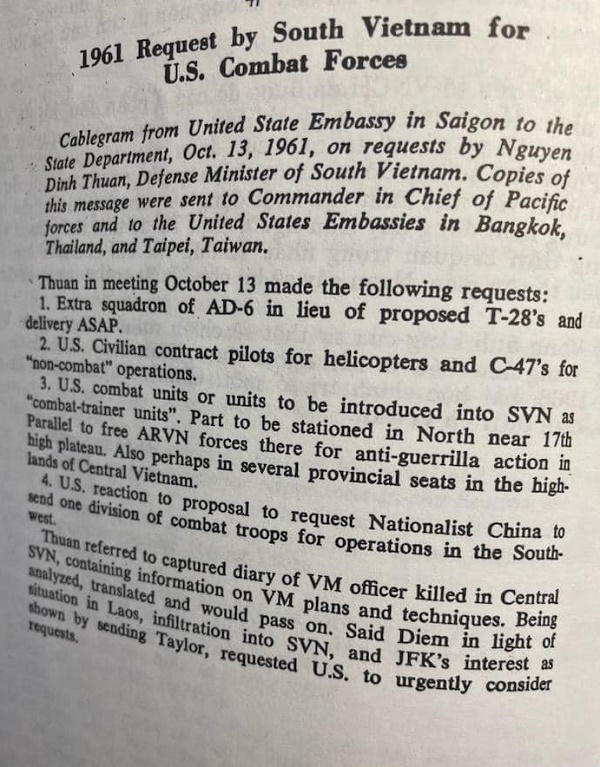
https://sachhiem.net/LICHSU/IMG/NGODD/1961XinQuanMy.jpg
Ngo Dinh Luyen,
Personal Representative of Vietnamese Chief of State Bao Dai at the Geneva Conference.
Ambassador-at-large of Vietnam; Vietnamese Ambassador to the United Kingdom from March 1956; youngest brother of Ngo Dinh Diem
Smith, Walter Bedell,
Under Secretary of State; Head of the United States Delegation at the Geneva Conference, May 3–June 20, and July 17–21, 1954.
https://history.state.gov/historicaldocuments/frus1952-54v16/ch5subch4
https://avalon.law.yale.edu/20th_century/inch006.asp
https://www.cia.gov/readingroom/docs/CIA-RDP80B01676R002500010001-5.pdf
https://history.state.gov/historicaldocuments/frus1952-54v16/d1027
https://search.library.wisc.edu/digital/ABHSHVCERGRA6I86/pages/ALUZ5OG5PRZCCH83?as=text&view=scroll
https://en.wikipedia.org/wiki/Walter_Bedell_Smith
BAO DAI, EMPEROR OF VIETNAM LEAVES FOR INDO CHINA (VIETNAM)
https://www.youtube.com/watch?v=Ljq-ttrqS6A
Bao Dai, Emperor of Indo China Visits Saigon (1949)
https://www.youtube.com/watch?v=Pv-fwo0c0L4
Cờ vàng New Year in Vietnam 1949 tại phút thứ 0.56-0.58 và 1.22-1.24


No comments:
Post a Comment