20260403 CDTL DDE D549 19 May 1954 Bản ghi nhớ của Cố vấn Bonsal gửi Trưởng phái đoàn Smith.
https://history.state.gov/historicaldocuments/frus1952-54v16/d549
Google Translated
Tài liệu 549
Quan hệ Đối ngoại của Hoa Kỳ, 1952–1954, Hội nghị Geneva, Tập XVI
751G.00/5–1954
Bản ghi nhớ của Cố vấn Bonsal Phái đoàn Hoa Kỳ gửi Trưởng Phái đoàn Smith
Tối mật
[Geneva,] ngày 19 tháng 5 năm 1954.
Chủ đề: Lần gặp mặt tiếp theo với đại diện cá nhân của Bảo Đại, ông Ngô Đình Luyện.
Ông Ngô Đình Luyện đã đến gặp tôi sáng nay để cho biết rằng ông đã báo cáo với Bảo Đại về cuộc gặp của ông với Ngài vào hôm qua.
Theo ông Ngô Đình Luyện, Bảo Đại đang hết sức mong muốn cải tổ Chính phủ Việt Nam. Ông dự định mời ông Ngô Đình Diệm về làm Thủ tướng và thay thế hầu hết—nếu không muốn nói là toàn bộ—các bộ trưởng hiện tại. Một chính sách độc lập mới, được xây dựng trên nền tảng việc thành lập một quân đội quốc gia Việt Nam thực thụ, sẽ là chương trình hành động của chính phủ mới này—một chính phủ mà qua đó Bảo Đại hy vọng sẽ tiếp thêm sinh lực cho cuộc đấu tranh của Việt Nam chống lại chủ nghĩa Cộng sản.
Tuy nhiên, Bảo Đại muốn biết rõ ông có thể trông cậy vào sự hỗ trợ của Hoa Kỳ đến mức độ nào. Ông muốn biết liệu rằng, trong trường hợp những nỗ lực quân sự hiện tại giữa Pháp và Việt Nam không đủ sức giữ vững vùng Đồng bằng, liệu Hoa Kỳ có kế hoạch can thiệp trực tiếp hay không. Ông cũng lo ngại rằng Chính phủ Pháp, dưới sức ép từ dư luận chính trị và công chúng Pháp, có thể sẽ quyết định từ bỏ cuộc đấu tranh này. Trong tình huống đó, liệu Hoa Kỳ có can thiệp trực tiếp hay không?
Tôi đã trả lời rằng tôi không nhận thấy bất kỳ dấu hiệu nào cho thấy quyết tâm tiếp tục cuộc chiến của phía Pháp đang suy yếu. Ngược lại, những dấu hiệu gần đây cho thấy quyết tâm của Pháp đang ngày càng được củng cố. Tôi cũng cho biết mình sẽ chuyển những câu hỏi của Bảo Đại tới ông.
Bảo Đại cũng tỏ ra lo ngại về việc Chính phủ Việt Nam nên có thái độ như thế nào trong trường hợp Hội nghị Geneva xuất hiện những dấu hiệu chuyển dịch theo hướng dẫn đến một tình thế mà trên thực tế sẽ đồng nghĩa với việc bỏ mặc Việt Nam cho phe Cộng sản. Liệu Phái đoàn Việt Nam có nên rút lui hay không? Lời khuyên của chúng ta là gì?
Bảo Đại cũng quan tâm đến việc nhận viện trợ quân sự từ Hoa Kỳ (MDAP) được chuyển giao trực tiếp cho Quân đội Quốc gia Việt Nam, hoặc ít nhất là được dành riêng cụ thể cho quân đội này, thay vì được chuyển giao thông qua phía Pháp như hiện nay. Bảo Đại không mong muốn tạo ra một sự thay đổi mang tính cách mạng đối với các cơ chế hiện hành, nhưng ông muốn thấy nguồn viện trợ của chúng ta được gắn liền một cách cụ thể với Việt Nam hơn là với nước Pháp. Ông cũng mong muốn nhận được ý kiến của Ngài về vấn đề này.
Trong trường hợp một chính phủ mới dưới sự lãnh đạo của Ngô Đình Diệm lên nắm quyền, hành động đầu tiên của họ sẽ là thành lập một đội quân Việt Nam mới. Trong đội quân này, Bảo Đại hy vọng sẽ hợp nhất các thành phần hiện có của quân đội Việt Nam cộng với các binh sĩ Việt Nam hiện đang phục vụ trong Quân đoàn Viễn chinh Pháp cùng tất cả các loại quân du kích và tôn giáo. Ông dự đoán sẽ gặp phải sự phản đối của Pháp vì theo ông, hơn một nửa lực lượng Liên hiệp Pháp tại Việt Nam là người Việt Nam và do đó, những lực lượng này sẽ bị suy yếu đáng kể bởi kế hoạch của Bảo Đại. Ngoài ra, Bảo Đại tin rằng người Pháp lo sợ rằng một đội quân quốc gia Việt Nam mạnh mẽ có thể tạo điều kiện cho các cuộc đàm phán và thỏa thuận trực tiếp giữa Việt Nam và Việt Minh. Tuy nhiên, Hoàng thượng muốn tạo ra một đội quân có tư tưởng tấn công mạnh mẽ. (Tôi đã bình luận rằng kế hoạch như vậy, mặc dù cuối cùng có thể giúp tạo ra một đội quân quốc gia Việt Nam mạnh mẽ, nhưng trong thời gian đó có thể làm suy yếu tiềm lực quân sự của phía chúng ta. Đáp lại, Ngô Đình Diệm nói rằng đó là ý kiến của Hoàng thượng muốn tiến hành một cách từ từ.)
Kiến nghị
Tôi kiến nghị rằng, trước mắt, Ngài hãy cho phép tôi thông báo với ông Ngô Đình Luyện rằng tôi đã chuyển những nội dung nêu trên tới Ngài; rằng Ngài chưa sẵn sàng trả lời ngay lập tức các câu hỏi do Bảo Đại nêu ra, nhưng Ngài đang xem xét chúng một cách nghiêm túc. Tôi xin nói thêm rằng quan điểm của Ngài là: trong bối cảnh đầy cam go hiện nay, mọi lực lượng tích cực thuộc phe ta đều cần phải đoàn kết; và do đó, mọi quyết định quan trọng, trong chừng mực có thể, đều cần phải phản ánh sự đồng thuận giữa tất cả các bên hữu quan.
1. Trong một ghi chú đề ngày 25 tháng 5 được đính kèm văn bản gốc, Hennes thông báo cho Bonsal rằng: “Liên quan đến bản ghi nhớ đính kèm của ông, Tướng Smith đã chấp thuận việc ông thông báo cho Ngô Đình Luyện biết rằng ông đã chuyển báo cáo của ông ấy tới Tướng Smith. Hiện chưa có hồi đáp, nhưng Tướng Smith có thể sẽ muốn trao đổi với Ngô Đình Luyện vào một thời điểm sau này.”↩
2. Trong một ghi chú viết tay bên lề, Walter S. Robertson đã viết: “Tôi đề nghị lược bỏ chỉ thị này”, khi đề cập đến phần câu sau đây: “rằng ông chưa sẵn sàng hồi đáp ngay lập tức các câu hỏi do Bảo Đại nêu ra, nhưng ông đang xem xét chúng một cách nghiêm túc”.↩
List of Abbreviations and Symbols
https://history.state.gov/historicaldocuments/frus1952-54v16/terms
https://history.state.gov/historicaldocuments/frus1952-54v16/persons
The Geneva Conference on Indochina May 8–July 21, 1954
https://history.state.gov/historicaldocuments/frus1952-54v16/comp2
https://history.state.gov/historicaldocuments/frus1952-54v16/ch7
May 19, 1954 (Documents 549–555)
https://history.state.gov/historicaldocuments/frus1952-54v16/ch7subch12
1. Document 549
Foreign Relations of the United States, 1952–1954, The Geneva Conference, Volume XVI
751G.00/5–1954
Memorandum by the Adviser to the United States Delegation (Bonsal) to the Head of the Delegation (Smith)
top secret
[Geneva,] May 19, 1954.
Subject:
- Further call of Bao Dai’s personal representative, Mr. Ngo Dinh Luyen.
Mr. Ngo Dinh Luyen called on me this morning to say he had reported to Bao Dai on his interview with you yesterday.
According to Ngo Dinh Luyen, Bao Dai is most anxious to change the Vietnamese Government. He would bring in Ngo Dinh Diem as Prime Minister and replace most if not all present ministers. A new policy of independence based upon the creation of a real Vietnamese national army would be the program of the new government with which Bao Dai hopes to revitalize the Vietnamese struggle against Communism.
Bao Dai would like to know, however, to what extent he can count on US support. He would like to know whether, if the present Franco-Vietnamese military effort is insufficient to hold the Delta, the US would plan to intervene directly. He is also concerned lest the French Government, under the pressure of French political and public opinion, should decide to abandon the struggle. In that case, would the US intervene directly?
I replied that I saw no signs of a weakening of French determination to continue the fight. On the contrary, recent indications show a firming up of French determination. I said that I would convey Bao Dai’s questions to you.
Bao Dai is also worried as to what the attitude of the Vietnamese Government should be in the event that the Geneva Conference shows signs of moving toward a situation which would in effect involve the abandonment of Viet-Nam to the Communists. Should the Vietnamese Delegation pull out? What is our advice?
Bao Dai is also interested in having US military assistance (MDAP) delivered directly to the Vietnamese national army or at least specifically earmarked for that army instead of being delivered as at present through the French. Bao Dai does not want to make a revolutionary change in present arrangements but would like to see our assistance specifically identified with Viet-Nam rather than with France. He would like your views on this point too.
In the event a new government under Ngo Dinh Diem takes over, its first act would be the creation of a new Vietnamese army. In this army, Bao Dai would hope to consolidate the present elements of the [Page 849] Vietnamese army plus Vietnamese soldiers now serving with the French Expeditionary Corps plus all types of irregular and religious troops. He anticipates French opposition because according to him over half the French Union forces in Viet-Nam are Vietnamese and therefore those forces would be much weakened by Bao Dai’s plan. Also, Bao Dai believes the French fear that a strong Vietnamese national army might make possible direct negotiations and agreement between Viet-Nam and the Vietminh. His Majesty, however, desires to create a fighting offensive-minded army. (I commented that such a plan while it might eventually help create a strong Vietnamese national army would in the mean time probably weaken the military potential of our side. In reply Ngo Dinh Luyen stated that it would be His Majesty’s idea to proceed somewhat gradually.)
Recommendation
I recommend that for the present you authorize me to tell Ngo Dinh Luyen that I have communicated the above to you,1 that you are not prepared at once to reply to the questions raised by Bao Dai but that you have them under serious consideration.2 I might add that it is your view that under present critical circumstances all positive elements on our side must be united and that consequently all important decisions should so far as possible represent agreement between all concerned.
1. In a note of May 25 attached to the source text, Hennes informed Bonsal that “Regarding your attached memorandum, General Smith has approved your telling Ngo Dinh Luyen that you have communicated his report to General Smith. There is no reply, but General Smith may want to talk to Ngo Dinh Luyen at a later date.”↩
2. In a handwritten marginal notation, Walter S. Robertson wrote “I suggest elimination of this instruction” in reference to the following part of the sentence: “that you are not prepared at once to reply to the questions raised by Bao Dai but that you have them under serious consideration”.↩
https://history.state.gov/historicaldocuments/frus1952-54v16/d549
https://history.state.gov/historicaldocuments/frus1952-54v16/pg_849
Thân thế (các) nhân vật
Chief of State of Vietnam.
Counselor of Embassy in France to March 1952; Director of the Office of Philippine and Southeast Asian Affairs, Department of State, from August 1952.
https://history.state.gov/historicaldocuments/frus1952-54v13p1/d48
https://history.state.gov/historicaldocuments/frus1952-54v13p2/persons
https://afsa.org/sites/default/files/fsj-1954-03-march_0.pdf
https://history.state.gov/historicaldocuments/frus1952-54v13p1/d223
https://www.jaas.gr.jp/jjas/pdf/1981/No.01-119.pdf
Hennes, Richard V.,
Special Assistant to the Under Secretary of State. Deputy Director, Office of International Administration, Bureau of International Organization Affairs, Department of State; Executive Secretary of the Bureau, 1971
https://history.state.gov/historicaldocuments/frus1952-54v16/persons
https://history.state.gov/historicaldocuments/frus1952-54v16/ch5subch4
file:///C:/Users/TN/Downloads/ST_SG_SER.A_242-EN.pdf
https://history.state.gov/historicaldocuments/frus1969-76v05/persons
https://discovery.ucl.ac.uk/id/eprint/10123385/1/Hwang_10123385_thesis.pdf
https://history.state.gov/historicaldocuments/frus1952-54v16/d735
Ngo Dinh Diem,
President of the Council of Ministers of the State of Vietnam to October 1955; thereafter President and Chief of State of the Republic of Vietnam
https://en.wikipedia.org/wiki/Ngo_Dinh_Diem
https://millercenter.org/the-presidency/educational-resources/diem-coup
https://www.jfklibrary.org/search?f[0]=subject:Vietnam%20War,%201961-1975
The Diem Coup audio
https://soundcloud.com/the-miller-center-at-uva/sets/the-diem-coup
February 1, 1966: President Johnson remembers Diem coup (admitted) to Eugene McCarthy
https://soundcloud.com/the-miller-center-at-uva/february-1-1966-president
November 4, 1963: President Kennedy on the Diem coup
https://soundcloud.com/the-miller-center-at-uva/november-4-1963-president-kennedy-on-the-diem-coup
NHỚ LẠI NHỮNG NGÀY Ở CẠNH TỔNG THỐNG NGÔ ĐÌNH DIỆM (Full) - Tài Nguyễn Diễn Đọc
https://www.youtube.com/watch?v=sWTTgB7oE6U&t=6927
Một phụ nữ miền Bắc viết về cố TT Ngô Đình Diệm.
https://www.youtube.com/watch?v=UMEkUQRp01o
"The Death of Diem and Nhu"
https://www.youtube.com/watch?v=U8O1HOTXS8A
"The Coup in Saigon"
https://www.youtube.com/watch?v=k4IaJYiNanc
"Everybody'll Say We Did It"
https://www.youtube.com/watch?v=Jaai1NdZ70k
"We Have Plans for Withdrawal"
https://www.youtube.com/watch?v=0BABdRu7FY0
"The Road to Disaster"
https://www.youtube.com/watch?v=dr5dRFVV-ok
https://www.youtube.com/channel/UChty22qJfdeAd8dAee9Mo7g/featured
“The President Is Dead”
https://www.youtube.com/watch?v=lD-akTUBFWs
“That Wasn't What Killed Kennedy”
https://www.youtube.com/watch?v=LAF0JGttS3E
Kennedy and Vietnam: The great what-if
https://www.youtube.com/watch?v=6XLhqXt2pww
JFK, LBJ and the Paradox of Vietnam
https://www.youtube.com/watch?v=TYRsahM-GqQ&t=2054
BÀI 305: NHÌN LẠI LỊCH SỬ: ĐỆ NHẤT CỘNG HÒA
http://www.bacaytruc.com/index.php/16996-bai-305-nhin-l-i-l-ch-s-d-nh-t-c-ng-hoa-tac-gi-vu-linh-ddtc
BÀI 306: NHÌN LẠI LỊCH SỬ: ĐỆ NHỊ CỘNG HÒA
https://diendantraichieu.blogspot.com/2023/11/bai-306-nhin-lai-lich-su-e-nhi-cong-hoa.html
BÀI 307: NHÌN LẠI LỊCH SỬ: VAI TRÒ CỦA MỸ
http://www.bacaytruc.com/index.php/17092-bai-307-nhin-l-i-l-ch-s-vai-tro-c-a-m-tac-gi-vu-linh-ddtc
JFK and the Diem Coup
https://nsarchive2.gwu.edu/NSAEBB/NSAEBB101/
Evidence on the Diem Coup in South Vietnam 1963
https://www.tokyoprogressive.org/evidence-on-the-diem-coup-in-south-vietnam-1963/
Tập 1 - Đời Một Phóng Viên & Những Ngày Bên Chí Sĩ Ngô Đình Diệm
https://www.youtube.com/watch?v=2CJ1CXSWwpI
Tập 2. Đời Một Phóng Viên & Những Ngày Bên Chí Sĩ Ngô Đình Diệm
https://www.youtube.com/watch?v=Po5Hlbfk6Zc
Tập 3 - Đời Một Phóng Viên & Những Ngày Bên Chí Sĩ Ngô Đình Diệm
https://www.youtube.com/watch?v=vdluTn-L8sc
Tập 4 : Đời Một Phóng Viên & Những Ngày Bên Chí Sĩ Ngô Đình Diệm
https://www.youtube.com/watch?v=p58HIMAy_Hg
Tập 5 - Đời Một Phóng Viên & Những Ngày Bên Chí Sĩ Ngô Đình Diệm
https://www.youtube.com/watch?v=ti24AXG12YE
Tập 6 - Đời Một Phóng Viên & Những Ngày Bên Chí Sĩ Ngô Đình Diệm
https://www.youtube.com/watch?v=LB0xpBPX9UI
Tập 7 - Đời Một Phóng Viên & Những Ngày Bên Chí Sĩ Ngô Đình Diệm
https://www.youtube.com/watch?v=Rvv0ze1mG_8
Tập 8 - Đời một Phóng Viên và Những ngày chung sống với Chí Sĩ Ngô Đình Diệm
https://www.youtube.com/watch?v=Ht1u6A62KXk
Tập 9 - Đời một Phóng Viên và những ngày chung sống với Chí Sĩ Ngô Đình Diệm
https://www.youtube.com/watch?v=bcZZ9O5cwgA&t=18s
Tập 10 - Đời một Phóng Viên & Những ngày chung sống với Chí Sĩ Ngô Đình Diệm
https://www.youtube.com/watch?v=bgJnv7kALSA
Interview with Madame Ngo Dinh Nhu, 1982
https://video.alexanderstreet.com/watch/interview-with-madame-ngo-dinh-nhu-1982
Tài liệu cộng sản giặc Hồ xuyên tạc Tổng thống Diệm và quân đội Mỹ
https://sachhiem.net/LICHSU/N/NgoDacTriet.php
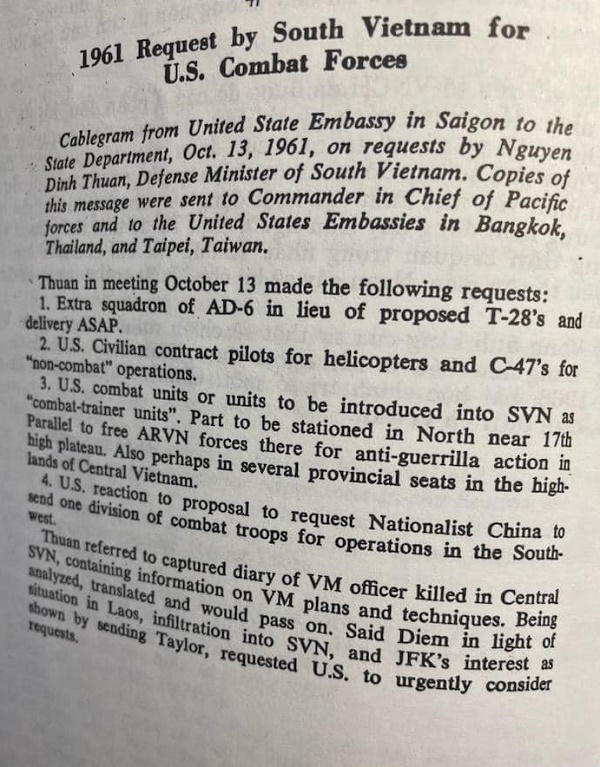
https://sachhiem.net/LICHSU/IMG/NGODD/1961XinQuanMy.jpg
Ngo Dinh Luyen,
Personal Representative of Vietnamese Chief of State Bao Dai at the Geneva Conference.
Ambassador-at-large of Vietnam; Vietnamese Ambassador to the United Kingdom from March 1956; youngest brother of Ngo Dinh Diem
Robertson, Walter S.,
Assistant Secretary of State for Far Eastern Affairs
https://en.wikipedia.org/wiki/Walter_Robertson
https://history.state.gov/departmenthistory/people/robertson-walter-spencer
https://en.wikipedia.org/wiki/Assistant_Secretary_of_State_for_East_Asian_and_Pacific_Affairs
Smith, Walter Bedell,
Under Secretary of State; Head of the United States Delegation at the Geneva Conference, May 3–June 20, and July 17–21, 1954.
https://history.state.gov/historicaldocuments/frus1952-54v16/ch5subch4
https://avalon.law.yale.edu/20th_century/inch006.asp
https://www.cia.gov/readingroom/docs/CIA-RDP80B01676R002500010001-5.pdf
https://history.state.gov/historicaldocuments/frus1952-54v16/d1027
https://search.library.wisc.edu/digital/ABHSHVCERGRA6I86/pages/ALUZ5OG5PRZCCH83?as=text&view=scroll
No comments:
Post a Comment